| Author |
 Replies: 24 / Views: 8,901 Replies: 24 / Views: 8,901 |
|
Pillar Of The Community
United States
534 Posts |
|
|
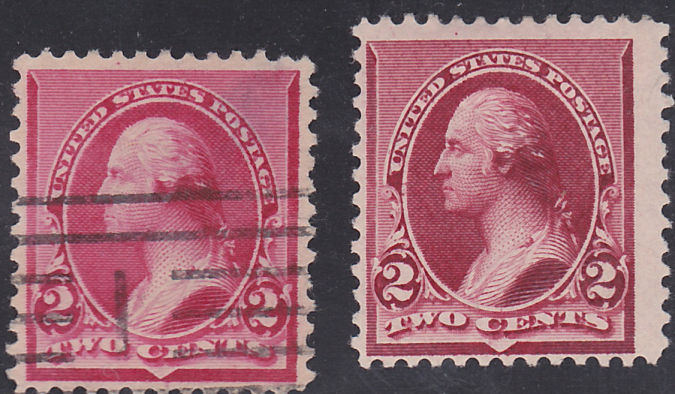
Thought I would break out my Scott #219 Series to share with everyone. It's been a while since I looked at them and what better place to do so then here. Used Lake Color  Mint Lake Color 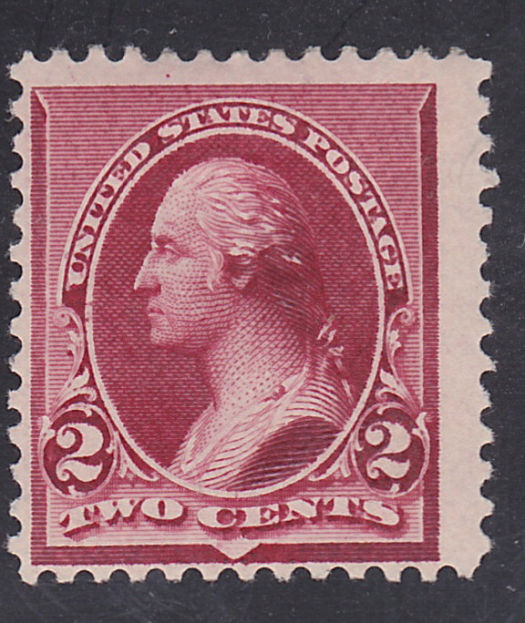 Cap on Left "2" 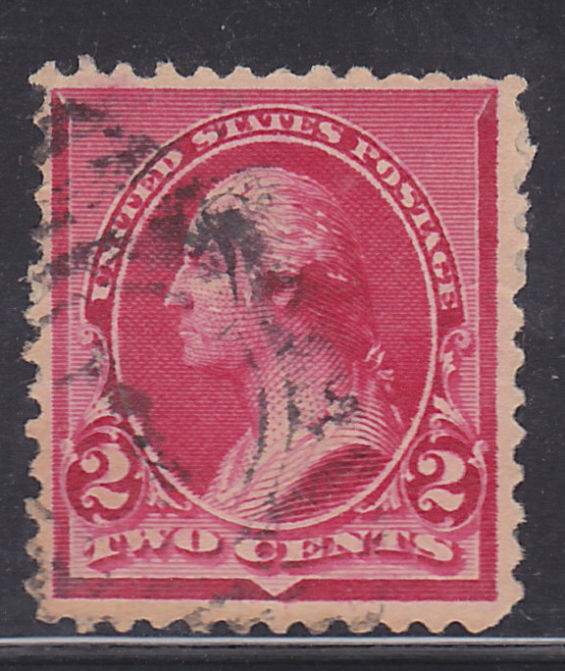 Caps on both "2"  |
|
Send note to Staff
|
| Edited by 597596 - 09/01/2012 9:32 pm |
|
|
|
|
Pillar Of The Community
United States
534 Posts |
|
|
Pillar Of The Community
United States
2547 Posts |
|
|
This was a guide dot that was used to align the horizontal rows. It actually was placed at the bottom of the design with the transfer row. After the plate laydown many of the dots were removed by the plate finishers.
This dot is also visible on all the die proofs from ABNC die C-224. |
Send note to Staff 
|
|
|
Pillar Of The Community
United States
534 Posts |
|
|
Russ,
Do you have a link or book you can suggest I read on this align dot? |
|
Send note to Staff
|
|
|
Pillar Of The Community
United States
2547 Posts |
|
|
Hugh Southgate did a series of articles for BIA in 1937 which detailed the dies used by ABNC and the BEP for the 2 cent that discusses this. Another characteristic of ABNC die C-224 is the dot in the "S" of "CENTS" and the "gash in the forehead which is found in all the transfers from that die. Thes characteristics are also on all BEP Type I stamps (from BEP die 35). |
|
Send note to Staff
|
|
|
Pillar Of The Community
United States
534 Posts |
|
|
Why doesn't Scott note this information for #219d or 220c. I only see this information on #252 & #267 regarding dot? It was my understanding that BEP didn't start printing these until the second series, 1892. #219D and #220c were printed in 1890 by the ABNC. |
|
Send note to Staff
|
| Edited by 597596 - 09/01/2012 11:54 pm |
|
|
Pillar Of The Community
United States
2547 Posts |
|
|
Because it was not a variety for the 219D/220 or the BEP Type I. All 2 cent ABNC stamps had it as did all BEP Type I. The dot in the S was burnished out of all the BEP Type II transfer rolls made from BEP die 79. Die 79 was also used for the Type III with the shading lines in the triangles burnished out of the transfer rolls. The dot in the S was burnished from some of the Type III transfer rolls and still present in others. The dot in the S on the Type III is never as prominent as it is in the ABNC 219D/220 or the BEP Type I. |
|
Send note to Staff
|
|
|
Pillar Of The Community
United States
534 Posts |
|
|
Ok, if I understand correctly, ABNC who was the only company to print #219D & #220c used this dot on every sheet? Some dots never got removed? |
|
Send note to Staff
|
|
|
Pillar Of The Community
United States
2547 Posts |
|
|
The first postage stamps printed by BEP were the Type I 2 cent from plate 1, 3, 4 and 5. These four plates were certified June 19, 1894 and put to press on June 20. |
|
Send note to Staff
|
|
|
Pillar Of The Community
United States
534 Posts |
|
|
Russ, I see what you mean when I found this plate proof on Indian paper, and it has the exact same same ink spot above "s" in states. 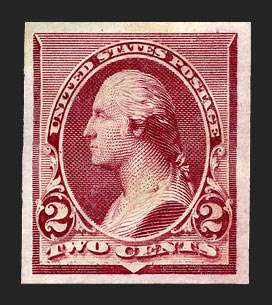 |
|
Send note to Staff
|
|
|
Pillar Of The Community
United States
2547 Posts |
|
|
There were 2 dots associated with the 2 cent ABNC, the guide dotbelow the entry (this is the one that appears above the first "S" in "STATES" on the stamp below it. These dots were sometimes removed by the plate finishers but the were on the transfer roll and were enter in every position. Below is a die proof of the BEP die 35 which was made by modifying the ABNC die C-224. The gouide dot is circled. (when BEP made their transfer rolls they did burnished this dot out and it is never found on any BEP issue.) 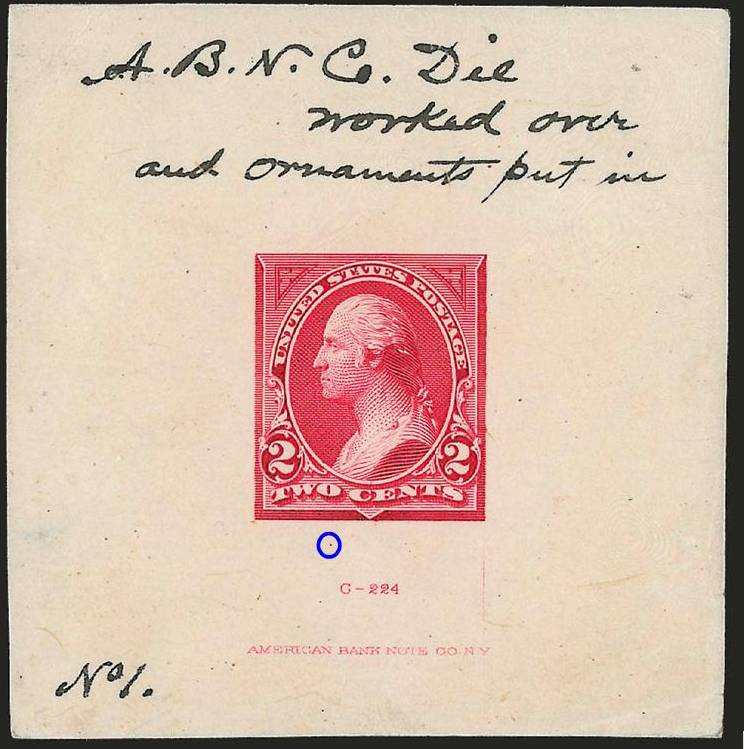 The second dot is the dot in the S (believed to be a engravers' dot to align the lettering) This was also on the transfer roll and transfer to each plate entry. Some 219D/220 do not have a visible dot due to inkig, wear or liht entry transfer. Below shows the characteristic gash on forehead and dot in S that is on all 219D/220 and all BEP Type I stamps. 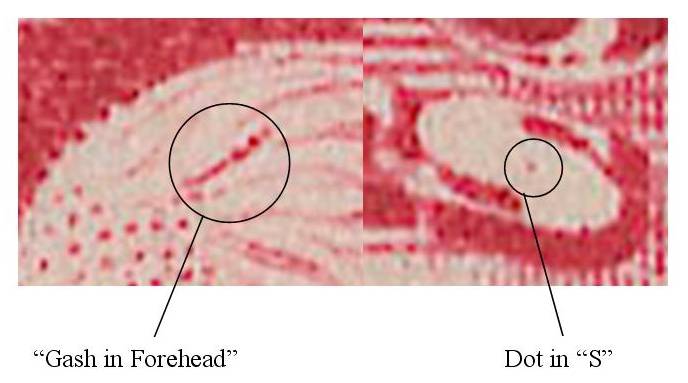 The progression from ABNC to BEP and the BEP die and transfer roll modifications are a interesting topic in the BEP history. The Type IV was not documented until 1955. |
|
Send note to Staff
|
|
|
Pillar Of The Community
United States
2547 Posts |
|
|
Bear in mind that there are 2 types of proofs, die proofs printed from the mater die (like the one I posted above) and plate proofs printed from the plate. The one you posted is a plate proof so the dot above the stamp is from the entry directly above that position. The transfer roll would place the dot below the entry as in the die proof. |
|
Send note to Staff
|
|
|
Bedrock Of The Community
Australia
38679 Posts |
|
|
Pillar Of The Community
United States
2547 Posts |
|
|
Rod, my background is a tool & die maker and manufacturing engineer. I often find the details of stamp production/manufavture more interesting than the stamps themselves. |
|
Send note to Staff
|
|
|
Pillar Of The Community
United States
534 Posts |
|
|
Incredibley tuff to learn all these minute details in printing. It's been educational and I Know I'll be looking for these details more often as I'm expanding my collection. I would have never gathered such practices were such a big part of the ABNC printing model for this stamp. Was this done with every stamp printed by ABNC or only the 2c Washington stamps? |
|
Send note to Staff
|
|
|
Pillar Of The Community
United States
2547 Posts |
|
|
Fred, this thread provides some basic info on platemaking that you my find helpful. https://goscf.com/t/11260&SearchTer...te,varietiesEdit: Guide dots and various layout lines were common on most U.S. stamps printed prior to the BEP. Dr. Chase did a series of article on the guide dotes in the Americian Philatelist about 1920. I will try to find that info for you. |
|
Send note to Staff
|
| Edited by Russ - 09/02/2012 01:01 am |
|
|
Replies: 24 / Views: 8,901 |
|




 Posted 09/01/2012 8:22 pm


 Is it possible they came from the exact same plate? Any one else see this? How could this be,