| Author |
 Replies: 20 / Views: 5,557 Replies: 20 / Views: 5,557 |
|
Pillar Of The Community
571 Posts |
|
|
Can someone please inform what is the difference in color of a pink and pigeon pink stamp on Scott #64? Below are 2 stamps. One is unused with no gum, impartial perf, it looks very light. The other is on paper with cancellation date. They are pink in color, so rule out the rose for both of them. What would be the value on them with there conditions? 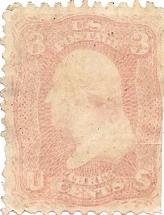 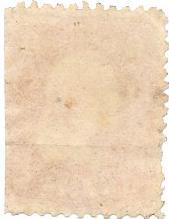 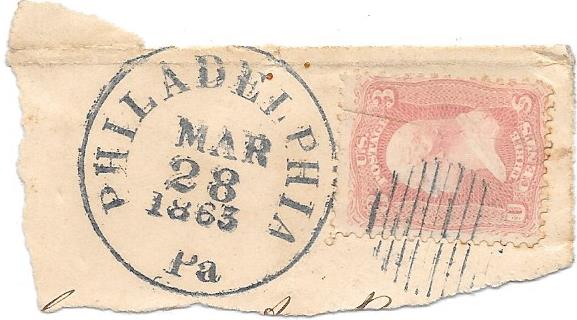 |
|
Send note to Staff
|
|
|
|
|
Pillar Of The Community
United States
8956 Posts |
|
|
Almost to the day, on July 15, Mizar asked the question:"pigeon blood pink?". If you missed it, please search for Scott 64 and you will find the link. The post has several different hues of this stamp pictured, and mentions that the pigeon blood pink has a bluish tint over it.
Even though it is probably impossible to tell this hue on a computer screen without another one next to it, yours does not appear to have a bluish cast to it!
Peter |
Send note to Staff 
|
|
|
Pillar Of The Community
United States
1873 Posts |
|
|
The current issue of American Stamp Dealer & Collector has an article on expertizing this issue with color examples and Pantone color numbers for comparison.
However, the odds are strongly against you. 1.8 billion rose stamps were printed, compared to 100,000 (and change) of the pink shades. Your stamps very likely are severely faded rose examples, Scott 65. To validate them as 64, 64a or 64b would require extensive research or an expert's eye, and given the condition of these, it may not be possible to find anyone willing to go on record that these are pink.
I'm not sure why you say "rule out rose." It's just not that simple. There are numerous articles on this subject that merit reading, not to mention prior posts here. |
|
Send note to Staff
|
|
|
Pillar Of The Community
United States
1125 Posts |
|
|
What, other than your gut feeling, leads you to believe that either matches any of the "pink" shades?
It is important to realize that what any individual may call a color - "Looks pink to me" - has nothing to do with the "philatelic" color. That color is the one of the stamp that is the reference copy the expertising groups use, or one that has previously been matched to that shade. In fact, the same color name can point to completely different colors across stamp issues.
The 1861-issue "pink" and "pigeon blood pink" color names match stamps from the first batches printed in late 1861. Your first stamp looks faded badly, making any color determination someone irrelevant, and the second dates from 1.5 years after the accepted range for pinks.
Don't get your hopes up on either as being "3c pink."
C. |
|
Send note to Staff
|
| Edited by chipg - 08/18/2015 12:42 pm |
|
|
Pillar Of The Community
United States
1359 Posts |
|
|
The stamp dated 1863, although it may be pinky, is #65, not pink #64. True pink was the first printing in August of 1861 only, so anything dated later than very, very early 1862, can't be certed as pink. We've had a lot of strings on this topic, so you might want to search the site. You can check out some of my postings on the 3c 1861 shades and responses, and you'll find some of this, a bunch of times...hope this helps, Ray |
|
Send note to Staff
|
|
|
Moderator

United States
12330 Posts |
|
|
Valued Member
United States
351 Posts |
|
|
I have found the "Scott Specialized Color Guide for United States Stamps" to be quite handy with performing a color ID on your own.
But you must have good lighting so as not to skew your attempts at matching pigments with the samples in this publication.
However nothing beats having it certified, there is always the likelihood that the stamp is a color changeling, and having it expertised is the best bet.
Regards,
Stampalotapus
|
|
Send note to Staff
|
|
|
Pillar Of The Community
571 Posts |
|
|
i found the information from michael m. very interesting in previous discussions pertaining to the pink colors. to determine about pink and pigeon pink.. The contrast of the area under the upper left 3 to the adjacent lattice work is found and a required for the pink shades including ball in the left corner nearly invisible and scroll around is fainted. So, because the stamp looks fainted, still can be the color of a pink stamp. maybe a pink rose shade..but I would like to know what is the value of the unused stamp. |
|
Send note to Staff
|
|
|
Pillar Of The Community
United States
1359 Posts |
|
|
You may also find that there are different thoughts on pigeon blood as several different shades are expertised as PBP. I'm not in agreement that PBP should have a bluish tint. PBP was first defined by Ashbrook and we don't know where his reference collection is. Hypothesized in The Chronicle a few years back by Mike McClung that PBP was named after the PBP ruby, which are the rarest and most valuable rubies, and therefore PBP is ruby pink.
The are certed PBP 64a's that are carmine pink, and lavender pink-- both rare shades but not pigeon blood. Most of the PBP on the PF website are ruby pink....
All of this is hypothetical, since PBP isn't defined anywhere, and experts have they're own thoughts on what is and what is not PBP, so it's basically a crap shoot.
Hope this is helpful, and sure that there will be some other opinions....Ray |
|
Send note to Staff
|
|
|
Pillar Of The Community
United States
1125 Posts |
|
|
Quote:
..but I would like to know what is the value of the unused stamp. One man's opinion follows: It's a plain vanilla Scott 65 rose (shade irrelevant) Value can only be placed by the buyer. However, I wouldn't value it very highly: - Faded color - Straight edge - pulled perfs at left - horizontal crease - corner crease If you offered it to me at $10, I'd pass. I'd rather spend the same $10 for a nice, well-centered used copy. As for the other one, another vanilla Scott 65 that is creased, stained, off-centered.... you can figure it out possible value from there. C. |
|
Send note to Staff
|
|
|
Pillar Of The Community
571 Posts |
|
|
i agree with you. Ray...in my own opinion, I believe the same what you are expressing..I view the P.F. certifications as well and other shades of pink are noted for a Scott 64. Thank you for sharing your comments.
|
|
Send note to Staff
|
|
|
Pillar Of The Community
571 Posts |
|
|
Chip...i am just curious..how did you determine it was a Scott 65? was there something specific that showed in the stamp from a Scott 64? yes, I agree it has faults which lowers the price for any unused stamp. |
|
Send note to Staff
|
|
|
Pillar Of The Community
United States
1125 Posts |
|
|
blazenstar:
Read all of the comments to your original post. Look at the threads referenced. None point to either of these being a pink. Once you've seen a few dozen pinks, you'll know what they look like.
If the scans are close to accurate on the colors, these both look like run-of-the-mill rose shades.
They're not pink, no matter how much you might want them to be.
If you want to spend the money having it expertised, go ahead. However, it won't come back as a pink.
Chip
(edited to add "If the scans are close to accurate on the colors," |
|
Send note to Staff
|
| Edited by chipg - 08/18/2015 4:05 pm |
|
|
Pillar Of The Community

United States
1273 Posts |
|
|
blazenstar, on the first stamp, its really irrelevant what the color was. At this point, its so faded out that there simple isn't any value and probably no way any expertizing service will consider it being more than a #65. As has been stated, due to the date of cancel on the second stamp, it is essentially impossible for it to be anything other than a #65. In 1863, there were some rose shades that tended toward the pink more than red color, but they are not the 1861 shades of pink, #64, #64a or #64b. Your copy is somewhat faded, but as a long shot, may have been an 1863 pinkish rose shade or other nearer pink shade, but it is still a #65. Those who have given you answers, have seen enough examples of the 1861 shades posted here and probably in person to give you an opinion. There are numerous posts that you can search to understand where they are coming from. Search them and read them and you'll have a better understanding of what a #64 looks like. Don't be discouraged, keep looking at resources and if you are still convinced you have a #64 or #64a, then send them to a certification service.  |
|
Send note to Staff
|
|
|
Pillar Of The Community
571 Posts |
|
|
I respect your opinions..i appreciate all your comments.. my eye sight is not the so great anymore, but it does look like pink shade to me more than red and could be due to the faint color.Ray is also correct that there not all color are so obvious for this pink shade. below if had to compare color shades, It is definitely not the same as this color. 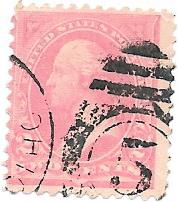 |
|
Send note to Staff
|
|
|
Pillar Of The Community
United States
526 Posts |
|
|
Why did you ask for people's opinions if you were going to stick with your own opinion no matter what?
What part of "it's not pink" don't you get? |
|
Send note to Staff
|
|
|
Replies: 20 / Views: 5,557 |
|



 Posted 08/18/2015 12:10 pm


