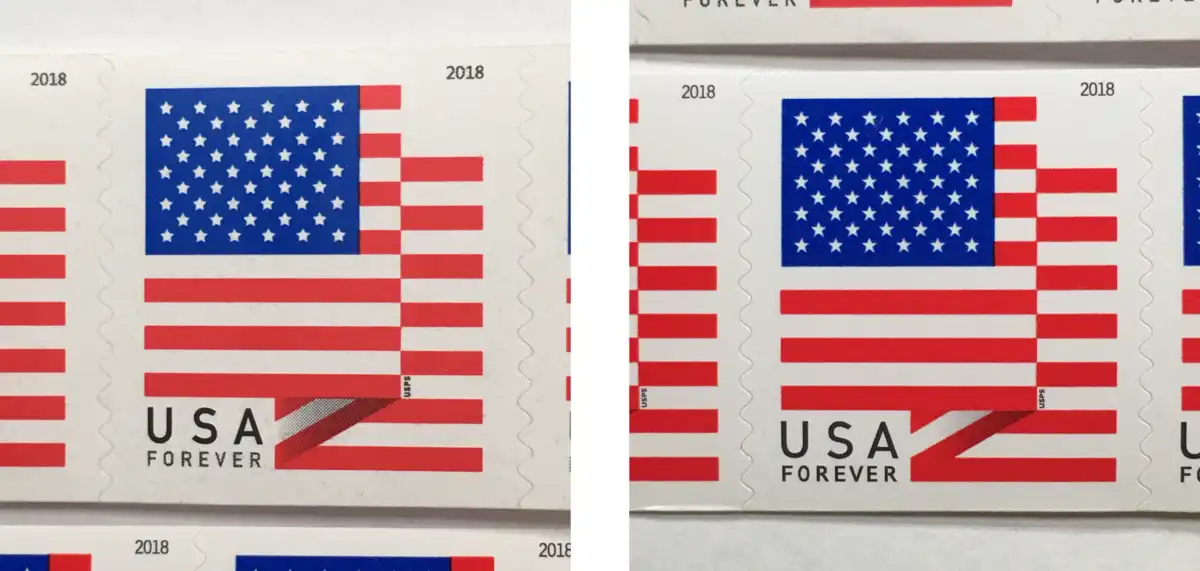
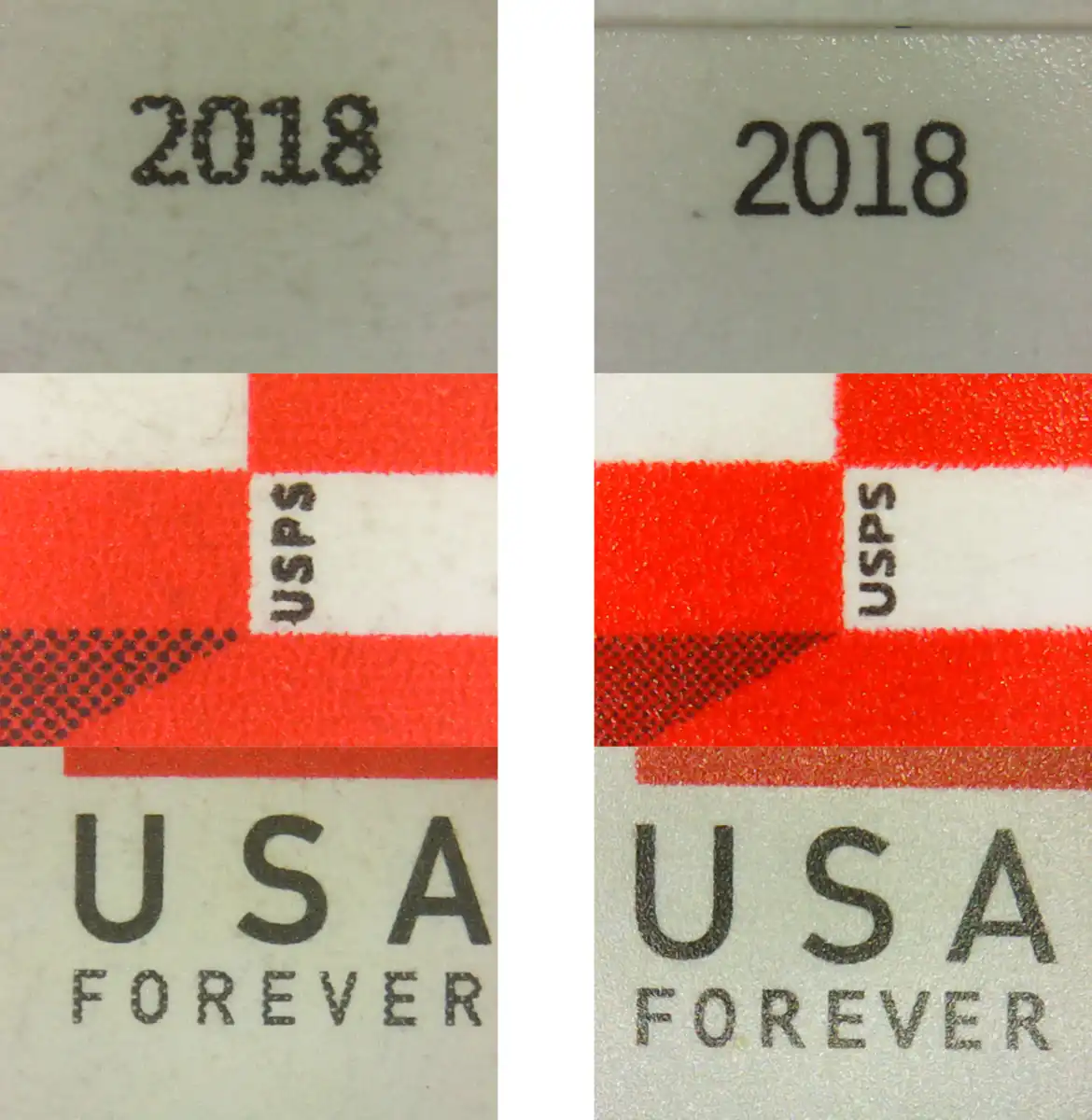
I agree that both examples are counterfeit. The die cutting resembles that of the Banknote Corporation of America version of this stamp. As such, there should be part of an elongated wave in the die cuts visible at top and bottom on properly cut rolls. The amount of that elongated wave that's visible at either top and/or bottom depends on how accurately the die cutting is applied vs. the cutting of the web into individual rolls. Neither of the two stamps in the OP show this elongated wave. Here's an example from my collection where you can see the elongated wave at the bottom but not quite as well at the top.
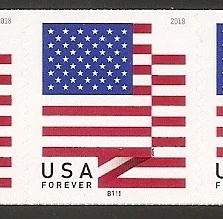
Another tell is the absence of what's known in the PNC world as micro-bridges. Coils produced by BCA are packaged in sticks where as many as 10 rolls are attached to each other. This is accomplished by not completely cutting through the paper when separating the web into rolls, but leaving small bits of paper between the rolls. In appearance, this looks similar to rouletting. When a roll is broken off the stick, small "teeth" remain at top, borrom, or both. Rolls from the edges of the web will have micro-bridges on either top or bottom, while all other rolls should have them on both top and bottom (most common). The example I've posted has them at both top and bottom. Those at the top are a bit harder to see.
For more data on this stamp, see this page on the PNC3 website:
https://pnc3.org/Data-2018/5261.phpAlso see page 68 of the June 2018, issue of Coil Line, the monthly PNC3 newsletter, for better illustrations of the elongated die cut and micro-bridges. That issue can be found at
https://pnc3.org/Coil_Line_Archives/2018/June.pdfFinally, do stamps on either roll have plate numbers? Genuine rolls should have a plate number of B111 every 31 stamps.



 Replies: 6 / Views: 110

 Posted Today 4 Hrs 18 Min ago