| Author |
 Replies: 9 / Views: 305 Replies: 9 / Views: 305 |
|
|
Valued Member
Poland
118 Posts |
|
|
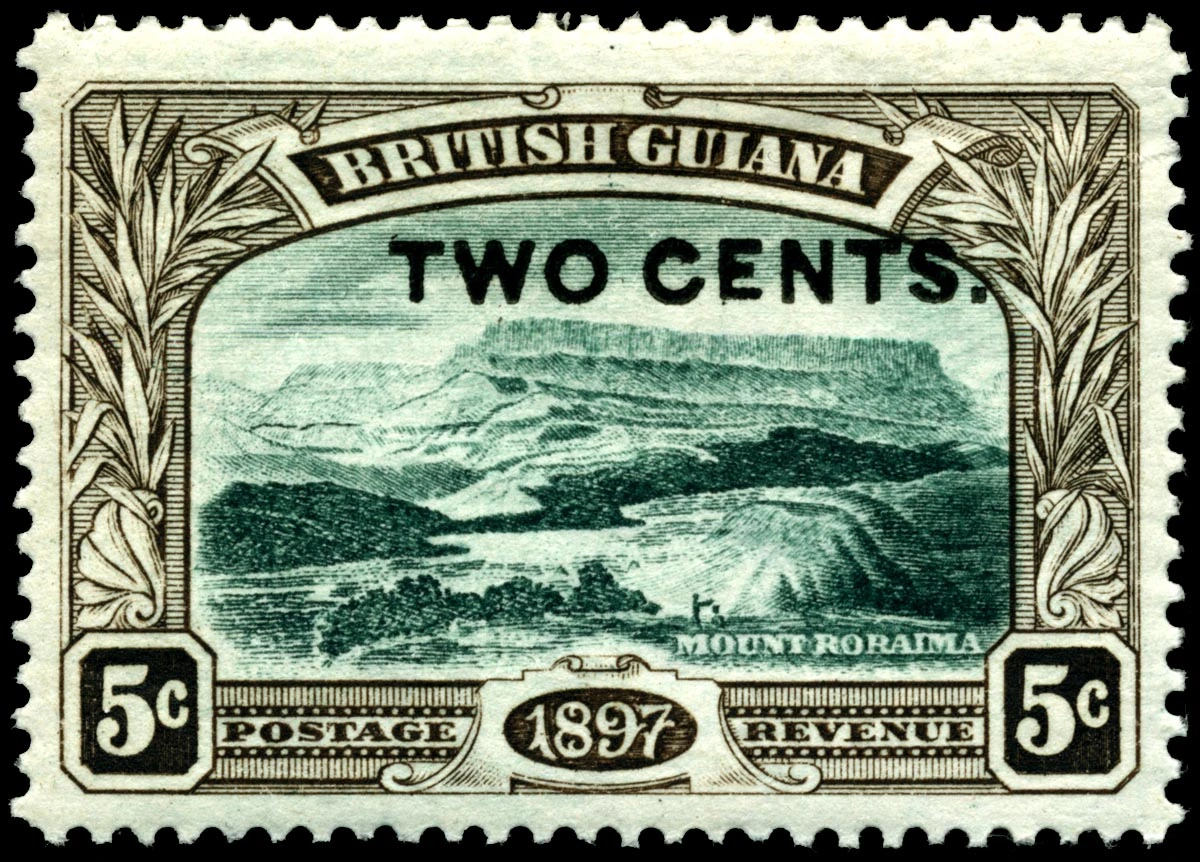
Is this the "without dot" overprint variety? Thank you in advance for your opinions.  |
|
Send note to Staff
|
|
|
|
|
Pillar Of The Community
Netherlands
6594 Posts |
|
|
Maybe, you should first check whether the overprint is genuine. It looks a bit too neat compared to the image in the SG catalogue and that of an online catalogue. |
Send note to Staff 
|
| Edited by NSK - 08/03/2026 07:34 am |
|
|
Valued Member
Poland
118 Posts |
|
|
Pillar Of The Community
Netherlands
6594 Posts |
|
|
That picture from Wikipedia looks much like the one in the online catalogue. The overprint is very different from that on your stamp.
I would hesitate to assume Wikipedia is showing the genuine overprint, but, at least, it raises the question whether your overprint is genuine. |
|
Send note to Staff
|
|
|
Pillar Of The Community
United States
7087 Posts |
|
|
The overprints were done in settings of 60, 6x10.
I don't have any scholarship newer than about thirty years ago, but it was thought that the two higher values were set twice, and this value was set once, probably after the other two. There is a fair amount of variability among the 60 positions. The "stop omitted" appeared at position 53, but not in every position 53, apparently.
If you can find images of multiples from the lower right corner, you can see what the lettering looks like at position 53. Whether there is a stop or not in the multiple you're using for comparison, your letters should match. Position 53 would be the next-to-last stamp in the next-to-last row. Again, probably obvious, but you need to be comparing with other examples of this value, not the two higher values, to be sure.
As always, if someone has newer information or differing interpretations, speak up. |
|
Send note to Staff
|
|
|
Pillar Of The Community
United States
7087 Posts |
|
|
I did a little more flipping around, and I ran across Michael Nicholson's note in the BWI Study Circle Bulletin 167 from December 1995.
He claims that the correct position is #9 (Row 2/3, i.e., the third stamp in the second row), and he cites very old sources claiming that the stop was eroding during printing, such that you often only see a tiny remnant of the upper portion of the stop.
Interesting stuff. |
|
Send note to Staff
|
|
|
Valued Member

United Kingdom
203 Posts |
|
|
I think I see a trace of a dot after the S. Would a forger include a trace of a dot?
Perhaps the overprint is genuine, but a faker has tried to remove the dot without complete success. It might be useful to check under UV light for evidence of tampering. A bright patch right of the S would be evidence of nefarious villainy.
If it's genuine (and I'm inclined to think it is), I think the dot would have to be completely absent to qualify as SG 222a. A stamp with unlisted "eroded dot" variety would be of interest to a specialist, as Cjd indicates, but the price would probably be much lower. |
|
Send note to Staff
|
|
|
Pillar Of The Community
United States
8511 Posts |
|
|
I think what is being said here , it will take a person with a much stronger glass to see that stamp better than anything being said . |
|
Send note to Staff
|
|
|
Pillar Of The Community
Netherlands
6594 Posts |
|
|
When you compare the two stamps posted here, you may notice the one in the OP, in addition to being too neat, shows a pattern of dots in the overprint, suggesting photogravure (a very rare process for overprinting), or a printer. The other example posted does not show the dots in the overprint. |
|
Send note to Staff
|
| Edited by NSK - Today 3 Hrs 57 Min ago |
|
|
Valued Member
United Kingdom
334 Posts |
|
|
Seem to be the same font (probably Caslon Egyptian, which was used by the Ordnance Survey) but the 'TWO' on the spotless one is slightly narrower, though the overall length of the 'TWO CENTS' is the same. The dots may be specks of dried ink forced to the edges of the faces. |
|
Send note to Staff
|
| Edited by Flightle_Bee - Today 1 Hr 11 Min ago |
|
| |
Replies: 9 / Views: 305 |
|



 Posted 08/03/2026 05:08 am