pjr - I will try to explain:
Regarding postal function/use of any of the issues in Serbia, they are legal tender for use to pay service in sending envelope or parcels inside/outside Serbia. Quantity printed, are very balanced, and go from 25 000 to even more than 500 000 .... it depend on which issue are in question. Small size common issue have a large quantity, because they are used frequently in postal systems, but commemorative issues can be sometimes very limited to just subscribers need, and little bit to dealers outside Serbia alone.
In any case, they are legal for use to pay service.
I think, that small quantity are main reason why they print an 36 issues per years. as they can collect more income, or same income. This way, they have more stamps on market, but limited quantity just for subscribers + postal system needs.
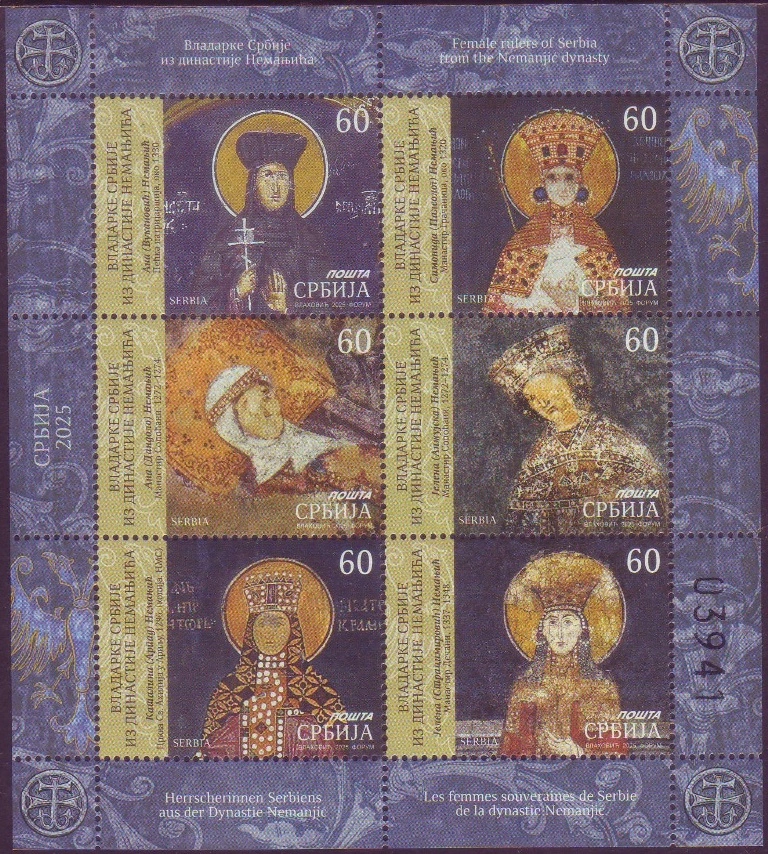
Now, why they use few language on borders of sheets?
It is tradition even from Yugoslavia times. It is name of issue in English, France, Serbian Cyrillic, Germany. Probably, just for marketing purpose.
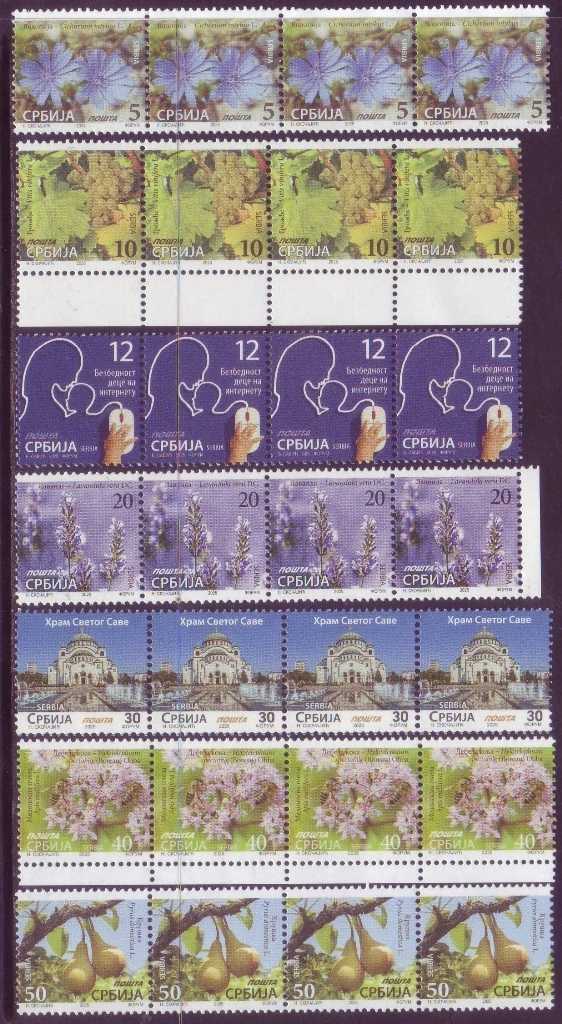
Regarding definitive (small size common issues) and special (commemorative) issues, definitive issues are small size, and big quantity, mostly small face values (10, 30, 40 Dinar, and up to 50 Dinar), and special issues are made to celebrate some happening or like EUROPA issues (which are also printed in larger quantity (50 000 to 60 000).
Domestic market are very important, because there a many collectors/subscribers to new issues, and many are still active from all six Republic of Yugoslavia, so an active market are around there between new "independent" republics and Serbia.
I'm happy that Serbia didn't entered this scheme with AFINSA, like Slovenia and Croatia, or like Montenegro that have large quantity printed just for export to one or two "big" stamp dealers, because we know how it ended.
Here I will show You this small size definitive issues.
Hope, that I answered all question.
Any way, I'm here to answer for any further questions.



 Replies: 2 / Views: 90

 Posted Yesterday 3:54 pm