| Author |
 Replies: 507 / Views: 39,866 Replies: 507 / Views: 39,866 |
|
|
|
Pillar Of The Community
Australia
1214 Posts |
|
|
Pillar Of The Community
Australia
3296 Posts |
|
|
Pillar Of The Community
Australia
1214 Posts |
|
|
Pillar Of The Community
Australia
3296 Posts |
|
|
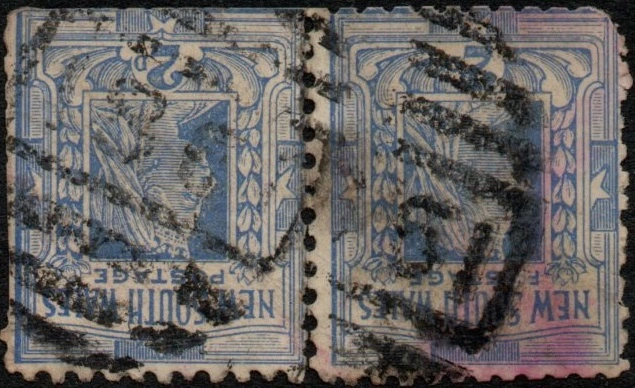
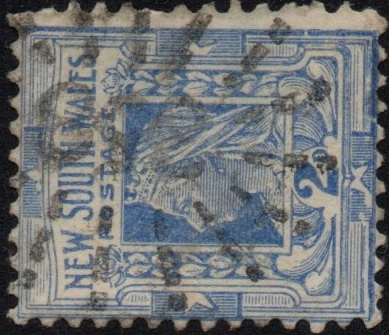
A 358 Mittagong and two 99s Walgett Al  The last rays type numeral was 835 so it can't be an 892. |
Send note to Staff 
|
|
|
Pillar Of The Community
Australia
1214 Posts |
|
|
Thanks again Bobby
I'm slowly catching on now that I have started setting them out into 2 albums . Now the buying continues .
|
|
Send note to Staff
|
|
|
Pillar Of The Community
Australia
932 Posts |
|
|
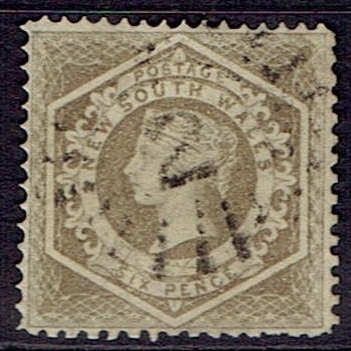
A nice clear 3R20 strike of 2 from Parramatta. Not easy to find, despite the lower rating. I'd like to see others if members have them in their collection. 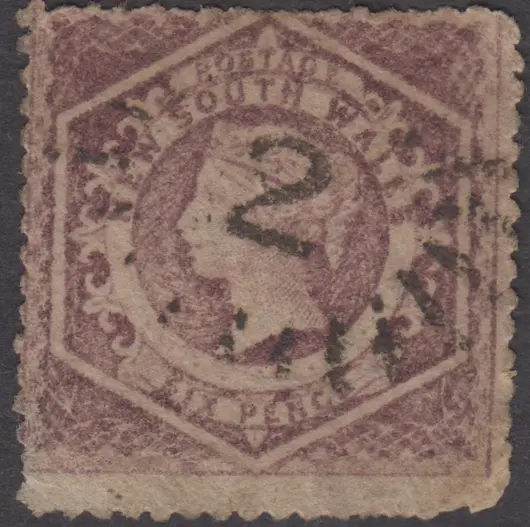 |
|
Send note to Staff
|
https://www.fairdinkumstamps.com Fair Dinkum Stamps - Specialising in stamps from early Australia and the colonies, Australian philatelic literature, catalogues, stockbooks and accessories. |
|
|
Pillar Of The Community
Australia
3296 Posts |
|
|
The device is a 2R20, of which there was only one used at Parramatta. Any differences claimed by Freeman are easily attributed to wear. I have four on DLR stamps (which should come as no surprise) but also have 2 examples on cover, both bearing 2d imperf diadems. The nicer of the two strikes is below, although the cover leaves a great deal to be desired. 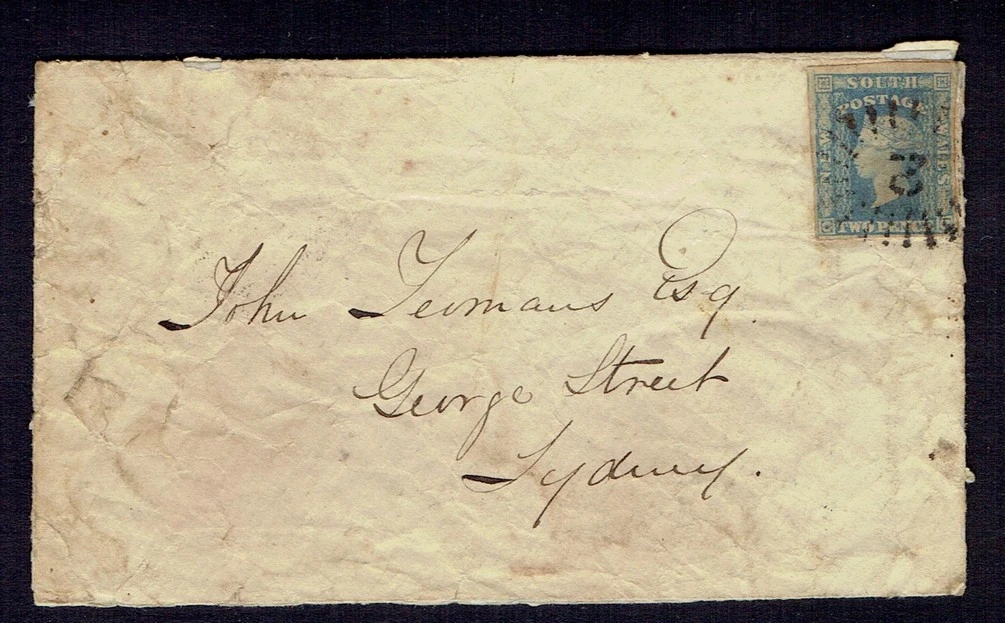 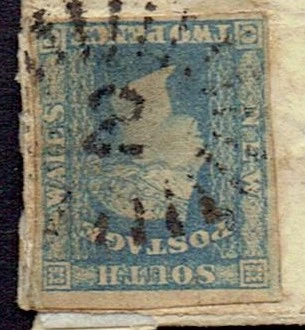 Plenty on Trove about the addressee, which is probably this man https://trove.nla.gov.au/search/cat...&l-year=1875 |
|
Send note to Staff
|
| Edited by Bobby De La Rue - 09/15/2026 12:06 am |
|
|
Pillar Of The Community
Australia
3296 Posts |
|
|
Pillar Of The Community
Australia
932 Posts |
|
|
Thanks for posting those Bobby De La Rue - the 'two' devices did look suspiciously similar! |
|
Send note to Staff
|
https://www.fairdinkumstamps.com Fair Dinkum Stamps - Specialising in stamps from early Australia and the colonies, Australian philatelic literature, catalogues, stockbooks and accessories. |
|
|
Pillar Of The Community
Australia
932 Posts |
|
|
It's not often that I see a stamp that has been blessed with a very nice strike of this red cancellation. If one is seen at all, it is more often found elsewhere on the envelope. A quick quiz - can you identify the location where the red cancellation was applied? the time of day it was struck? 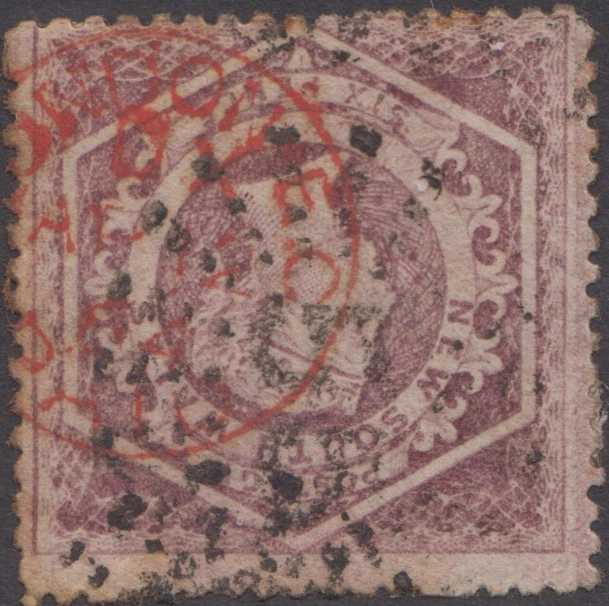 |
|
Send note to Staff
|
https://www.fairdinkumstamps.com Fair Dinkum Stamps - Specialising in stamps from early Australia and the colonies, Australian philatelic literature, catalogues, stockbooks and accessories. |
|
|
Pillar Of The Community
Australia
3296 Posts |
|
|
Very nice item FDS London EC (ie: East Central) Paid, 12 April 1864. I can't recall seeing that much of the cancel on the stamp, but small parts of the cancel are seen from time to time. If the D of the DX is the time code, it would've been stamped between 5.30AM and 6.00AM (assuming I'm understanding my literature, but I probably need to brush up as it's been quite a while). The letter, posted from Newcastle, left Sydney on 21 February and arrived at Marseilles on 11 April. |
|
Send note to Staff
|
|
|
Pillar Of The Community
Australia
932 Posts |
|
|
Thanks for adding those details Bobby De La Rue - I haven't researched the London codes - at some point the code represented the 'stamper' and then switched to time codes.
At a cursory glance, 'Postmarks of the British Isles' mentions that a red cancel was used in the morning at London - I'm not sure whether that applied to all of the London offices.
I made a quick internet enquiry about the journey and came up with these details that match your mention of Marseilles:
The Mail Route Timeline
The Origin (February 1864): The letter was written and posted in Newcastle, NSW. From there, it was brought down to Sydney via a regional coastal steamer or mail coach to catch the monthly international department.
Departure from Sydney (21 February 1864): The RMS Madras officially weighed anchor from Sydney Harbour at 9:00 AM on 21 February 1864, carrying the heavy monthly mailbags destined for Europe.
The Indian Ocean Relay: The RMS Madras functioned as the Australian branch liner. It sailed down past Melbourne and across to King George's Sound (Western Australia) before making the long trek across the Indian Ocean to Point de Galle, Ceylon (now Sri Lanka).
The Overland Transit & Marseilles: At Ceylon, the mail bags were transferred to a larger P&O main-line steamer heading to Suez, Egypt. From Suez, the mail was carried by train across the Egyptian desert to Alexandria, where it was loaded onto a Mediterranean mail steamer (such as the SS Massilia) bound for Marseilles, France.
Arrival in London (12 April 1864): Once it arrived in Marseilles, the "Marseilles Express" mail portion was rushed by train through France, ferried across the English Channel, and reached the General Post Office in London on your stamp's exact backstamp date: 12 April 1864.
|
|
Send note to Staff
|
https://www.fairdinkumstamps.com Fair Dinkum Stamps - Specialising in stamps from early Australia and the colonies, Australian philatelic literature, catalogues, stockbooks and accessories. |
| Edited by fairdinkumstamps - Today 1 Hr 9 Min ago |
|
|
Replies: 507 / Views: 39,866 |
|




 Posted 04/24/2026 9:07 pm