Holy Year of Compostela (I)Quote:
The Camino de Santiago, also known in Spain as the Rutas Jacobeas and in English as the Way of St. James, is a historic network of pilgrimage routes leading to the shrine of Saint James the Great (Hebrew: Jacob ben Zebedee), one of Jesus' apostles, in the Cathedral of Santiago de Compostela in Galicia, northwestern Spain. According to Christian tradition, the remains of the apostle are buried there. For more than a thousand years, pilgrims from across Europe and beyond have travelled these routes for religious, spiritual, and cultural reasons. The most famous route is the Camino Francés (French Way), which crosses northern Spain from the Pyrenees to Santiago de Compostela. Today, the Camino remains one of Europe's most celebrated pilgrimage traditions and an important part of Spain's religious and cultural heritage.
To publicize the 1971 Holy Year of Compostela, Spain issued during that year a long series of 21 stamps issued in three parts. Here is the first part issued on January 4, 1971.
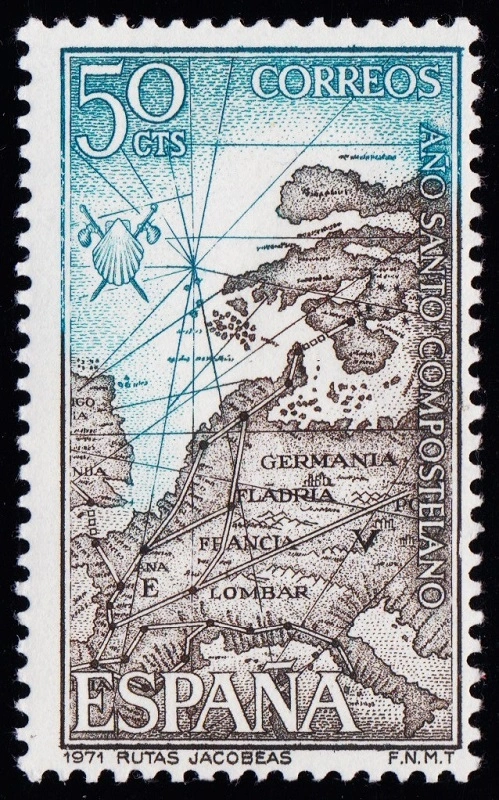
Map of the Camino de Santiago (Way of St. James)
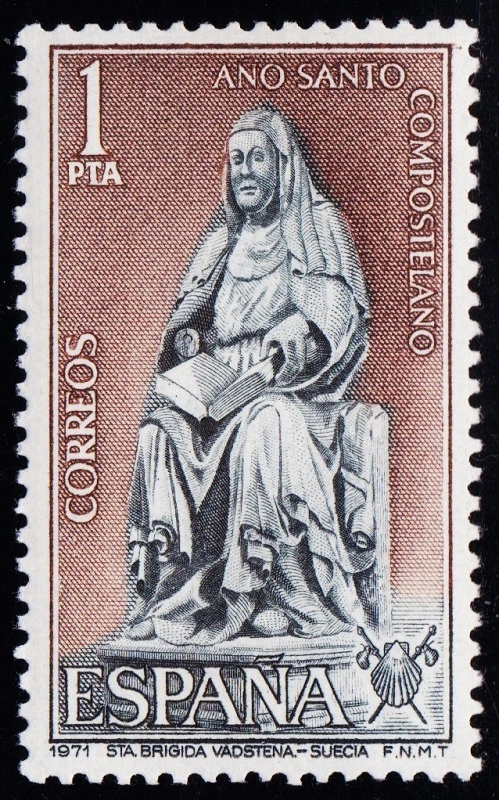
Statue of Bridget of Sweden in Vadstena Abbey. Work by sculptor Johannes Junge in 1425.
Bridget of Sweden (c. 1303 – 1373) or Saint Birgitta is a mystic and saint, and founder of the Bridgettines nuns and monks after the death of her husband of twenty years
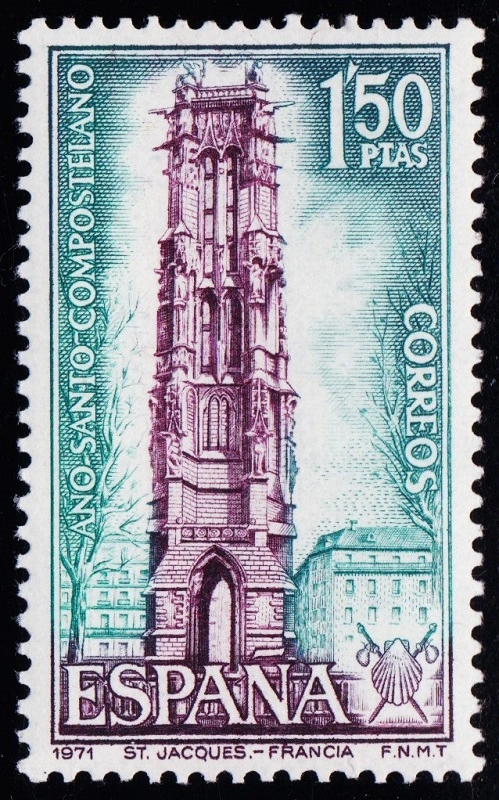
St. Jacques (the French name of St. James), France
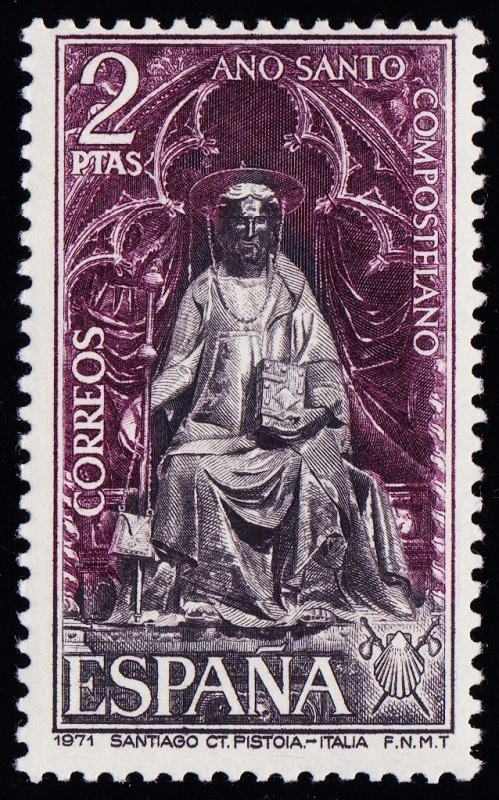
Statue of St. James, Cathedral of Pistoia, Italy
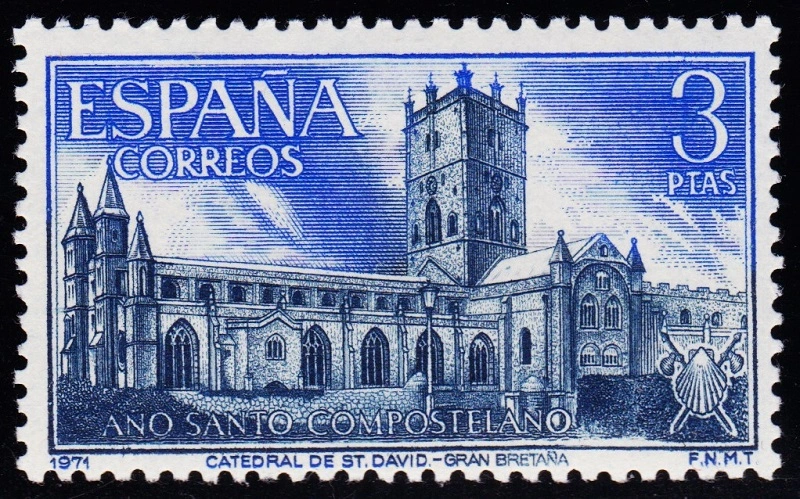
St Davids Cathedral, St Davids, county of Pembrokeshire, near the most westerly point of Wales, GB
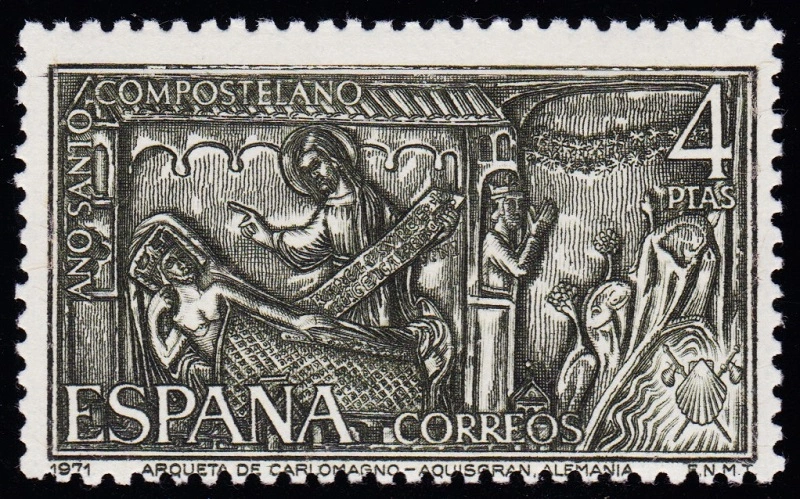
Casket of Karl the Great, Aachen Cathedral, Germany



 Replies: 309 / Views: 139,617

 Posted 08/22/2025 08:35 am