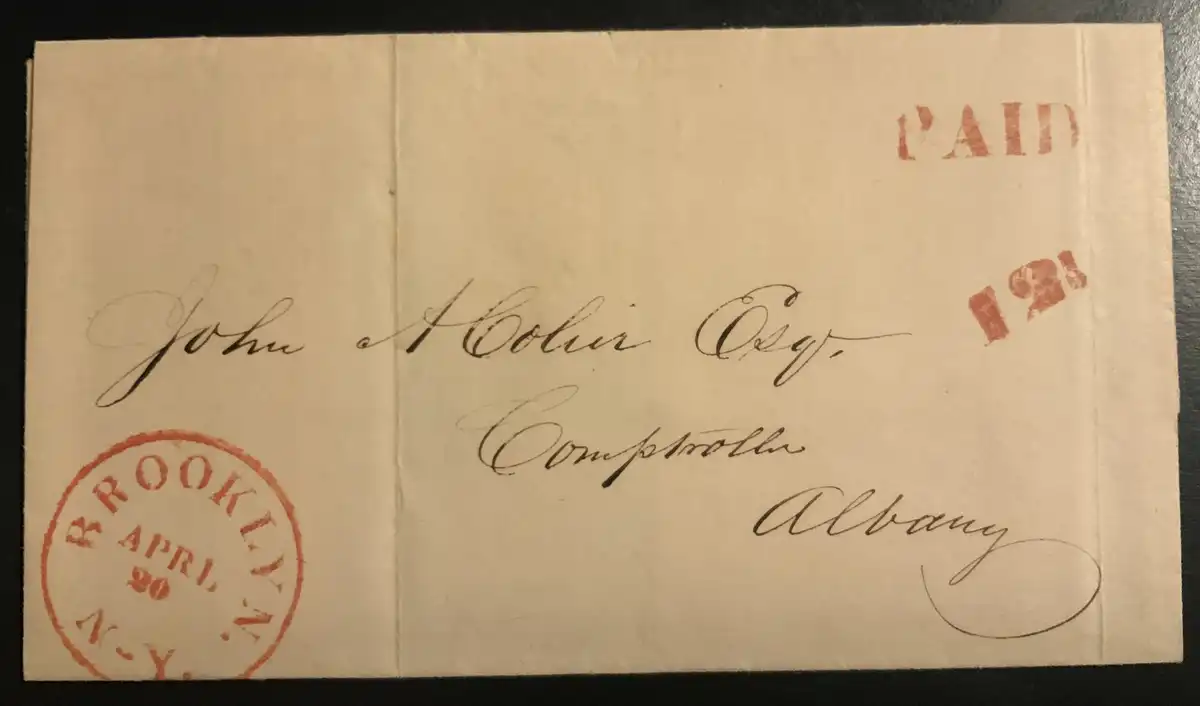
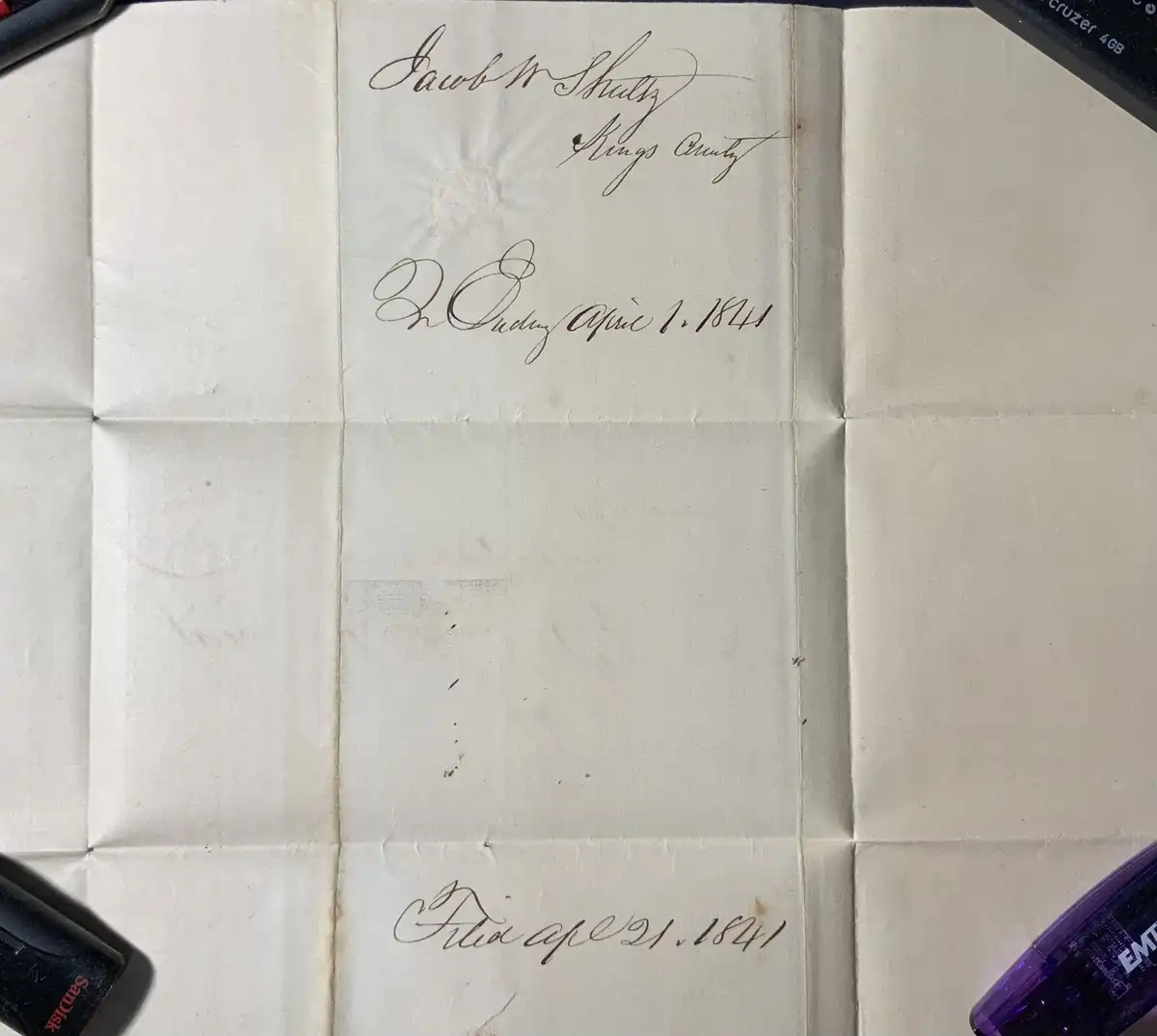
The addressee is John A. Collier who, rather than a lawyer, was Comptroller of the State of New York. "Esq." in this instance is an honorific rather than specifying a lawyer as it often does today. Collier served for only a year from January 1841 to February 1842, although the term authorized by statute was three years.
The Comptroller operated as the chief financial officer of the state government, maintaining and administering the state's financial accounts, auditing public revenues and claims, and ensuring the legal compliance of expenditures. In addition to general bookkeeping, the comptroller was specifically tasked with the stewardship, management, and investment of the state's General Fund, which had grown significantly over the preceding decades from land sales, auction duties, and federal credits. A major component of the comptroller's duties also included the authority to sell land to collect delinquent taxes owed to the state, a duty that expanded significantly after the Panic of 1837. Starting in 1840, the comptroller shared authority with the Secretary of State to oversee department printing contracts, while also serving alongside other executive officers on the state's powerful Canal Board to manage the finances and operations of New York's rapidly expanding canal network. At this point in time, and for about a decade longer, the canals were more important than the railroads. |



 Replies: 5 / Views: 174


 Posted Yesterday 6:25 pm