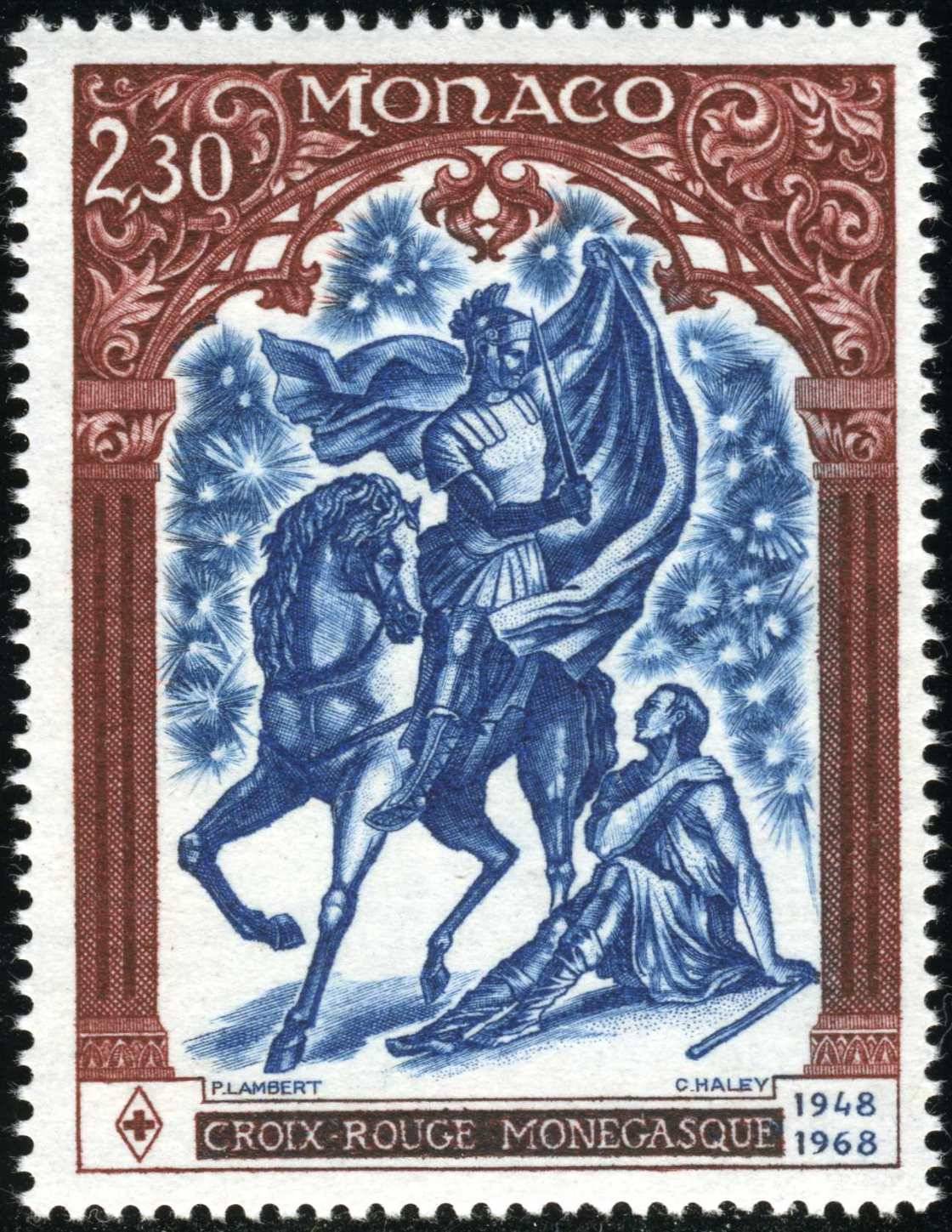
Photogravure: The design is reproduced multiply onto a glass plate, usually (but not necessarily) with a step & repeat camera.
This plate, termed the "Multipositive", is used to print a carbon, a sheet
of gelatin sensitized with dichrornate & backed with paper.
An image is not visible, but the areas more strongly exposed are proportionately hardened.
The carbon is then applied to a metal (copper) printing cylinder, & allowed to st& long enough to develop adhesion. The cylinder is washed with water, which not only removes the paper backing, but dissolves the unhardened parts
of the gelatin as well.
The cylinder is then etched with ferric chloride solution, which attacks the metal in proportion to the degree that it is not protected by hardened gelatin. Afterwards, when all
of the gelatin is removed, a printing surface with the design in recess remains; it is usually given a light chromium plating before use.
In other meaning, Photogravure is a kind
of recess printing, in that the ink is contained in recesses in the printing plate.
Unlike Line Engraved recess printing, where the recesses are produced mechanically, the photogravure plate has its recesses produced by etching. The steps involved in this process are:
1) Finalisation
of the accepted essay.
2) Normal negative photograph
of the approved design.
3) Multipositive
of 100 stamp images.
4) Carbon print
of the multipositive on thin gelatin tissue, for transfer to the printing plate.
5) Chemical etching
of the plate, producing recesses in the form
of positive images (i.e. the deeper recesses represent areas to be dark in tone).
6) The large format
stamps result from processes starting with a larger multipositive plate.
* The foregoing explanation leaves out one essential step:
Screening.
Screening is necessary to break up the large solid & continuous tone areas into small dots so that the printing surface will be able to hold ink in the proper places.
There are two types
of screening:
Grid (Mesh), &
Granular (Corn Grain).
In the "Grid" screening, the carbon is exposed to a plate bearing an image
of a grid
of fine lines to imprint the grid on the carbon before the "multipositive" is imprinted.
The eventual result is that the metal cylinder is etched with a pattern
of tiny pits, or cells, the depth
of which is in proportion to the amount
of light transmitted at each point.
The light areas
of the stamp design have shallow cells, which thus retain very little printing ink, & the dark areas have deeper cells.
If the screen is fine the cells will be small & numerous & an appearance
of continuous tone is conveyed in the printed image.
A "Mesh" (Coarse) screen can be seen easily with the naked eye, a very fine screen may be difficult to detect even with a magnifying glass. The dots that make up the image are always evenly spaced &
of the same size, except ins
ofar as they may tend to merge in the darker areas because
of ink spread.
A Corn-Grain screen consists
of irregularly scattered dots
of irregular size & shape, & is produced by dusting a surface with a powder, usually resin or bitumen.
This may be done on a glass plate, which can then be used in the same way as a grid screen, but the earlier procedure. The grains
of resin thus protected parts
of the cylinder from etching. The printing result is the same in each case: colored areas
of the design have a mottled, granular appearance, which if it is fine gives s
oftness to the image.
The Half-Tone (Coarse) process also makes use
of a screen to break up the image into a mass
of dots. However, the screen is the reverse
of the grid screen & consists
of a pattern
of square dots. Instead
of cells, the printing surface consists
of dots that are high (i.e. at surface level) in the case
of half-tone relief printing, & essentially so in the case
of lithography.
The dots vary in size with the intensity
of the light coming through the screen, dark areas
of the stamp design having larger dots (which may even run together).
The result in the printed stamp is a simulation
of continuous tone, as with "Photogravure", but the nature
of the dots is different, & the effect not so delicate, for the dots all receive the same amount
of inking. Half-tone may be used in the preparation
of plates for relief printing, lithography, &
offset-lithography.
Hope I could be
of a little help

Cheers





 Posted 07/07/2011 7:33 pm