|
This page may contain links that result in small commissions to keep this free site up and running.

Welcome Guest! Registering and/or logging in will remove the anchor (bottom) ads. It's Free!
To participate in the forum you must log in or register.
| Author |
 Replies: 274 / Views: 44,531 Replies: 274 / Views: 44,531 |
|
|
|
Pillar Of The Community
Netherlands
6647 Posts |
|
|
Talavera de la Reina is a town 110 kilometres southwest of Madrid in the Province of Toledo. Lying on the motorway to Extremadura, many busses connect Madrid's main bus terminals with this town. Already in 181 a.d. the town is documented as Caesarobriga. The Arabs renamed the town Talabira. In 1328, King Alfonso XI of Castile gave the town as a wedding present to his bride, María of Portugal, adding "de la Reina" to the towns name. The town preserves much of its mediaeval wall that has Roman foundations, Arab curtain walls, and Christian additions. The indenture of a Roman sandal in the wall's Roman foundation can be observed at the visitor centre. The town preserves several Mudéjar (a terminology used for a Muslim remaining in the Iberian peninsula after the Christian reconquest) churches, of which the most important is the Colegiate Church of Santa María la Mayor. 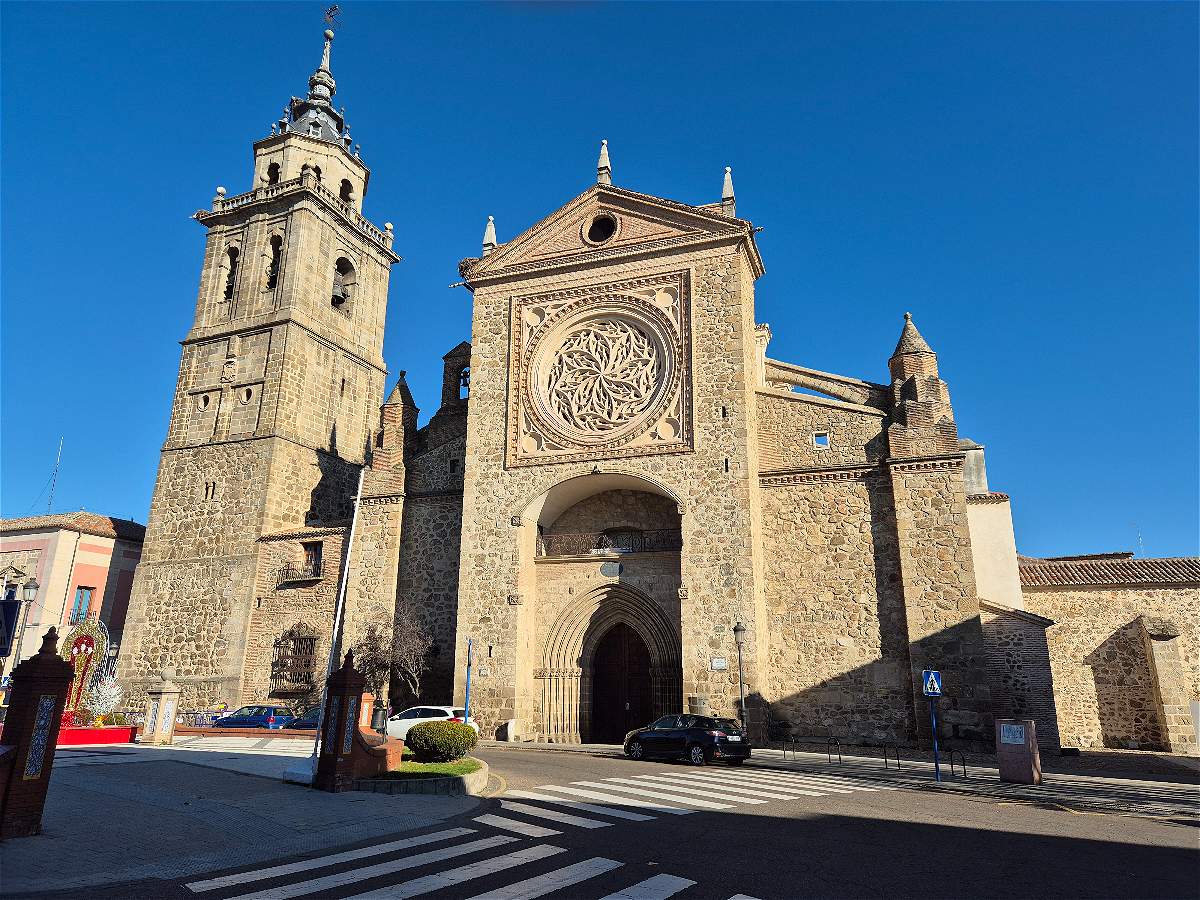 The town, also, is famous for its ceramics. Decorated ceramic tiles made in Talavera de la Reina can be found al around Spain. A former convent houses the local ceramics museum. 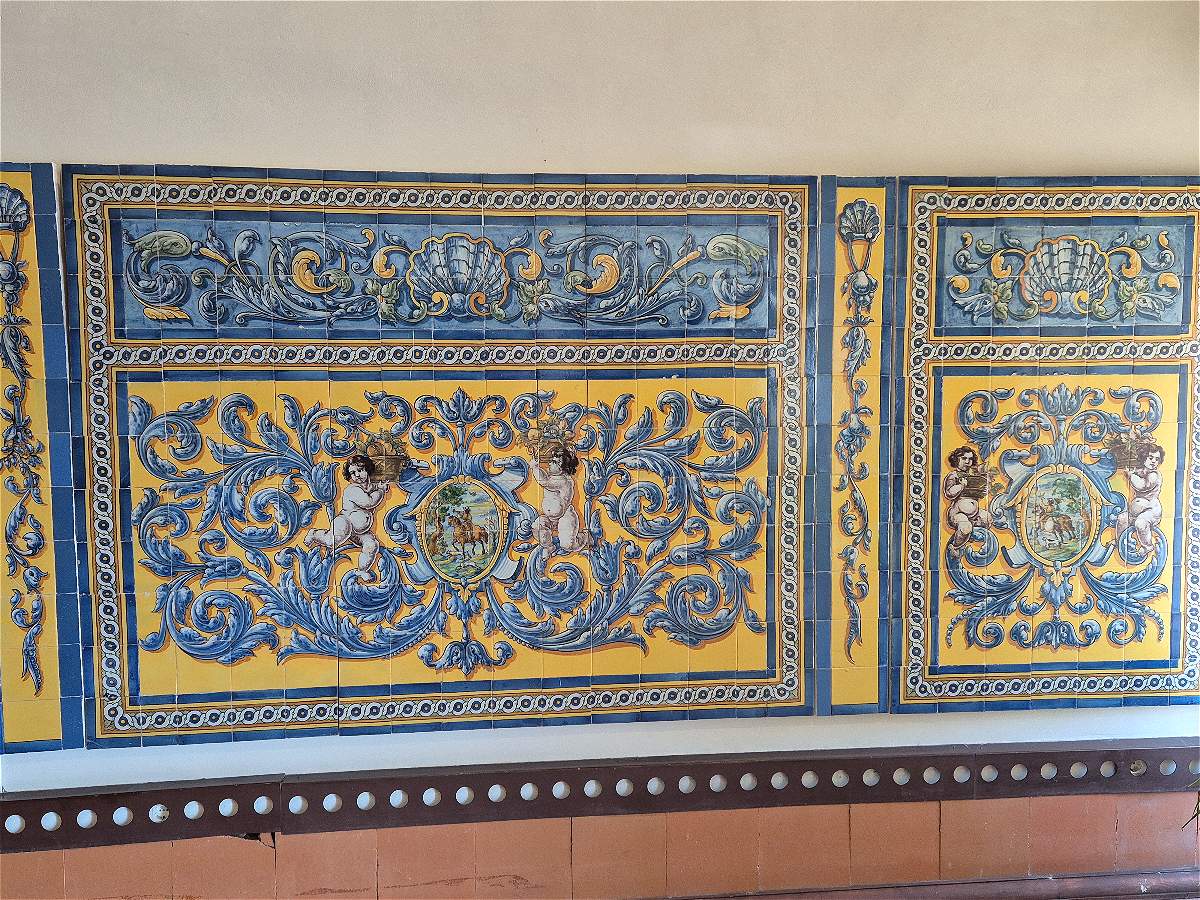 The post office can be found in the town centre, facing the mediaeval wall of Roman origin. Circa 100 metres from the post office is the vistor centre that allows a climb up a small section of the wall, a nice view of the Mudéjar church next to it, and a look at the Roman sandal indenture. 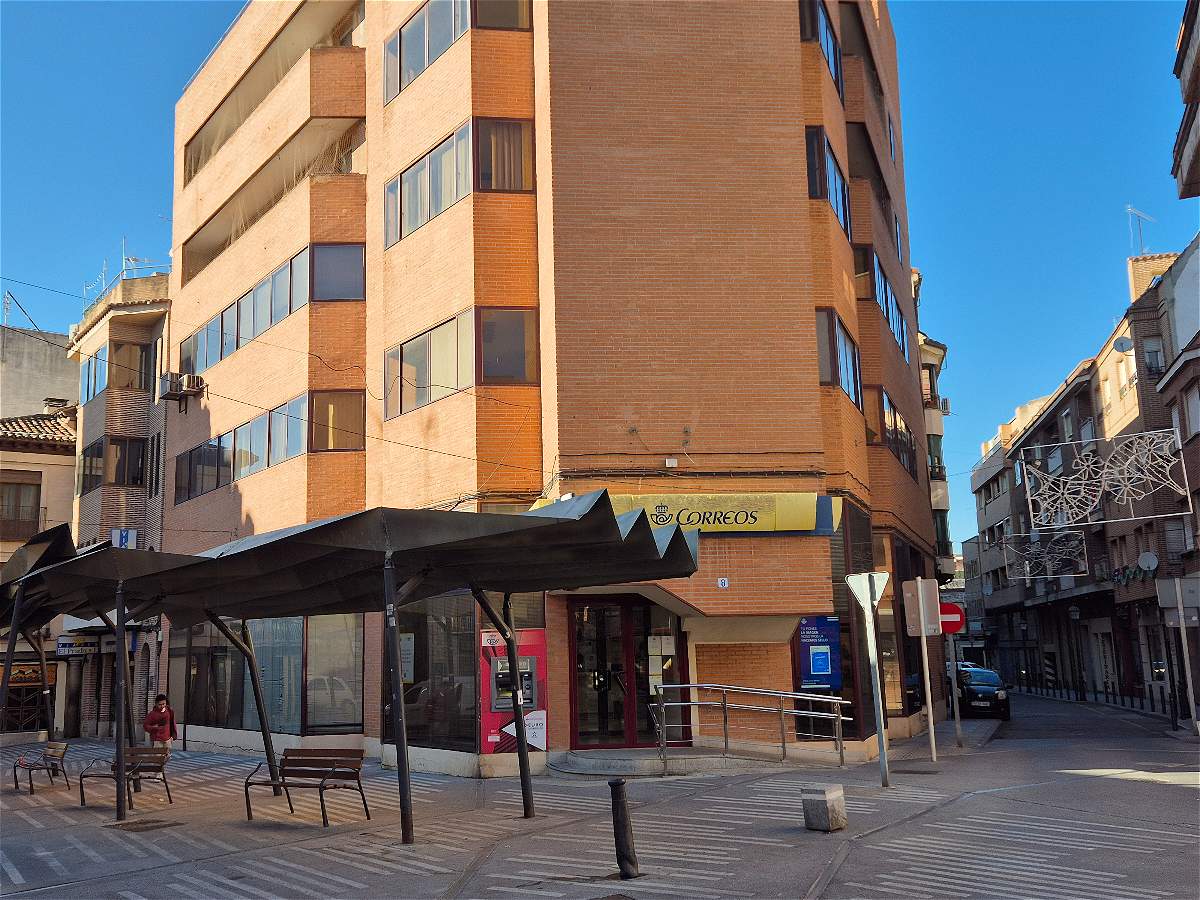 On a personal note: I arrived by bus from Madrid. I checked in to my hotel and made my way to the tourist office. It was closed for lunch. Across the road is the most impressive section of the old wall. After reading the bulletin boards pointing out the Roman (including re-used grave stones), Arab, and Christian elements, taking pictures, following the wall, and stumbling upon the collegiate church, I noticed it had long gone past 3 o'clock. I found a café near the tourist bureau that served a very decent three-course lunch. I chose wine to accompany the meal and was served a whole bottle of D.O. Valdepeñas wine. Doing my best to empty two-thirds of the bottle, I made my way to the bar to pay for this feast. Much to my surprise, it cost just € 12. And no, I am not talking about the 1980s, this was Boxing Day 2024. 76/4 |
Send note to Staff 
|
| Edited by NSK - 07/04/2025 12:24 pm |
|
|
Pillar Of The Community
United Kingdom
631 Posts |
|
|
NSK, Geoff, you're right, Shrewsbury is beautiful. My daughter has just bought a house there, we had the weekend there only last month. Didn't buy anything stamp-related though!
Regards
DavidR |
|
Send note to Staff
|
|
|
Pillar Of The Community
Netherlands
6647 Posts |
|
|
Périgeux is a city in the Nouvelle Aquitaine, situated circa 160 kilometres east of Bordeaux. A regional TER train connects the city with the Saint Jean Station in Bordeaux. Périgeux was the capital of the Gallic tribes called Petrocorii from which it takes its current name. The city is known for its "foie gras" and truffle, and has quite a few restaurants with Michelin Stars. Yet, from personal experience they are unable to serve a steak that is not so raw that it moos when you put a fork in it; even after sending it back to better be grilled. But hey, this is a country that makes sauce from Smurfs.  The main sight ofthe mediaeval old town is its twelfth-century cathedral of Saint Front that is part of the UNESCO World Heritage listing of French Pilgrimage Routes to Santiago de Compostela. The cathedral took the Basilica of Saint Mark in Venice as an example. 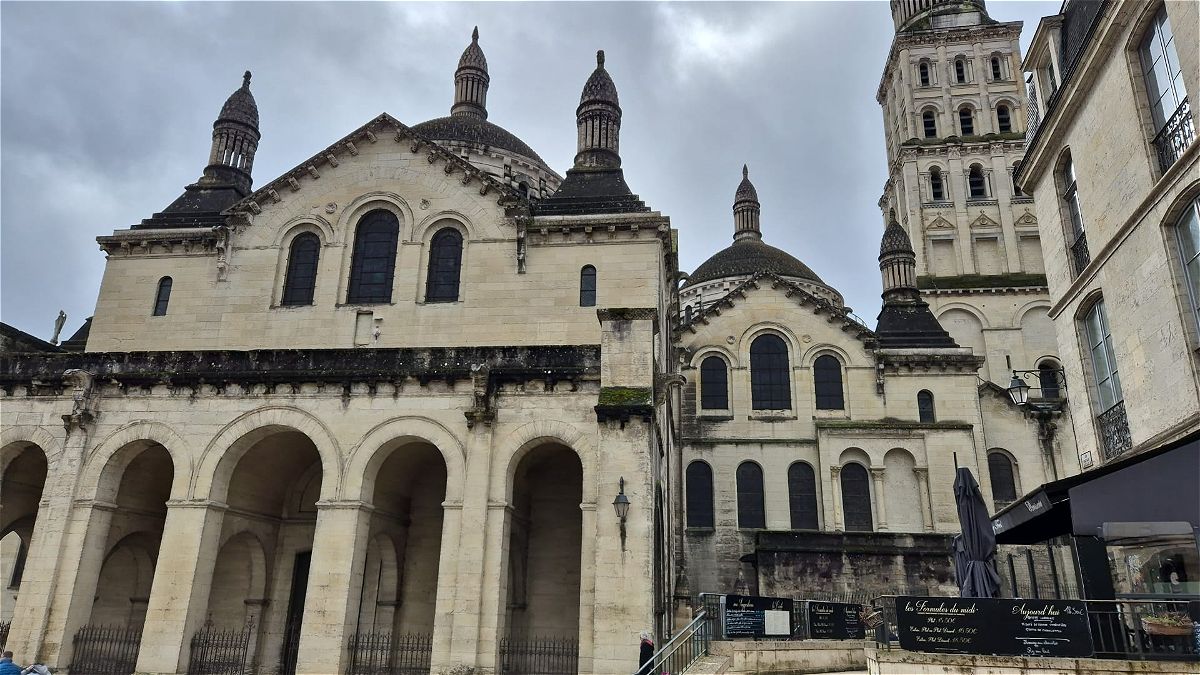 Some 1,500 metres from the old town is the neighbourhood of Vésone. After the Roman invasion, the Petrocorii settled in this area known by its Roman name of Vessuna. The remains of a Gallo-Roman temple from circa the end of the first century a.C. and a Roman villa that was extended and remodelled several times during the first to third centuries can be found here. The latter, now, is a museum that offers an entertaining quest to its younger visitors. 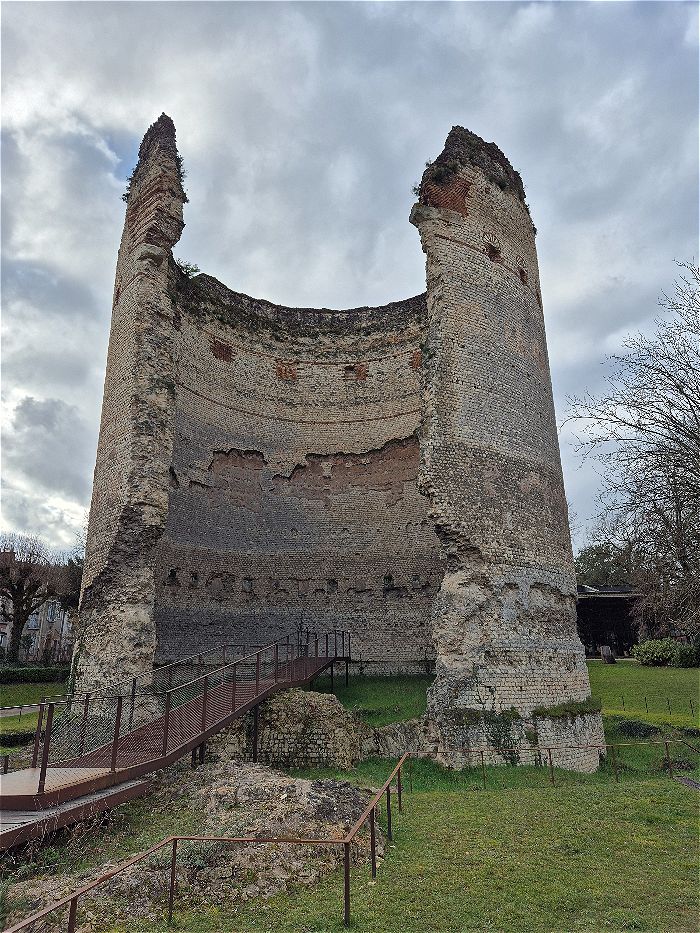 The post office stands on the edge of the old town. 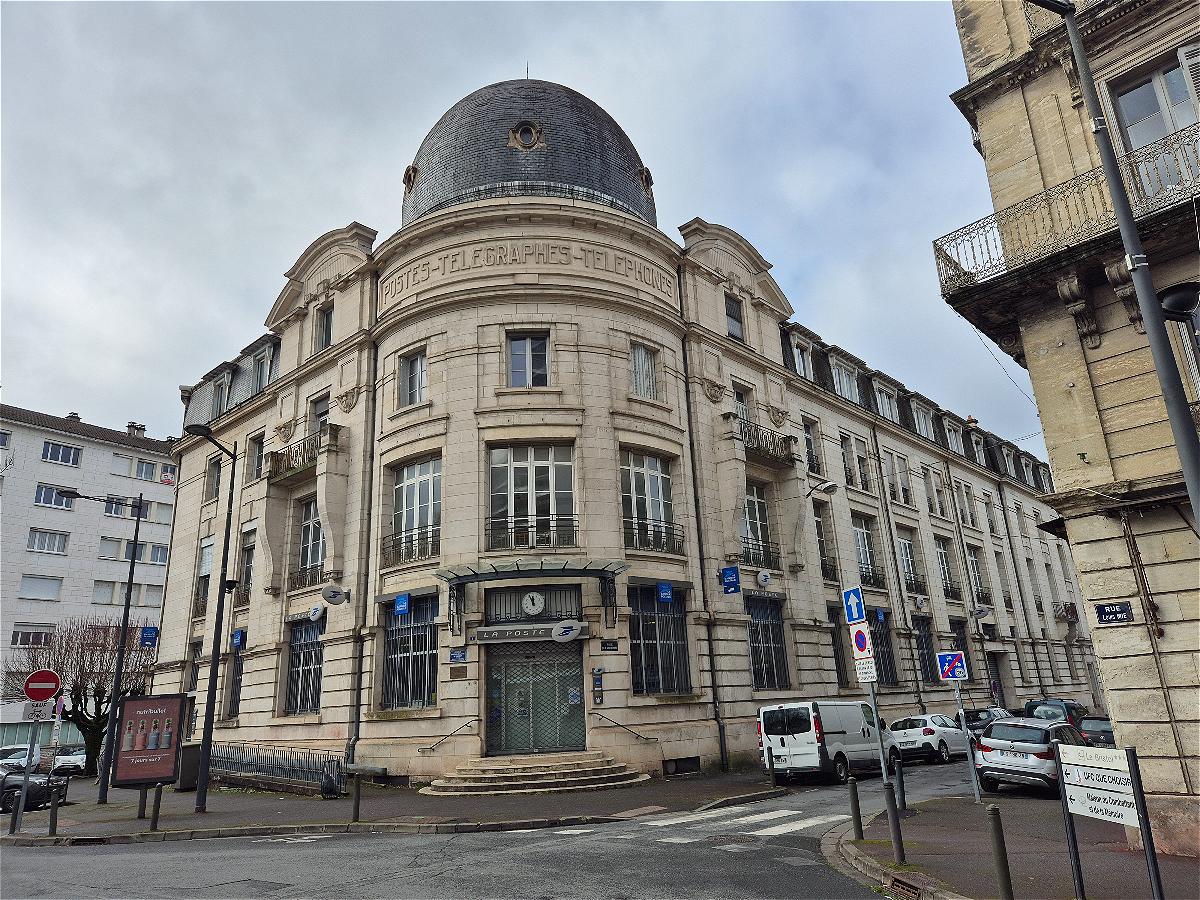 77/4 |
|
Send note to Staff
|
|
|
Pillar Of The Community
Netherlands
6647 Posts |
|
|
Plzen,  might qualify as the most overrated destination in Czechia if not for being the birthplace of the world's most popular type of beer. 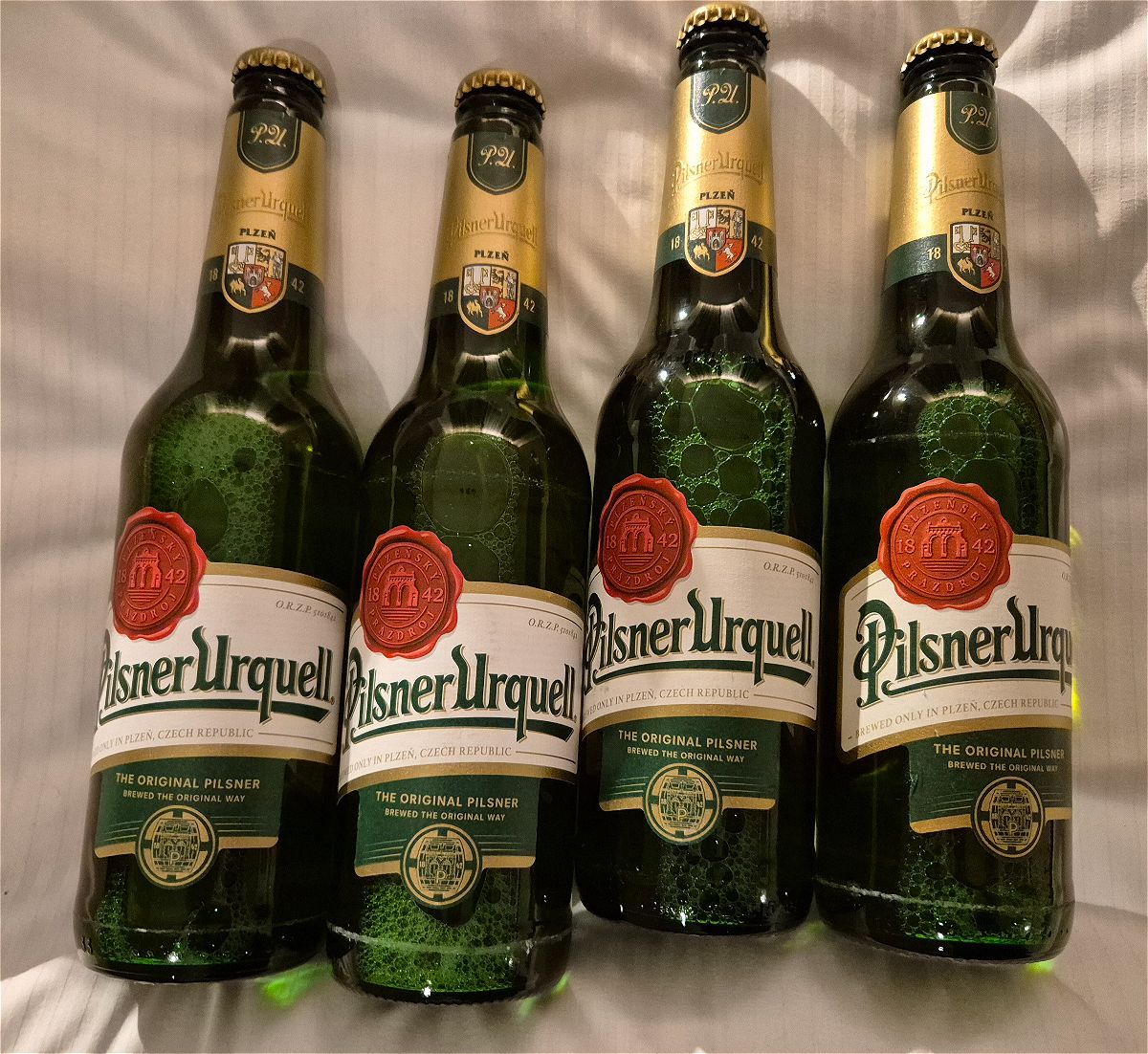 The city is circa 80 kilometres west of Prague. Regular regional express and intercity trains will take you from Praha Hlavni Nadrazi to Plzen Hlavni Nadrazi in under 1:30 hour. The circa one kilometre walk from the station to the centre of the old-town will take you past the Plzensky Prazdroj brewery that stands just outside the old town. The old town is not much more than a square with a cathedral, a Renaissance town hall and, mostly, houses of Gothic origine with facades in different architectural styles, and a few streets beyond the square. It is popular with stag and hen parties, that come here on low-cost flights for the cheap beer. Fortunately, during the winter, the old town is not crammed with drunks throwing up in the streets. 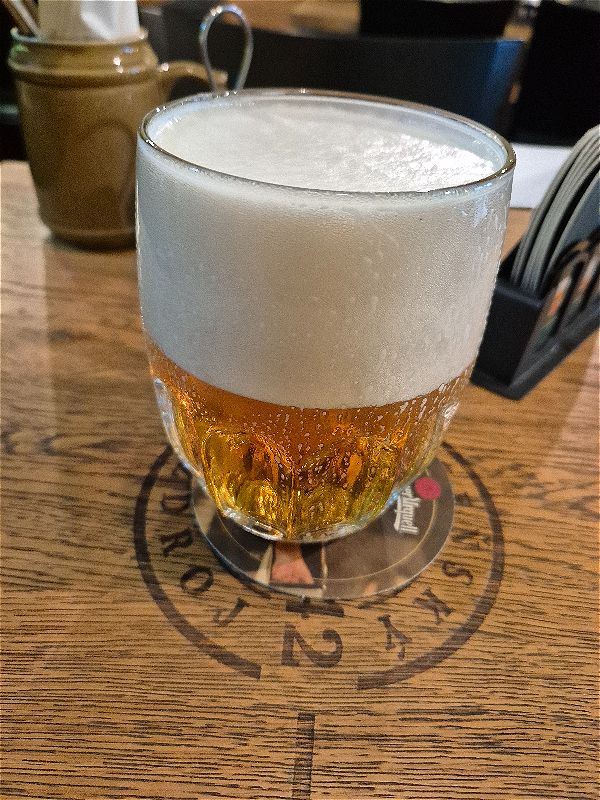 Among the attractions is the beer museum that I found somewhat disappointing. You, also, can visit the mediaeval underground galleries where people sheltered during sieges of the town, stored foods and beer. The German word for storing, "lager," lends its name to the beer class that includes Pilsner. There are German and English tours of the galleries. I, personally, found this the most interesting and educational activity in the city. Although the history of beer-brewing in the town goes back to the Middle Ages, what is known as Pilsner dates to the second half of the nineteenth century. Tickets for the museum and the underground tour can be bought at the shared ticket office. There is a discount on combined tickets and each comes with a voucher for a free (small) glass of beer that can be used at a number of restaurants in the old town, including the (recommended) eatery adjoining the museum. On the edge of the old town, about two hundred metres from the historic town hall stands the main post office. 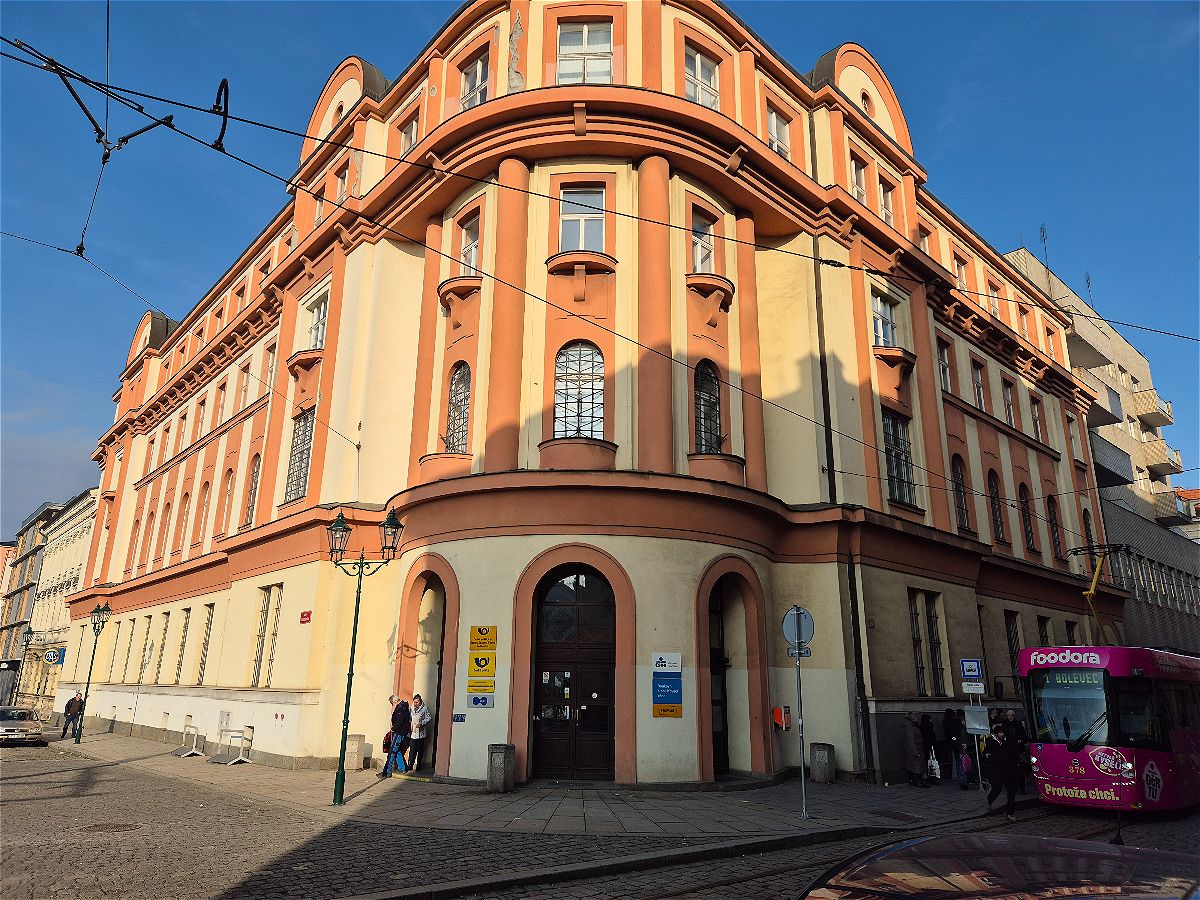 I visited the post office to buy stamps for the postcards I was sending friends. In the main hall, there are stamps on display. There, also, is a philatelic counter that no one knows when it opens. It, certainly, did not do so when I was there. 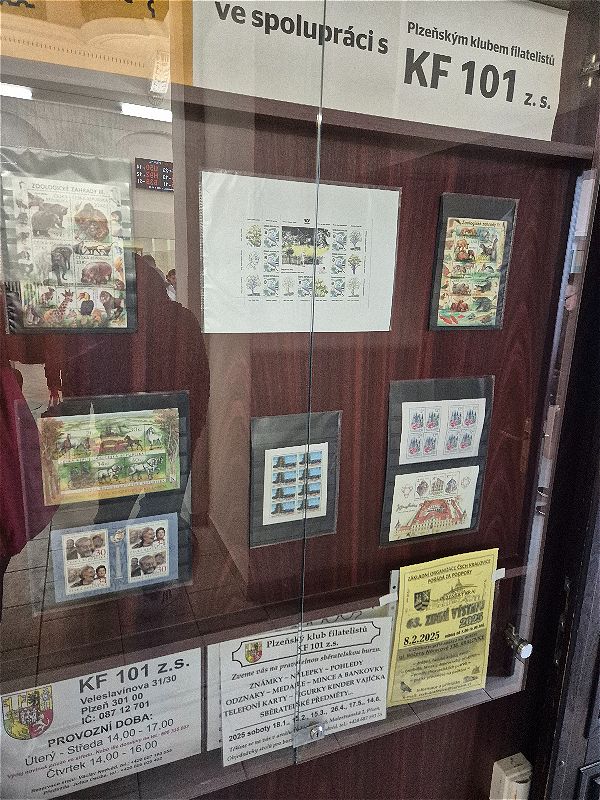 When I asked for some stamps for a colleague's collection, panic struck. I was sent from one counter to the other and asked whether I would speak German. But even German was too difficult. So, the clerk took me to the first floor, pushed a doorbell, after which I could enter an office with yet another counter. This did not solve the language barrier, but I did walk out of the post office with a nice selection of stamps for my postcards and for my colleague. 78/4 |
|
Send note to Staff
|
| Edited by NSK - 07/05/2025 07:11 am |
|
|
Pillar Of The Community
Netherlands
6647 Posts |
|
|
Skofja Loka  is a small mediaeval town in the Gorenjska Region of Slovenia. It is circa 20 kilometres from Ljubljana Airport. Either take the airport bus to the main bus station in Ljubljana or (less frequent) Kranj. Change for a highly frequent bus or frequent train to Skoja Loka. When travelling by train, there is a frequent bus (not on Sundays) that takes you from the train station, almost three kilometres from the town to its bus station. The town's name "Skofja Loka," derives from the German "Bi schoflack." During the World War II occupation, it was known as Laak an der Zaaier. The town was founded by Prince-Bishop Abraham of Freising - yes, the town where Munich Airport is -, who received the land from German-Roman Emperor Otto II, on 30 June 973. The old town preserves its mediaeval character with many old houses and a parish church of mediaeval origin. 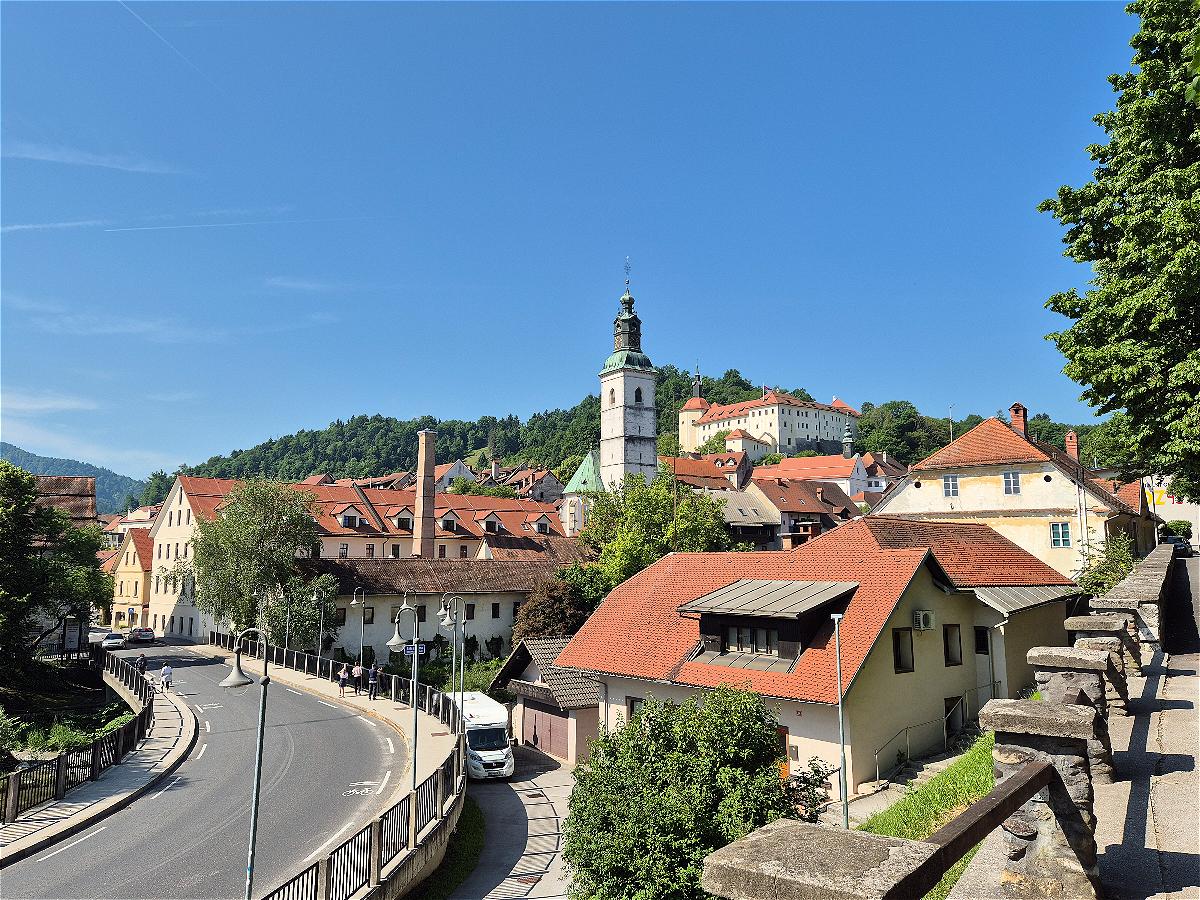 On the hill above the town stands the castle of the Bishops of Freising, It was rebuilt, after an earthquake had severely damaged the original castle form 1202, in 1511. 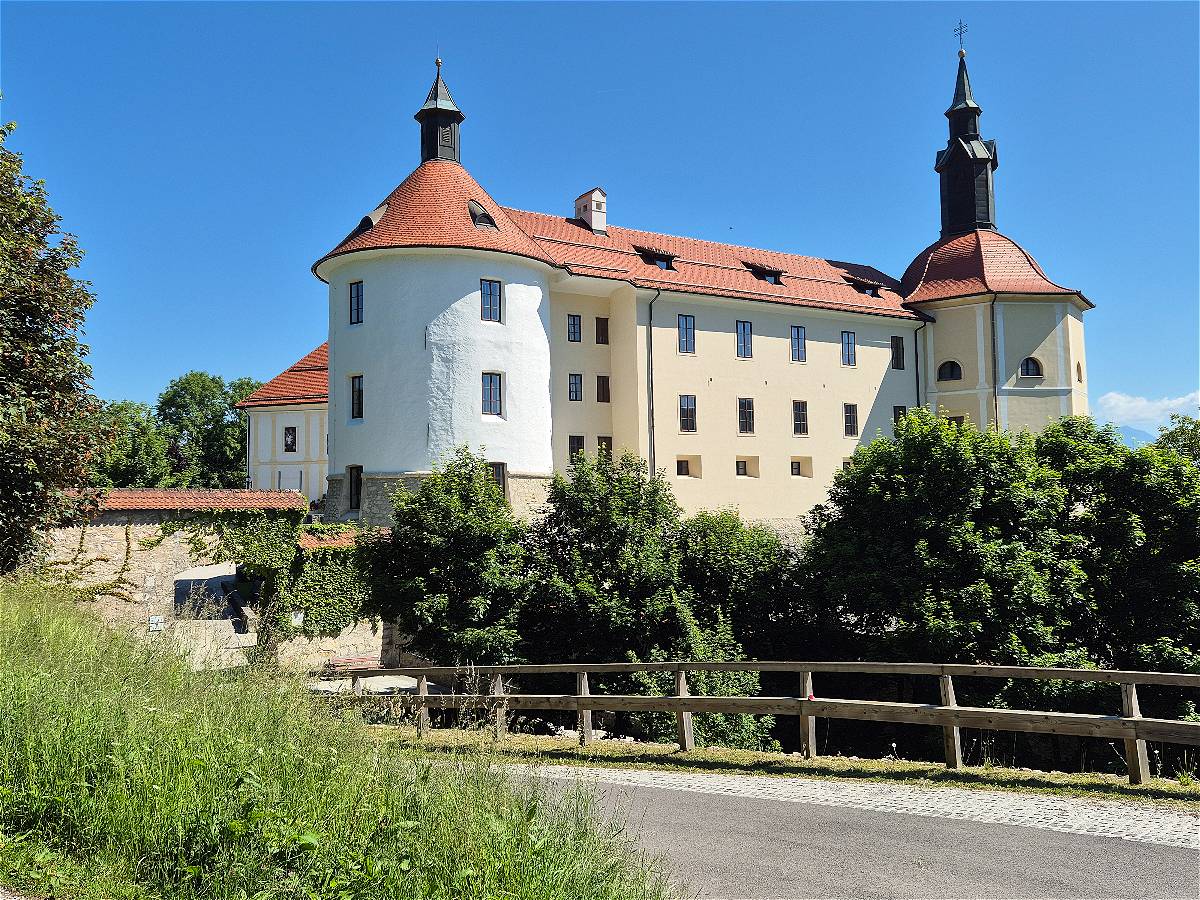 In the fourteenth century, Prince-Bishop Leopold of Freising ordered the construction of a bridge over the Sora Brook that flows through the town. When he crossed it, once it was finished, he fell of his horse and drowned in the Brook. In 1888, the Capuchin Bridge named for the nearby Capuchin Monastery that is famous for its library got a parapet with a statue of Saint John of Nepomuk, patron of bridges. The post office stands next to the bus station that is on the bank of the Sora Brook opposite from the old town. 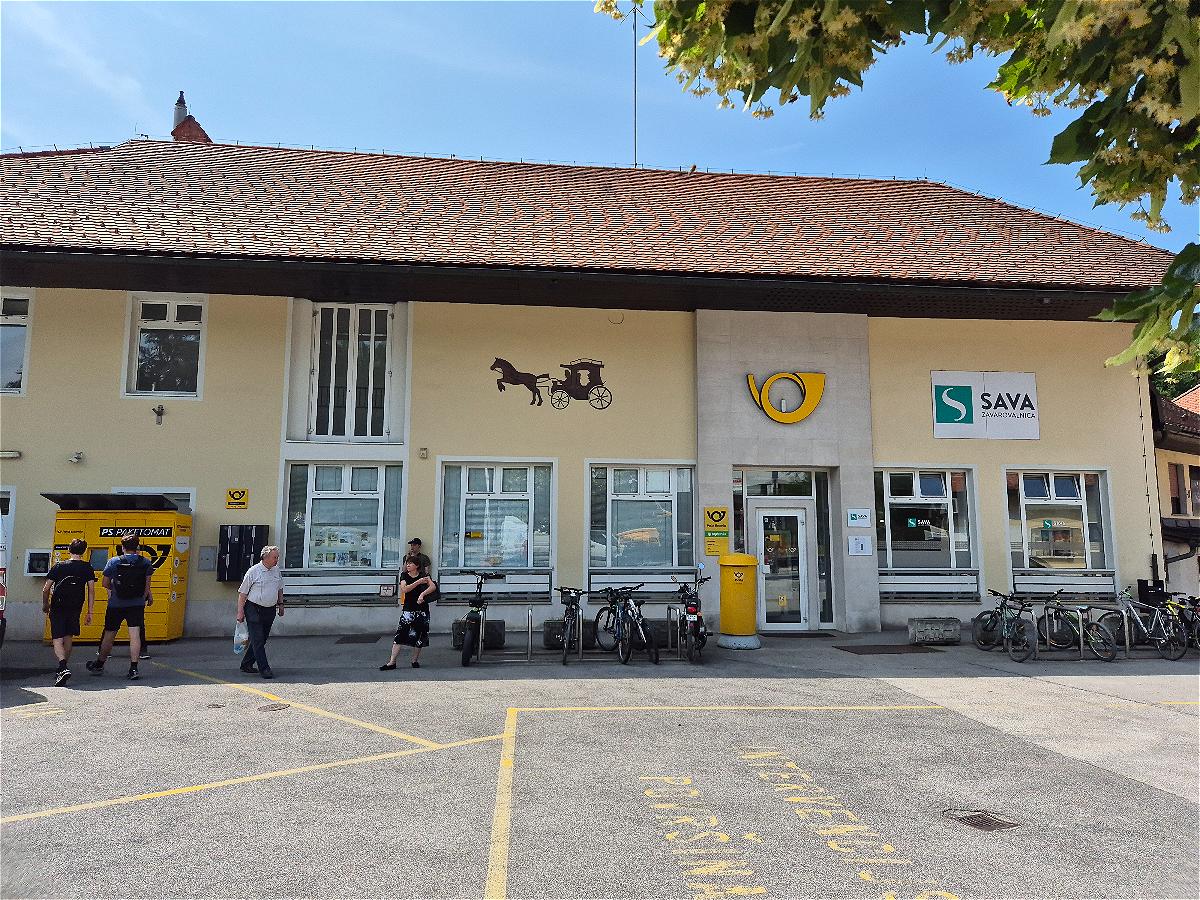 79/4 |
|
Send note to Staff
|
|
|
Pillar Of The Community
Netherlands
6647 Posts |
|
|
Radovljica, Radmannsdorf in German, is a small town with a mediaeval centre in the Gorenjska region. It sits in a valley at six kilometres from Lake Bled (very frequent busses will take you there from the bus station). The bus station is located a couple hundred metres from the old town from which it is separated by a park. There are frequent busses to the central bus station in Ljubljana and the bus stations in Kranj (connected to the airport) and Skofja Loka. Some will call in those towns on their way to Ljubljana. A 200-metres' steep climb will take you from the train station at the foot of the old town, to the old town itself. All station service trains from Ljubljana's main station terminate at Jesenice near the Austrian border and call at Skofja Loka, Kranj and Radovljica, taking about an hour to arrive at the latter stop. 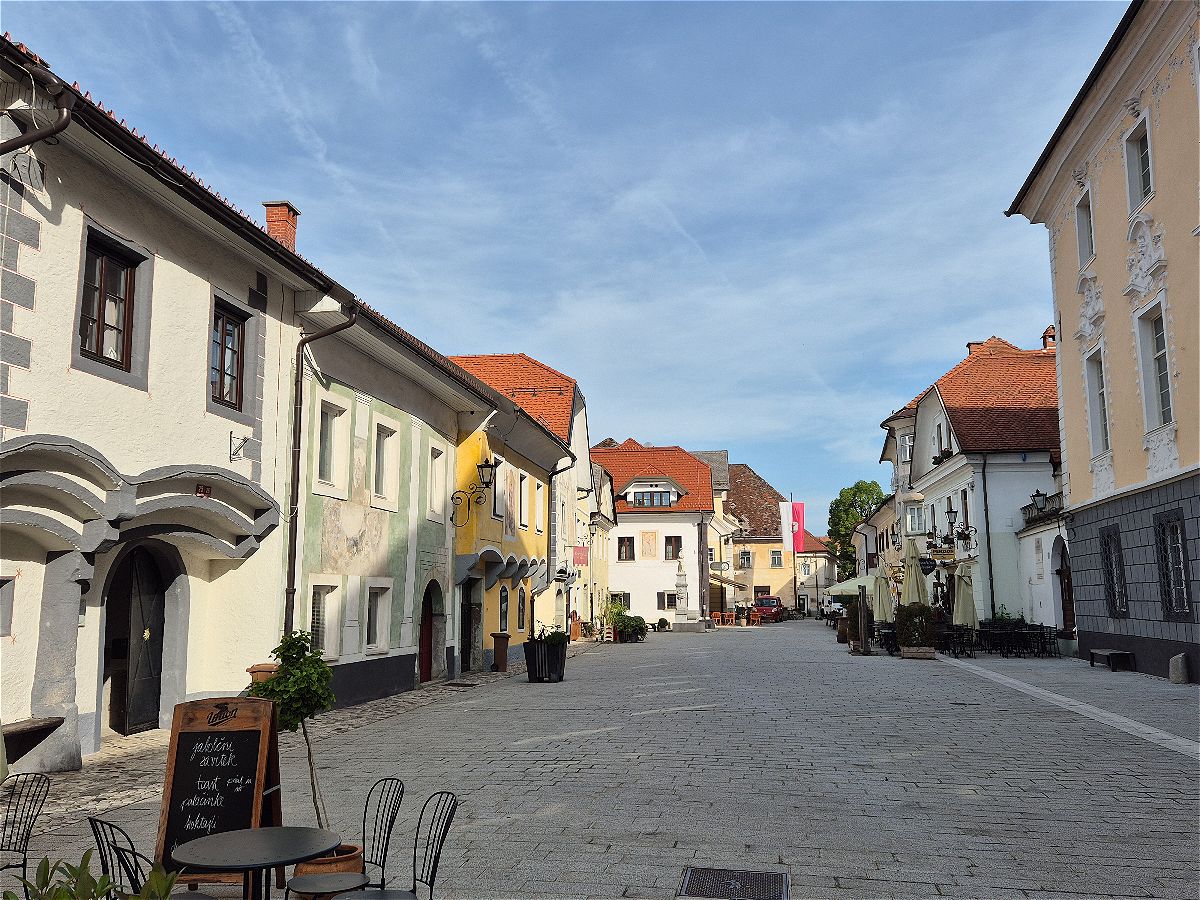 The old town is just a single square lined with historic houses with Gothic, Renaissance (sgraffito), and Baroque facades. At one end (behind me in above picture) stands the Gothic parish church. At the far end is a small square on which stands a chocolate shop that produces its own chocolate. The town organises an annual chocolate fair. Also on the main square stands the chateau of the Counts of Ortenburg, dating to the Middle Ages. Its present appearance (part is visible on the righthand side of above picture) is neo-Classical. It houses a beekeeping museum. Radovljica is considered a beekeeping capital of Slovenia. The museum informs about the different types of bees and focuses on honeybees. It explains how bees tell each other where the find the flowers for their honey. It also exhibits traditional wooden hives with hand-painted panels. Also, it tells about the local contribution to honey production. Unfortunately, the honey that is on sale comes from a factory and not from local beekeepers. I found one vegetable stall near the bus station that sells honey produced by beekeepers. Behind the houses on the lefthand side is a vantage point with a schematic explanation of the views. There are benches on which you can sit and look out over the valley. There is an excellent view of the highest peak of the Slovenian Alps to the northeast (4 June 2025). At 2,864 metres, Mount Triglav is the highest mountain in Slovenia and the Julian Alps. It is the national symbol of Slovenia and depicted on its 50 eurocent coins. It, also, appears in the arms of the country that are part of its flag. To the right of Mount Triglav rises Mount Rz (2,538 metres). 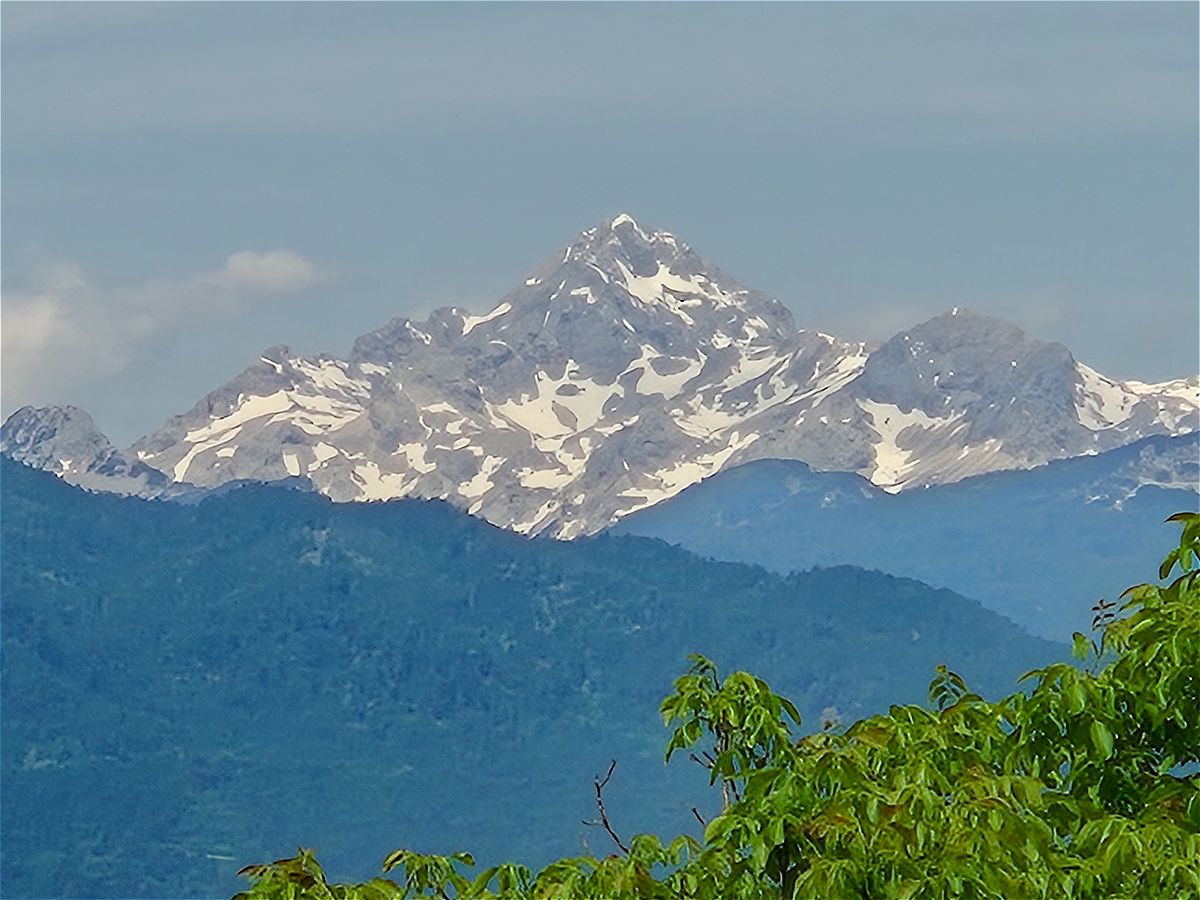 The post office stands next to the bus station. 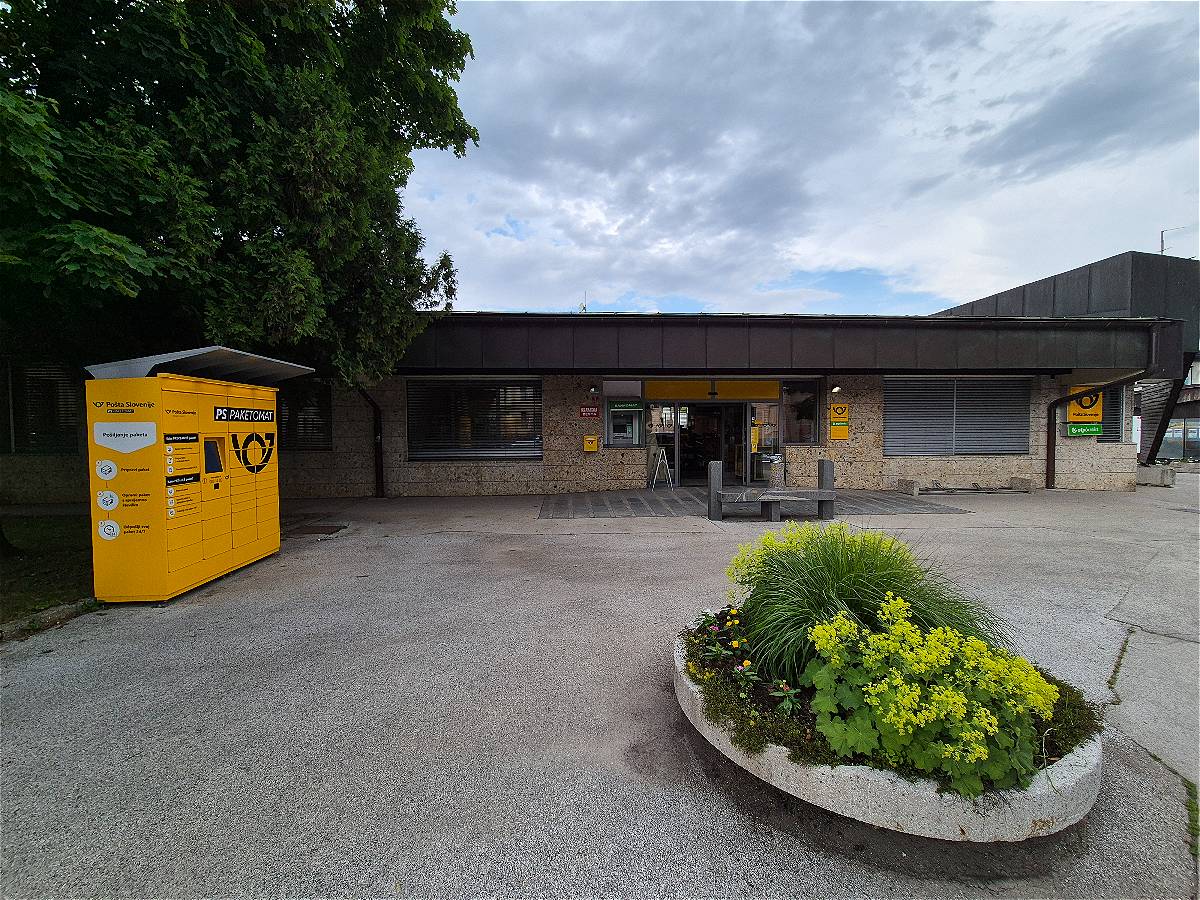 80/4 |
|
Send note to Staff
|
| Edited by NSK - 07/06/2025 08:35 am |
|
|
Pillar Of The Community
Netherlands
6647 Posts |
|
|
Kamnik is circa 20 kilometres east of Ljubljana's airport, at the feet of the Kamnik Alps. Hourly trains from Ljubljana's main station take about 45 minutes to the three stations in Kamnik. More frequent busses from the main bus station in Ljubljana, that is in front of the train station, take up to an hour to the bus station in Kamnik that is about 200 metres from the central square in the old town. 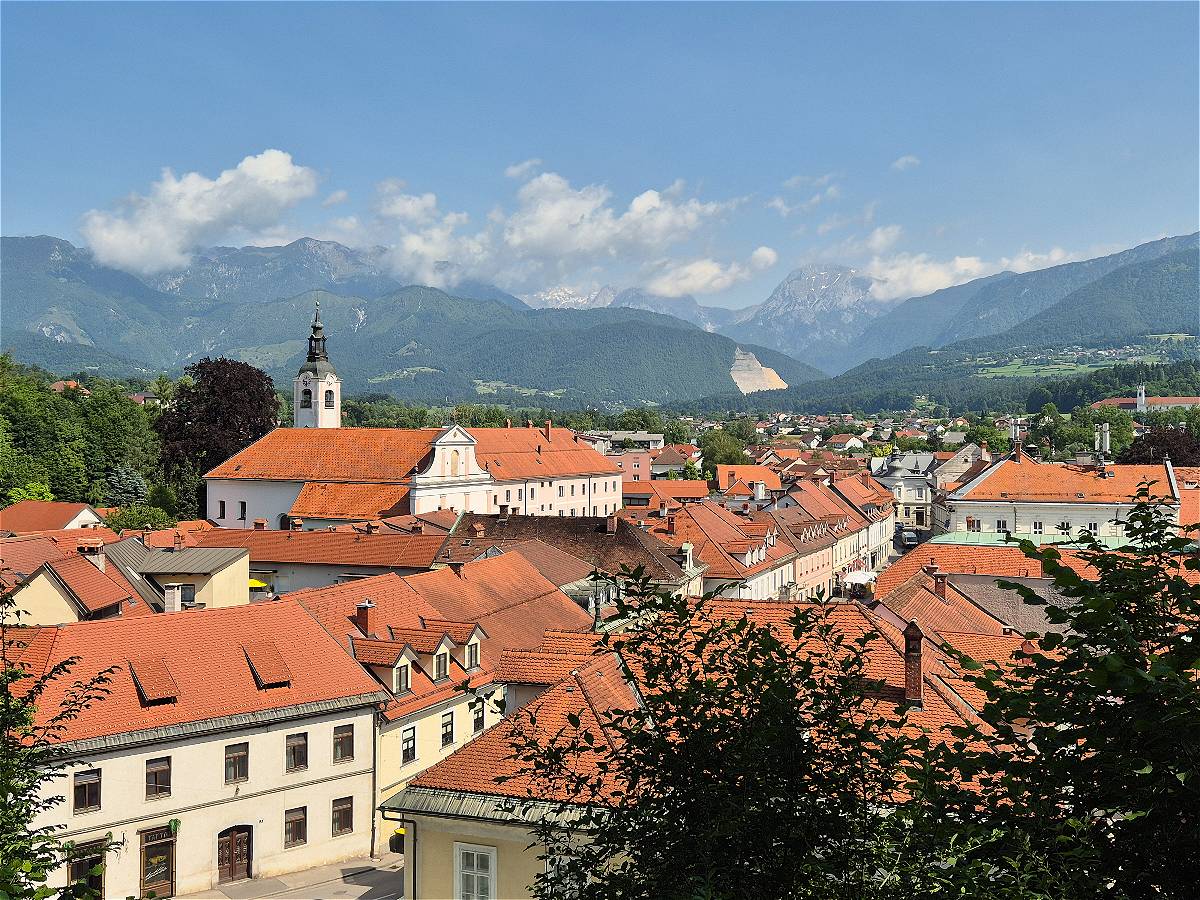 The oldest reference to Kamnik dates to the eleventh century and it was documented in 1229. The town that was on the trade route between Ljubljana and Celje is one of the oldest in Slovenia. The old town is small and easily visited on a daytrip from Ljubljana. In the Middle Ages, the town was a possession of the Bavarian Counts of Andechs that were among the highest nobility of the Holy German-Roman Empire. They built two castles that overlooked the town. One has all but disappeared. Above the central square are the remains of a second castle (above picture was taken from the castle ruins). On a hill above the former suburb of Sutna with its historic main street arises Zaprice Castle (Steinbüchel). The village of Zaprice became part of Kamnik in 1934. The present castle was built in Renaissance style in the sixteenth century and remodelled in Baroque style. Archaeological research in the grounds of the castle has uncovered traces of an earlier Roman building. The houses a local history museum. In a field next to the castle are several historic timber sheds and outhouses. 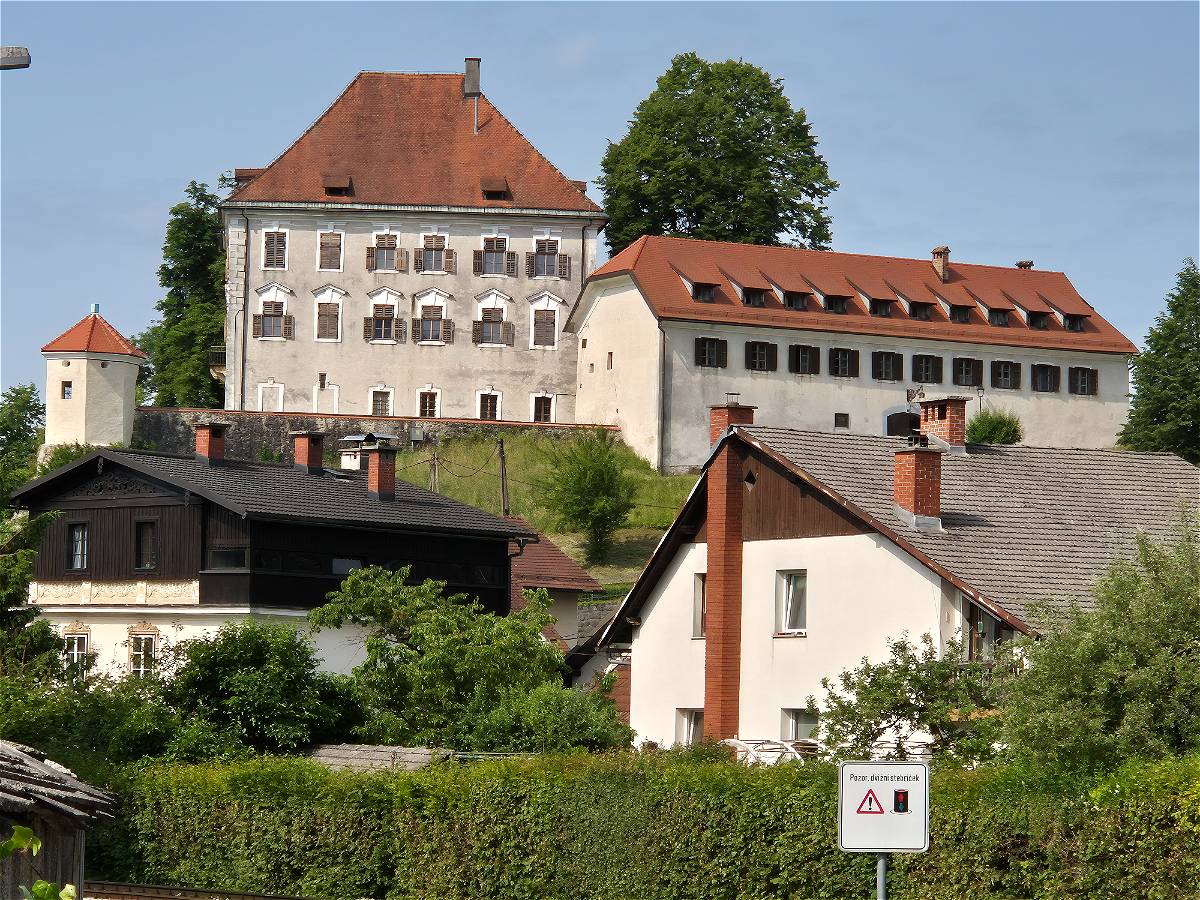 The main post office stands on a corner of the main square, opposite the local post office and on the only road that runs through the old town. 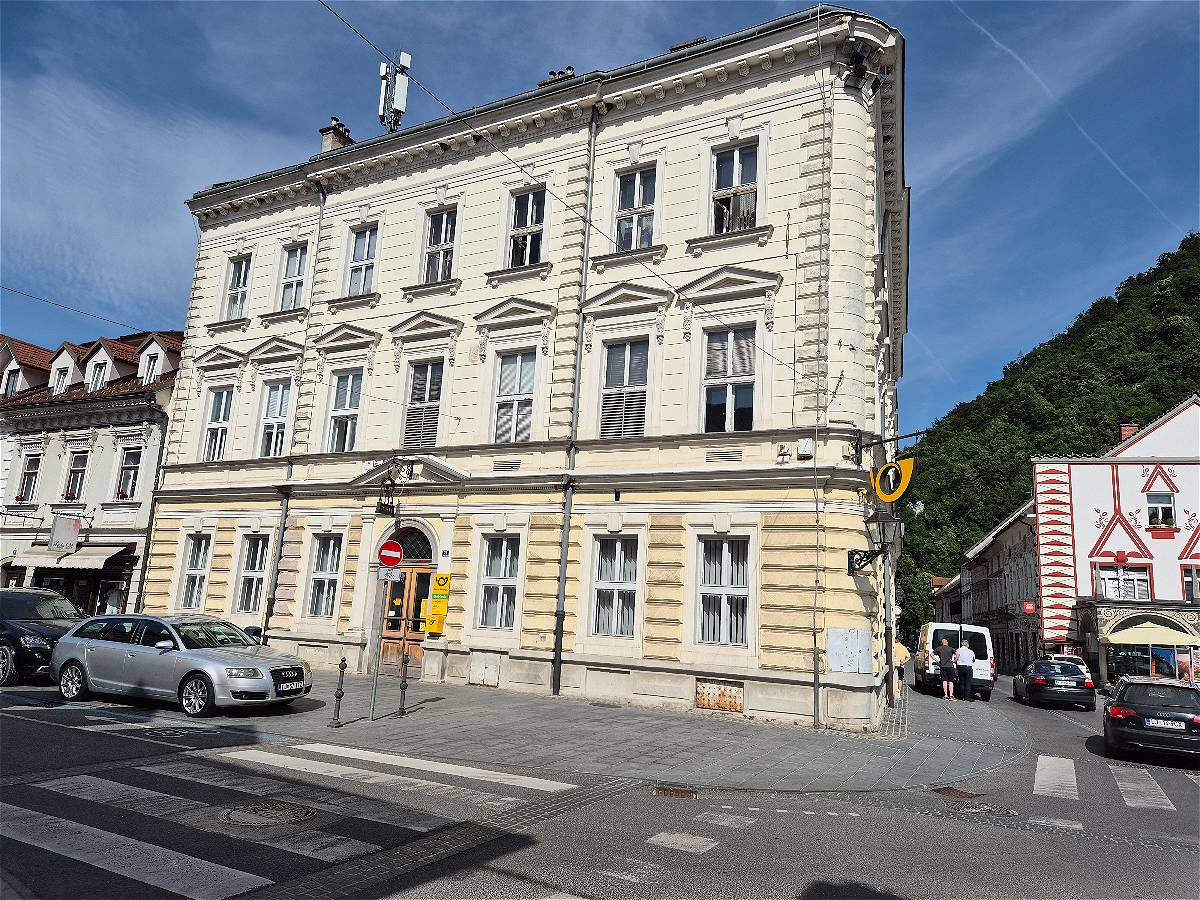 81/4 |
|
Send note to Staff
|
| Edited by NSK - 07/11/2025 02:57 am |
|
|
Valued Member
United Kingdom
391 Posts |
|
|
And now the banal… 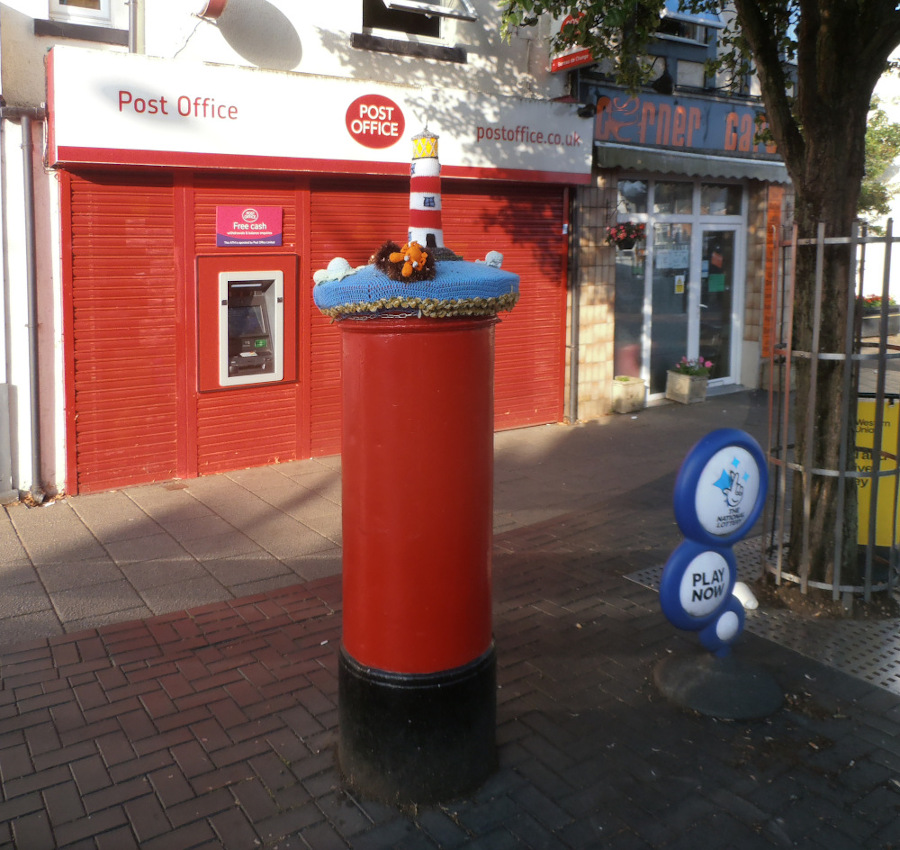 Netherfield, Nottingham. Housing built for railway workers at the nearby Colwick marshalling yard. The yard was constructed to handle coal traffic from the area's mines. It opened in 1872 and closed in 1970. It took about two years to extract all the spilt coal from the area. The lighthouse is crocheted from wool. |
|
Send note to Staff
|
|
|
Pillar Of The Community
United States
2948 Posts |
|
|
I can't recall if I've shared this already. This is in the Finger Lakes region of Western New York State. 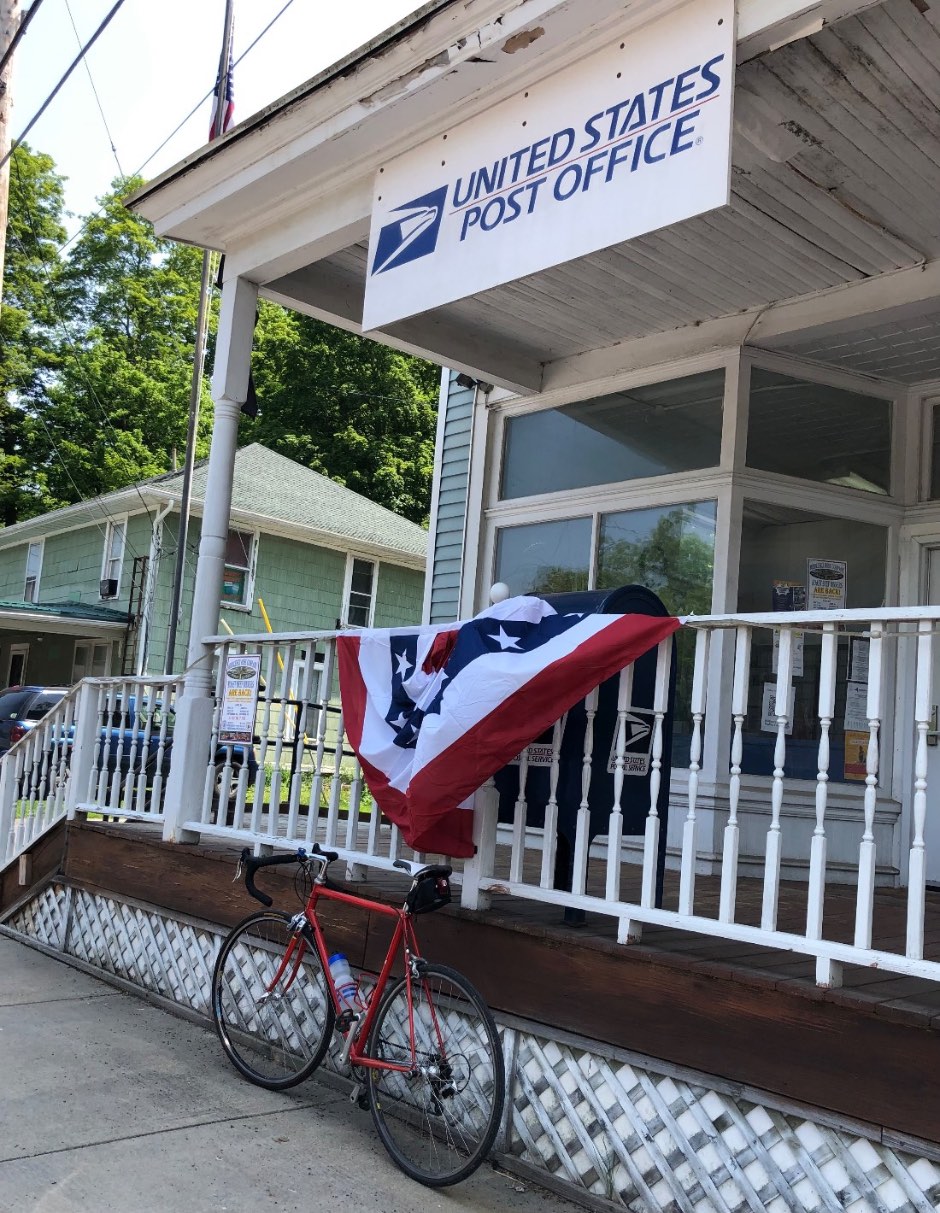 NSK, Slovenia is on my short list for road cycling adventure. For this year decided on Girona, Spain. Hopefully Slovenia in the near future!! |
|
Send note to Staff
|
| Edited by stampcrow - 07/12/2025 12:53 pm |
|
|
Pillar Of The Community
Netherlands
6647 Posts |
|
|
Yup, page 11. https://goscf.com/t/23324&whichpage=11#782641Quote:
Slovenia is on my short list for road cycling adventure. For this year decided on Girona, Spain. Hopefully Slovenia in the near future!! Enjoy that trip. I was there a few years ago. The Girona post office is here: https://goscf.com/t/23324&whichpage=13#799271It is a beautiful city and not overrun by tourists yet. The cathedral is spectacular. You would not think so when you look at the façade, but the inside is a huge surprise. And the food is very good. The post office was at the end of the road where my hotel was. It is close to a square where the locals go to "picotear." The old town is across the river from the post office. I was in central Slovenia at the end of May and beginning of June. It was really enjoyable. I had been there on two earlier occasions. My first trip took me to Ljubljana, some 25 years ago. In June, when I was staying in Kamnik, I met up with friends from Trieste, in Ljubljana. It was horrible. There are too many tourists. My second trip, some ten years ago, took me to the Venetian coastal towns in Istria (Koper, Izola, and Piran. I also visited the Predjama Caves. There remain some towns on my list of places to visit in the future. If you go to the coastal region of Girona and are in Begur, consider having a cup of tea or coffee or even lunch here: https://paradores.es/en/parador-de-aiguablava |
|
Send note to Staff
|
| Edited by NSK - 07/12/2025 1:20 pm |
|
|
Pillar Of The Community
Netherlands
6647 Posts |
|
|
Toro sits on the bank of the Duero River, 188 kilometres northwest of Madrid and 33 kilometres east of the provincial capital, Zamora. A couple of daily busses from Méndez Álvaro (South) bus station in Madrid take 3:30 hours to arrive at Toro. The bus station is a few hundred metres outside the old town and about 1.5 kilometres from the centre of the old town. A few local trains running between Zamora and Medina del Campo (and Valladolid) that are served by high speed trains take you there with a change. Do not change at Medina del Campo, as its high speed train station is outside town and the bus and train stations are some distance from it. The Toro trains station is quite some distance from the town centre and you have to walk uphill. An alternative is to change for a bus at Zamora. The town has a rich history. Whereas it, now, is a small provincial town with fewer than 9,000 inhabitants, its importance in the past is reflected by the fact that it had a representative in the parliament. In 1476, a battle took place at a few hundred metres from town. This decided the war of succession resulting in the undisputed reign of Isabel I of Castile. Although the town is known for being the capital of D.O. Toro wines and its excellent sheep's cheeses, it, almost, is synonymous with its collegiate church that mixes Romanesque with Mudéjar architecture. 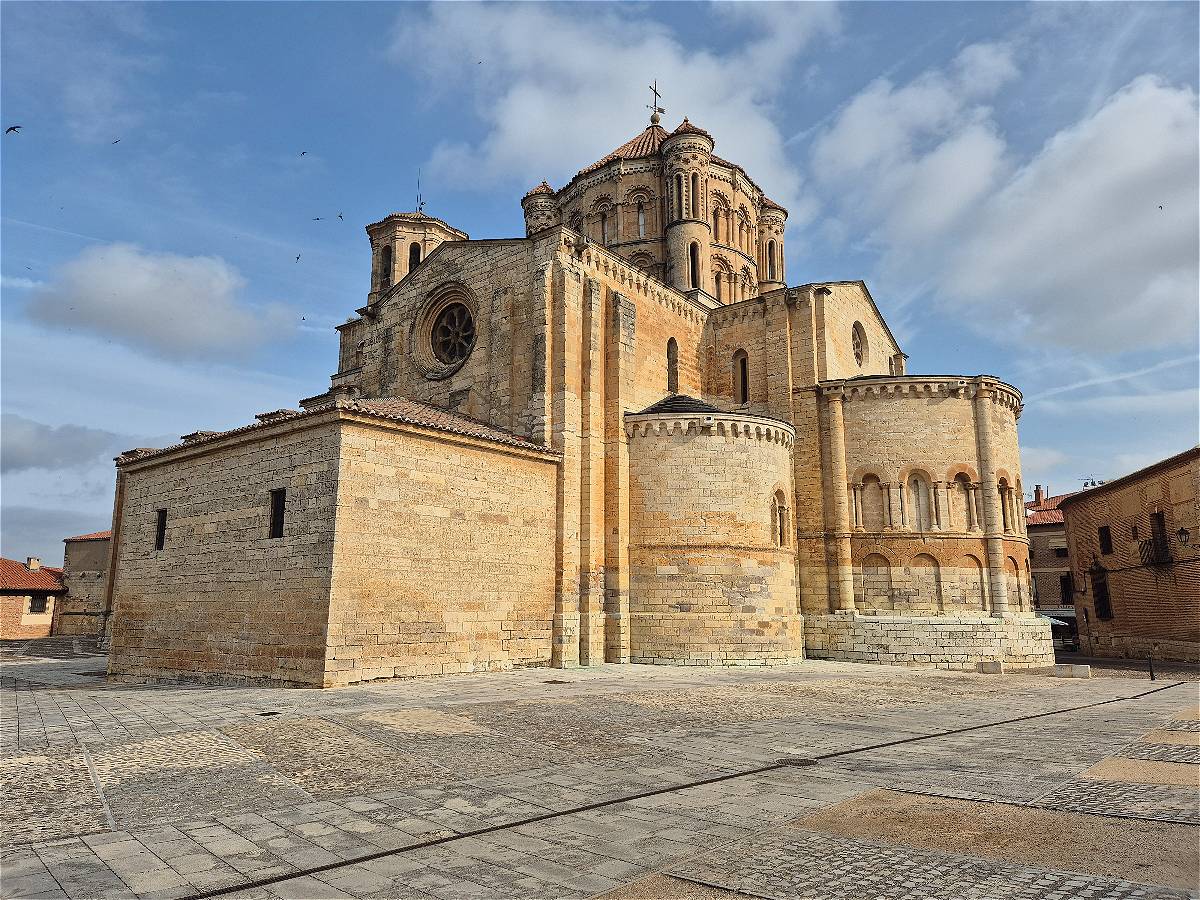 The historic importance of the town, however, means the rich built their mansions and churches. Only the portal remains of the royal palace. Although Napoleon's occupation and Mendizábal's confiscation destroyed much of the artwork, most of the Mudéjar churches preserve their original timber ceilings. A combined ticket will give you access to all churches. It includes a guided tour of the Royal Monastery of the Holy Spirit that remains in use and guards the beautiful tomb of the Queen Consort Beatriz de Portugal, wife of Juan I of Castile. Still, the highlight of any visit of the town will be the twelfth-century Collegiate Church with its polychrome sculptures. The Gothic southern portal, the "Pórtico de la Majestad," is a stunning work of art. 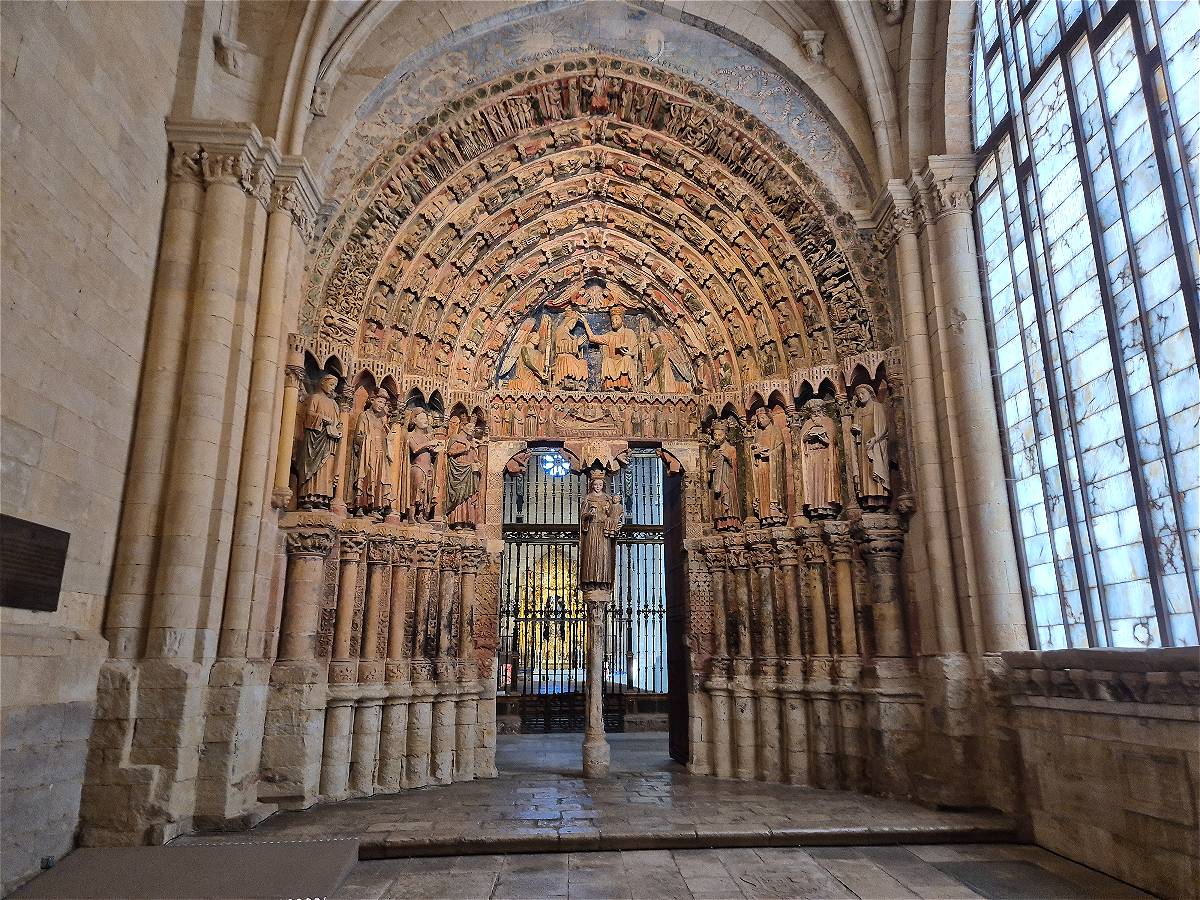 The post office is in a square a few hundred metres from the clock tower that stands at one end of the central square. 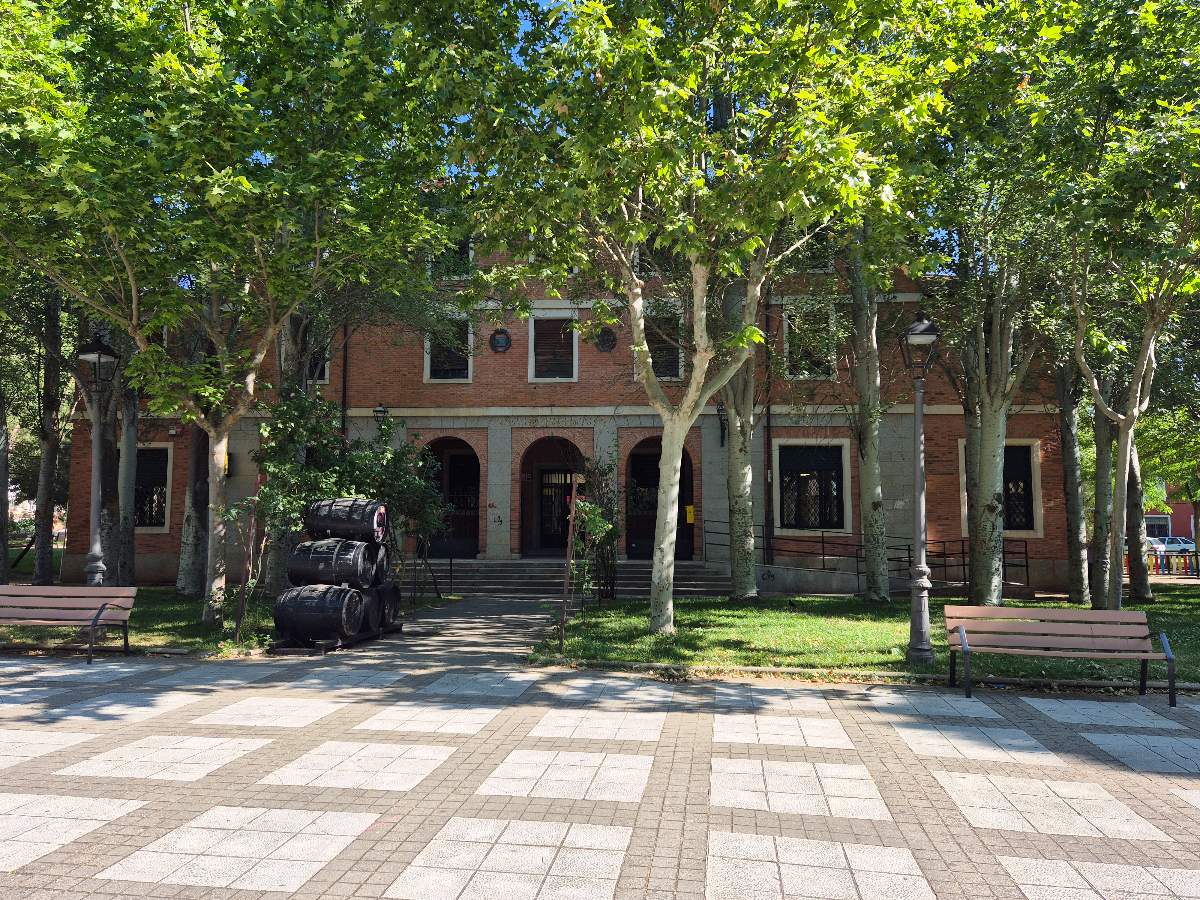 Hint: Hint: When visiting this town, get hold of the guide published by Edilera. It is available from the Collegiate Church and the small shop next to the town hall. It is in Spanish, but it has schematics that do not require a degree in Spanish and the pictures will show you what to look for. (There also exists an edition for the town. Buy both! The one that focuses on the Collegiate Church adds a lot to the general one.) On a personal note. I stayed at the fifteenth-century mansion of Juan de Monroy y Antona García who participated in a revolt against the Portuguese troops and in favour of Isabel of Castile. It is one of the few remaining mansions. The revolt failed and the nobility that revolted were executed in the central square. Doña Antona Garcia, however, was strangled from the screen of a window of her mansion. When Isabel I took possesion of the town, she honoured Doña Antona by having the screen guilded. The mansion is known as "Palacio de la Rejadorada" (Mansion of the Guilded Screen). Although simple with a simple (traditional Spanish) breakfast, the historic significance and the friendly reception make up for it. And the post office is around the corner. 82/4 |
|
Send note to Staff
|
| Edited by NSK - 07/13/2025 04:11 am |
|
|
Pillar Of The Community
Netherlands
6647 Posts |
|
|
Valladolid is the capital of the province of Valladolid and the autonomous region of Castilla y León. The city is located 162 kilometres northwest of Madrid, although by road, the journey will be 212 kilometres. The many high-speed trains from Madrid's Chamartín - Clara Campoamor Station in the directions of León and Asturias or Burgos and the Basque Country take just over an hour to get you to Valladolid. If you like to torture yourself, there are a few media distancia trains from Principe Pío Station that take an uncomfortable 3 hours. The city has a long list of monuments. It also witnessed important events in Spain's history and arts. Among the historically significant events are the birth of Phillip, son of Emperor Charles V (King Charles I of Spain), in the mansion of the Pimentel family. Philip would become King Philip II of Spain and the ruler of an empire where the sun would never set. His name lives on in the name of the Philippines. Across the road from the Pimentel Mansion is the Royal Palace to which King Phillip III moved the court from Madrid, from 1601 until 1606. The future King Phillip IV was born in the palace. In the mansion of the Vivero family Isabel of Castile and Ferdinand of Antequera, now known as the Catholic Kings married. They would end the reconquest, rule the Spanish Kingdoms, and finance Colón's (re-)discovery of the Americas. Across the road from the Vivero Mansion is the museum dedicated to Colón, purported to have been constructed on the site of the house where he died (which is not correct, as he died in a monastery elsewhere in the city). 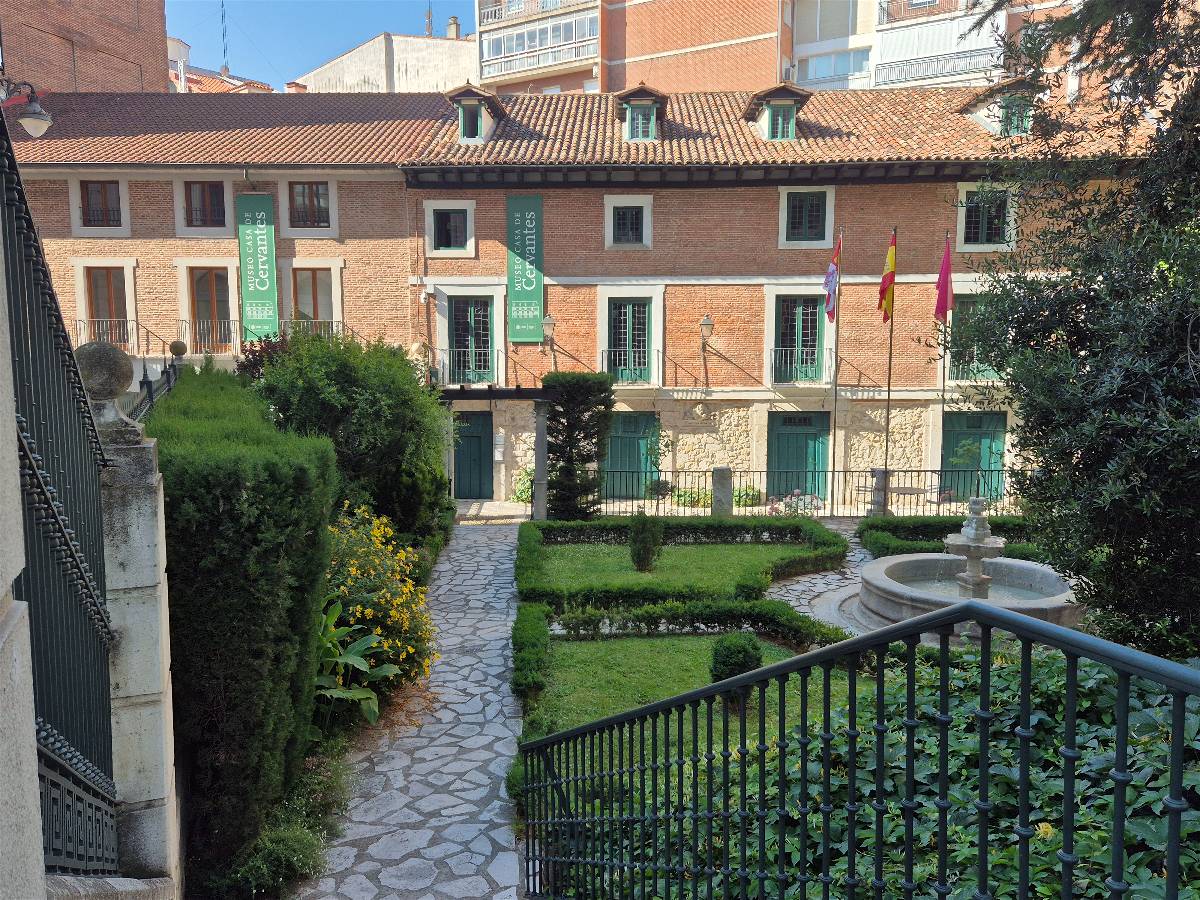 With the court residing in Valladolid, Miguel de Cervantes Saavedra moved to Valladolid. In1605, he finished his Don Quijote there. His house, now, is a museum. His legacy was documented and the document used to furnish the house as it would have been in 1605. It looks as if he has just stood up from editing his famous novel. You expect him to appear behind you any moment. Among the churches are a few that preserve Romanesque elements. Next to the Pimentel Mansion is the conventual church of San Pablo with its Isabelline façade by Simón de Colonia. 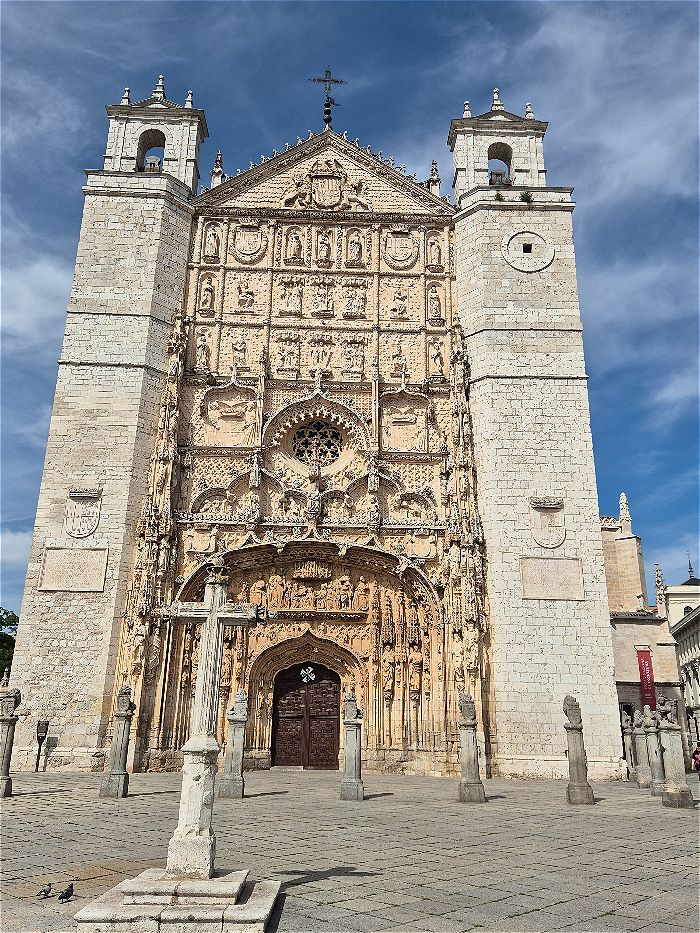 Walking down alley between this church and the palace, you, soon, will pass the Colegio de San Gregorio that, now, houses the national museum of Sculpture, This too has an Isabelline façade. 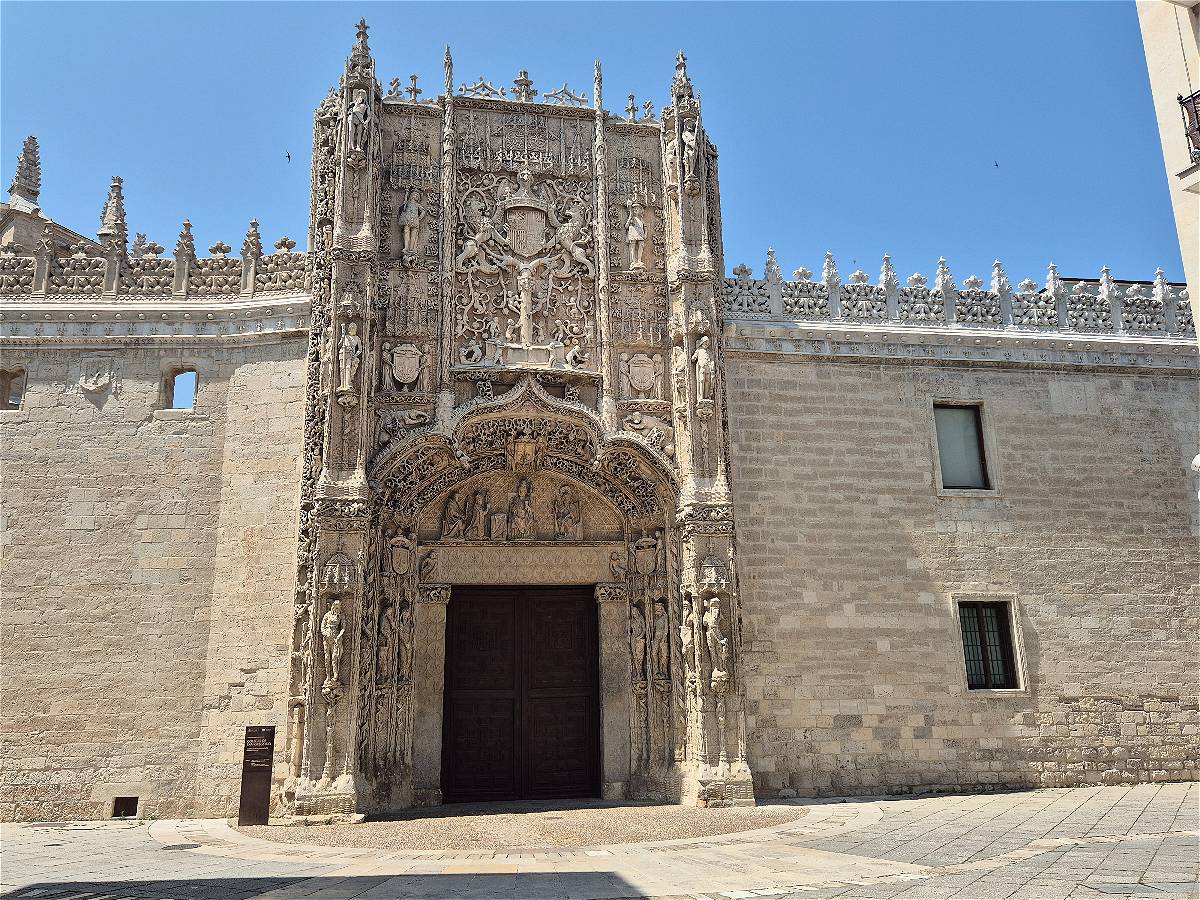 The post office can be found next to the town hall, at the back. The Eclectic-style building is the work of Jerónimo Arroyo, an architect from the city of Palencia. The building was constructed in 1922. 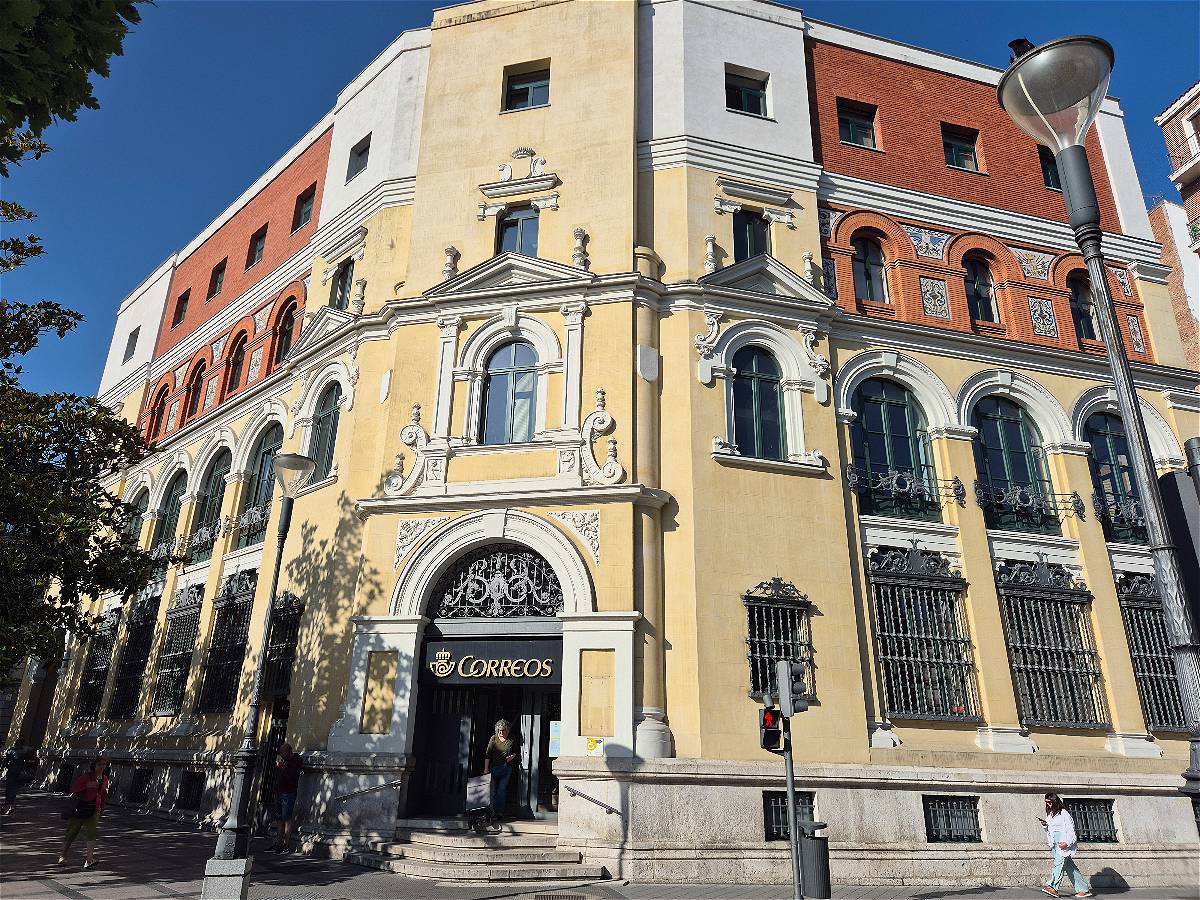 83/4 |
|
Send note to Staff
|
|
|
Pillar Of The Community
Netherlands
6647 Posts |
|
|
Peñafiel sits on the banks of the Duratón River at its confluence with the Duero River, 50 kilometres - 54 kilometres by road - east of the provincial capital of Valladolid. Frequent busses from Valladolid take about an hour to arrive at the bus "station" of Peñafiel. Some buses continue along the Ribera de Duero route to Aranda de Duero. On a hilltop above the town stands its castle from the fifteenth century. The castle arises on the site of an earlier castle from the tenth century that had been reconstructed in the first half of the fourteenth century. The castle that is considered one of the most beautiful castles in Spain appeared on a 1,50 peseta stamp of the "Castles" series, issued in 1968. The castle, currently, houses the provincial wine museum of Valladolid. 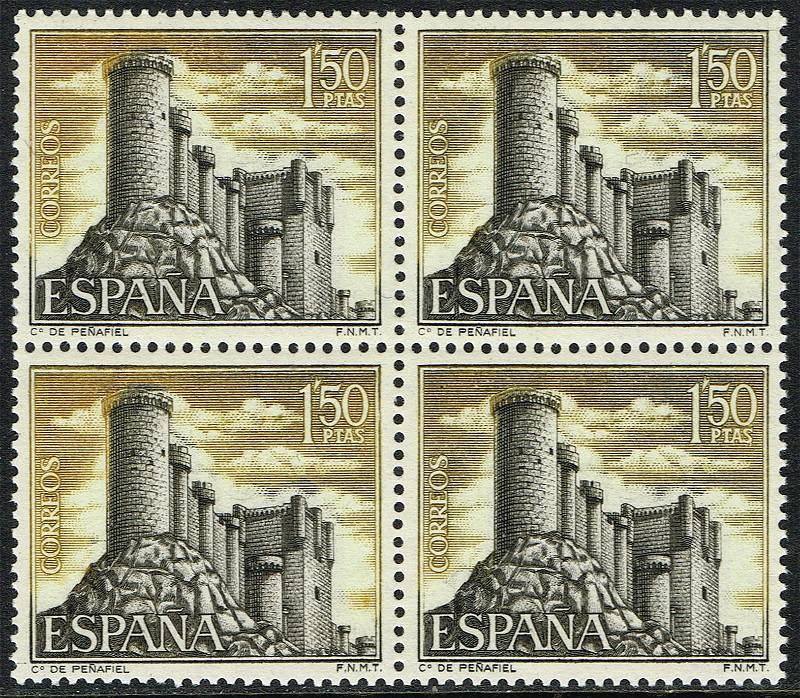 The town itself lies in the centre of the Ribera del Duero wine region with protected designation of origin that produces some of Spain's best red wines. The white wines produced by the wineries tend to be produced in Valladolid's Rueda Region. The wineries located in the surroundings of Peñafiel produce some of the best wines of the region itself. 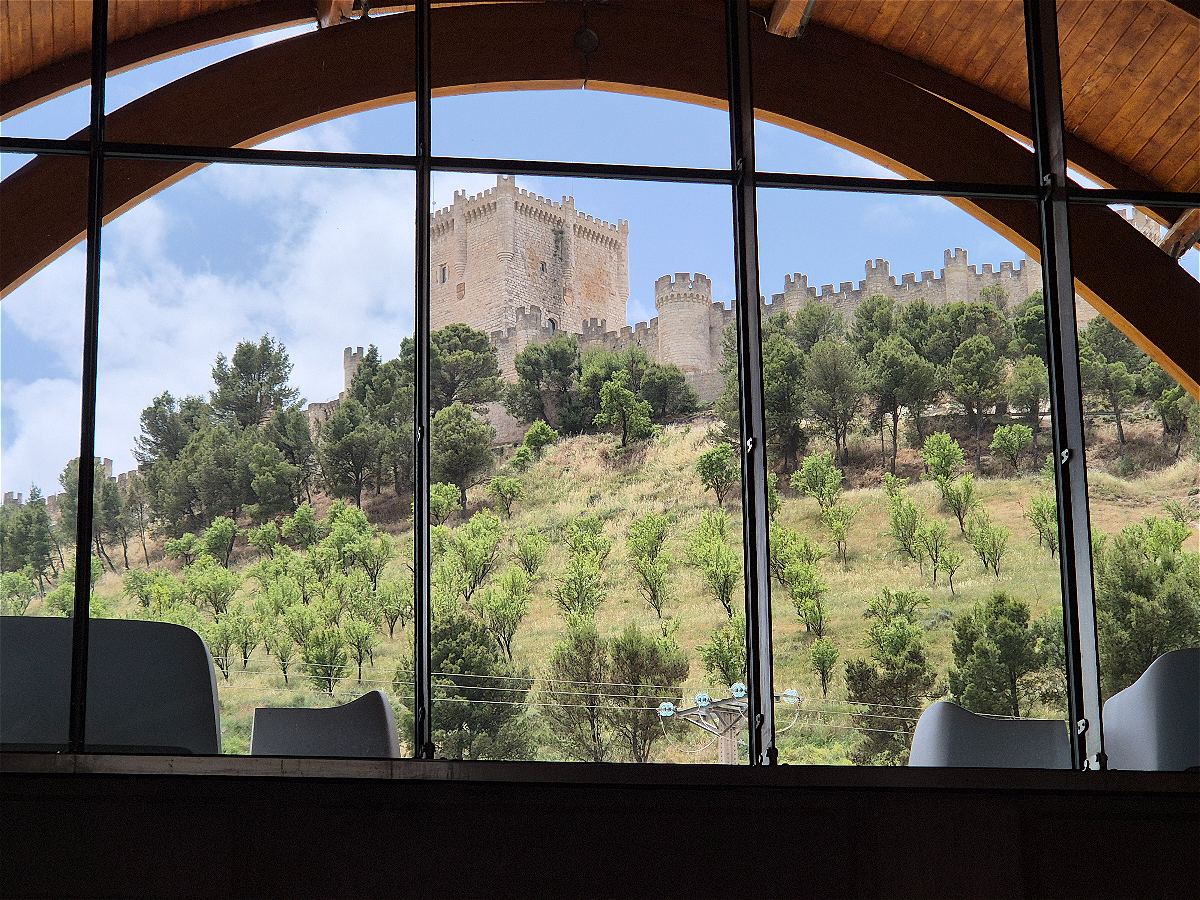 The name Ribera del Duero was first used in 1927 by a co-operative winery. When the regulatory body for what, now, is known as D.O. Ribera del Duero was established, the winery ceded the right to its name to the regulatory body. The winery itself changed its name to Protos, an allusion to it being the proto-winery of this wine region. Its modern winery, that stores its wine in galleries in the hill below the castle was designed by the architect Richard Rogers, who also designed Terminal 4 of Madrid Adolfo Suárez Airport. The winery organises guided tours (€ 20, do not forget to bring the confirmation email with the barcode) that include a tasting of three wines and a present: a wine glass. 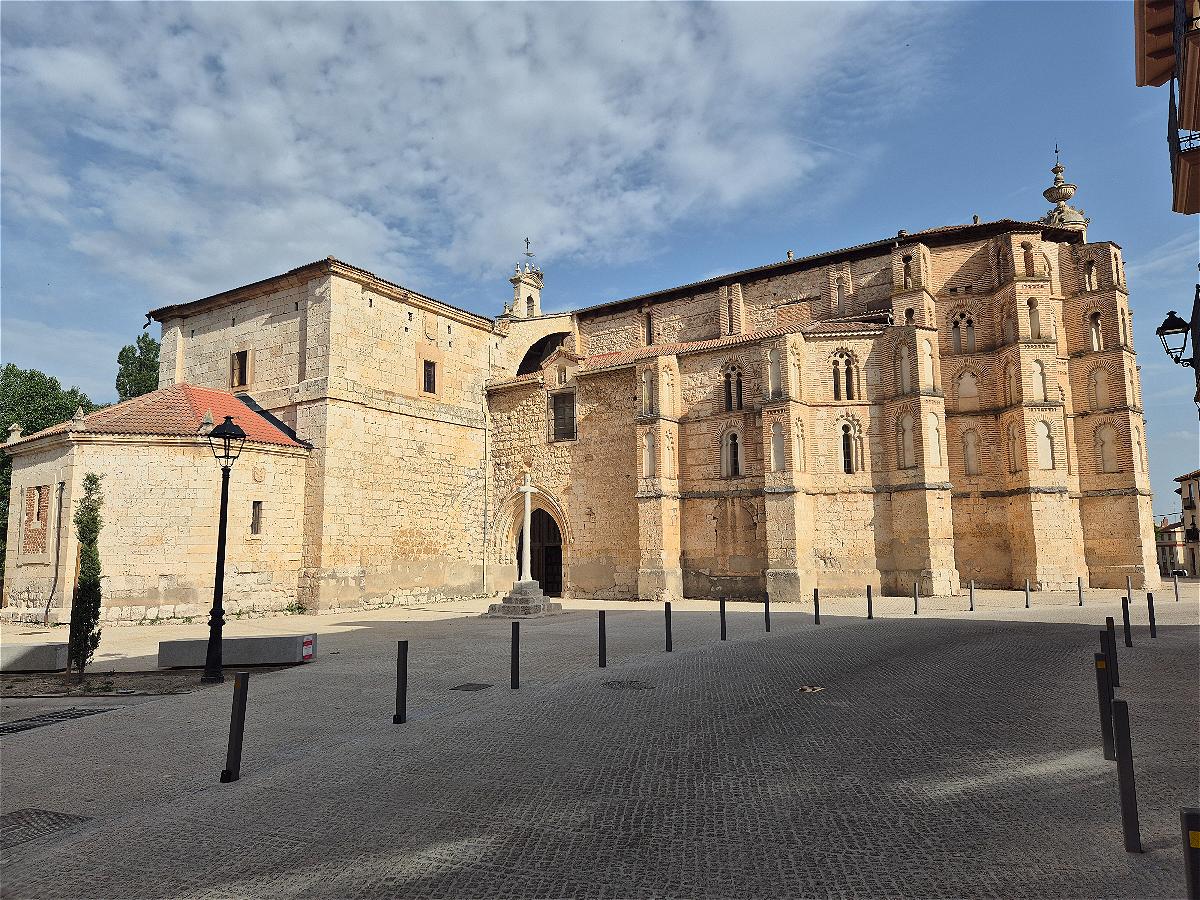 Among the sights in the town are the convent of San Pablo that was founded by Don Juan Manuel, grandson of King Fernando III "the Holy" of Castile and León, and writer. The early fourteenth-century convent with its Mudéjar church was built on the foundations of the former alcázar of King Alfonso X "the Wise" of Castile. A descendant founded the Renaissance (Plateresque) funerary chapel of the family in the conventual church. 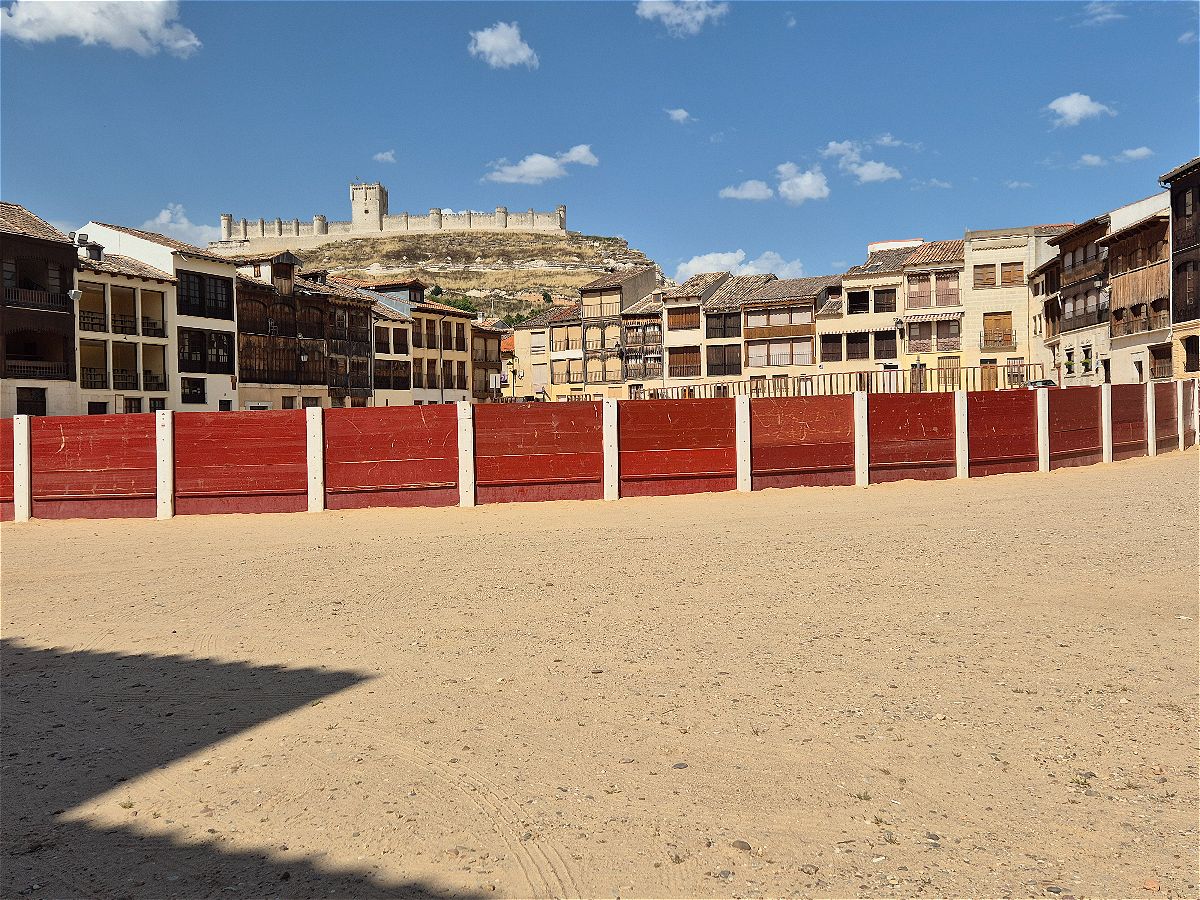 The main square, known as Plaza del Coso, that can be traced to the twelfth century is a contender for the accolade of oldest Plaza Mayor in Spain. Around the Plaza del Coso that also serves as bullfight ring are 48 houses with timber balconies. Each house is different from the others. It was the right of owners of these houses, even after they had sold them, to watch events in the square from their (former) balconies. The current balconies were constructed in the eighteenth and nineteenth centuries. 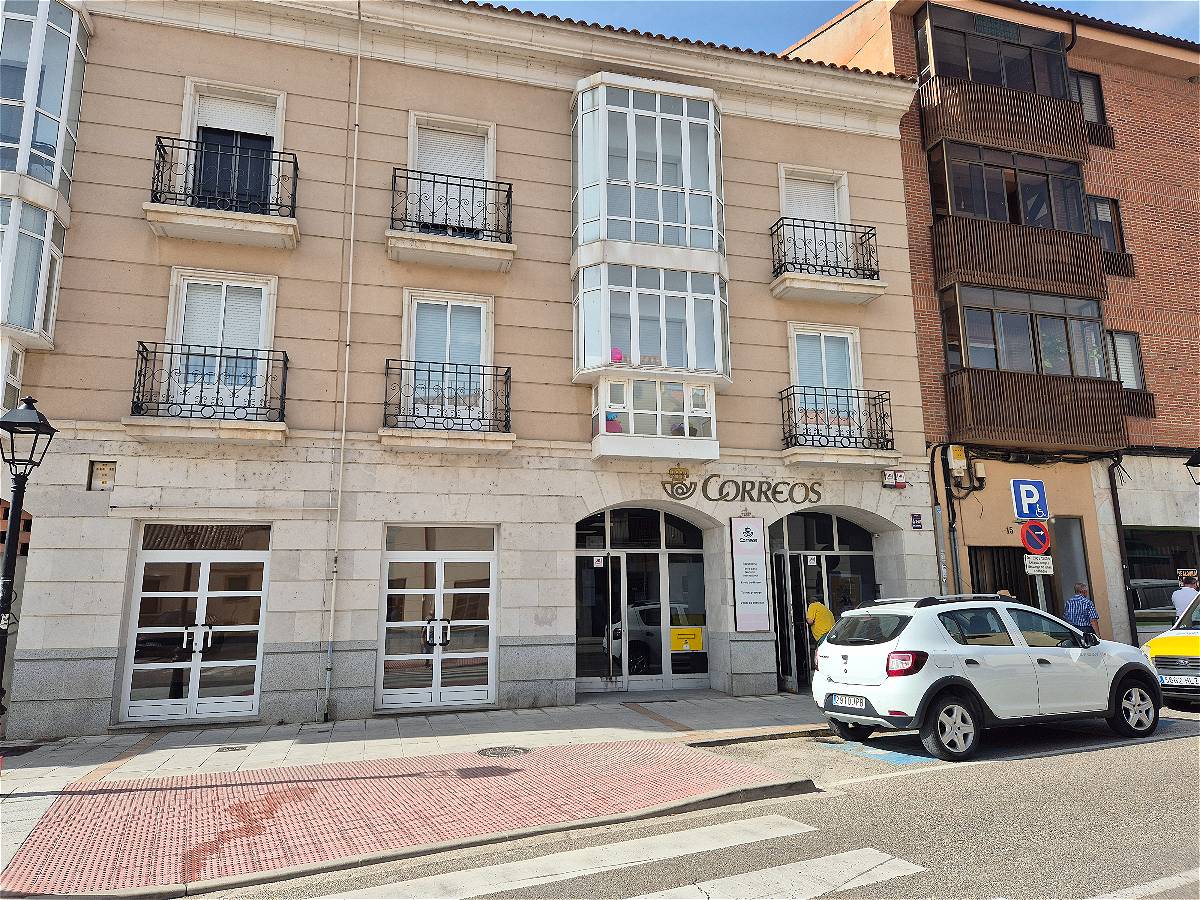 The post office is located on the opposite bank of the Duratón River from the old town, just across the eighteenth-century Puente de la Leona and next to the church of the seventeenth-century former convent of the Poor Clares. The convent, now, houses one of two hotels in the town. I stayed at the AF Pesquera Hotel that is close to the Protos winery. The hotel is owned by the Fernandez Rivera family that owns several wineries in the Ribera del Duero, Rueda and Toro (the latter does not produce wines with a protected designation of origine), among which is "Tinto Pesquera" winery in the neighbouring town (6.5 kilometres, one bus a day, a taxi may be advisable and costs less than € 10 at the time of writing) of Pesquera de Duero. This is one of the best-known names of the D.O. Ribera del Duero and, also, one that produces some of the best wines. A visit of the Tinto Pesquera winery can be booked in advance (English is possible) through the hotel reception. Doing so saves you € 5 on the normal price of € 25) The tour includes a tasting of three wines and a wine glass of the company. 84/4 |
|
Send note to Staff
|
| Edited by NSK - 07/17/2025 10:30 am |
|
|
Pillar Of The Community
Netherlands
6647 Posts |
|
|
Medina de Rioseco is a small town in de Tierra de Campos of Valladolid, located 41 kilometres northwest of the provincial capital, Valladolid. The road to Medina de Rioseco passes by the airport of Valladolid. Several buses a day connect the bus stations of Valladolid and Medina de Rioseco. Some of these buses serve the route between the Méndez Álvaro (South) bus station of Madrid and Gijón, with a few calling at Madrid Adolfo Suárez Airport Terminal 4's bus station (alsa). The town is known as the "Town of the Admirals of Castile." The sea and any seaport are more than two hundred kilometres from the town that is at the end of one of the two southern arms of the Canal of Castile. In 1405, King Enrique III of Castile made Alfonso Enríquez, grandson of King Alfonso XI of Castile, Admiral of Castile. The title remained with the Enríquez family until 1705. In 1423, King Juan II made Alfonso Enríquez Lord of Medina de Rioseco. As a result, the town became known as the "Town of the Admirals of Castile." Little remains of the town's mediaeval wall. Most of it is hidden from view by houses. Of the eight town gates, three remain. The oldest of the three dates to the thirteenth century and was remodelled in the fifteenth century. The main street is lined with porticoed houses. The town's main attractions, however, are its churches. All charge admittance. It is advisable to buy a combined ticket. The church of Santa Cruz from the end of the sixteenth century houses the local "Semana Santa" Museum. The Easter Processions that take place during this "Holy Week" are considered cultural heritage since 1985. The most important is the late-Gothic Church of Santa María de la Mediavilla. In 1553, the local banker Álvaro Alfonso de Benavente bought a chapel in the church to turn it into a funeral chapel for his family. He commissioned the brothers Corral de Villalpando with the remodelling of the chapel. They finished the chapel in 1554. It is considered one of the most important works of Spanish Renaissance art and has been classified as the "Sistine Chapel of Spanish Art." The reredos and screen of the chapel are the work of the Franco-Spanish sculptor Juan de Juni. 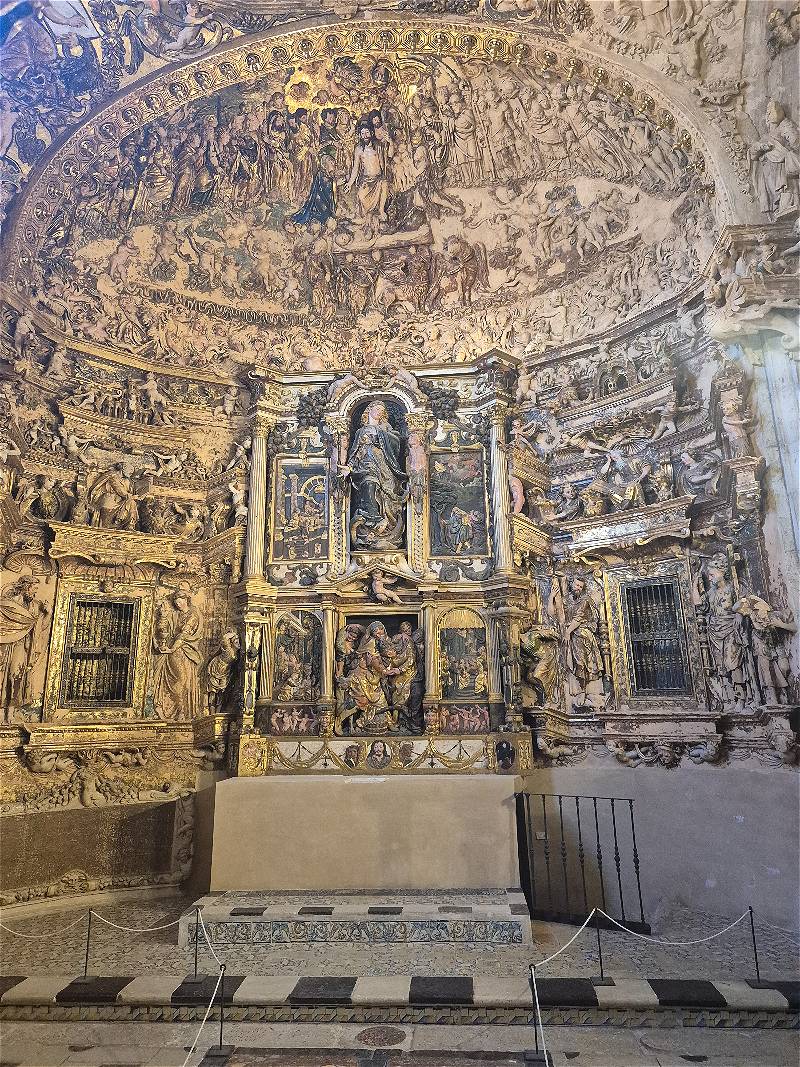 Among the artwork is the church is the Renaissance screen of the choir and the Baroque misericords of the choir itself that were brought here from the Monastery of San Francisco. On a visit to the workshop of Cristóbal de Andino in Burgos, the then Admiral of Castile saw the screen being made for the local cathedral that he claimed for his own monastery in Medina de Rioseco. The Church of Santa María de Mediavilla and the nearby Church of Santiago Apóstol, only, can be visited with a guide. The visit of the latter church, normally, follows that of the former. The construction of the late-Gothic Church of Santiago Apóstol started around the same time as that of Santa María de Mediavilla. It, however, continued into the Baroque era. Inside the church is a 30-metres' high reredos from the early eighteenth century designed by José Joaquín de Churriguera. The name of the Churriguera family that was of Catalan origin is synonymous with the Spanish Baroque style of the beginning of the eighteenth century. 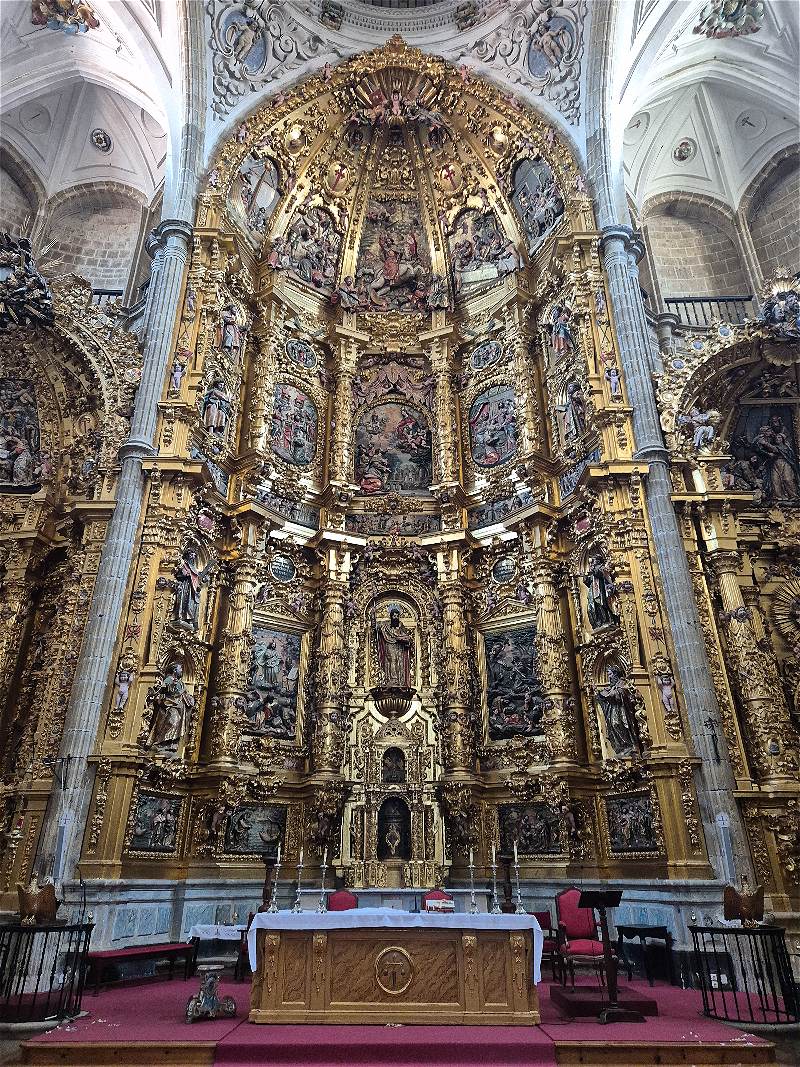 The last of the four churches is that of San Francisco that was part of the fifteenth-century Franciscan Monastery built by the Admirals of Castile and destined to serve as their final resting place. It, now, houses the local museum of sacred art. Among its top pieces are sculptures by Juan de Juni. The church can be visited with a guide. As I was the only visitor, the guide offered me to walk around while she would run a light and sound show. She received a call from someone informing her a Spanish couple that wanted to participate in this last visit of the day was slightly late. Just as the guide decided we had waited long enough for people that were "nearby," she received another call informing her of their arrival at the ticket office. As she went to collect admittance and accompany them from the ticket office to the church, I was allowed to look around the church. The post office is located just off the main road from Valladolid, not far from the bus station. 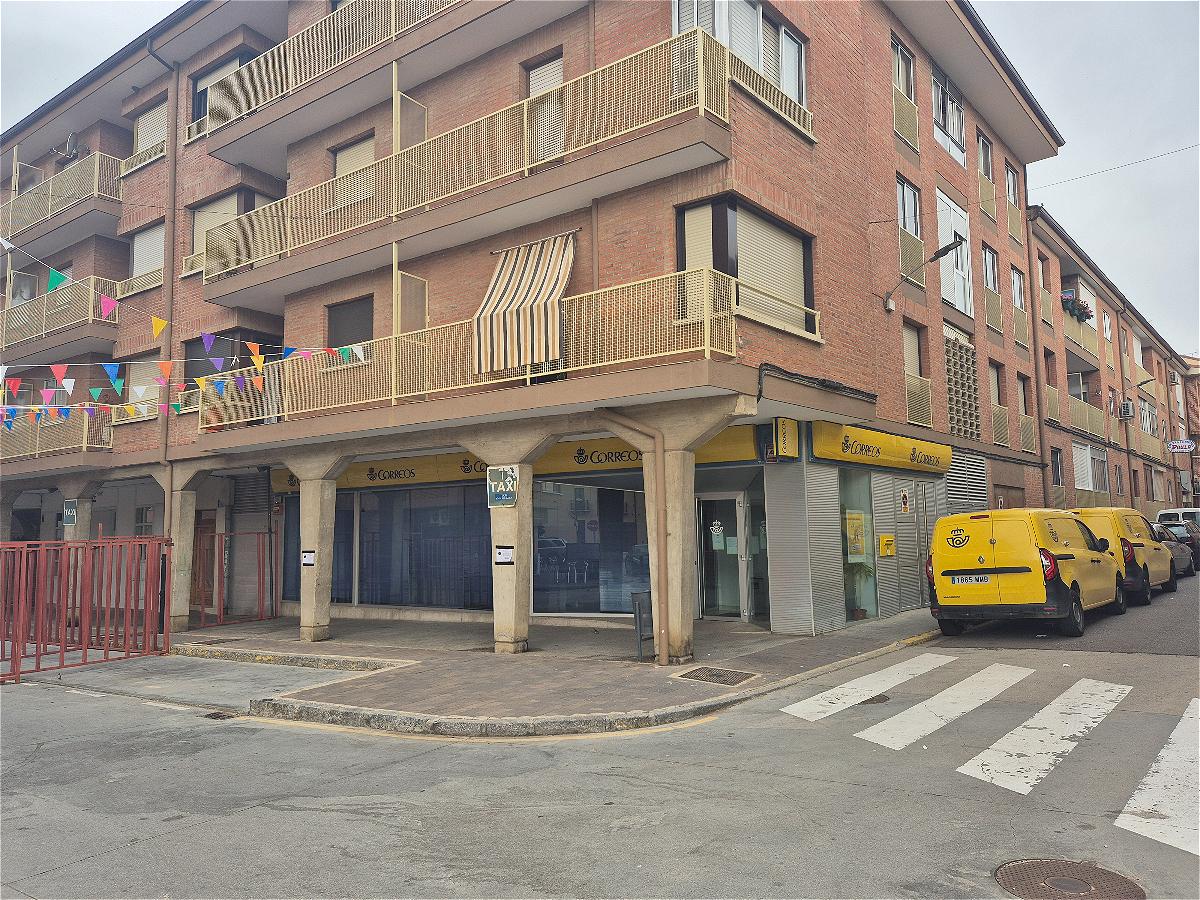 I visited the churches the day before the Corpus Christi procession. On the day, a silver monstrance is walked through the narrow streets of the town. The procession starts and ends at the Church of Santa María de Mediavilla. At the time of my visit, the processional float with the monstrance was guarded in the church itself. As a bonus to the visit – that turned out a private guided tour with very detailed explanation of the artwork of the Benavente Chapel -, I also got a very close-up view with an explanation of the different stages of the monstrance. The following day (22 June 2025), I had an opportunity to watch the procession. 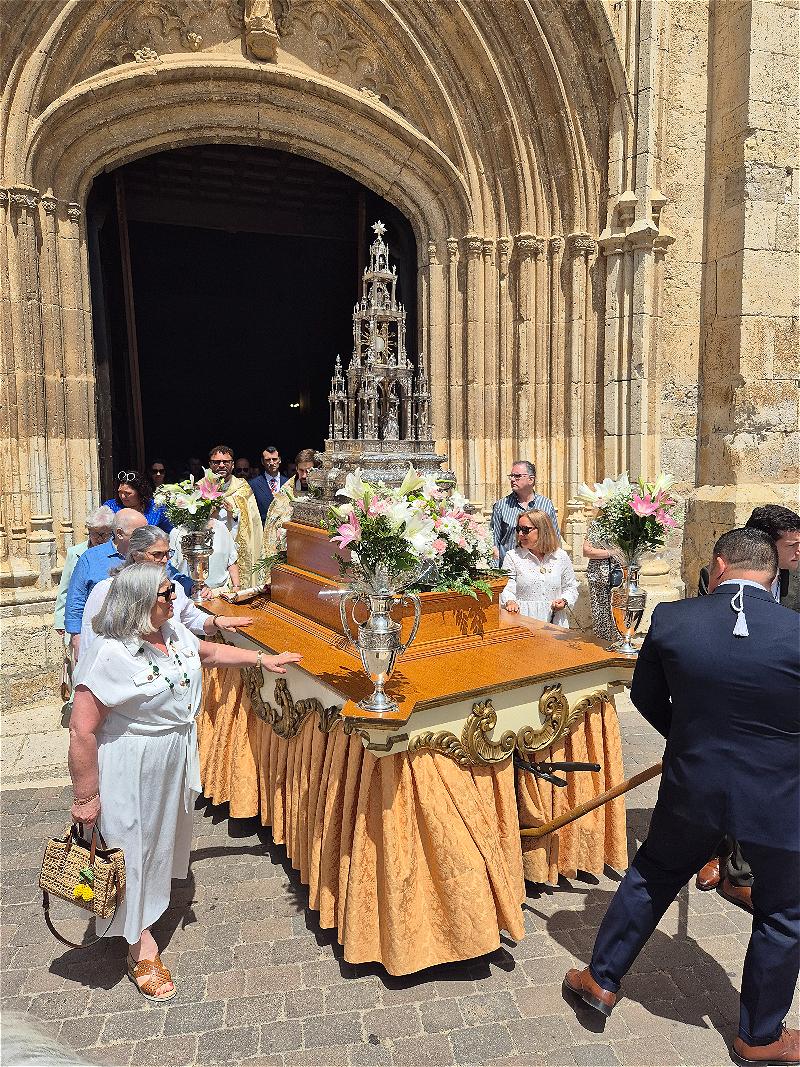 85/4 |
|
Send note to Staff
|
| Edited by NSK - 07/18/2025 2:54 pm |
|
|
Valued Member
United States
128 Posts |
|
|
Replies: 274 / Views: 44,531 |
|
|
To participate in the forum you must log in or register. | |
Disclaimer: While a tremendous amount of effort goes into ensuring the accuracy of the information contained in this site, Stamp Community assumes no liability for errors. Copyright 2005 - 2026 Stamp Community Family - All rights reserved worldwide. Use of any images or content on this website without prior written permission of Stamp Community or the original lender is strictly prohibited.
Privacy Policy / Terms of Use Advertise Here |
| Stamp Community Forum |
© 2007 - 2026 Stamp Community Forums |
| It took 0.25 seconds to lick this stamp. |
 |
|
|
|


 Posted 07/04/2025 12:17 pm