| Author |
 Replies: 73 / Views: 9,492 Replies: 73 / Views: 9,492 |
|
|
|
Pillar Of The Community
Israel
4900 Posts |
|
|
Hindu Mythology - Krishna and Radha
Krishna is one of the most widely revered and most popular of all Indian divinities, worshiped as the eighth incarnation (avatar, or avatara) of the Hindu god Vishnu and also as a supreme god in his own right. Here is a stamp show stone relief from Angkor Thom temple, Cambodia, depicting Krishna riding his chariot. Issued by the Kingdom of Cambodia on November 1, 1961:

 Radha is a favorite lover of god Krishna. According to one tradition, she is an avatar (incarnation) of Lakshmi, goddess of good fortune and wife of Vishnu. The goddess took the form of Radha in order that she might not be separated from her husband. Radha, miniature painting from Kishangarh, Rajasthan, ca. 1750, National Museum of New Delhi - India, 1973:  Krishna and Radha, Indian miniature painting, XVIII century - Yemen Arab Republic, 1968:  Krishna was smuggled across the Yamuna River, after his father tried to slay him, and was raised by the leader of the cowherds, Nanda, and his wife Yashoda. As a youth, the cowherd Krishna became renowned as a lover, the sound of his flute prompting the gopis (wives and daughters of the cowherds) to leave their homes to dance ecstatically with him in the moonlight. Krishna with the Gopis - Guyana, 1969: 
One of the Gopis, Radha, is the favorite lover of god Krishna: 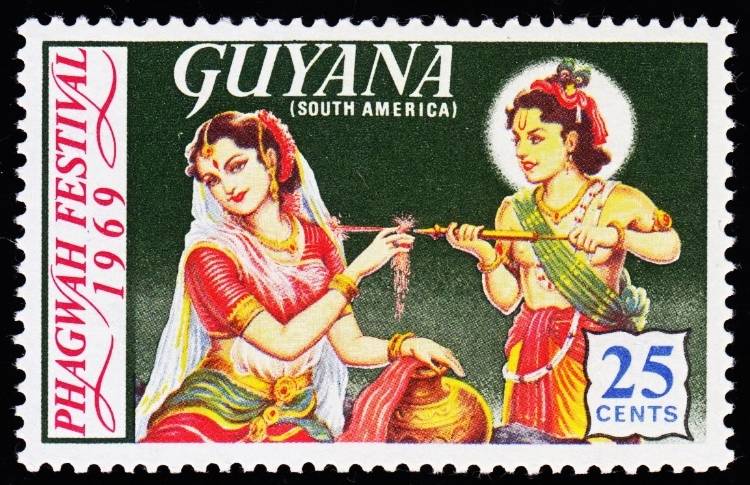 Both colorful stamps were issued by Guyana in 1969 to celebrate the Phagwah (Holi) Hindu Festival. It is a spring festival, also known as the festival of colors and festival of love. People use to color each other with dry powder and colored water as depicted on the stamps Both colorful stamps were issued by Guyana in 1969 to celebrate the Phagwah (Holi) Hindu Festival. It is a spring festival, also known as the festival of colors and festival of love. People use to color each other with dry powder and colored water as depicted on the stamps. |
Send note to Staff 
|
|
|
Pillar Of The Community
Israel
4900 Posts |
|
|
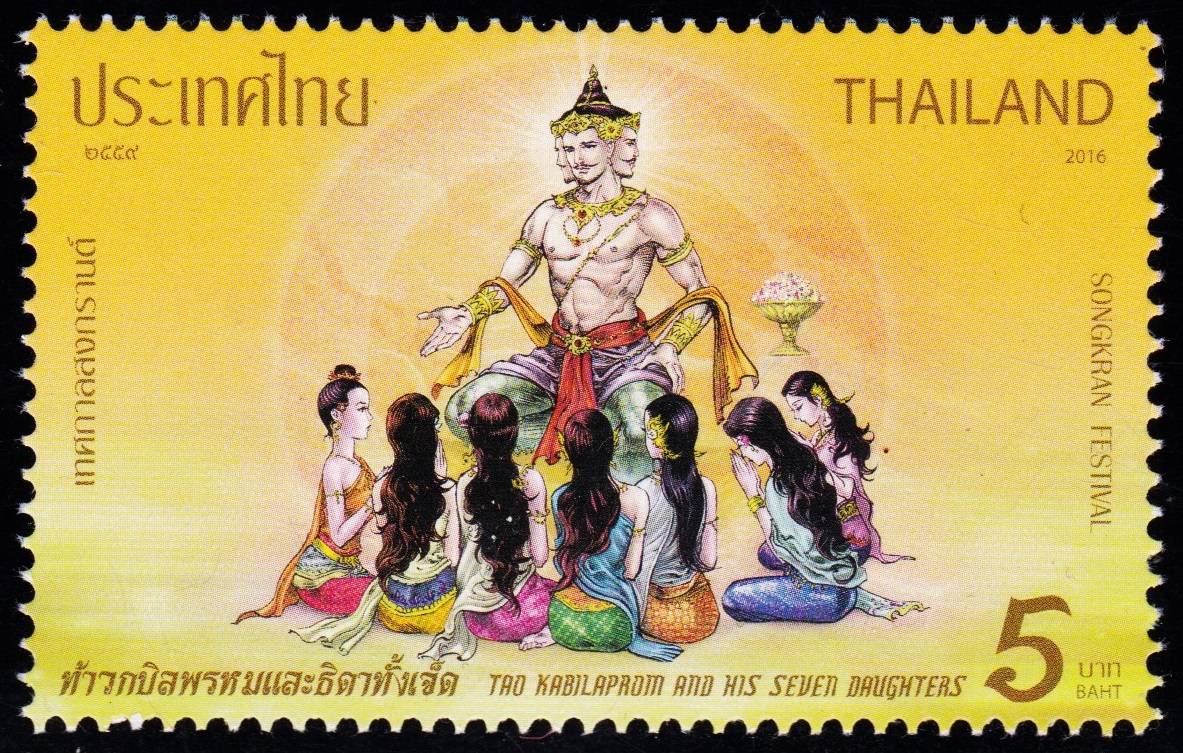
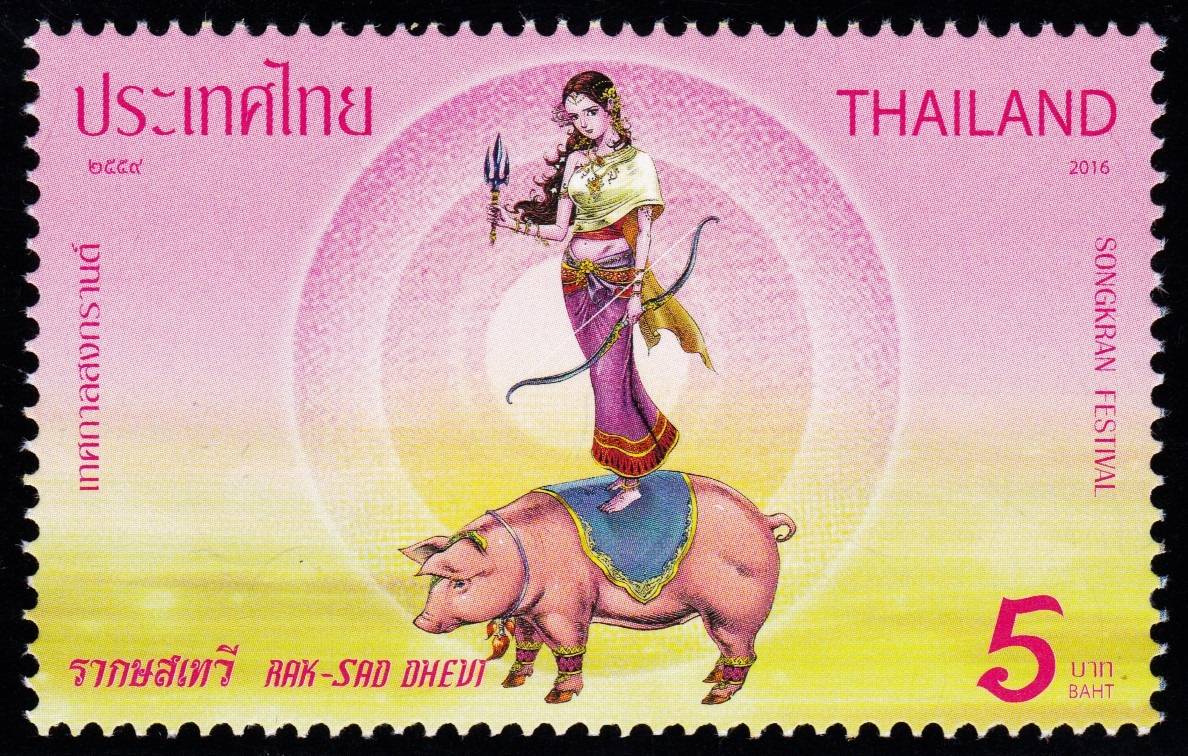
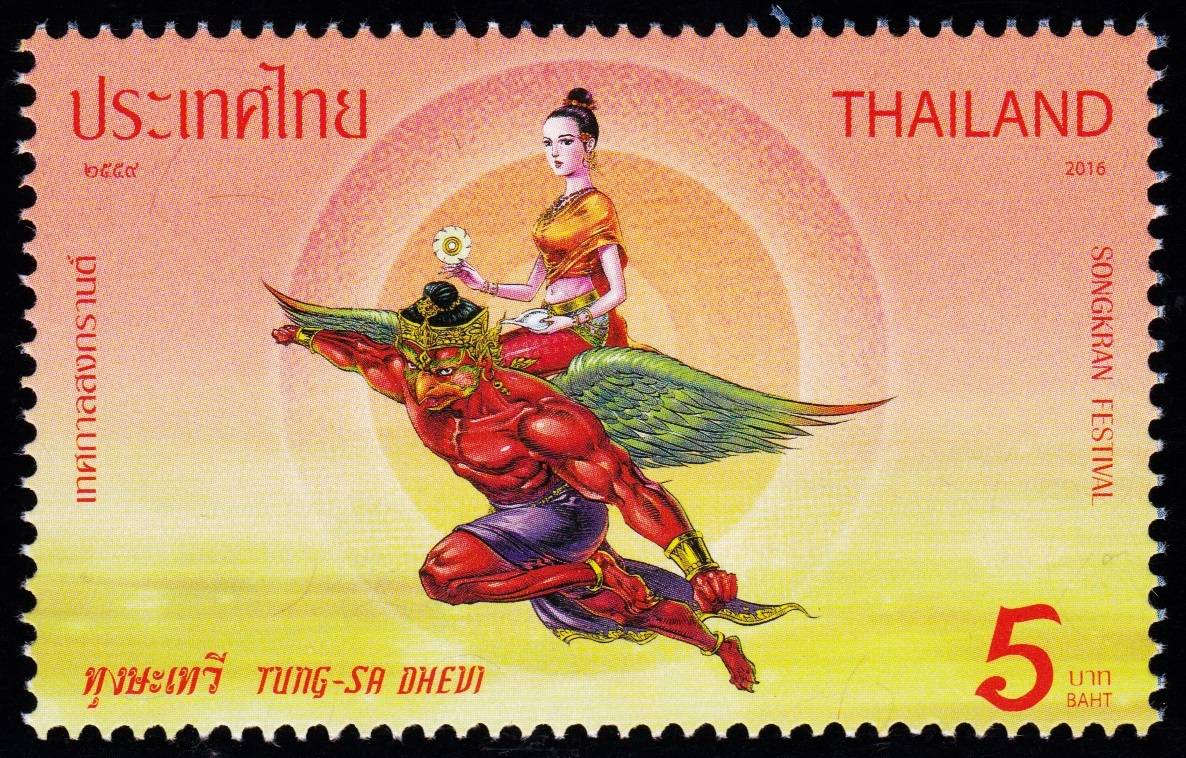
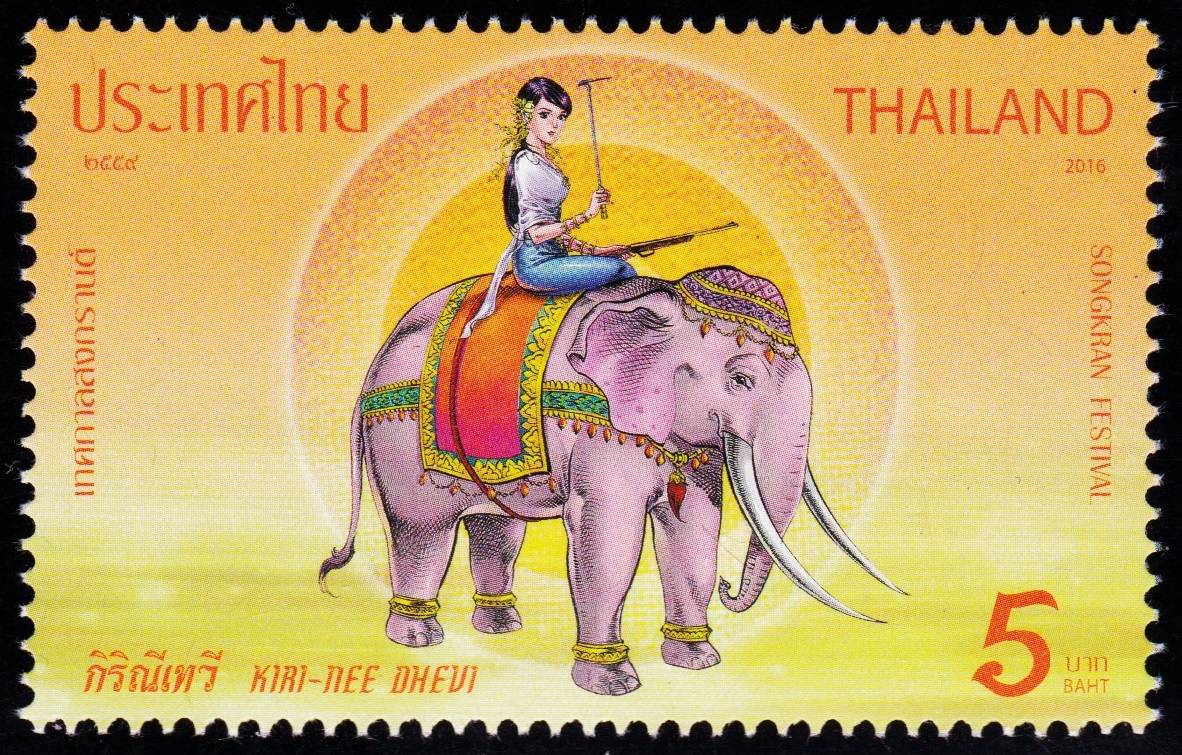
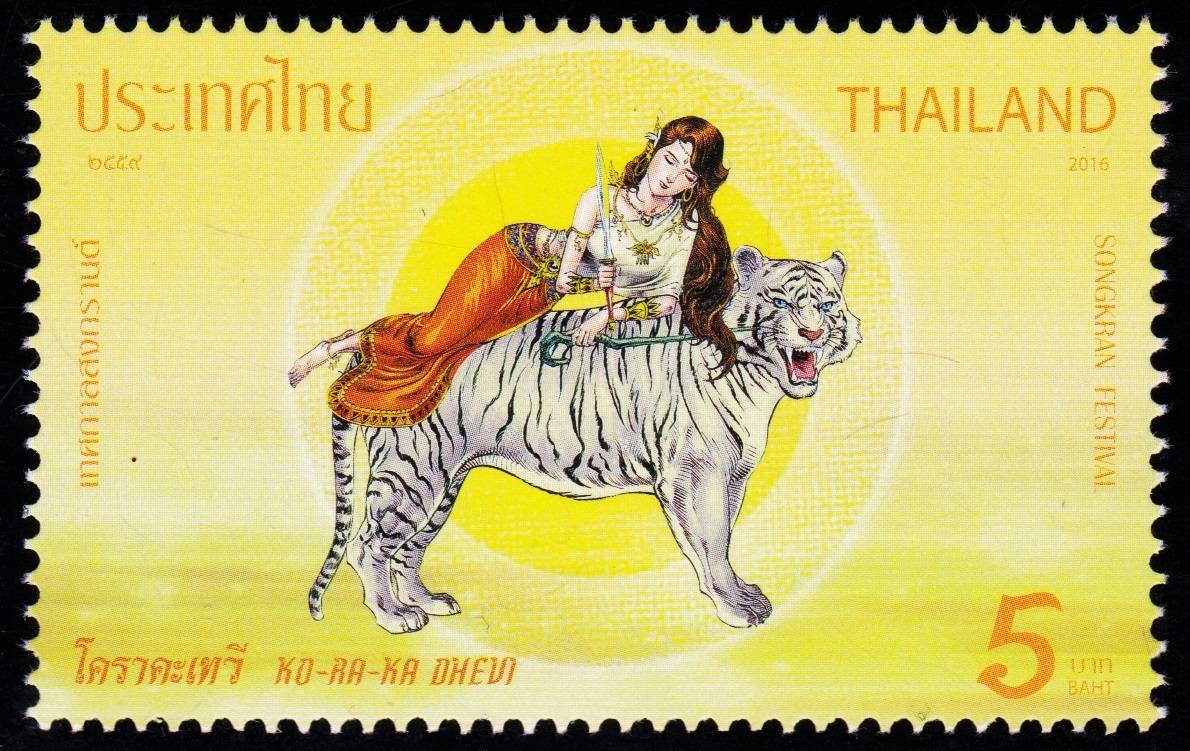
Buddhist Legend: Kabilaprom and his seven daughters
The legend tells about Dharmabarn, the smartest man alive. He had the ability to speak with birds. Another smart man named Kabilaprom heard of Dharmabarn's abilities. Kabilaprom had seven daughters.
Kabilaprom challenged Dharmabarn with a riddle in which the looser must sever his own head. The riddle is: In the morning, at noon and in the evening, where is the human wheel of life?
Dharmabarn heard two eagles talking about the wheel of human life. The birds revealed to him that: In the morning, the wheel of life is on its face- that is why we wash our faces every morning. At noon, the wheel of life is at its chest- that is why we wear perfume on our chests. In the evening, the wheel of life is at its feet- that is why we wash our feet before going to bed.
Dharmabarn was correct hence Kabilaprom cut off his own head. His seven daughters feared that if the head fell into the earth, a great fire will engulf the planet. If the head is hurled in the air, the planet will suffer a drought. If the head fell into the ocean, it would dry up. They decided to keep the head suspended in a cave of a mountain. Every year, one of the daughters would retrieve the head and parade around with it.
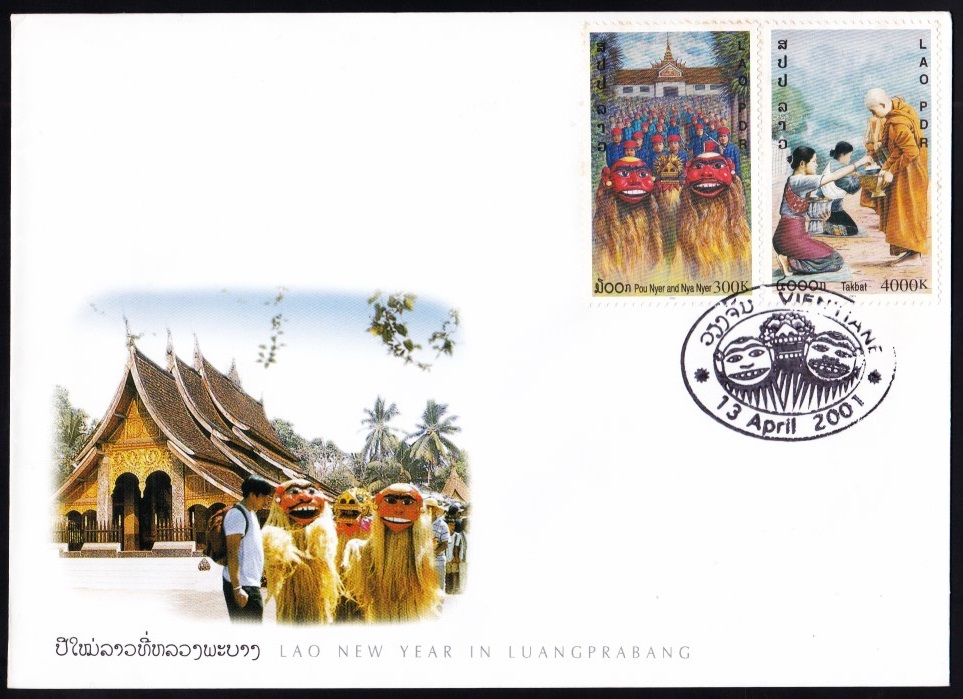
One of the ceremonies takes place in the New Year Festival in Thailand and Laos is Sand Stupas building ceremony. The stupas symbolizing Mount Sumeru, where King Kabilaprom's head was kept by his daughters. The stupas sprinkled with scented water, decorated with flags and covered with yellow cloths symbolizing Buddhism. The stupas, with their offerings are than offered to the monks, thus people gain merits.
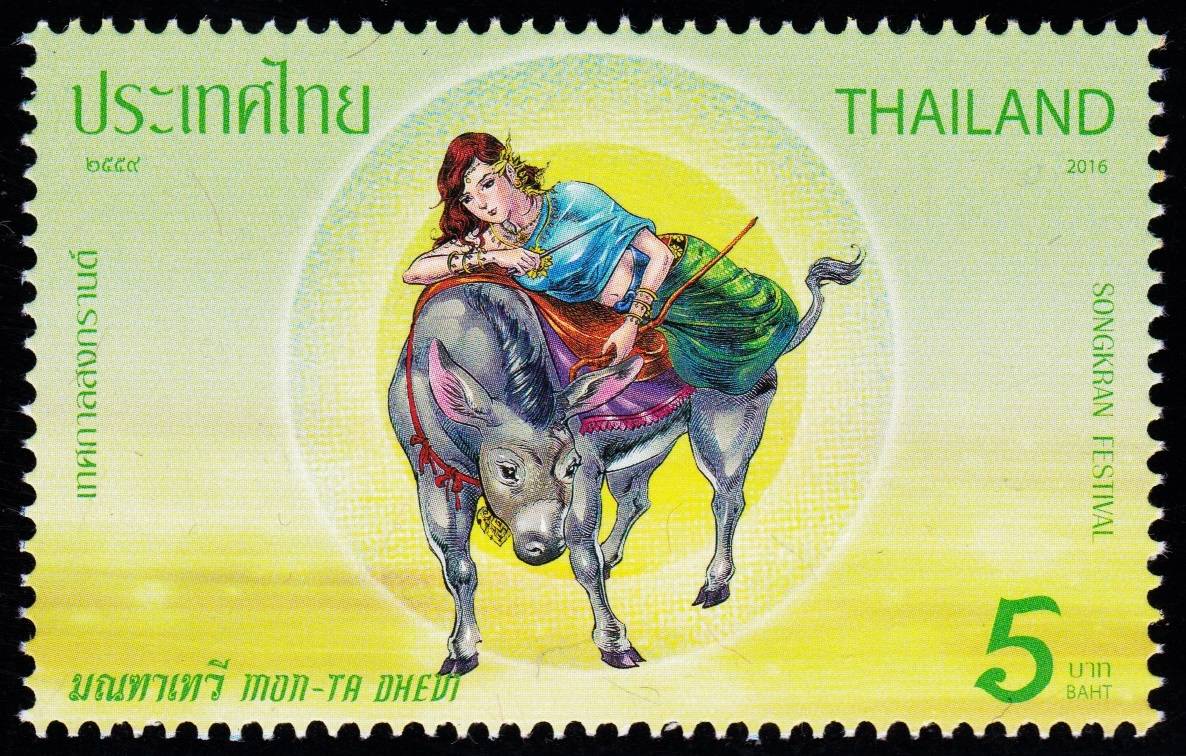
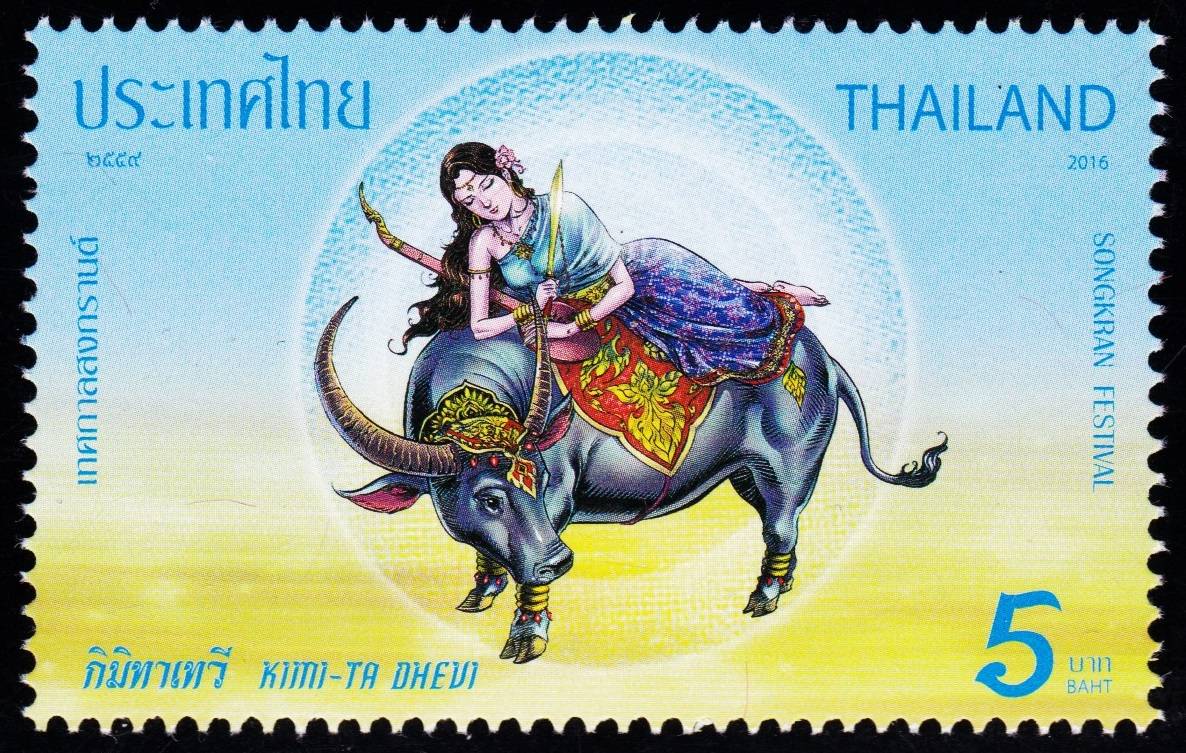
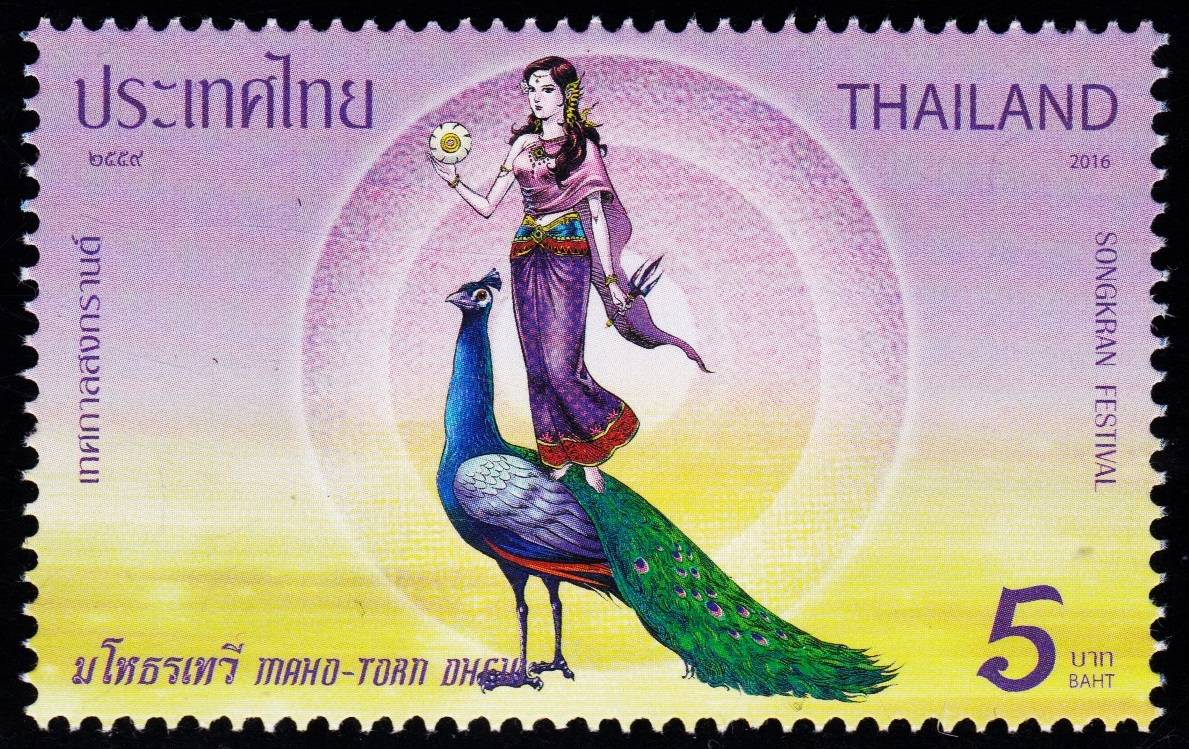
Kabilaprom and his seven daughters, issued by Thailand on April 7, 2016:
 |
|
Send note to Staff
|
|
|
Pillar Of The Community
Israel
4900 Posts |
|
|
In Japanese mythology, Ebisu is one of the "Seven Gods of Luck" and a popular Shinto deity, the patron of fishermen and tradesmen. He is depicted as a fat, bearded, smiling fisherman often carrying a rod in one hand and a tai, a red snapper symbolizing good luck, in the other. god Ebisu, State Museum of Oriental Arts, Moscow, issued by the USSR on September 3, 1969: 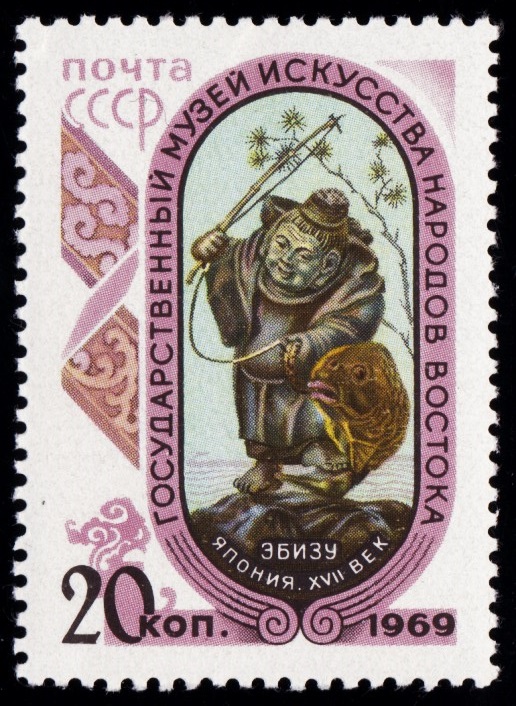 |
|
Send note to Staff
|
|
|
Pillar Of The Community
Israel
4900 Posts |
|
|
In Hindu mythology, Lord Ganesh is widely revered as the remover of obstacles, the patron of arts and sciences and the deva of intellect and wisdom. Ganesh is represented with the head of an elephant. According to one of the legends, Ganesh was created by Parvati using clay to protect her. Shiva beheaded him when Ganesh came between Shiva and Parvati. Shiva then replaced Ganesh's original head with that of an elephant. Hand-painted Ganesh on Indian PC sent locally in 1962: 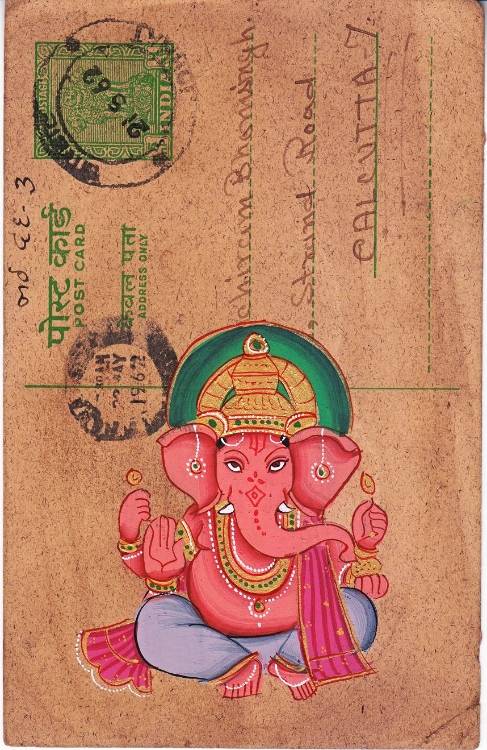 Ganesh, Thailand, 2009: 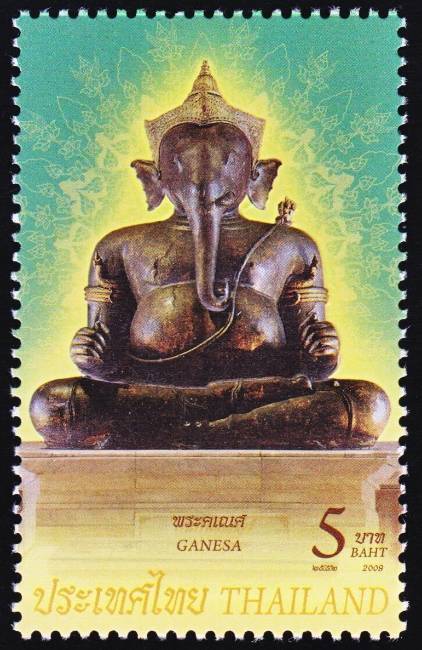 Ganesh, called in Laos Nakhanet, issued by the Kingdom of Laos on February 5, 1971. Designed by Ky Phungchaleun and engraved by Jean Miermont: 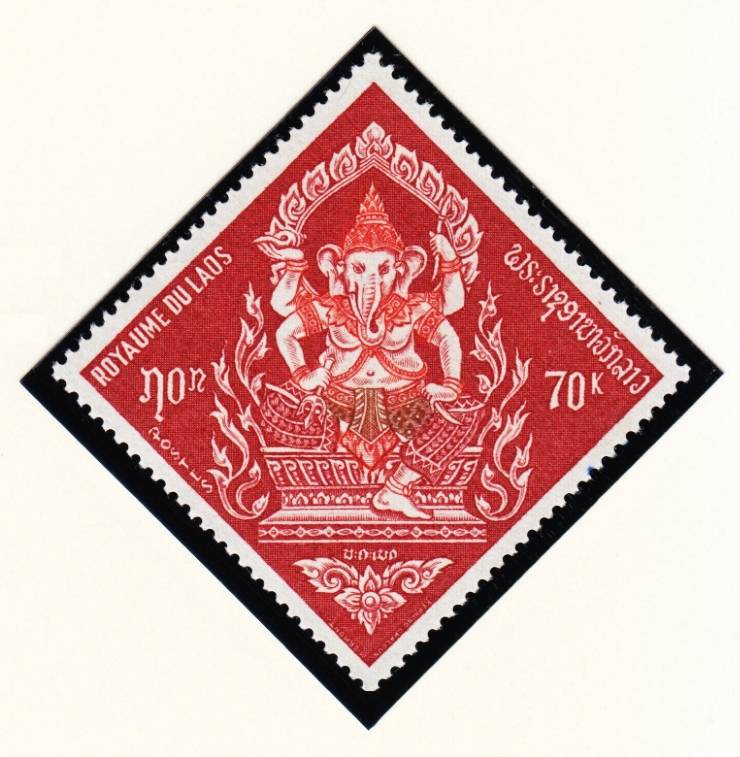 |
|
Send note to Staff
|
|
|
Pillar Of The Community
Israel
4900 Posts |
|
|
Pillar Of The Community
Israel
4900 Posts |
|
|
Batara Kala is the god of the underworld in traditional Javanese and Balinese mythology. He is also the god of time and destruction, who devours unlucky people. Batara Kala is the cause of the solar and lunar eclipses. As the god of darkness and the underworld, Batara Kala is the sworn enemy of the god of the Moon, Batara Candra and god of the Sun, Batara Surya. Sometimes he will try to devour the Sun or Moon, causing an eclipse. When this eclipse happens, Javanese villagers will try to save the Sun or Moon by offering sacrifices and banging lesung (traditional rice hulling equipment) or slit drums, to cause noise and make Batara Kala vomit. This is thought to release the Sun or Moon and stop the eclipse. Batara Kala swallowing and then vomiting the Sun, issued by Indonesia on February 23, 2016 to commemorate the solar eclipse event: 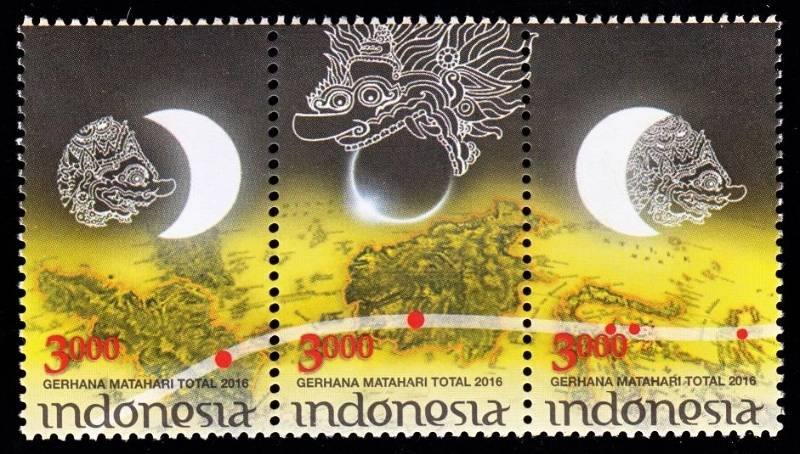 |
|
Send note to Staff
|
| Edited by LaoPhil - 07/10/2022 5:26 pm |
|
|
Pillar Of The Community
Israel
4900 Posts |
|
|
Pillar Of The Community
Israel
4900 Posts |
|
|
Pillar Of The Community
Israel
4900 Posts |
|
|
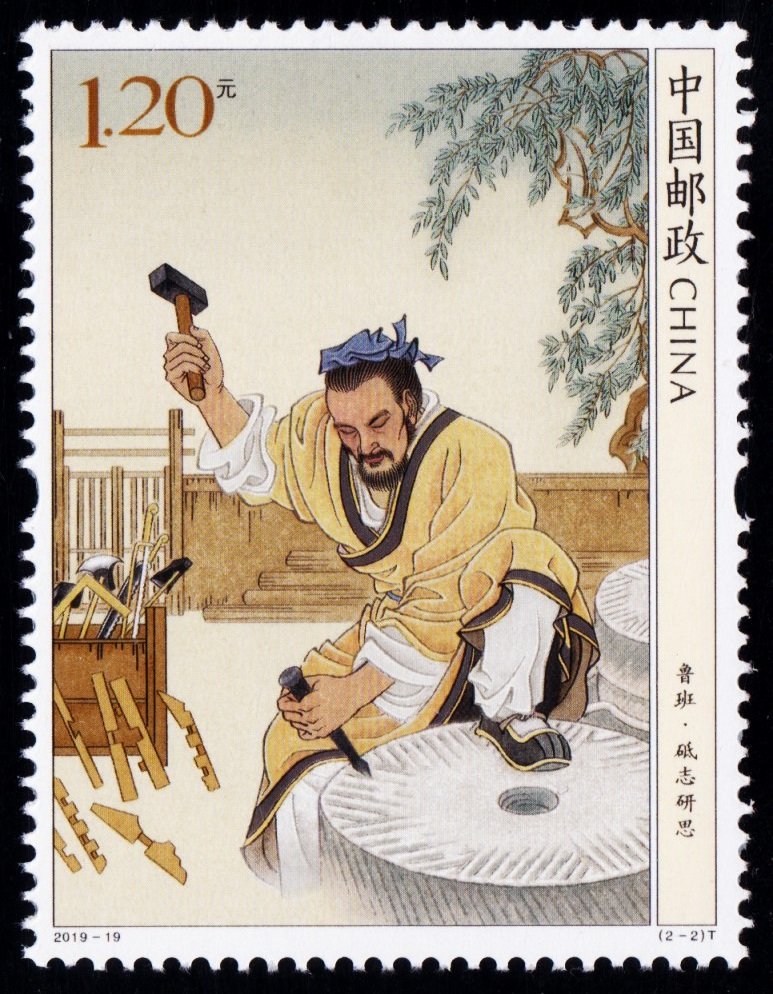
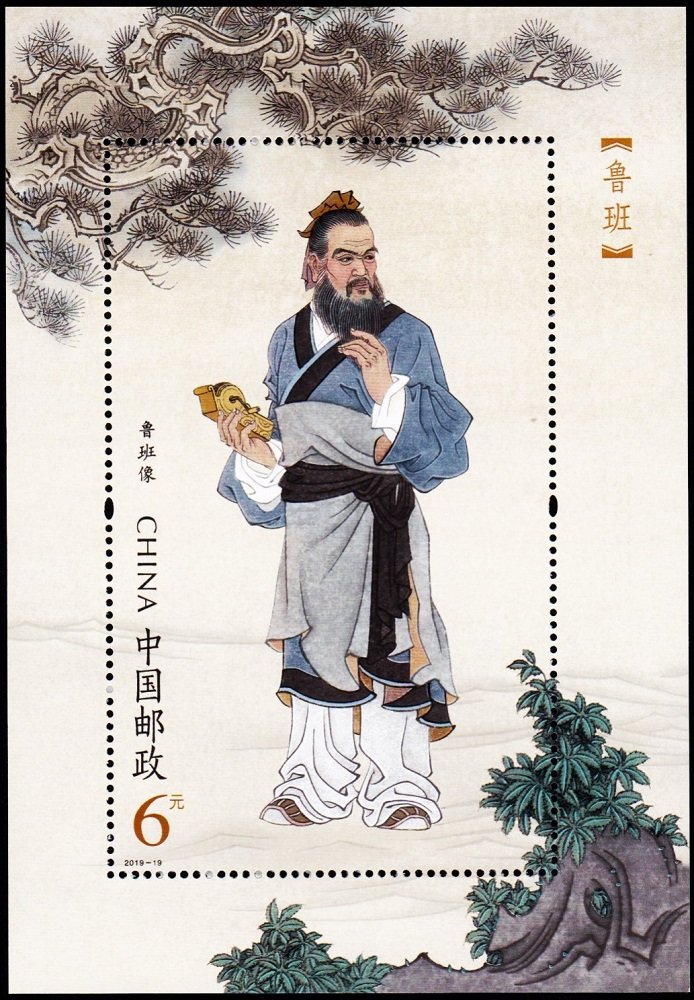
Lu Ban (c.#8201;507–444 BC) was a Chinese structural engineer, inventor, and carpenter during the Zhou Dynasty. He is revered as the Chinese Deity (Patron) of the builders and the contractors. Lu Ban is revered as the god of carpentry and masonry in Chinese folk religion. His personality is assumed by the master carpenter involved in the construction of houses among the Dong. He is sometimes counted among the Five Kings of the Water Immortals, Taoist water gods invoked by sailors for protection while carrying out journeys. Lu Ban, issued by PR of China on August 24, 2019: 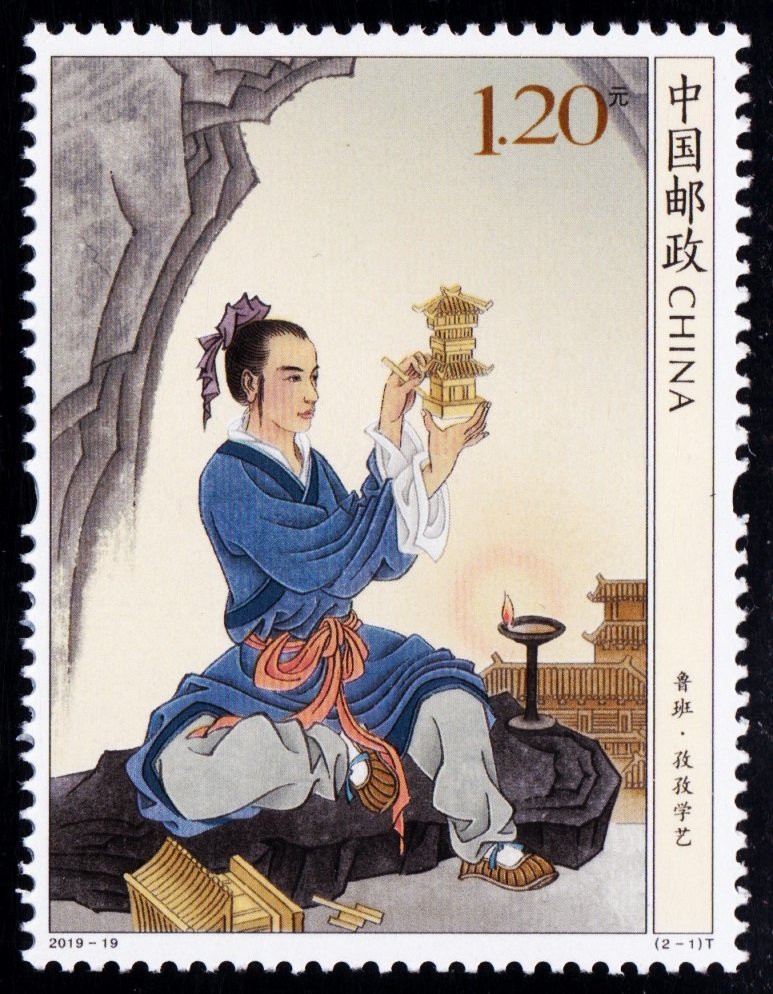
 |
|
Send note to Staff
|
|
|
Pillar Of The Community
Israel
4900 Posts |
|
|
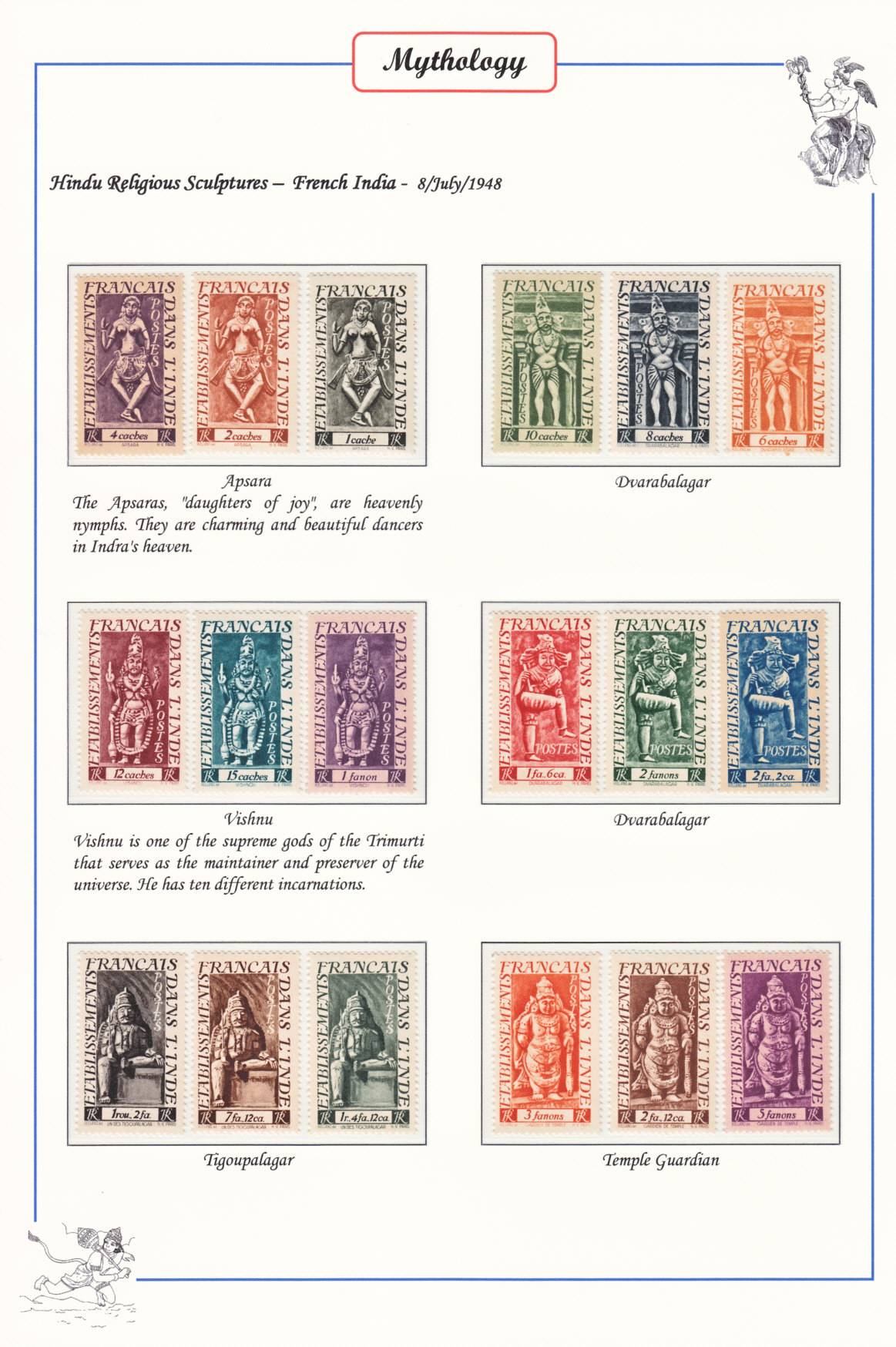
Hindu Sculptures, issued for use in French India on July 8, 1948. Vishnu and Apsara: Vishnu, also known as Narayana, is one of the principal deities of Hinduism. He is the supreme being within Vaishnavism. Vishnu is known as "The Preserver" within the Trimurti, the triple deity of supreme divinity that includes Brahma and Shiva.
An Apsara is a type of female spirit of the clouds and waters in Hindu and Buddhist culture. In Indian mythology, apsaras are beautiful, supernatural female beings. They are youthful and elegant, and superb in the art of dancing. They are often wives of the Gandharvas, the court musicians of Indra.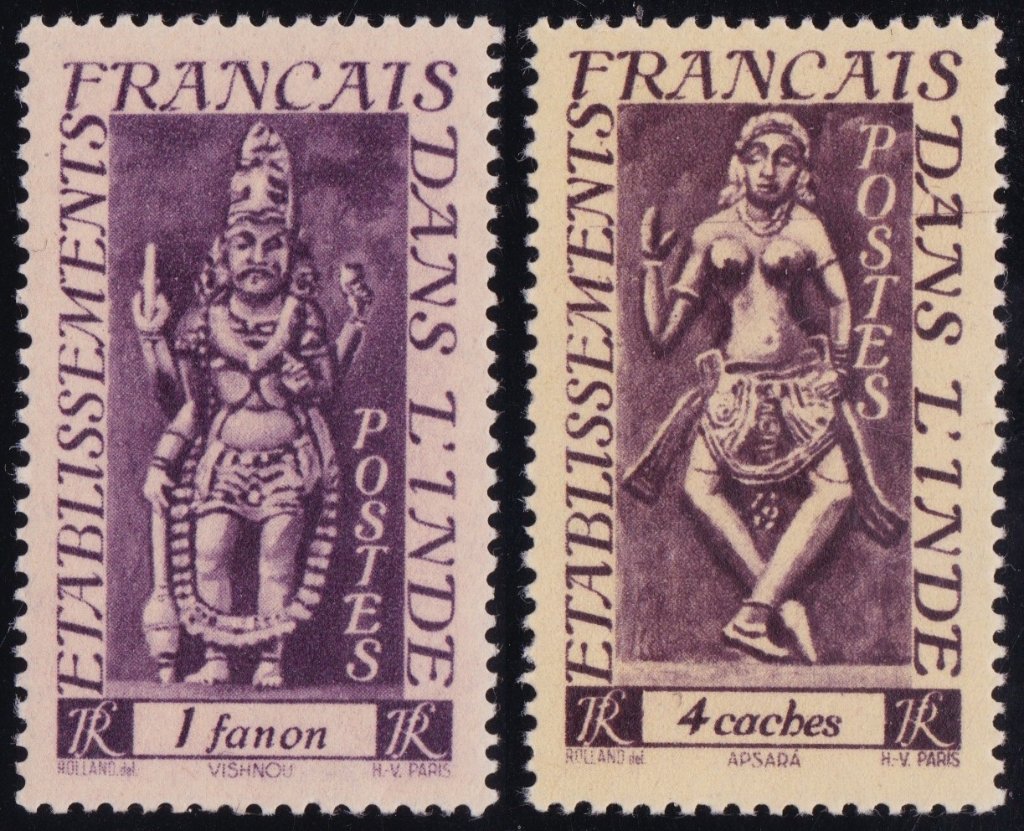 Dvarabalagar: 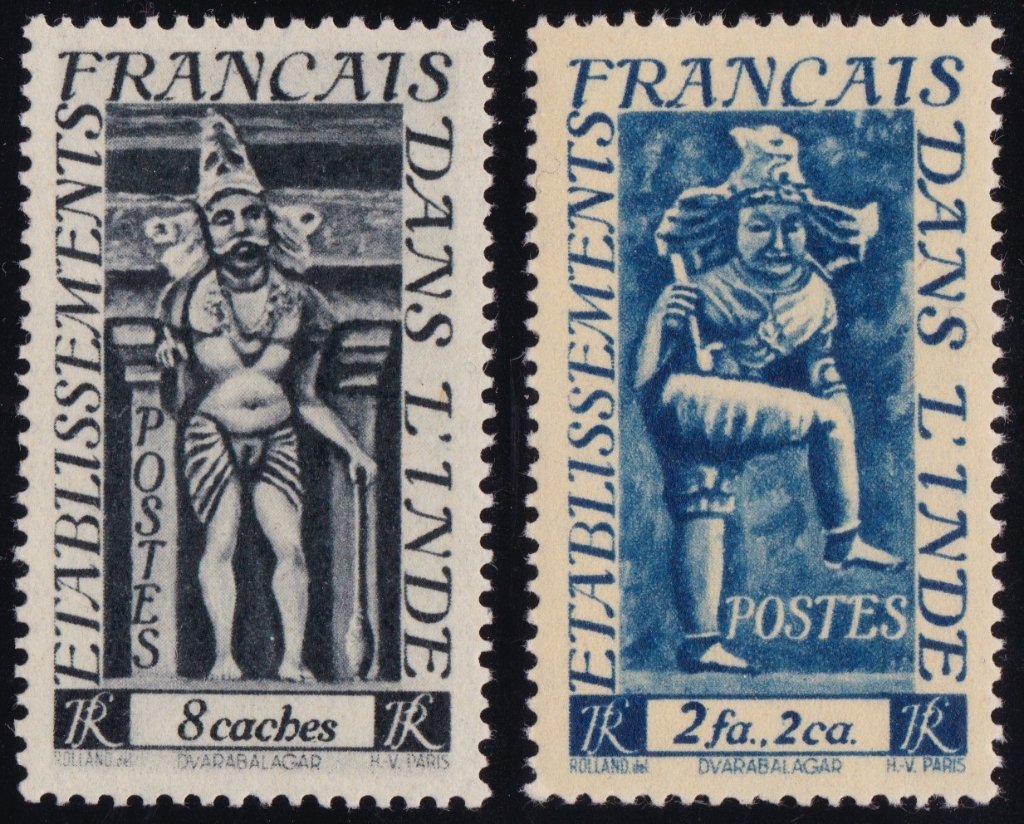 Tigoupalagar and Temple Guardian: 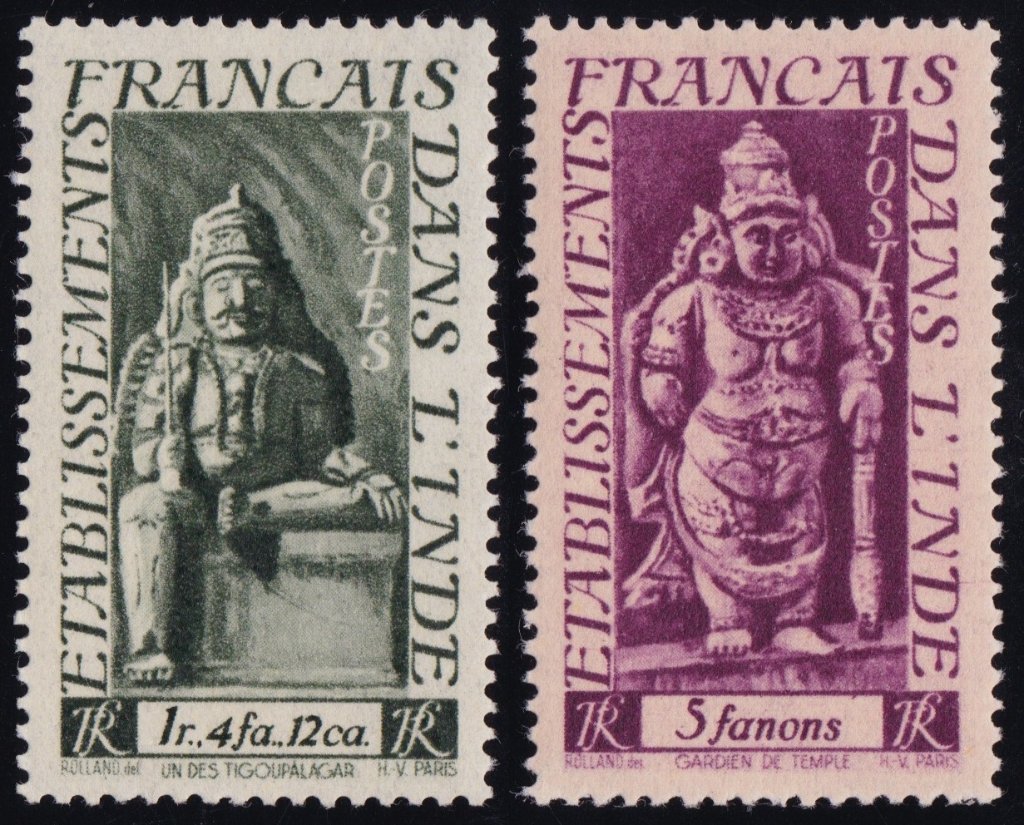
 |
|
Send note to Staff
|
|
|
Pillar Of The Community
Israel
4900 Posts |
|
|
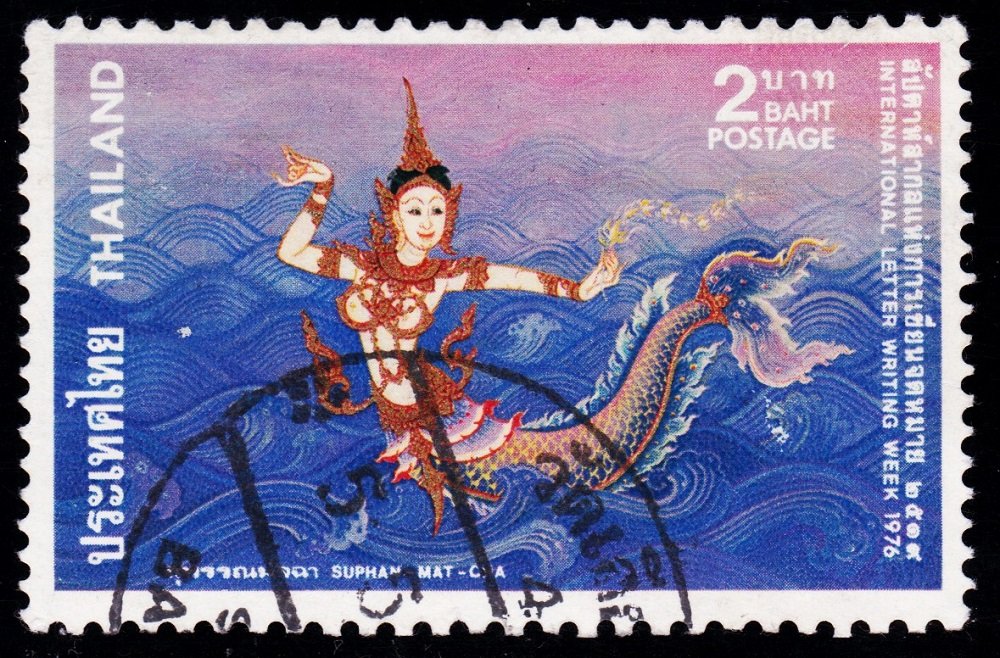
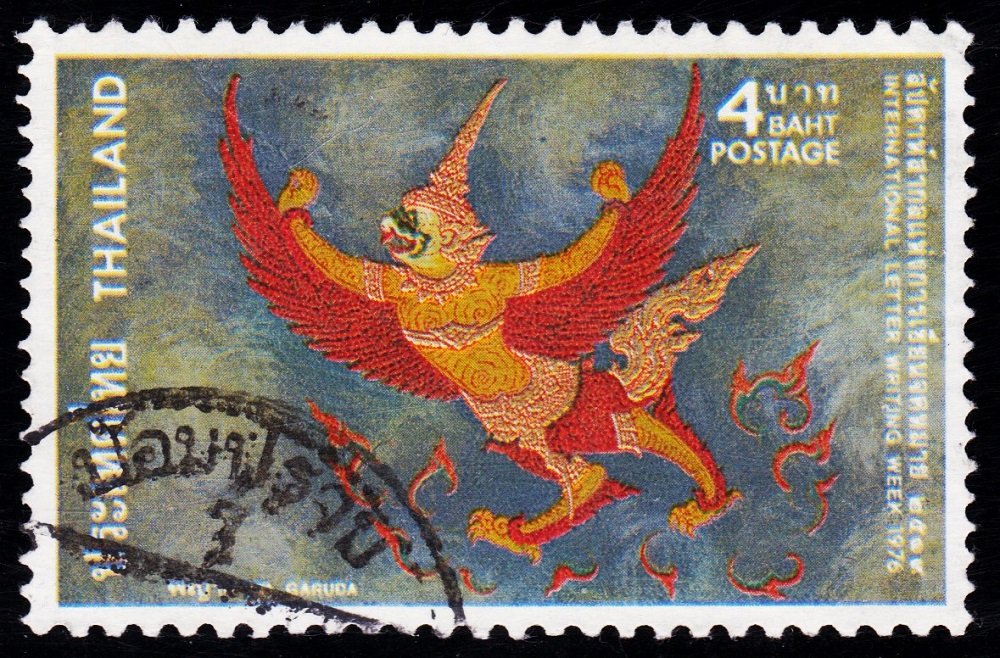
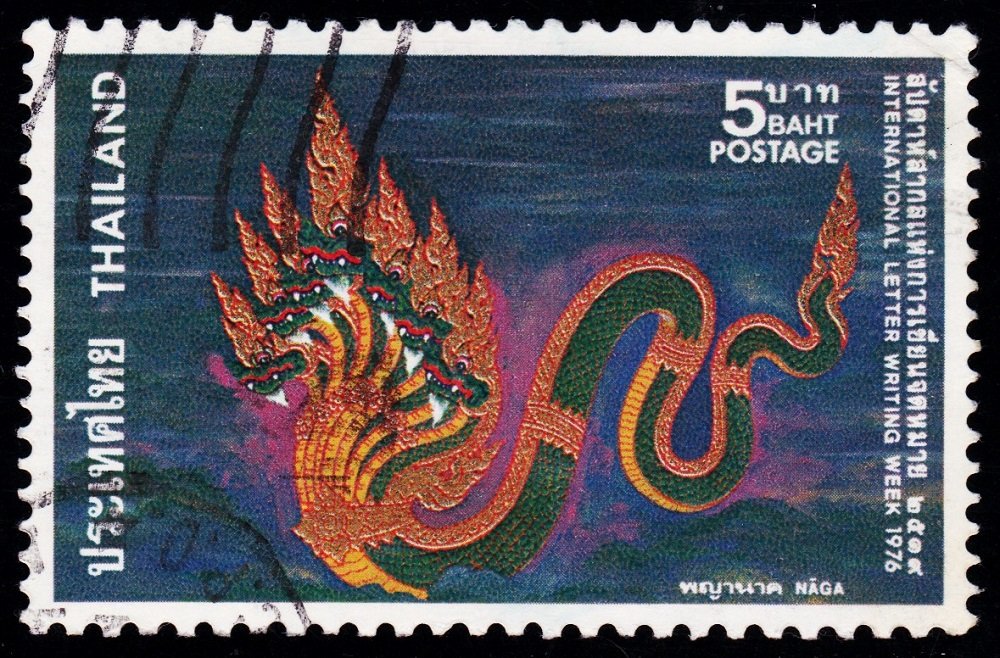
Buddhist Mythical Creatures, issued by Thailand on October 3, 1976. Kinnari - celestial musician, part human and part bird Suphan-Mat-Cha - mermaid, one of the Ramayana epic characters Garuda - part human pert bird, King of the birds Naga Dragon - part human part serpent, the protector 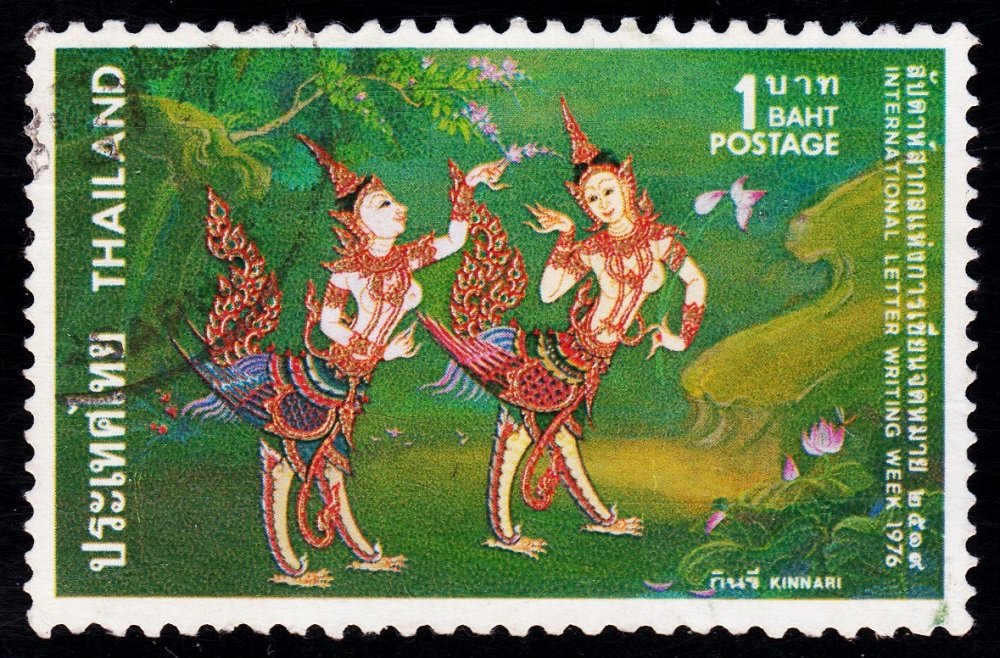
 |
|
Send note to Staff
|
|
|
Valued Member
United Kingdom
337 Posts |
|
|
Valued Member
United Kingdom
337 Posts |
|
|
Pillar Of The Community
Israel
4900 Posts |
|
|
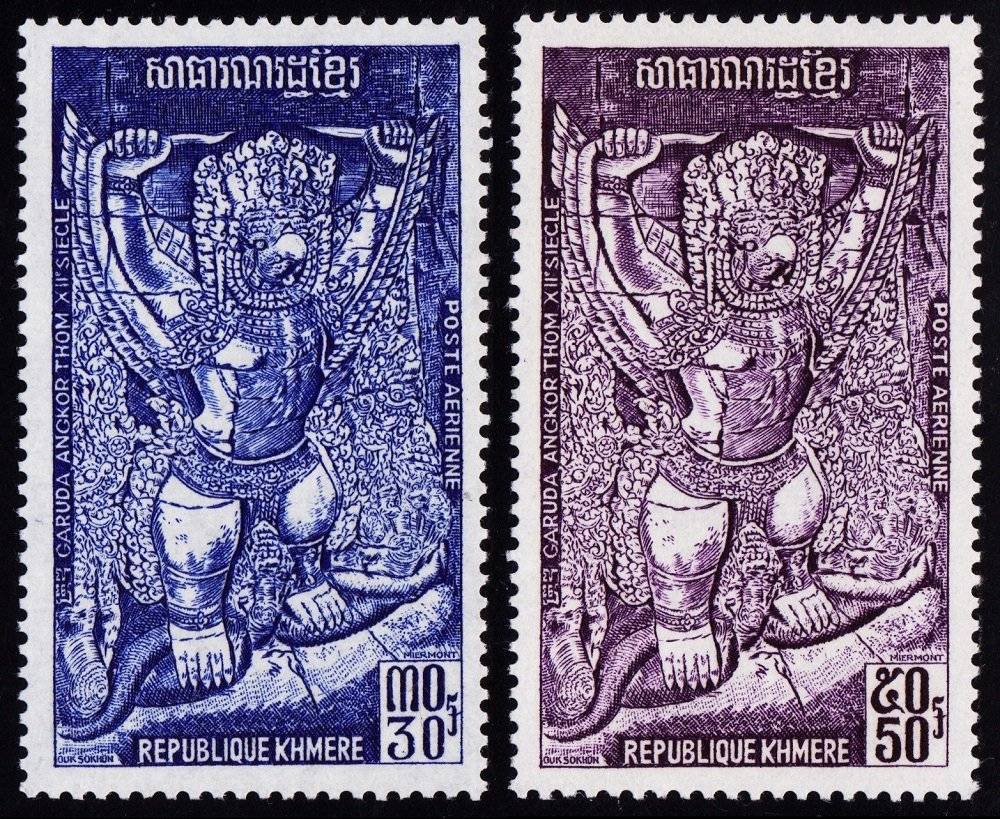
Garuda is a Hindu demigod and divine creature mentioned in the Hindu, Buddhist and Jain faiths. Garuda is described as the king of the birds and a kite-like figure. He is shown either in a zoomorphic form (a giant bird with partially open wings) or an anthropomorphic form (a man with wings and some ornithic features). Garuda is generally portrayed as a protector with the power to swiftly travel anywhere, ever vigilant and an enemy of every serpent. (Wiki) Garuda, a 12th century stone relief from temple Angkor Thom, siem Reap, Cambodia, designed by Duk Sokhon, engraved by Jean Miermont, and issued by Cambodia (Khmer Republic) on January 18, 1973: 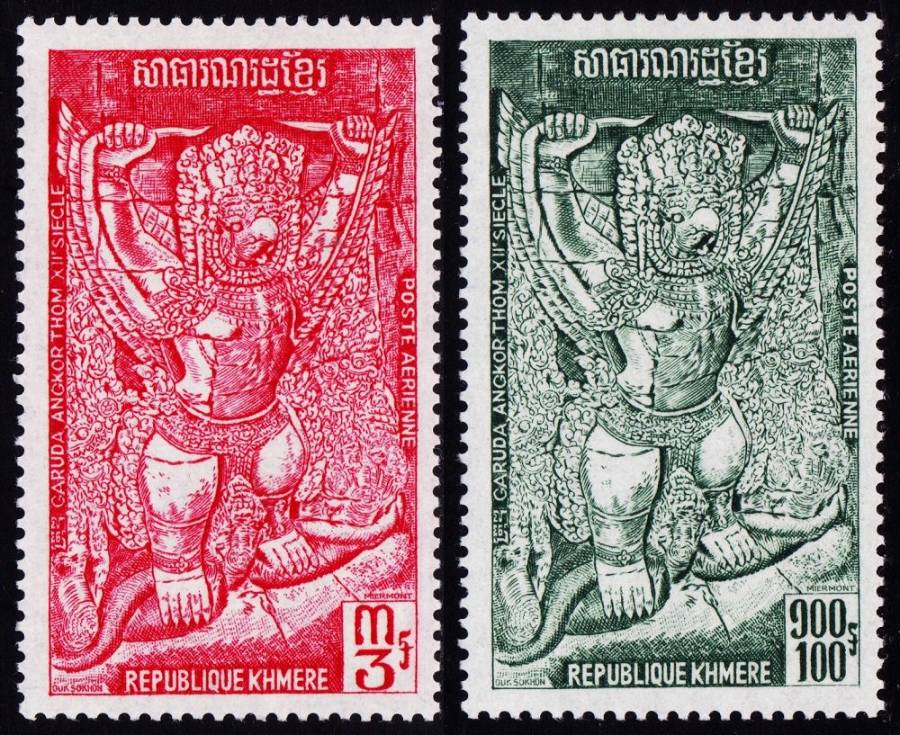
 Garuda stone relief from temple Angkor Thom on a 100,000 Riel commemorative banknote - 2012: 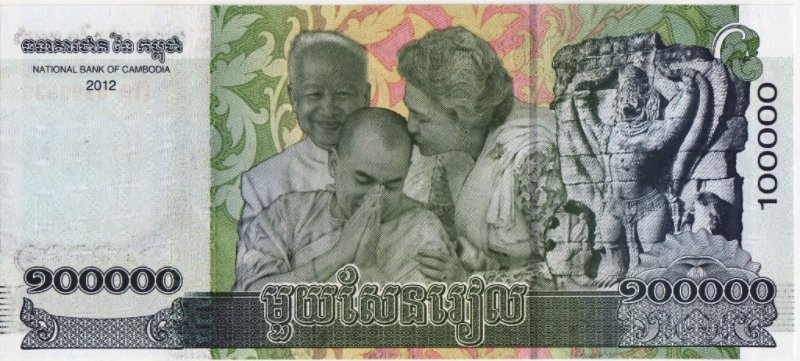 |
|
Send note to Staff
|
|
|
Valued Member
United Kingdom
337 Posts |
|
|
When East meets West.
~~~~~~~~~~~~~~~~ It is believed that a large furry creature lives within the woods of Canada and in the snowy regions of the Himalayas. The Canadian creature goes by the name of "bigfoot" or the name of "sasquatch".  A similar creature is also reported to live in the region of the Himalayas, known as the "Yeti". 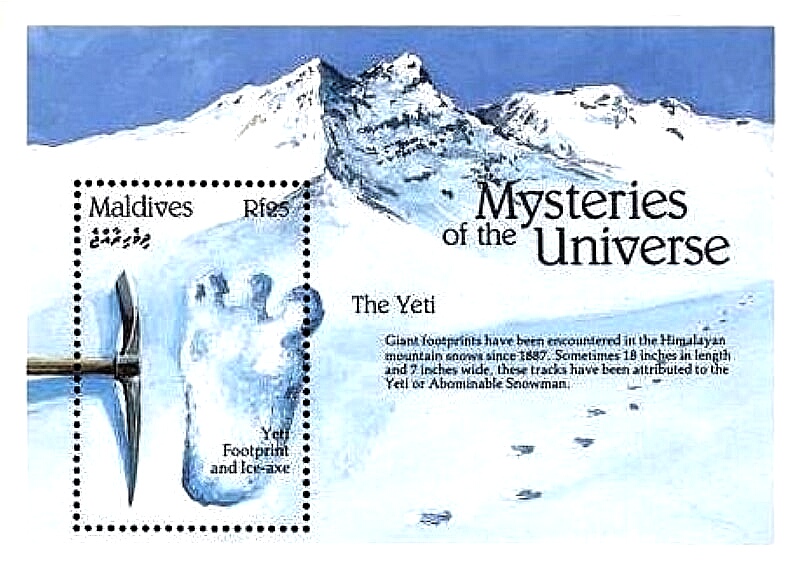 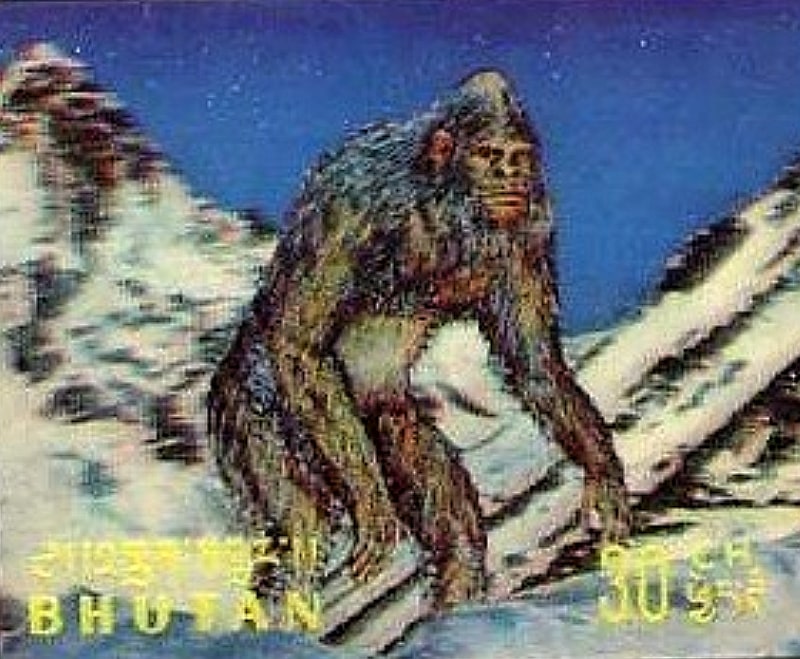  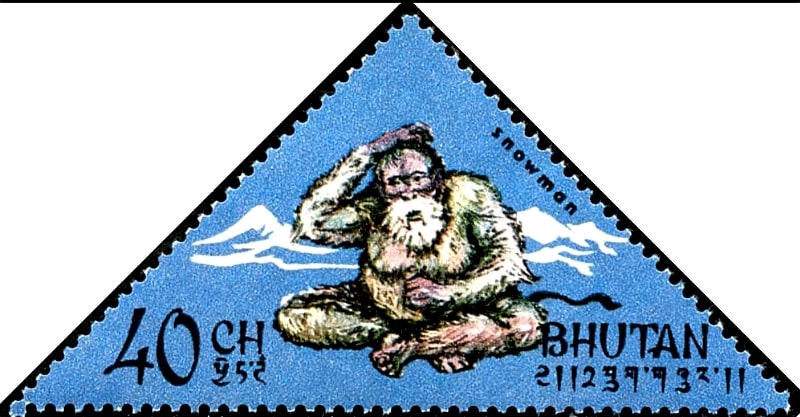 Fact or fiction ? |
|
Send note to Staff
|
|
|
Replies: 73 / Views: 9,492 |
|




 Posted 06/25/2021 4:56 pm