| Author |
 Replies: 414 / Views: 36,362 Replies: 414 / Views: 36,362 |
|
|
|
Valued Member
22 Posts |
|
|
Thank you Partime, really appreciate the reference and information provided! |
Send note to Staff 
|
|
|
New Member
Australia
2 Posts |
|
|
Hi itma and rod222 I have been reading the King George V postings and love the pictures as reference but itma your page of references to pictures shown and page is no good if you don't have the book. I am finding myself having to print pages up of the forum so I can remember the picture. My husband is complaining of how much paper trail I am making. But I get my Kings out and hope I find that one because I don't have the books .  |
|
Send note to Staff
|
|
|
Pillar Of The Community
Canada
877 Posts |
|
|
Good morning, Tastwinkle: A good first step would be to look for a second hand copy of ACSC on ebay. I say "first step" because ACSC lists only a small percentage of varieties. They change their numbering from time to time (like all catalogues) but always cross-reference to position number. You may also wish to join BSAP which costs less than GBP20 per year. You can then buy their checklists over time at member prices. Their quarterly newsletter has a regular updates to the 1d sideface and occasional updates to other denominations. |
|
Send note to Staff
|
|
|
New Member
Australia
2 Posts |
|
|
Thanks itma for that but it is hard to get these books second hand on ebay. I battled to get a Stanley gibbons 2016 book at a price I can afford. I just wanted to have a book so I could look up errors as I am doing an album minus the King George V and Roo maps because I don't have them due to my collection as a child was from King George Vl. But I was lucky and got a couple and one was inverted. If you know any one selling them . I love my stamps but love them even more now that I am I crushed a nerve, they keep me busy with soaking stamps and mounting them . I have time now to make a story line. |
|
Send note to Staff
|
|
|
Pillar Of The Community
Canada
641 Posts |
|
|
Hello everyone! What an interesting subject! I guess these stamps can be compared to the famous 3 cents Washington from 1851-57 with all these variations and different printings!  Hours and hours of fun. I'm beginning with these stamps and I wonder how to start, except with watermarks, dies, and perforations. There's so many things to discover! Can someone explain me what are the different Electro numbers and why is there so many different panes? And can someone tell me what are the varieties I should be looking for first? I have a few stamps of this issue and would like to study them.  Any help would be appreciated. |
|
Send note to Staff
|
| Edited by Captain Stamp - 05/02/2025 5:34 pm |
|
|
Pillar Of The Community
Canada
877 Posts |
|
|
First of all, pane and electro usually have the same meaning and the same identifying number, when talking about KGV sidefaces. This, however, only applies to the issues created by the electrotype process, but as we are always talking about the end result of the printing process - the actual postage stamp - perhaps "pane" is more appropriate and general term. (I count myself amongst the culprits in this case.) The 1d issue was printed from steel plates and did not use the electrotype process. Why are there so many electros - as may as 34 in the case of the 1½d denomination? The steel plates are very long lasting with 8 panes on four plates lasting the entire life of the Sidefaces - close to 20 years. The electros use copper plates with a much shorter life and required replacement from time to time. As to where you should start, much depends upon how much you are willing to spend. On a limited budget, I would suggest choosing just one denomination. My recommendation would be the 1d issues which are probably the best documented. This could be further restricted selecting a single colour, say red or green, with green being the less expensive route while still involving the great majority of the 1d varieties. Then you need documentation. I would not recommend the Australian Commonwealth Specialists' Catalogue. ACSC contains only a small percentage of varieties and is expensive, although if you can pick up a 25 year old copy at a good price, it will give you very useful additional information. You might care to take a look at BSAP's publications at https://www.bsap.org.uk/publications. It is not expensive to join BSAP - currently £20 per year and then you will get access to member pricing for their publications. Hope this helps, and good luck. |
|
Send note to Staff
|
| Edited by itma - 05/03/2025 11:58 am |
|
|
Pillar Of The Community
Canada
641 Posts |
|
|
Thank you! Yes, this of course, helps. Unfortunately, every book I was interested to get was out of stock. I would be interested to join the society, will think about that.
Before learning that, I will need to learn more accurately the different printing processes.
While I try to get a book I want about this subject, can I show you a couple of scans of details I spotted on KGV stamps of mine to know if these are varieties or not?
Thank you really much again for your help! |
|
Send note to Staff
|
| Edited by Captain Stamp - 05/03/2025 11:04 pm |
|
|
Moderator

United States
5107 Posts |
|
|
Please go ahead and post your varieties here. Be sure to add a circle or arrow to point out the section you believe makes it a variety. |
|
Send note to Staff
|
|
|
Pillar Of The Community
Canada
641 Posts |
|
|
Here are several of the things I spotted. I am not familiar with the details of these stamps, and I spot a lot of details that may be nothing interesting. None of them may be no varieties at all, as well as all of them can be varieties. These are some details I found curious, I can't tell more, as I don't know more. First detail: really small part in the curve joining the upper part of the 2 and the lower part maybe missing or really thin. A variety?  I compared that to another 2 on another stamp that looks "normal" (last of the two pictures). 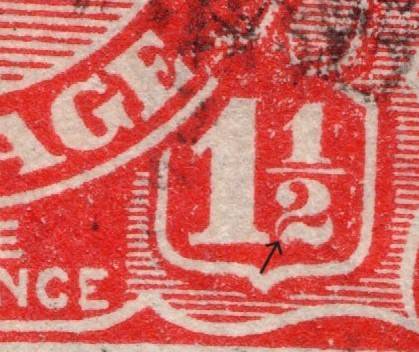 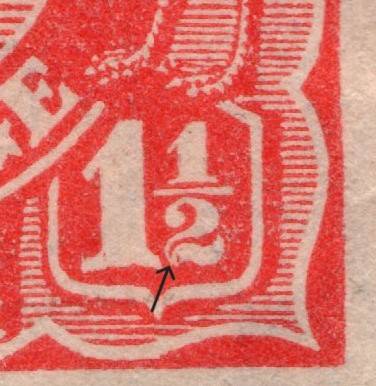 Second detail: flaws near "2"? 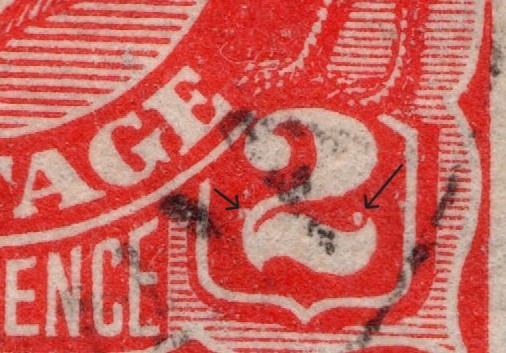 Third detail: broken lines? 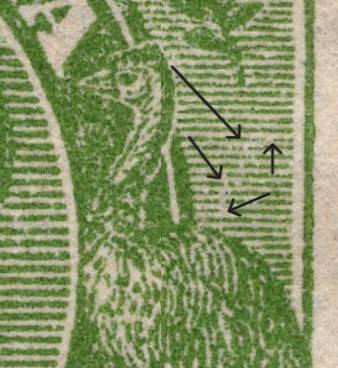 Fourth detail (s): plating characteristics? 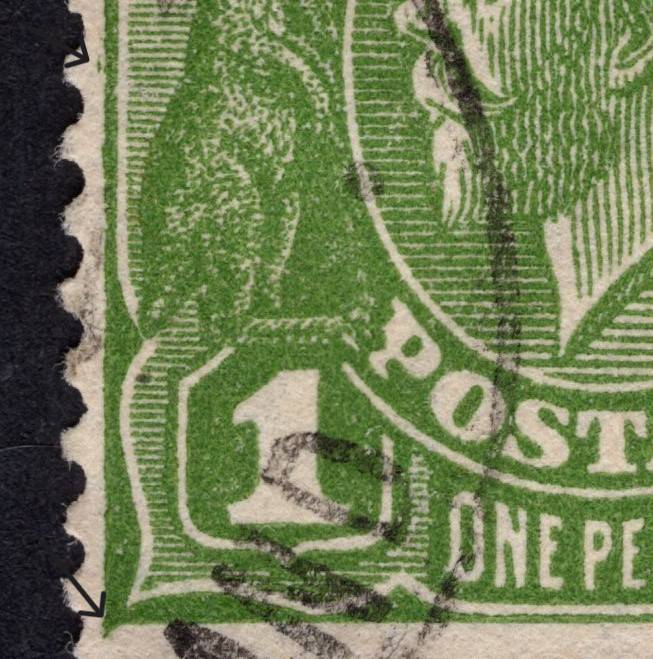 Fifth detail: deformed inside "A"? 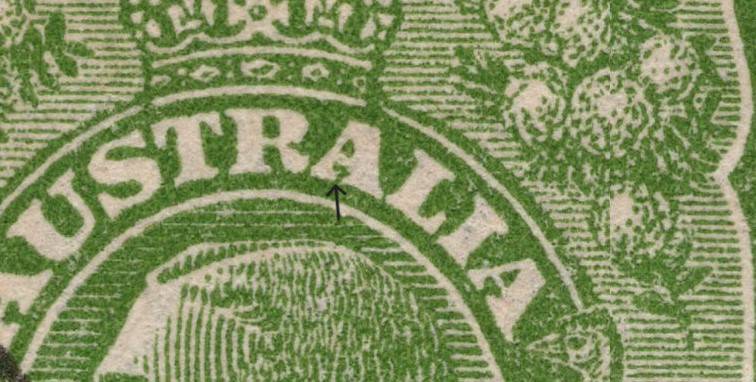 All of these may be completely normal but I post them in case these are varieties, and if not, to enlarge my knowledge by getting explanations. Here are the complete pictures of each stamp I spotted details on: 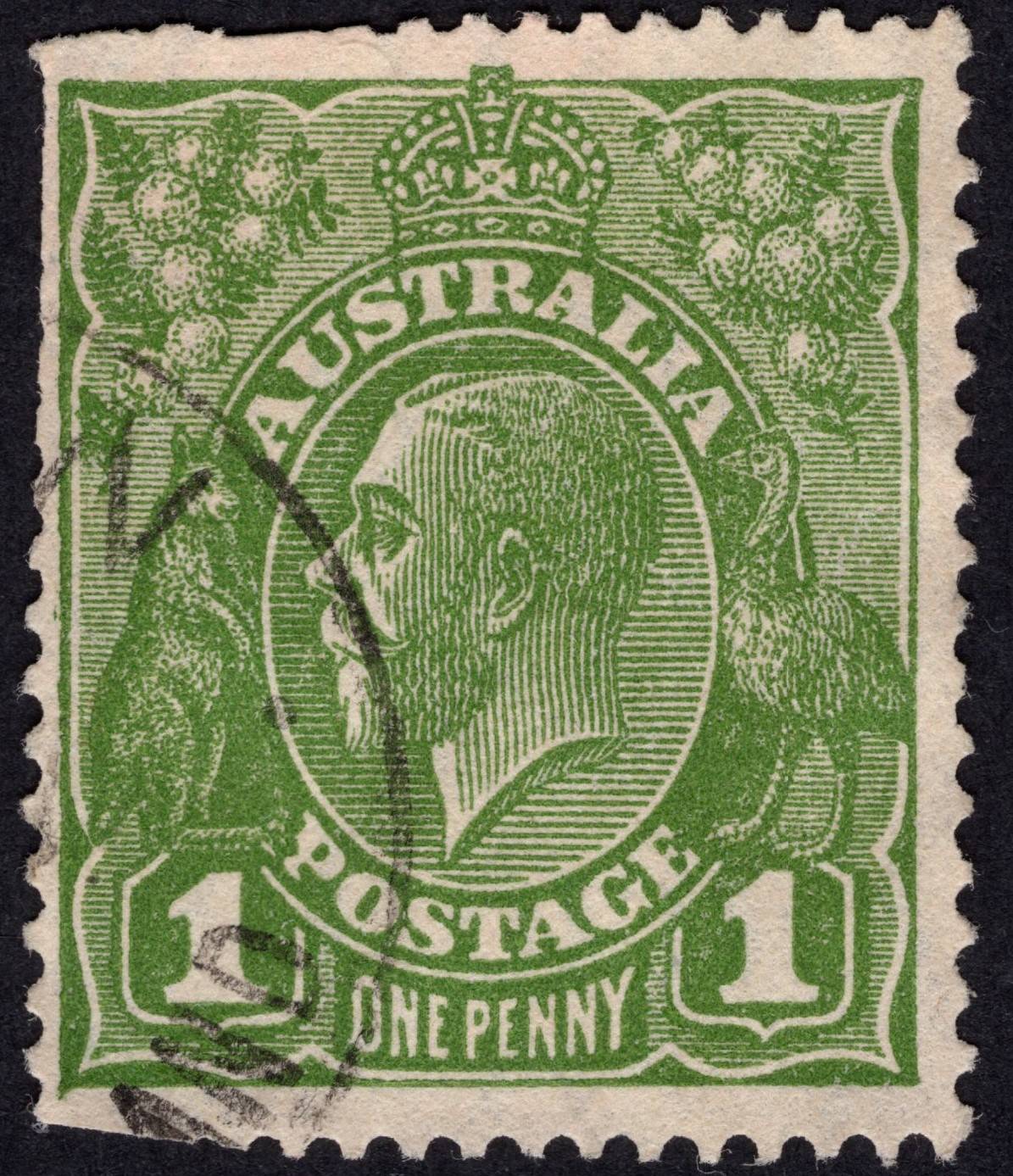 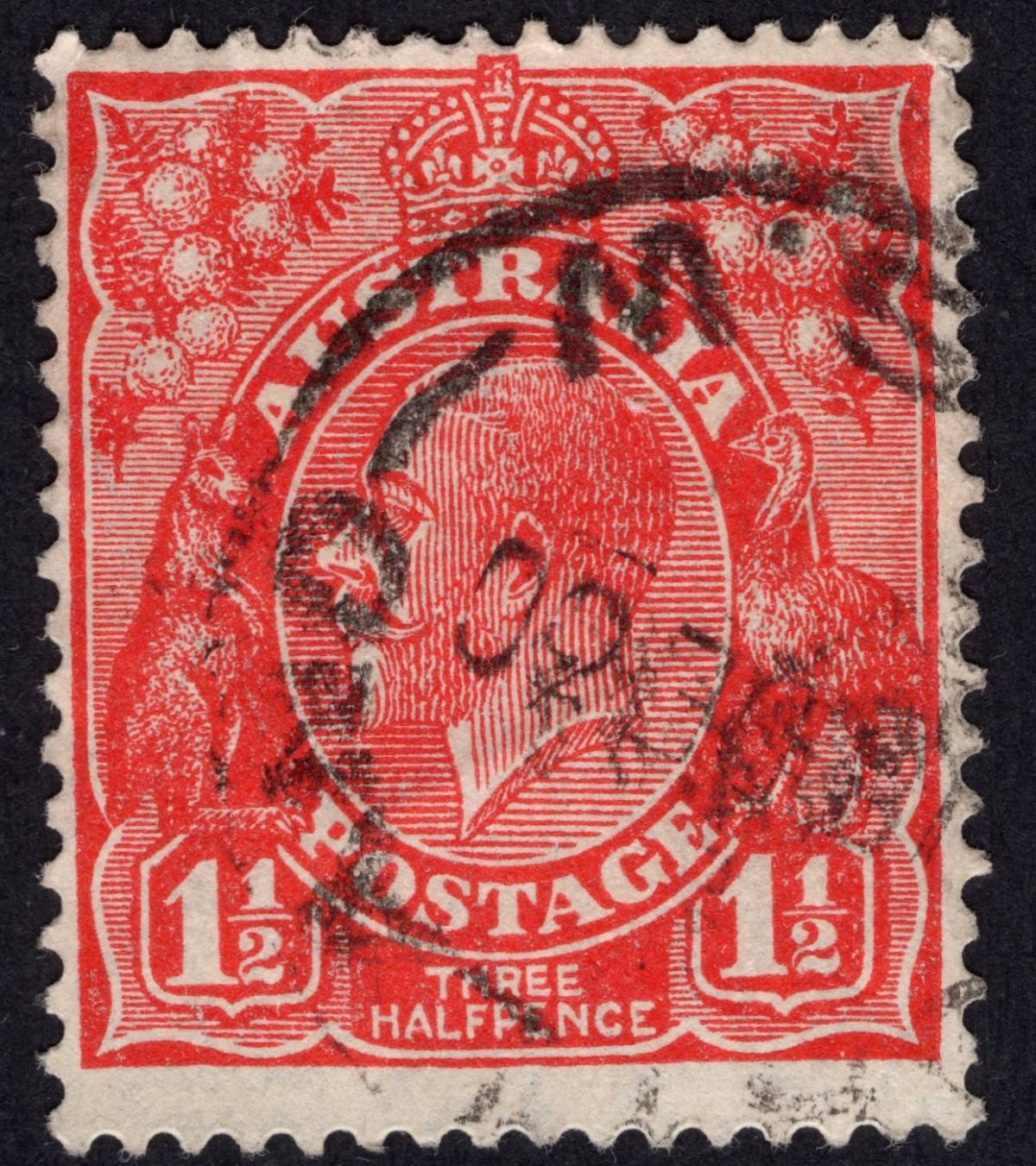 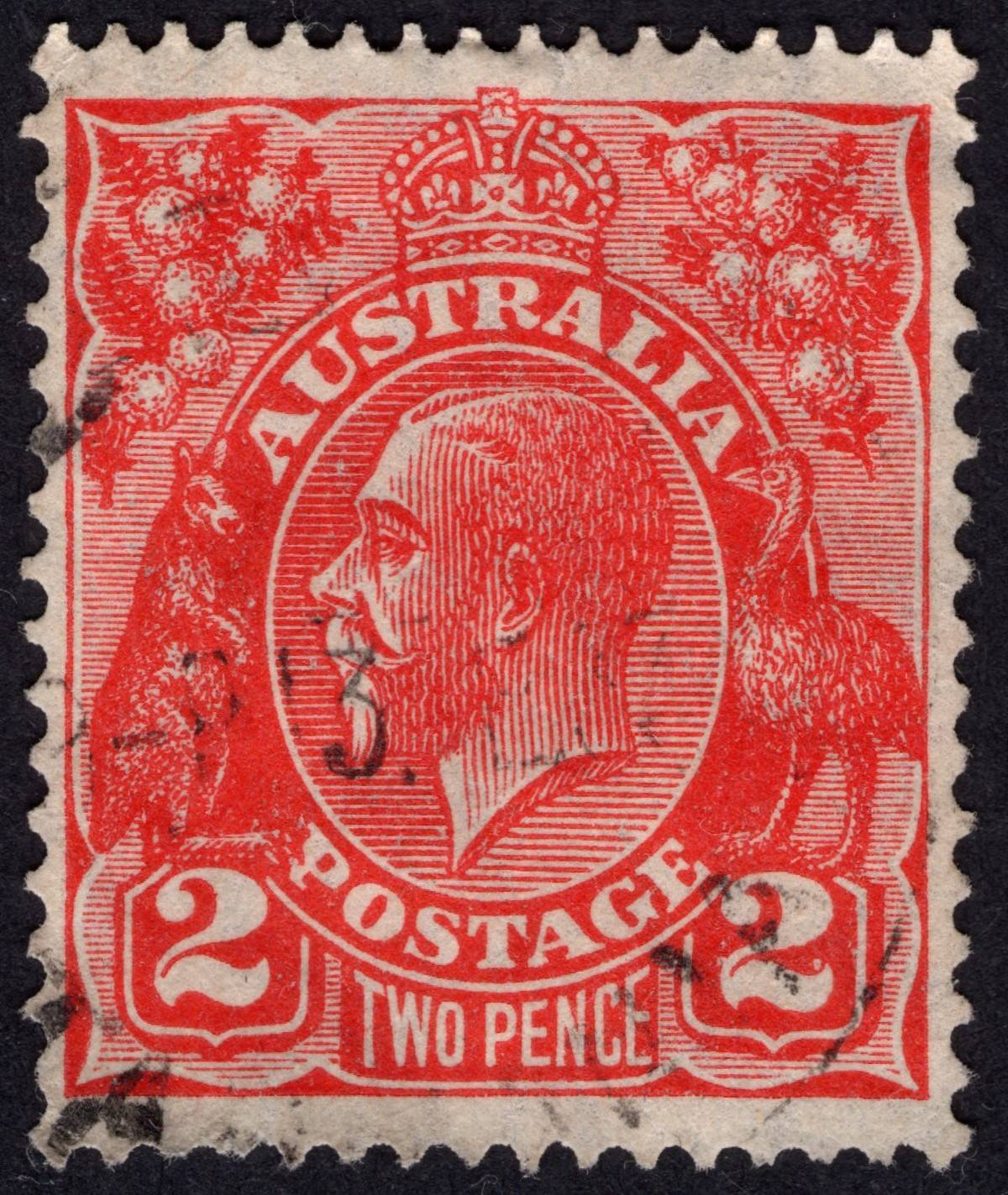 In case you would have remarked something that may be a variety I didn't spot, please tell me. If possible, I would ask if you could plate these stamps, this would be appreciated. By the way, apologize for the annoying lines in some of my scans, can't stop the problem for now. Thank you really much for any help! |
|
Send note to Staff
|
| Edited by Captain Stamp - 05/03/2025 9:22 pm |
|
|
Moderator
United States
5107 Posts |
|
|
The extended vertical line in the lower left corner of the 1d green "could" be a known variety, but a very minor one. All of the others appear to be simple inking variations. |
|
Send note to Staff
|
|
|
Pillar Of The Community
Canada
641 Posts |
|
|
Thank you Partime. Will certainly have to learn how to make a visual difference between inking variations and varieties!  |
|
Send note to Staff
|
|
|
Pillar Of The Community
Canada
877 Posts |
|
|
Captain Stamp: Re the 1d Green: My best guess for this is that it comes from Pane VI, Number 25 (a left marginal position). One of the problems with ACSC is that is just gives the description of a single flaw. In this case, similar bottom left corner flaws are found in I/21, I/36, IV/14, V/3, V/25 and VI/25. So you need to find additional features on a stamp to narrow the choice down. The BSAP check list describes the features as follows: First State - Proof to December 1914
- 1a: Top Right Corner. Small hump on TF at corner which protrudes slightly to right. Variable.
Second State -1914 to Final
- 1a: As before
- 2a: Top Frame. Straight shave from TLC for 2.5mm where it returns abruptly to normal.
- 2b: Bottom Left Corner. Frame extends vertically down for 0.3mm from corner. Variable.
By variable, it is meant that this feature may be changeable in size/form or could even be absent. This could be any one of the six 1d Green issues, depending on the perf and watermark. So it's important to add as much information as you have when seeking when seeking an identification. Re the 1½d Red stamp following the 1d Green could be 1R18, i.e. Plate 1, Right Pane, Position 18 - thick letters of value. Because of the date on the postmark, I suggest this is ACSC BW92(1)la a.k.a. SG96 or 96a. (ACSC doesn't list this variety for BW91/SG87 or 87a). Other than ACSC, I don't have any further detailed info on Die II 1½d stamps. I'll try to take a look at the others as I have time. Have you thought about joining the BSAP Group on Facebook? You don't need to be a member. Once you have made yourself known there, you may be able to find someone who has a BSAP Check List that is surplus to requirements. I am sure they will do everything possible to encourage young collectors. |
|
Send note to Staff
|
|
|
Valued Member
United States
131 Posts |
|
|
I found the following with a line top right to bottom left. At first I thought it was damage, but then saw that it was at printing. 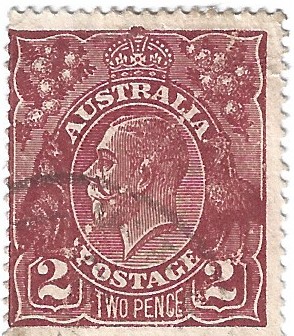 |
|
Send note to Staff
|
|
|
Pillar Of The Community
Canada
877 Posts |
|
|
Looks like the stamp has had something rubbed heavily across it. Hard to say from the low resolution' image. |
|
Send note to Staff
|
|
|
Pillar Of The Community
Canada
641 Posts |
|
|
Thank you really much! So, I guess several of the details I spotted were not varieties, but plating characteristics? For your information, the 1d green is watermark ''Crown and C of A multiple'' which makes it a late print. I measured the perfs, and it looks like perforated 14x13. It's not noted in my catalogue that 14x13 exists, curious. Thank you really much for your help! |
|
Send note to Staff
|
|
|
Replies: 414 / Views: 36,362 |
|



 Posted 09/24/2023 8:23 pm


