| Author |
 Replies: 12 / Views: 1,071 Replies: 12 / Views: 1,071 |
|
|
Pillar Of The Community
United States
1854 Posts |
|
|
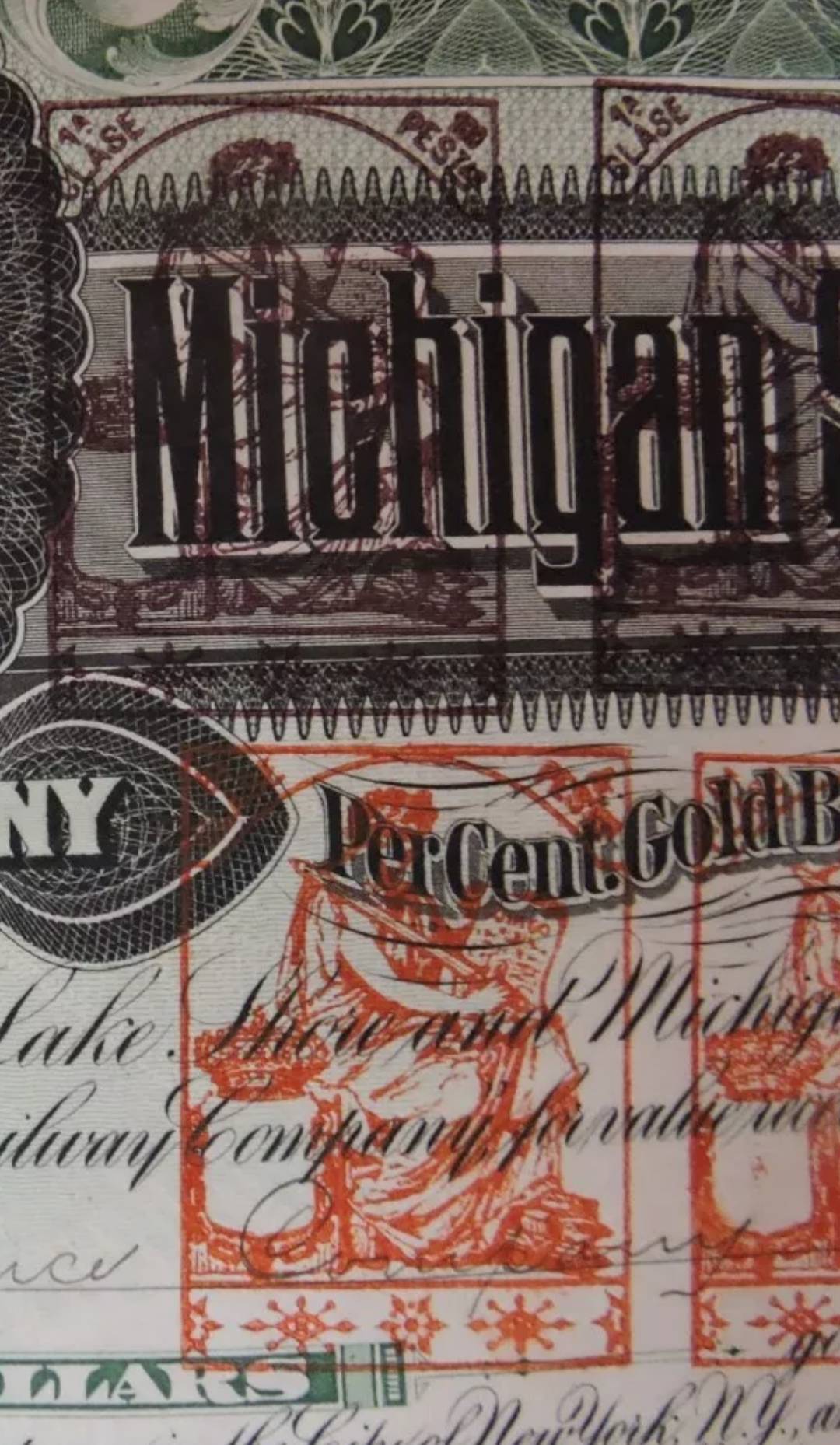
I spotted this today on ebay. Not a buyer, but I am curious to know what all those imprints are, running along the top. I assume revenues, but I can't discern what country -- and why so many? 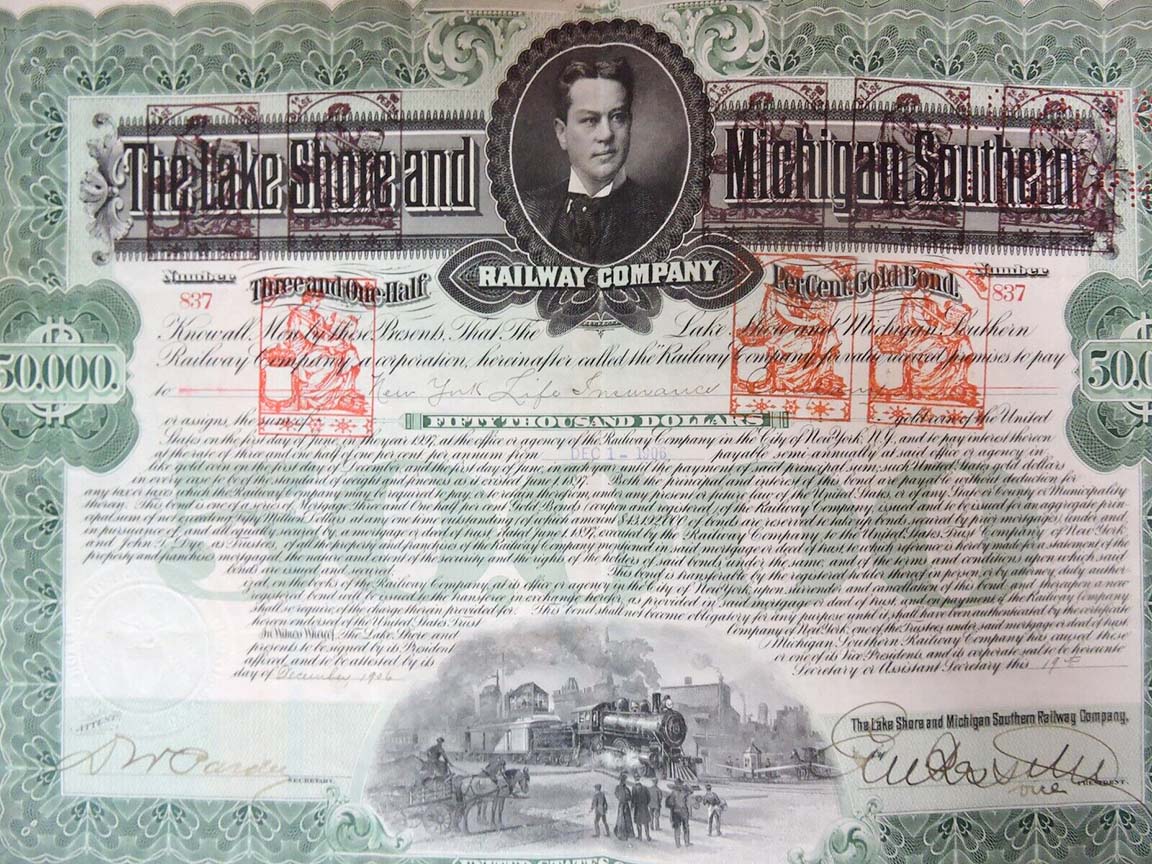 |
|
Send note to Staff
|
|
|
|
|
Pillar Of The Community
6344 Posts |
|
|
It would be helpful to have a high-res close-up image of one or two of the clearer stampings. |
Send note to Staff 
|
|
|
Pillar Of The Community
United States
1854 Posts |
|
|
Pillar Of The Community
Netherlands
797 Posts |
|
|
Bedrock Of The Community
United States
10684 Posts |
|
|
 As to why there are so many, it would depend on how much the tax was and exactly what values existed at the time. |
|
Send note to Staff
|
|
|
Pillar Of The Community
Netherlands
6593 Posts |
|
|
It does appear to be in Spanish, 1a clase (1st class), 100 PESTas. (pesetas?) and 4 PESTas. See bottom of page 5 https://www.rahf.es/wp-content/uplo...a_Fiscal.pdfThis either is someone practising a forgery of the pólizas, or the note was used by FNMT in some type of trial. The true pólizas should be labels affixed to, not stamped onto the document. |
|
Send note to Staff
|
| Edited by NSK - 05/08/2024 08:27 am |
|
|
Pillar Of The Community

United States
1080 Posts |
|
|
Because of where the markings are placed, and the fact they are an unrelated Spanish indicia, it seems clear to me they are simply obliterations to void/cancel the expired stock certificate, and not having anything to do with any actual revenue or tax purposes.
$50,000 is a lot of money, especially in 1906, so there are so many of the markings, and different colors, to make it very clear the certificate is all used up, and for whatever reason the clerk didn't have a rubber stamp that said Void or Cancelled. |
|
Send note to Staff
|
|
|
Pillar Of The Community
United States
1854 Posts |
|
|
It is an odd configuration, but if it was intended to obliterate why bother to use two different colors/denominations? I'm not sure this was really the case. Let's throw in a couple more clues that I just noticed on the back. There is a stamp duty rubber stamp in Spanish from 1916. But there is also a punch cancellation showing the bond was not cancelled until 1978! 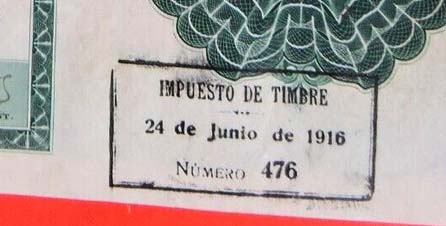 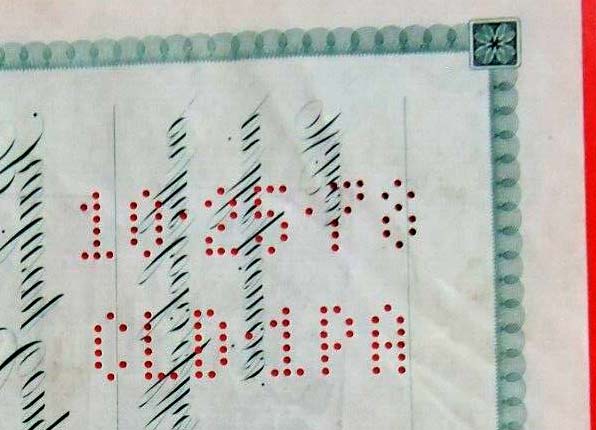 |
|
Send note to Staff
|
| Edited by GregAlex - 05/08/2024 2:22 pm |
|
|
Pillar Of The Community
Netherlands
6593 Posts |
|
|
Quote:
Because of where the markings are placed, and the fact they are an unrelated Spanish indicia, it seems clear to me they are simply obliterations to void/cancel the expired stock certificate, and not having anything to do with any actual revenue or tax purposes.
$50,000 is a lot of money, especially in 1906, so there are so many of the markings, and different colors, to make it very clear the certificate is all used up, and for whatever reason the clerk didn't have a rubber stamp that said Void or Cancelled. Before these pólizas were made, the stamps were applied to the document by government institutions in provinces and accounts were kept in a way the these stamps could be proven to be genuine. In the mid 19th century, they were applied to adhesive labels, bij the Fábrica de Sello in the 1893 merged into de Fábrica Nacional de Moneda y Timbre. In 1906 and later, they were used on adhesive labels. If the FNMT did not use an old document to test the stamp (I cannot imagine why they would), these, almost certainly, are forgeries. Maybe FNMT sold the devices after the póliza was abolished in the 1960s and someone had some fun. These are not stamps that someone at a post office or local tax office, or clerk at some administration had available to cancel a document. The impuesto de timbre could be related to the gold bond being transferred to someone in Spain and stamp duty was raised. Then the document must have been sent to the FNMT for the stamps (pólizas) to be applied directly. |
|
Send note to Staff
|
| Edited by NSK - 05/08/2024 2:35 pm |
|
|
Pillar Of The Community
United States
6450 Posts |
|
|
Quote:
Because of where the markings are placed, and the fact they are an unrelated Spanish indicia, it seems clear to me they are simply obliterations to void/cancel the expired stock certificate, and not having anything to do with any actual revenue or tax purposes. I disagree. They are denominated in pesetas in the upper right corner of each handstamp. The violet/brown is 100 pesetas and the red/orange is 4 pesetas. This implies to me that they did, in fact, signify some sort of tax paid. This assumes that the handstamps are genuine and contiguous. |
|
Send note to Staff
|
|
| Edited by revenuecollector - 05/09/2024 10:52 am |
|
|
Pillar Of The Community
Netherlands
6593 Posts |
|
|
I agree they, most likely, are genuine stamp duty use. |
|
Send note to Staff
|
| Edited by NSK - 05/09/2024 11:25 am |
|
|
Pillar Of The Community
United States
1080 Posts |
|
|
I'll agree with all your expertise. It was odd to see a document obliterated like that with Spanish markings, and I was believing that "The true pólizas should be labels affixed to, not stamped onto the document." And the example adhesives pictured in the referenced PDF had serial numbers while these handstamped markings do not.
Also most documents that I recall seeing have the revenue stamps placed well away from the company name or other important markings. This one looked like it was trying to intentionally deface the company name and markings rather than just provide a receipt for the tax paid.
I posted my first impressions before the photo of the "Impuesto de Timbre" handstamp on the back was posted. At that point, my opinion changed, to believe that yes the piece did go through the Spanish financial system somehow. And so it wasn't tax paid when the document was drafted in 1906, but in 1916 when it was transferred to someone in Spain as suggested? |
|
Send note to Staff
|
|
|
Pillar Of The Community
Netherlands
6593 Posts |
|
|
Quote:
"The true pólizas should be labels affixed to, not stamped onto the document." That is what the document in the link provided mentions. Apparently, that information is incorrect or incomplete. Quote:
"Impuesto de Timbre" handstamp on the back was posted. At that point, my opinion changed, to believe that yes the piece did go through the Spanish financial system somehow. The same goes for me. |
|
Send note to Staff
|
| Edited by NSK - 05/10/2024 05:12 am |
|
| |
Replies: 12 / Views: 1,071 |
|




 Posted 05/07/2024 9:32 pm