Thangka is a Buddhist painting on cotton, silk appliqué, usually depicting a Buddhist deity, scene, or mandala (geometric configuration of symbols). Thangkas have a variety of uses, but they are mostly used as a means of gaining merit, in death rituals and in Buddhist ceremonies.
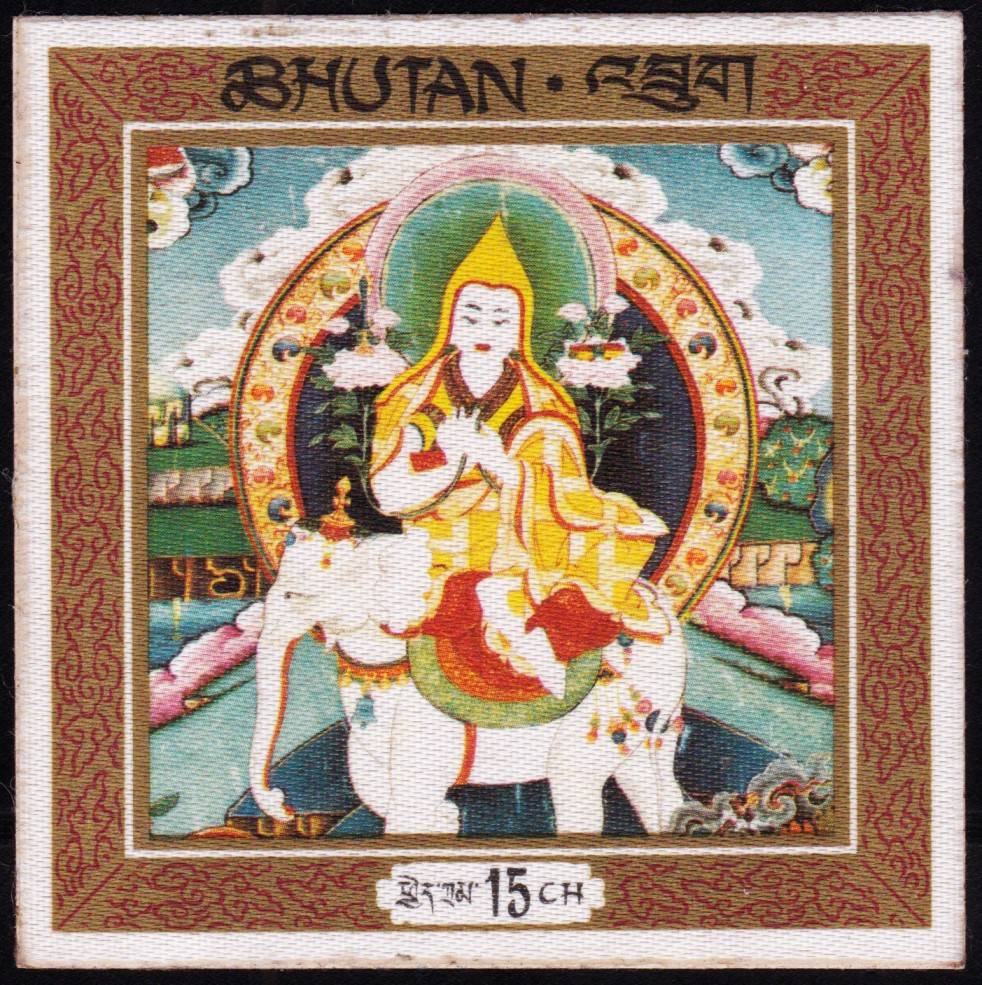
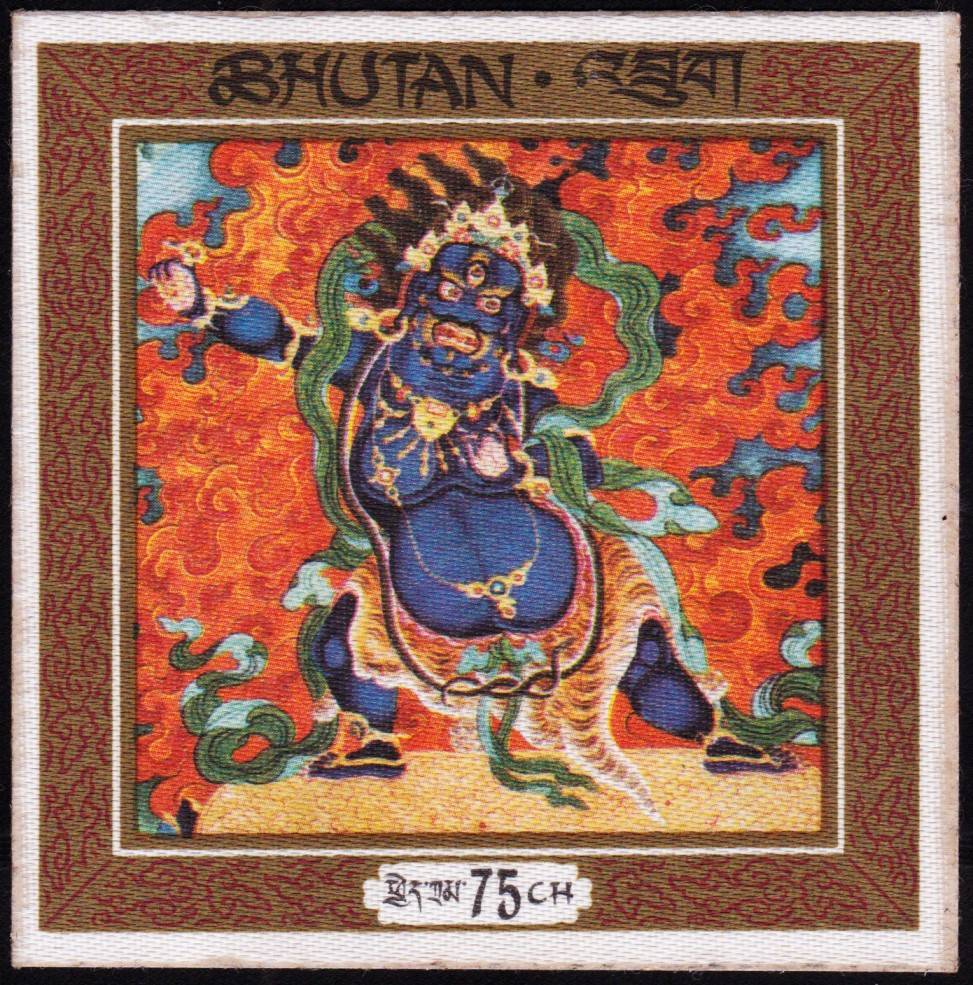
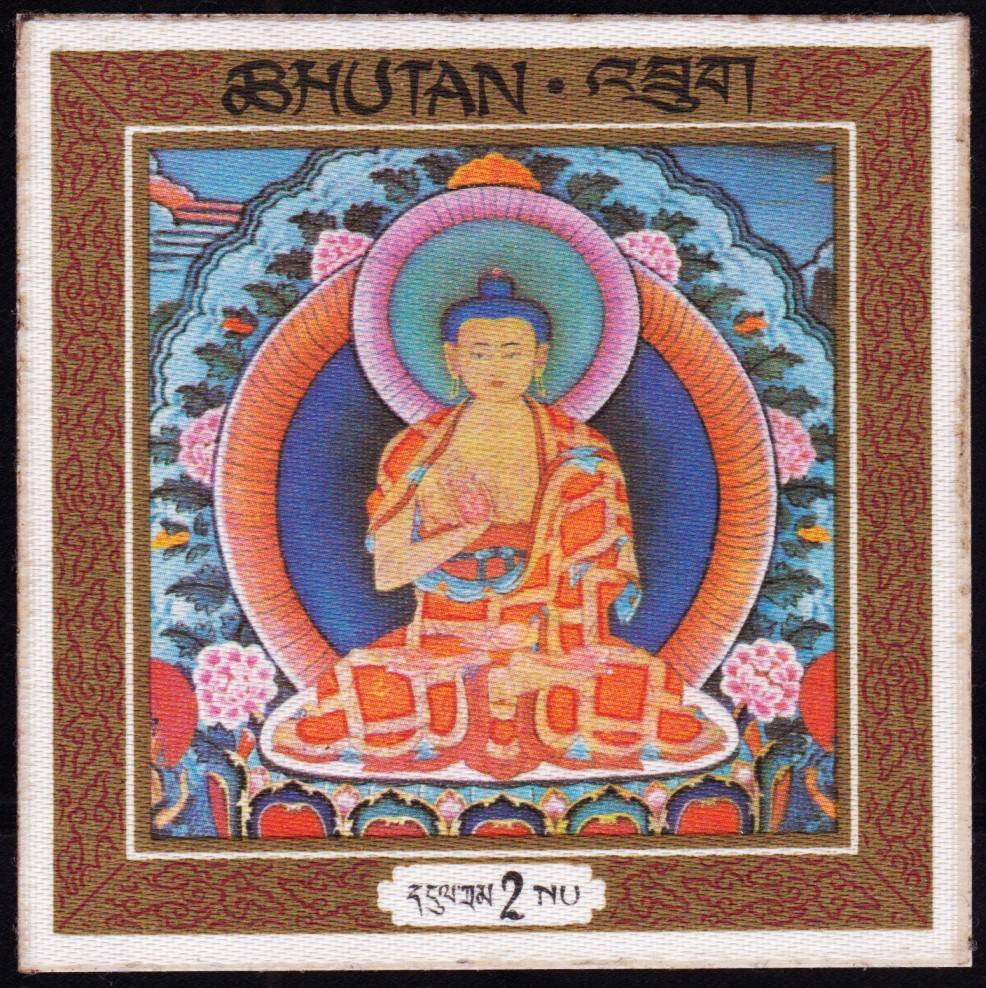
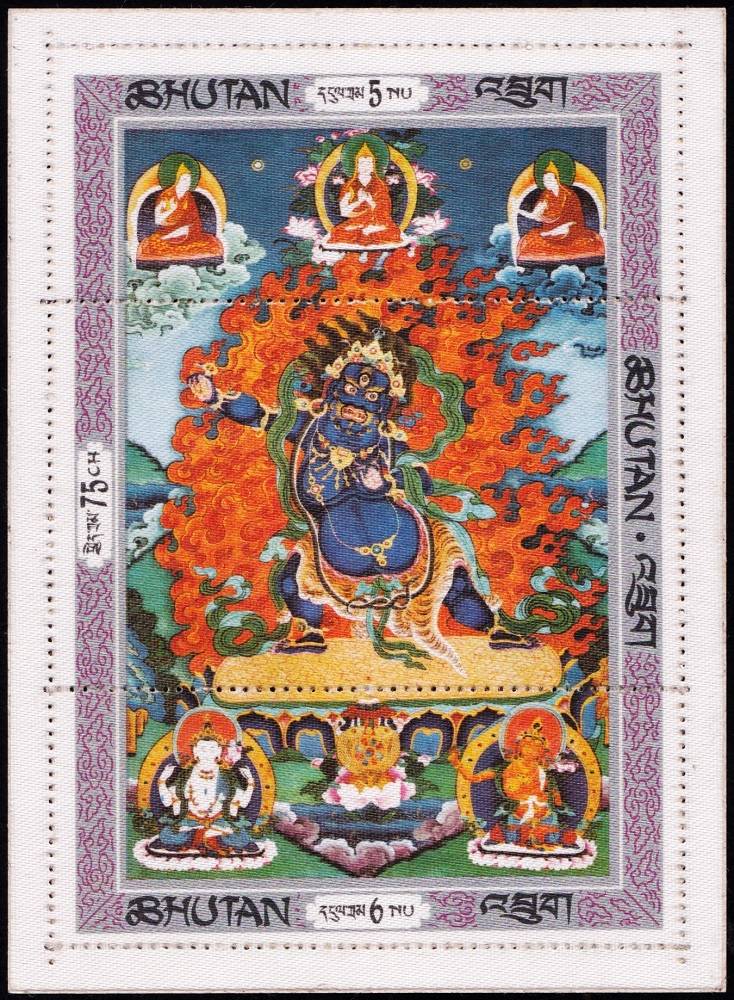
Thangka Paintings, first stamps in the world made of silk, issued by Bhutan on March 12, 1969:
Je Tsongkhapa, religious scholar of the 14th century, depicted in Dharmachakra Mudra seated on a white elephant which symbolizes steadiness and balance of mind:
Chana Dorji, a divine Bodhisattva. He wears a chain of devil heads with a snake coiled around the chain. He symbolizes the might of the Buddhas and is worshipped by those who seek cure from serpent spirits afflictions:
Sangay Marmey-dzey, considered the Sixth Buddha the enlightener and illuminator. He depicted as seated in preaching mudra:
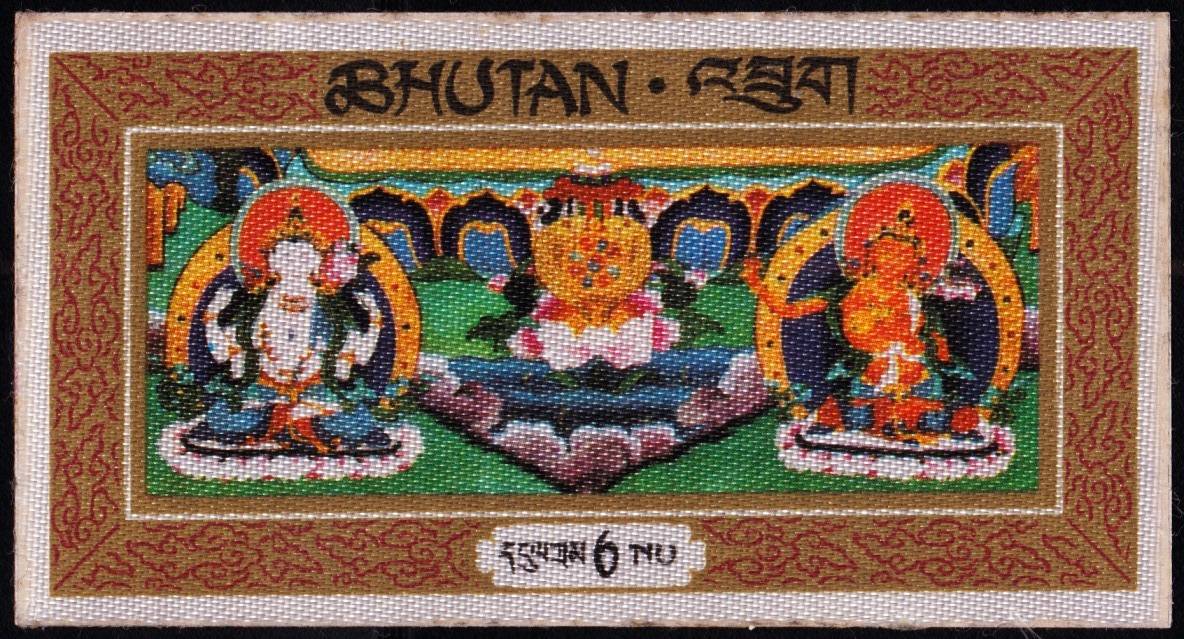
In Mahayana scriptures the noblest Bodhisattvas, out of compassion, refuse Nirvana so that they might benefit the afflicted humanity. They periodically descend to earth in human form to preach and illuminate the lives of mankind. The painting depict 3 great teachers:
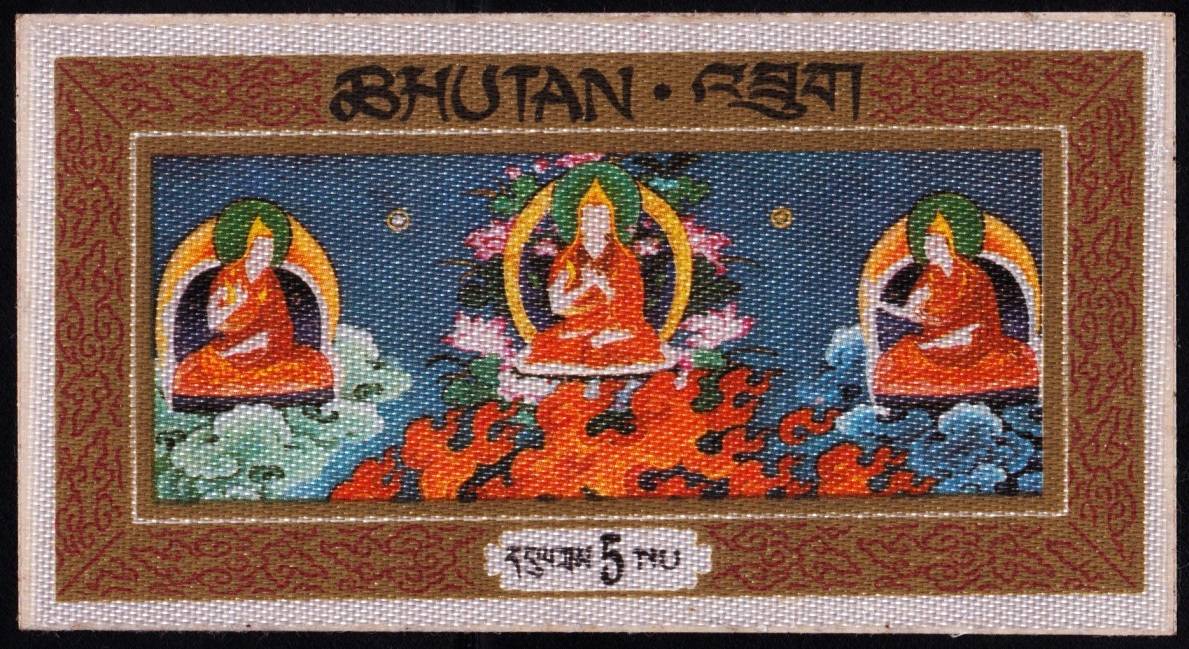
Chenresik (left) is Avalokiteswara, the supreme embodiment of compassion.
Tashi-thagye (center), the Eight Auspicious Signs in the form of a pot. The presence of these auspicious signs spell sanctity and happiness
Jampeyang Manjusri (right), symbol of saving knowledge. He holds a book and a sword for knowledge. The sword and book represents severing the fetters (chains) of ignorance:





 Posted 01/06/2020 4:40 pm