|
This page may contain links that result in small commissions to keep this free site up and running.

Welcome Guest! Registering and/or logging in will remove the anchor (bottom) ads. It's Free!
To participate in the forum you must log in or register.
| Author |
 Replies: 273 / Views: 44,154 Replies: 273 / Views: 44,154 |
|
|
|
Pillar Of The Community
Netherlands
6641 Posts |
|
|
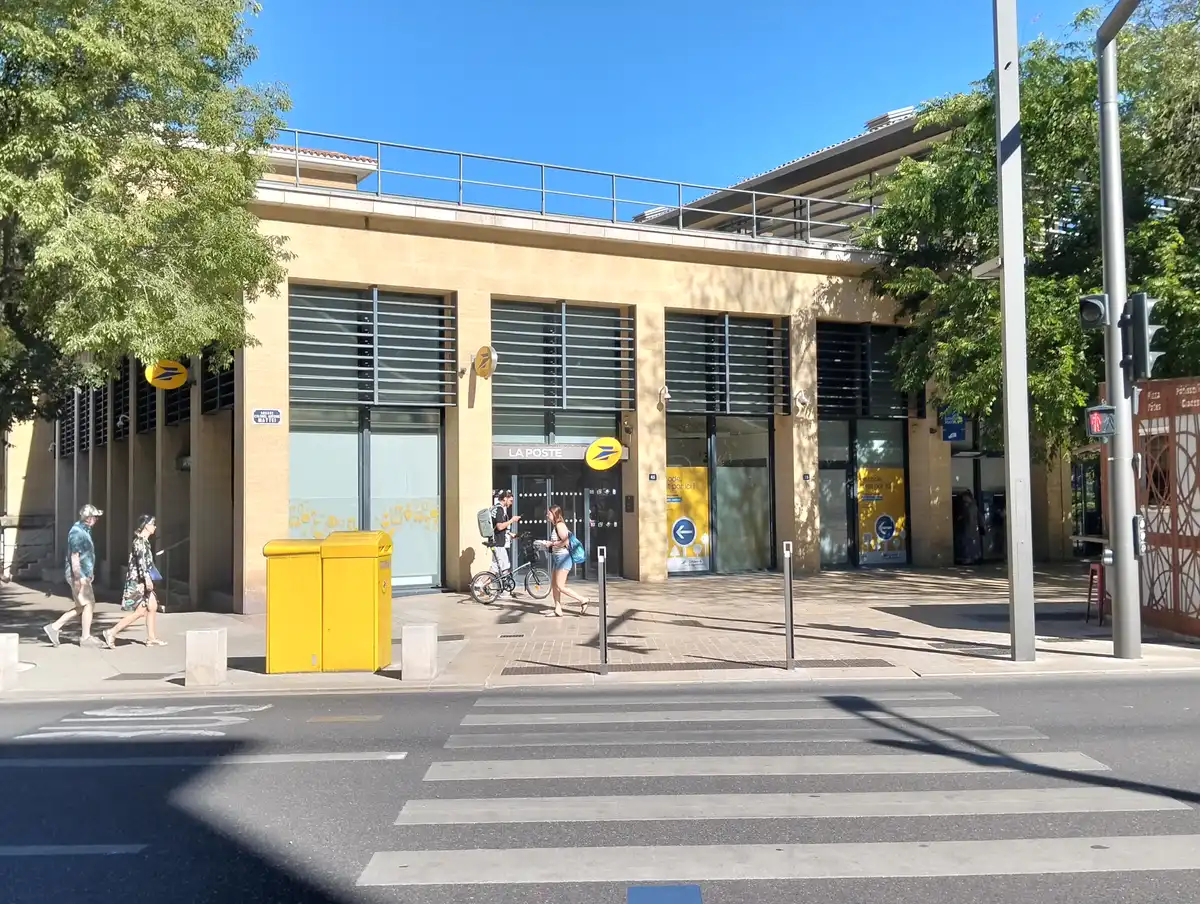
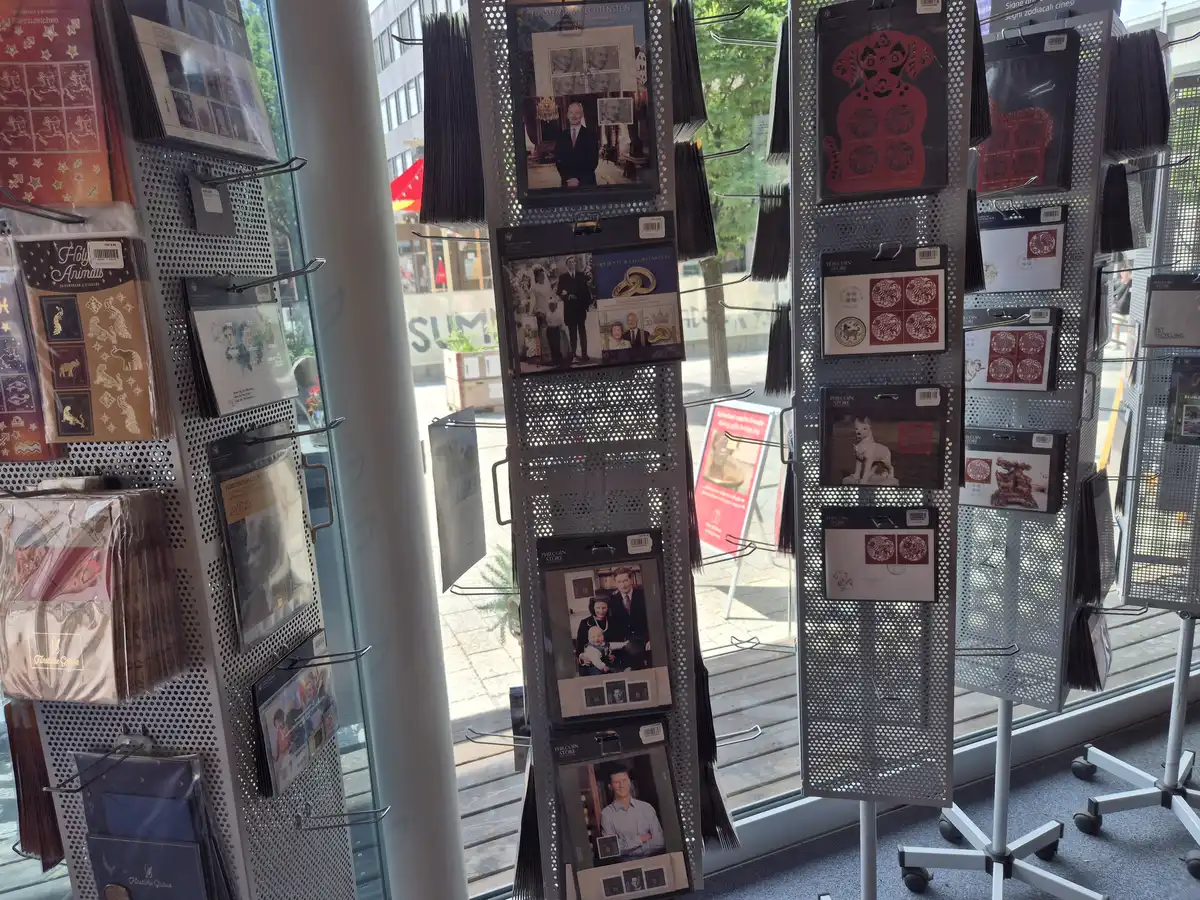
Huesca is the capital of the eponymous province that is the northernmost province in the autonomy of Aragón. The town sits at a short distance from the foothills of the Pyrenees. A couple of daily trains connect it with Zaragoza that is well connected with Madrid and Barcelona by high-speed trains. Some days, there is a direct high-speed (AVE) train from Madrid Puerta Atocha – Almudena Grandes Station. There, also, is a frequent (AVANZA) bus service that connects it in about an hour with the Zaragoza Delicias interchange (high-speed trains) station and a few busses a day connect it with Barcelona. 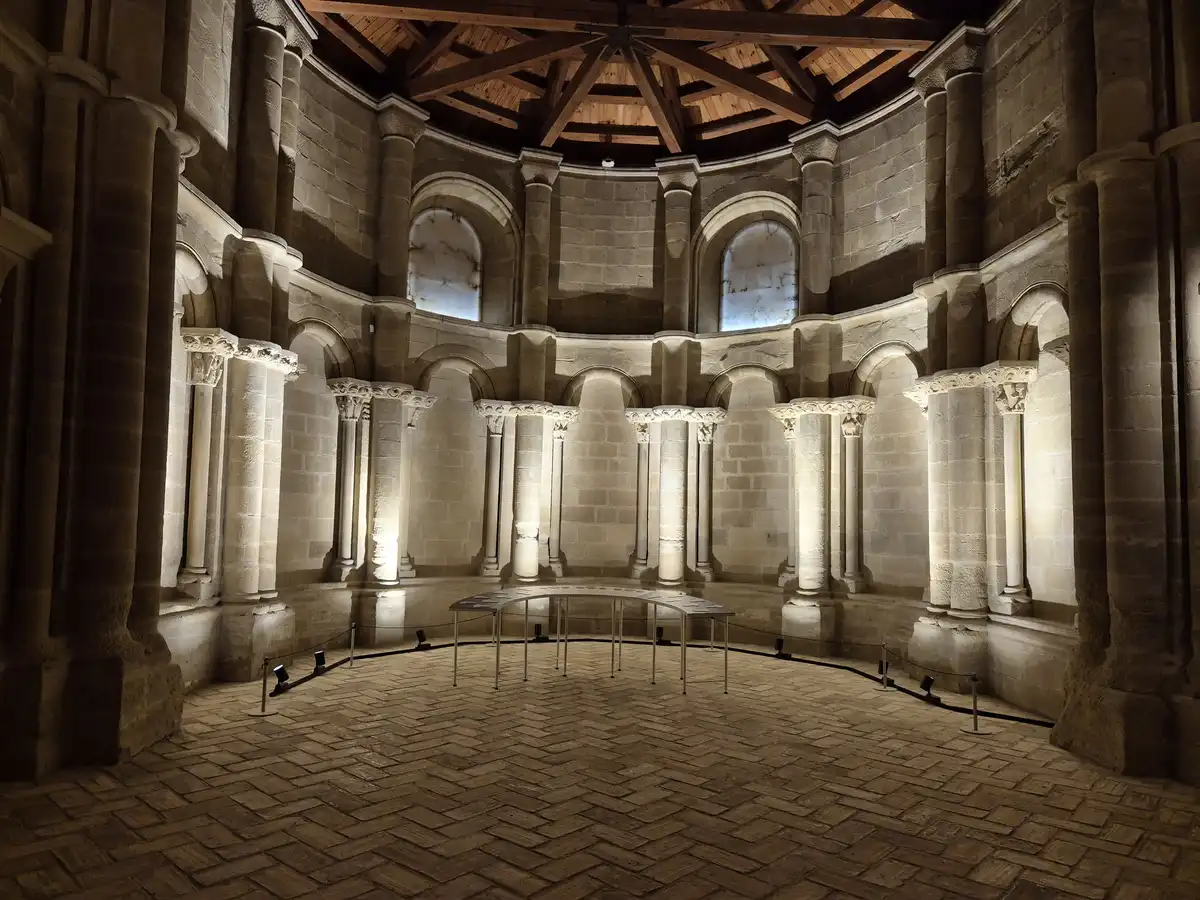 The town was a Roman Municipium and one of the most northern defended towns of Al Andaluz. A section of the Arab wall with one tower still stands. The Provincial Museum (no admittance charge) shows the history of the province. Among the art collection are paintings and drawings by Goya. This museum incorporates the remains of the palace of the Kings of Aragón (12th century). These include the chamber of the legendary of the Bell of Aragón. 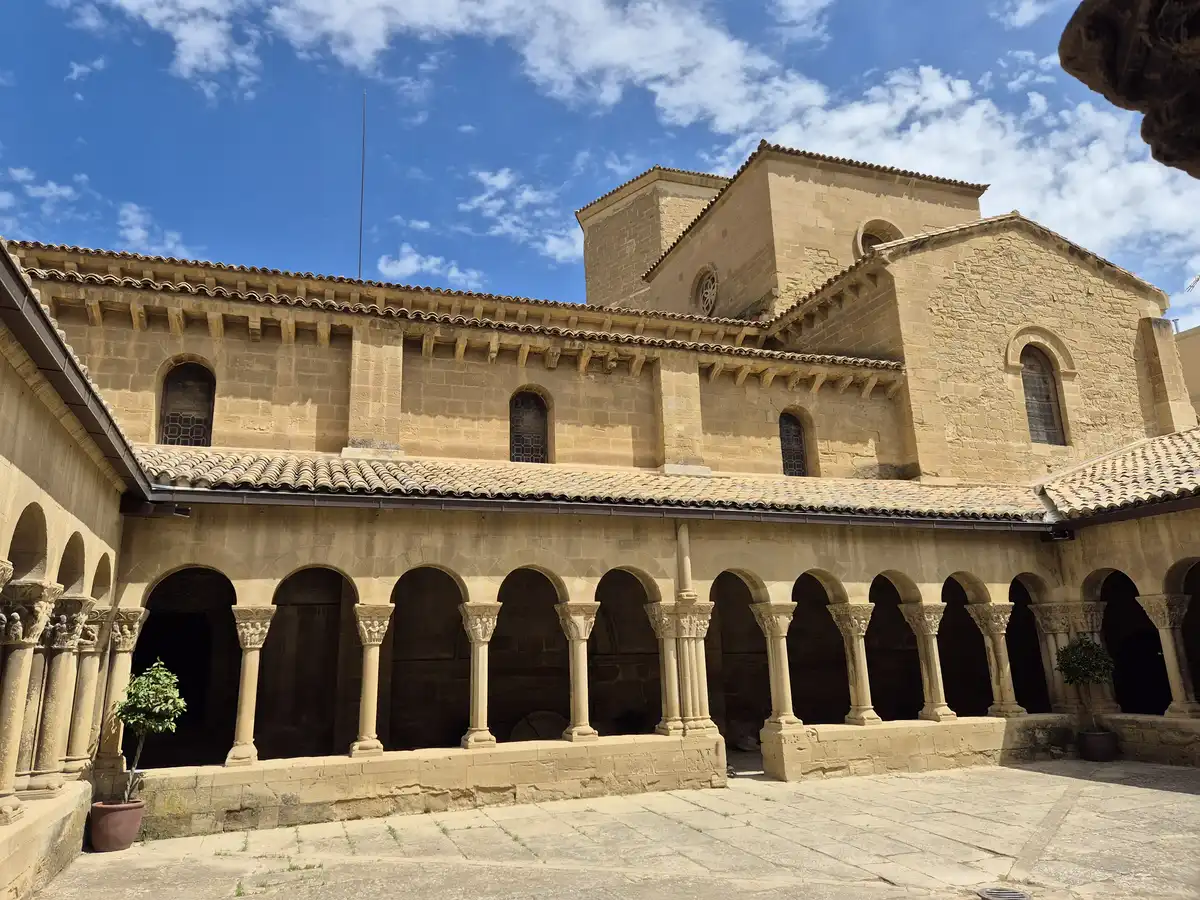 In 1134, the younger brother of Alfonso I El Batallador, Ramiro, was elected king of Aragón. Ramiro II of Aragón had lived as a monk and became abbot of the Abbey of San Pedro el Viejo in Huesca. The Romanesque abbey from the twelfth century preserves its Romanesque cloisters. In a corner of the cloisters is the pantheon of Ramiro II and Alfonso I. 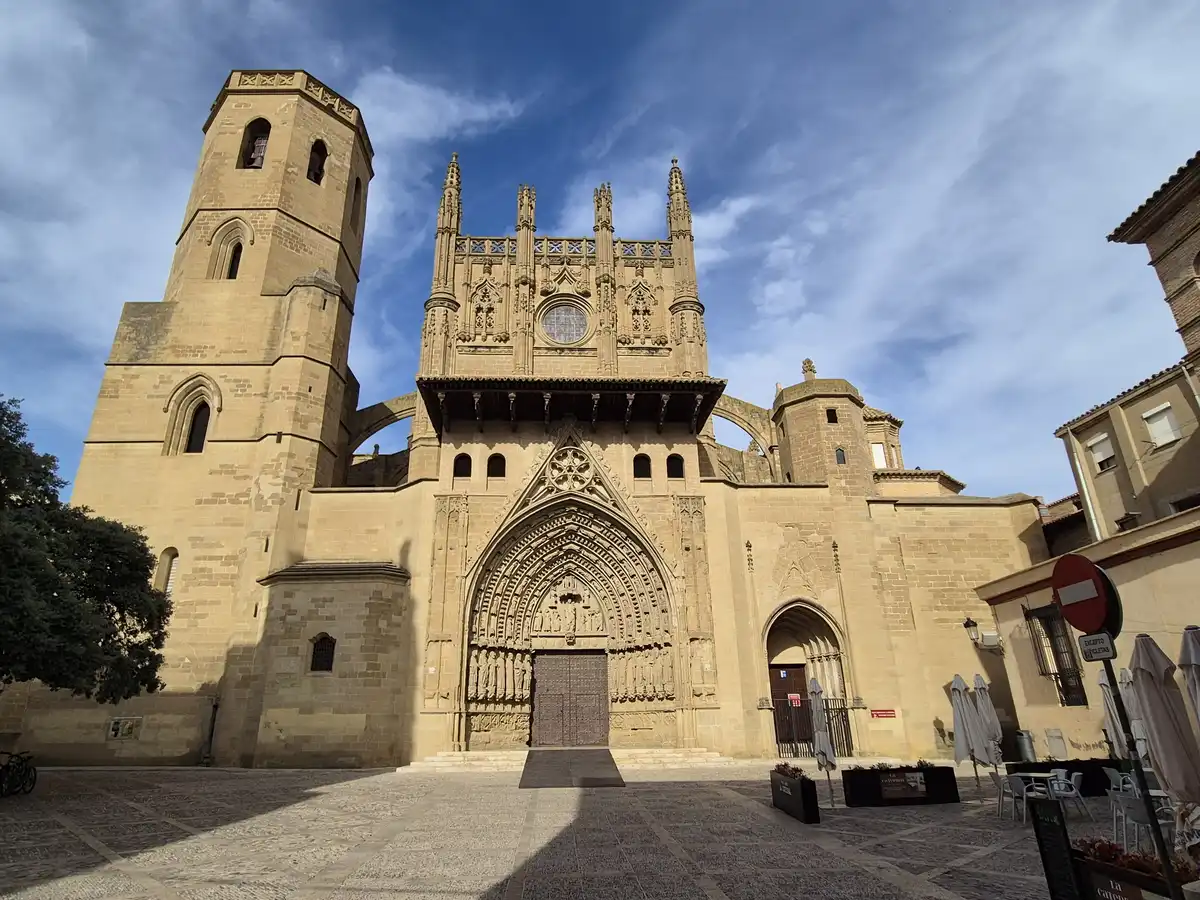 The Gothic cathedral of Huesca was built between the thirteenth and sixteenth centuries. It preserves remains of the Romanesque cloisters of an earlier adjoining structure. 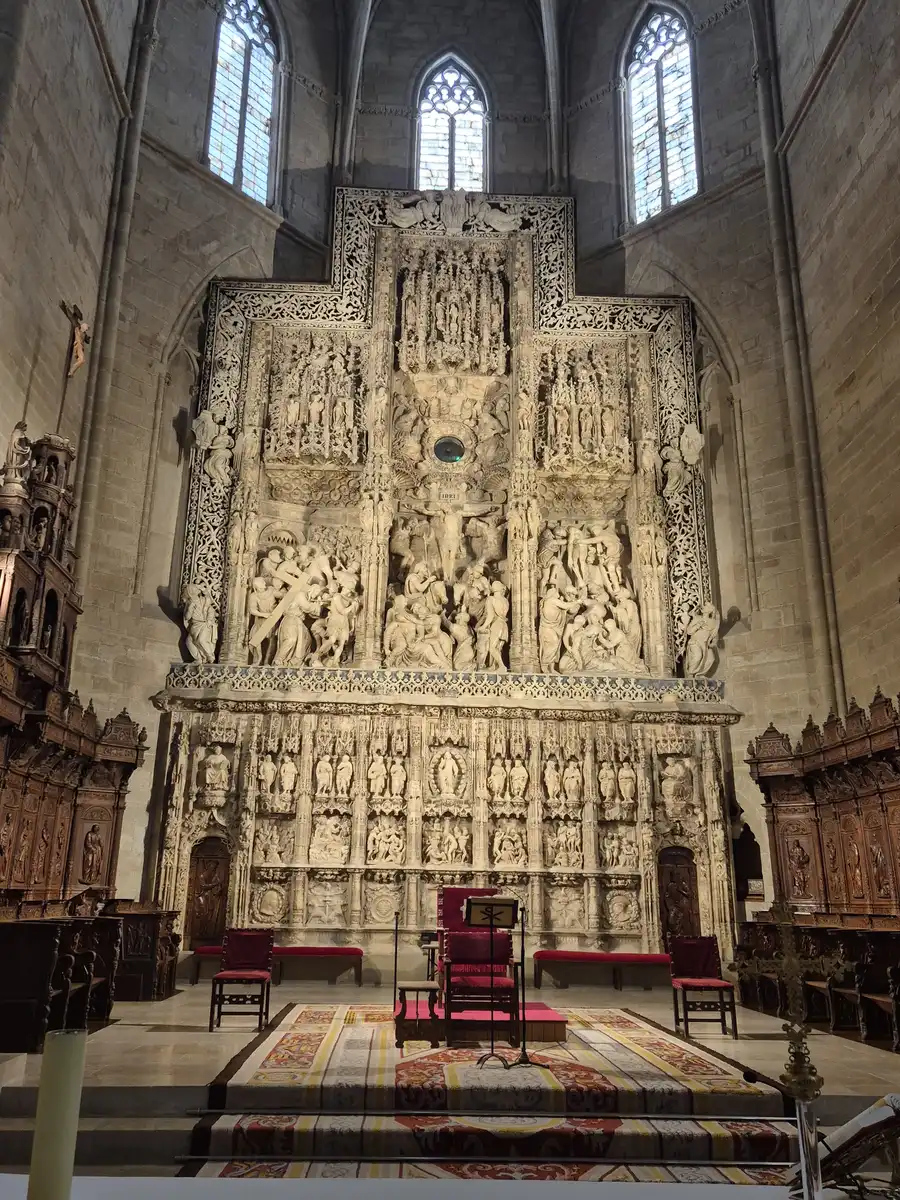 The cathedral's main altarpiece is among the most important works of the Spanish Renaissance. Made in alabaster, it depicts the Passion of Christ. 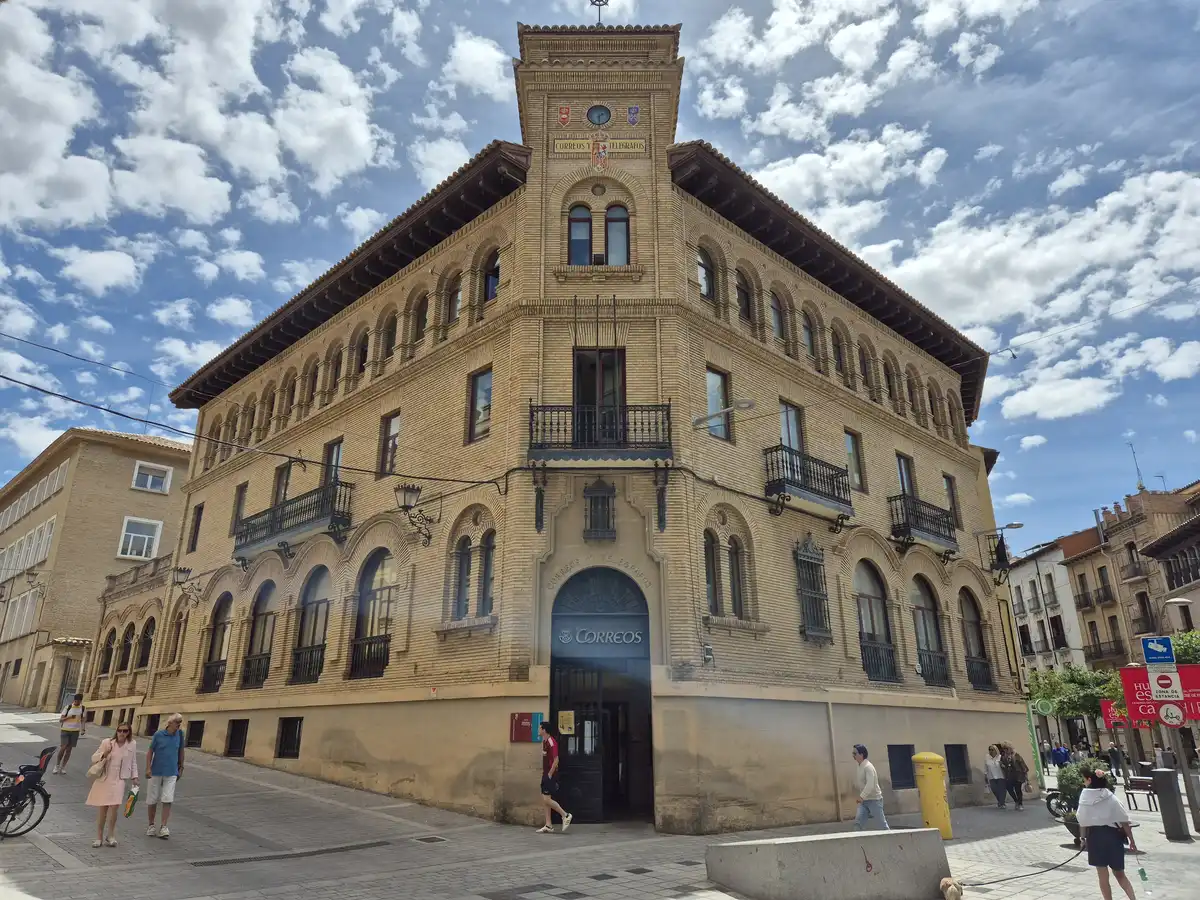 Huesca's main post office is housed in a Modernist building that stands on a corner of the Coso Alto. The building combines elements of Aragonese Renaissance and Mudéjar styles. The Coso is the main shopping street that runs around most of the old town, where once stood the mediaeval walls. 98/5 |
Send note to Staff 
|
| Edited by NSK - 06/14/2026 3:12 pm |
|
|
Pillar Of The Community
Netherlands
6641 Posts |
|
|
Jaca is a town in the province of Huesca. It is situated in the Pyrenees, ca. 70 kilometers north of the city of Huesca, and circa 30 kilometres from the Somport Pass between Spain and France. A couple of daily trains connect it via Huesca with Zaragoza that is well connected with Madrid and Barcelona by high-speed trains. There are frequent busses (AVANZA) that connect Jaca with Huesca. Some continue to the Zaragoza Delicias interchange (high-speed trains) station. Others connect at Huesca with busses to Zaragoza and Barcelona. 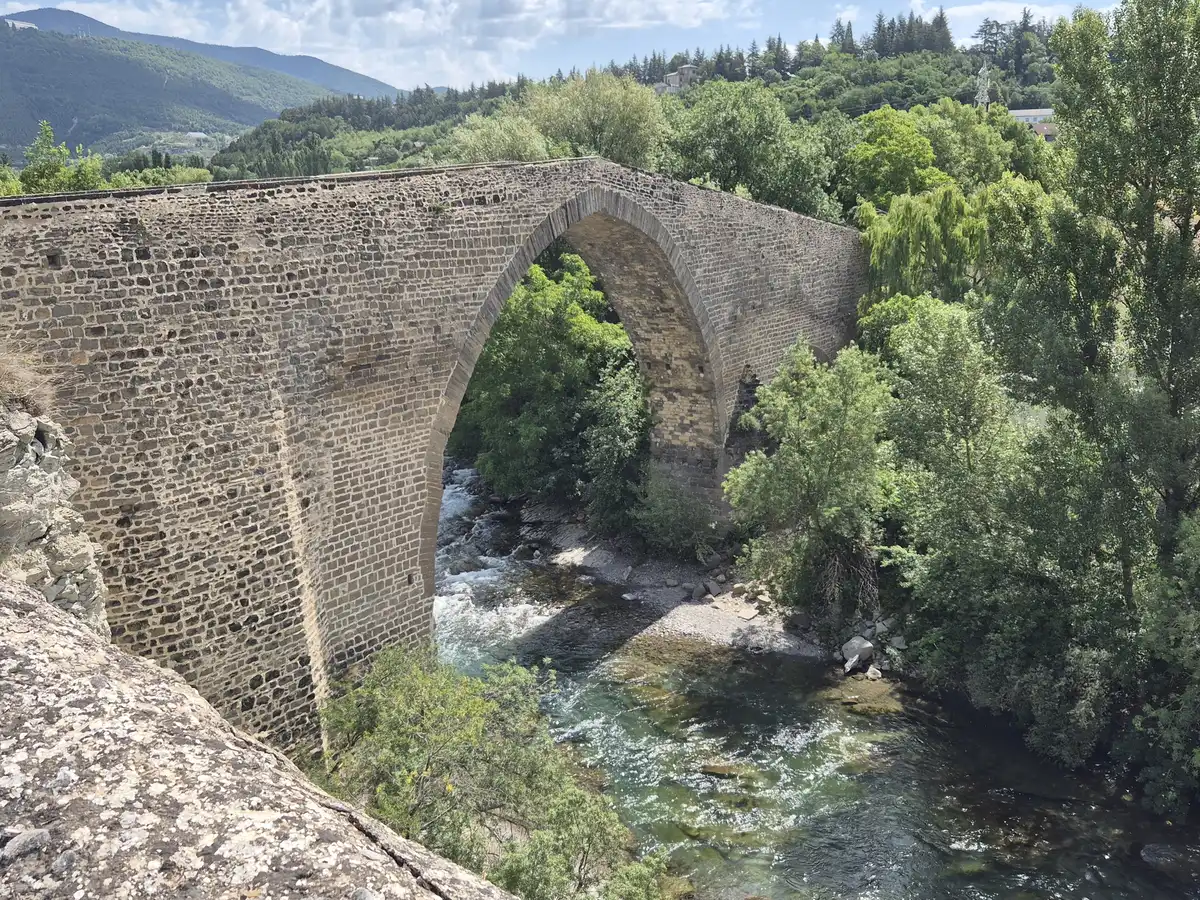 The city sits on a major pilgrim's route from France to Santiago de Compostela. This crosses the Aragón River just outside Jaca, where there is a mediaeval bridge. To protect the Pyrenean passes from Arab incursions, Charlemagne created the County of Aragón in the valley of the Aragón River. Over time, it became subordinate to the Kingdom of Navarra. In the eleventh century, it developed into the kingdom centred around Jaca that would become one of the two major powers that united into present-day Spain. 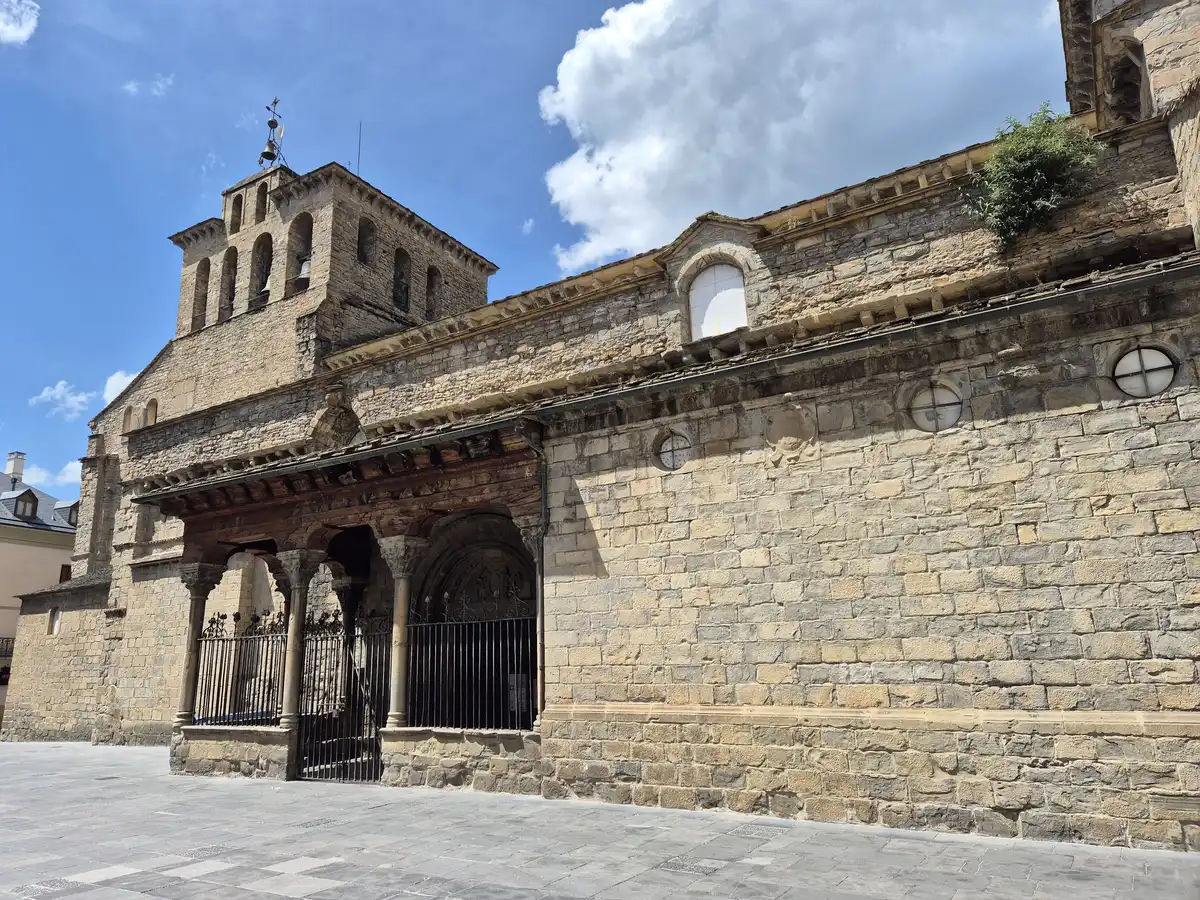 With the former episcopal see of Huesca remaining in Arab hands, Pope Alexander II conceded King Sancho Ramírez the episcopal see of Jaca. Construction of the cathedral started between 1077 and 1082. It is one of the first Romanesque cathedrals built in the Iberian Peninsula. Although it underwent changes in later centuries, it preserves much of its original structure. 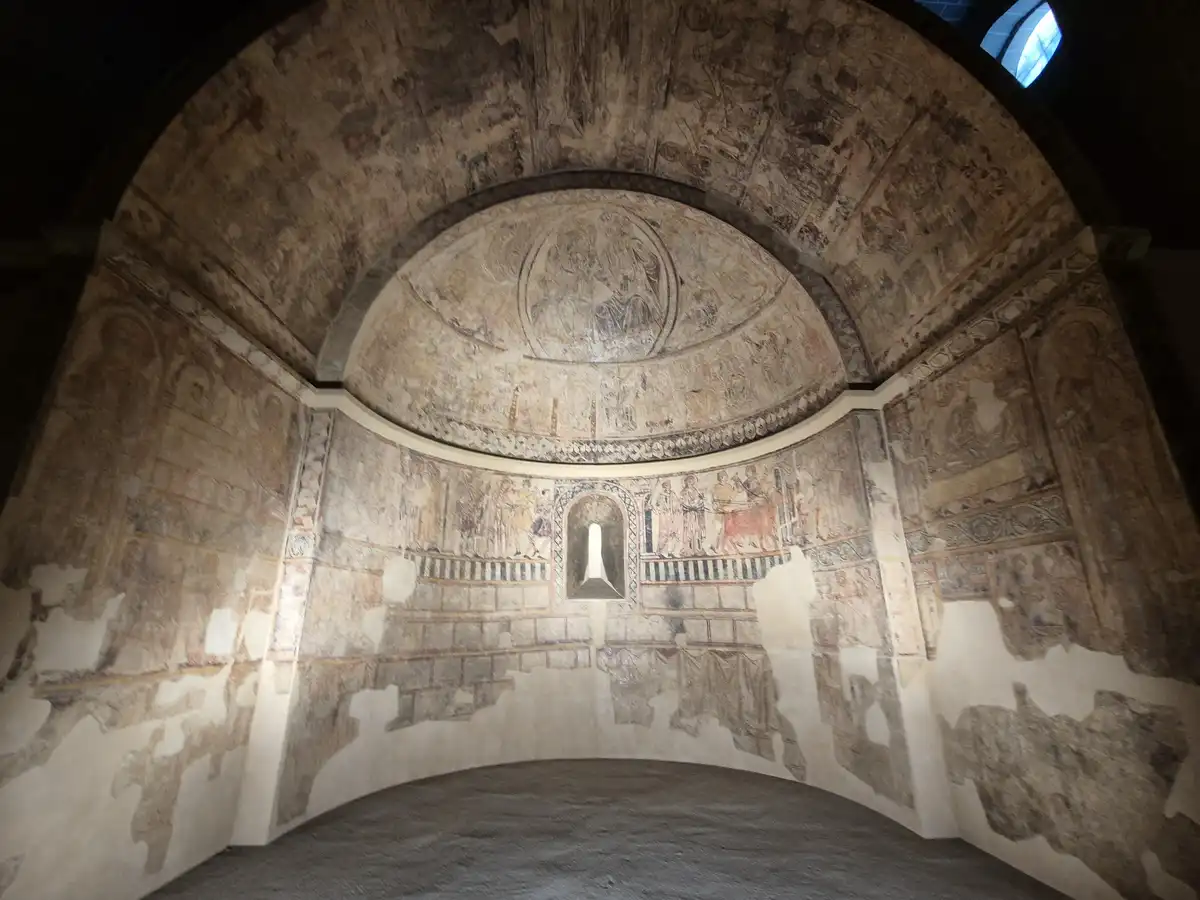 The cloisters of the cathedral house the diocesan museum (closed on Mondays). It holds a very important collection of Romanesque murals. The murals were recovered from churches in the region and transferred to the diocesan museum of Jaca. 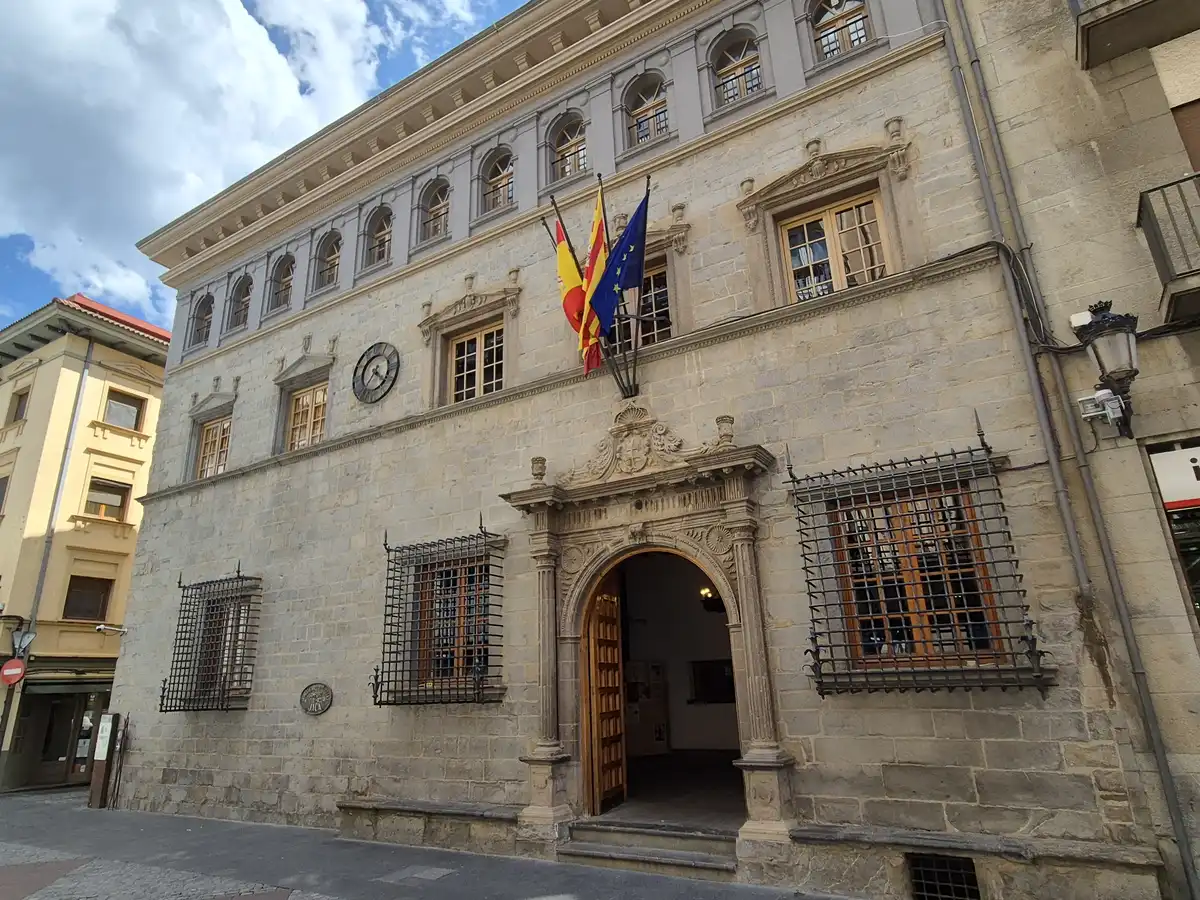 Situated in the Calle Mayor is the town hall with its Aragonese Renaissance façade. 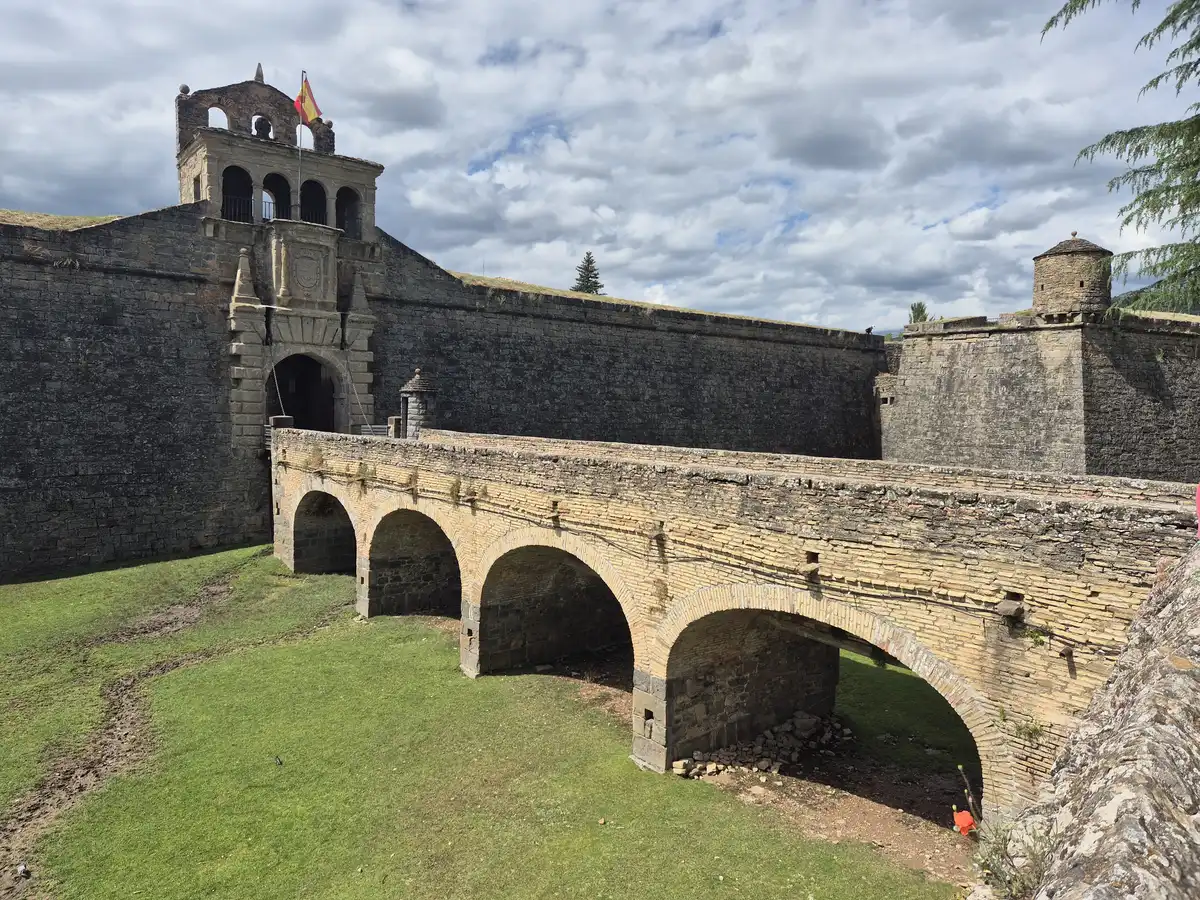 At the end of the sixteenth century, King Felipe II of Spain ordered the construction of citadels to protect his country against French attacks. The citadel of Jaca, located just outside the historic centre is the best preserved of these citadels. 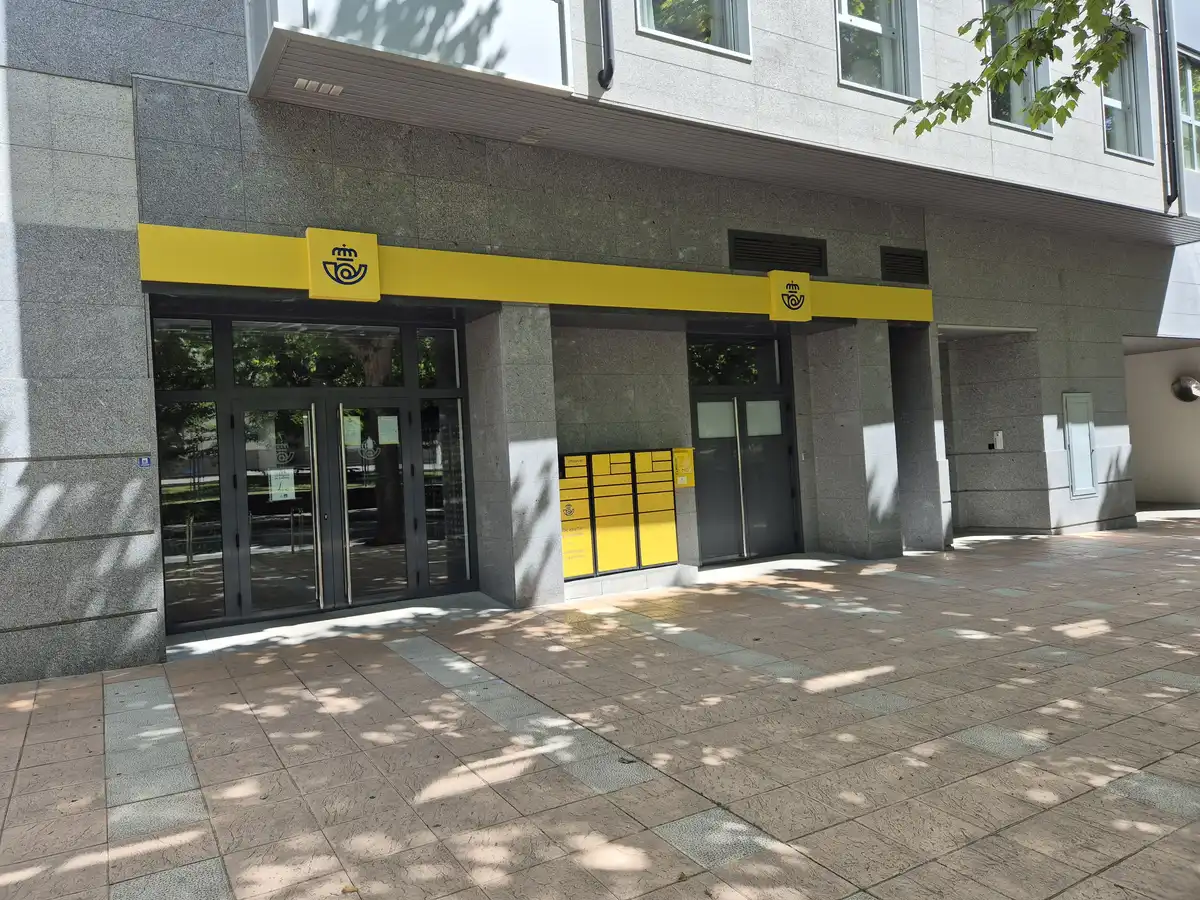 The post office is situated on the N330a main road, on the edge of the historic centre. I took the opportunity to buy some B-tariff (Europe) stamps and hand in my postcards. 99/5 |
|
Send note to Staff
|
|
|
Pillar Of The Community
Netherlands
6641 Posts |
|
|
Whilst waiting for my high-speed train from Zaragoza Delicias to Calatayud, on my way from Jaca, the historic (1930s) Tren Azul pulled into the station. I noticed this train included a mail car. 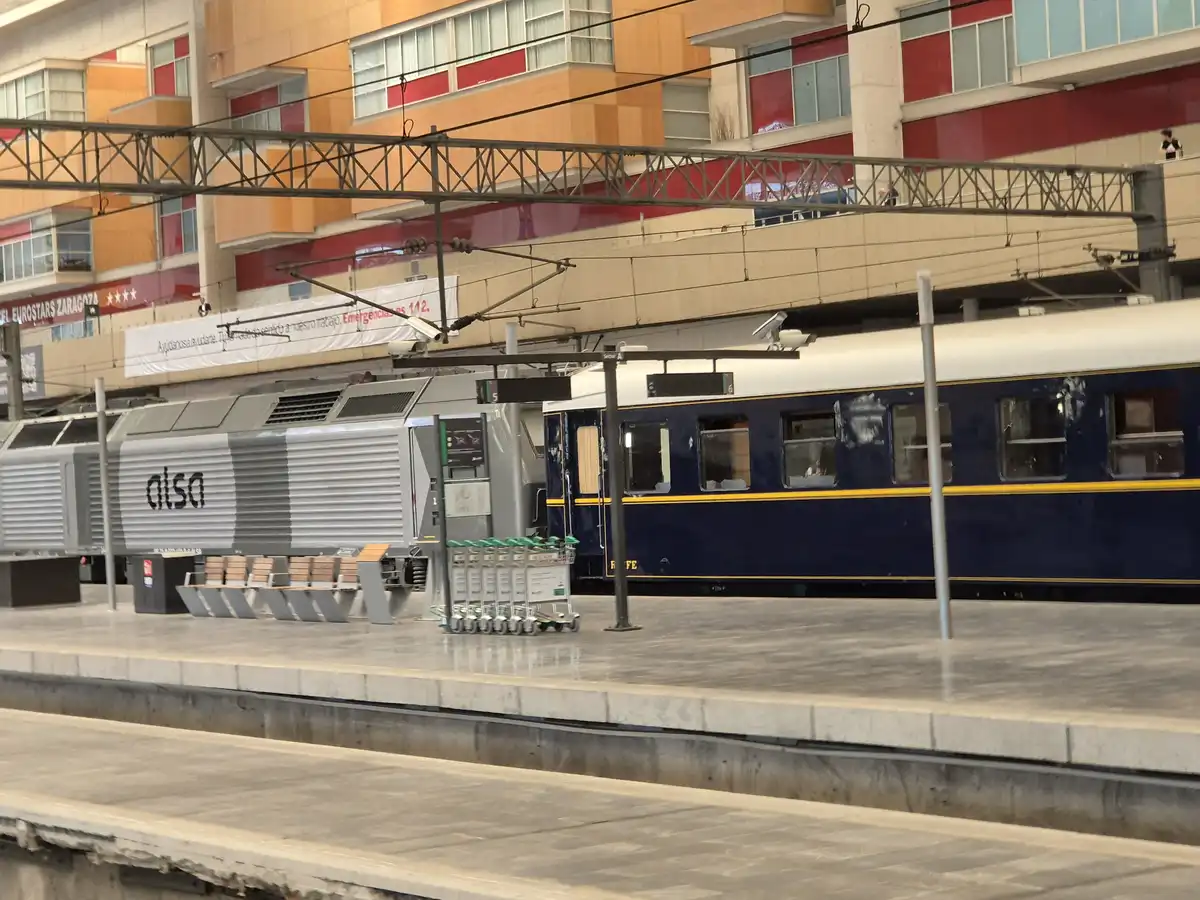 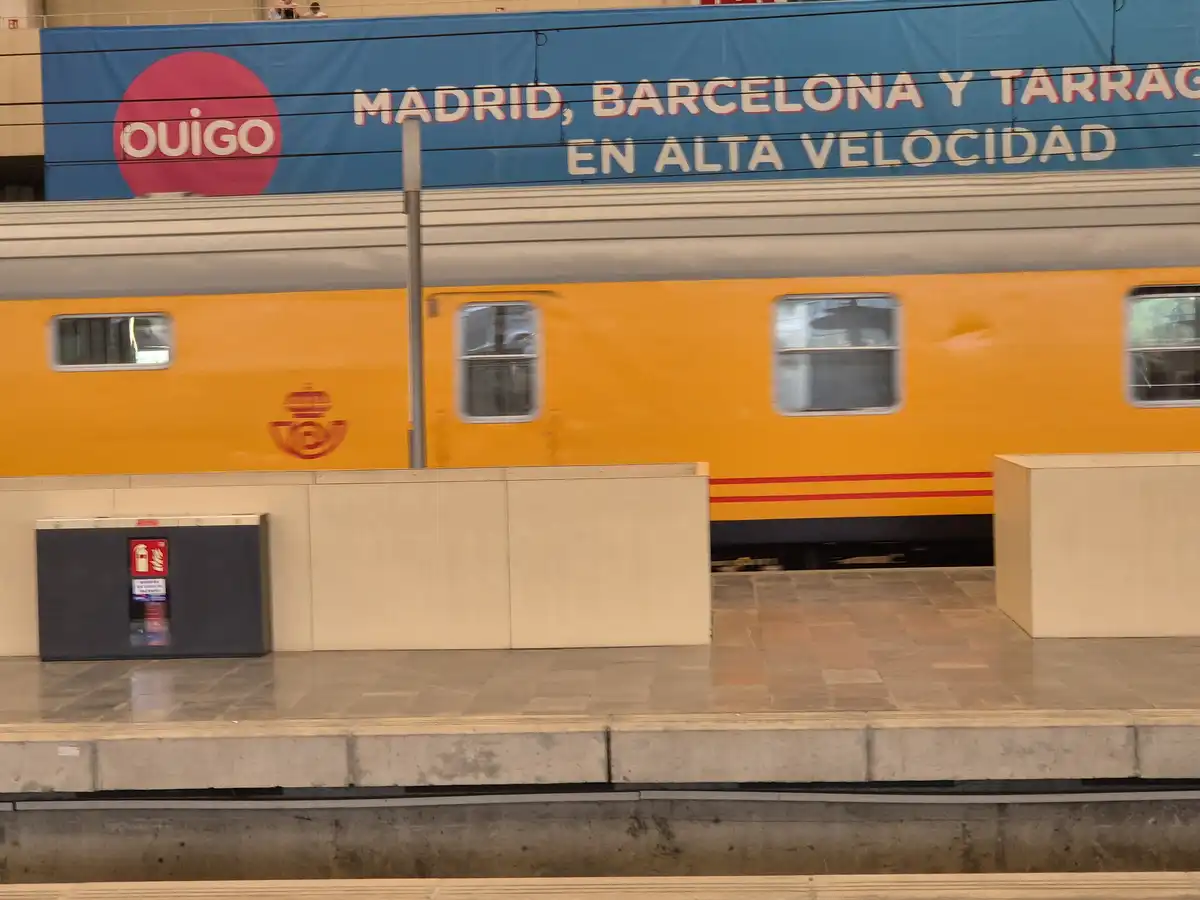 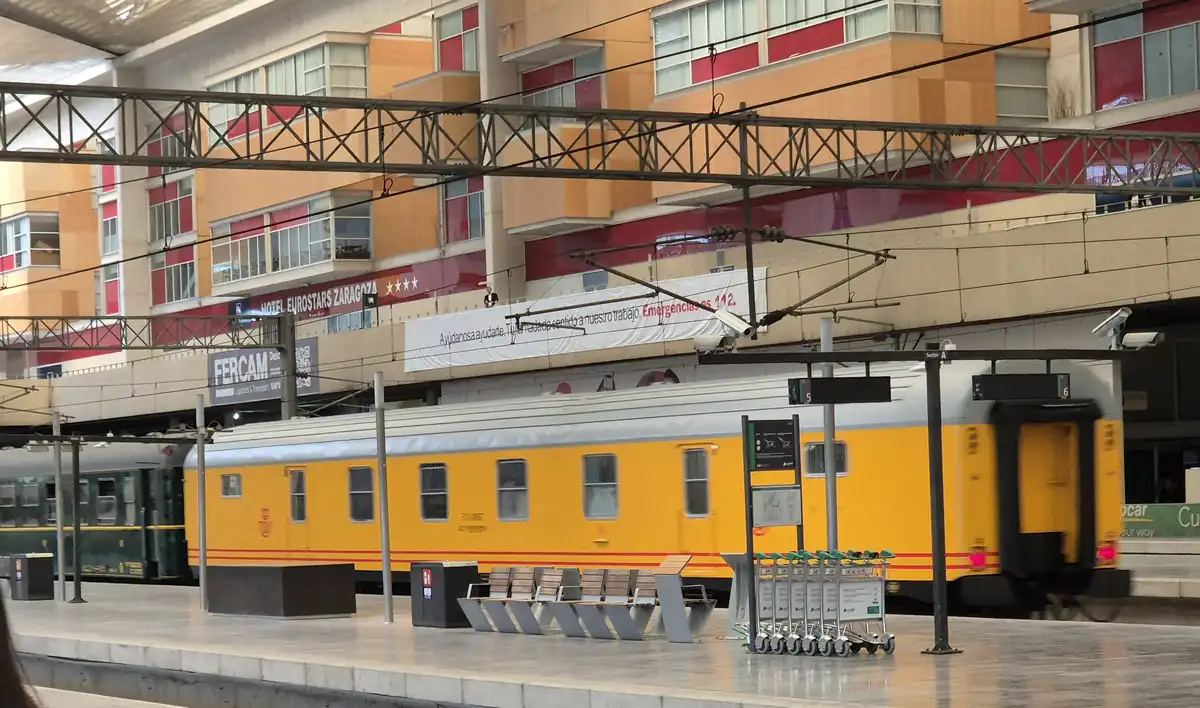 I have no idea what the purpose of this mail car is. The train does not run according to a fixed schedule. Mail in Spain is transported either by road or air. Except for the high-speed network, the railways in Spain are not the most direct ways to move between towns, if towns are served by the railways at all. 99/6 |
|
Send note to Staff
|
|
|
Pillar Of The Community
Netherlands
6641 Posts |
|
|
CalatayudThe town of Calatayud is located on the bank of the Jalón River, in the south of Zaragoza Province. Some of the high-speed trains that run between Madrid Puerta de Atocha – Almudena Grandes (1:30 – 2:00 hours) and Zaragoza – Delicias (0:20 – 0:30 hour) stations call at Calatayud. Beyond these stations, trains may call at several cities. It takes about 20 minutes to walk from the station to the historic centre. 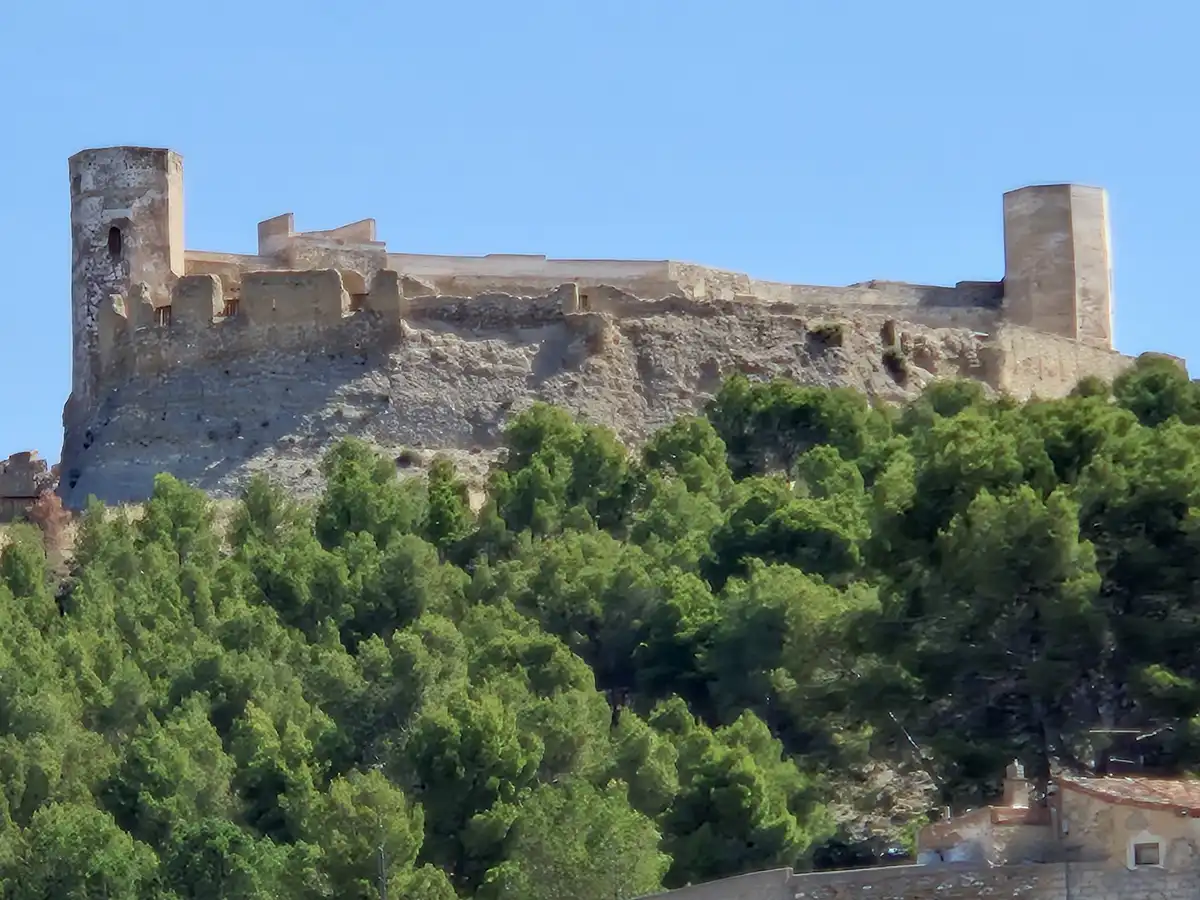 Calatayud is about four kilometres from the Roman town of Bilbilis, the birthplace of Roman poet Martial. The name of the present town derives from the oldest remaining Arab fortifications in the Iberian Peninsula. The Qal'at Ayyub (citadel of Ayyub) was an eight-century citadel that was extended in the ninth century. The citadel had five castles located on hills overlooking the town. At the highest point stood the Castle of Ayyub, that is the best-preserved part of the citadel. 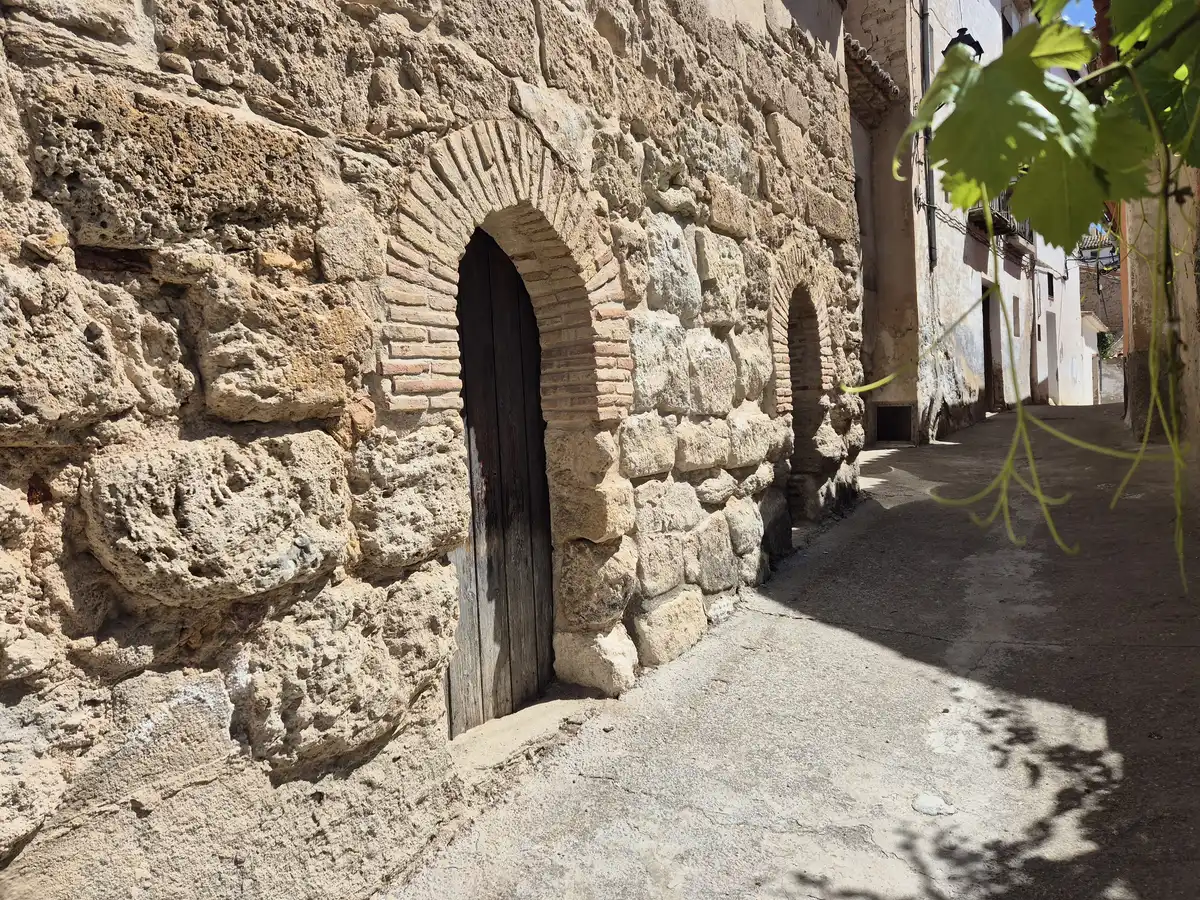 The judería (Jewish Quarter) of Calatayud was the second-largest in Aragón and almost as big and populated as that of Zaragoza. Its narrow streets preserve the remains of what was the main of several synagogues. This had separate entrances for men and women. 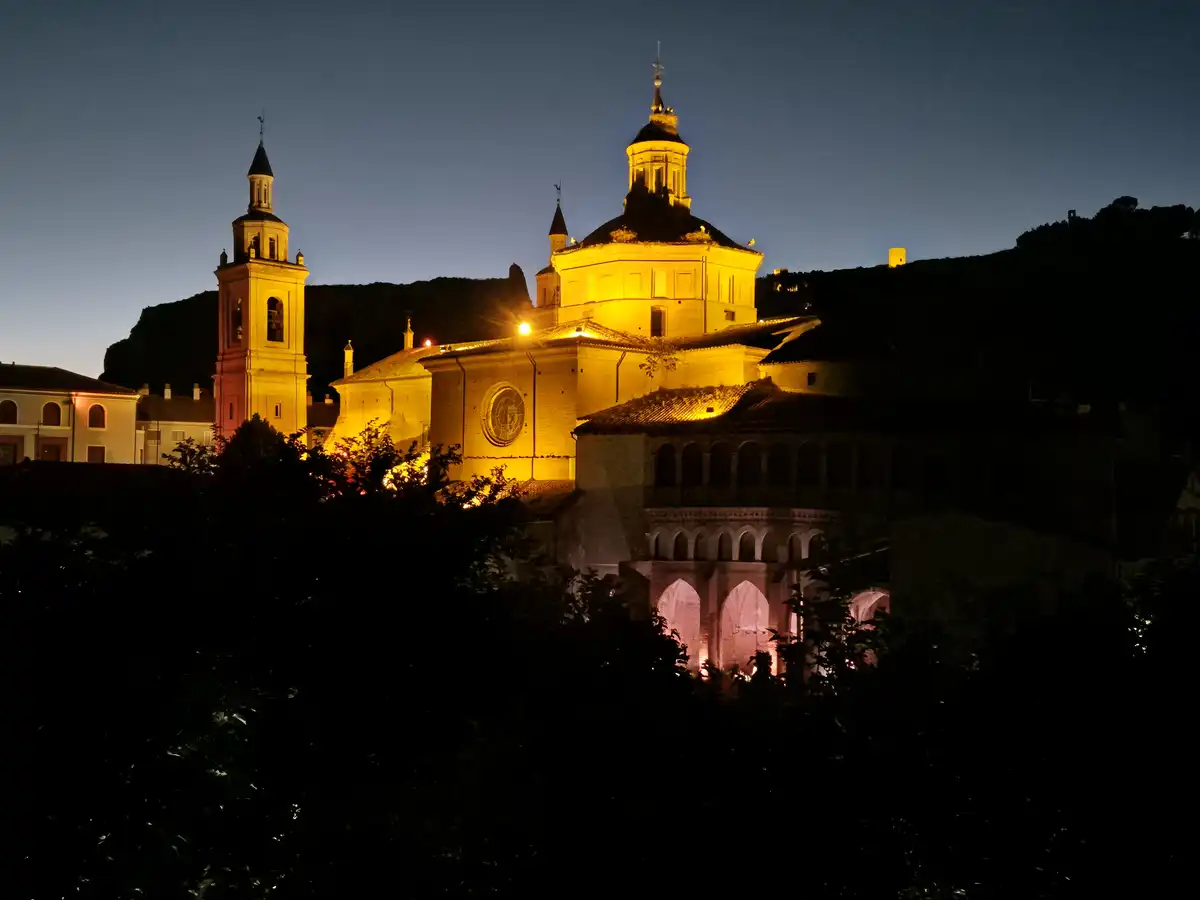 The town has two collegiate churches. The Royal Basilica – Collegiate of the Holy Sepulchre, originally, was built in the twelfth century. The present church dates to the early seventeenth century. It preserves remains of its Mudéjar cloister from the fourteenth century. It is the main temple of the Order of the Holy Sepulchre in Spain. 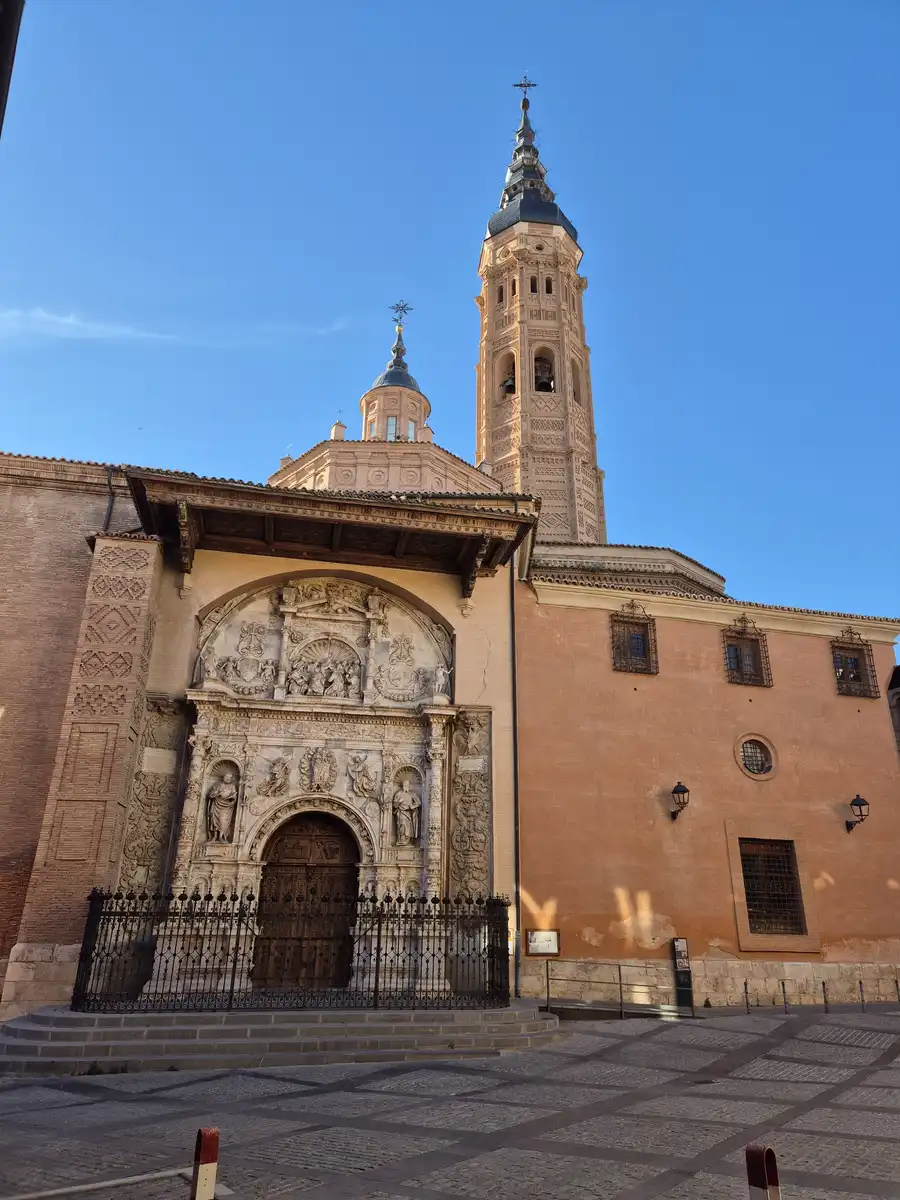 The collegiate church of Santa María la Mayor was first built on the site of the main mosque, in the twelfth century. The current church was built between the fourteenth and sixteenth centuries. It preserves several Mudéjar elements. The most visible are its 70-metres high octagonal tower and its apsis. The Mudéjar cloisters that house a museum of sacred arts are oriented towards Mecca. The church is part of the Aragonese Mudéjar that was listed by UNESCO as World Heritage. 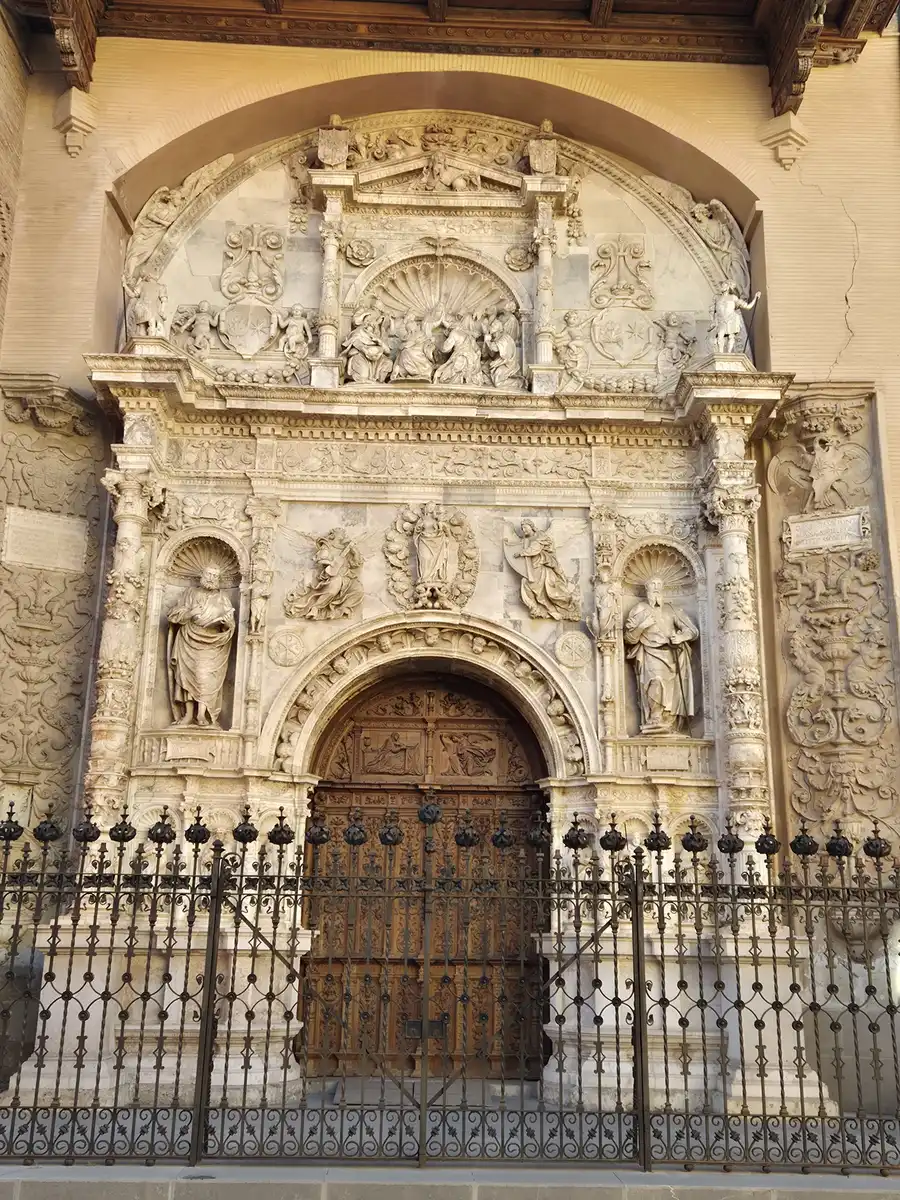 Its main portal dates to the sixteenth century. It was executed in the Plateresque (Renaissance) style that mimics an altarpiece. 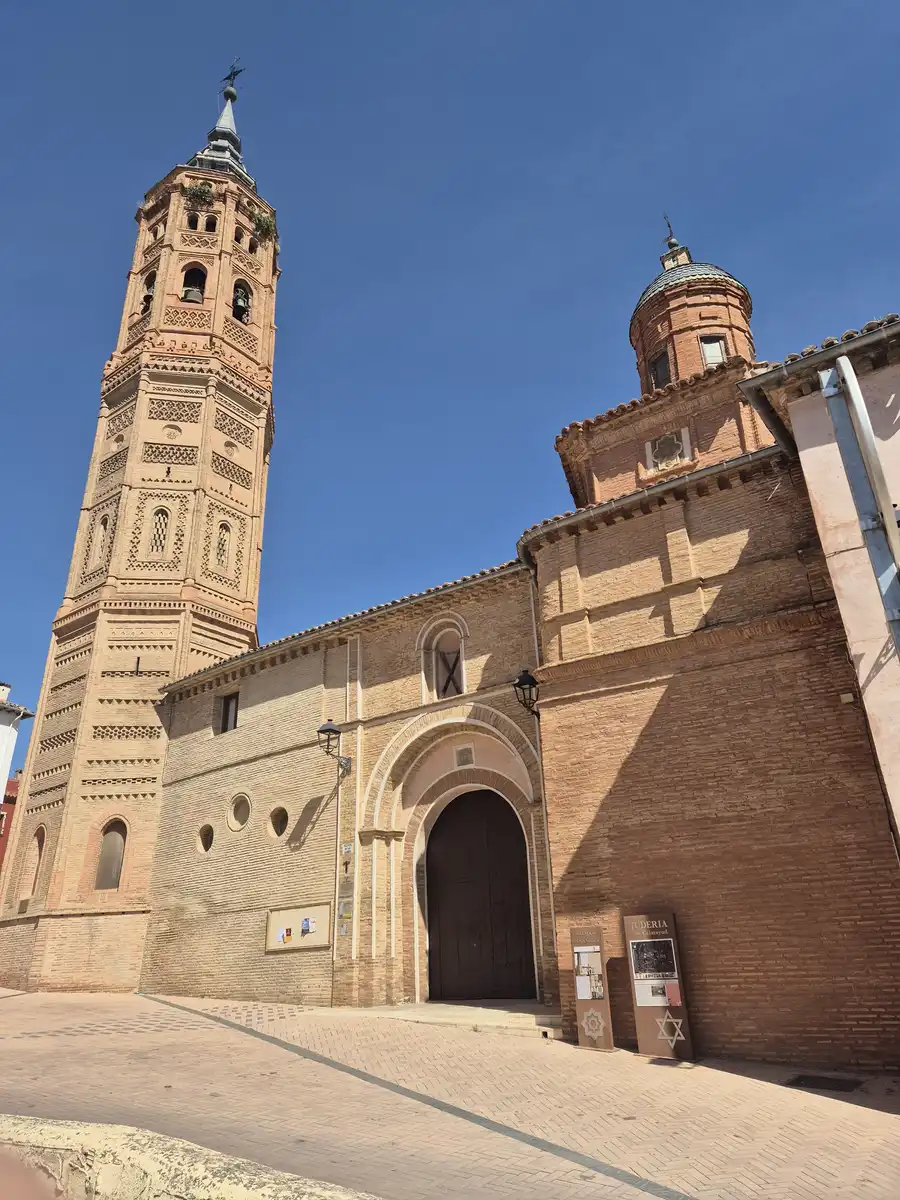 The town has a few more Mudéjar church towers. Among these is that of the Church of San Andrés that stood next to one of the entrances to the Jewish quarter. 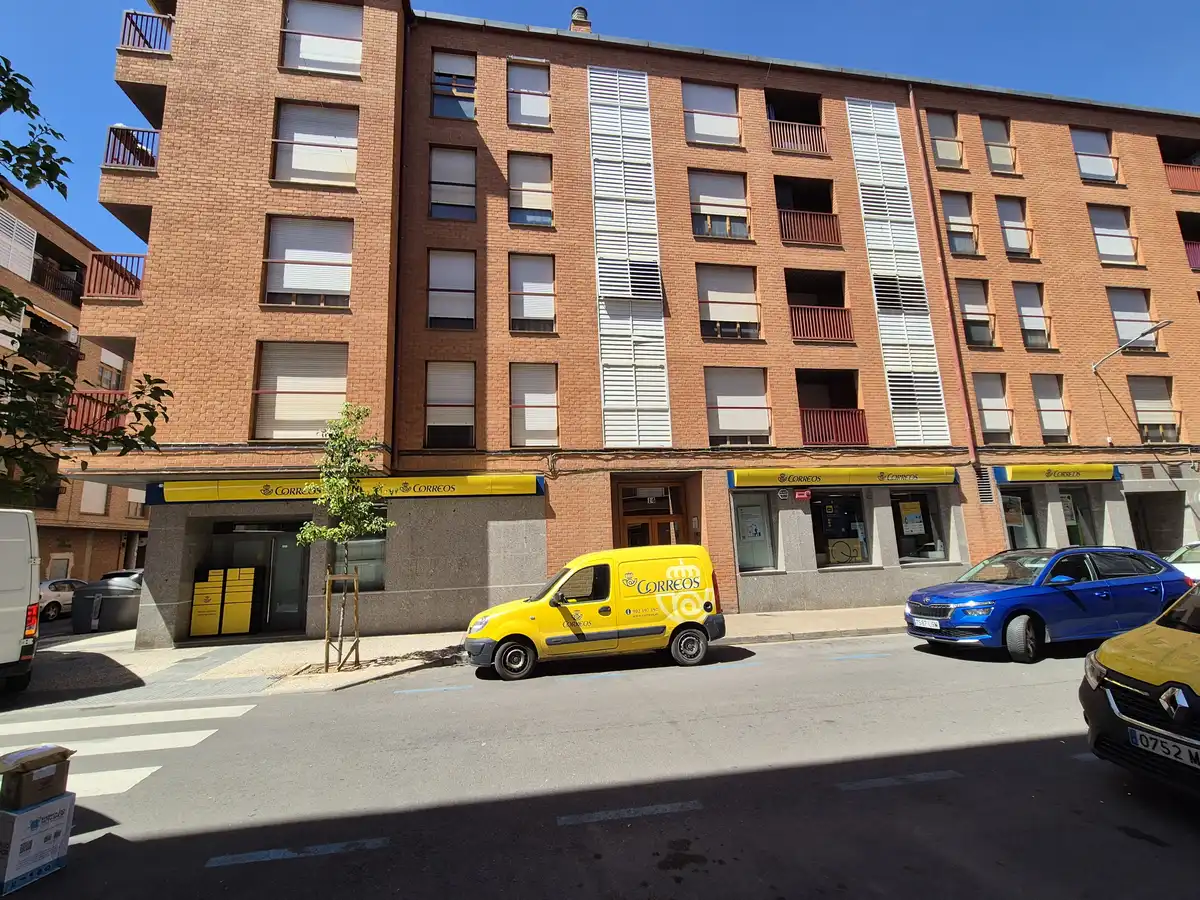 A couple hundred metres outside the old town, in Calle Glen Ellyn (named after Calatayud's twin town in Illinois), is the post office. If I counted correctly, this is the 100th post office of which I posted a picture. 100/6 |
|
Send note to Staff
|
|
|
Pillar Of The Community
2341 Posts |
|
|
Pillar Of The Community
Netherlands
6641 Posts |
|
|
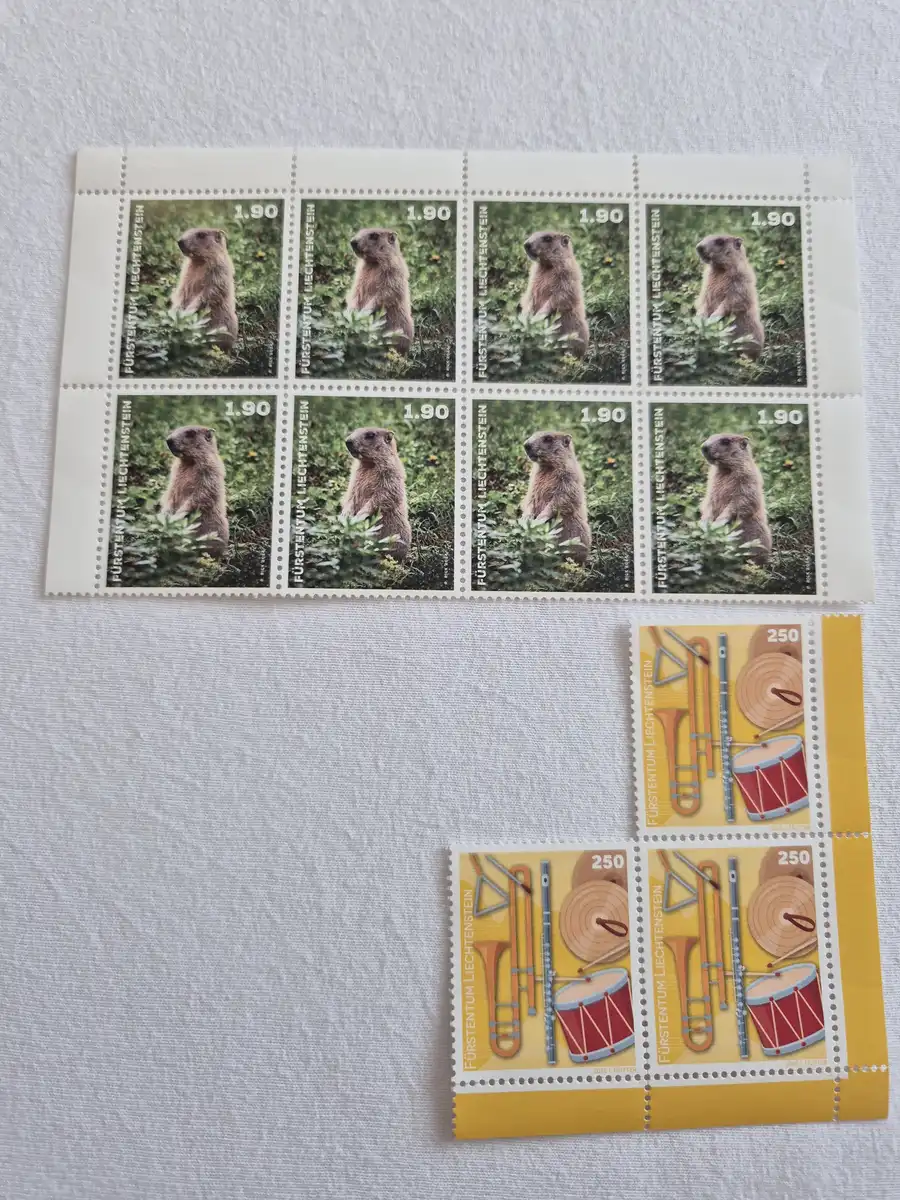
Feldkirch in the Austrian state of Vorarlberg sits on the Ill River in an Alpine valley, near its confluence with the Rhine. It borders on Switzerland and Liechtenstein (two to four busses every hour). Hourly direct Regiojet trains running through the Tirolean and Vorarlberg Alps between Innsbruck and Feldkirch connect it with Vienna in about seven hours. Trains continue to Bregenz (do spend the few euros on reserving a seat). A few continue to Zürich (this international airport is much closer but Swiss railways are extremely expensive). At the other end, some trains depart from or continue to Vienna Airport, Bratislava, or even Budapest. An alternative (just over four hours) would be to travel to Munich Airport and take a train to Bregenz or Lindau Insel and change there for Feldkirch (also nearly every hour). The main station is circa one kilometre from the old town. 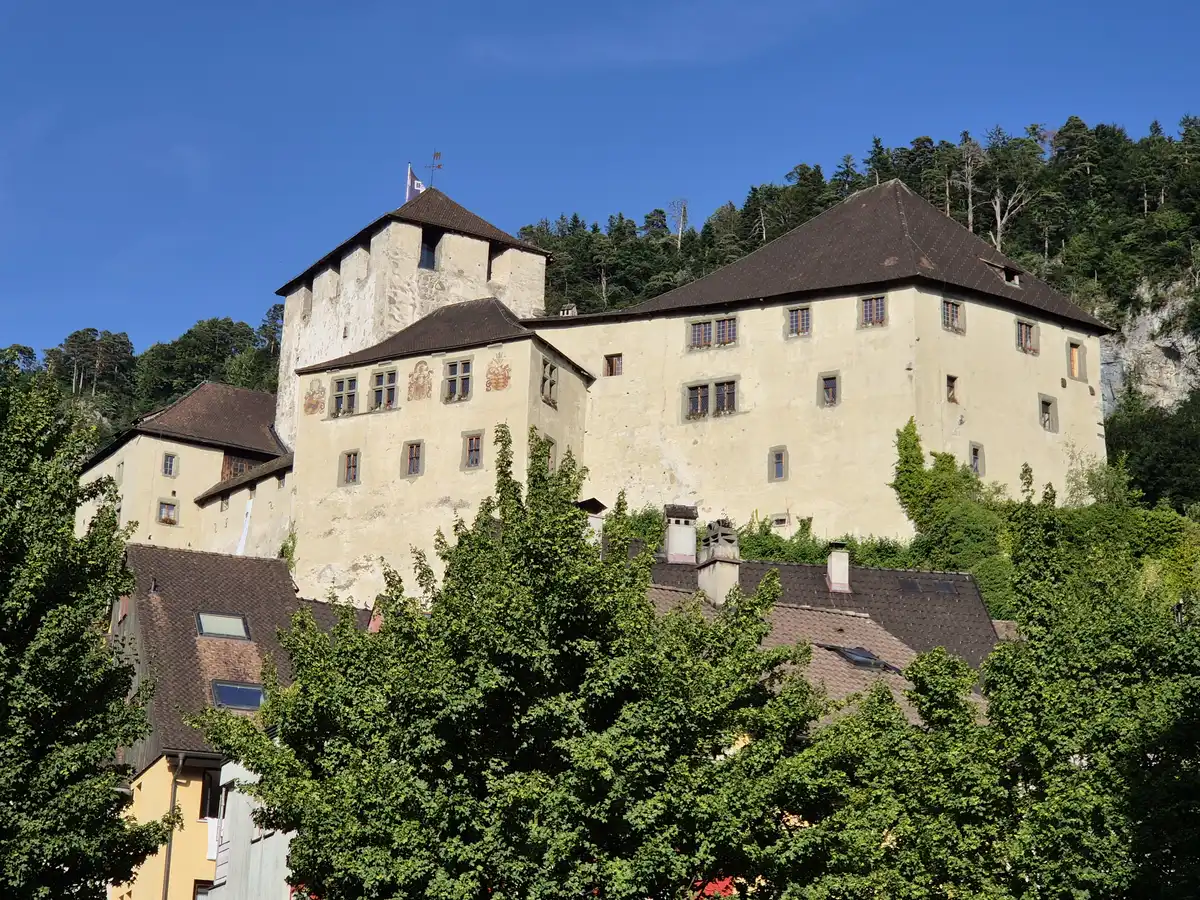 Around 1200, Count Hugo I of Montfort built a hillside castle on a hillside overlooking the River Ill. On the bank of the river, below the castle grew the current town of Feldkirch. The current castle was built during the fifteenth century, after the original castle had been destroyed. 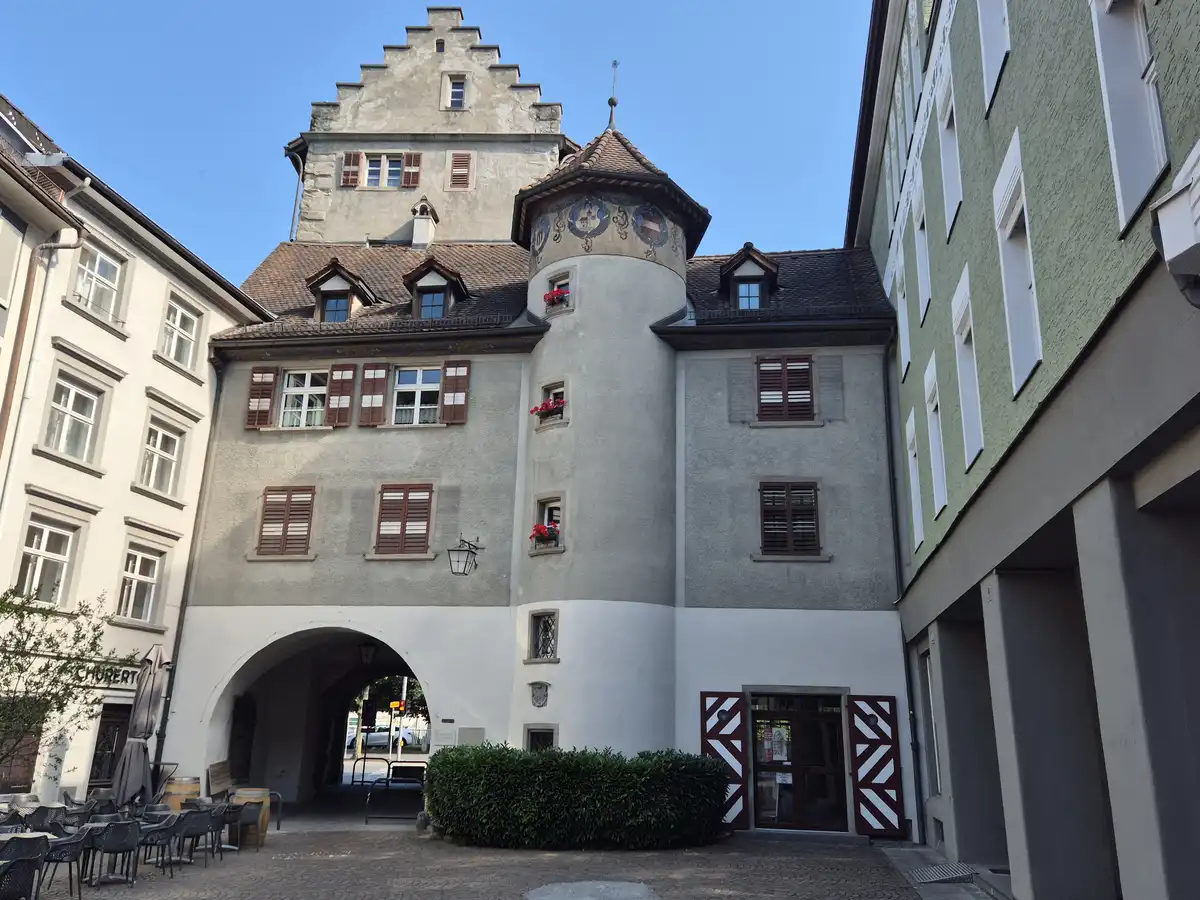 At the end of the fifteenth century, after the loss of their possessions in Switzerland, the Habsburg rulers of Austria reconstructed large parts of the town walls. These were demolished during the nineteenth century. Two of the four town gates and four towers of the wall remain. One of the gates is the Chur Gate that stood on the road to Chur in Switzerland. 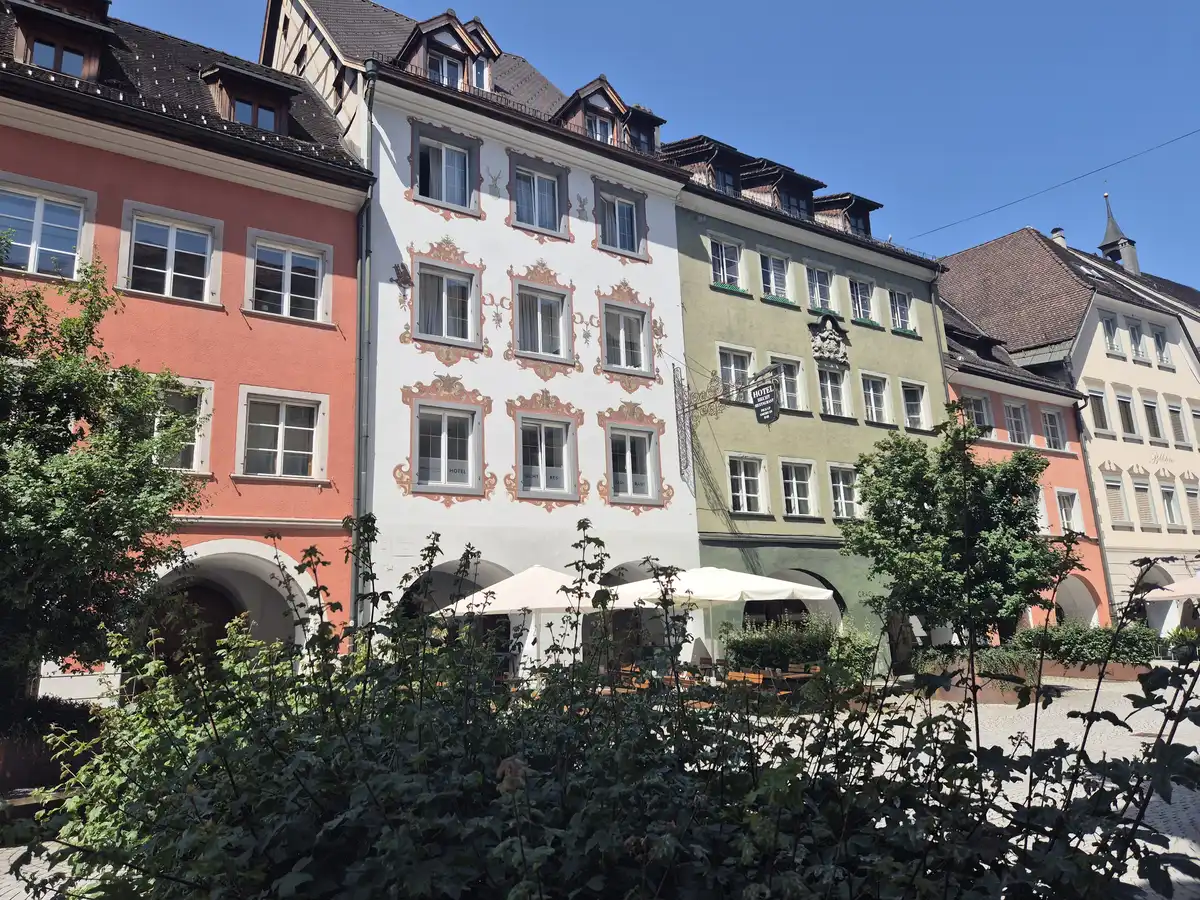 Many old buildings of mediaeval origin, often with arcaded galleries, remain, especially in Neustadt and on Marktplatz. Some have sgraffito façades. 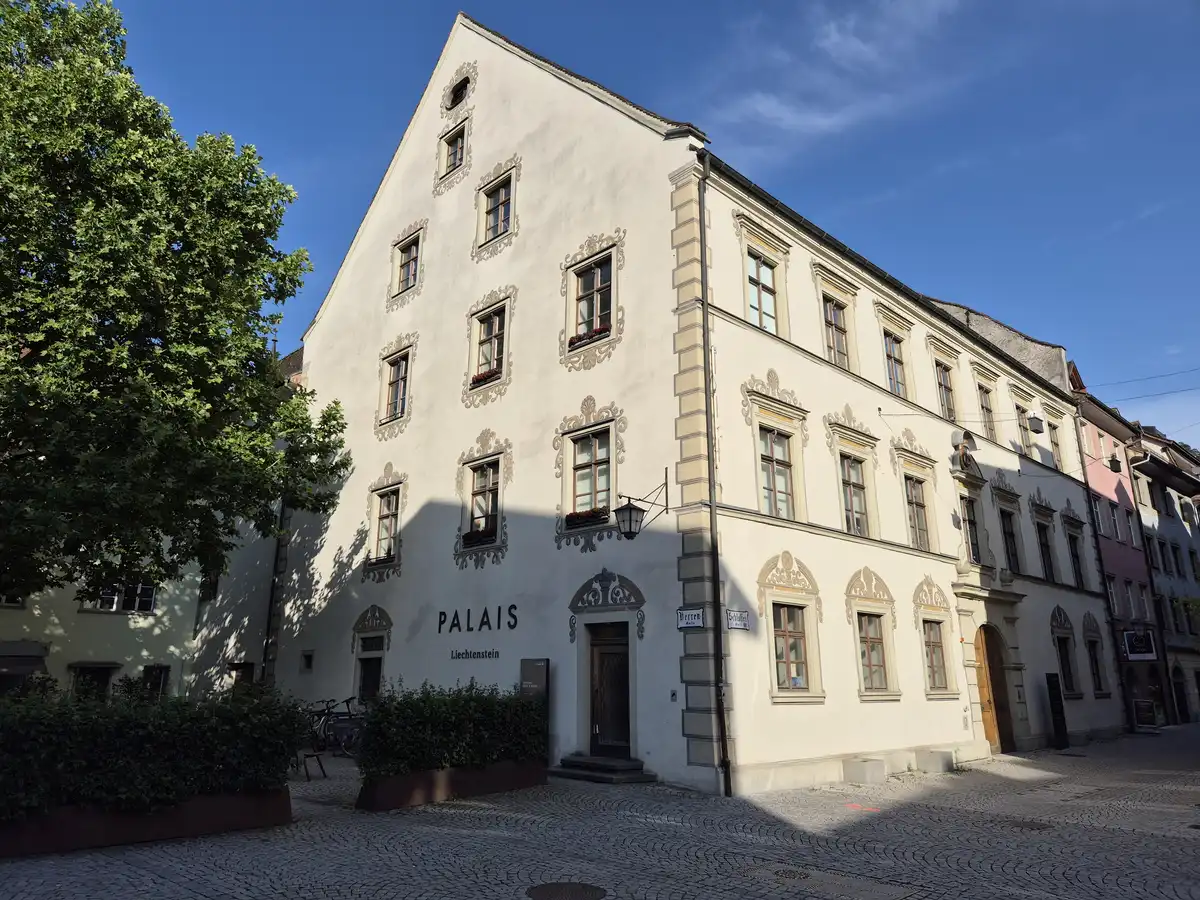 The tourist office, located near the bus station in the old town, is housed in the Palais Liechtenstein. The building replaces an older one destroyed during the 1697 town fire. The reconstruction in Baroque style was ordered by Prince Hans-Adam I of Liechtenstein. 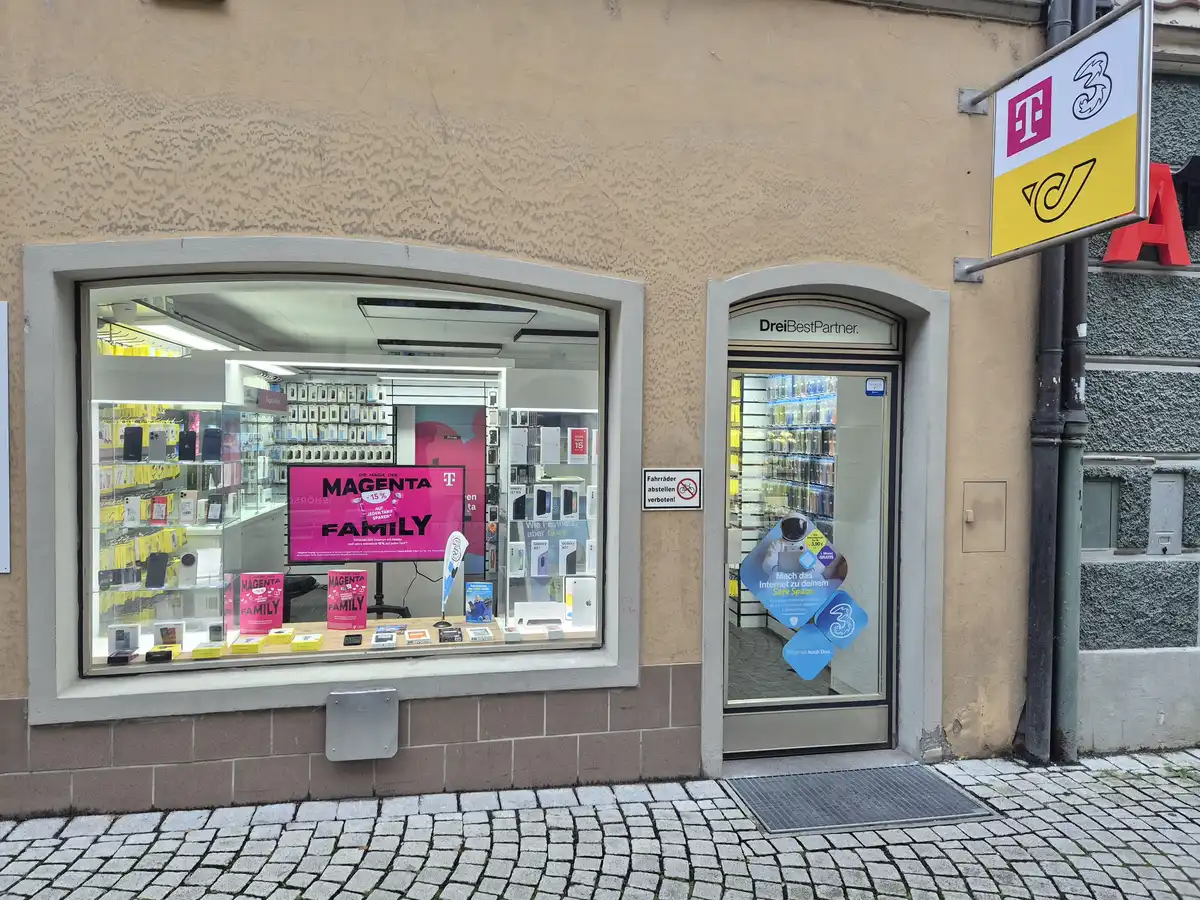 Directly opposite the tourist office is a small phone shop with a post office counter. This sold cards of four self-adhesive stamps. The person helping me had no knowledge of postal tariffs. He had to check the tariffs for postcards sent to European countries, including Russia (€ 1,25) and countries in Asia and South America (€ 2). He did not even know he had a folder with the tariffs on the counter.  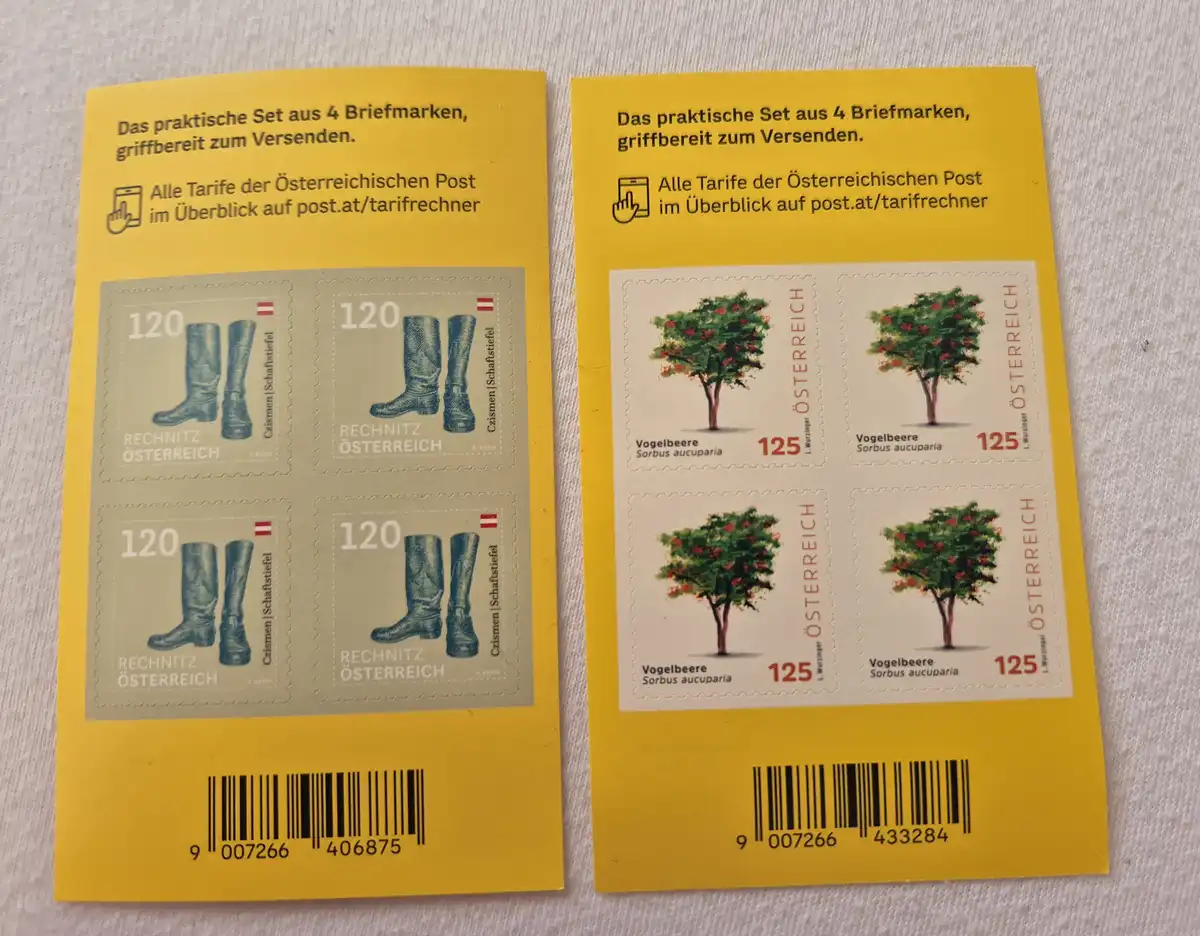 The range of available stamps did not even cover the latter tariff. The cheapest alternative was the use of two € 1.20 stamps, thus overpaying by € 0.40. Oh well, if it keeps the girls happy! 101/6 |
|
Send note to Staff
|
|
|
Pillar Of The Community
Netherlands
6641 Posts |
|
|
Feldkirch HauptbahnhofThere is a post office in front of the entrance to Feldkirch Hbf (Main Train Station). Between the train station and the post office is the main bus station. This has post office boxes. 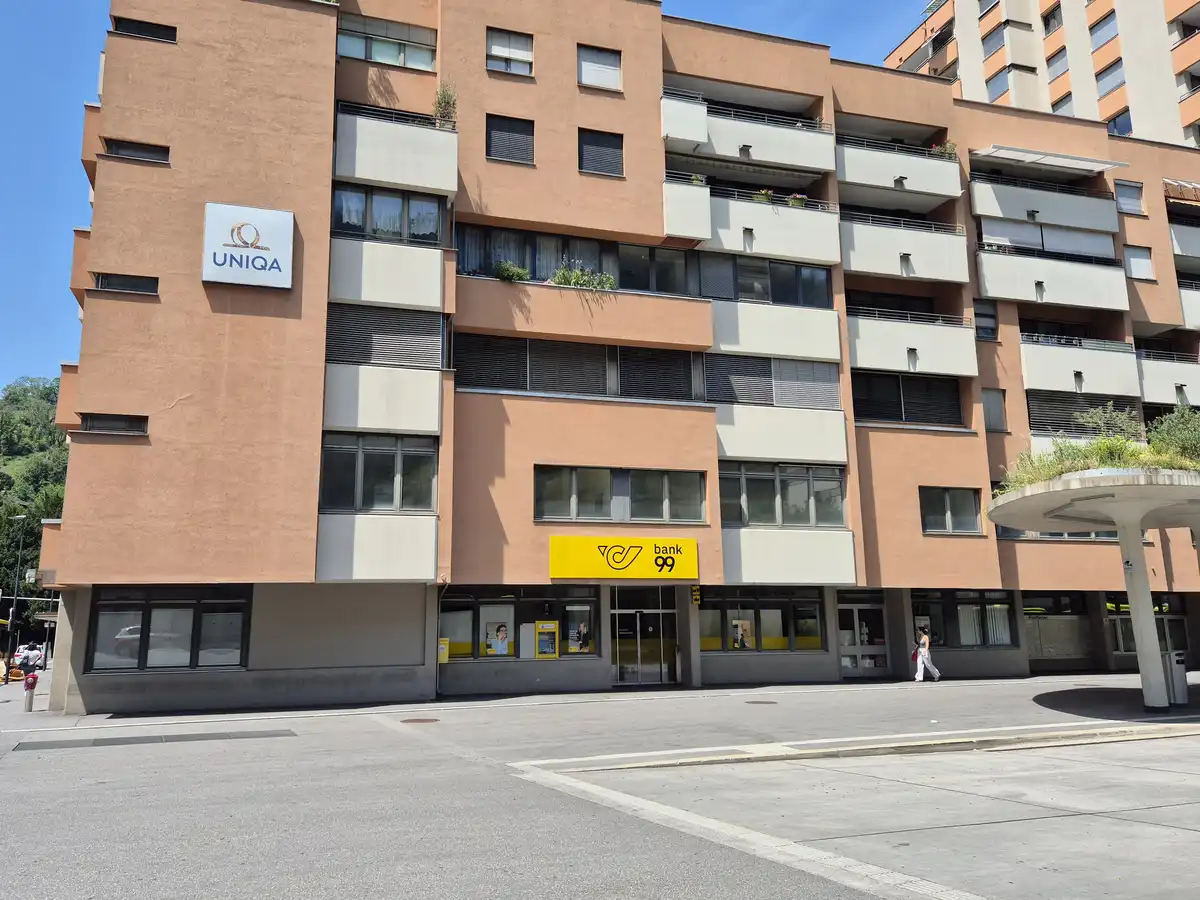 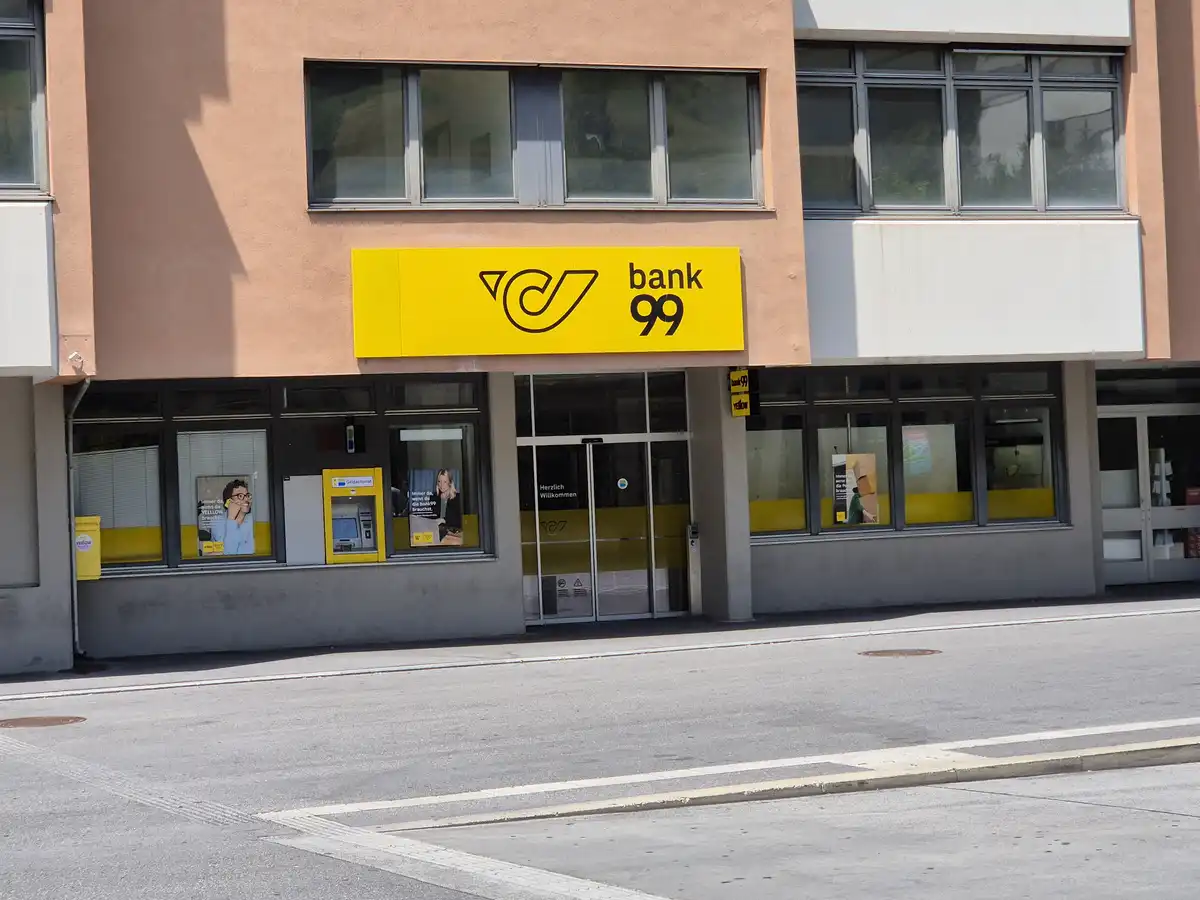 102/6 |
|
Send note to Staff
|
|
|
Pillar Of The Community
2341 Posts |
|
|
Pillar Of The Community
Netherlands
6641 Posts |
|
|
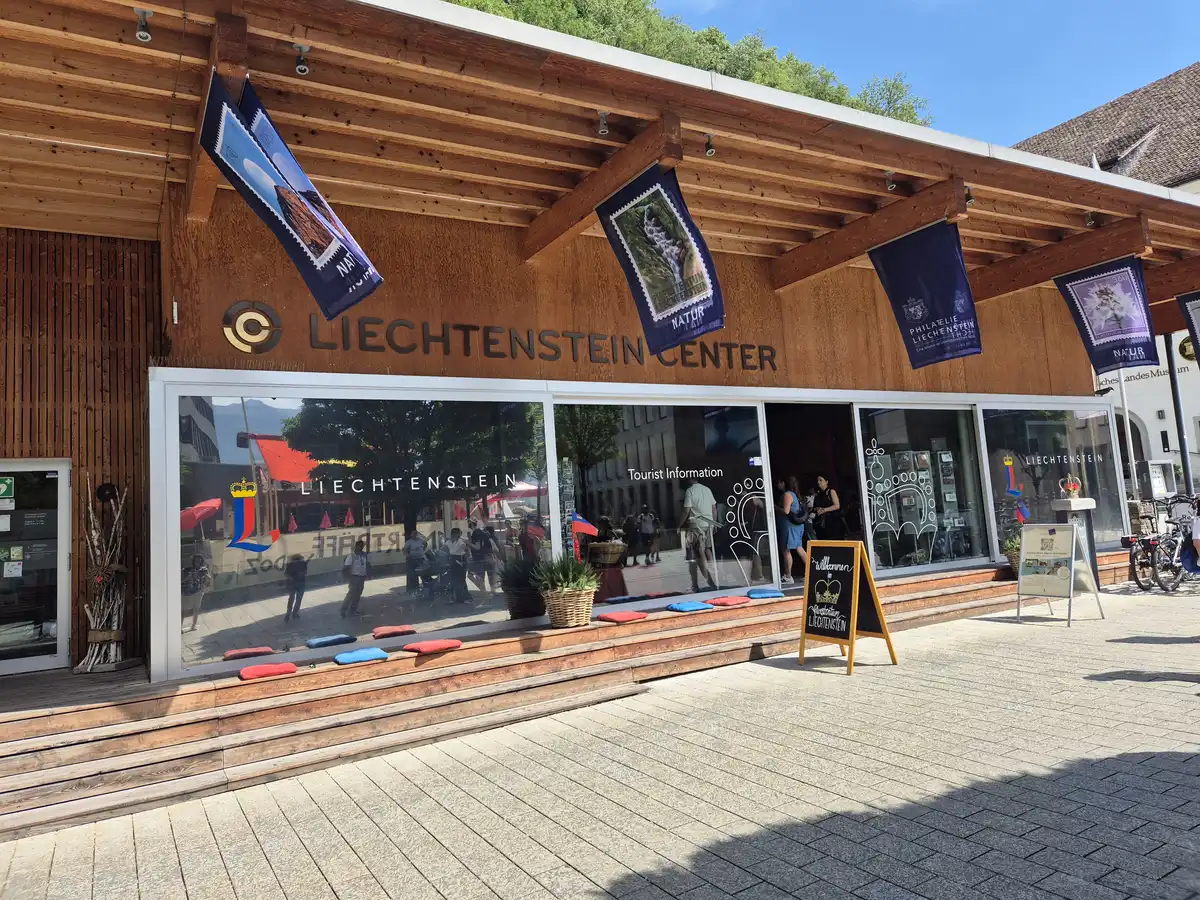
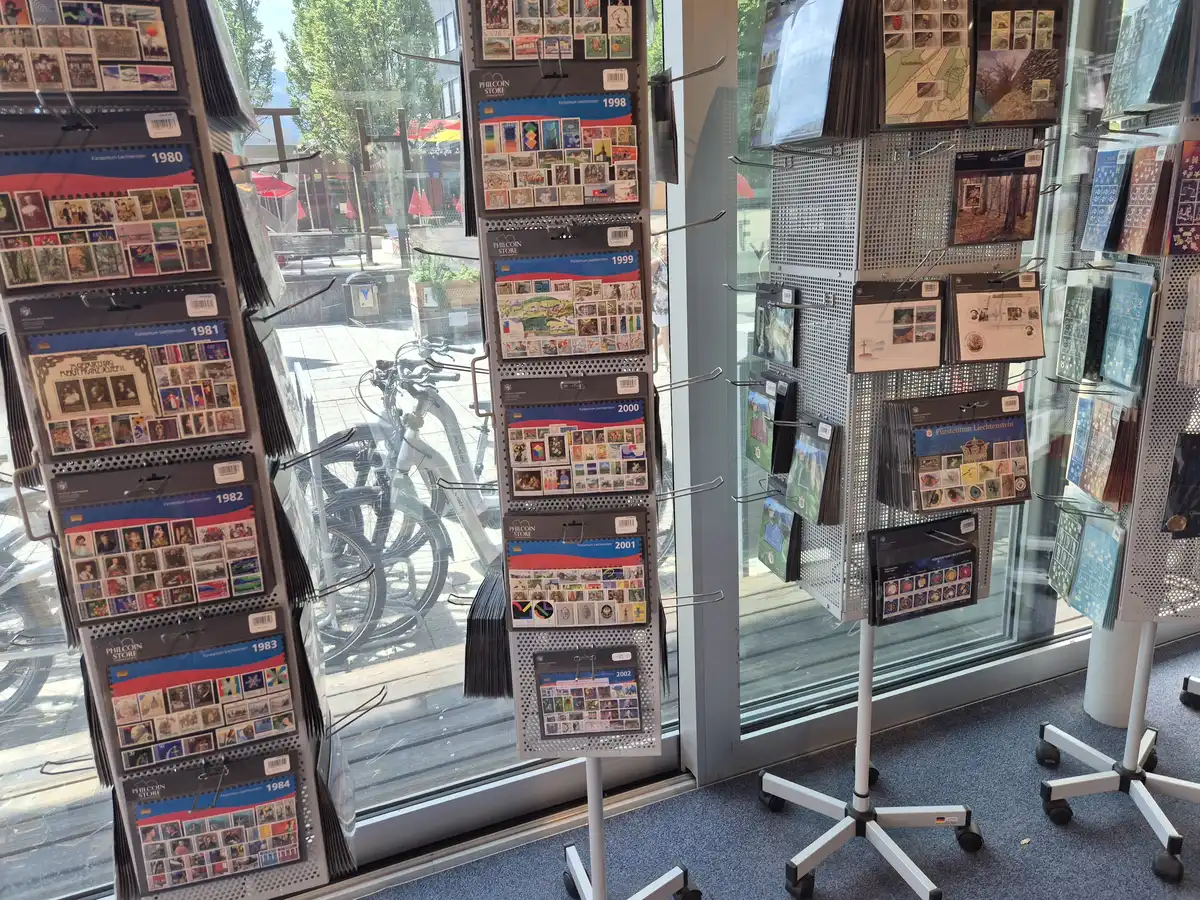
Vaduz is the main place (Hauptort) of the principality of Liechtenstein. A few trains a day run between Feldkirch in Austria and Buchs (Sankt Gallen) in Switzerland that call at Schaan. In front of the train station is a bus station, where you can catch one of the frequent busses that pass through Vaduz. 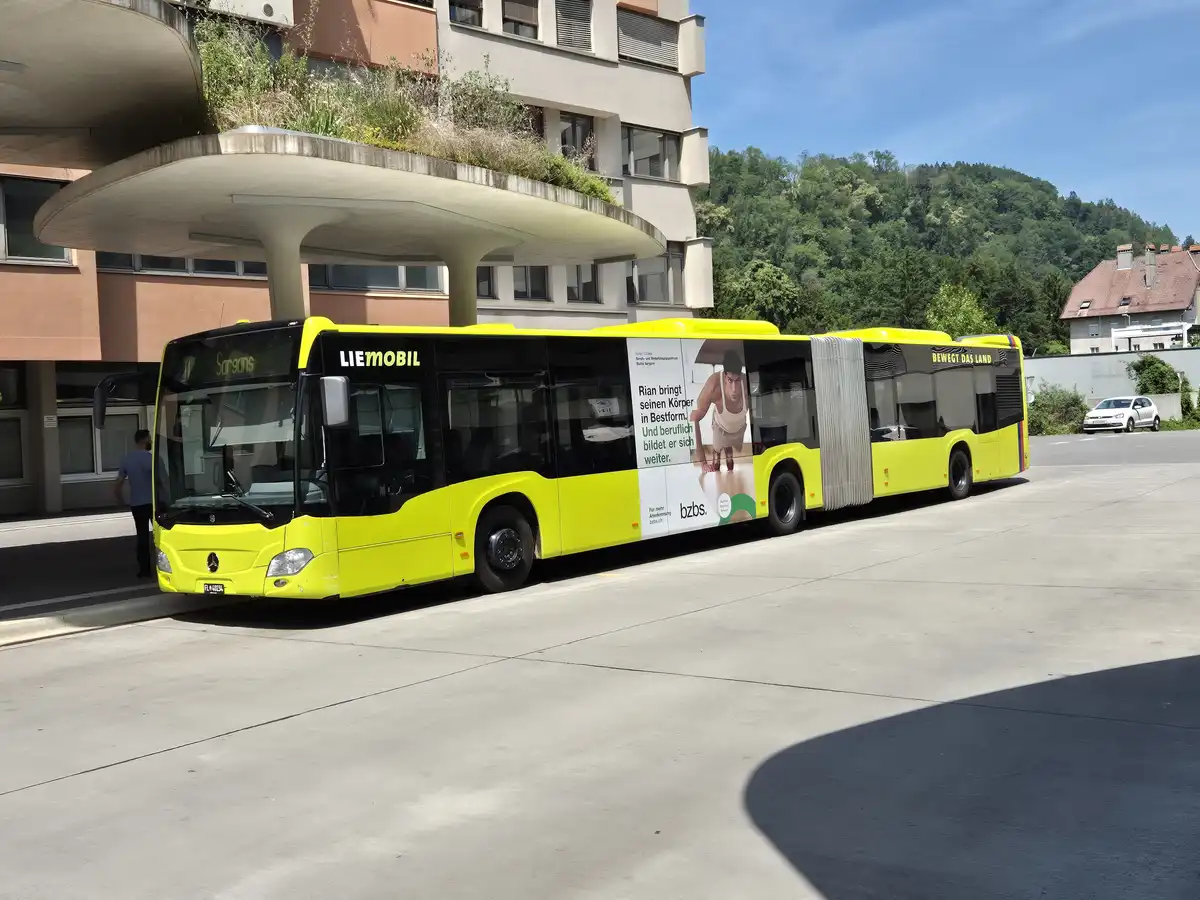 There, also, is a frequent bus service (LIE MOBIL line 11) that has a half hourly service between Feldkirch Main Train Station (Hbf) in Austria – see previous posts - and Sargans in Switzerland. This calls at many stops in Liechtenstein, including Schaan and Vaduz. On weekdays, there also is a half hourly service (LIE MOBIL line 14) running between Feldkirch Main Train Station and Schaan Station, where you can change for Vaduz. If you booked a hotel room, the hotel may send you a link to the Liechtenstein Guest Card. This allows you free travel on these busses. 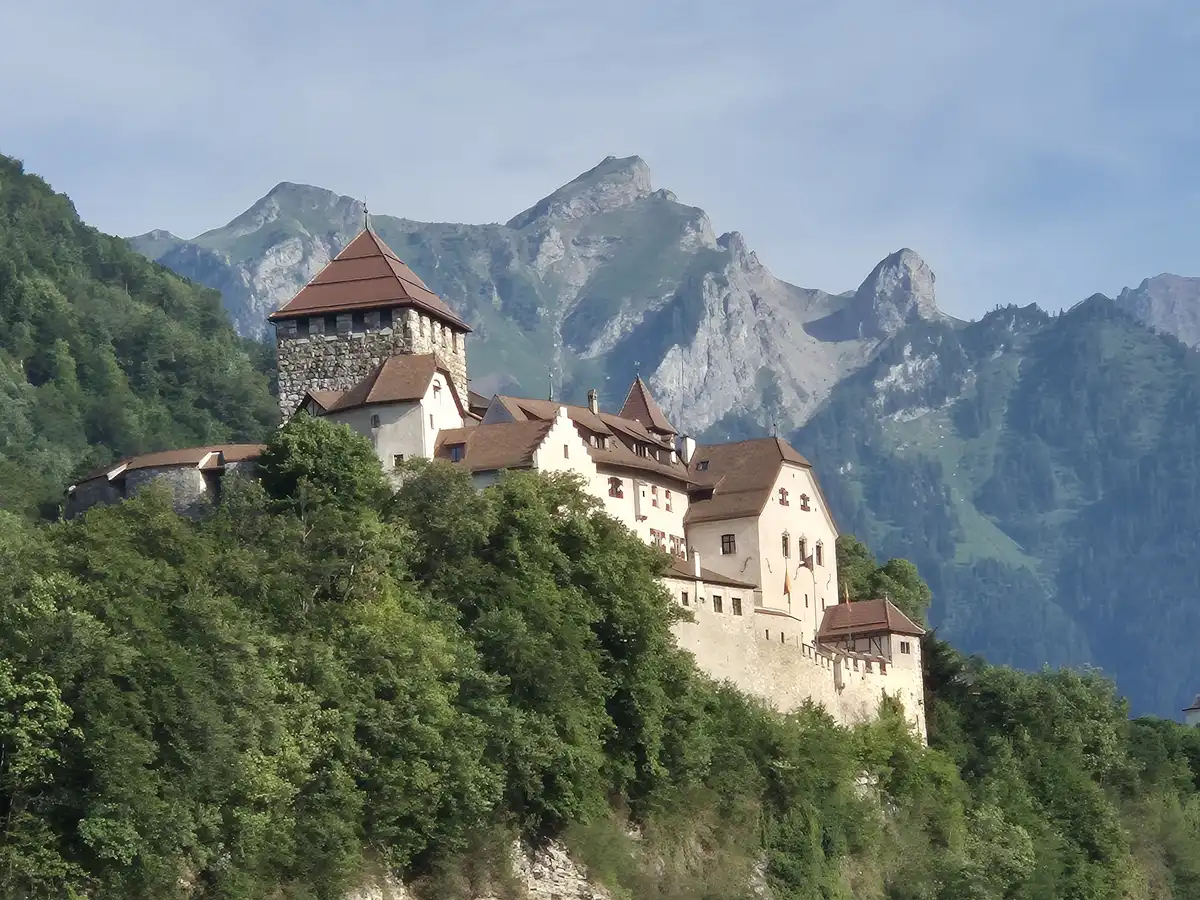 Liechtenstein is not rich in historic sites. The main attraction of Vaduz is its castle that was built on a rock over the village – Vaduz has just over 5,000 inhabitants, with Schaan having just a few more inhabitants -. Even this has mostly been rebuilt at the beginning of the twentieth century and is not considered a true reconstruction of what it used to be. The oldest part is the defensive tower that was first built in the twelfth century. The bastions were built in the sixteenth century. It was acquired by the Prince of Liechtenstein in 1712, and since 1932, after the reconstruction, served as residence of the Princes of Liechtenstein. 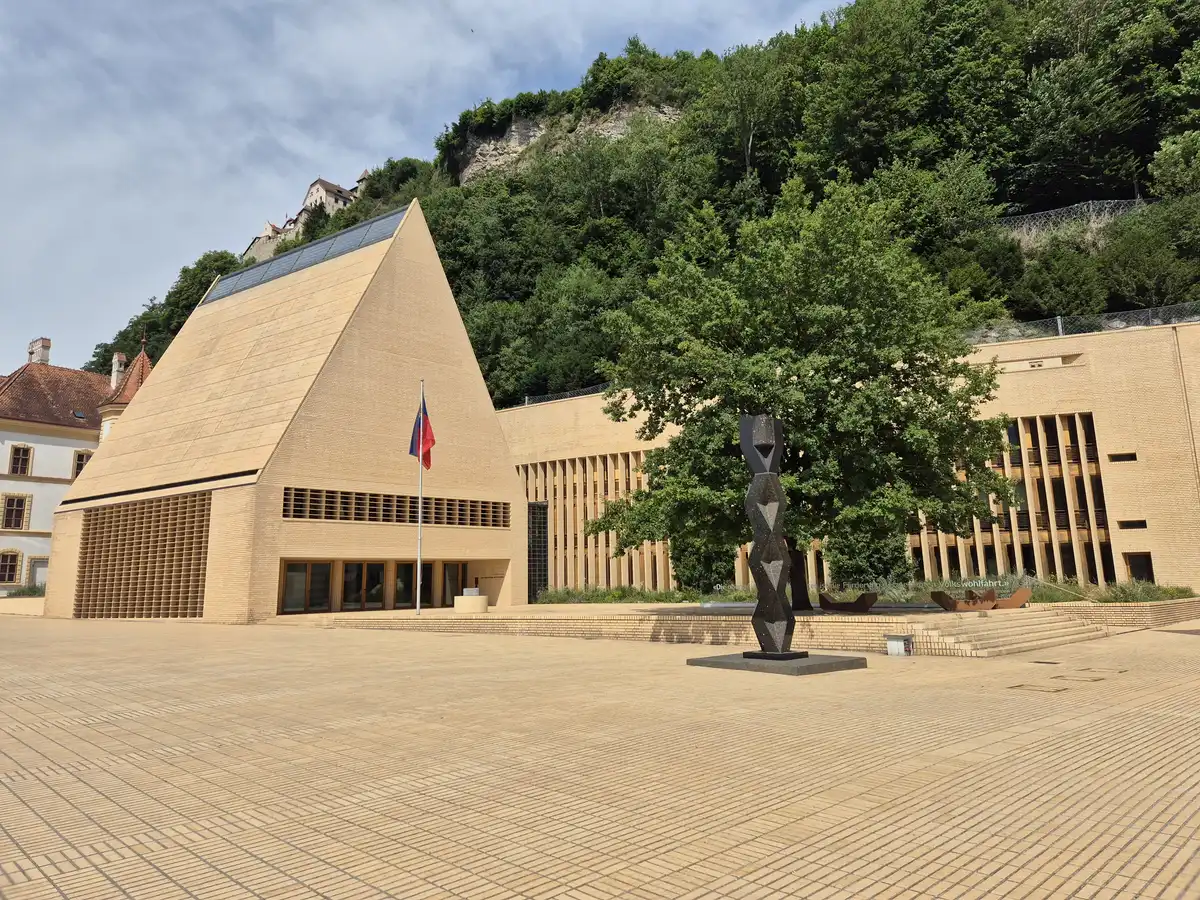 The tourist sites are on the pedestrian thoroughfare, Staedtle, roughly located between the bus stops "Staedtle" and "Post". Among these are the national museum (Landesmuseum) that is housed in a building of mediaeval origin, the neo-Renaissance town hall, and the modern parliament building (note the castle above it and the aforementioned museum in the background). 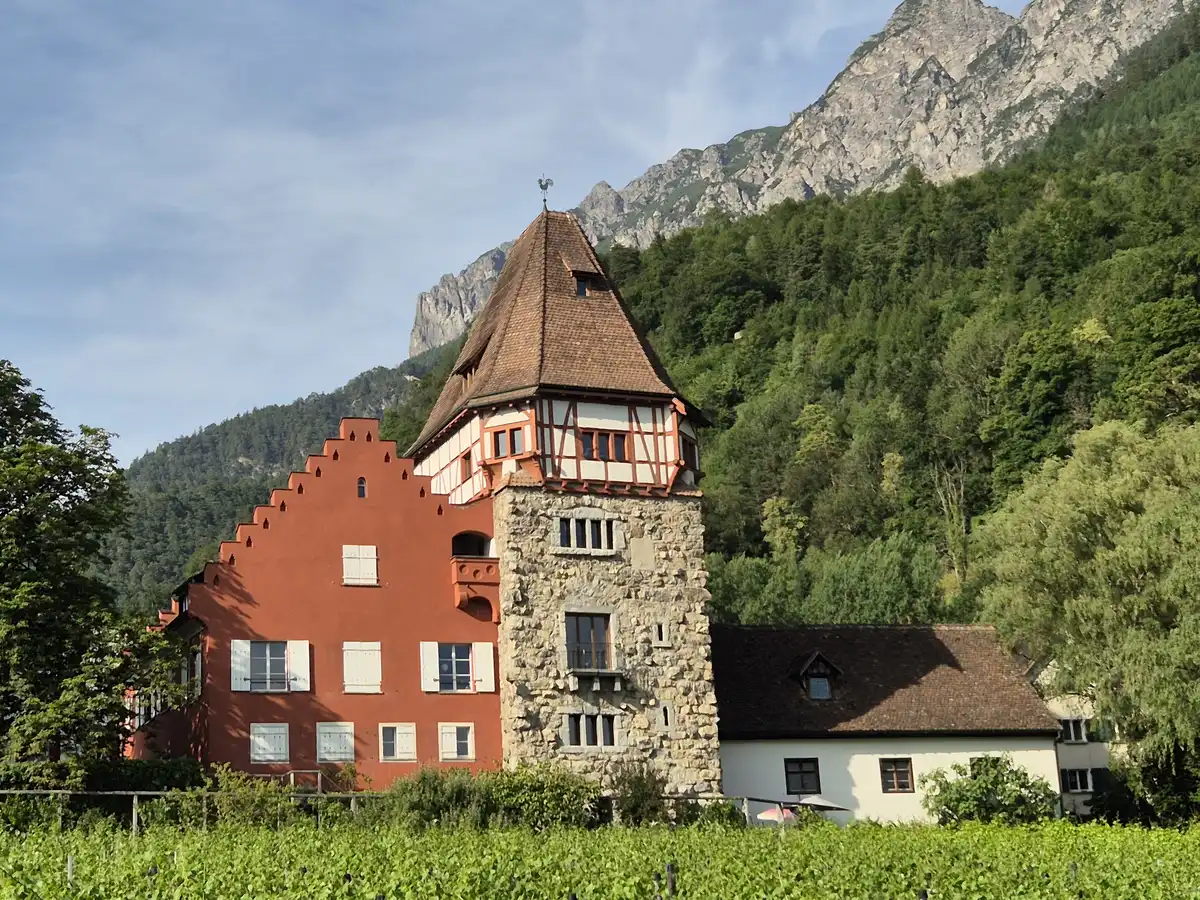 Most tourists will only visit the town on a short stop as part of a bus tour (I must confess my stay was just for a Sunday afternoon, leaving on Monday morning). About fifteen minutes on foot from "Staedtle" is the Mitteldorf area, the old centre of Vaduz. Here, you can find more traditional houses and the oldest building in Vaduz. The mediaeval building is known as "Das Rote Haus" (The Red House) for an obvious reason. 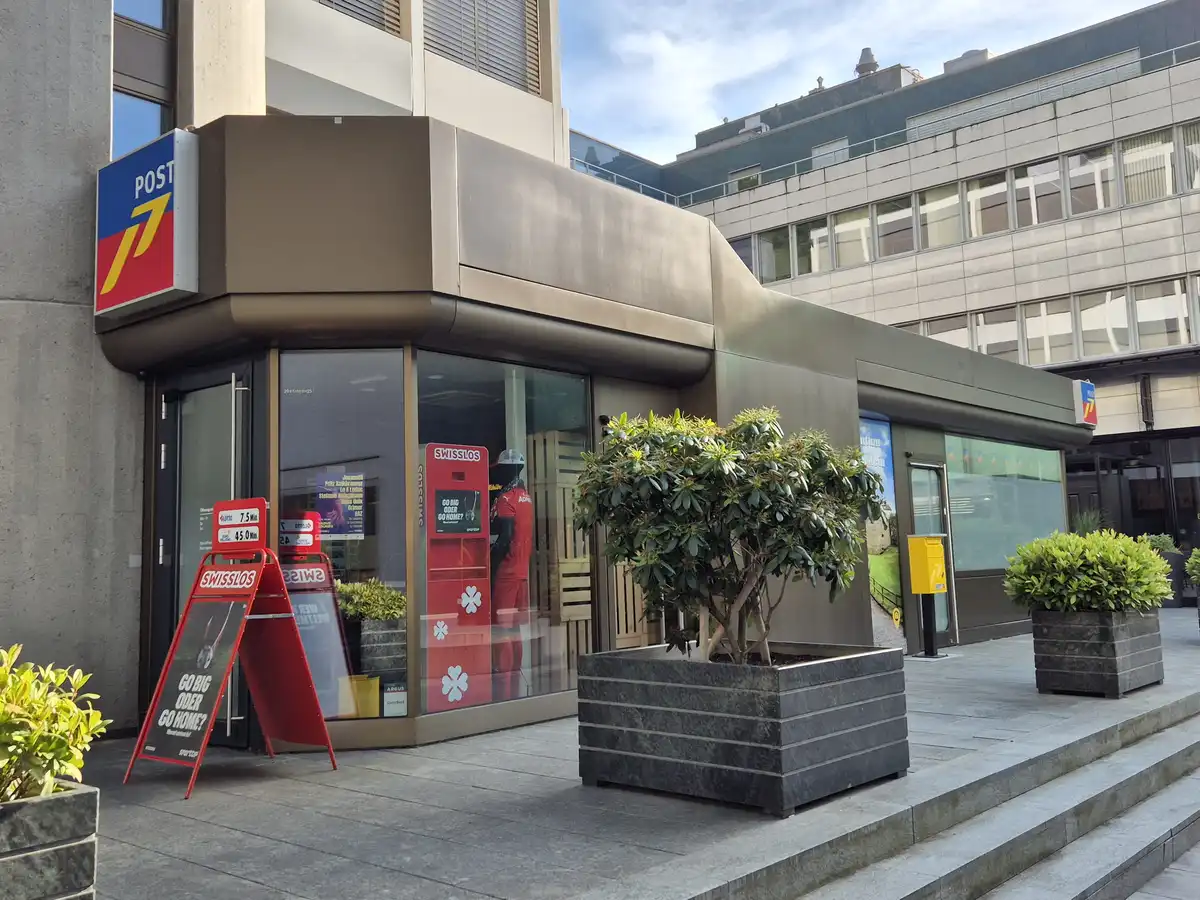 The post office is located just off "Staedtle", from which it, easily, can be seen. The "Post" bus stop is some 100 metres from the post office, on the main road that runs parallel to "Staedtle". 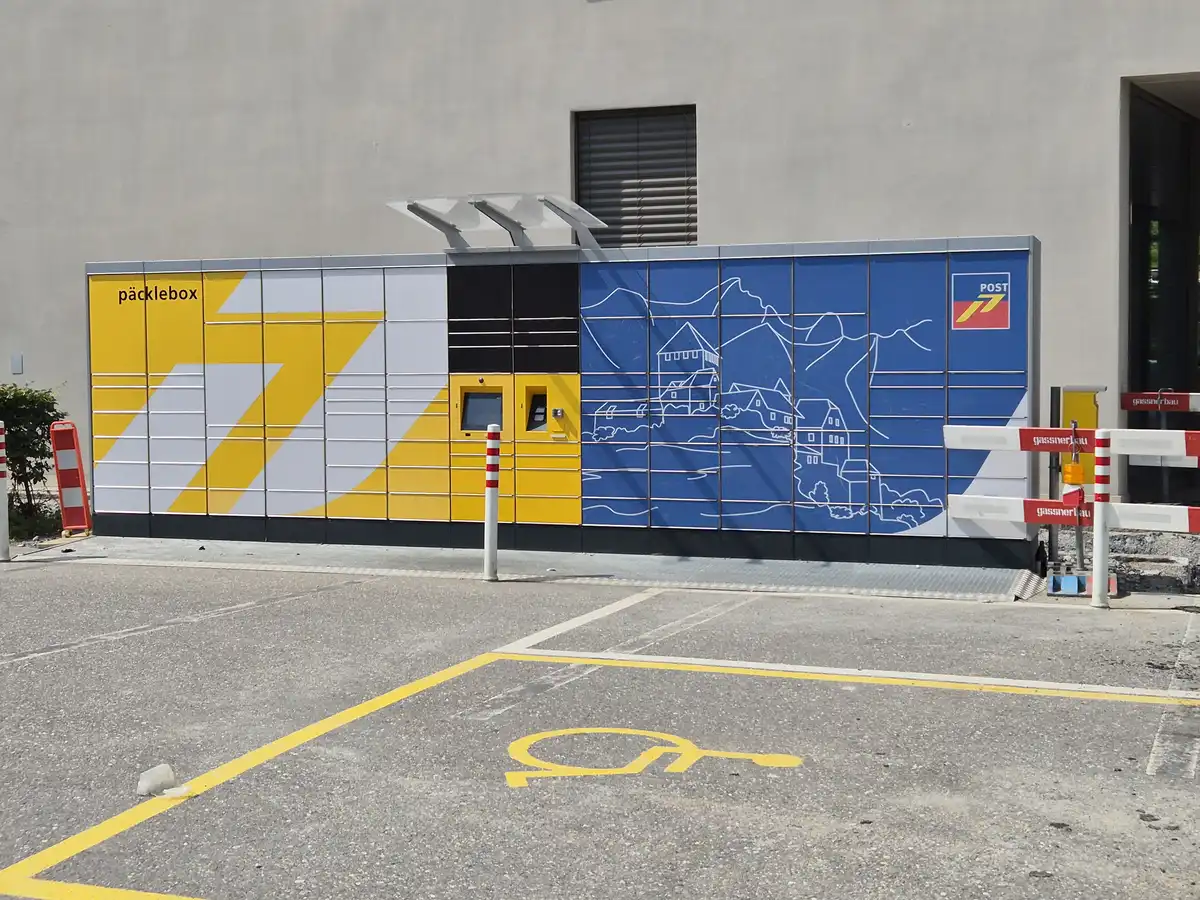 Across this main road from the post office stands a parcel station. 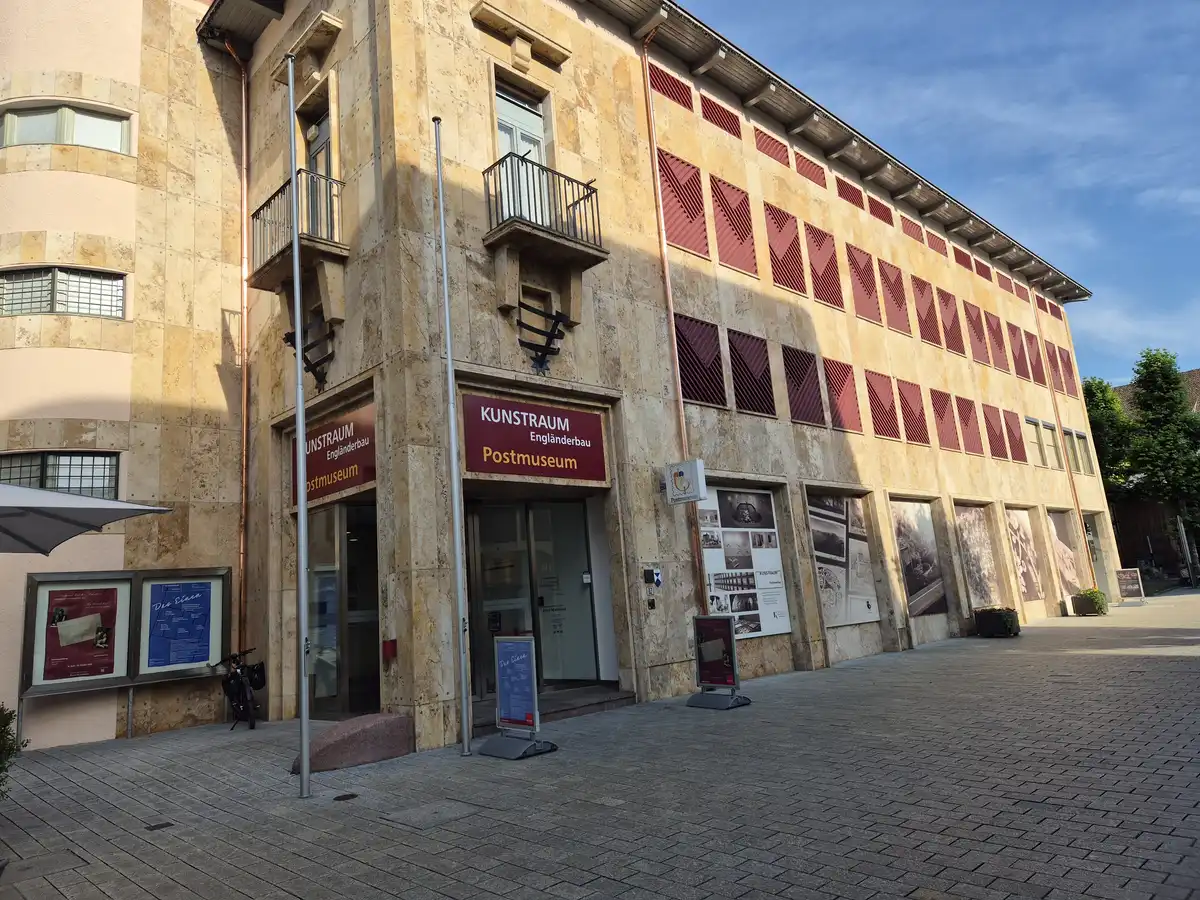 On "Staedtle", just about facing the post office, is the "Engländerbau" that houses the postal museum (unfortunately, I had no opportunity to visit it): https://www.landesmuseum.li/de/besuch.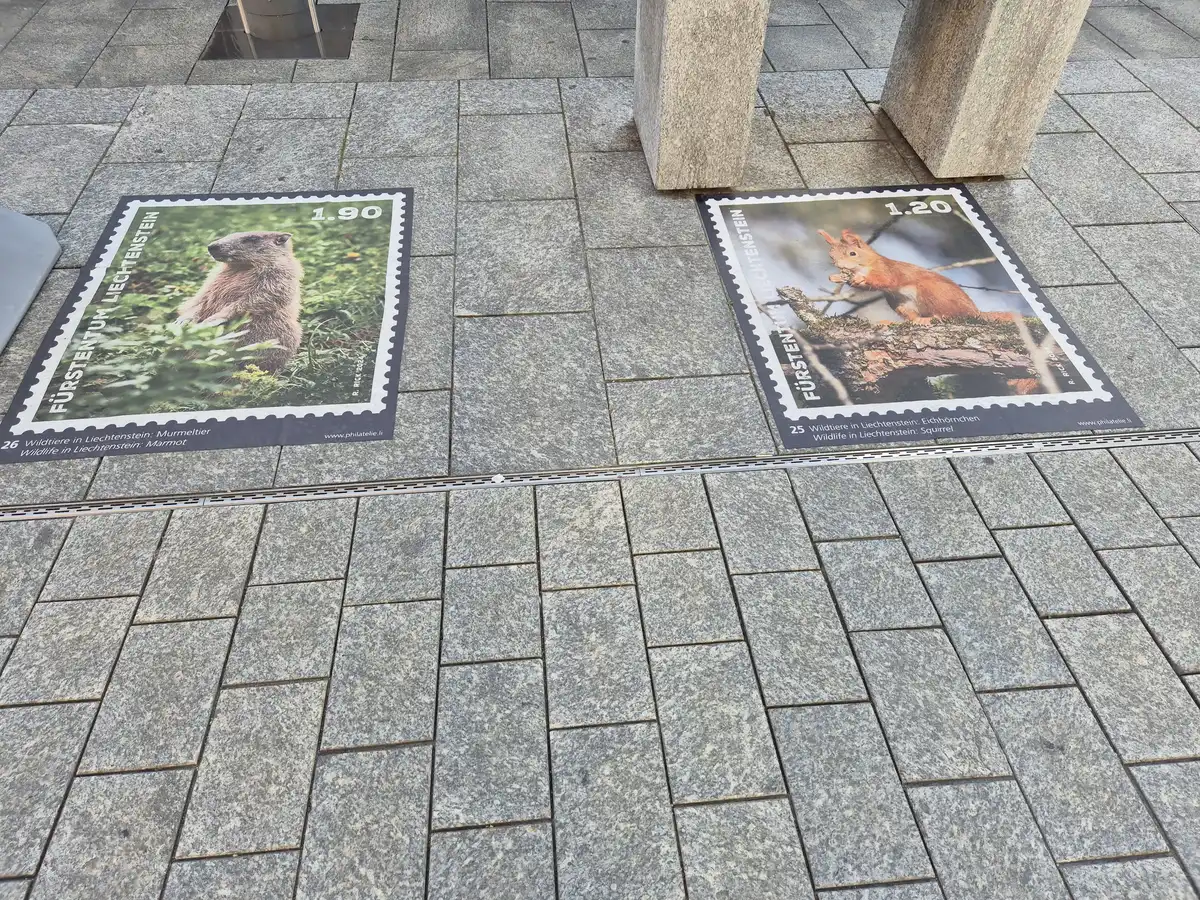 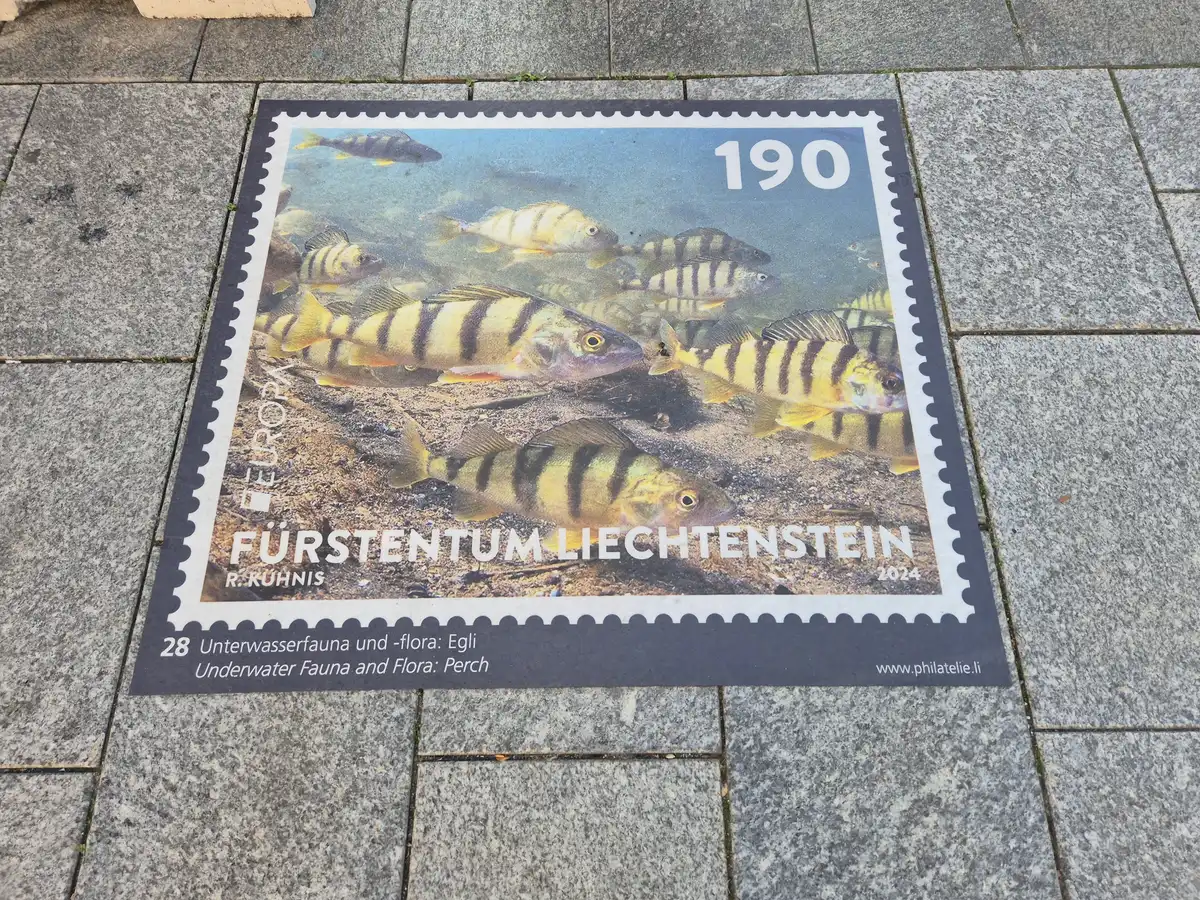 "Staedtle" itself is paved with images of stamps issued by Liechtenstein. 103/6 |
|
Send note to Staff
|
| Edited by NSK - 06/30/2026 02:32 am |
|
|
Pillar Of The Community
Netherlands
6641 Posts |
|
|
Pillar Of The Community
Netherlands
6641 Posts |
|
|
Steyr is a historic town in Upper Austria. There is a regional train that connects the town with the state capital Linz Hbf, every half hour. All services between München / Salzburg and Vienna call at Linz Hbf. Also, there is an hourly Intercity service between Vienna Airport / Hbf and Salzburg that calls at St. Valentin, where you can catch the regional train that runs between Linz Hbf and Steyr. 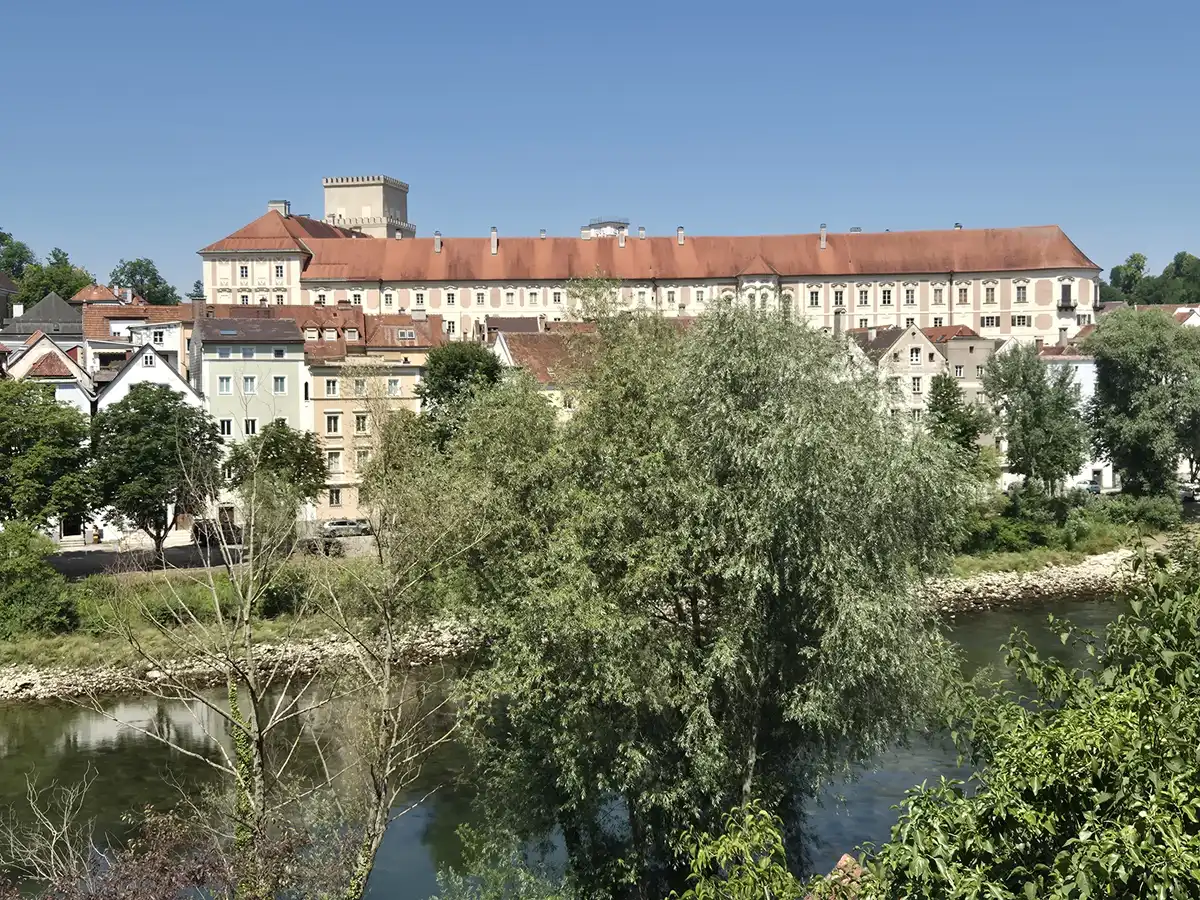 The town is located on the Steyr and Enns Rivers. There is a footbridge across the latter between the station and the town centre. At the top of the bridge, on the side of the train and bus stations, is a structure. If you enter it, you will find an elevator. On a rock at the confluence of the rivers stands the castle of the Counts of Lamberg. This was rebuilt in Baroque style after the 1727 town fire had destroyed the mediaeval castle. 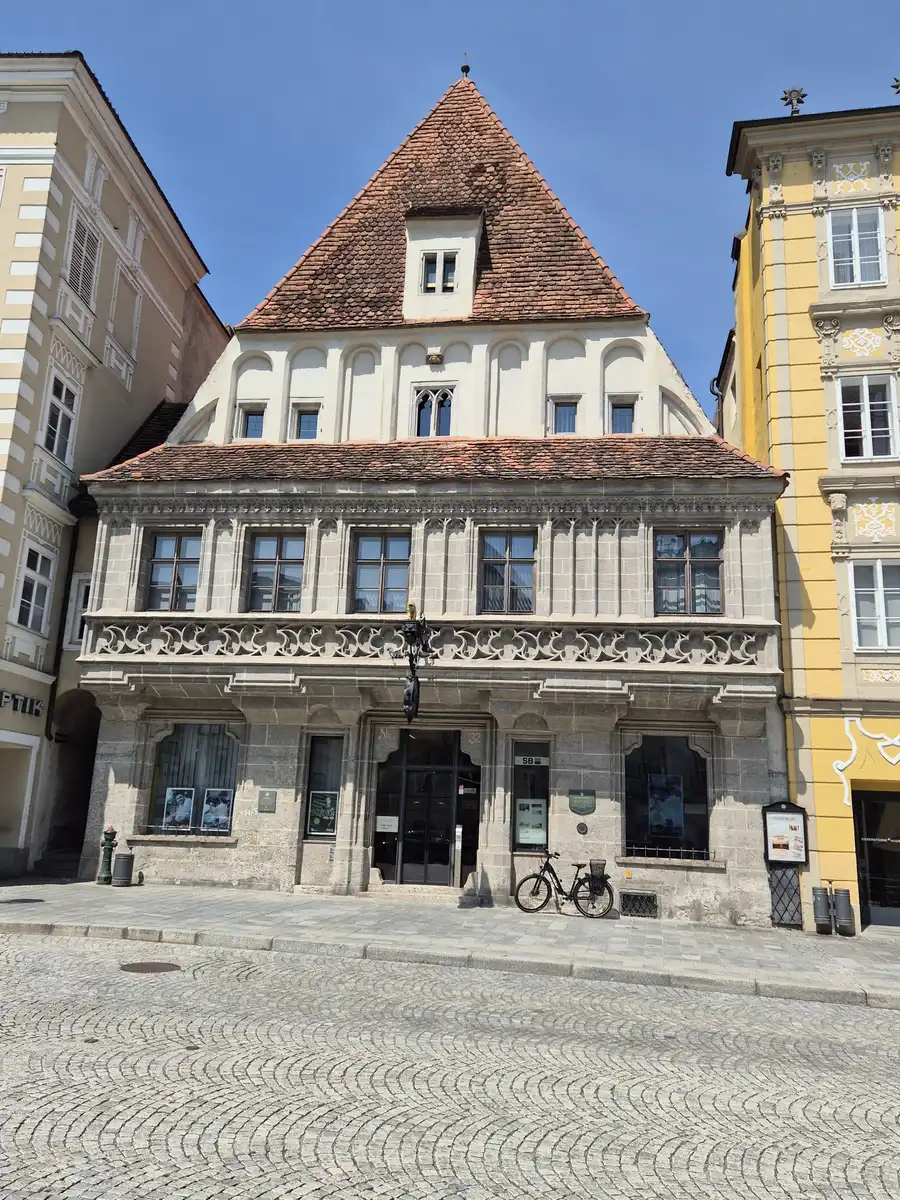 The town centre is the Stadplatz, on which stand many historic buildings. Although the town was rebuilt in the Baroque era, after the 1727 fire, the mediaeval origin of these buildings is evident. The most iconic building is a Gothic house that survived the town fire. Do visit the patios of the buildings. Many preserve their Renaissance appearance. 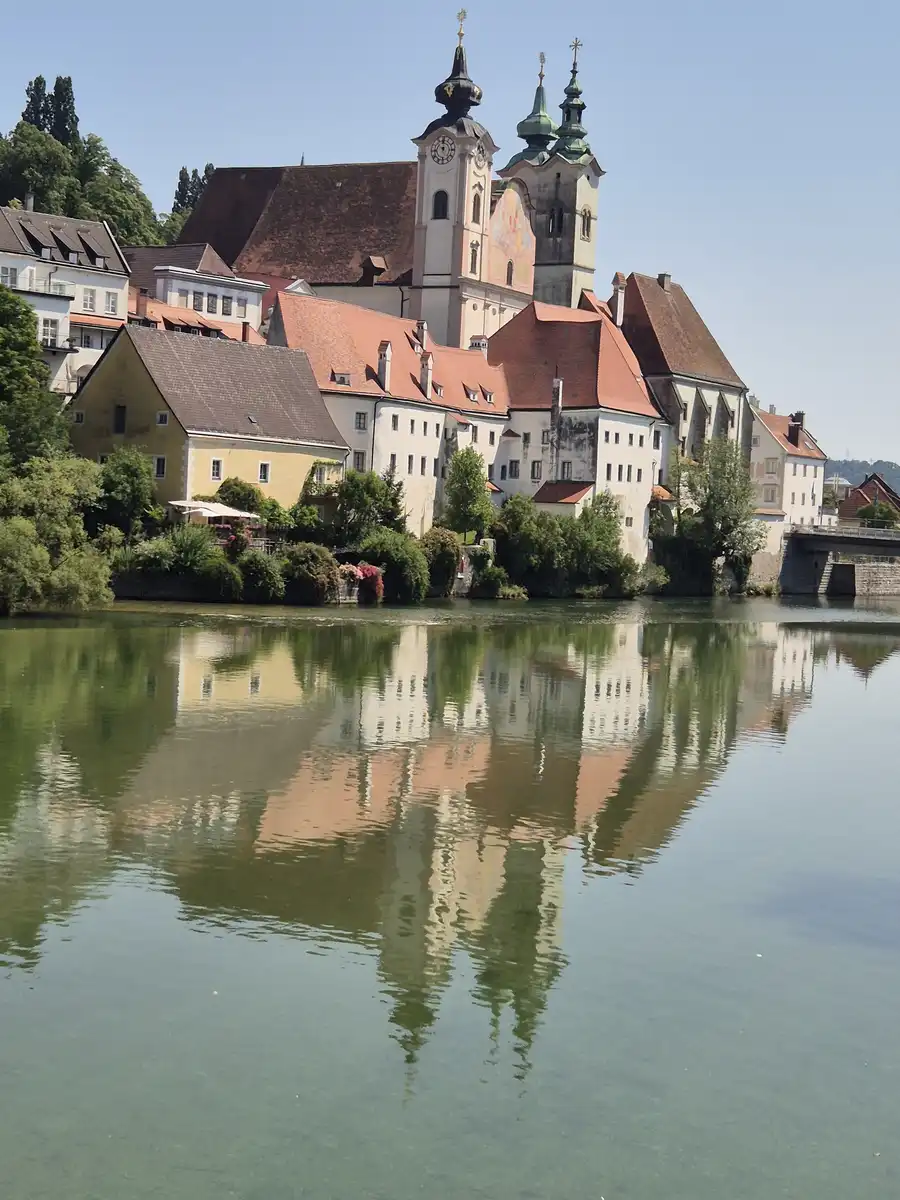 Across the Steyr River is the Steyrdorf area which preserves some interesting old buildings and one of the old town gates. 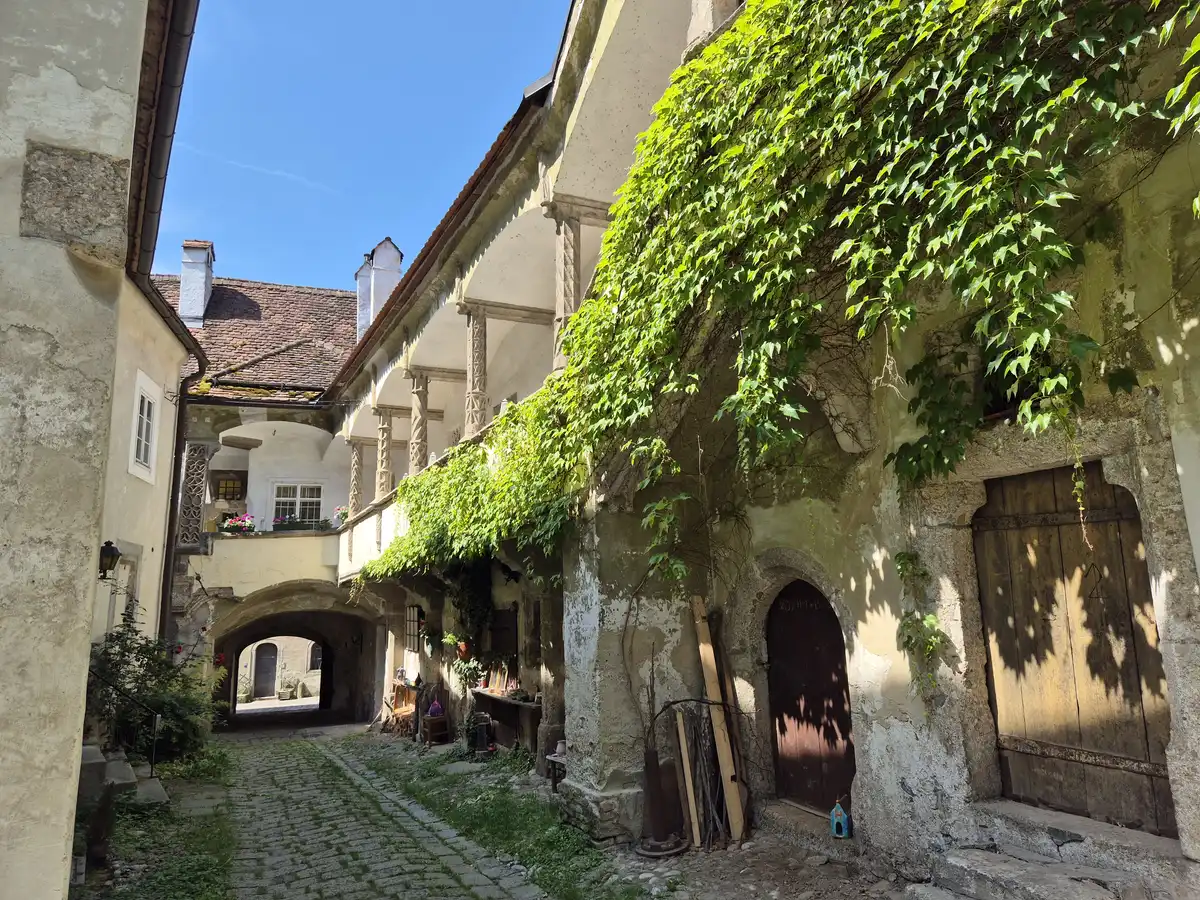 The Dunklhof, in the Steyrdorf area, has a very enchanting courtyard. 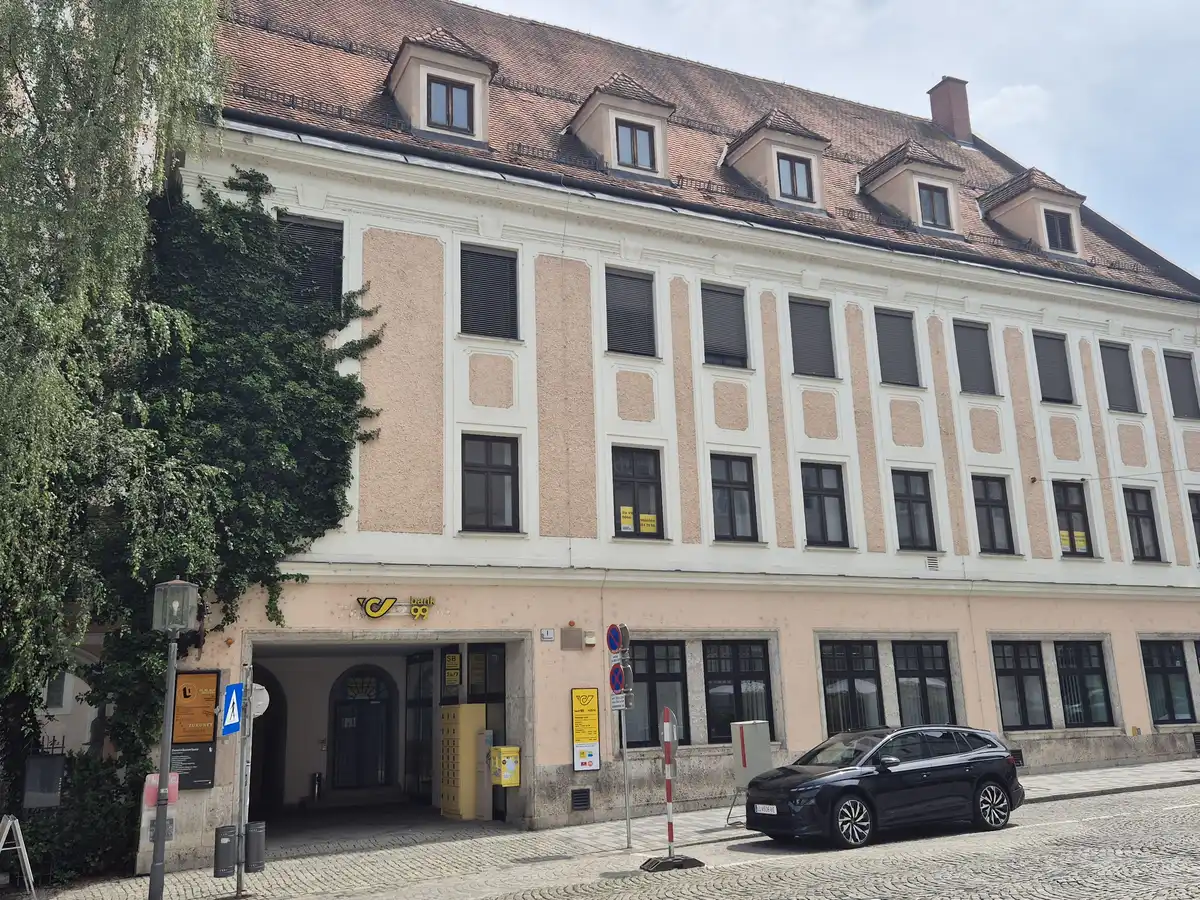 The post office stands on Grünmarkt, just off the Stadtplatz. This street, actually, is an extension of the Stadtplatz. 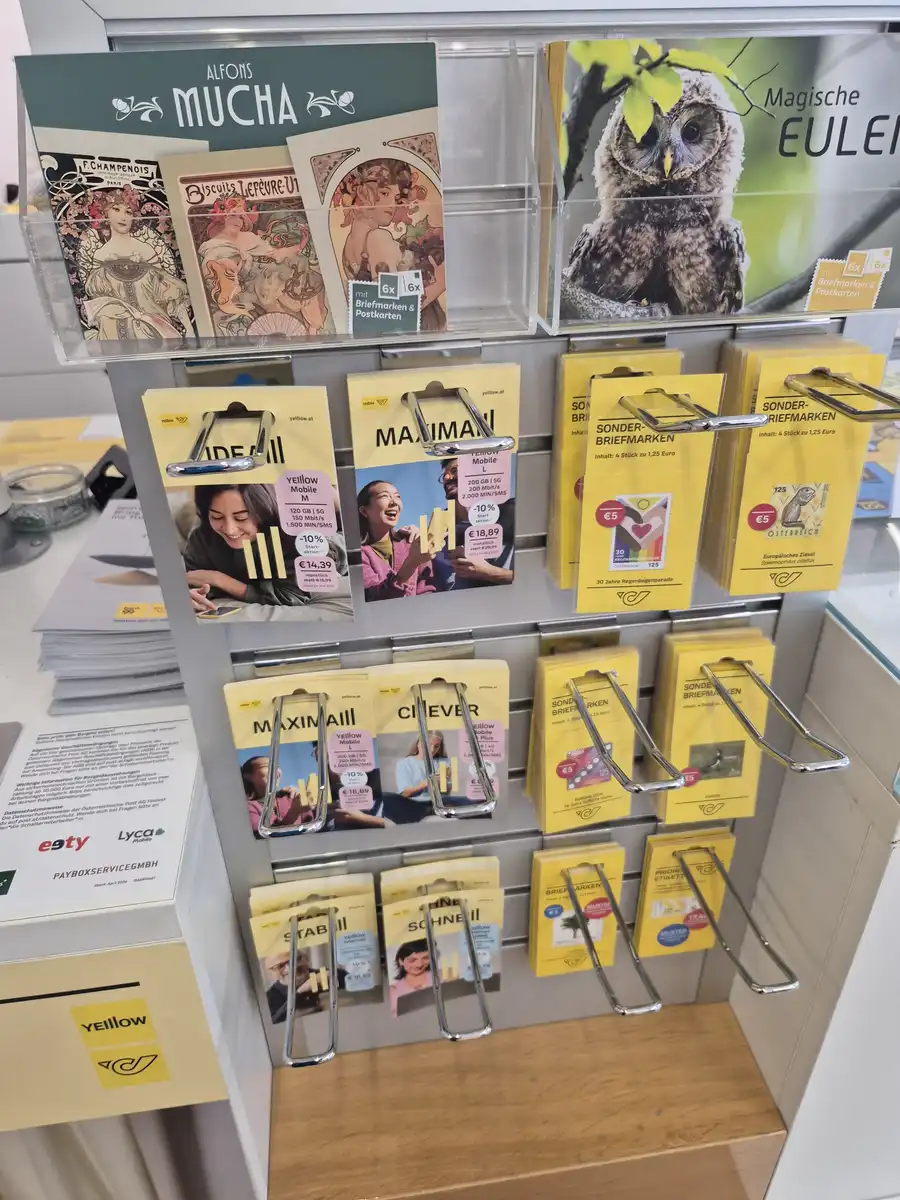 Here, they did have a wide range of stamps. 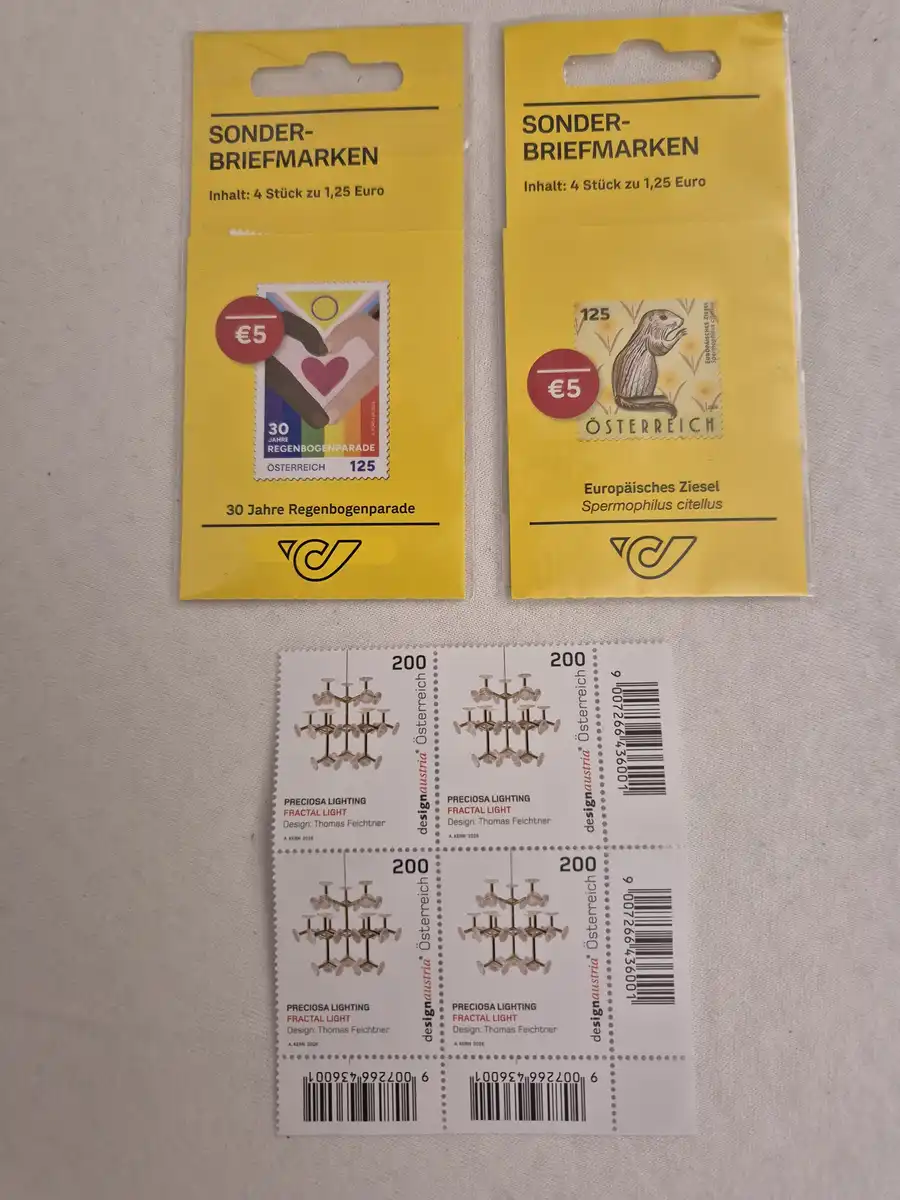 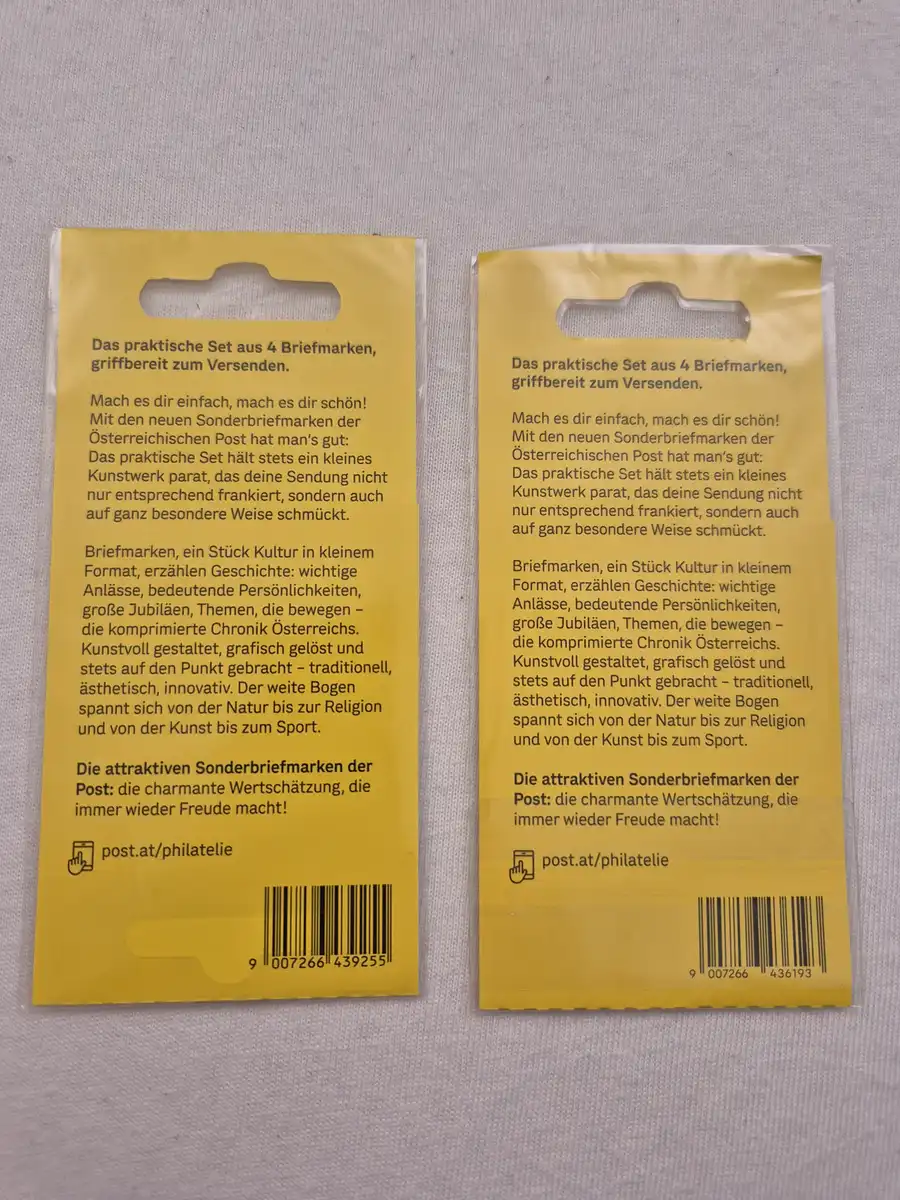 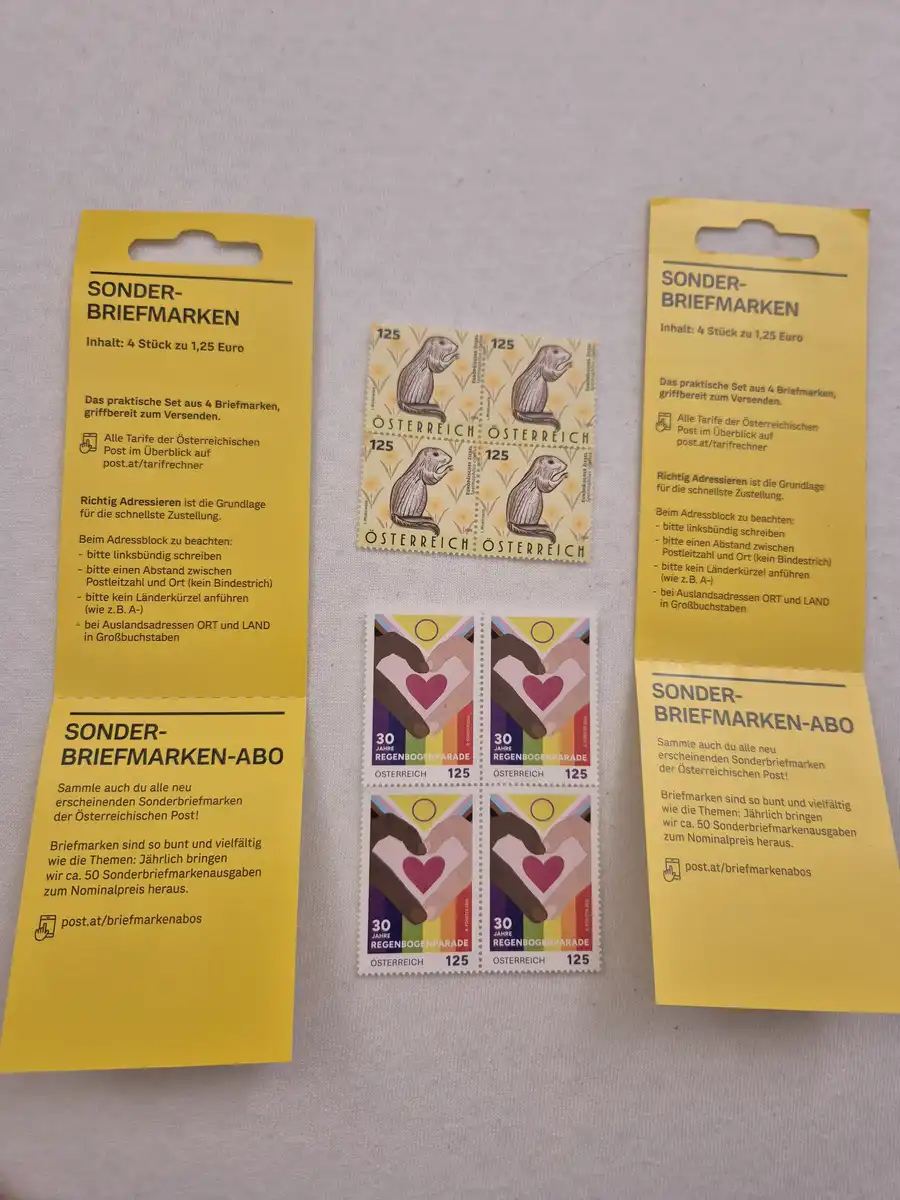 The stamps in stock included € 2 stamps for postcards to Asia and South America. (Yes, I did put that one back upside down). 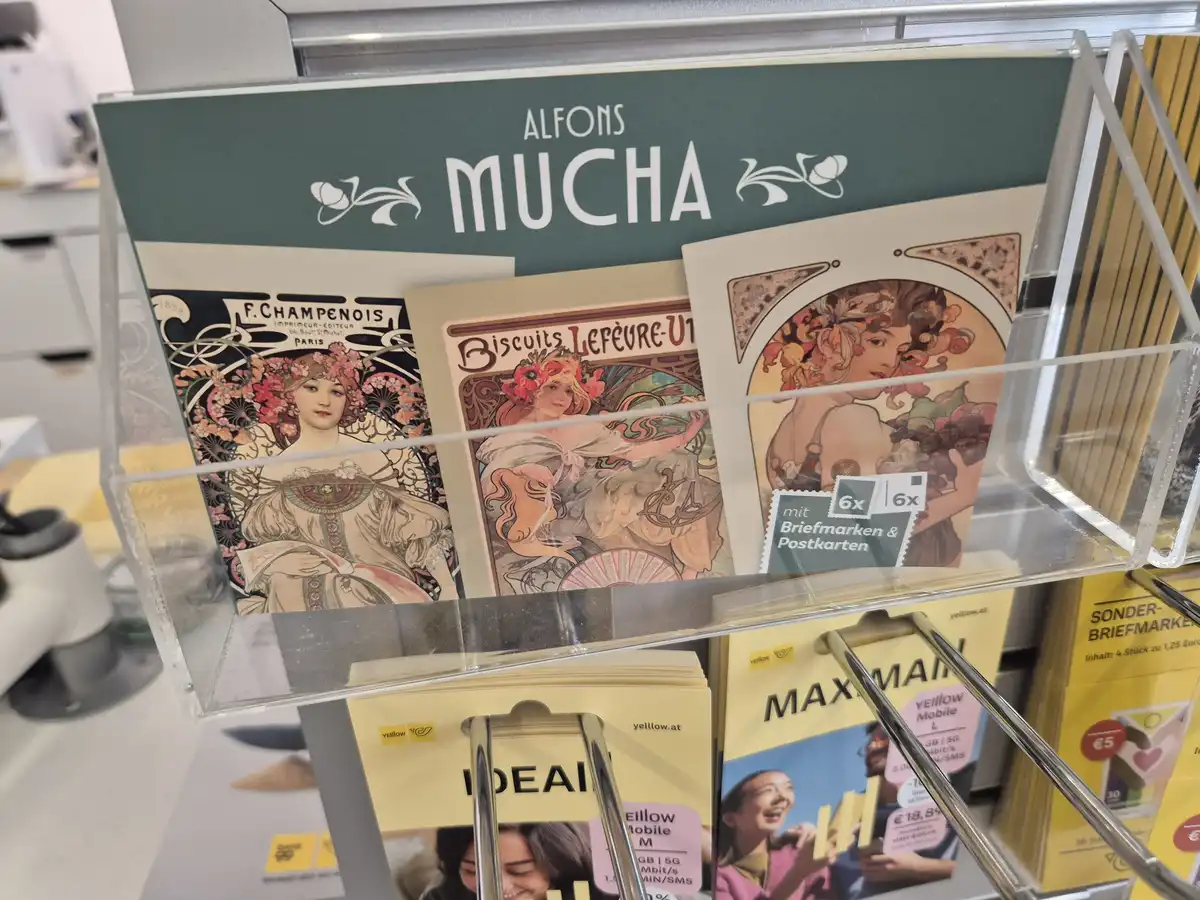 I noticed they stocked prestige stamp books dedicated to the famous designer Alphonse Mucha. 104/6 |
|
Send note to Staff
|
|
|
Pillar Of The Community
Netherlands
6641 Posts |
|
|
Hannover Ernst-August-GalerieHannover is the capital of Niedersachsen. The airport (HAJ) at Langenhagen is connected with Germany's big international airports (you may count Amsterdam as such). It is served by the nr. 5 S-Bahn that calls at the main station in the heart of the city. Trains run every 30 minutes (check whether there is a replacement bus because of engineering works as has happened for the past two years, especially, late in the evening) and take about 20 minutes. Hannover's main station can be reached by high-speed train from all major German cities (you may count Amsterdam as such). There is little to see after the allied forces bombed the city. A few old buildings have been rebuilt, and not always on the original site. As I visited this weekend, scaffolding resulted in even less sights to see. You may be interested in one of the museums, or take a walk in one of the many parks. 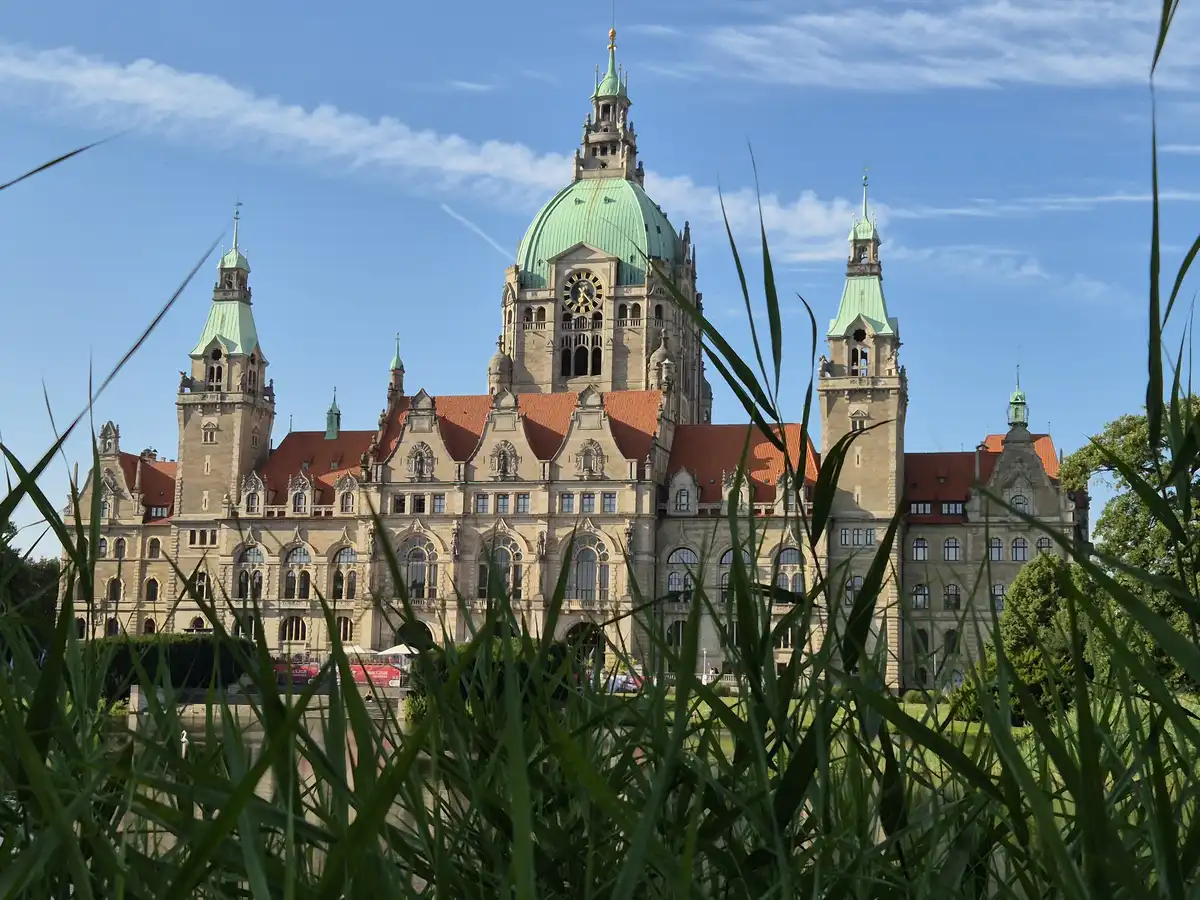 A new eclectic - someone once said that if it is too ugly to identify a style, you call it eclectic - town hall, stands in the Maschpark at the edge of the centre. A mostly pedestrianised throughfare connects the main station with the park. Just beyond the pedestrianised part is the "old" town. 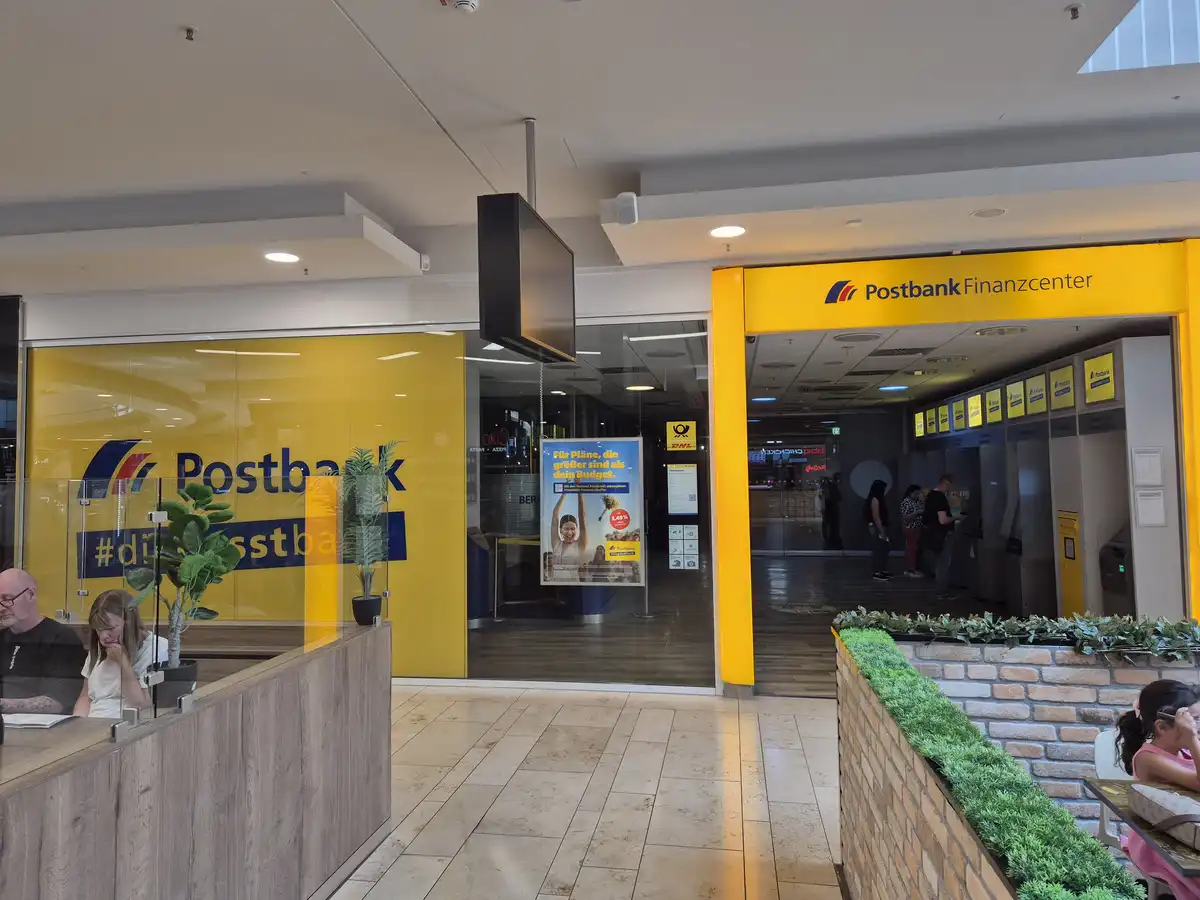 There are several post offices. One is located in the Postbank office located in the Ernst-August-Galerie (shopping mall), next to the main station (exit on the Ernst-August-Platz side of the station). I sent a parcel with notebooks to Russia and forgot to buy stamps for the postcards I wanted to send. When I returned on Saturday afternoon, around 13:45 CET, I found it had closed at 13:00 CET. The whole trip was somewhat of a disaster. So, my friends will receive postcards of Hannover with a Dutch stamp. 105/6 |
|
Send note to Staff
|
|
|
Pillar Of The Community
United Kingdom
8628 Posts |
|
|
Pillar Of The Community
Netherlands
6641 Posts |
|
|
Indeed. Something they are very keen on pointing out at base camp.
My German teacher in Germany pointed out that it was considered the place where purest German was spoken. He also told me the Chancellor at the time, Gerhard Schroeder, was very keen to show off that he was from the region and spoke Hanoverian German. |
|
Send note to Staff
|
| Edited by NSK - 07/30/2026 12:52 am |
|
|
Bedrock Of The Community
12731 Posts |
|
|
My post office is the left half of the building. Located in the Berkshire hills of Massachusetts. 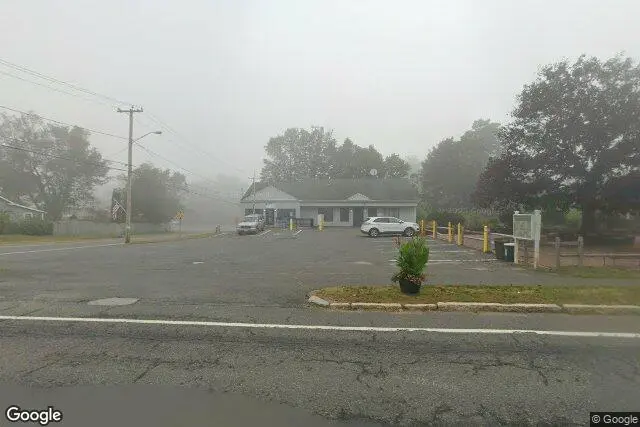 |
|
Send note to Staff
|
|
|
Replies: 273 / Views: 44,154 |
|
|
To participate in the forum you must log in or register. | |
 Cover Calendar For Month And Day -Pics Show Us Photos Of Your Post Offices! Show Your US 1857 Perforated Stamps Coffee, Tea, And Other Hot Brews! Stamps Made Of Cloth, Polymer, Metal, Wood Etc Romanian Danube Delta Ship Mail 1851-57 12c Washington I Have Questions. You Have Answers. I Hope. Lions Clubs International Stamps, Souvenir Sheets, Maximum Cards, Etc. Stamps Of Small Animals / Mammals / Fauna More Cats On Stamps Show Your US 1851-57 Imperforate Stamps WW2 Redirected Cover To A9958 Raf APO 5095 ? Journey To The West - The Adventures Of Monkey King Postmarks.day By Day Eire Oddity - Changeling? Some Day I'll Get It -Today -I Got It What Was Your Absolute Biggest Mistake As A Beginner? Charles Shreve Departs Siegel Suddenly Indian Head Fancy Cancellation? Heritage Back In The Stamp Auction Business Is This Zululand Stamp A Fake? Bare Feet On Stamps ' , ' , ' , ' Astronomy. Outer Space, Planets, Stars Etc Maxicards / Maximum Cards / Maximaphily Cover Calendar For Month And Day -Pics Show Us Photos Of Your Post Offices! Show Your US 1857 Perforated Stamps Coffee, Tea, And Other Hot Brews! Stamps Made Of Cloth, Polymer, Metal, Wood Etc Romanian Danube Delta Ship Mail 1851-57 12c Washington I Have Questions. You Have Answers. I Hope. Lions Clubs International Stamps, Souvenir Sheets, Maximum Cards, Etc. Stamps Of Small Animals / Mammals / Fauna More Cats On Stamps Show Your US 1851-57 Imperforate Stamps WW2 Redirected Cover To A9958 Raf APO 5095 ? Journey To The West - The Adventures Of Monkey King Postmarks.day By Day Eire Oddity - Changeling? Some Day I'll Get It -Today -I Got It What Was Your Absolute Biggest Mistake As A Beginner? Charles Shreve Departs Siegel Suddenly Indian Head Fancy Cancellation? Heritage Back In The Stamp Auction Business Is This Zululand Stamp A Fake? Bare Feet On Stamps ' , ' , ' , ' Astronomy. Outer Space, Planets, Stars Etc Maxicards / Maximum Cards / Maximaphily
Disclaimer: While a tremendous amount of effort goes into ensuring the accuracy of the information contained in this site, Stamp Community assumes no liability for errors. Copyright 2005 - 2026 Stamp Community Family - All rights reserved worldwide. Use of any images or content on this website without prior written permission of Stamp Community or the original lender is strictly prohibited.
Privacy Policy / Terms of Use Advertise Here |
| Stamp Community Forum |
© 2007 - 2026 Stamp Community Forums |
| It took 0.25 seconds to lick this stamp. |
 |
|
|
|


 Posted 06/14/2026 3:03 pm