I admit from the beginning that I am no expert in early Romanian stamps (Bull Head 1858-1859 and United Principates 1862-1864) and this is why I avoid buying as I can't positively asses if a stamp is genuine. These are the most forged Romanian stamps due to their higher value and while there are obvious forgeries, there are also very well done forgeries.
In trying to asses them, I am using the Kiriak's Romanian catalogue which the most exhaustive that I know of, but even though is not that easy.
Let's take the 2 "6 PAR" stamps. Although Kiriac's catalogue gives plenty of security elements, is not very explicit in differences between the 1862 and 1864 issues for this stamp. The following 2 images are for both editions:
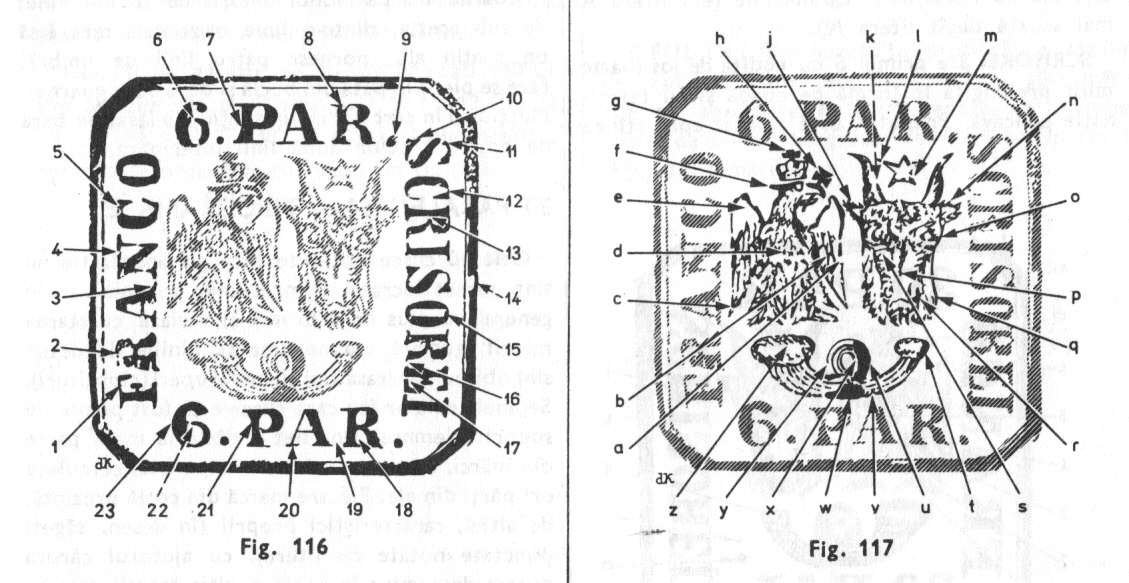
The only differences stipulated between 1864 and 1862 issues are these:
1. Dimensions: 1862 width between inside borders is 18mm and height between inside borders at the base of SCRISOREI text is 21-21.5mm while in 1864 issue these are 19mm and 19.5-20.5mm
2. 1864: there is an partial interruption in outer border on top of second S from SCRISOREI (14) not affecting the inner border.
3. Bull's right horn is interrupted at star's level (k)
4. Star is visibly interrupted in the third line (m)
Now regarding the stamp supposed to be Scott 16, it's ratio (width/height) seems consistent with 1864 issue, also the dent in the outer border (14) seems to be there. This would make to believe is a genuine stamp but from 1864. The issue is the cancellation (as 6 PAR stamps from 1864 aren't used).
The cancellation is of city of GALATZ as in the following picture:
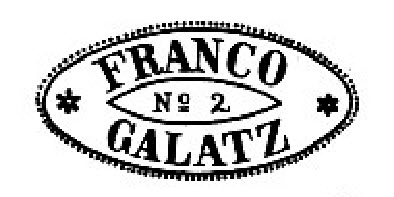
What is missing is the number (2 in picture) underneath letters NC from FRANCO. Also the stars on left and right should be closer to the border and the shape does not fit very well. Here is an image with cancellation superimposed over the stamp.
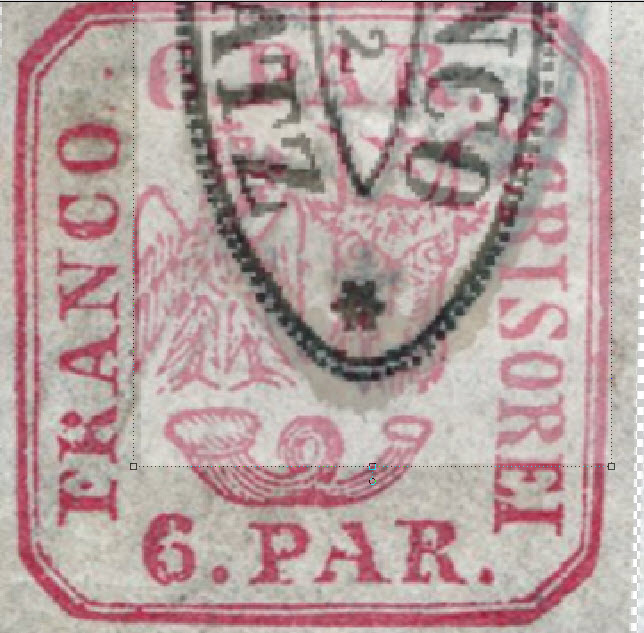
My guess in this case is that the stamp is genuine but from 1864 with a fake cancellation. This wouldn't be unusual as there are many such forgeries: using genuine stamp with lesser value and applying a fake cancellation to increase its value.
But again, these are just wild guesses and I can be plain wrong.
Now about Scott 20, this stamp has many of the elements specified for genuine stamps but there are 3 elements that don't seem to fit:
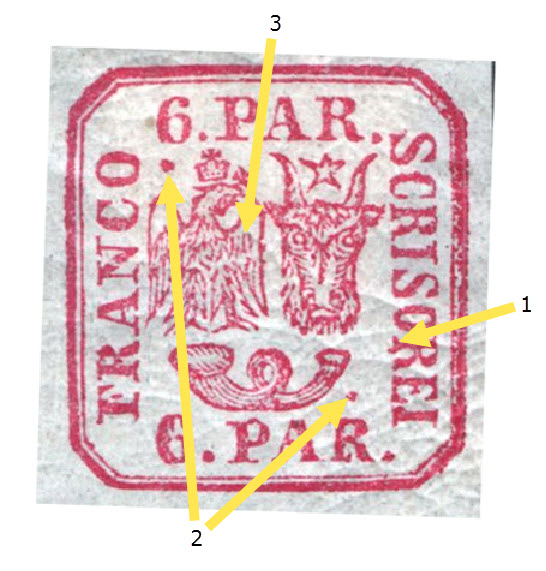
1. The curved base of main R's leg - I didn't see it specified
2. The 2 dots (normally caused by nails) are not specified for 6 PAR stamp, they are specified for 30 PAR stamp though
3. The most intriguing for me are the 4 lines on upper side of eagle's left wing: they should be 3 and they should be longer almost touching the lines on bottom side.
Therefore, I would say that there may be a slightly lower possibility for this stamp to be genuine than the first one.
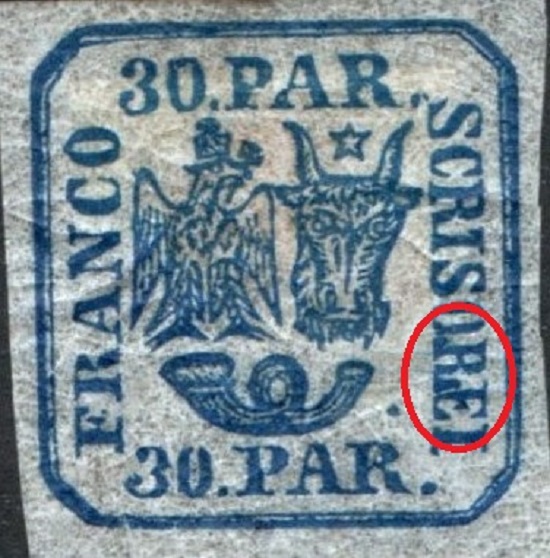
Regarding the 30 PAR it looks as a Type I as perf12 already indicated (22 out of 40 stamps in a sheet are type 1 including 1:5). Although the exaggerated serifs from second letter R in SCRISOREI I didn't find it specified I must say that perf12 must know better.
Once again, do not take for granted my opinions, they are just guesses and is more like opening a discussion that drawing conclusions.





 Posted 10/05/2017 1:52 pm