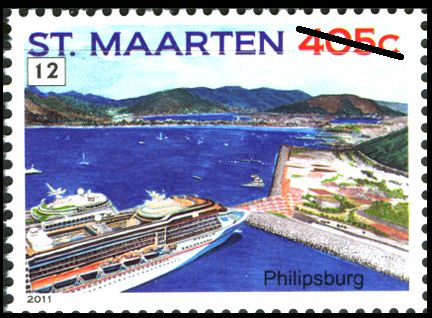
The Netherlands reorganized some (all?) of its overseas territories a few years ago, splitting Curacao off from the other Dutch-owned islands in the southern Caribbean Sea (Aruba, etc.), hence the name change from "Netherlands Antilles" to "Curacao." It was not just because someone at Scott Publishing decided to change the name.
Any stamp collector will benefit from a good stamp atlas to understand historical names and look at maps of what territories were involved. Or skim Wikipedia to find out what caused a name change, where things are, and so on. It's pretty easy to get confused if you don't, and that makes it difficult to even know where to look for a country in a stamp album.
In Scott Specialty albums, Netherlands pages come with pages for Dutch overseas colonies like Curacao and the Dutch East Indies (aka Netherlands East Indies ). Publishers of world albums often put colonies with the country that once controlled them, too, but give them their own pages when they become independent in whatever alphabetical place in the album that requires.
I prefer to move colonial or imperial era pages (Bechuanaland, for example) immediately before the modern nation it became ("Botswana") so there's a complete history of the stamps of that nation in one place. After all, even though they were imperial issues by the occupying power, they are generally about that territory, and the stamps were used by the people in that territory, not just by the colonizers. You have to make some judgment calls. French Tunisia goes with independent Tunisia which makes good sense. But I don't put Nazi-era Poland stamps with Poland, but with Germany, feeling that to do otherwise would be a great disservice to Poland. This requires a good deal of moving album pages, but I hate coming across isolated groups of pages that really belong elsewhere, often long-abandoned colonies that were created by a colonizer and which really belong with that colonizer. Putting the island of "Zanzibar" far away from Tanzania (which now includes Zanzibar) seems kind of odd to me. The stamps of Hawaii usually go with the U.S., for that reason, and Nova Scotia with Canada.
You might confuse the Dutch (Netherlands) East Indies with the Dutch (Netherlands) West Indies. "East Indies" refers to islands far to the east of Europe (Europe gave them these names). They're south of Southeast Asia and north of Australia. For centuries, trade products (spices mainly) from these islands, cinnamon, coriander, anise, pepper, and so on, were coveted by Europeans. You could get really rich off this trade. A lot of old sailings ships headed east to the East Indies. Columbus (who preferred to get there by going west), used "Indians" for the people he found in what turned out not be the East Indies, as he thought, but what later became known as the West Indies. It's confused a lot of people for a long time. Of course no one asked the locals whether they were "east" or "west". It was what Europeans thought that mattered. Just as no one in China considered themselves "far" east. But "Far East" is what people still say. Nor does Syria or Jordan consider themselves "near" east. But they're pretty much stuck with a label Europeans used.
The Dutch were once a superpower, so they grabbed what they could in both the East Indies (Asia) and the West Indies (the Caribbean). The Dutch East Indies later became the Muslim nation of Indonesia. The Dutch made an enormous pile of loot from these islands. In the West Indies on the other side of the world, the Dutch profited from the Netherlands Antilles (a Spanish term describing half-mythical islands to the west somewhere), though less than from their other colonies.
The inhabitants of the Dutch (Netherlands) East Indies (aka Spice Islands) finally rebelled against the Dutch after the Japanese were expelled at the end of WWII. And they won their independence. The resulting nation of Indonesia is now a very large, mainly Muslim, nation. In fact it's the largest Muslim nation in the world. So you're not very likely to confuse it with the small island of Curacao in the West Indies. Indonesia is so big if you put its map it on top of a map of the U.S., it would pretty much go "from sea to shining sea". Curacao is pretty small compared to that.
In the West Indies, the Dutch Antilles like Curacao and Aruba, etc. mainly rely on tourism today.
Somewhat oddly, these former colonial islands are not independent countries, but are now considered actual overseas parts of the Netherlands (which might seem a bit bizarre). France does this, too. The islands of French Martinique or Reunion or Tahiti aren't just owned by France, they "are" France. Something about the word "colony" gets people upset these days. So they figured they might as well just annex them outright. The U.S. did this with the former kingdom, later "territory," of Hawaii.
|





 Posted 12/11/2020 11:53 pm