| Author |
 Replies: 16 / Views: 4,290 Replies: 16 / Views: 4,290 |
|
Valued Member
Bulgaria
216 Posts |
|
|
If, for a given stamp, there are, in several catalogues, very big differences in its CV, how to proceed for finding the right one ? I "ll take an example which is for me very important.
Let's have a look about 2 stamps : 1870 – occupation of Alsace by Germany - Type II Stamp Nr A "4 centimes" Type II
- Scott # N10 : …………………………………..….120 € (150$) - Michel # 4 II……………………………….....… 2800 € Page 118 Michel Deutschland 2009-2010 - Yvert # Alsace-Lorraine #4b ……………….805 € Stamp Nr B "5 centimes" Type II
- Scott # N11…………………………..….. 5200 € (6500 $) - Michel # 5 II………………………………..… 50 € Page 118 Michel Deutschland 2009-2010 - Yvert # Alsace-Lorraine #5b ……………23 € Has somebody an explanation about these "anomalies" in the CVs ? Where else to check for finding additional quotations ? 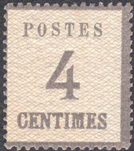 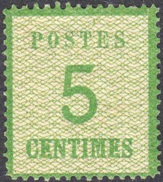 |
|
Send note to Staff
|
|
|
|
|
Pillar Of The Community
United States
2547 Posts |
|
|
Also - most of these were extensively faked, so the chance of having a genuine one is tiny. |
Send note to Staff 
|
|
|
Pillar Of The Community
United States
8610 Posts |
|
|
Go to the websites of a few stamp auction houses and see what the real prices are . |
|
Send note to Staff
|
|
|
Valued Member
United States
41 Posts |
|
|
Valued Member
Bulgaria
216 Posts |
|
|
@ Colombian12
Thanks; Michel is also giving the same way to determine if it is a stamp of the 1st print or of the second one ( which CV is nearly = to zero)
But, if you have a genuine one in your hands, how to determine its value ?
Of course, the way suggested by floortrader ( I will try it)
But, it remains to have the explanation about the disparity of the prices in wellknown catalogues. |
|
Send note to Staff
|
|
|
Pillar Of The Community
United States
2948 Posts |
|
|
Isn't this a "points" up or "points" down situation that is the difference in value?
chasa, reading the notes in Scott, it seems the issue that were faked, are the "points" down versions. N8-N14, the more valuable ones, of course.
Is this correct? |
|
Send note to Staff
|
| Edited by stampcrow - 12/11/2014 3:05 pm |
|
|
Pillar Of The Community
United States
8610 Posts |
|
|
I made this up a few years ago,so people understand how to tell forgeries with the position of the "P" with the edge of the plastic going thru it .  |
|
Send note to Staff
|
|
|
Pillar Of The Community
United States
2948 Posts |
|
|
floortrader, that's a great pic shot. I only have one '2 centimes' points down. It does pass the P position test but also the perfs measure 12 1/4 and not 12 1/2 which Scotts lists, in it's notes, as a tell.
The P position test that you have shown, is much easier! |
|
Send note to Staff
|
|
|
Valued Member
Bulgaria
216 Posts |
|
|
@Stamcrow
No, there were 2 types called I and II
Both stamps of them are genuine ones.
In 1885, they made a reprint ( called "official imitation" - Nachdruck ND )
We are talking about that reprint. Its stamps have MNH 25$ CV ( that is to say peanuts regarding the original print type II of 1870)
The method decribed by Michel or hereabove by floortrader (it's the same method) permit to make the distinction between the stamps of the reprint of 1885 and the originals ones from the 1st print in 1870.
That method IS NOT for differentiating type I / type II ( this is easy : type I the spikes are turned up and type II down)
But nobody is giving explanations about the disparuty of the prices in the mentionned catalogues !
|
|
Send note to Staff
|
|
|
Valued Member
Bulgaria
216 Posts |
|
|
@stamcrow yes, and it is also very easy to do it on the screen of the monitor ( if you see them on an auction) Example: there are a lot of them now for sale on ebay and they are indicated as type II. BUT THEY ARE NOT GENUINE ONES ! I checked on the screen with a simple ruler and 4 of them are fakes. After that, I stopped checking..... Just a precision about the method: For genuine ones ( print I or II of 1870) the line cross the pad of the letter P of the word POSTE For the stamps of the 1885 reprint, the line do not cross the pad and is passing above it. |
|
Send note to Staff
|
|
|
Pillar Of The Community
United States
2948 Posts |
|
|
Yes priatel, I do see what you mean now. I'm sorry, I don't have an answer. |
|
Send note to Staff
|
|
|
Valued Member
Bulgaria
216 Posts |
|
|
Sorry, I made a mistake when naming the stamps of the print of 1885 as 'FAKES".
They are not fakes because they were REPRINTED by the official authorities in exclusivity for a stamp dealer againt payment of fabrication costs + a donation to a caritative organization of the German Kayser.
So, nothing is fake.... but it's a REPRINT.
Of course, it exists faked and counterfeited stamps of the 1st print; but this is another story....
|
|
Send note to Staff
|
|
|
Pillar Of The Community
United States
2948 Posts |
|
|
piratel, I'm sorry to go slightly off topic. For the private reprints, are there ways to identify them. They must be very rare. |
|
Send note to Staff
|
|
|
Pillar Of The Community
Finland
753 Posts |
|
|
You really can't make a direct (one-to-one)comparison between Michel, Yvert, SG and Scott. Michel describes the German/central-European situation, Scott is from the US perspective etc.
I agree with floortrader. A range of recent auction results will provide the best overview of real world value. |
|
Send note to Staff
|
|
| Edited by scb - 12/11/2014 11:44 pm |
|
|
Valued Member
Australia
156 Posts |
|
|
priatel
According to my Michel the 4 centime is number 3II cv 120/150 (mint hinged), 200/260 (mint no hinge) and the 5 centime is number 4II cv 3200/2800 (mint hinged) - the cv in each is dependent on colour.
I may be slightly out on cv as my Michel is 2009 issue.
Regards
Frank
|
|
Send note to Staff
|
|
|
Valued Member
Bulgaria
216 Posts |
|
|
The Michel I used is Deutschland 2009 At the page 118 is the table of the CV.  |
|
Send note to Staff
|
|
|
Replies: 16 / Views: 4,290 |
|




 Posted 12/11/2014 10:28 am


