| Author |
 Replies: 32 / Views: 5,869 Replies: 32 / Views: 5,869 |
|
|
|
Rest in Peace
United States
4052 Posts |
|
|
They are not trying to tell postage from revenues; they are trying (for example) to tell carmine from pink from rose. |
Send note to Staff 
|
|
|
Rest in Peace
Netherlands
963 Posts |
|
|
Quote:
They are not trying to tell postage from revenues; they are trying (for example) to tell carmine from pink from rose.
At what cost? Science??? Telling line perf 11.346 from 11.351 :) |
|
Send note to Staff
|
|
|
Pillar Of The Community
United States
3520 Posts |
|
|
Color is a particularly nasty problem, since it can be perceived differently by different people with different lighting, or different ocular characteristics (the latter being a nice way of saying bad-eyesight).
Also a stamps color may change due to chemical changes in the stamp itself, such as sulfurization.
It would really be nice if there were some objective way to tell what color shade a stamp really is. That is a legitimate problem in the hobby at the moment, which is worth pursuing. |
|
Send note to Staff
|
|
|
Moderator

United States
12330 Posts |
|
|
 Nothing like using a piece of common clipart as your logo to build confidence in an organization. Don |
|
Send note to Staff
|
|
|
Pillar Of The Community
1375 Posts |
|
|
yes, and the same thing I thought about the IPDA (see advertising below). |
|
Send note to Staff
|
|
|
Moderator
United States
12330 Posts |
|
|
Stamp color? No one know exactly what color an ink was when it was first applied. And doing anything optical today is tilting at windmills; it will only tell you what a color is today (after decades of exposure to light and all kinds of things which have caused chemical changes). If you used a spectrophotometer and Fourier transform techniques to retrieve spectral information on a stamp today and then ran the same exact analysis in 10 years, you would get different results.
At best a chemical molecular analysis (which is a destructive test) would be able to identify the ink chemistry. Then you would have to replicate the paper, equipment, and processes to be able to accurately reproduce the exact stamp color as it was originally printed.
Don
|
|
Send note to Staff
|
|
|
Pillar Of The Community
United States
3520 Posts |
|
|
Thus the need for some sort of breakthrough innovation or standardization of treatment of this subject. |
|
Send note to Staff
|
|
|
Pillar Of The Community
United States
1868 Posts |
|
|
Determining the absolute value of a particular kind of blue or purple ink is not usually the goal of these studies. Rather, the question will be, "Was the ink used for issue B by printing house 1 the same as for issue A by printing house 2?" The papers in the proceedings of the last three symposia are the best reference for understanding what this group does.
|
|
Send note to Staff
|
|
|
Rest in Peace
United States
4052 Posts |
|
|
Don: I think the best route is to determine the original chemical composition of the ink(s).
While there will be oxidation et al, these are (mostly) simple, known reactions, so the original composition of the ink is recoverable.
At that point, we can stop talking about color, and start talking about ink component mixes, eg, you've got a 60-30-10 with these extents of these changes and I've got a 55-30-15 with those extents of those changes.
We can develop the ink composition database from cheap stamps, and then use non-destructive spectral data to assign valuable stamps to one ink batch or another.
Alternately, there are 'destructive' tests that use such a small area of the stamp that they might not matter a whole lot.
Cheers,
/s/ ikeyPikey |
|
Send note to Staff
|
|
|
Moderator
United States
12330 Posts |
|
|
Chris and ikey,
Our current situation is that color nomenclature is a mess, every catalog and album publisher simply uses whatever color names they desire. Hobbyists gravitate towards the simplest, most subjective identification approach they can, "Gee, this looks like 'Rose' to me so it must be the rare variety".
So I think the question that matters to the hobbyist is "what is the color of the this stamp in my hand?". But I do agree with Chris that the last three symposiums have nothing to do with the question that the majority of hobbyists care about.
I support research (I currently work for an R&D company) but the best research will lead to answers to our most important questions. How do you guys see the current symposium direction helping the average collector identify a color of a stamp they have in hand?
Don
|
|
Send note to Staff
|
|
|
Rest in Peace
Netherlands
963 Posts |
|
|
I am currently studying the Switzerland 1862-1881 Seated Helvetia definitives that according to the experts [Zumstein Spezial 2000] has only ONE type of paper. I found out that that at least TWO recognizable types of paper were used! That I am heading in the right direction was confirmed by the mentioning of Zumstein himself in 1924 of two different papers...
If after a 160 years this set lost its technical information - despite of generations of so-called experts - there is no way this club of analysts would have come to put forward the RIGHT questions of what to study!! They are ignorant at that point..... |
|
Send note to Staff
|
|
|
Pillar Of The Community
United States
1817 Posts |
|
|
Quote:
Analytical chemistry and physics in laboratories have NOTHING to do with Philately. As a layman perhaps I do not have a precise understanding of the meaning of "analytical chemistry," but the usefulness of laboratory techniques in the field of philatelic expertization/authentication seems like a no-brainer to me. For example, XFR testing and infrared spectroscopy were used to establish the bona fides of the only known legitimate usage of a bisected US One-Cent 1851-57 stamp (see Chronicle No. 237, 2013, p. 37). This has everything to do with philately. |
|
Send note to Staff
|
|
|
Pillar Of The Community
3860 Posts |
|
|
It is through having a large number of stamps available to make comparisons with and a long time of experience in studying and dealing with the stamps that helps in making some determinations. It helps to have a reference working collection and sometimes some cheaper stamps can be used to determine the same characteristics in more expensive stamps if one knows what to look for and understands how stamps are printed and made. |
|
Send note to Staff
|
|
|
Rest in Peace
United States
4052 Posts |
|
|
Quote:
Analytical chemistry and physics in laboratories have NOTHING to do with Philately. Neither do electric motors, plastic belts, glass polishers, microchips, or injection-moulded plastics ... but have you scanned anything lately? Cheers, /s/ ikeyPikey |
|
Send note to Staff
|
|
|
Pillar Of The Community
United States
8571 Posts |
|
|
Do I really need some college educated Analytical person to tell me which color I have or are they going help me sell these . 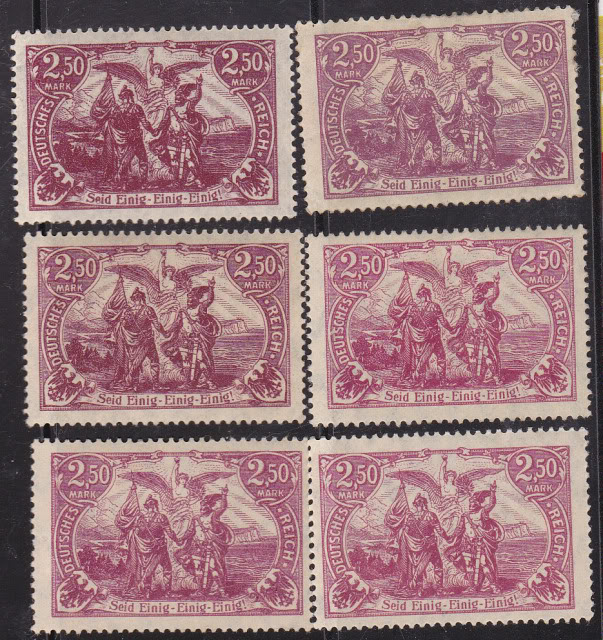 |
|
Send note to Staff
|
|
|
Replies: 32 / Views: 5,869 |
|




 Posted 06/22/2018 07:30 am


