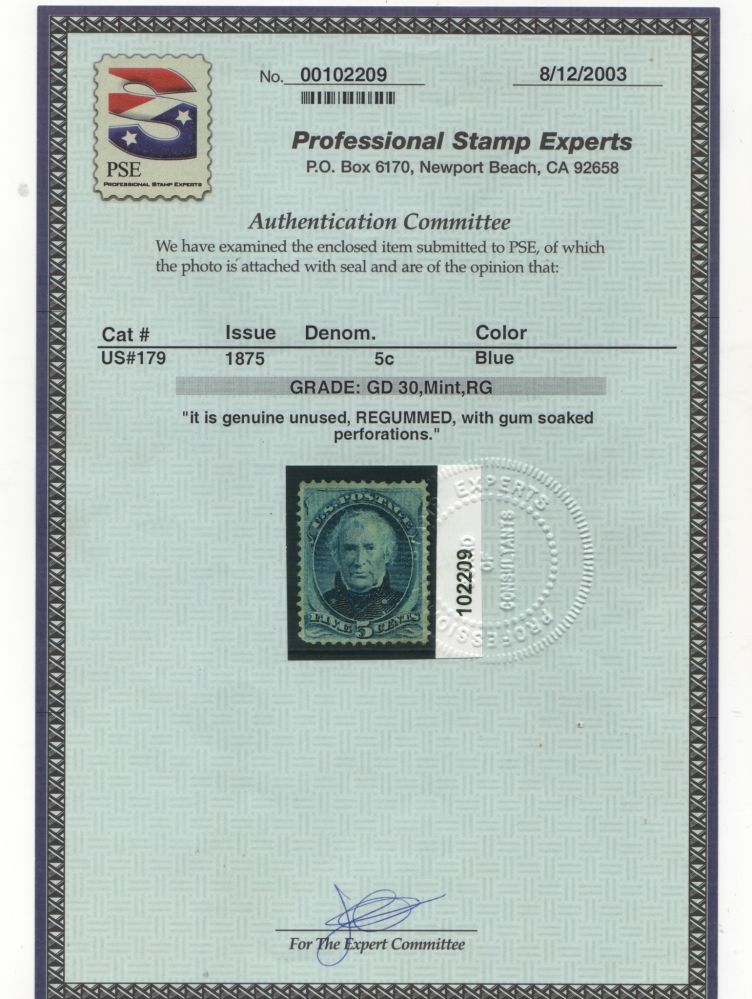
I've only had one experience along this line, and I wouldn't call it an error.
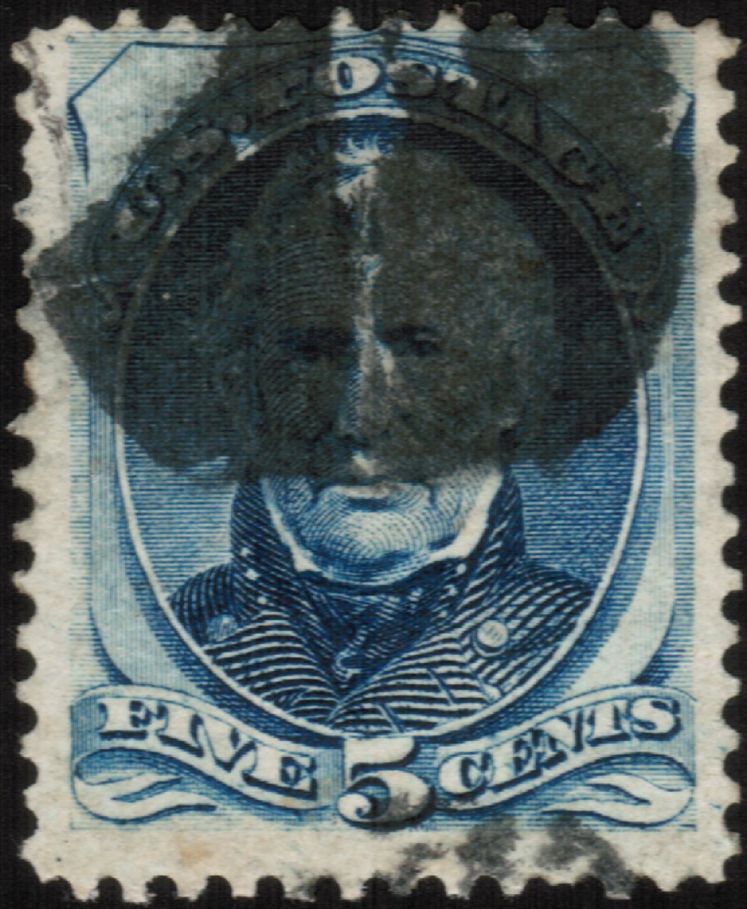
I purchased this stamp, with the certificate, on
ebay. I thought it would be nice to have a certified stamp which showed straw paper.
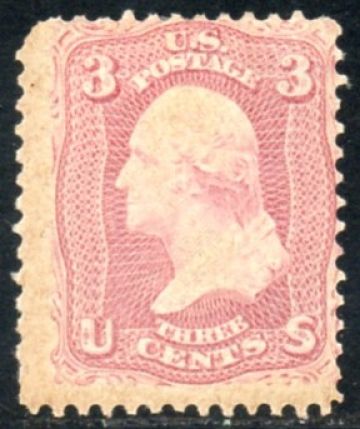
Here's the APEX Cert which came with it.
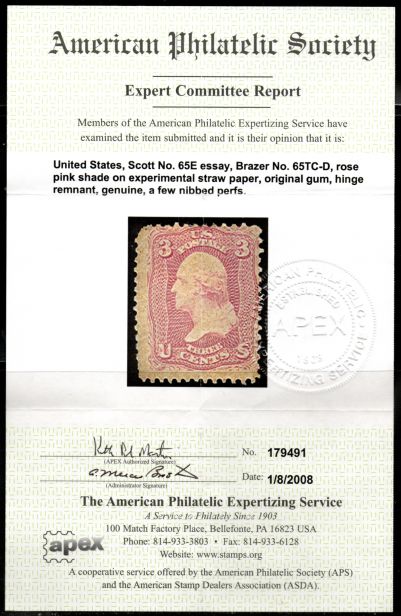
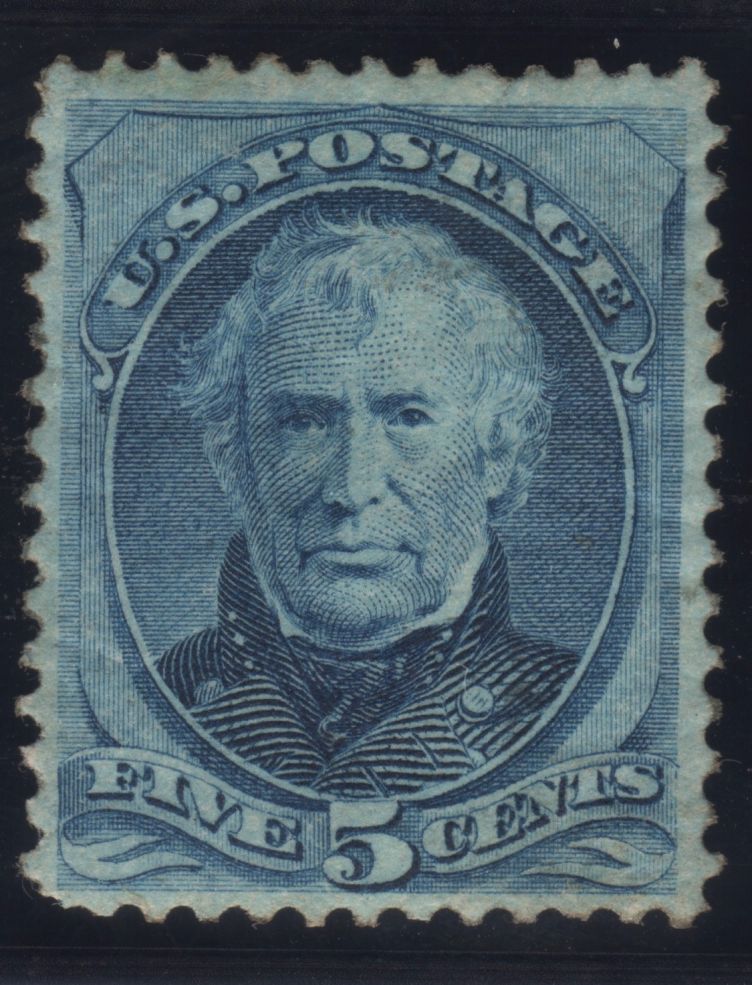
After looking at this stamp for two days, under magnification, with an Ott light behind it, in front of it, in sunlight and at every angle imaginable, I came to the conclusion either I was losing my mind (and my eyesight) or this was NOT straw paper as there wasn't a single visible strand of anything which could be considered a "straw" fiber.
I contacted Mercer Bristow at the APS and told him the problem and he promptly asked to have the stamp sent back. Here's what I received back from APS:

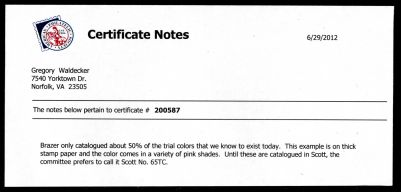
The determination was quite different, but this was a tough item to certify. I would hazard a guess that the person who originally submitted it thought they had a Scott 64 and must have been quite disappointed when they got the certification back. I was a little disappointed because I still don't have a straw paper stamp in my collection

.
At the end of the day, although APS did offer to replace my expense from the original purchase and there was no cost for the new certificate, I decided to keep the stamp as part of the collection.
I felt that the way APS handled the entire problem was nicely done. It cost me nothing, I was offered a refund of my purchase price - no questions asked, and I have a neat stamp story to tell.
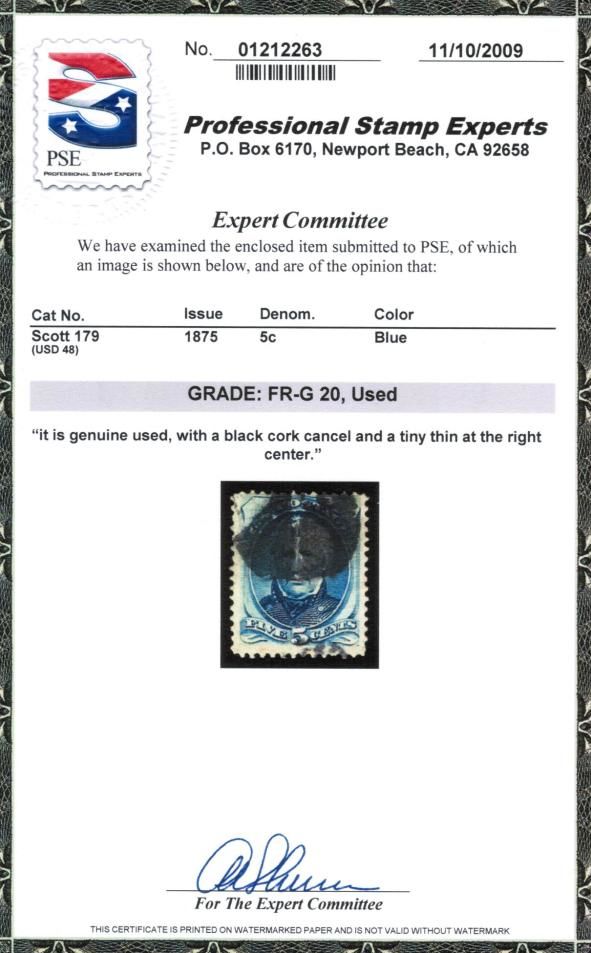
I had a disagreement with PSE on the Ickes collection certified stamps but that's in another post to this forum. Feel free to look that one up when you get a minute.
So, I can't say anything about PF or PSAG, as I've never had an issue one way or the other with them. In both instances, APEX and PSE fixed the issues and made sure I was satisfied with the end result.
I like it!

So, if you've found a problem, I think the bottom line is to let the certifying service know about it. Give them a chance to review the issue and correct it. Not doing so is a disservice to yourself, to the certificate issuing authority and ultimately to the hobby. What happens if, God forbid, you get run over tomorrow. Are your heirs going to be savvy enough to know that Scott 24 with a certificate is wrong? Would they know enough to send it in for a review? Or are they more likely to put it back into the marketplace and let the next collector make the discovery that it's a Scott 23.
Something to think about.





 Posted 12/26/2016 11:20 am