Once again, thank you very much Postmaster, I'll chase that up and let you know the result.
--------------------------------------------------------
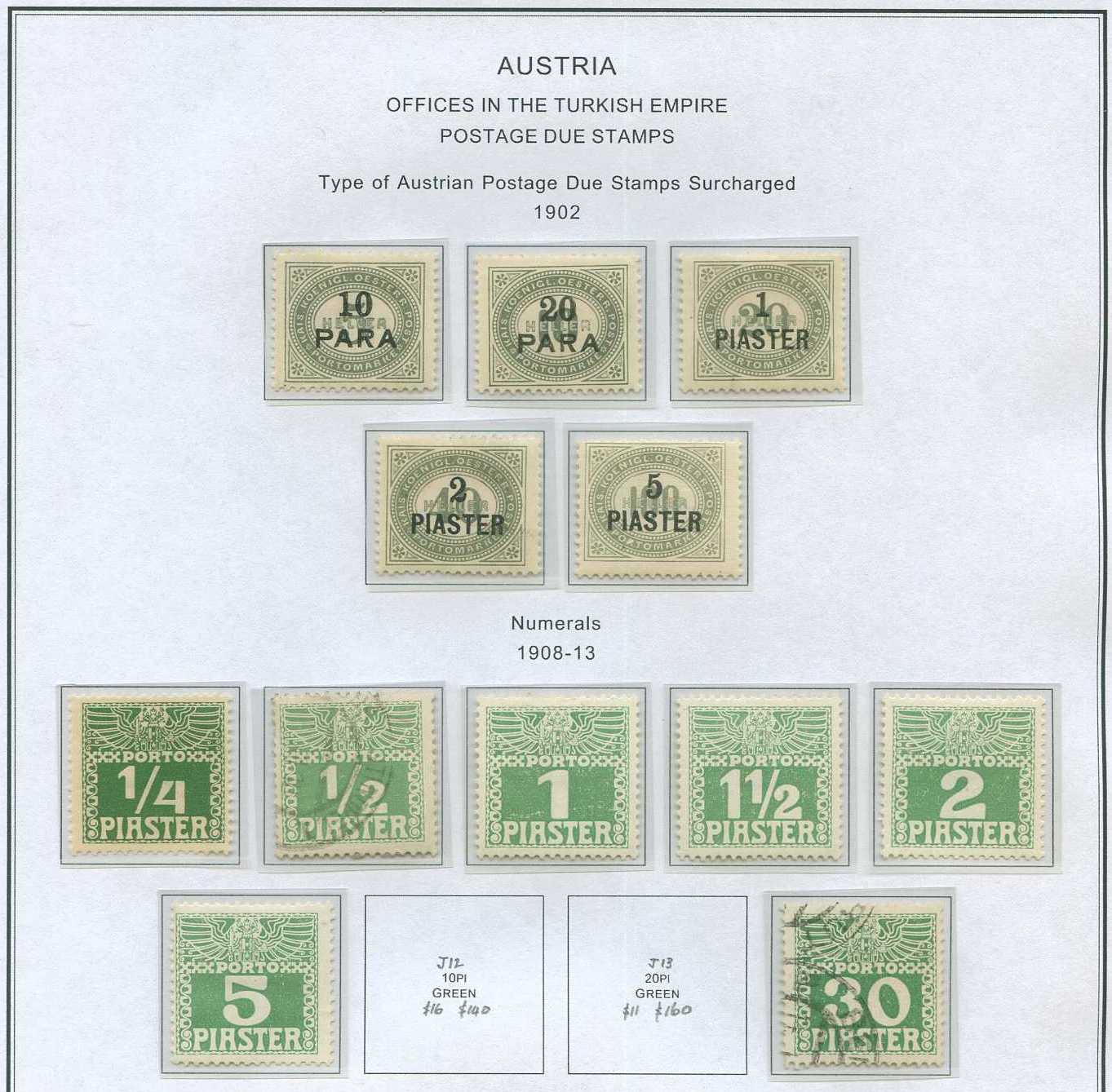
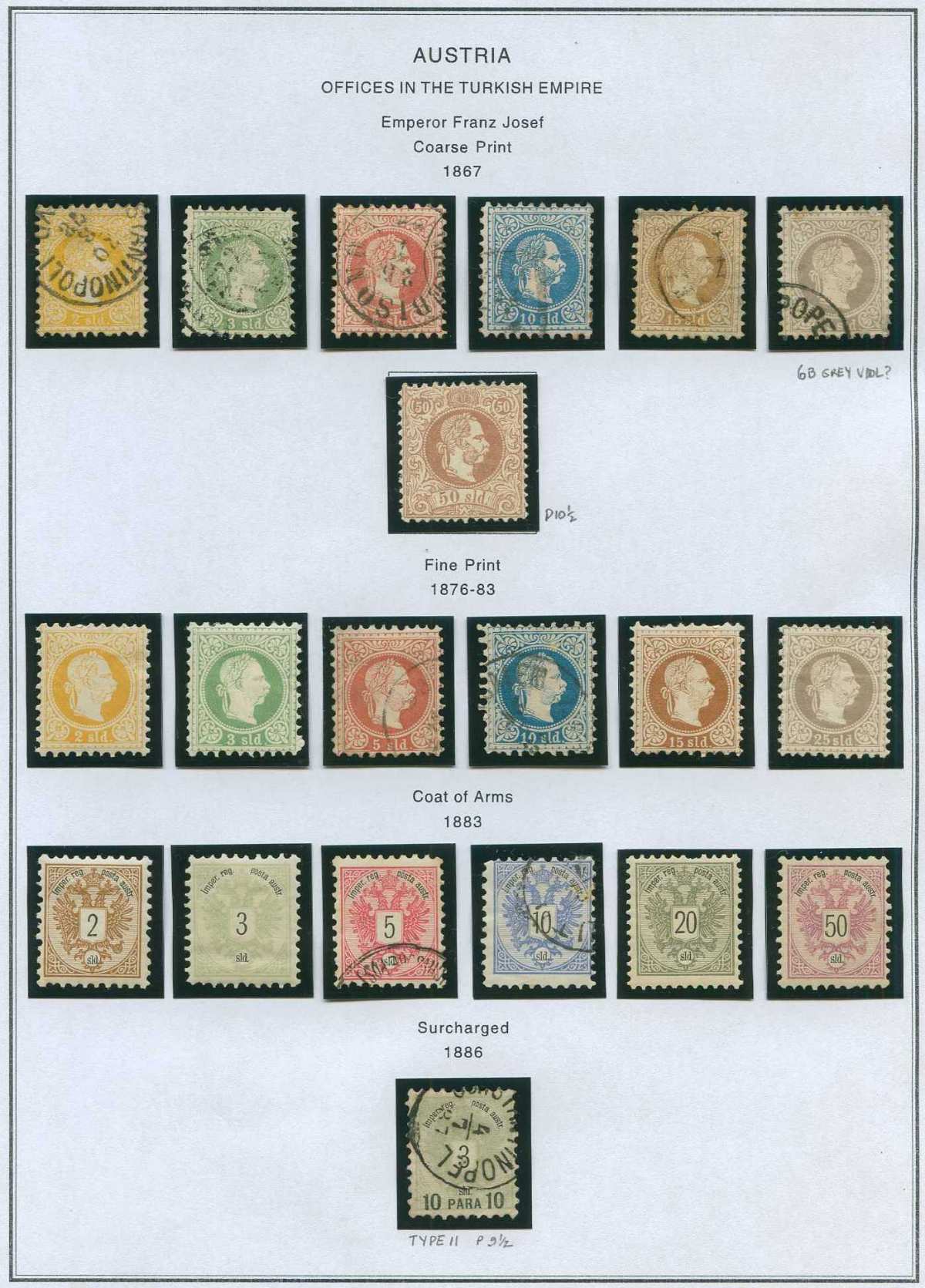
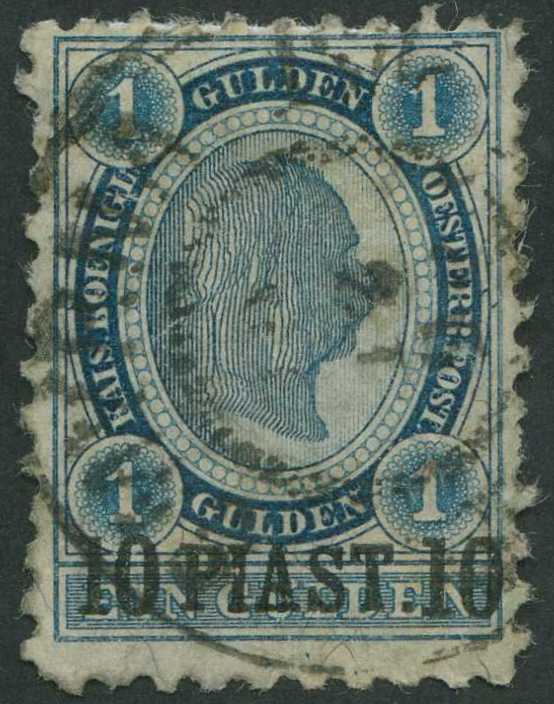
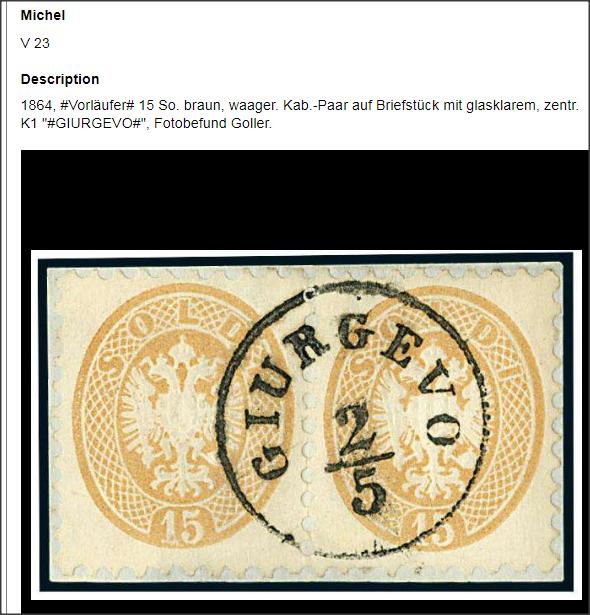
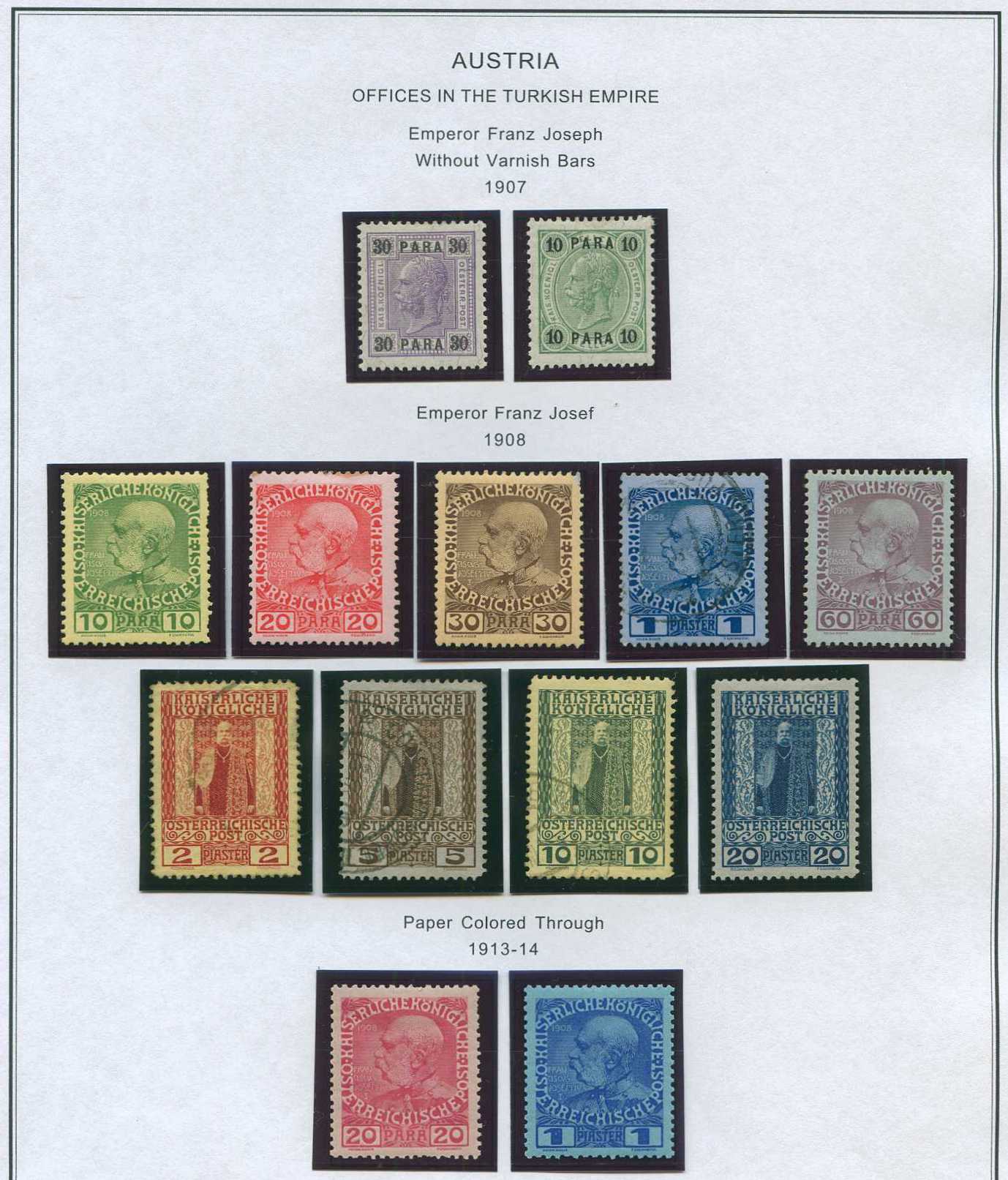
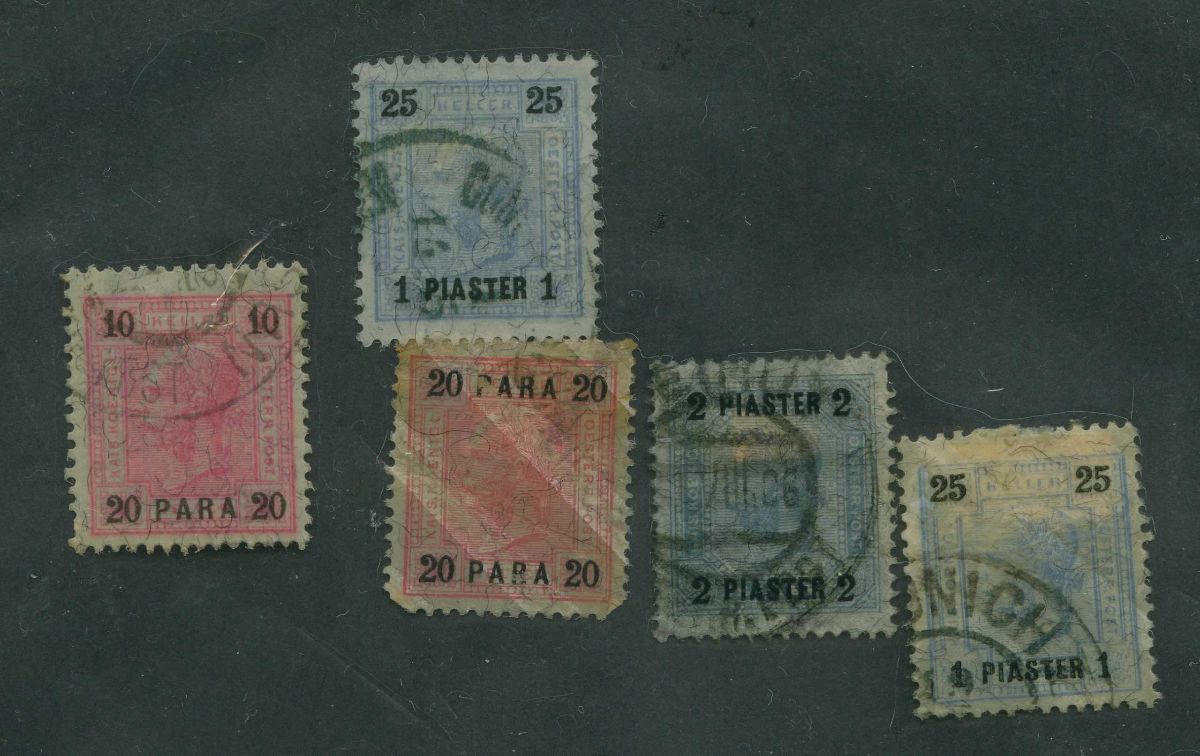
Offices in the Turkish Empire~ Austria.
Shining the spotlight on Sc#54 1908.
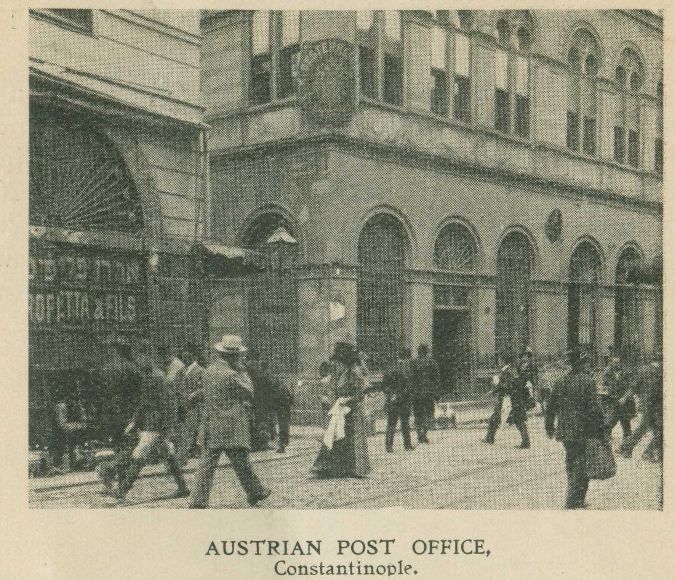
Austrian Post Office, Constantinople 1915.
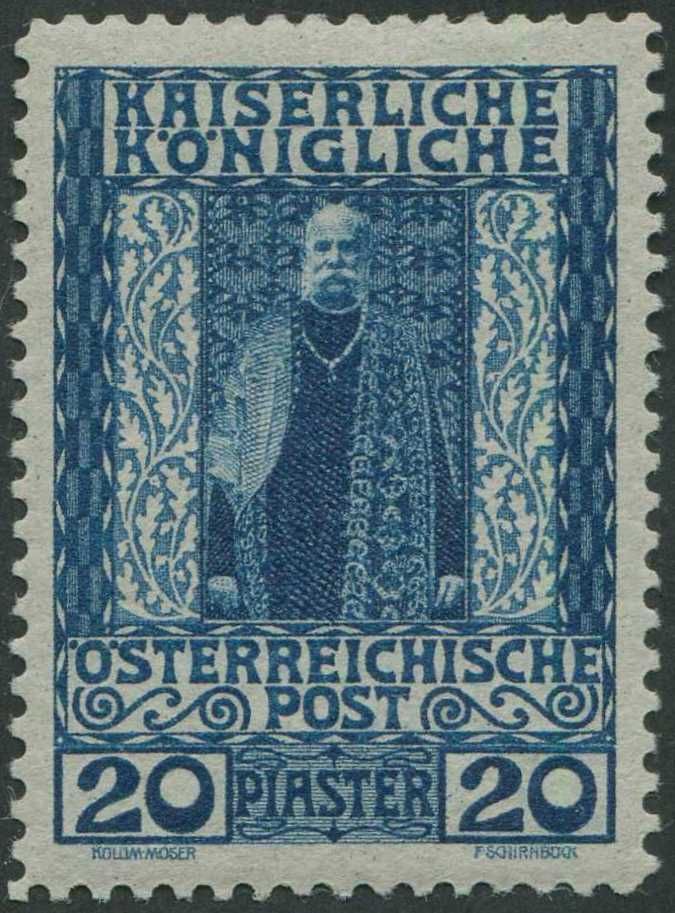
Sc#54 1908 2 piastres Blue on Grey, Emperor Francis Joseph l
July 15th 1908
New Issues.
(The Levant stamps of the former issues would be exchanged for the new stamps until the end of 1908)
On the values of 2 piastres and upward (Line engraved) the aging monarch Emperor Francis Joseph l is portrayed,
(60th year of reign) three quarter length, wearing the order of the Golden Fleece.
The designs were the work of Professor Kolman Moser, and the dies were engraved by Ferdinand Schirnboeck, the stamps being printed as before at the State Printing Works, Vienna, the perforation gauging uniformly 12½.
The so-called variety of the 1 Piastre value on white instead of bluish paper is believed to be a chemical changeling ( Armstrong )
Order of the Golden Fleece (wiki)
The Order of the Golden Fleece was established on 10 January 1430, by Philip the Good, Duke of Burgundy, in celebration of the prosperous and wealthy domains united in his person that ran from Flanders to Switzerland. It is restricted to a limited number of knights, initially 24 but increased to 30 in 1433, and 50 in 1516, plus the sovereign.
The Order's first King of Arms was Jean Le Fèvre de Saint-Remy. It received further privileges unusual to any order of knighthood: the sovereign undertook to consult the order before going to war; all disputes between the knights were to be settled by the order; at each chapter the deeds of each knight were held in review, and punishments and admonitions were dealt out to offenders, and to this the sovereign was expressly subject; the knights could claim as of right to be tried by their fellows on charges of rebellion, heresy and treason, and Charles V conferred on the order exclusive jurisdiction over all crimes committed by the knights; the arrest of the offender had to be by warrant signed by at least six knights, and during the process of charge and trial he remained not in prison but in the gentle custody of his fellow knights.
The order, conceived in an ecclesiastical spirit in which mass and obsequies were prominent and the knights were seated in choirstalls like canons, was explicitly denied to heretics, and so became an exclusively Catholic honour during the Reformation. The officers of the order were the chancellor, the treasurer, the registrar, and the King of Arms, or herald, "Toison d'Or".





 Posted 11/29/2017 9:35 pm