Stamperix,
They are not 'printed on back'; as previously mentioned this term is used to describe a true error when a pane of stamps is reinserted into the press and actually printed on back. 'Printed on back' design will always be orientated exactly like the front design.
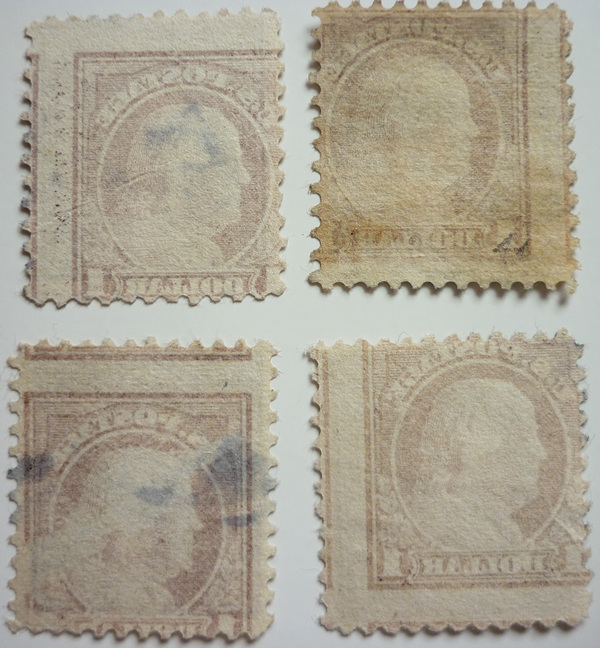
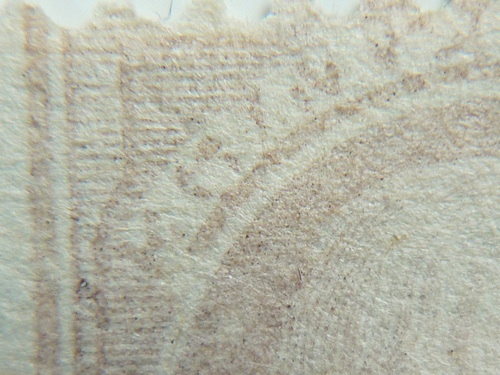
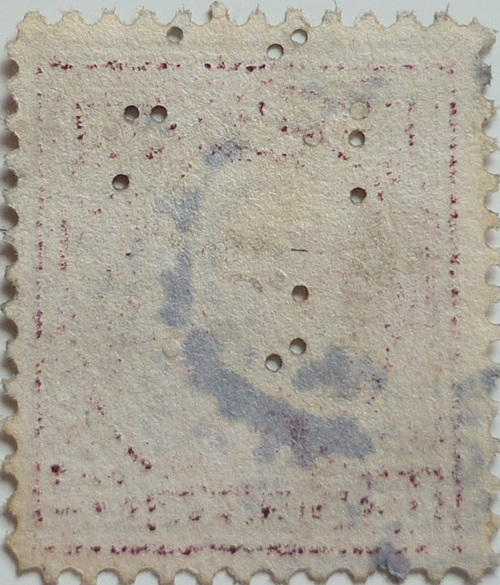
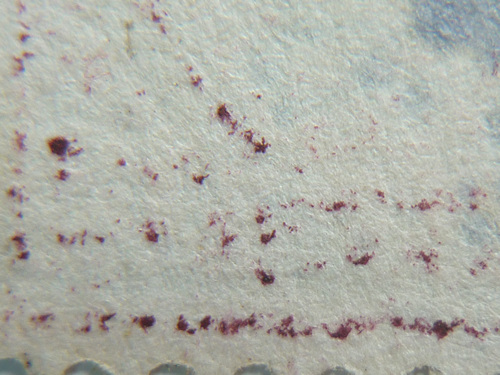
There is confusion with the terms setoff and offset but they both mean that ink/design has been transferred to the back of a stamp through some other means. On flat plate stamp this is almost always due to the stacking of the panes coming off the press with the ink still wet/damp. I would assume that the $1 dollar stamp shows this more than other issues due to the nature of the brown ink, perhaps taking it longer to dry than the other inks.
Setoff/offset is also not considered an error, it is a considered normal production occurrence. Stamps which show a reversed design image on back are considered curiosities.
Catalogs like Scott use the term 'printed on back' to note true error stamps, these stamps carry a significant increase in value. So it is important to understand this term and not apply it to setoff stamps. (There are
ebay listings which incorrectly use this term for setoff stamps. It could be that some are intentionally using 'printed on back' term to entice unknowing buyers into thinking that are buying a more expensive error stamp.)
Don
Edit; I understand the process that Papy24 described and it makes sense. But at least here in America, and the thread is about W/F stamps, the term 'printed on back' would not apply to a stamp with a reversed design. Note that the link that GeoffHa posted does not call the stamp 'printed on back'.





 Posted 04/30/2017 2:58 pm






 Great examples friends!!.


