|
This page may contain links that result in small commissions to keep this free site up and running.

Welcome Guest! Registering and/or logging in will remove the anchor (bottom) ads. It's Free!
To participate in the forum you must log in or register.
| Author |
 Replies: 151 / Views: 9,817 Replies: 151 / Views: 9,817 |
|
|
|
Rest in Peace
United States
920 Posts |
|
|
Just curious. Does the strength of the cancellation fit into the current numeric grading process? How would those not favoring that system grade it...VF...XF...? This is an extremely common stamp with uncommon borders but with a heavy cancellation. In my book it detracts from the value. 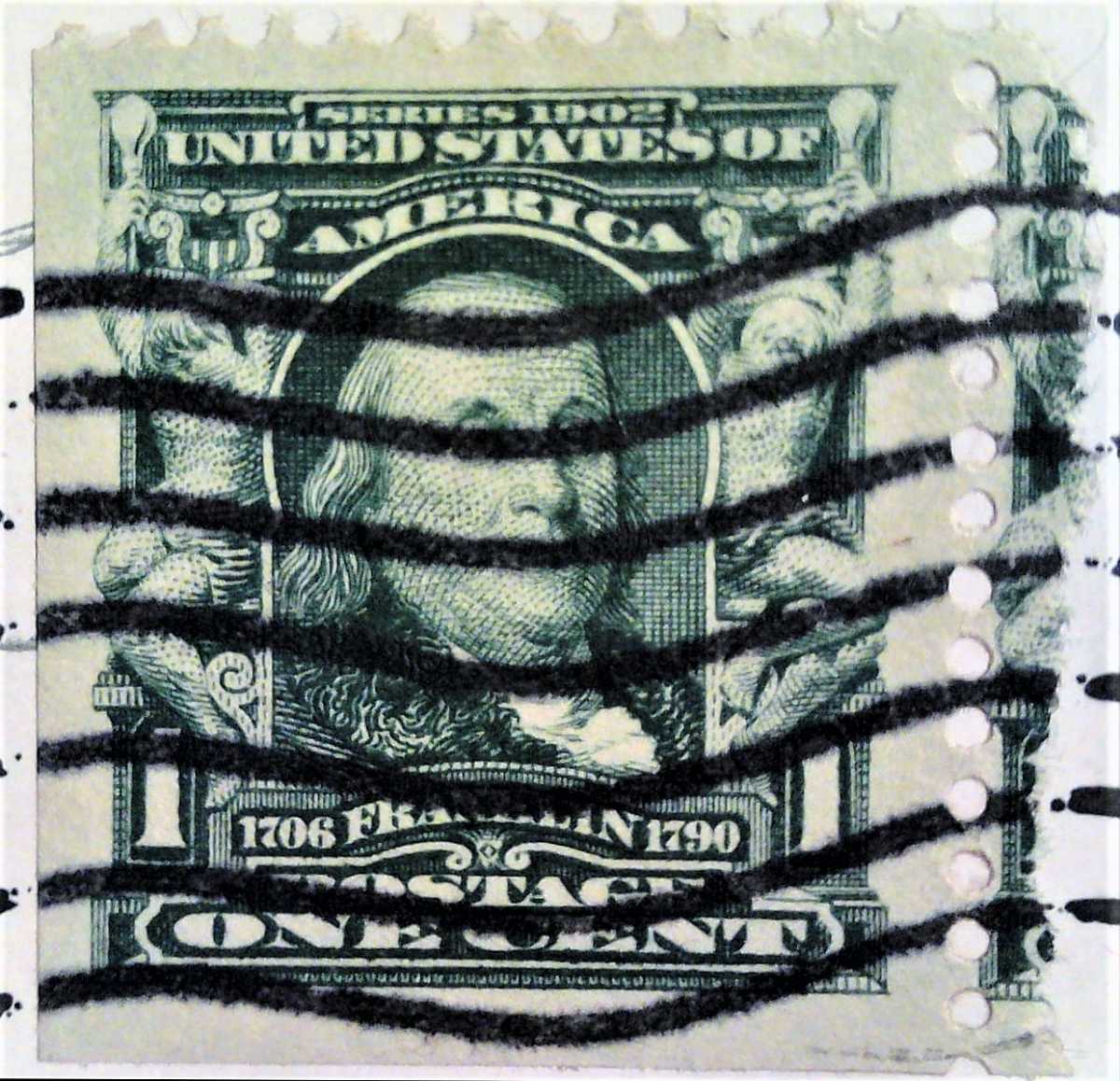 |
Send note to Staff 
|
|
|
Pillar Of The Community
6363 Posts |
|
|
Caper, it's not always the heaviness of the cancel but the positioning - in this case the eyes are covered, which detracts a lot. The same cancel, but showing the eyes would make a huge difference in (pardon the pun) eye-appeal! |
|
Send note to Staff
|
|
|
Bedrock Of The Community
12749 Posts |
|
|
Rest in Peace
United States
920 Posts |
|
|
Pillar Of The Community

723 Posts |
|
|
> I am happy as long as people do not grade their stamps. It is good for me as I have a massive marketplace advantage over people that do not grade their stamps. I get better prices for the stamps I sell and buy high quality stamps that are priced as if they are at lower quality levels.
I am against grading beyond what I like to call, meh, good, great, and wow, for myself. If you think you are gaining an advantage, kudos to you. I rather get a decent copy of a stamp, where I can save the superb premium for a trip to Aruba. I try not to let grading get involved in the things I collect. It's not fun for me, I don't treat my purchases with such scrutiny, and feel it would slow me down to the point of never buying anything. When I see a stamp I like, I negotiate, based on nothing else beyond feels. Getting a good deal is just self minded fodder.
I think it's been detrimental to every hobby that has introduced it, as it detracts people from "just collecting" because it's fun! I get the MNHOG, but to then take more than a few percentage points off prices based on centering is just rubbish.
When I look at the collections I really admire, (say that were sold on Siegel), most oftenly grading never came into the picture. Simply having the rarity is reward.
|
|
Send note to Staff
|
|
|
Pillar Of The Community
Canada
1462 Posts |
|
|
Interesting thread - some very divergent opinions on the perceived merits of professionally/numerically grading stamps.
As a non-US collector, so being ignorant and with no "skin in the game", I wonder why this appears to be a practice only with US stamps. Is this something that has come over from the US coin market? And why the focus on centering & margin size as a primary factor that drives this grade? As opposed to freshness, gum condition, perf quality, other factors... |
|
Send note to Staff
|
|
|
Rest in Peace
United States
4052 Posts |
|
|
. Without quibbling about whether/not the questions, in & of themselves, correctly describe the situation: Quote:
... And why the focus on centering & margin size as a primary factor that drives this grade? ... Because these are easy (to agree on). Quote:
... As opposed to freshness, gum condition, perf quality, other factors ... Because these are hard (to agree on). Cheers, /s/ ikeyPikey |
|
Send note to Staff
|
|
|
Pillar Of The Community
United States
4182 Posts |
|
|
" must be precise, eg Very Good 65, or Extra Fine 76. The grade must have a number as there is a big difference between Superb 90 and Superb 97, for instance"
85 if FVF, 90 is XF, 95 is Superb. The market does not recognize a 76 or a 97. |
|
Send note to Staff
|
|
|
Pillar Of The Community
United States
6469 Posts |
|
|
Quote:
The market does not recognize a 76 or a 97. But if you've got Way Cool Sooper Dooper Stamp Measuring Software(tm), you can make up all the grades you want, and even print out your own certificates for that elusive "Fawesome 98.663"! |
|
Send note to Staff
|
|
|
|
Valued Member
135 Posts |
|
|
Caper, This 1903 US #300 stamp is indeed uncommon. Too bad tat it is not imperforate on all sides! Cancellations definitely affect the value of a stamp and an astute posted gave a great link on the matter relating to the eyes. The question still remains: what is the grade of this stamp. Since the stamp is common and not of much value, it does not really matter? There is little difference in value for a Fine or Very Fine version of this stamp. So the grade is of little consequence. That said, what still is the grade? Aside from the cancellation and some of the perforations being messed up, the stamp is from the lower left corner of the printed sheet and thus has no perforations. This is an issue also. However, assuming that the perforations were hypothetically at the edge of the non-perforated sides of the stamp, you have a Jumbo 22 Fine/Very Fine 65 stamp. When I indicate Jumbo 22, that means that exactly 22% of the stamp area is comprised of the margins of the stamp. The centering is Fine/Very Fine 65. If this were a stamp of value, you would have a real keeper, regardless of the cancellation. I have sold Jumbo Very Fine stamps with cancellations worse than this from my collection at meaningful prices in relation to catalogue value. The fact that I was able to document the Jumbo status and the precise centering enabled me to command top dollar for my stamp. With you stamp it does not make much difference because the stamp is so common and not highly valued. Here is a good test for chat board members. What are the precise grades of these three stamps? Chat member that gets the closest wins bragging rights. The 1969 US #RW36. The 1912 Chile #116. The 1869 India Dept of Revenue Forbin #2.   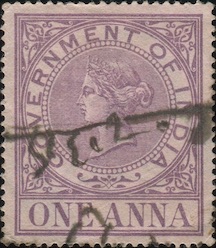 |
|
Send note to Staff
|
|
|
Valued Member
135 Posts |
|
|
I meant to say that the 1903 US #300 stamp is common. I started by saying that it was uncommon. A typo on my part. |
|
Send note to Staff
|
|
|
Pillar Of The Community
723 Posts |
|
|
Eyeballing, I rank all as XF to superb. Stamps with flaws can have the same grades, but the value will be lower. Flaws and grades are orthogonal imho, (ie toning on 3rd bottom left corner, or busted perfs, or heavy cancel)
I wouldn't buy any of the 3 (without knowing anything about these 3), because they don't look like great specimens in the first place, unless they're rare. I'm not drawn to them for any level of beauty. |
|
Send note to Staff
|
|
|
Pillar Of The Community
United States
6469 Posts |
|
|
The stamps immediately above are prime examples of how grading is not just mathematical centering, and centering cannot exist in a vacuum.
That Chile stamp may very well have jumbo balanced margins, but in my opinion it is a subpar example of the stamp due entirely to the heavy cancel and its positioning. Not worth a premium at all.
The Indian revenue stamp has multiple bent perfs and corner creases.
I don't care how pristine the mathematical centering might be; they have too many other negating factors that overcome the centering. |
|
Send note to Staff
|
|
|
|
Valued Member
United States
283 Posts |
|
|
On the India stamp, the combination of perf issues, based on PSE guidelines, could add up to either a major fault or severe fault. If centering goes at 90, the major fault drops it to 50. Sever fault 30.
On the Chile, the unattractive cxl is an auto 10 pt deduction. The 'tired' overall look is good for another 15. Add in the blunt left perfs and short perf bottom right as a minor fault. With centering at 85, it grades at 45.
On the RW36, possible perf disc, thin perf, minor perf crease adds up to a minor fault. Color not super fresh. Grades at 80. |
|
Send note to Staff
|
| Edited by craigk - 01/23/2019 3:30 pm |
|
|
Valued Member
135 Posts |
|
|
Rismoney, You made a decent attempt at grading the stamps and I give you credit. In my opinion, one must start with the centering, as that is the leading quantifiable factor. The more subjective factors such as a bent perf, folded corner, or other can then be applied to the centering grade. The professional grading services work this way and are actually quite specific about their approach. Everything starts off the centering, unless the damage to the stamp is so horrendous that no amount of centering will help.
As for my stamps,
…for the 1969 US#RW36, this stamp is centered Superb 91. It has no faults and the PSE would grade this at 98 on their system without question. They list the value of this stamp at this grade at $400. An Extra Fine 85-90 version of this very stamp is priced at $115-$175 according to PSE. If you owned this stamp and did not do the grading work as I have done, I would have to say that you are a fool. There is a massive difference between Superb and Extra Fine. At these price levels and differences in value there is no room to guess. Not attempting to grade this stamp is a huge amateur mistake. So do not bother to grade your stamps (either buying or selling) at your own risk. FYI, I bought this stamp as if it were priced at Fine/VeryFine (not even Extra Fine) as the seller did not do their homework and had no idea what they owned.
….for the 1912 Chile #116, this stamp is only Very Fine 80, but it is also a massive Jumbo 24. Jumbo 24 is off the charts incredible as far as Jumbo stamps go (24% of the stamp area is in the margins). So I have a Very Fine centered stamp, with a heavy cancel and a couple short perfs. Without the Jumbo status, the stamp would drop from "Very Fine 80" to "Fine 70" based on the cancel and the perfs. But with the Jumbo status, that would take it right back to Very Fine 80 in my opinion. No one has to agree with my assessment. The point is that I am making a quantifiable, defendable, and explainable assessment, which is the whole purpose. The difference in stamp values between grades can be massive as the prior example clearly demonstrates. Doing it solely by eye is amateur hour. Professional services do not even do it solely by eye, so why should anyone else.
…for the 1869 India Revenue Forbin #2, this stamp is centered precisely Extra Fine 85. This has a nominal pen cancel, but has two bent corners. I would say that these are minor faults and the stamp is of exceptional color and condition otherwise. I would take 5 points off the rating for the minor faults, and the stamp on a PSE basis would still be close to Extra Fine or at worst the high end of Very Fine/Extra Fine. No one has to agree with this, but if I were to sell this item, that is the grade at which it would be listed and priced.
Here is what the PSE Grading Authority says about the whole matter. It could not be more clear. I have been collecting stamps for over 50 years, have a massive worldwide collection, and seen my share of everything. The development of software grading tools has allowed me the ability to precisely identify the grade of every stamp I own. As I said before, this has yielded massive benefits in terms of dollar value. No longer do I have to guess at anything or take someone's bogus assessment as to the grade of a stamp when I am buying or selling. I know what I have and how it should be valued, and that is the whole point.
Ris, post some images of your three most valuable stamps, and I will grade them for you.
Revcolector, I will do the same for you!
…From PSE….
After having evaluated the two major components of a stamp, (soundness and centering) the preliminary grade of the stamp may then be established. These two factors interact with each other to yield the following grades. Soundness grades are located on the left side, where centering grades are located at the top.
G VG F F-VF VF VF-XF XF XF-S Sup Gem
Damaged 10 10 10 20 20 30 30 40 50 60
Major
Fault 10 10 20 30 30 40 50 60 70 70
Fault 10 20 30 40 50 50 60 70 75 75
Minor
Fault 20 30 40 50 60 70 75 80 85 85
Very
Minor
Fault 30 40 60 70 75 80 85 90 95 95
Faultless 30 50 70 75 80 85 90 95 98 100
Even though soundness and centering are the primary components of a stamp's grade, there are several other factors that must be considered such as the cancellation, color, impression and overall "freshness" of the stamp. These factors have a definite effect on the market value and hence, the grade of a stamp.
The eye appeal of a used stamp deals primarily with the cancellation. While some collectors specialize in odd, unusual or fancy cancellations, the majority of collectors prefer a lightly canceled stamp with as much of the original design showing as possible. A heavy, dark cancellation that obliterates the design of the stamp is certainly less desirable than a light cancel that affects only a small portion of the stamp.
The final grade of a used stamp may be increased up to 10 points for an extremely light, or pleasing cancellation and a fresh overall look. Used stamps with a heavy, unattractive cancellation, a pen cancel or a "tired" look may be reduced in grade up to 50 points.
The eye appeal of an unused stamp deals with its color, freshness and impression. The final grade may be adjusted up to 10 points (either up or down) based on the visual impact these factors have on the stamp. Particularly impressive color, freshness or impression can add up to 10 points to the grade, while unusually dull or poorly impressed stamps can lose up to the same amount. The following table summarizes these eye appeal adjustments for used stamps only.
Adjectival Description Adjustment
Light Neat, face-free ordinary cancel or clear, well-placed premium cancel, great color, freshness or impression up to +10 pts
Neat / Clean Average cancel. Typical overall appearance no effect
Heavy Heavy cancel. Slightly "tired" appearance up to -10 pts.
Very Heavy Very heavy cancel-much of design obscured -10 to -25 pts
Obliterated Design effectively obscured by cancel, or a pen cancel -25 to -50 pts
Unused Stamps may be adjusted +/- 10 pts based on color, freshness, and/or impression.
|
|
Send note to Staff
|
|
|
Replies: 151 / Views: 9,817 |
|
|
To participate in the forum you must log in or register. | |
Disclaimer: While a tremendous amount of effort goes into ensuring the accuracy of the information contained in this site, Stamp Community assumes no liability for errors. Copyright 2005 - 2026 Stamp Community Family - All rights reserved worldwide. Use of any images or content on this website without prior written permission of Stamp Community or the original lender is strictly prohibited.
Privacy Policy / Terms of Use Advertise Here |
| Stamp Community Forum |
© 2007 - 2026 Stamp Community Forums |
| It took 0.24 seconds to lick this stamp. |
 |
|
|
|


 Posted 01/22/2019 4:33 pm




