These are all valid points and perspectives and it is great to see so many knowledgeable people weigh in on the subject.
I would say the following: if you are experienced in philately, then you can be held to you own actions and decisions as to what you buy, how much you pay, and how you judge the quality of the stamps you sell and buy.
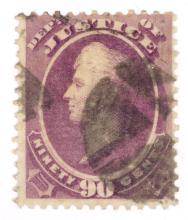
Where I have serious issues is when I see people or auction houses misrepresent the quality and the price of what they are selling. I see it every day all over the place. My earlier analysis of the Mystic Stamp Company grading internet page yielded disgusting results. This "bastion" of stamp collecting over-grades its stamps by a full two grades. This is a complete ripoff of new collectors who may be just entering the hobby. This creates all sorts of disinformation as the new collector thinks his Mystic-acquired stamps are "valuable", are very fine, that other stamps in his/her collection that look the same must also be very fine, and that a similar looking stamp on
ebay must also be very fine, when in fact these stamps are all at best Good to Very Good. And Mystic is not the only culprit. I routinely see this everywhere.
After much thought and discussions with people I consider leading stamp experts, I decided that I would not go down this route. It is bad for the hobby and morally corrupt. I decided that for any stamp that I would sell, I would grade it with precision for centering using computer technology, display the item with 600 dpi scans front and back. I would include in the sale listing the grading documents (often more than one grading document). I would also include computerized perforation analysis so as to insure to the buyer what variety the stamp was and take other necessary steps to make sure that the stamp was 100% accurate in its listing. (I have an interesting story with a Saudi Arabia back of book stamp that had 17 different varieties and proper identification was extremely difficult - but I did properly identify it and proved the stamp's identification in the listing - and sold the stamp at a great price to a expert in the field who understood the identification challenges and appreciated my work). In my listings I also comment about any flaws, cancellations, or other that were apparent on the stamp. I would then price the stamp according to these "findings' and perceptions.
After doing that, it is on the buyer to reach a conclusion (is my information correct, is the price acceptable, and so on). The buyer is presented with more than enough detailed information with which to make an informed decision. There is no phoney baloney.
When I look at a stamp listing, I see none of clarity this from other sellers, except in the very very very rare case where there happens to be a authentication/grading certificate from a recognized appraiser. In fact I find that the vast majority of sellers grossly overrate their stamps and simply make a blanket claim that a stamp is such and such. I routinely see auction houses list catalogue values for a stamp that are as if the stamp is Very Fine and Extremely Fine when in fact the stamp is actually only Good. It is all a scam - an attempt to have collectors overpay for inferior merchandise.
The results of my activities on this front have been nothing short of fantastic. I routinely have buyers that ask that the grading/perforation analyses be included with the stamp I have sold them. They understand that they simply do not have the eye or the skill to perform such an evaluation. I in fact have buyers that then ask me to look at stamps from the existing collection for me to evaluate. In many cases the results of this work leads to significant surprises to the benefit of these stamp collectors.
The other end result of my efforts is that my stamps are generally much more accurately priced and offer fair value to any buyer. In many cases, I have found stamps in my collection that were of far greater quality than I had initially thought by visual inspection. In one case recently I sold an Austrian stamp for five times the catalogue value - and I believe that I was able to do this only because I knew what I had, was able to clearly document it, and was able to price the stamp appropriately.
When I buy a stamp, I almost always grade it myself, regardless of whether the stamp has an official grading certificate or the seller's claim of the grade and the stamp's quality. When I want a variety of stamp, I generally look for the best quality stamp I can find. In many cases, I find stamps that are listed off-the-cuff at the seller default "oh, this is a Very Fine stamp". My analysis then reveals that the stamp is actually superb. In such cases I am able to procure a Superb grade stamp at a Very Fine grade price. Most of the time the listed "Very Fine" stamps are simply Good, Very Good, or Fine.
I am not sure why posters on this chat board do not recognize the common sense value of this approach.
I refuse to participate in this bogus game of stamp grade inflation that pollutes the hobby and rips off new/inexperienced collectors. I have taken specific steps not to participate in this fakery. My approach works for me and works for those who purchase stamps from my collection. I grade my stamps. Enough said.





 Posted 01/23/2019 11:03 pm