| Author |
 Replies: 56 / Views: 6,055 Replies: 56 / Views: 6,055 |
|
|
|
Pillar Of The Community
United Kingdom
1216 Posts |
|
|
Republic of Cyprus 2nd January 2002 Cyprus Wildflowers 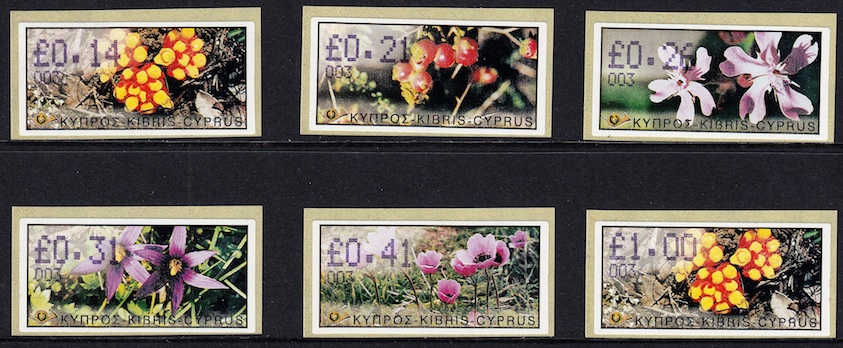 designed - Takis Dimitriades printed - Christos Papachristoforou Ltd., Nicosia |
Send note to Staff 
|
|
|
Pillar Of The Community
United States
7239 Posts |
|
|
Germany is an anomaly in the computer-vended stamp area. Deutsche Post has been using the same format for its stamps for 38+ years. The designs of the stamps have changed, but they are still water-activated, still the same size, and they still have a counting number on the back of every 5th stamp. The machines still have the same 2 large sprockets to keep the stamps moving and aligned, and the value printing is still the old fashioned dot matrix type. The computer capability has, of course improved. From the Michel ATM-Spezial Katalog 2008/9 in reference to the Sieloff machines then in use, "All 5000 machines are connected via the mobile phone service station and can be controlled online." Below are some pics of the first German computer stamps (unvalued), a technician loading a roll of 2000 stamps into an early machine, and nine stamps for different countries using the Kluessendorf or other German equipment. Most, if not all of these countries' postal systems have moved on to other equipment and self-adhesive stamps/labels. 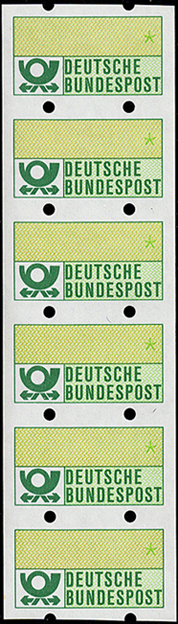 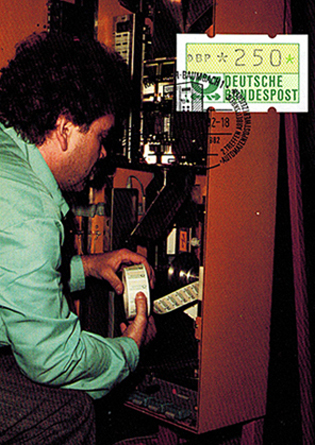 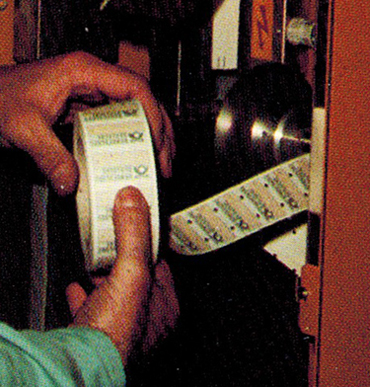 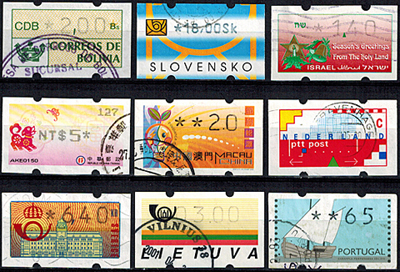 |
|
Send note to Staff
|
| Edited by bookbndrbob - 04/05/2019 4:36 pm |
|
|
Bedrock Of The Community
Australia
38679 Posts |
|
|
Nice post Bob. German Framas on cover (2003) from Myriam, Germany. (Contained a full set of Maluku Selatan Stamps) 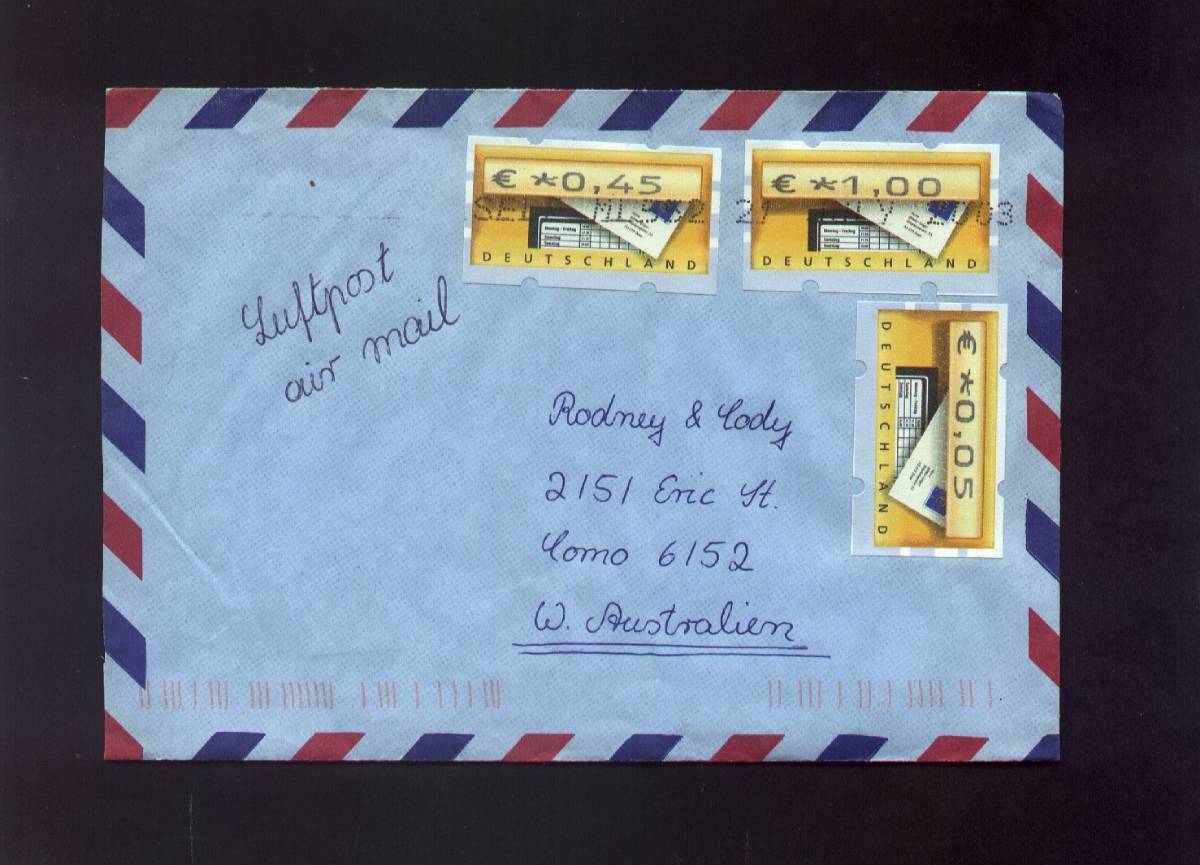 |
|
Send note to Staff
|
| Edited by rod222 - 04/06/2019 12:54 am |
|
|
Pillar Of The Community
United States
7239 Posts |
|
|
Thanks Rod. You may want to check all of your Postkasten/letterbox design stamps (as above). Deutsche Post upgraded some equipment around the time these stamps were issued, and a few machines were Samkyung from S.Korea). So, the value printing on the Samkyung machines is 31 mm wide, while the Sielaff value printings are 28 mm wide. Michel gives only a very slight premium for the Samkyung printings, but they are very difficult to find. I have many hundreds of these stamps from various sources, but only 3 of the Samkyung printings. 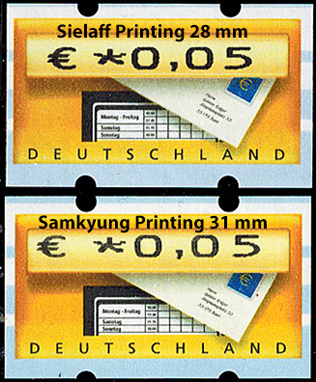 |
|
Send note to Staff
|
|
|
Bedrock Of The Community
Australia
38679 Posts |
|
|
Cheers Bob,
alas, retrieving that cover...I don't like my chances, I don't throw things out, but covers get lumped into a carton in the attic.
What else for a WW collector?
Going by the distance between the Euro Icon and the asterisk, I'd say the Sielaff machine.
You have some extraordinary information on these stamps, care to share your source? (OK if not)
|
|
Send note to Staff
|
|
|
Pillar Of The Community
United States
7239 Posts |
|
|
For computer-vended stamps I presently have two sources of information, the internet and Michel Automatenmarken-Spezial catalog. The internet can be very valuable if you are seeking country specific details. There are people and clubs who will share this information, but often it seems to come and go. Only occasionally have I been aware/awake enough to print or bookmark this information when it is at hand. The ATM collectors club (not its official name, so search may not help) located in Spain gives some great details as a "teaser" to join. The Michel ATM-Spezial (a worldwide catalog) is a very fine production. I believe the editor/author of the catalog you showed was the editor of the first Michel ATM catalog. Michel does not skimp on information about stamps, and the information is well organized. The introduction of this catalog begins with an explanation of its organization and a glossary/definition of terms about the material. Then there is a concordance/alphabetical listing of the companies and their machines. Very useful stuff. I skipped the last edition of this catalog, but I will purchase the next one. Surely it will be much more expensive, because there are many technical changes, and many more new issues. Also, here are the current German "Automatenmarken". 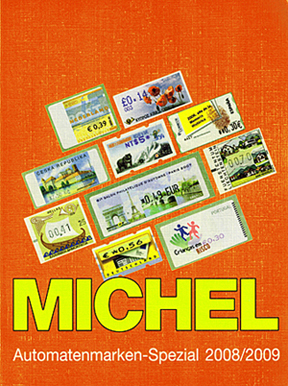 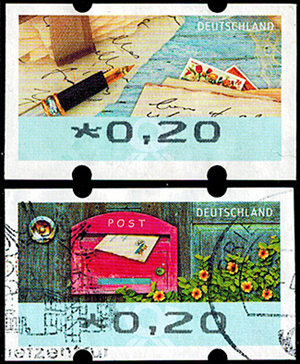 |
|
Send note to Staff
|
|
|
Pillar Of The Community
United States
7239 Posts |
|
|
Spain's first computer-vended stamps were the Swiss Frama type, issued on September 15, 1989. Then in 1992, Spain issued 2 different stamps (April 20 and April 24) in the German Klüssendorf format, Finally, in June of 1992 Spain issued its first self-adhesive ATM stamp. This is Michel #4, featuring the Spanish postal emblem (crown over posthorn) as the central design. It was dispensed on Epelsa ET equipment. Except for 3 more Kluessendorf stamps issued over the next 13 months, Spain has been using Spanish Epelsa equipment ever since. Michel Automatenmarken -Spezial catalog lists 3 different major types for this stamp. Type I has a thick frame around the logo, and the crown is open at the bottom on the sides. Type II. also has a thick frame around the logo, but with a closed crown. Type III. has a thin line around the central design. Michel also lists differences with the "point of sale" thermal printing of the values. There are wide and narrow fonts and various types of stars/asterisks. Regarding Spain's use of computer stamps, Michel ATM catalog states, "Spain is the first country in which computer-vended stamps have largely supplanted the definitives. More than 900 million stamps from these computer terminals are used by Epelsa in normal traffic every year." 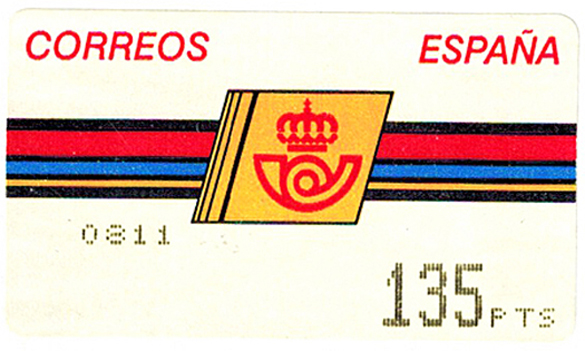 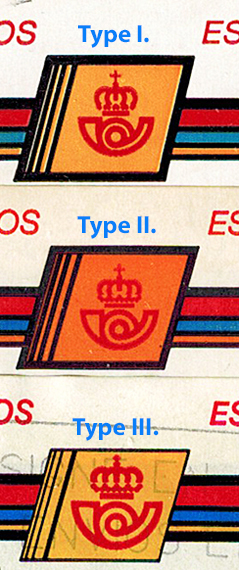 |
|
Send note to Staff
|
| Edited by bookbndrbob - 04/08/2019 6:41 pm |
|
|
Bedrock Of The Community
Australia
38679 Posts |
|
|
Pillar Of The Community
United States
7239 Posts |
|
|
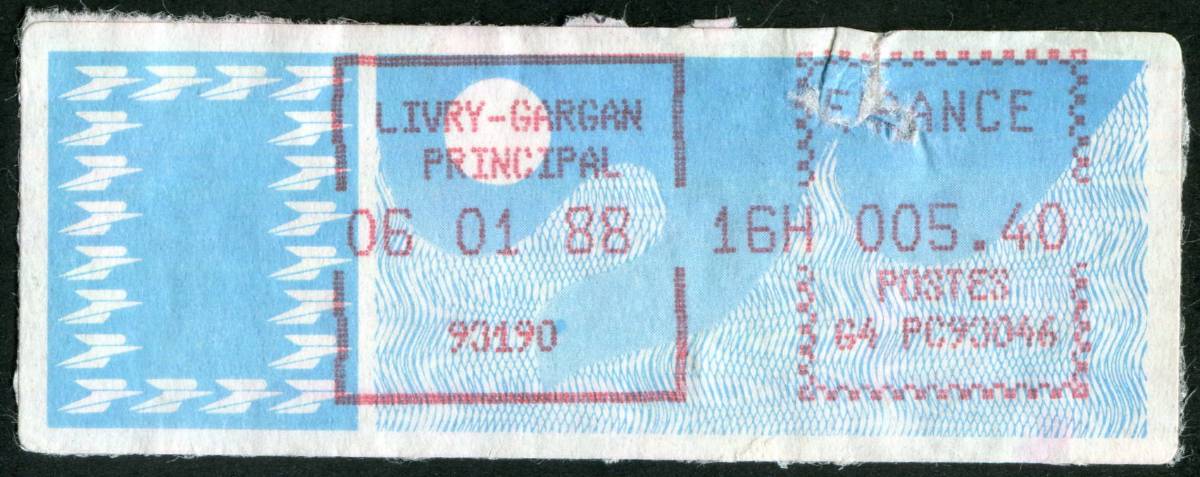
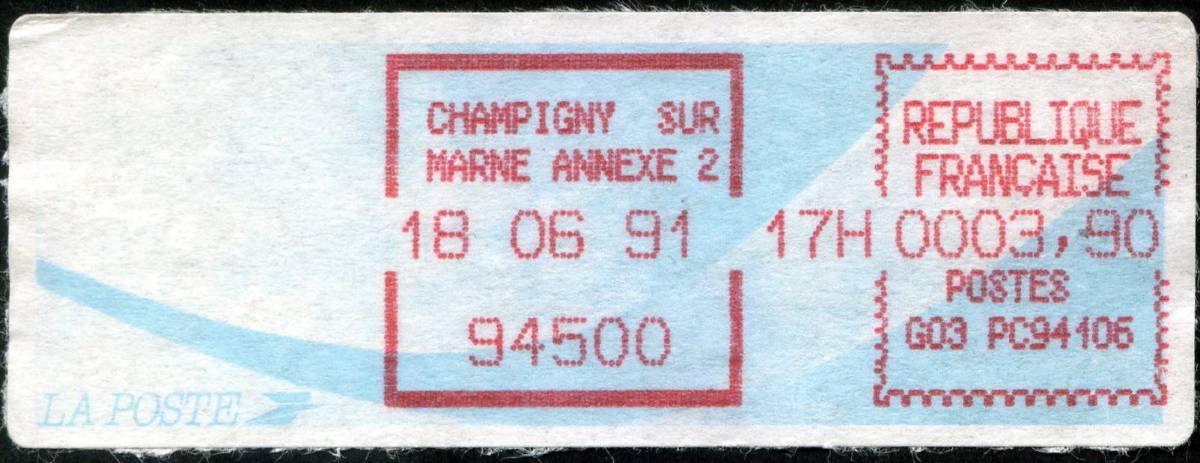
The first two French stamps may be meters. I believe the squares containing the dates and locations indicate this, but this is only an educated guess. My reasoning is that the postal counter employees in some countries use the same/similar equipment as the postal lobby ATM equipment.
The website "ateeme.net" gives a very good definition of what differentiates a computer-vended stamp from a meter. The line gets very hazy when the same label is used for both...if this indeed is the case.
Michel does not show these printings, and I have not been able to find out anything about them on the Internet.
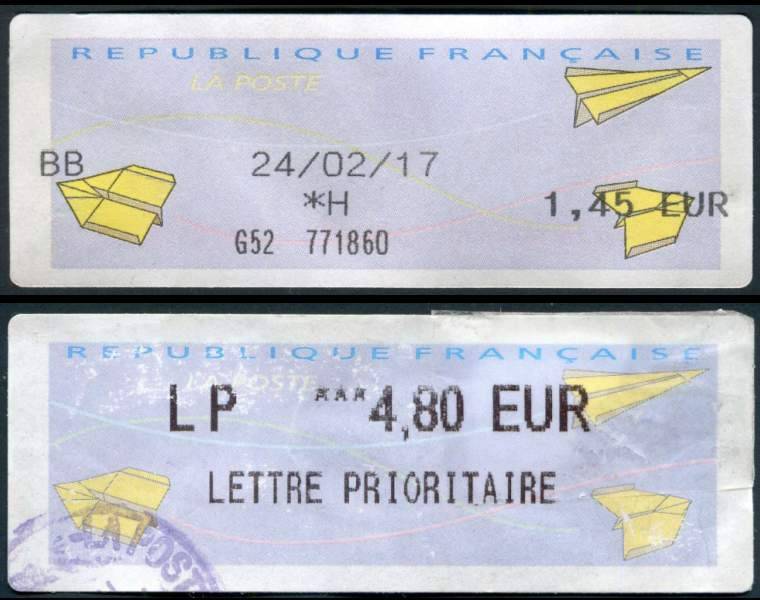
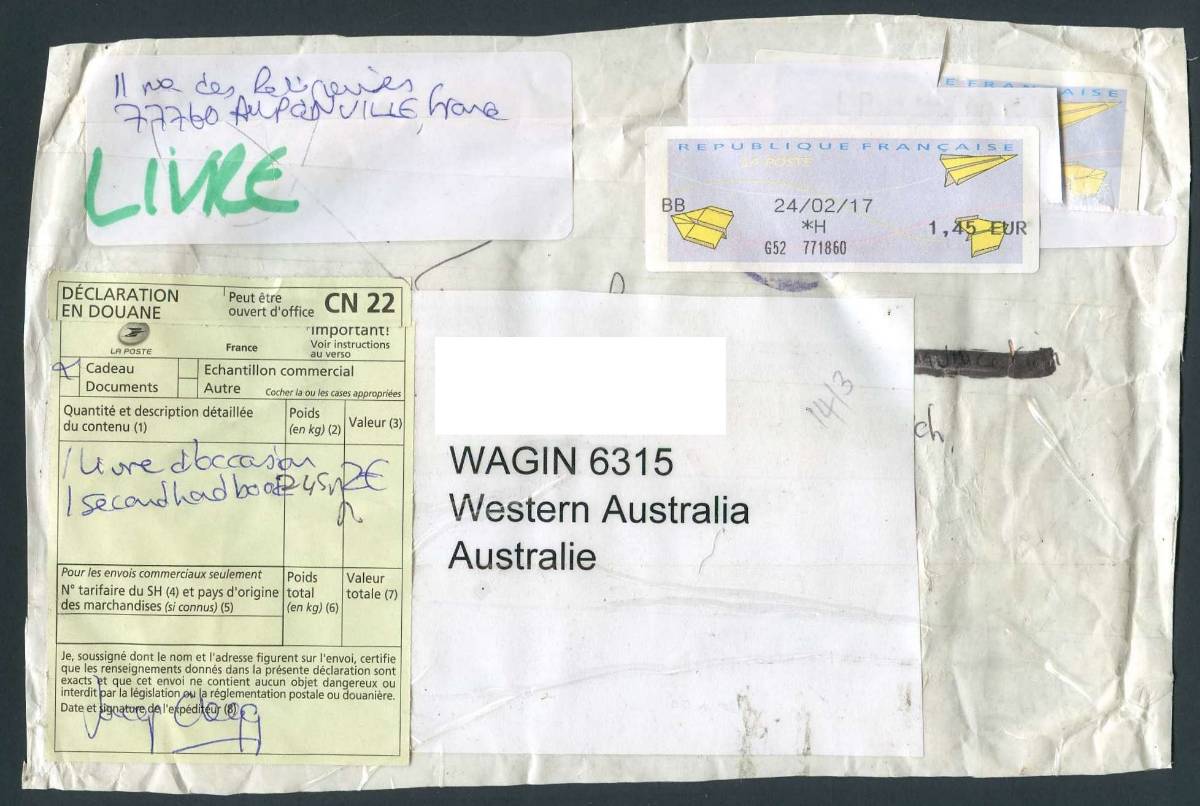
It is very easy to be behind the times in this area of collecting. While doing the France search, I stumbled across the newest Germany ATM stamps. They are self adhesive, were issued in 2018, and carry the same images as the 2017 issues shown in a posting above. |
|
Send note to Staff
|
|
|
Bedrock Of The Community
Australia
38679 Posts |
|
|
Thanks for your time Bob, I have them under Meters, I thought twice about posting, but thought "computer vended" suited them. Comments? So what do you wish on this thread? ATM's (Framas) or Variable Value stamps (Meters) ? or both? 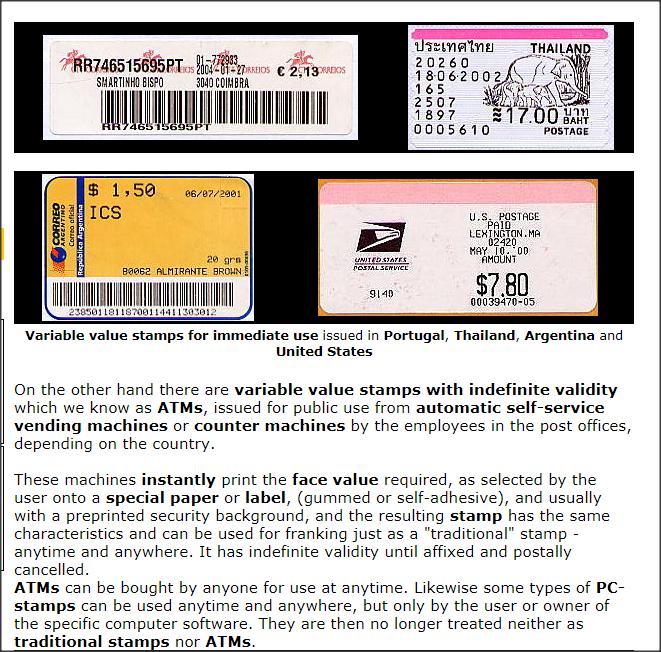 |
|
Send note to Staff
|
| Edited by rod222 - 04/09/2019 01:20 am |
|
|
Bedrock Of The Community
Australia
38679 Posts |
|
|
Bob, found the French in Yvert 2000 under Timbres de Distributeurs (if that helps in adjudication) 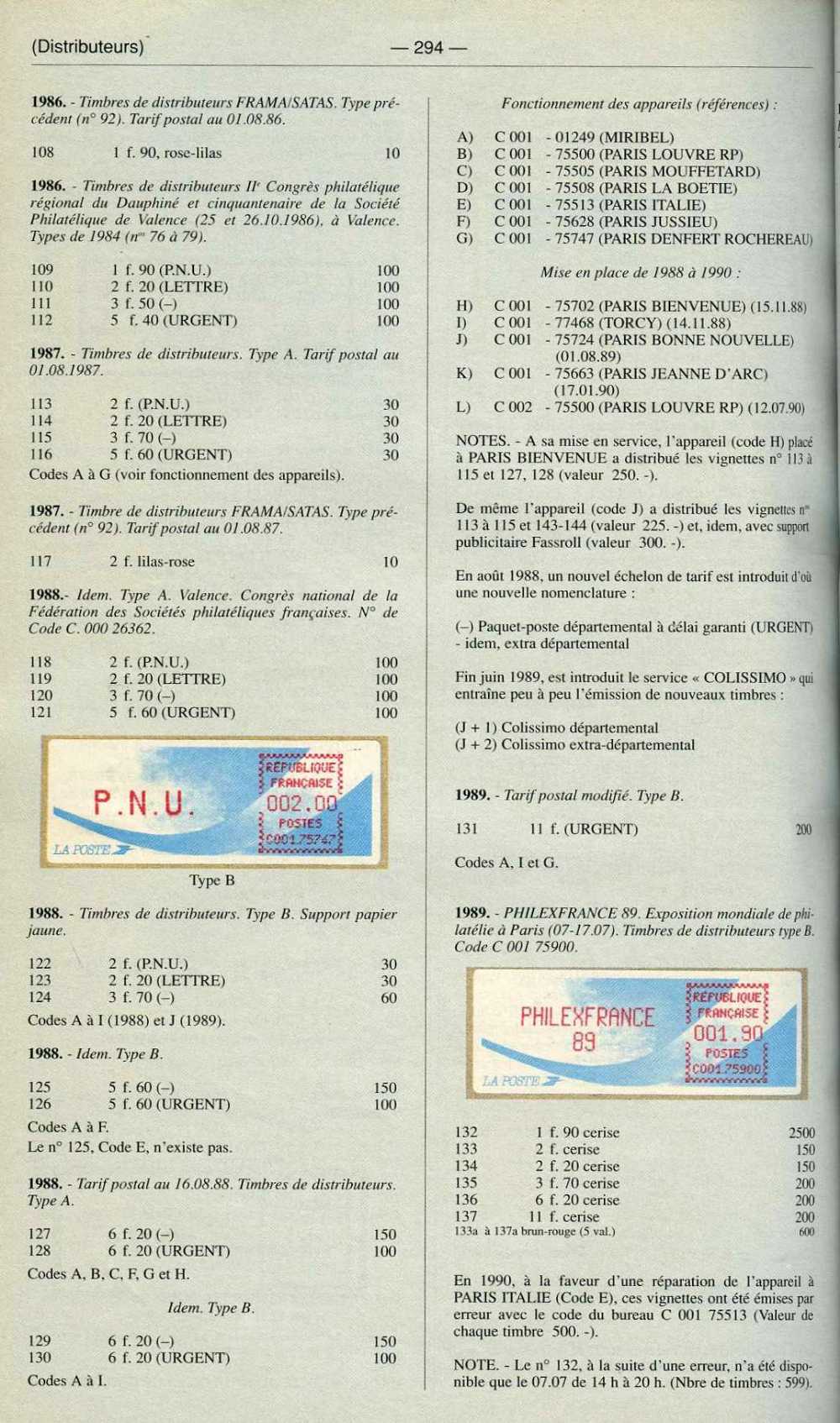 |
|
Send note to Staff
|
|
|
Pillar Of The Community
United States
7239 Posts |
|
|
Rod, this looks very similar to Michel, i.e., in their descriptions of the various markings and rates. I am a little surprised that no French philatelist or stamp collecting organization has pointed out the use of these labels for metering mail, if this is the case. Perhaps it is because it is obvious to a native speaker or resident. Who knows?
I enjoy seeing all manner of things related to modern technology and the evolution of stamps on this thread. I am aware that most traditional stamp collectors would prefer to ignore this whole issue. |
|
Send note to Staff
|
|
|
Bedrock Of The Community
Australia
38679 Posts |
|
|
Bob, Australia has a long history of collecting "Meters" ie imprints for personally held postage printing machines, Pitney Bowes etc. However Australia Post has introduced "Machine Labels" as I call them, machine labels produced over the counter as variable rate stamps. I have never seen any Aussie collector indicating they collect them, I like them a lot, they indicate the Post Office date and time. When I am in the Red Cross stamp shop, the always have them in boxes of "unclassified" so I buy the lot, when I visit I probably would have a few thousand of them. 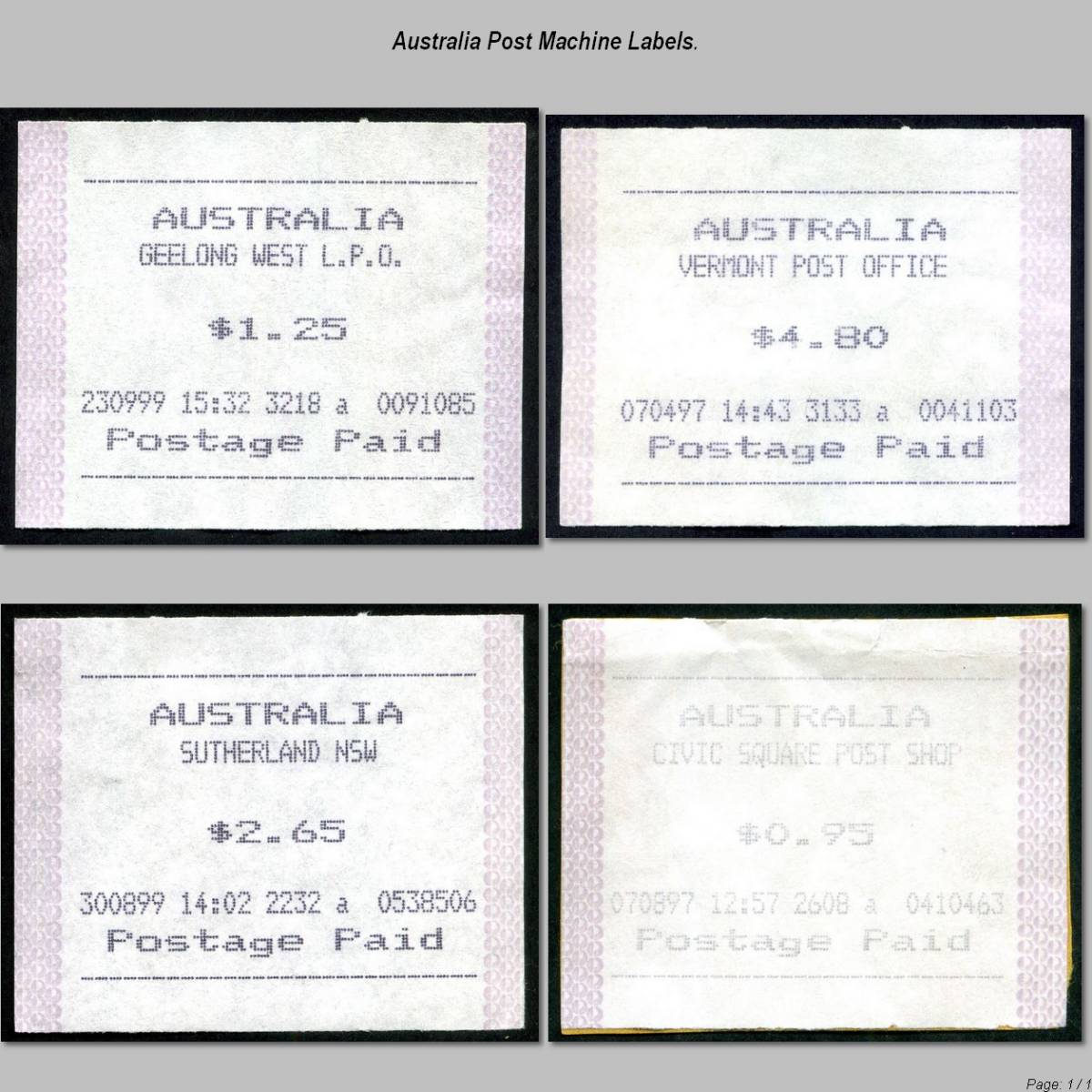 |
|
Send note to Staff
|
|
|
Pillar Of The Community
United States
7239 Posts |
|
|
The Netherlands began using computer-vended postage on August 22, 1989. These labels are of the Kluessendorf (Germany) type. They have water soluble gum and every fifth stamp has a counting # from the roll. They are denominated in cent (gulden), and could be bought from 5c to 700c, in 5c increments. In 1996, a second type was introduced using Nagler (Germany) equipment. These stamps are very much like the Danish Framas shown by Rod a few postings back. Both types of gulden denominated machines were removed from service between April and June of 2001. The Netherlands initiated euro-denominated computer stamp services on November 6, 2006. These machines are Wincor Nixdorf (Germany). This company has been in the ATM and bank machine business since 1952. Also, at this time the NL postal service had merged with TNT, a Netherlands based international parcel and mail courier service. The merged enterprise was known as TNT N.V. The euro denominated stamps are self-adhesive. The examples below show both a domestic use (left) and international/priority use (right). Since these stamps were issued, the two enterprises have de-merged. The postal service is now called Post NL. 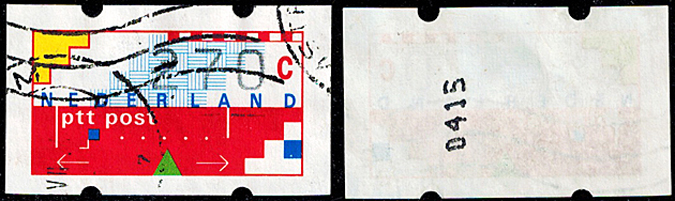 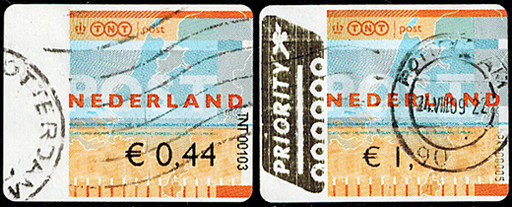 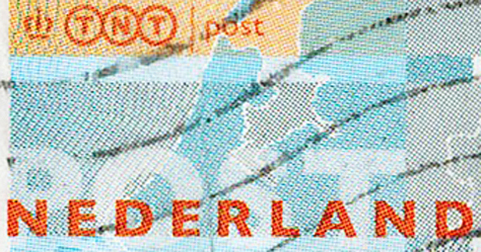 |
|
Send note to Staff
|
|
|
Bedrock Of The Community
Australia
38679 Posts |
|
|
Spain. B.o.b. (Back of book) I see Thematic "Motorbikes on stamps" Member Aussie Al. 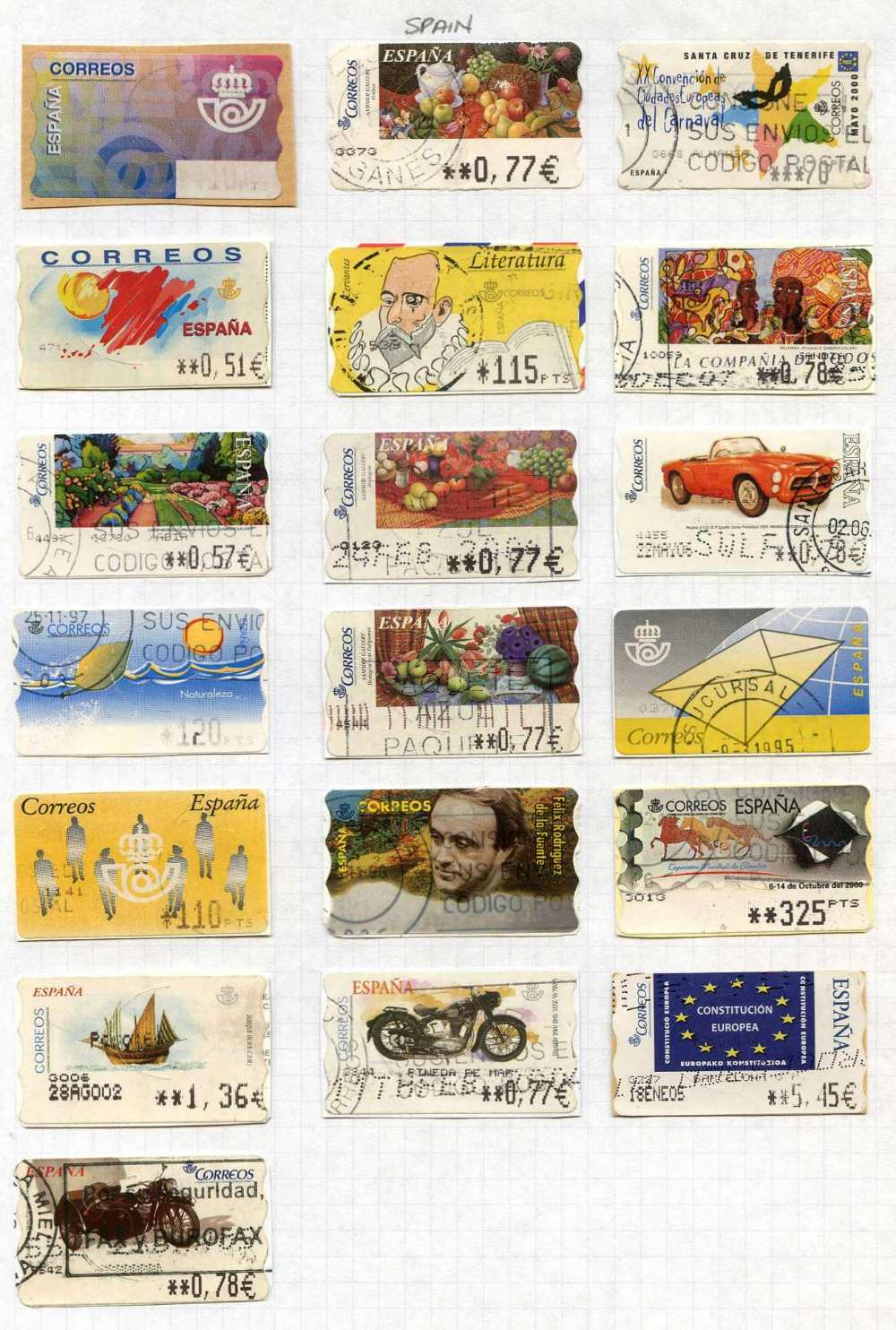 |
|
Send note to Staff
|
| Edited by rod222 - 04/12/2019 6:53 pm |
|
|
Replies: 56 / Views: 6,055 |
|



 Posted 04/03/2019 09:10 am