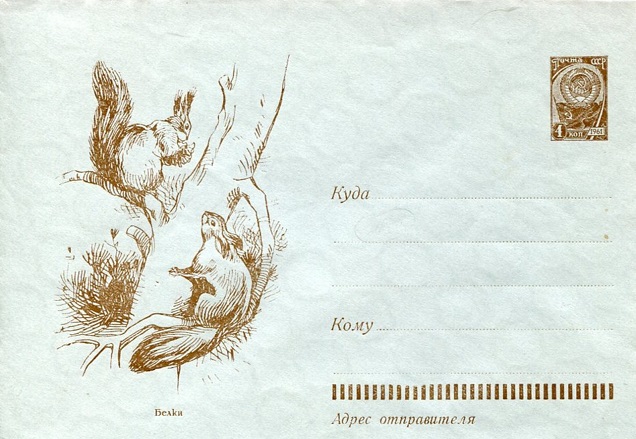
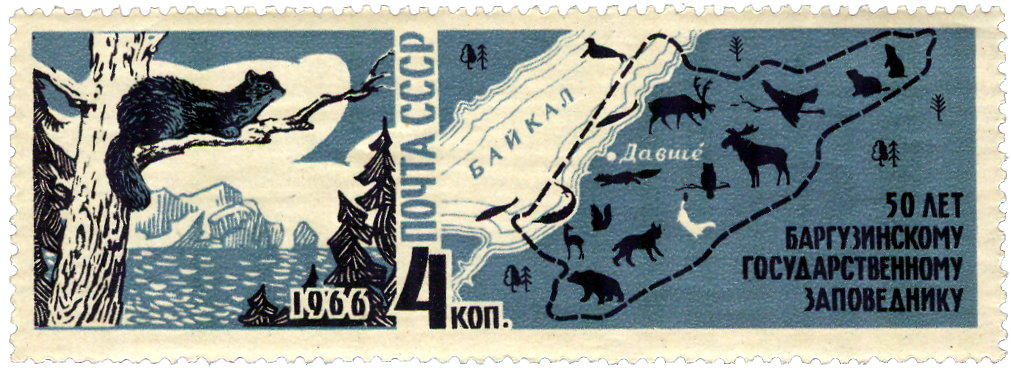
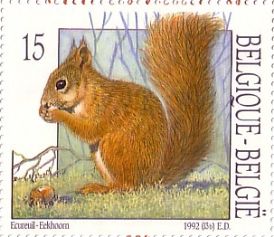
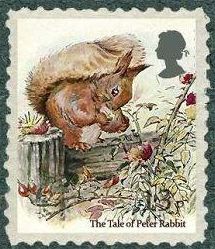
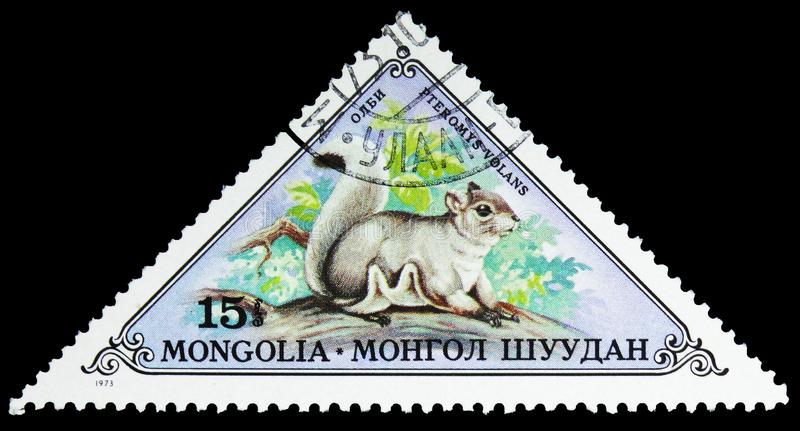
Siberian Flying Squirrel, 1973.
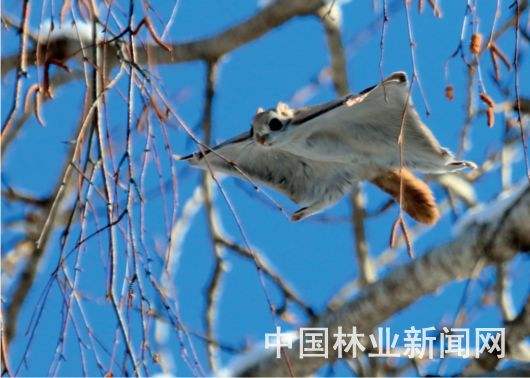
Jump, a wing will appear!

Quote:
One reason, doubtless, why squirrels are so bold and reckless in leaping through the trees is that, if they miss their hold and fall, they sustain no injury. Every species of tree-squirrel seems to be capable of a sort of rudimentary flying,—at least of making itself into a parachute, so as to ease or break a fall or a leap from a great height. 3The so-called flying squirrel does this the most perfectly. It opens its furry vestments, leaps into the air, and sails down the steep incline from the top of one tree to the foot of the next as lightly as a bird. But other squirrels know the same trick, only their coat-skirts are not so broad. One day my dog treed a red squirrel in a tall hickory that stood in a meadow on the side of a steep hill. To see what the squirrel would do when closely pressed, I climbed the tree. As I drew near he took refuge in the topmost branch, and then, as I came on, he boldly leaped into the air, spread himself out upon it, and, with a quick, tremulous motion of his tail and legs, descended quite slowly and landed upon the ground thirty feet below me, apparently none the worse for the leap, for he ran with great speed and eluding the dog took refuge in another tree.
A recent American traveler in Mexico gives a still more striking instance of this power of squirrels partially to neutralize the force of gravity when leaping or falling through the air. Some boys had caught a Mexican black squirrel, nearly as large as a cat. It had escaped from them once, and, when pursued, had taken a leap of sixty feet, from the top of a pine-tree down upon the roof of a house, without injury. This feat had led the grandmother of one of the boys to declare 4that the squirrel was bewitched, and the boys proposed to put the matter to further test by throwing the squirrel down a precipice six hundred feet high. Our traveler interfered, to see that the squirrel had fair play. The prisoner was conveyed in a pillow-slip to the edge of the cliff, and the slip opened, so that he might have his choice, whether to remain a captive or to take the leap. He looked down the awful abyss, and then back and sidewise,—his eyes glistening, his form crouching. Seeing no escape in any other direction, "he took a flying leap into space, and fluttered rather than fell into the abyss below. His legs began to work like those of a swimming poodle-dog, but quicker and quicker, while his tail, slightly elevated, spread out like a feather fan. A rabbit of the same weight would have made the trip in about twelve seconds; the squirrel protracted it for more than half a minute," and "landed on a ledge of limestone, where we could see him plainly squat on his hind legs and smooth his ruffled fur, after which he made for the creek with a flourish of his tail, took a good drink, and scampered away into the willow thicket."
http://www.gutenberg.org/files/2438.../24388-h.htm





 Posted 02/08/2020 05:17 am