| Author |
 Replies: 22 / Views: 3,358 Replies: 22 / Views: 3,358 |
|
Valued Member
United States
94 Posts |
|
|
|
Could someone shed some light on "makeshift" booklets ?
Are they sheet stamps that are placed into a booklet?
Do they have straight edges ?
When removed from the booklet are they distinguishable from sheet stamps?
Thanks
|
|
Send note to Staff
|
|
|
|
|
Pillar Of The Community
United States
901 Posts |
|
|
StampOCD
I had never heard of these before. Did a search and found the following online: It taught me something I didn't know.
This is a story about the United States Postal Service being the good guys while doing a good job of responding to the needs of its customers.
The Scott Specialized Catalogue of United States Stamps & Covers includes a section on Booklets: Panes & Covers and in that listing you will find a listing for MAKESHIFT VENDING MACHINE BOOKLETS. While the editors of the Scott Catalog initially refused to include these "jury rigged" booklets, the booklets are now included with major Scott Catalog Numbers.
Beginning in 1995, the USPS contracted with MDI, a nonprofit social service organization based in Minnesota, to fabricate vending booklets to meet an early public demand. The stamp stock for these vending size booklets were taken from sheets and panes of both water-activated and self-adhesive definitive and commemorative stamps. The stamps were mounted between white card stock covers printed in blue, and thus the origin of these booklets became known as the "blues."
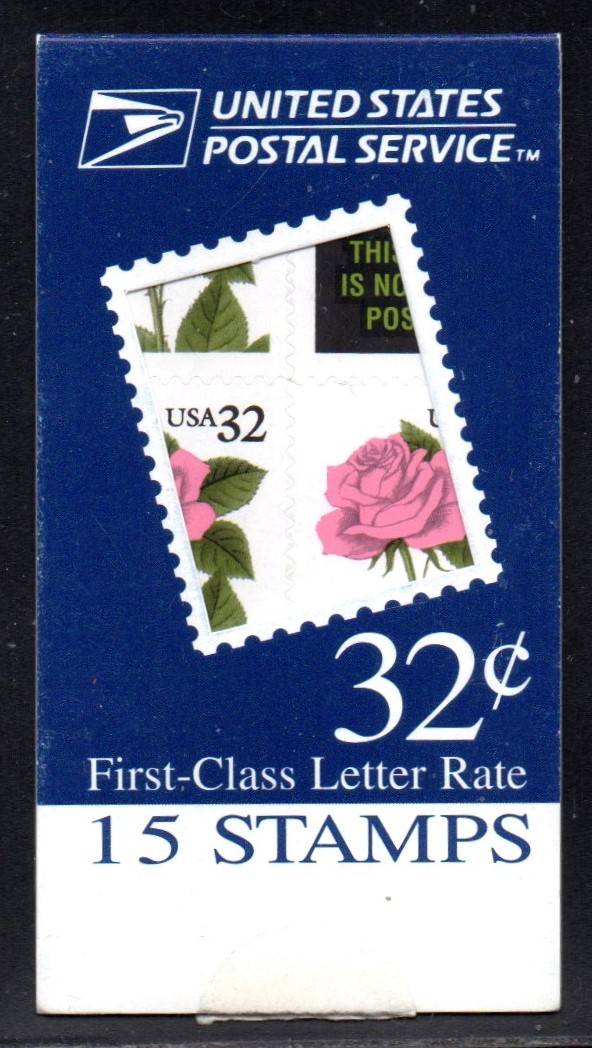
The first booklets that were produced – Scott Numbers BK178A-BK178F – included the #2492 pink rose. Produced as booklets of 20 in a fold-it-yourself format, the panes were modified to panes of 15-label, 14 and 16 to accommodate the vending booklet format.
Later productions of the "blues" by MDI include The Georgia O'Keefe issue, James Dean, Rural Free Delivery, Endangered Species, Indian Dances and other popular issues of the 1990s. The final additions to the series are #BK277 and #BK278 using the American Glass and Famous Trains panes for stock.
The "blue" covers are the unique characteristic of the series. There are two different outside front covers. Type I was only used on the early 32¢ Pink Rose booklets [BK178A, 178B, and combo 178E]. Some of these booklets were wrapped in cellophane rather than being taped shut. The Type I cover can be distinguished by a much narrower white band and the viewing portal is a bit lower.
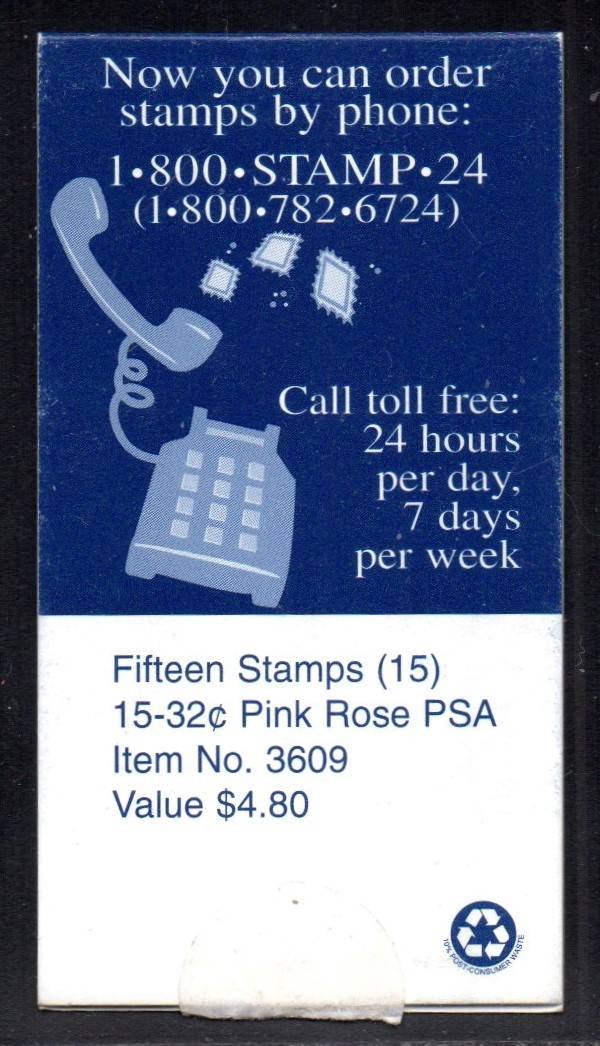
On the backside of the covers there are four varieties. The booklets with the Type I front cover have no writing in the white section of the outside back cover; instead, a label listing product information was attached to the outside of the cellophane wrapper.
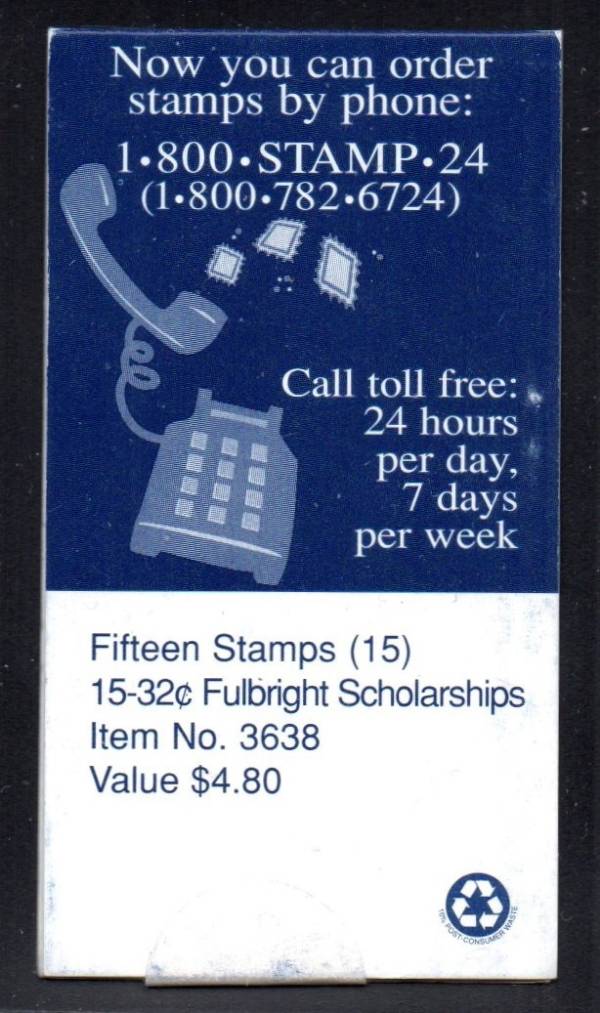
Subsequent booklets produced with the Type II front covers have one of three different outside back covers, Types II, II-a, and III. The only distinguishing feature between Type II and Type II-a is "Item No." and "Item #." Type III is distinguished by a UPC bar code, a different location of the circular "10% Post-Consumer Waste" label, and a different ordering of the product information.
Where did these unique booklets come from? This is the good part, the part about the Post Office doing well.
The Michigan Dyslexia Institute, Inc. (MDI) was established as a nonprofit educational organization in October 1982 to serve the more than one-half million children and adults with dyslexia in the state. In a very short span of time, MDI emerged as a unique resource and significant educational force in Michigan and in the country.
Today, most of MDIs business comes from the U.S. Postal Service which has been utilizing the HDPE laminated corrugated plastic totes to transport mail for more than a dozen years. These are the plastic open-top carrier boxes that we all use when we have large amounts of mail to take to and from the Post Office.
|
Send note to Staff 
|
|
|
Rest in Peace
United States
1189 Posts |
|
|
Valued Member
United States
94 Posts |
|
|
Pillar Of The Community
United States
4182 Posts |
|
|
Quote:
There are many sheet issued stamps which were used to create the makeshift booklets. These used regular sheets of stamps and once removed from the makeshift booklet are unidentifiable as such.
Here's a few examples from my collection: The first 3 you pictured were not made from sheet stamp stock, they were made from booklet pane stock that was cut differently than used for normal booklet panes, and as such the MDI panes can be identified as coming from a makeshift booklet. Quote:
Michigan Dyslexia Institute, Inc. (MDI) Nope, MDI stands for Minnesota Diversified Industries. |
|
Send note to Staff
|
|
|
Pillar Of The Community
United States
901 Posts |
|
|
eyeonwall
You're right. Checked their website and it seems the author of the article was in error on that point. Michigan Dyslexia Institute has nothing to do with the stamps or the mail containers. From the website of Minnesota Diversified Industries:
1970's - Developing Concepts
In 1973, manufacturing contracts with the United States Post Office and 3M begin and remain in place today. Over the next decades these and other business opportunities create hundreds of jobs for people with disabilities. Projects use a mixed work force of craftsmen and people with disabilities. In 1976, The Occupational Training Center becomes Minnesota Diversified Industries (MDI). |
|
Send note to Staff
|
| Edited by gettinold - 04/16/2019 11:42 pm |
|
|
New Member
United States
1 Posts |
|
|
Just joined the forum. I've been collecting the makeshift booklets for a few months now. Here's some additional information.
To collect a complete set of makeshift booklets you'll need to look at the back of the booklet as well as the front.
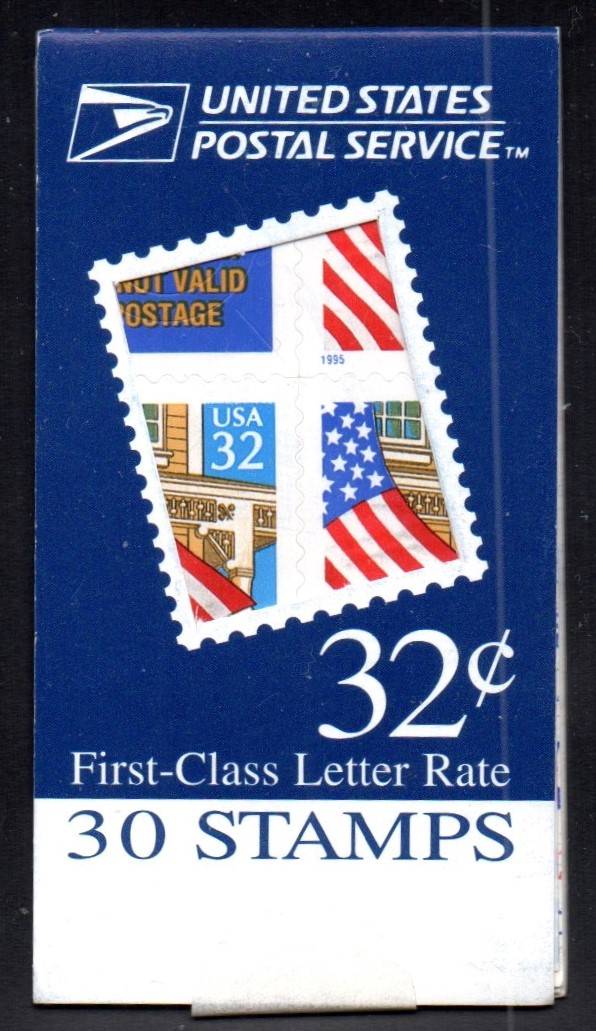
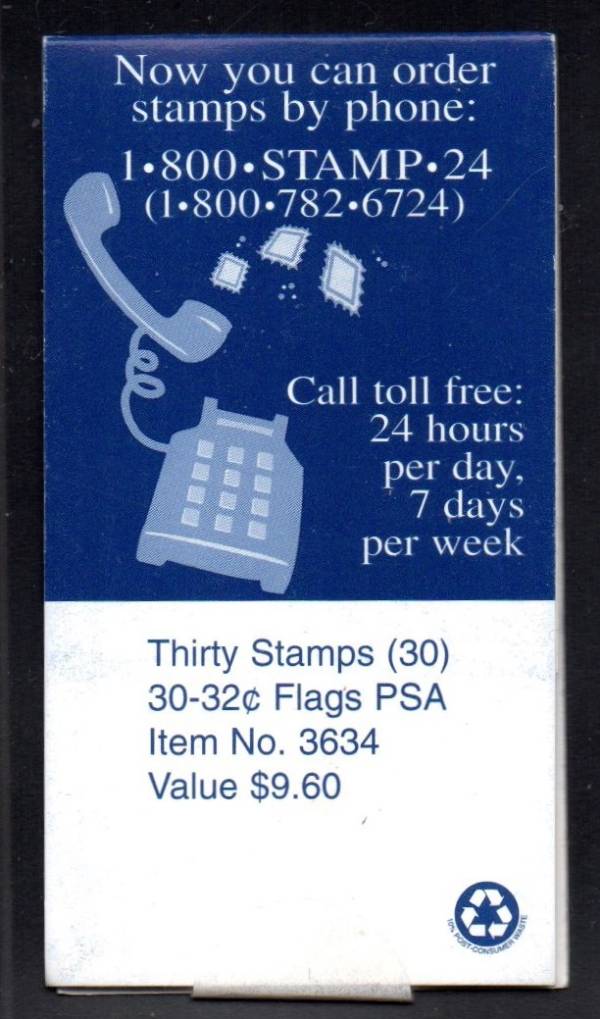
There are a couple of options on the back. For example booklet BK227 (Flag over Porch, large blue 1995 date, 30 stamps and 2 labels) has at least 2 different item numbers with different text: Item #3634X and Item No. 3634
Also, the stamps in the booklet can be arranged differently and appear differently. For example booklet BK178A (Pink Rose, 15 stamps and 1 label) has one version with the label showing on the left side, another with the label showing on the right side, and a 3rd with no label showing. |
|
Send note to Staff
|
|
|
Pillar Of The Community
United States
4182 Posts |
|
|
There are 3 different BK227 covers - No. 3634, No. 3634X & #3634X.
There are 4 different positions of the label on the top pane - label shows at left (position 11), label shows at right (position 12), doesn't show in window but is in left column (position 13), doesn't show in window but is in right column (position 14). The label on the bottom pane also can be in 4 different positions. So there are 16 different label position combinations. |
|
Send note to Staff
|
|
|
Valued Member
276 Posts |
|
|
I had one of these for the 1c Kestral self adhesive. It was dispensed by a vending machine, and consisted of sheet stamps folded to fit within a booklet size cardboard cover. |
|
Send note to Staff
|
|
|
Valued Member
208 Posts |
|
|
Quote:
I had one of these for the 1c Kestral self adhesive. It was dispensed by a vending machine, and consisted of sheet stamps folded to fit within a booklet size cardboard cover. The 1c Kestrel item that you had was likely packaged in a glassine envelope and not a cardboard cover. The Kestrel is not known with the blue MDI booklet cover. I no longer have one of these to scan but there's a previous thread that pictures one. https://goscf.com/t/80531 |
|
Send note to Staff
|
| Edited by philatomic - 11/05/2023 08:27 am |
|
|
Valued Member
276 Posts |
|
|
@philatomic, yes, that glassine is familiar looking, thanks. I stand corrected. I used up those 1c stamps years ago and must have tossed the glassine. |
|
Send note to Staff
|
|
|
Valued Member
Switzerland
497 Posts |
|
|
Fun fact: When trying to contact MDI for information about these booklets, noone has ever been able to get any response. The worst I heard is someone got a cease and desist order out of the blue from MDI lawyers.
I have been trying to find out how many MDI booklets (for each issue) were ordered by the USPS and how many were actually made and sold. Going up and down the USPS corporate ladder, noone had an answer. As these booklets were hand-made, there are many varieties. I have around 650 different MDI booklets - so far. |
|
Send note to Staff
|
| Edited by drkohler - 11/05/2023 5:33 pm |
|
|
Valued Member
United States
10 Posts |
|
|
Went to a stamp show today and went through a dealer's box of MDI makeshift booklets. He has 3 odd ones. He has what BK277 that had the top-most pane of stamps glued into the cover completely backward. The window only showed the Self adhesive backing. Since the seal was broken I opened it up and yes the stamp side was glued down.
Then he had 2 booklets that on the back cover listed the typical stuff for BK277, with American Glass listed. Yet, the stamps inside were not the American glass stamps. One had 15 Ayn Rand (3308) stamps glued in it (but the seal was broken), and the other had 15 Lunt & Fontaine (3287) stamps glued in the booklet (the seal was broken, most of his stock had their seals broken). Has anyone seen such MDI mistakes before?
By the time I left, the dealer had mishandled the Rand booklet and the block of stamps came off (separated from the back cover). Since all of these had seals broken It could be possible that someone purposefully swapped out the American Glass stamps or glued backwards the FOP stamps. The dealer was seeing dollar signs and wasn't about to sell them until he did some research. I wasn't about to offer him anything over discount postage values for the now separated Rand block. |
|
Send note to Staff
|
|
|
Valued Member
Switzerland
497 Posts |
|
|
There are a few booklets known with the pane inserted backward. They are rare. There are also a few MDI booklets (all from the early self-adhesive issues) known with the wrong contents - however all these known booklets have the contents in the previously issued booklet cover. It seems that some leftover booklet stock was carried over to the new booklet cover stock in error. I think it is impossible that MDI booklets contained "foreign stamps". Stock was sent by the USPS to MDI, MDi did not procure the stamps otherwise. In your case, it seems someone practised making "rare" MDI booklets. Once a seal is broken, all bets are off. It is technically possible to figure out if an MDI booklet was faked. Either if the contents was replaced by other stamps or the stamp folding was changed (this one is particularly finnicky). The following images are from the Dolls issue and shows a few rare variants (either the 20 stamp-pane was reduced incorrectly to 15 stamps or folded not according to rules). 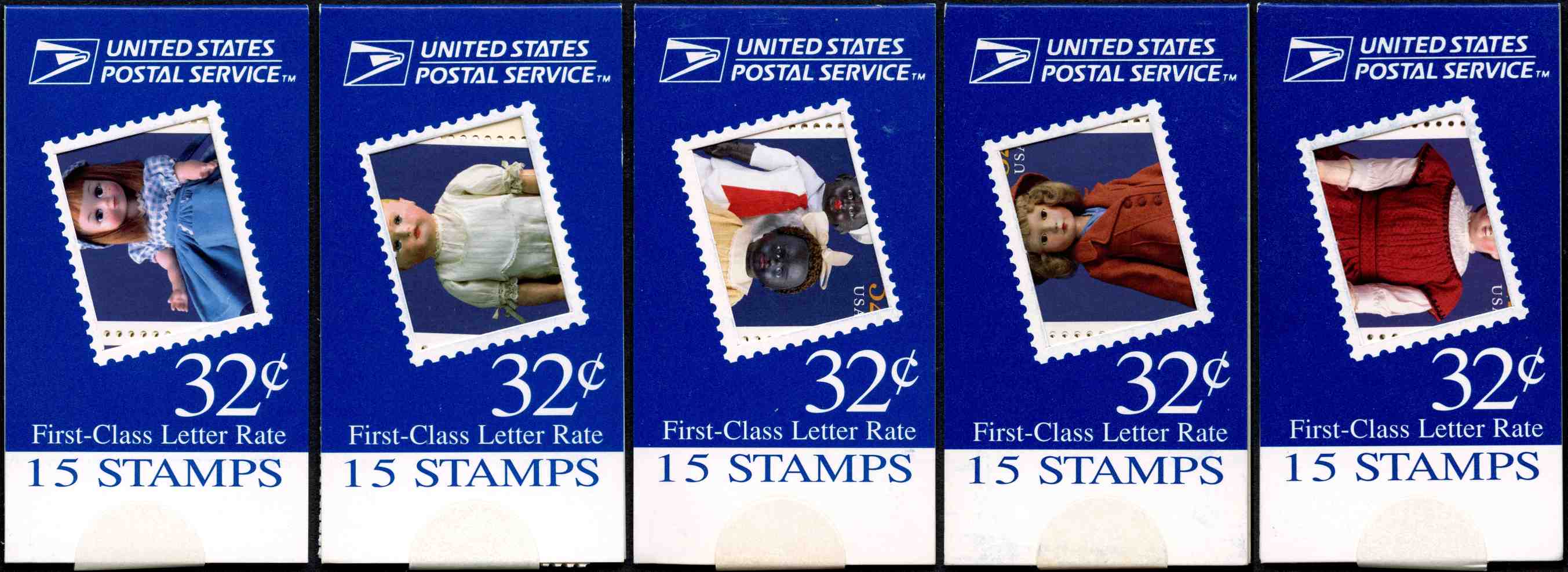 The first two booklets are the "regularly" issued format, the other three booklets are rare variants. |
|
Send note to Staff
|
| Edited by drkohler - 11/25/2023 6:54 pm |
|
|
Valued Member
United States
10 Posts |
|
|
Thanks for your insight drkohler. I enjoyed seeing the images of the Doll variations.
Wish I had taken pictures while at the dealer's booth because I may not have described the BK277 that I saw very well. The stamps did not show in the window at all. It was the backing that was visible. Do you think it Is possible to fold the glued down panes of an exploded BK227 in such a way that the backing is seen through the window?
It seems rather suspicious that at one dealer's table, out of about 50 MDI booklets (most of them with their seal broken), their were 3 never before seen booklets. As you say, all bets are off when the seals are broken. |
|
Send note to Staff
|
|
|
Pillar Of The Community
United States
4182 Posts |
|
|
The two American Glass covers with the Rand and the Lunt & Fontaine are most definitely someone's fantasy.
"He has what BK277 that had the top-most pane of stamps glued into the cover completely backward. The window only showed the Self adhesive backing. Since the seal was broken I opened it up and yes the stamp side was glued down......... glued backwards the FOP stamps. "
Assume you mean BK227. I have seen a few books with panes glued in backwards, but did not get the chance to examine them to determine if they were possibly faked or not. |
|
Send note to Staff
|
|
|
Replies: 22 / Views: 3,358 |
|




 Posted 04/16/2019 7:43 pm