| Author |
 Replies: 3,825 / Views: 255,746 Replies: 3,825 / Views: 255,746 |
|
|
|
Pillar Of The Community

United States
1838 Posts |
|
|
Inner recut line? I never realized there was an inner recut. That explains a lot. So it's the line between the E and C. Not the outer frame line. This indeed would be easier to see. I was always just looking at the outer line. One day I will laugh at how bad I was at this. Not today though. |
Send note to Staff 
|
| Edited by rlsny - 02/26/2022 2:35 pm |
|
|
Pillar Of The Community
United States
1820 Posts |
|
|
Recut once at bottom = outer line recut only. Recut twice at bottom = outer and inner lines both recut. Inner line only recut does not exist. Your stamp is recut once at top and twice at bottom.
A few positions on Plate 1 Late are recut twice at top, involving both an outer and inner recut. The inner recut shows up somewhere (depending on the position) between the P and the T of POSTAGE. A good example showing all the recuts (twice at top and twice at bottom) is position 79L1L. Check it out at the Doporto Image Archive. |
|
Send note to Staff
|
| Edited by dudley - 02/26/2022 4:38 pm |
|
|
Pillar Of The Community
United States
1838 Posts |
|
|
OK, I'm trying to learn something today. These two both have cancels that may make it hard, but I think I'm seeing a single bottom recut on the left stamp. Maybe a double on the right. Please correct me. (I'm not trying to plate these, just trying to see if I can see recuts.) These were both listed as type II by the previous owner. 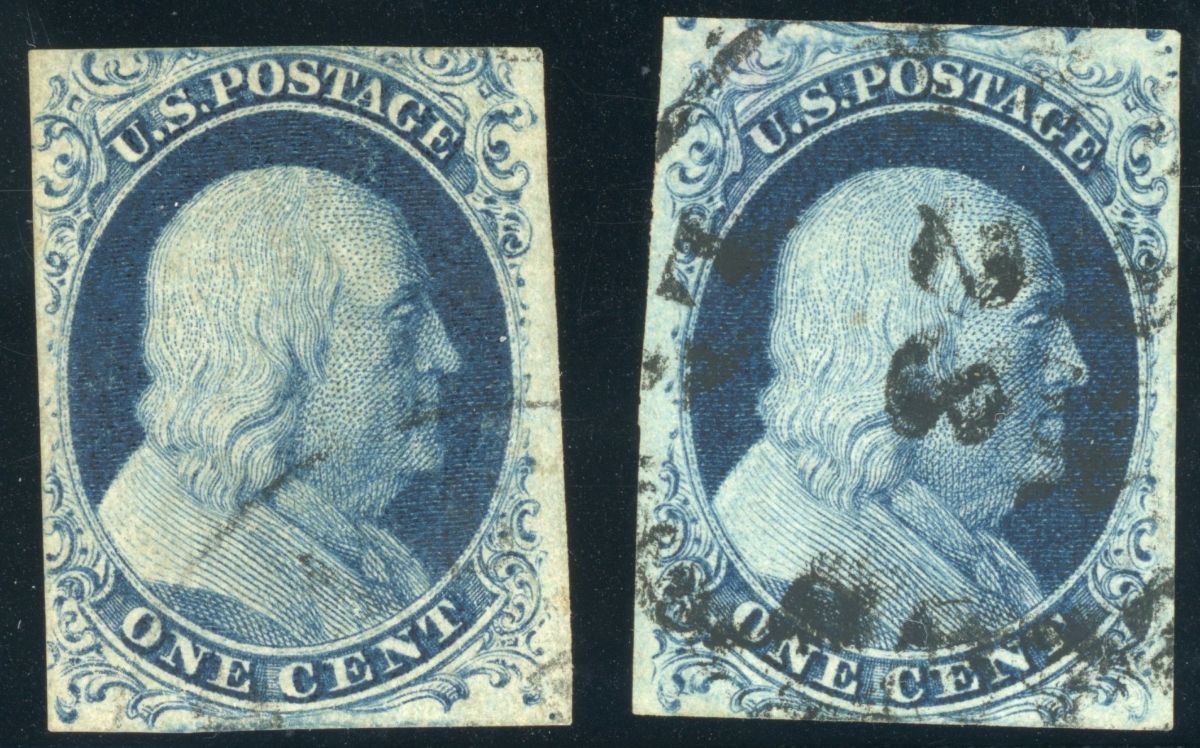 |
|
Send note to Staff
|
|
|
Pillar Of The Community
United States
1820 Posts |
|
|
They both are Type II, no recuts. The bottom recuts, as mentioned, are sometimes difficult to discern, especially on fresh impressions. However, there are other clues. The only positions on Plate 1 Late that have bottom recuts but no top recuts are from the top row (Relief T). Neither of these stamps falls into this category (the right stamp shows part of a stamp above and the left stamp has a guide dot, which top-row stamps do not). These are from Plate 2. The bottom frame line on Plate 2 stamps is often almost indistinguishable from the recut bottom frame line on sharp Plate 1 Late impressions. Look to the top frame lines first. |
|
Send note to Staff
|
|
|
Pillar Of The Community
United States
1838 Posts |
|
|
Pillar Of The Community
United States
4189 Posts |
|
|
I originally posted these two back in July. This is my first attempt at plating anything. Might this first one be either 5L6 or 6L6? 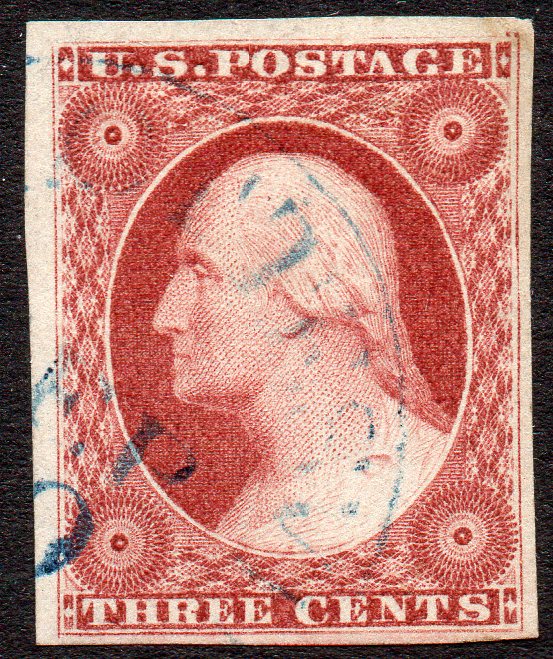 If someone could do this second one I would be most grateful (no inner lines, one guide dot at LR touching the diamond block) 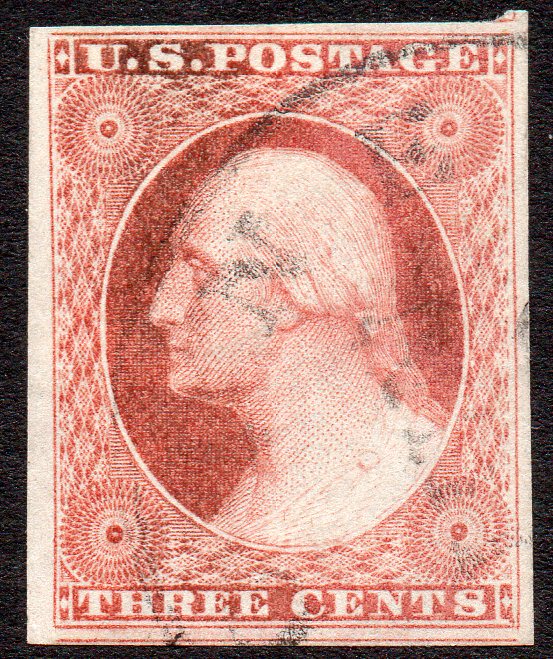 |
|
Send note to Staff
|
|
|
Pillar Of The Community
United States
2230 Posts |
|
|
Hi eyeonwall, Those are some beautiful stamps! Thanks for posting them again. Your stamp with the double dots at top is from sheet position 1L6. The compressed image below highlights some distinct right frame line bends and thickness changes. The one with the dot at bottom right is position 43L8.  Edited to remove redundancy |
|
Send note to Staff
|
| Edited by Classic Coins - 03/06/2022 5:38 pm |
|
|
Pillar Of The Community
United States
4189 Posts |
|
|
Valued Member
United States
327 Posts |
|
|
Greetings all. Here's one I found to be interesting. I've plated it to 58L1L. The right recut inner frameline looks like it was a cut a little wide giving one the impression there are two right inner frame lines. It also looks obvious to me that the right inner frame line extends well into the lower right rosette making it a recut #25 but it doesn't appear to be identified as such by Chase or McDaniel. This position seems unique enough to get more attention than just a classification as another 11A-A relief from plate 1L. Curious what others think. Regards, Harper1249 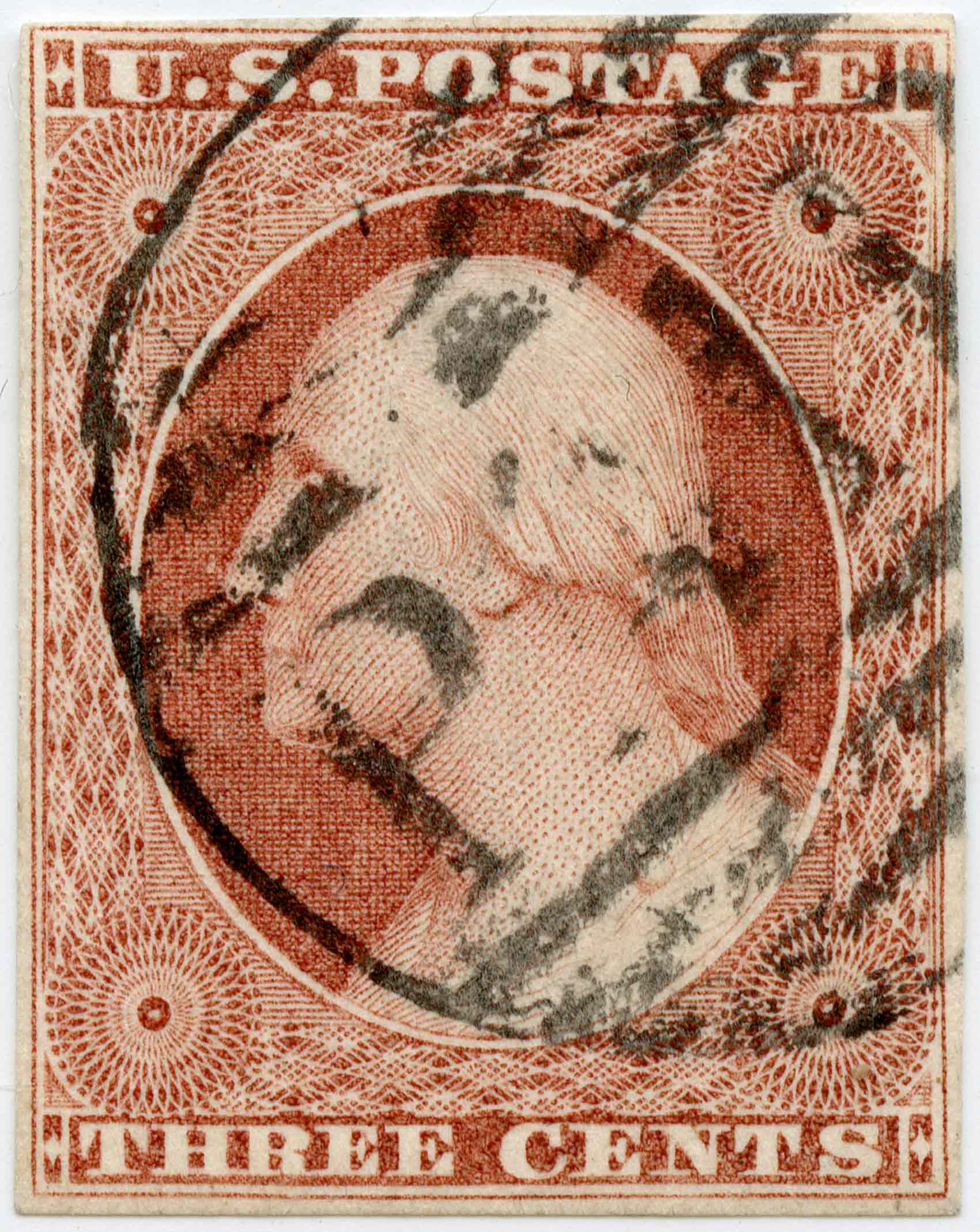 |
|
Send note to Staff
|
|
|
Pillar Of The Community
United States
637 Posts |
|
|
Hi Harper1249 -- That is a very nice plate 1L stamp you posted -- and surely a very early impression given the clarity of the first ring of fine lines surrounding the center dots of the rosettes. The stamp might also be slightly under-inked (or over-wiped) which tends to make everything stand out a little more -- as all of the inked lines appear a touch thinner than would otherwise be typical, and consequently the white spacing between all of the lines appear a touch wider. Regarding the recut classification as to the RIL running down too far -- and why neither Chase nor McDaniel classified the position as such -- a couple of thoughts: -- Very generally speaking -- all of the Chase classifications of what he called either "normal recutting" or "varieties of recutting" were relative to the master die. In other words -- What Chase terms as a "normal recut" are those lines that were engraved by hand (i.e., after the design was rocked in by the transfer roll) that strengthened elements of the original design as engraved on the master die. Conversely, what Chase termed as a "variety of recutting" were those lines that significantly deviated from the master die. A scan of a Scott 41P2a -- the Panama Die proof -- is below for "master die" reference purposes (not my stamp, but rather courtesy of Siegel Auction Galleries Power Search utility -- reference Sale 1116 // Lot 3010). -- All of that said -- when classifying the inner lines running up or down too far -- both Chase and McDaniel seem to have used a different standard for where to draw the line (no pun intended) as to classification as a "variety of recutting". My observation is that Chase did not classify an inner line running up / down too far unless the line ran noticeably well past a level opposite the center dot of the applicable rosette -- whereas McDaniel made the call much sooner. -- Another contributing factor as to why there are differences between Chase and McDaniel in terms of classifying varieties of recutting -- is that Chase was working from actual stamps -- whereas my understanding from one of McDaniel's USPCS Chronicle articles is that he (i.e., McDaniel) was working from the Chase photos. Regarding the classification of the RIL running down too far on your stamp -- it clearly runs down much farther than the RIL on the master die -- and by McDaniel standards (i.e., based on other stamps he classified as such) I am guessing that he missed it. By Chase standards, hard to say why it was not classified as such -- although most of the stamps classified by Chase as recut #25 have the RIL running down even further -- so I am guessing that the position in question did not meet the "Chase standard" for such (again -- only a guess). Regards // ioagoa 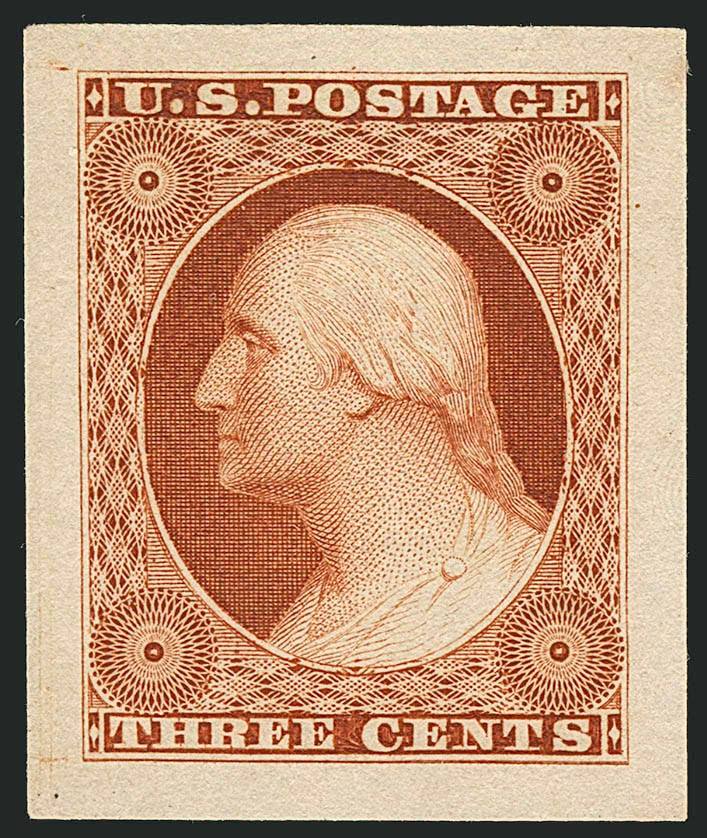 |
|
Send note to Staff
|
|
|
Pillar Of The Community
United States
1162 Posts |
|
|
ioagoa - thank you for posting the proof. Although a student of the 3c 1851, I have never really looked closely at the proofs. At least not at the "let's see if I can plate this" looking closely. I have always admired the detail that is visible - thus the auction describer's all-time favorite: proof-like impression.
One thing I have noticed on this proof that I have not really seen before is the tessellation that 'bleeds' into the blank oval surrounding Washington's image - at T, B, L, and R. I have often seen 'blobs' of ink in the blank oval (corresponding to the dark portions of the tessellation in the oval) but never made the leap of logic that they were related to the tessellation. Looking at this proof makes that leap unavoidable. Since I have never seen a stamp with the level of impression with which this proof was made, then the idea of 'proof-like impression' is obviously not literal. I never really thought it was, but... yowzer. Looking more closely at the proof, it appears that (at least for this proof) they made little effort to 'erase' any of the tessellation that impinges on the oval.
My God, that proof is beautiful!!! |
|
Send note to Staff
|
|
|
Pillar Of The Community
United States
1838 Posts |
|
|
Nice looking orange brown I think. I've demonstrated how bad I am at plating, but if anyone wants to give me some hints I'm willing to give it another go. Thanks 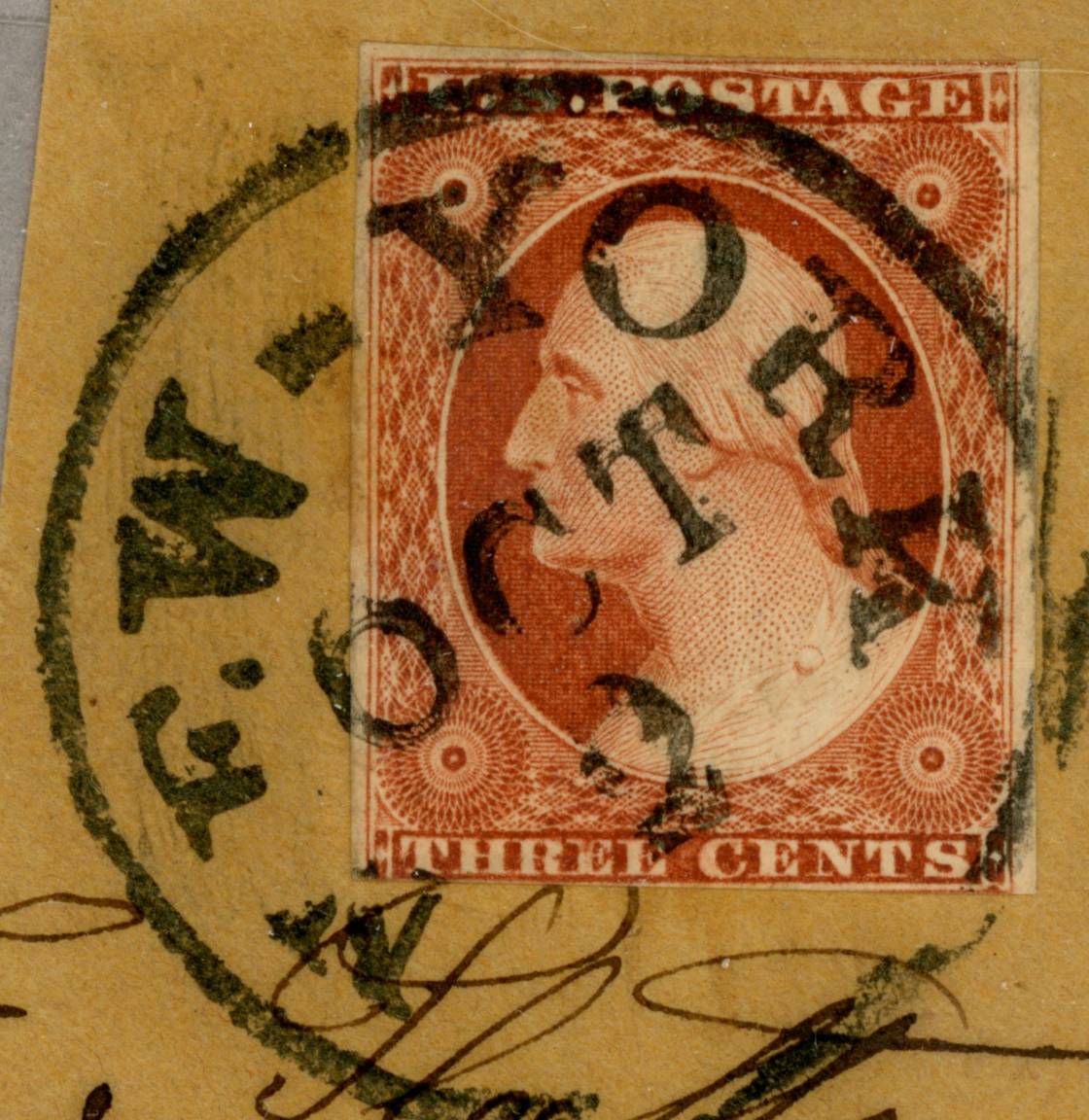 |
|
Send note to Staff
|
|
|
Pillar Of The Community
United States
4189 Posts |
|
|
Pillar Of The Community
United States
637 Posts |
|
|
Hi Mootermutt and eyeonwall -- A couple of additional comments about that Panama Die Proof that might be of interest: -- My understanding is that Scott #41P2a (i.e., the Panama Die Proof) was made from the "master die" -- thus it shows all of the engraved lines -- including the tessellation impingements into the white oval surrounding the medallion -- exactly as they existed on the master die. -- When TCC manufactured the "3-relief" transfer roll -- as part of the production process -- an engraver "cleaned up" these tessellation impingements in the white oval surrounding the medallion -- and did so individually -- one at a time -- for each of the 3 reliefs -- thus creating the primary differences that identify the A - B - and C reliefs (the gash in the C relief notwithstanding). -- Although listed in the Scott catalog as an "essay" -- Scott #11-E22 -- is widely regarded by students of the issue to be a "master die" proof. Siegel recently sold one of these in the Gordon Eubank's Sale -- (Reference Siegel sale #1242 -- Lot #131). I downloaded a scan of the 11-E22 from Siegel's website and am attaching it here for additional reference. Regards // ioagoa  |
|
Send note to Staff
|
| Edited by ioagoa - 03/11/2022 10:12 pm |
|
|
Pillar Of The Community
United States
637 Posts |
|
|
Hi rlsny --
I have not yet attempted to plate your so-called "nice looking orange brown I think" stamp -- but here are a couple of thoughts (i.e., hints):
-- clearly a B relief with a huge GD below the LRDB (this would be my primary search feature).
-- Clear and strong recut horizontal line across the top of the URDB.
-- Upper end of the LFL extends beyond its intersection with the TFL.
-- Inking in the first E of THREE might be a DT -- but likewise could just be a bit of stray ink -- hard to be sure without plating the stamp?
If you think this is a 10A -- the only way to be certain is to nail down the plate position.
Regards // ioagoa
|
|
Send note to Staff
|
|
|
Replies: 3,825 / Views: 255,746 |
|




 Posted 02/26/2022 2:35 pm


