7L5E on a nice Rail Road cover.
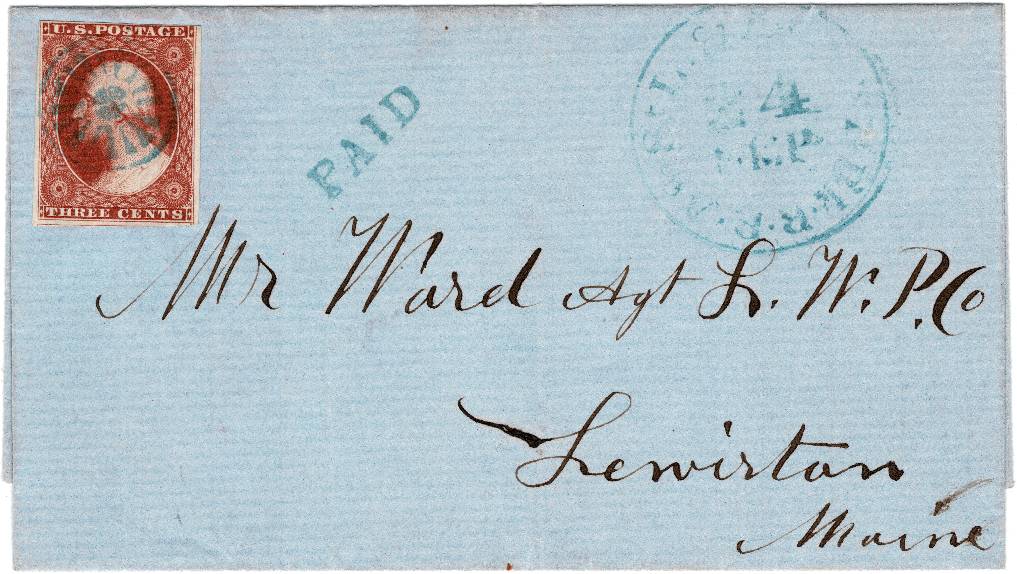
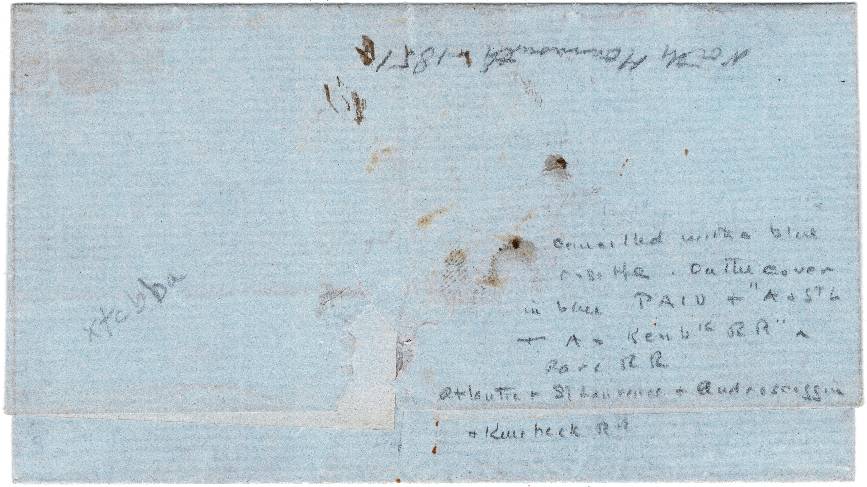
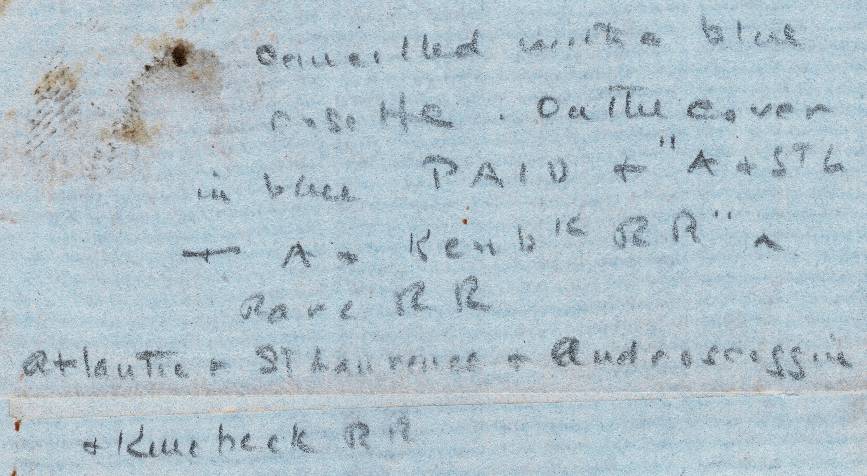
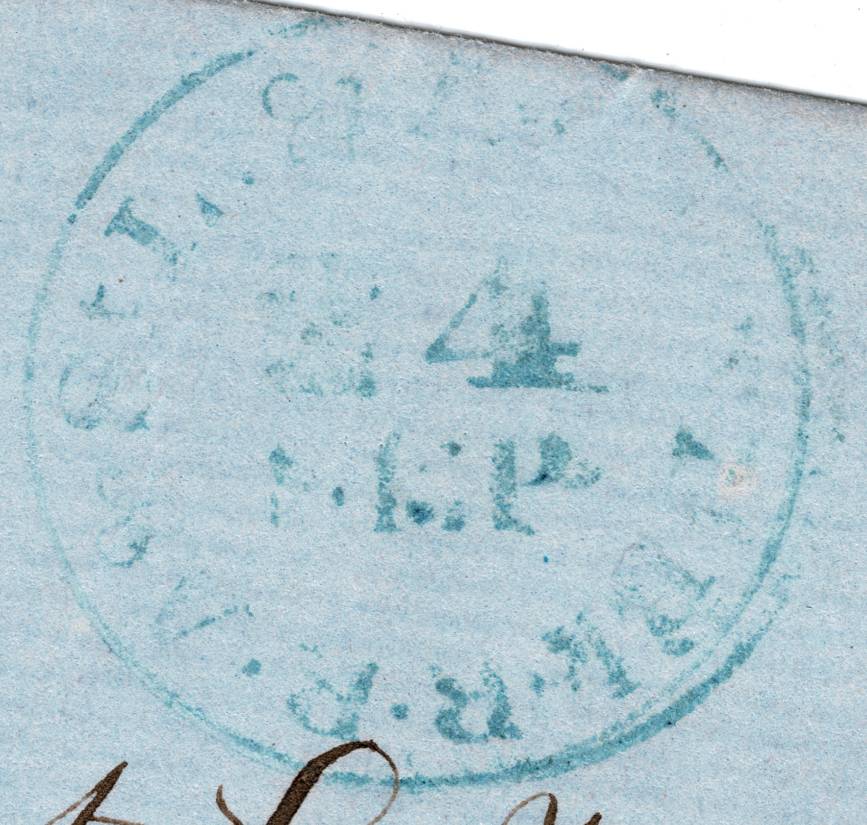
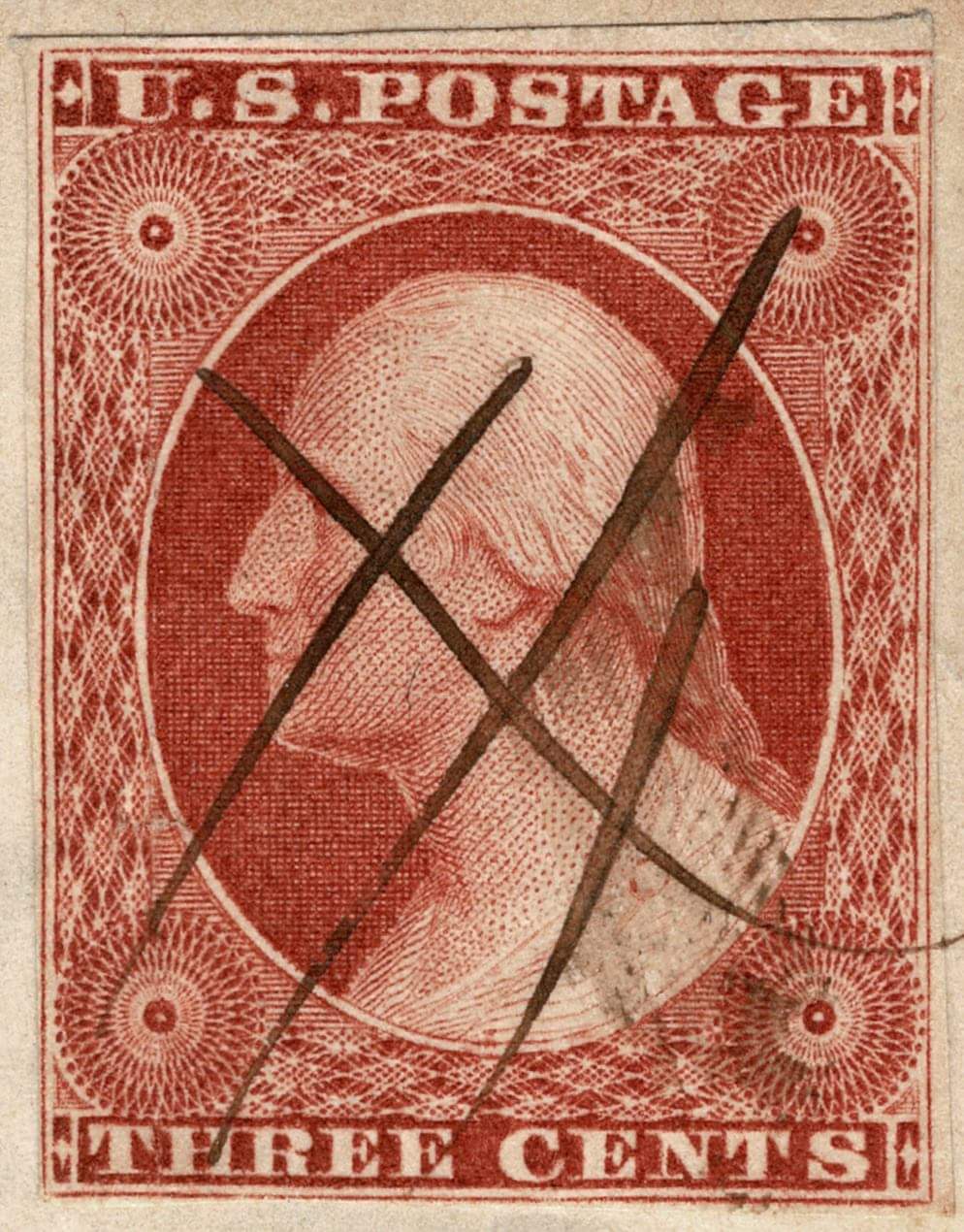
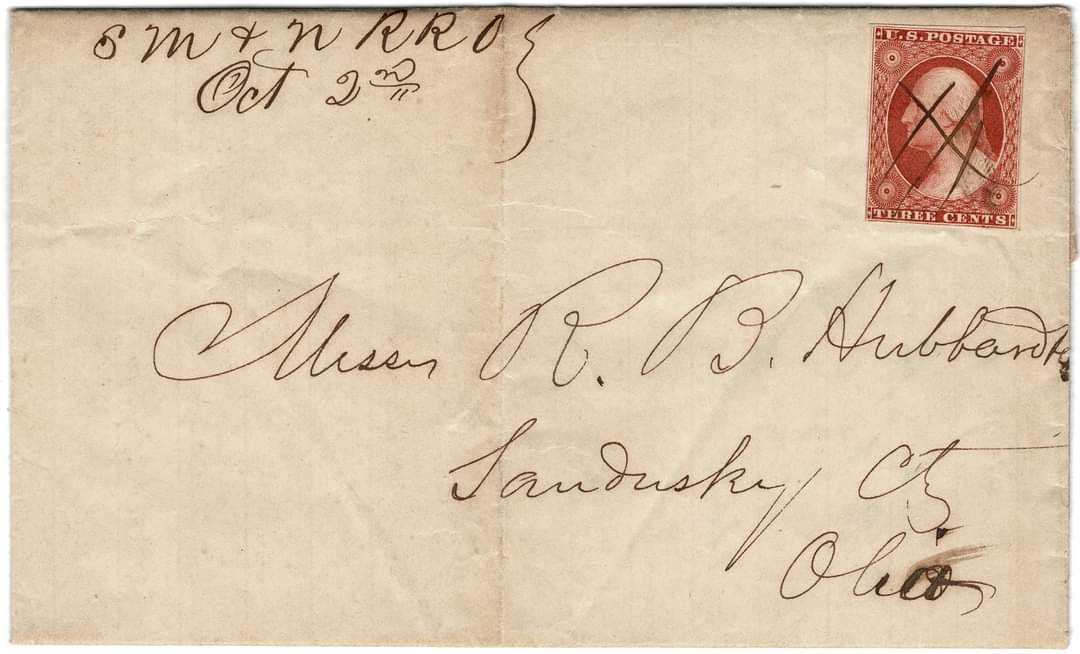
(Sandusky, Mansfield & Newark Railroad) "S M & N RR O, Oct 2". Manuscript route agent marking with matching manuscript cancel tying this 3¢ orange brown (Scott #10A), with 4 full margins (to just touching), on a folded letter datelined "Mount Vernon (Ohio) Oct 2nd 1851" Vertical file fold, F.-V.F. and rare. Towle's listed No. 567-M-1.
.
Addressed to:
Messr R. B. Hubbard & Co.
Sandusky City,
Ohio
.
In the auction listing, information taken from Hugh V. Feldman, it mistakenly says:
.
"Put onto Route 9142 to be carried 91 miles north to Sandusky."
.
When I checked in Feldman's book, "U.S. Contract Mail Routes by Railroad (1832-1875)", pages 644-645, he mistakenly lists this cover as being dated in 1857. An easy enough mistake if you look at the way the date reads on the letter inside. But, having collected these covers long enough, I am aware that 1851 often looks like 1857. That's just the way the ink slurs from the top of the 5 to the top of the 1. It looks like a 7. Easy enough to mistake. (Check the comments section of the original post on my personal facebook page by clicking on the cover image and then clicking on the comments, you will see the interior letter)
.
Route 9142 was commissioned from 1856 to 1860. This letter wasn't sent at that time. It was sent in 1851.
.
Route 2165 was commissioned from 1848-1852. This letter travelled during that time period, so on Route 2165.
Feldman is a specialist, don't get me wrong. His understanding of railroads and steamships and the various route agent markings is second to none. Remele and Towle would be impressed at the expansions that he has made to their work. He certainly stood on the shoulders of these giants, and reached for the sky, but none of us is perfect.
.
Let's circle back to the additional information that Feldman gives us:
Feldman notes that Route 2291 was the first contracted mail route – From July 1846 to June 1848, 6 times per week this train went the 61 miles From Mansfield to Sandusky City. The compensation was $2,050 per annum. (Technically, until August 7, 1846 the route only went 39 miles. After that date, the wooden rails were replaced with iron rails on the old Monroeville to Sandusky line service and then the route expanded to the full 61 miles)
.
The second contracted route, 2165, was From July 1848 to June 1852, 6 times per week this train went the 61 miles From Mansfield to Sandusky City. The compensation was $5,229 per annum.
For the July 1848 contract, the Mansfield & Sandusky City Railroad bid $3,000 per annum and the post office countered with, "Offer company $50 per mile per ann. Between Mansfield and Monroeville (45 miles) and also $50 per mile per ann. Additional on No.2296 Mansfield to Newark (63 miles) for the conveyance of the Great through mails for Toledom Chicago, Detroit and beyond. Provided that the company run by such schedules as may be fixed upon by this department. One seventh of the above to be deducted for Sunday service omitted." This resulted in an increase of pay to $4,544 per annum for the final 6 months of the contract.
.
In 1845, the Columbus and Erie Railroad was incorporated and completed 63 miles of track from Newark north to Mansfield by 1850. The post office contracted this route (2296) commencing December 1, 1850. It is probable that the mail cars started travelling through between Newark and Sandusky as of that date.
In late 1851, the road was leased to the Mansfield & Sandusky R.R. for 10 years – and they took over the contract. It is probable that from that day on, they ran the full 124 mile line between Sandusky and Newark – via Mansfield.
.
This explains the history of the routes that existed when our folded letter travelled in late 1851.
.
Feldman continues to explain that ….
.
"Two route agents were appointed on January 1, 1851 being Charles Ruggles and Charles W. Parker. The line continued to have two route agents operating on it through 1872. Two date stamps worded "SANDUSKY & NEWARK R.R." (Towles 567-C-1) and "SANDY & NEWK R.R." (Towles 567-D-1) are recorded as well as a manuscript "S. M. & N. R.R. O." of January 1852. The author has a second form of the manuscript notation of 1857 (Figure OH14)"
.
This is where his mistake shows up. Figure OH14 shows the cover at hand. And Feldman's description says "Figure OH14. Folded letter sheet dated "Mount Vernon Oct 2nd 1857" addressed to Sandusky and put on Route 9142 to be carried the 91 miles north to Sandusky. In the absence of the route agent's date stamp he endorsed the letter "S M & N R R O / Oct 2nd."
.
I will include the images of the other two Route Agents' Circular Date Stamp markings [Towles 567-C-1 (Remele S1-a) and Towles 567-D-1(Remele s1-b)] in the comments section of this post, but first –
.
Remele lists these other two markings as follows:
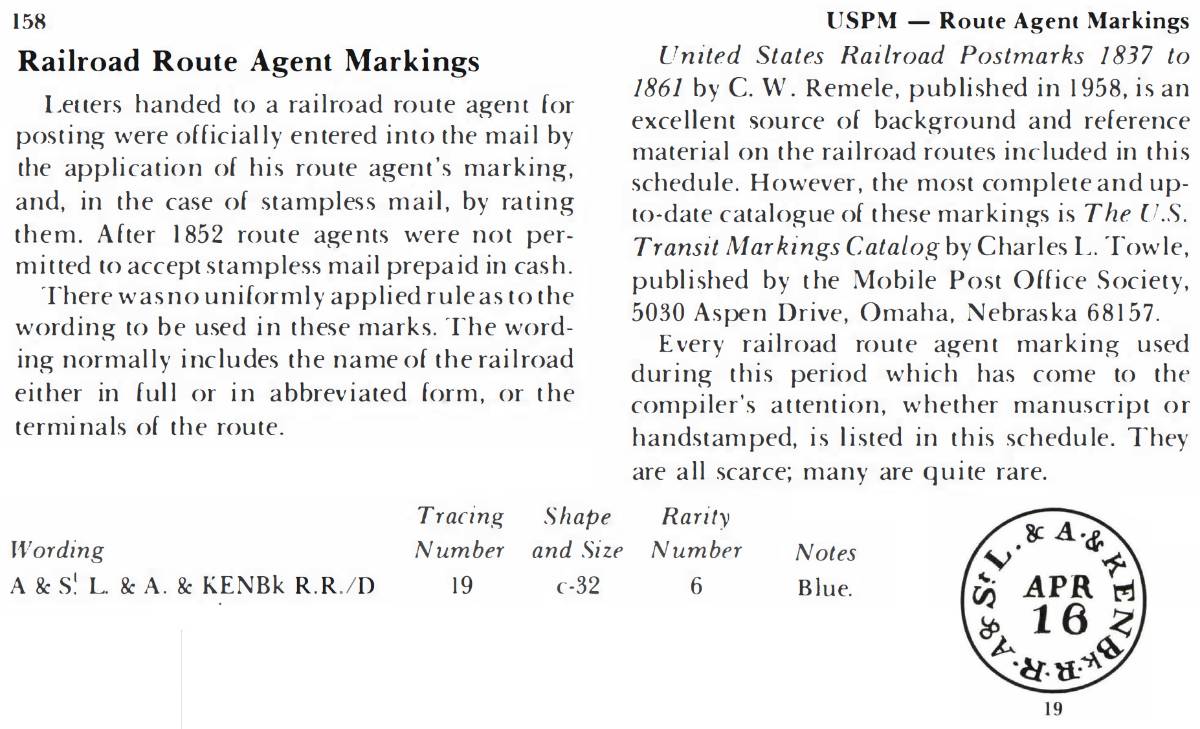
S1-a SANDUSKY & NEWARK R.R. 33mm Black, blue- 1851-1857
S1-b SANDY & NEWK R.R. 29.5mm Black – 1851-1857
.
Remele notes, "The blue listing of S1-a is from Dr. Chase's list as I have no other record of that color. This is another can be named either a terminal marking or a short name marking, as the railroad was the Sandusky, Mansfield, Newark."
.
Remele also notes:
.
Monroeville, O. to Sandusky 16 miles 1844-1845
Mansfield O. to Sandusky 61 miles 1846-1850 & 1851-1855
Sandusky to Newark, O. 124 miles 1856 & 1857-61
.
Remele remarks that "Route agent service began as early as March 1852, and perhaps earlier.
S1-a is rare, S1-b is extremely rare.
.
(Feldman's research, stated above, showed that two route agents were hired on Jan. 1, 1851)
.
Remele does not list the manuscript marking.
.
Feldman mentions Towle's January 1852 manuscript marking – and mistakenly concludes that the one at hand was from seven years and ten months later – when it was in fact 3 month prior to the Towles example.
.
Towle's listing:
.
567-M-1; S-M & N/ R R O, manuscript, 2 lines, ink, 1852, VI (image in comments section) shows a manuscript marking for this line from 1852 (Jan 31?) and is presumed to be the listing Feldman mentions.
.
The marking at hand does not match that handwriting and is also presumed to have been made by the other Route Agent, Charles. (The first two route agents were both named Charles – we don't know which one was which, but they were not replace until 6-7-1853 (Charles Ruggles) and 6-19-1853 (Charles W. Parker))
.
*****
THE LETTER:
Mount Vernon Oct 2, 1851
Messr R B Hubbard & Co.
Please send me
By the earliest (possible) train possible
Twelve hundred feet of flooring (pine) ready
Worked. Six hundred feet such as
You can afford at $1.60 per hundred
And six hundred of such as you can
Afford at $1.80 per hundred. Also send
Me three thousand lath for plastering
All to be paid for here on delivery
I will pay the freight here.
Send to care of Mr McQueen (?)
Agent for the R road. I shall probably
Desire to purchase about two thousand
Feet more of the latter named grade
Of flooring provided you can wait for
One half the pay until June next
On getting good security in your own
Neighborhood. Please answer this on
receipt immediately & inform me when
you can forward the stuff now ordered
and what you can do on my last proposi-
tion Respectfully yours in
Matthew H. Mitchell
*****
The sender:
Matthew H. Mitchell shows up in the 1850 Census as being a 41 year old Lawyer who was born in Ohio, his apparent wife, Anna M Mitchel was 33 and had been born in Ireland. Residing with them were Margaret Smith, 18, also born in Ireland and what appear to be two sons and a daughter – Henry Mitchell, 12, M. Edward Mitchell, 7, and Mary R Mitchell, 9.
.
Matthew lists real estate valued at $8,000.
*****
The town sent from:
Mount Vernon, Knox County, Ohio was a thriving community of 3,711 people in 1850.
.
Know County was named after Revolutionary War hero Henry Knox, who was immortalized on an 8c, 1985 US Postage Stamp in the Great Americans Series (Scott #1851)
*****
The addressee:
.
During the mid-1850s the firm of R. B. Hubbard and Company, which included Connecticut-born entrepreneurs Langdon Hubbard, his brother Watson, and cousin Rollin B., built a steam-powered sawmill on Willow Creek. The company town they developed was named Huron City in 1861. A horse-drawn tram carried the mill's products to a nearby dock in Lake Huron for transport to the firm's lumber yard in Sandusky, Ohio.
*****
The town addressed to:
.
Sandusky is the county seat of Erie County, Ohio. "Sandusky" means "at the cold water" in Wyandot.
.
Founded in 1817, Sandusky originally was called Portland. In 1838, the Ohio government created Erie County and established Sandusky as the county seat.
.
Sandusky grew quickly. By 1846, approximately three thousand people resided in the town. Two railroads served the community, and it was an important harbor on Lake Erie, making Sandusky an important economic center.
.
In 1846, Sandusky merchants exported 843,746 bushels of wheat. The town consisted of numerous stores, two printing offices, two machine shops, two banks, six churches, one high school, and several iron furnaces. During the 1840s and 1850s, Sandusky also was an important stop on the Underground Railroad, with many residents assisting fugitive slaves in their search for freedom by transporting the African Americans to Canada.
Stan Shepp





 Posted 09/08/2022 8:21 pm