Hi banknoteguy --
Quote:
Is the quality/sharpness of the impression not a factor?
YES -- the quality and sharpness of the impression is definitely a factor -- but it is one that involves many variables and is very difficult for me to articulate in words. That said, I will try my best with a couple of additional comments on this subject:
-- Regarding "impression" -- if you have not already done so, you should read the chapter in the Chase book on "Varieties of Impression" -- which provides a great overview of all the various factors impacting the overall impression of a printed stamp -- none of which have anything to do with the impact of the re-entry process when plate 2E became plate 2L -- but all of which can significantly impact the "quality and sharpness" of an impression.
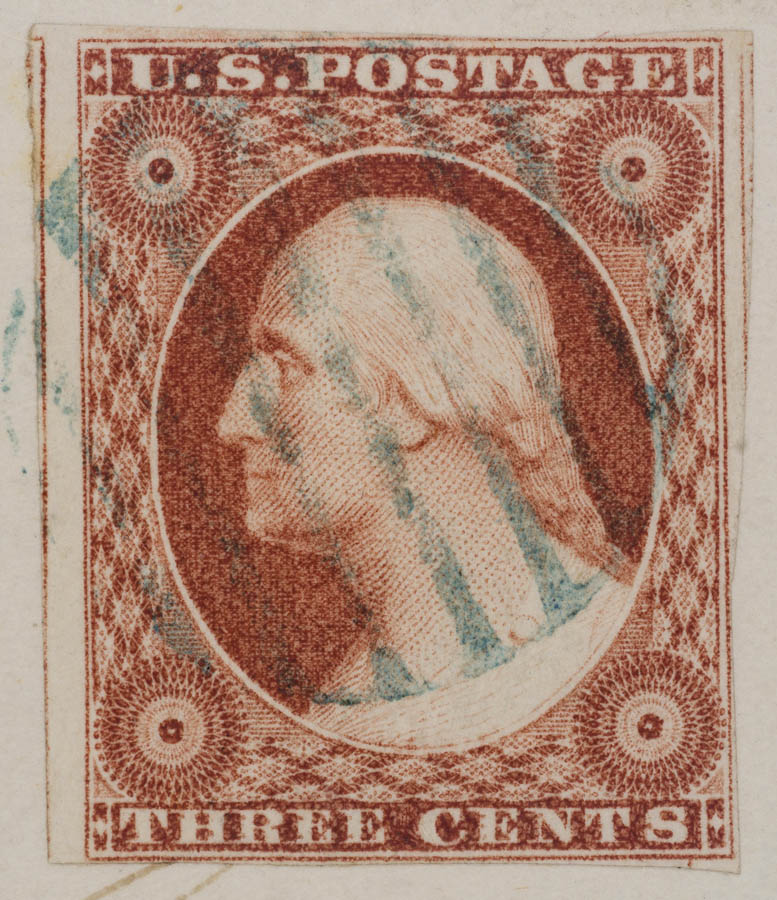
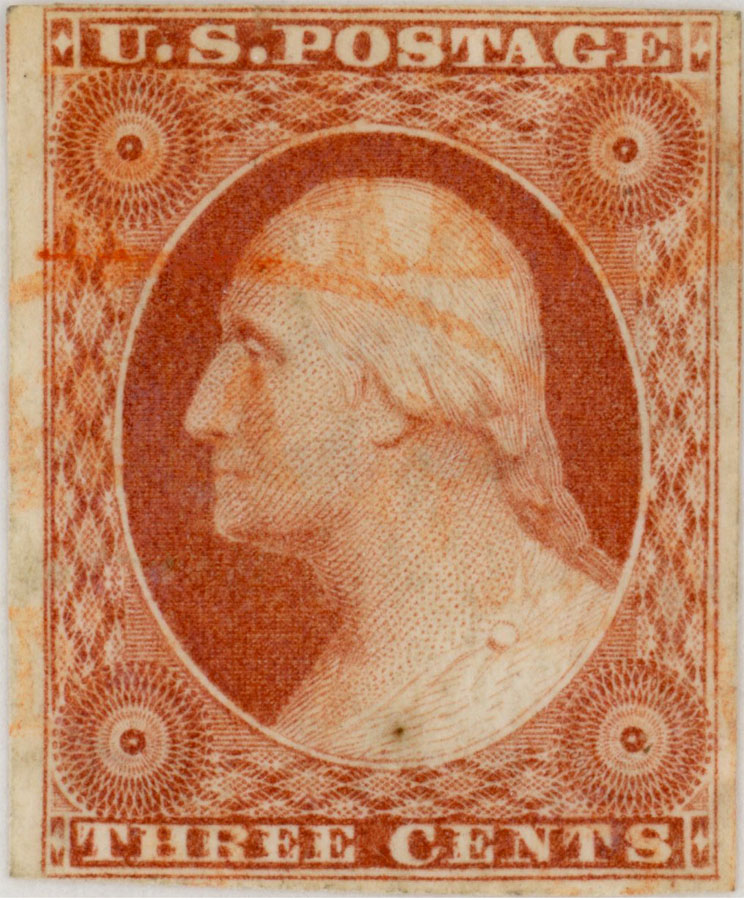
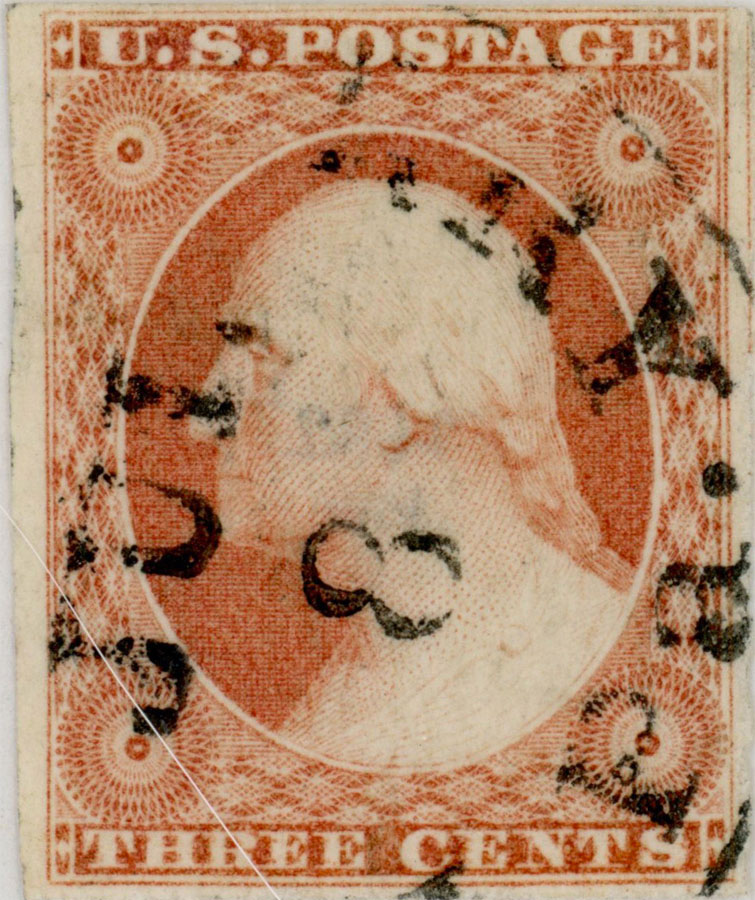
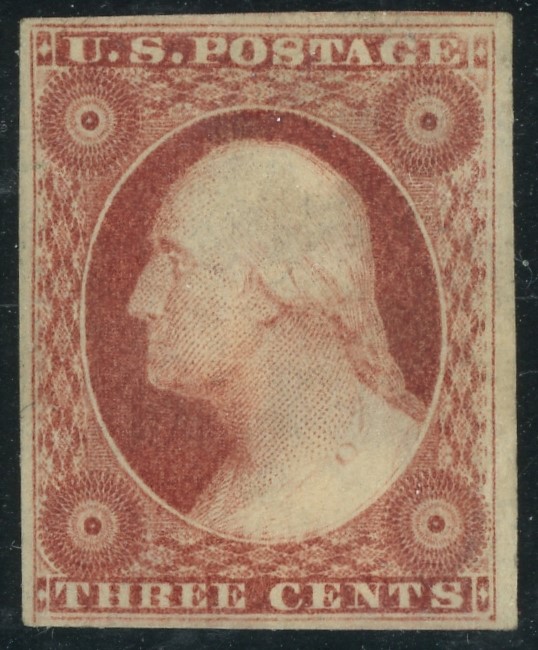
-- Next -- with the Chase comments on "variety of impression" in mind -- lets assume that you had 2 stamps side by side with identically perfect impressions -- and from the same position on plate 2 -- one being from the early state and the other being from the late state, and presuming that the position was one where there was no additional touching up by hand -- then the only difference between the two -- aside from the color -- would theoretically be the impact of the re-entry process. This is where experience of studying many stamps over a long period of time comes into play -- and this is where I just don't know how to best articulate such experience into written words. When it comes to "sharpness of impression", some of the signs of re-entry that I look for are a very subtle "fuzziness" of the FL's -- which sometimes will also show a very short dash or two of a teeny miniscule doubling. Another thing that I sometimes look for are fatter rosette dots which sometime result from the re-entry process. Again -- all of these things can be very subtle -- and even with experience can be hard to see -- but as you gain more experience -- the subtler signs of re-entry will become more apparent.
-- Now let's really confuse things -- same scenario as above -- 2 stamps side by side -- and from the same position on plate 2 -- one being from the early state and the other being from the late state, and presuming that the position was one where there was no additional touching up by hand -- BUT -- this time the Early stamp is a late printing impression made just before 2E was taken out of service -- and the Late stamp is an impression from the first printing when 2L was initially placed into service. Now things get complicated because we are dealing with differences compounded by factors beyond just the re-entry -- including differences in the quality of the impression and plate wear. Again -- this is where experience comes into play in relying solely on the impression and the sharpness factors.
In conclusion -- YES -- sharpness and impression are factors -- but practically speaking, as I mentioned in my prior post, the extensive re-entry process when plate 2E became plate 2L resulted in most all of the recut lines, double transfers, etc., etc. showing much less distinctly on the late state of the plate -- and on some positions, the recutting on the early state of the plate became so badly blurred as to be indistinguishable -- or had disappeared all together on the late state. So, if you have a stamp where based on the color and overall impression you are on the fence as to early versus late state of the plate, I would start by looking at the strength of the horizontal recut across the top of the URDB -- which on 2E is always clearly defined -- and on 2L almost always became blurred to some extent due to the extensive re-entry process. Next, I would look at the TLB and the inner lines -- which on 2L are usually weaker than on 2E. Then any other recuts, the frame lines, etc., etc.
I could go on for another 10 pages on this subject -- so I will stop my rambling here -- but I think the above is the gist of the answer to your question about the using the "quality and sharpness" of the impression to separate plate 2 stamps between early and late states.
As an aside, if you have a stamp that plates to 2 Late -- and you are convinced that it is OB in color -- then you might just have one of the scarce to rare plate 2L orange browns

Happy to discuss further if you like.
Regards // ioagoa





 Posted 07/02/2020 10:02 pm