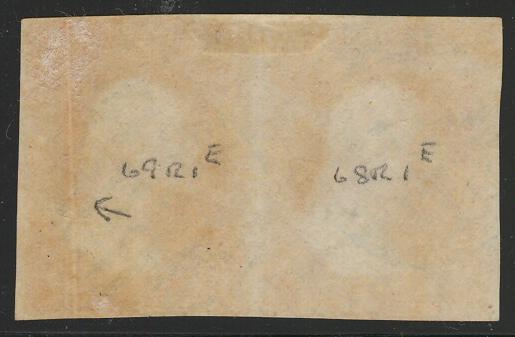
Hi stampcrow --
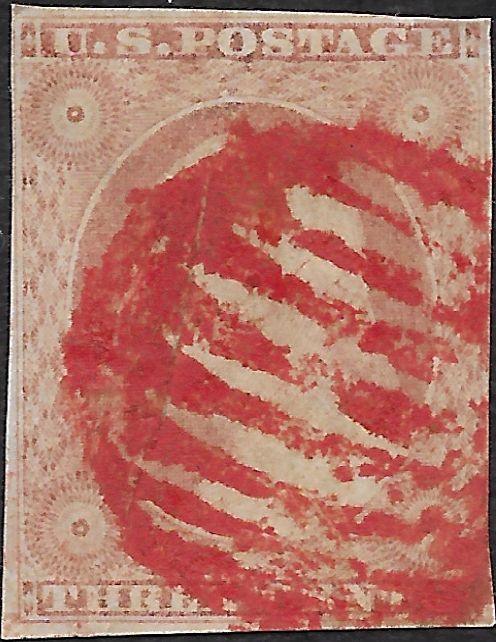
Regarding the state of the plate on your 73R1 as being "early" or "intermediate" -- after consulting with a fellow plater -- and after spending considerable time studying this stamp -- unfortunately I am going to have to decline to opine on whether "E" versus "i". That said, I am 100% confident that your stamp is Scott #10 -- position 73R1. A little "color commentary" on the subject is as follows:
-- As I mentioned yesterday -- when it comes to plate 1, differentiating between the early and intermediate states of the plate can be frustratingly difficult.
-- On your stamp, due primarily to the combination of scan resolution (which is limited by the SCF file size 200 kb maximum) and cancel obstruction (primarily covering much of the BFL) -- it is not possible to determine the state of the plate -- and even with the stamp in hand, making such a determination may not be possible. Thus, at this point in the analysis, anything I say would be an "educated guess" at best.
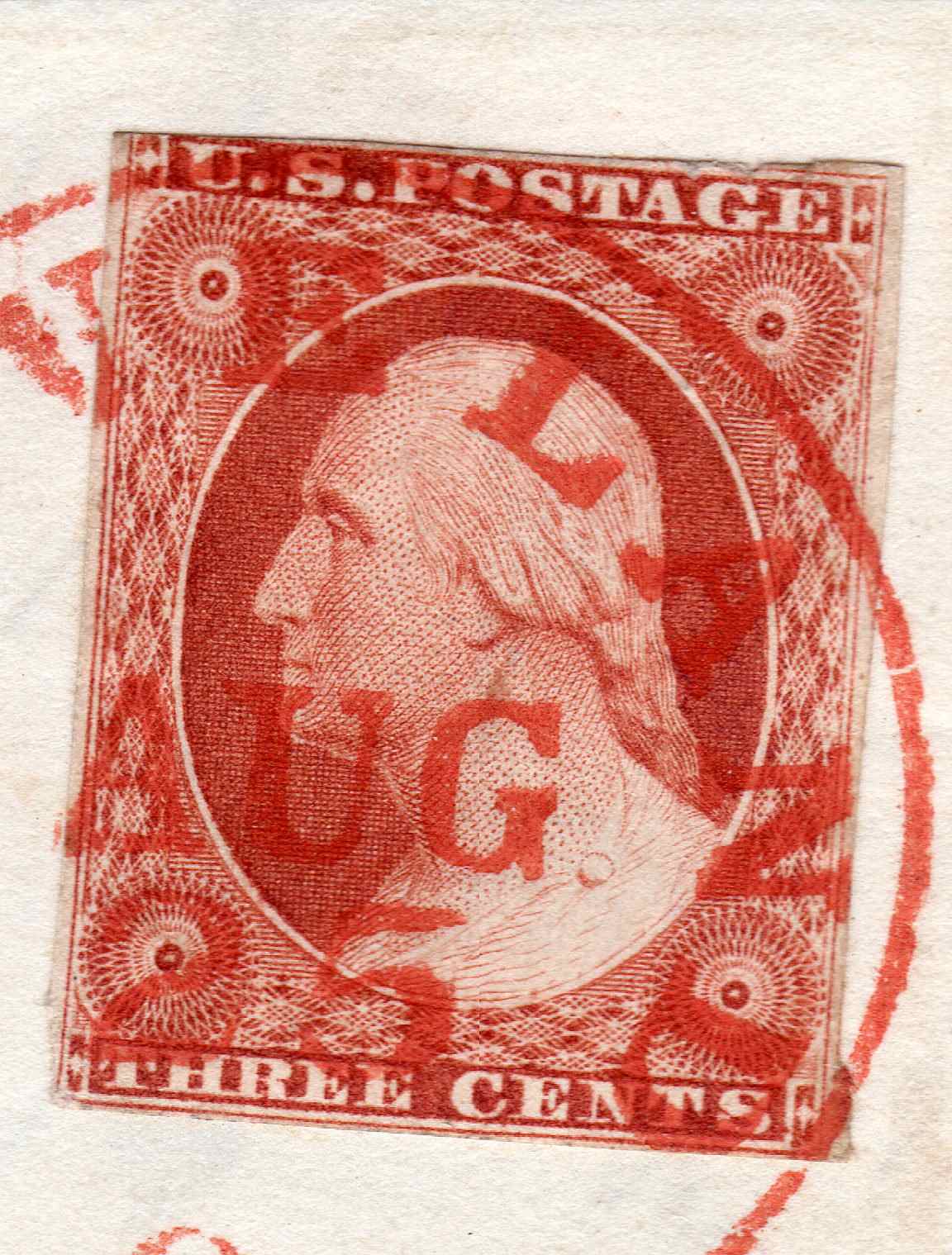
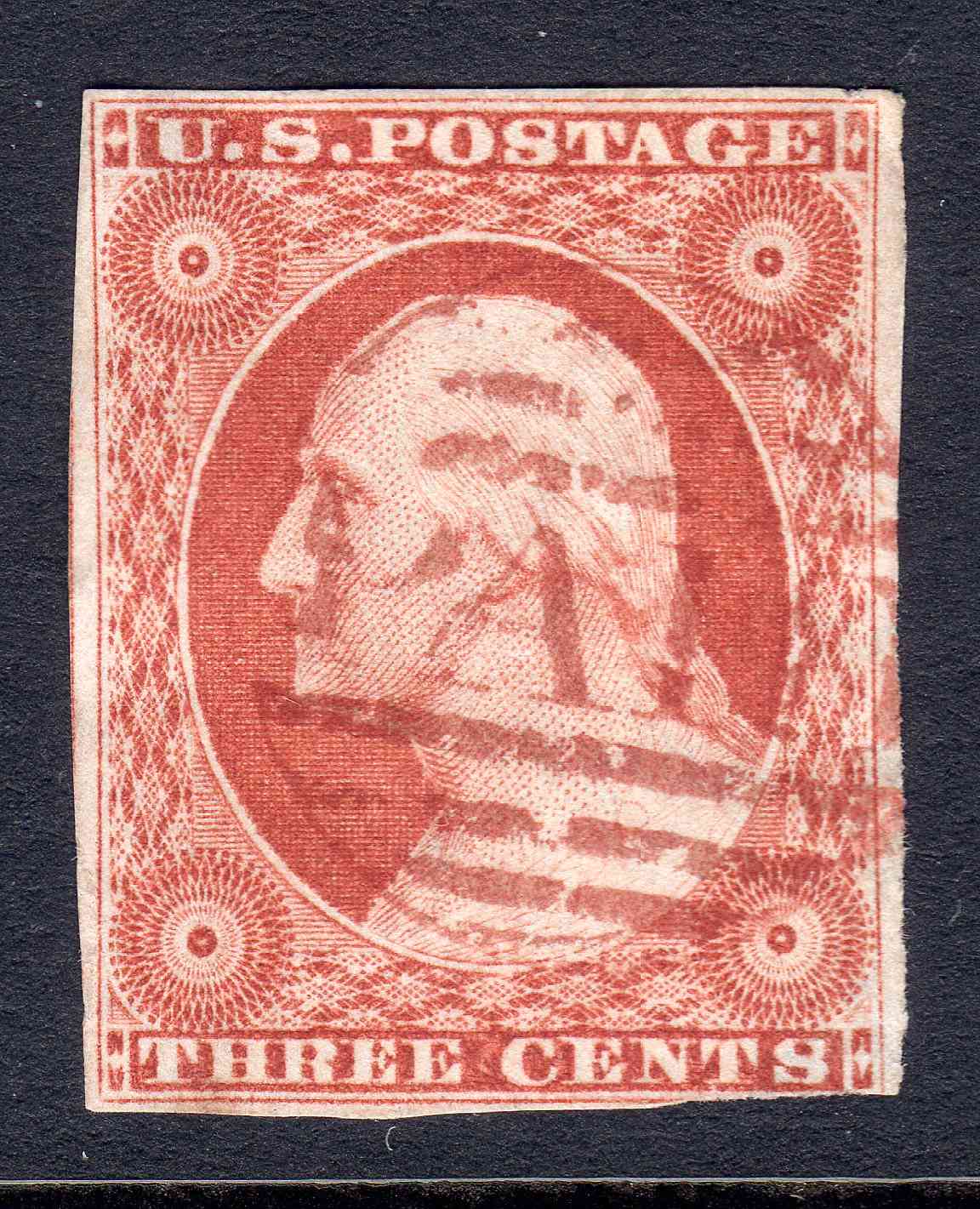
-- Further complicating the analysis is that the Chase photographic copy of 73R1i is actually a worn plate printing of 73R1E (as per the USPCS website listing of Chase photo errors) -- in other words, the Chase photos contain 2 copies of 73R1E and none of 73R1i. Link to the USPCS web page listing the Chase Plate Reconstruction Photographic Errors is here:
https://www.uspcs.org/?s=chase+photo -- To add another layer of confusion for anybody trying to figure all of this out, is that the O'Doherty / Lund stamp posted as 73R1E on stampplating.com is actually 73R1i -- in other words -- the O'Doherty / Lund stamps posted up to stampplating.com contain 2 copies of 73R1i and none of 73R1E.
-- Very generally speaking -- the only difference between the Early and Intermediate states of Plate 1 were caused solely by re-entry -- so the only way to differentiate between the two -- short of a DT or a different relief being used -- is to look for the very subtle signs of re-entry -- (for example -- fuzzy and thicker FL's, fatter rosette dots, etc.). That said, the analysis can be extremely challenging due to differences in inking and impression -- most notably for example if one has a worn plate printing from 1E and a very early printing impression from 1i.
I will wrap this up by again saying that I am 100% confident that your stamp is Scott #10 -- position 73R1 -- but decline opinion as to the state of the plate being E or i.
Regards // ioagoa
PS -- if you want to contact me via "private message" through SCF -- and could send a high resolution 1,200 dpi scan of the stamp -- I will take another look and let you know if I see anything that would tip the scales in either direction.





 Posted 07/13/2020 10:45 pm