Hi classic coins, mootermutt987 and moyock13 --
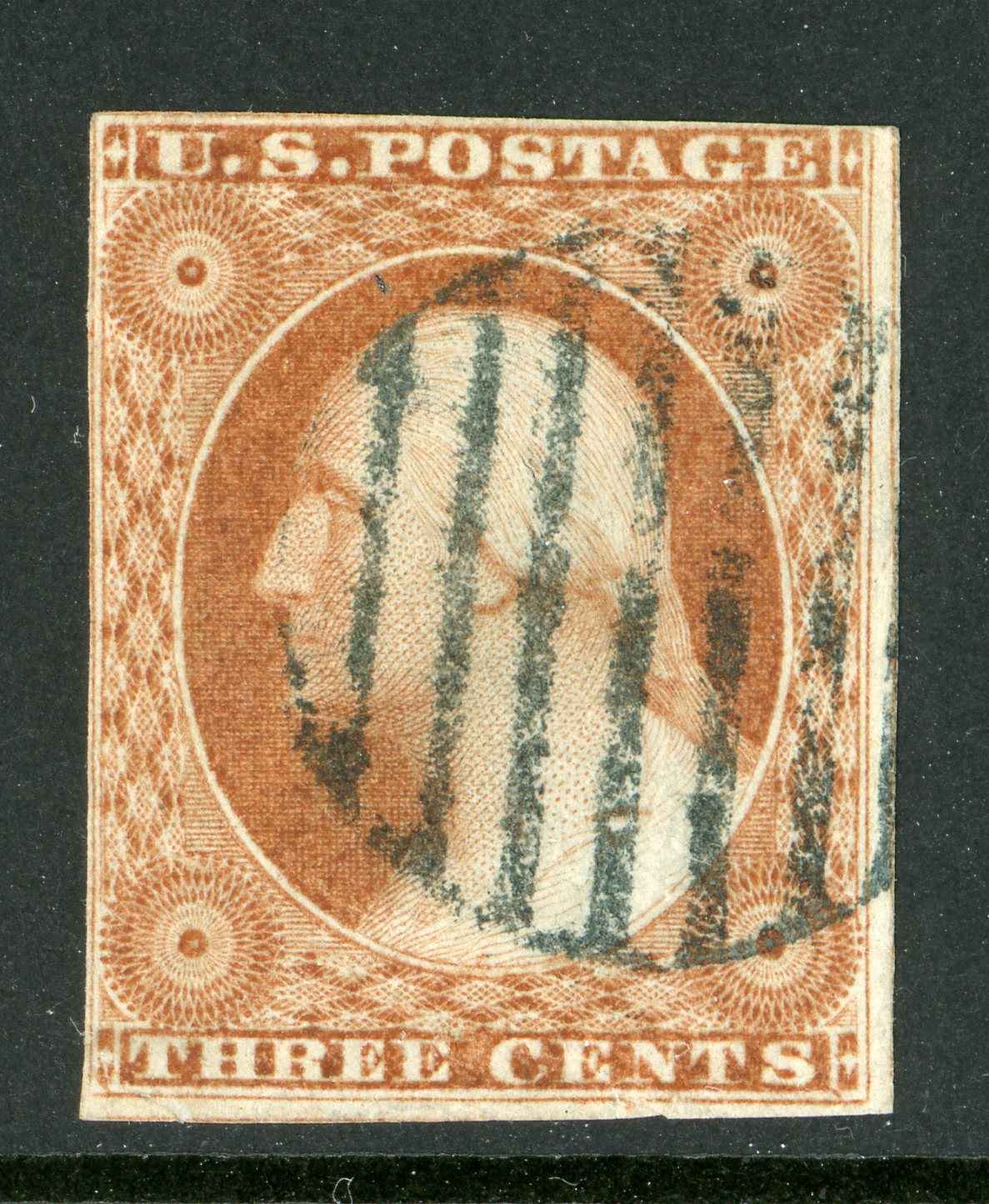
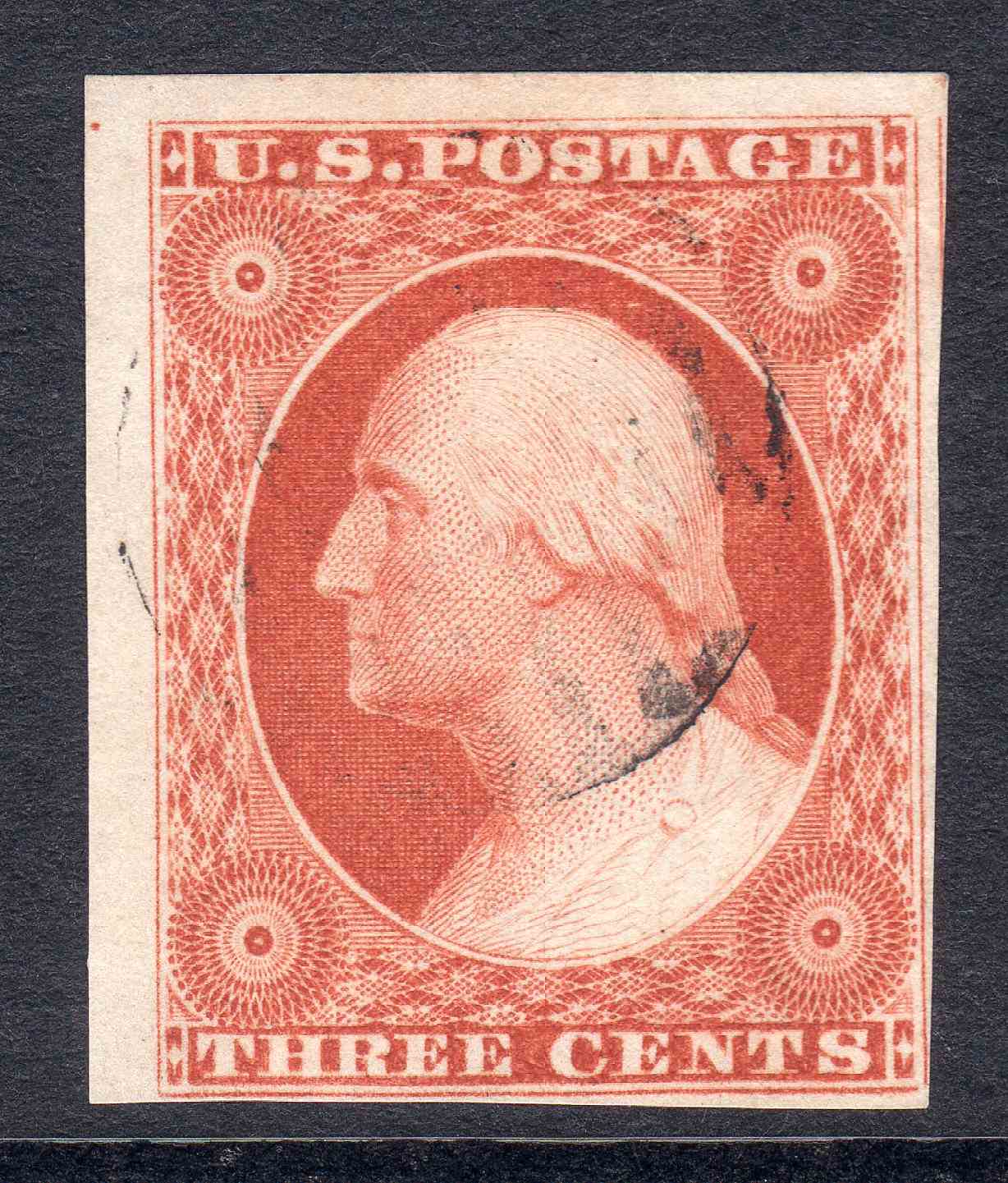
Thank you all for the compliments on the 1R1E -- too bad the stamp has a pressed out crease at upper right -- otherwise it would be a major auction quality stamp -- but alas -- it is a plating copy -- (albeit a very nice one that I was able to pick up for a fraction of catalogue value because of the crease!).
Mootermutt -- you wrote --
Quote:
I wonder why some lines were recut, while others on the same impression were left alone. Even when the un-recut ones were virtually invisible. On your example, above, why recut the right inner line, but not the left inner line?
To answer the question specifically about plate 1E -- as you stated -- the real reason is anybody's guess -- and is pure speculation at best. But one line of thought is that we know for a fact that plate 1E was the first plate for the 3-cent denomination to be put into actual printing production for the stamps issued on July 1, 1851. We also know from the literature and from a few of the archived TCC documents that have been found -- that TCC had a very difficult time with the production of the 1851 issue -- especially the 1c and the 3c denominations. Consequently, the answer to the question of "why some positions got recut and others did not" -- might well be as simple as TCC was running out of time to make their delivery commitment to the USPOD -- so some TCC front line manager just made a business decision to abruptly stop the recutting and clean-up work and start the printing presses?
Now -- if the preceding is true -- and I have no idea if it is -- then it begs the next logical question which is: From an operational production management perspective, can we look at the status of the recutting on plate 1E at the time that it "abruptly" went to press -- and in doing so, can we discern any type of pattern that might emerge based on the recutting that was done versus that which was not?
For example, we know that all 4 outer frame lines on all 200 positions were recut on plate 1E -- but the recutting of the inner lines is somewhat random -- implying, perhaps, that all 4 outer FL's were recut before starting on the IL's? However, there is also the question of how did the other so called "normal recuts" (e.g., the triangles, etc.) fit into the overall production process.
In any event -- we also know that on plate 1E, the great majority of the stamps on the left pane show 1 or both inner lines recut -- versus the majority of stamps on the right pane show no inner lines. For some reason, also still unknown, these inner line recuts can be for the full length of the IL, part of the length, and in extreme cases only a tiny fraction of the length.
So what does all of this mean? I don't know -- but, generally speaking, the recutting work was clearly more complete on the left pane versus the right when the plate was put into printing production. That said, it is only us collectors who think in terms of "panes" (of 100), but no doubt the folks at TCC thought in terms of "plates" (of 200). Still, if for some unknown reason TCC wanted to finish all of the recutting on the left pane before they started on the right pane -- there are a good number of positions on the left pane that you would think required more recutting to clean them up before moving on to the right pane?
In any event, on the surface, I see no discernible pattern that can help decipher in what order the recutting of the the FL's, the IL's, and all of the other so called "normal recutting" (e.g., the triangles) might have taken place?
I was corresponding with a fellow plater on this subject yesterday -- who raised another interesting line of thinking that might go something like this:
I think if you read Baxter's book, Printing Postage Stamps by Line Engraving, he describes how they engrave a die -- which is basically that you push a burin forward to incise a line.
For many 3-cent students, the conventional wisdom and general thinking of recutting frame lines and inner lines has been that the engraver did one stamp at a time, then went on to the next. But based on the recutting that was done on plate 1E, this way of thinking becomes very questionable.
For example -- say an engraver had a plate of 200 that was just created sitting on his workbench. He would also likely have a printed proof sheet to see where clean-up (i.e., recutting) was needed -- and perhaps even marked up the proof sheet accordingly. Any recut lines he now engraves are made by pushing the graver forward and away from him. This makes sense for for "vertical" lines (i.e., RFL, LFL and both IL's), but he would have to rotate the plate 90 degrees for the horizontal FL's (i.e., BFL and TFL). Get the picture?
So the engraver might recut (say) the side frame lines and inner lines, position by position -- which could be done either by horizontal row, or vertical column. Either way, it would seem that the engraver would want to minimize the number of times that he would have to rotate the plate. Could the engraver recut a whole vertical column of 10 stamps from top to bottom without moving the plate (i.e., rotating it 180 degrees)? Even more questionable, is could the engraver do a whole horizontal row of 20 stamps (again, think "plate of 200", not "pane of 100") without rotating the plate? I don't know.
In any event, since you "push forward" a graver to make a recut, once the side FL's and IL's were done, to do the top and bottom FL's the engraver would have to rotate the plate 90 degrees. I presume that rotating the plate would have been a nuisance for the engraver -- and would have slowed down the production process -- and thus, TCC would want to minimize the number of times that this "rotation" needed to be done, so perhaps TCC attempted to do all the recuts of one direction at the same time -- then rotate the plate and follow through with all of the recuts going in the other direction?
Then again, there those other so called "normal recuts", such as triangles -- where the engraver would want the plate in the same orientation as for the side FL's and IL's.
Anyhow, your question got me thinking -- and I don't know if any of the foregoing is relevant -- but one thing is for sure -- and that is that whatever happened at TCC back in 1851 with regard to how the recutting was actually done in a business production capacity (i.e., where time is money -- and efficiency and increased productivity are the goals) is still an unsolved mystery -- but obviously, a few years later when they got to plates 4, 6, 7, and 8 they decided that recutting the IL's wasn't worth it and abandoned that part of the process entirely -- probably driven by a cost / benefit analysis?
Enough of my rambling -- and curious if anybody else has any other thoughts or ideas on this subject?
Regards // ioagoa





 Posted 09/29/2020 11:29 am