| Author |
 Replies: 831 / Views: 75,861 Replies: 831 / Views: 75,861 |
|
|
|
Pillar Of The Community
United States
3520 Posts |
|
|
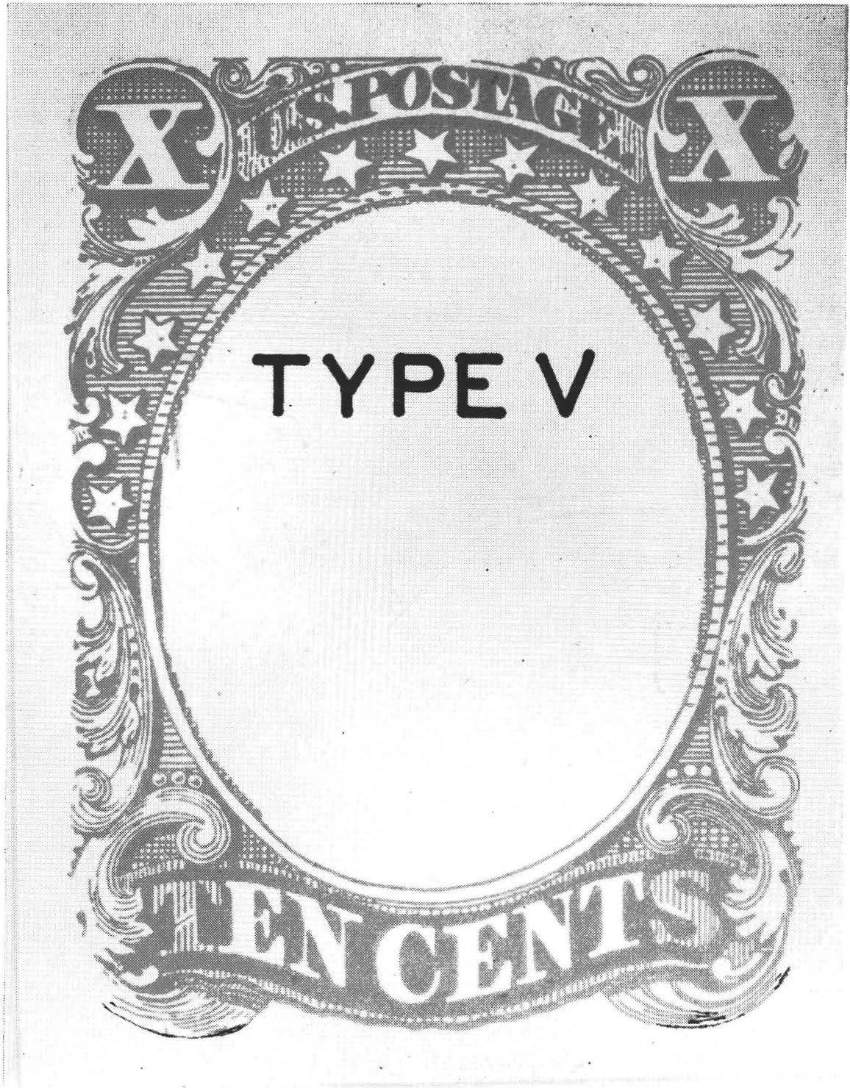
Here is a diagram of the 10c stamp which I had previously uploaded, in case it helps the discussion on reference points. I'll defer to caper or dudley to explain.  |
Send note to Staff 
|
|
|
Pillar Of The Community
United States
939 Posts |
|
|
Pillar Of The Community
United States
3520 Posts |
|
|
Pillar Of The Community
United States
1817 Posts |
|
|
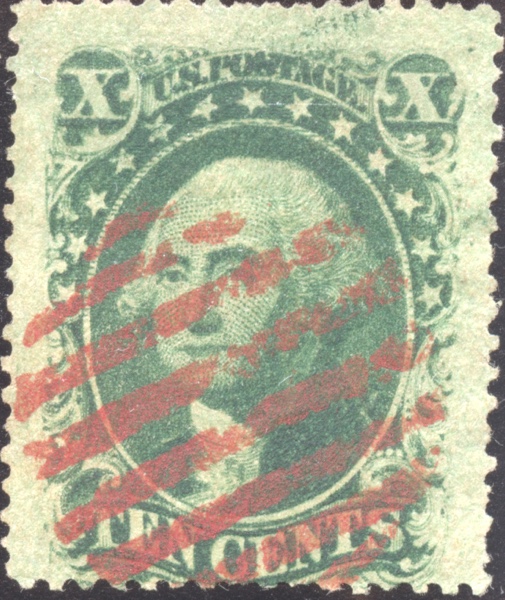
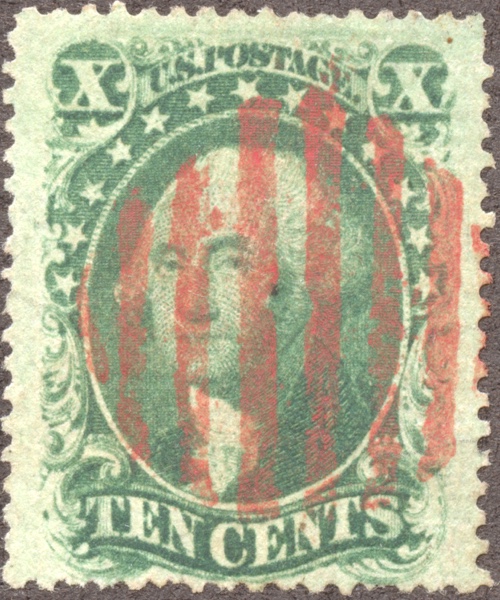
moyock, if you are asking what to look for to identify Type V (Scott #35), then check to see if there are three pearls on both sides attached to the bottom plumes (see the reference diagram posted by txstamp above). If there are any less than six full pearls altogether then you have a Type V. All the stamps you show are Type V. The top one appears to be position 10R2 (Relief A top row: guide dot at UR. See attached copy of Neinken drawing for this position); the bottom one does indeed look like 91R2. You should get access to Neinken's book on the Ten-Cent Stamps of 1855-1859. The USPCS Electronic Library makes it available.  |
|
Send note to Staff
|
|
|
Pillar Of The Community
United States
939 Posts |
|
|
Pillar Of The Community
United States
939 Posts |
|
|
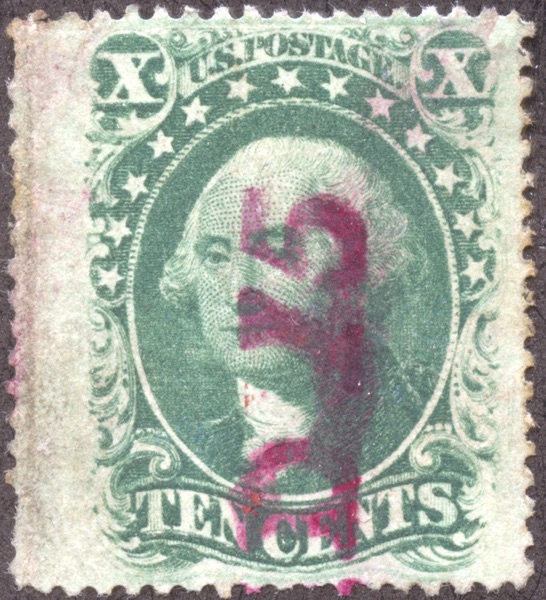
Picked up what I think is an early 26. Chase says that most of the stamps printed in the first 6 months of 1857 were imperforate. The description of the stamp said "trimmed 26" and it does have similar characteristics for a 26. The give away for me was that there is another partial stamp, a centerline and no perforations between. Unfortunately a good portion of the bottom of the stamp is trimmed away. What do you think?  |
|
Send note to Staff
|
|
|
Pillar Of The Community
3860 Posts |
|
|
Rest in Peace
United States
920 Posts |
|
|
Mayock- I vote poorly penfed and trimmed 26. I have a 26A much the same. |
|
Send note to Staff
|
| Edited by Caper123 - 09/07/2020 10:44 am |
|
|
Pillar Of The Community
Australia
967 Posts |
|
|
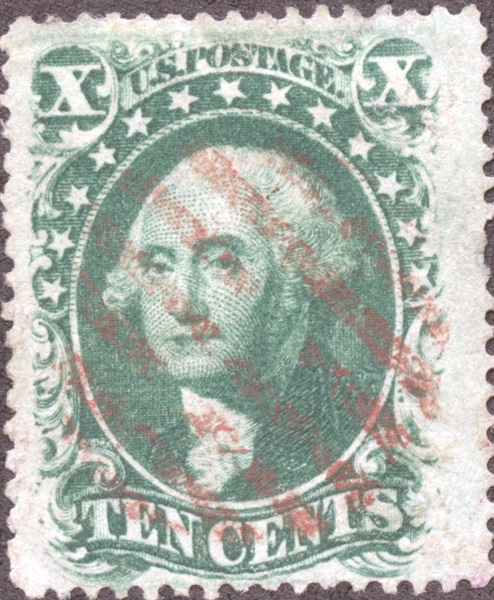
So can someone tell me what is so special about this stamp? I thought it was a 24?  |
|
Send note to Staff
|
|
|
Pillar Of The Community
United States
2555 Posts |
|
|
Not a #24. At least a #22. Perhaps a #21. I would want to plate it or have it in hand to be certain that it is a #21 but odds are it is indeed a Type III, Scott #21. |
|
Send note to Staff
|
|
|
Pillar Of The Community
Australia
967 Posts |
|
|
Pillar Of The Community
United States
1817 Posts |
|
|
Laurie, even though the right-side ornaments are partially cut away you can see that they are more complete than they would be on a #24. Also, the break in the top frame line is much smaller than is the case on #24. This is a Plate 4 C Relief, which as sinclair said produced both #21 and #22. |
|
Send note to Staff
|
|
|
Rest in Peace
United States
920 Posts |
|
|
I vote Type III (Scott 21) and though the photo is somewhat unclear it looks quite a bit like 21L4. |
|
Send note to Staff
|
|
|
Rest in Peace
United States
920 Posts |
|
|
Moyock - back to your questions about the green 10c Washingtons:
If the bottom left and right shell is complete the stamp can only be a Type I or V stamp. If it has the three pearls on both sides it is always a Type I. If it has three pearls on only one side then it is almost always a Type V. If the lower bottom plumes are incomplete then your stamp will be a Type II,III, or IV. Type IV's top/bottom or both lines rather strongly recut. There are a few other differences that one should know but I would do as Dudley recommended above and refer to the Neinken book on the 10c stamp! |
|
Send note to Staff
|
|
|
Rest in Peace
United States
920 Posts |
|
|
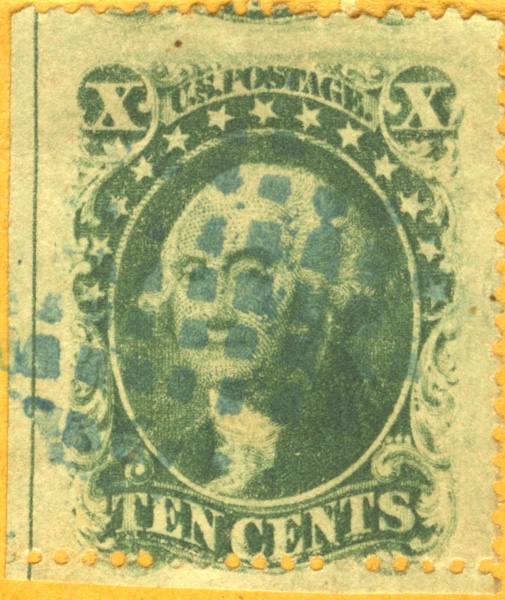
Need some help plating this stamp very recently received. Though listed as a Type V I am not convinced it is not a Va. It is not an easy one to plate. The closest I can come up with is 100L5 but I can find few to compare it to. My considerations are: 1) It has a straight right edge without any sign of perfs (small notch on top right is wear.) I'm assuming right side of left pane trimmed inside of line. 2) It has all the appearances of being an 'F' relief with the broken top and longer bottom line. 3) The right scroll has the apparent completeness of a bottom row stamp. 4) Side ornaments are as complete as the example in the 1c Franklin Archive example. I can find no identifying plate marks.  |
|
Send note to Staff
|
|
|
Replies: 831 / Views: 75,861 |
|




 Posted 08/31/2020 11:03 am