| Author |
 Replies: 32 / Views: 2,509 Replies: 32 / Views: 2,509 |
|
|
|
Valued Member
Canada
395 Posts |
|
|
Quote: Quote:
I don't believe the reason for closure affects the rarity of cancels
I do. That is exactly why I described 2 main categories of closures. I have to disagree. Reason for closure has nothing to do with rarity. Rarity is just a measure of availability. There are ghost towns in BC where the cancels are relatively common. For example, Blakeburn is a ghost town that has a rarity factor C (=closed, but is in most collections). Now, value may be affected by reason for closure. But value is not the same thing as rarity. Jan |
Send note to Staff 
|
|
|
Pillar Of The Community
6355 Posts |
|
|
Let me try this again before giving up:
1. A town is founded with a new PO, it struggles, dies off and the post closes after 5 years.
2. A town is founded with a new PO, thrives exponentially, and after 5 years the citizens get postal approval to change the name of the town.
Both show up as a 5-year DPOs in the literature, but the supply side of the cancels is quite different. The reason for the "closure" is significant to the supply. And on average, I will have to pay more for the ghost-town-DPO than for the name-change-DPO. |
|
Send note to Staff
|
|
|
Rest in Peace
7742 Posts |
|
|
The way I look at rarity is this way..
An example town say has say 100 residents, and just say each person sends out say 10 letters in a year and the P.O.is closed in say just one year, that would make 1000 letters introduced to the postal system.
1 - Now if the P.O. is say closed in one year due to postal area change – still 1000 letters.
2 - Closed because of insufficient monetary income - still 1000 letters.
3 - Closed because of Post Master death and no one to replace him/her - still 1000 letters.
I am not the smartest collector in the world, but seems that cause of change does not have affect that 1000 letter were produced on all 3 variables.
Any ideas why the closure would affect the rarity of those 1000 letters...???
Robert |
|
Send note to Staff
|
|
|
Pillar Of The Community
6355 Posts |
|
|
Robert,
You are not reading and understanding the two scenarios I propose. The first has a very few letters sent, the second has a lot of letters sent. Note that I am changing the number of residents between dying out and thriving. |
|
Send note to Staff
|
|
|
Valued Member
Canada
395 Posts |
|
|
I will also try once more before I give up. In this quote: Quote:
1. A town is founded with a new PO, it struggles, dies off and the post closes after 5 years.
2. A town is founded with a new PO, thrives exponentially, and after 5 years the citizens get postal approval to change the name of the town. you introduce something entirely new to the conversation: "it struggles" and "it thrives exponentially". These do affect rarity, but the reason for closure does not. There are lots of examples that thrive exponentially, die off and close (eg Blackburn I mentioned earlier), and there are examples that struggle and then get incorporated into a larger town. The first will be common the second will be rare. Jan |
|
Send note to Staff
|
|
|
Valued Member
Canada
395 Posts |
|
|
Pillar Of The Community
6355 Posts |
|
|
Sorry, I give up. I am just not communicating my thoughts in a way that gets through. |
|
Send note to Staff
|
|
|
Bedrock Of The Community
Australia
38679 Posts |
|
|
Opinion:
It is excellent that members advise, correct and recommend to other members, to do so, takes knowledge, effort and time.
However, I do believe we need to be cautious we do not try and force our opinion on others.
It can be hurtful, frustrating , and severely disappointing to the individual. It can alter their approach to Philately.
If a person wants to glue their stamps to a page, burn or bin stamps, they have every right, Philately is the the ultimate democracy. It is not always possible, but perhaps kindness should be our aim.
|
|
Send note to Staff
|
|
|
Pillar Of The Community
United States
875 Posts |
|
|
Pillar Of The Community
6355 Posts |
|
|
I was trying to suggest there are two broad types of DPOs, and broadly, their supply may be naturally different. I have found it true many times after 30+ years of chasing postal history. I must admit frustration that in my scenarios the constants were interpreted as variables, and the variables as constants. |
|
Send note to Staff
|
|
|
Bedrock Of The Community
Australia
38679 Posts |
|
|
Yes, I saw (and understood) the opinions of all contributors, John,
There was no criticism there.
I also noted Roberts obvious delight in constructing a list, that means a great deal to him.
I just felt we need to be cautious we do not injure enthusiasm.
|
|
Send note to Staff
|
|
|
Rest in Peace
7742 Posts |
|
|
I wish now I had not started this post....But, hey its ok.
Lets just let it just find its way down the list.
John, I still have the utmost reguard for your expertise.
I will just do it for my own personal enjoyment.
Thanks Rod222 and EdziuMM for your kind words.
Time to move on.
Robert
|
|
Send note to Staff
|
|
|
Moderator

United States
12330 Posts |
|
|
I think a lot like John. I think that way because that is how you design and develop a databases (or spreadsheet if you are just working by yourself). In other words, data is organized using lowest common denominator data (fields in a database or columns in a spreadsheet). You do this because you can always combine the fields/columns to build new views or ways to look at the data. if you do not do this, you are then required to parse and/or interpret the data when you ask certain questions. Put another way, if you start with complete, well organized data you can always get the answers you may want to ask of it. Simple example. Say you want to store data for names and addresses. Obviously you want name, street address, city, provinces as fields (or column if using a spreadsheet). Do you use one field/column for name or is it two fields/columns (i.e 'first name and last name)? You use two fields/columns because it is far easier to combine them then it is to go back and try to parse out first/last names. It is also a lot more efficient. If you ask the question, 'How many people have the last name 'Smith'?' the search is far more efficient with two fields rather than looping through a text strong searching for 'Smith' in both first and last names. Lastly, in my opinion the project Robert describes is best suited as a community, online database project. This is the most flexible, platform which supports a team effort to enter/edit data over the long term. 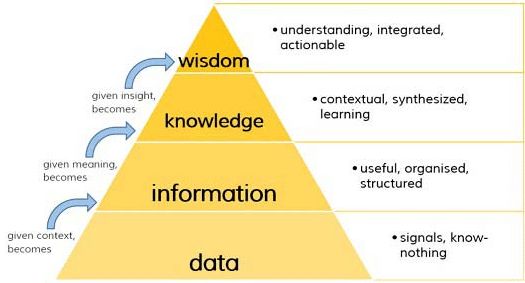 Don Edit: I will say that different folks think about things in different ways. So I am not saying that the way I think about this is the 'right' or 'wrong' way. It is a way that is well suited for the gathering, compiling, and archiving philatelic information. But there are other ways especially if a person is simply working by and for themselves. |
|
Send note to Staff
|
|
|
Pillar Of The Community
Canada
728 Posts |
|
|
Here's a damaged Map stamp with a Ghost Town Post Office postmark from NARVA ONT MR 25 99. Not much else going for this stamp. 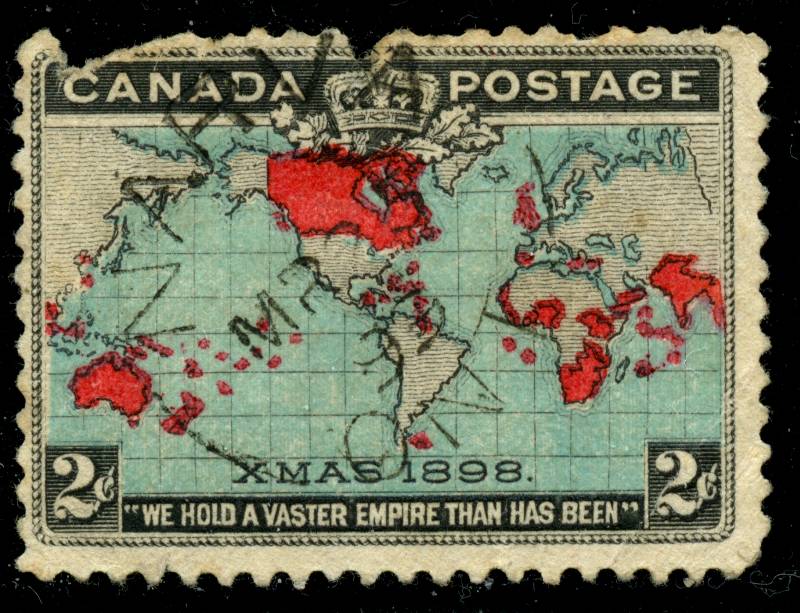 |
|
Send note to Staff
|
|
|
Bedrock Of The Community
Australia
38679 Posts |
|
|
Replies: 32 / Views: 2,509 |
|



 Posted 12/21/2020 4:25 pm


