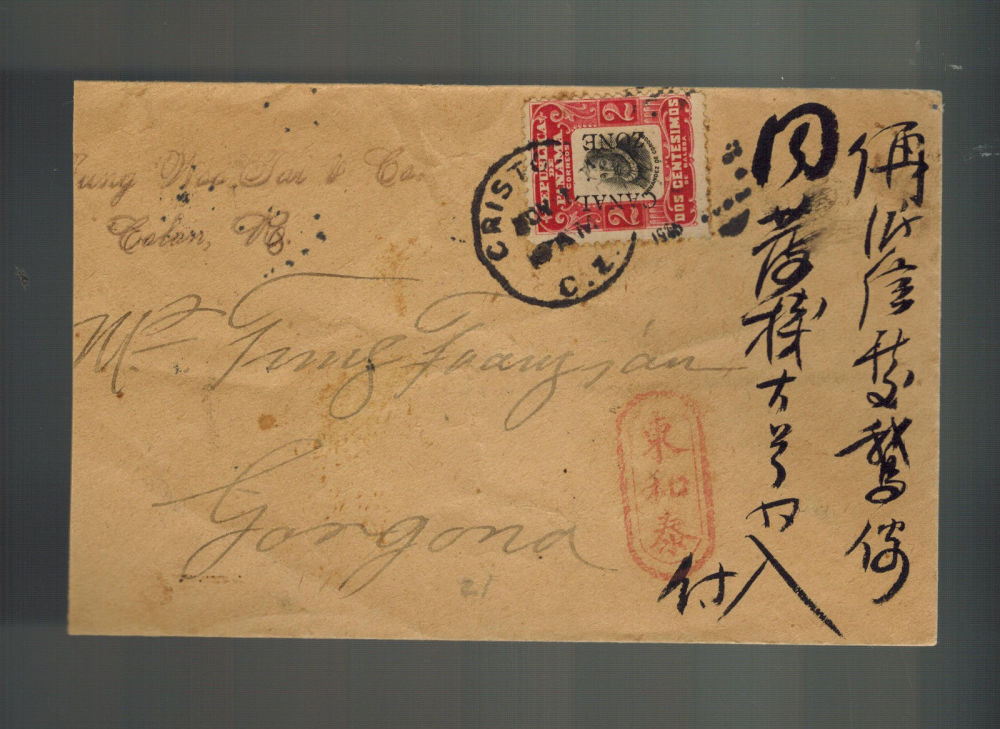
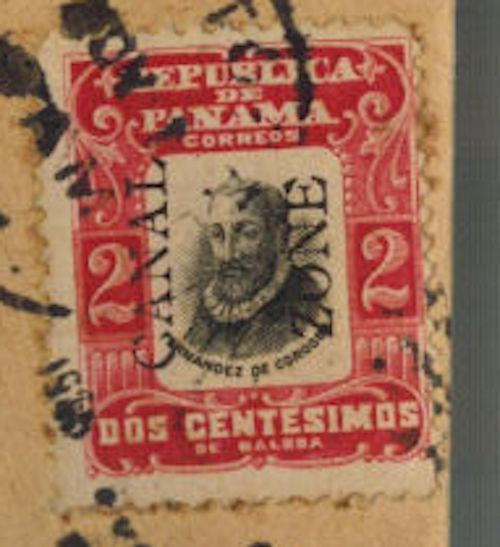
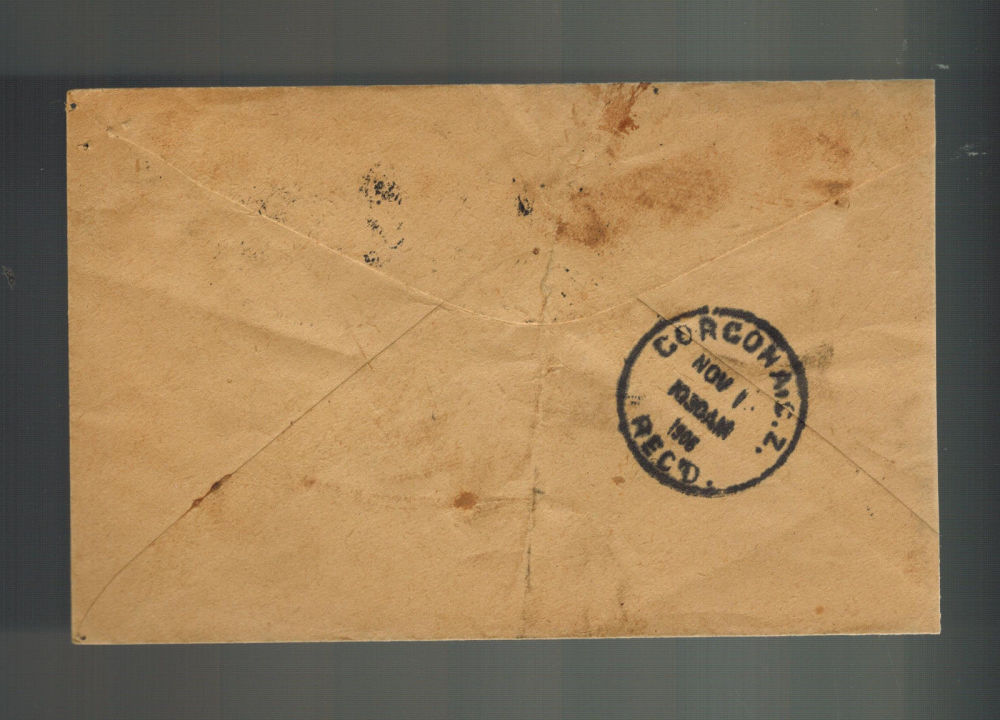
Thanks for the pic of the back with the full date! And the info about being a near FDC!
I see by the recv'd post mark that the town in the CZ is Gamboa, know it well, and is across from the old town of Gorgona, which is Probably the name on the front.
Here'r a little bit of info on Gorgona:
This town bears the name given by Pizarro to an island off the coast of Colombia, because he found such treacherous currents around it. It may be that this name was adopted arbitrarily, or that the Chagres River travelers found some eddies which reminded them of the currents off Gorgona Island in the river at this location. Of this place Otis says: "The native town of Gorgona, was noted in the earlier days of the river travel as the place where the wet and jaded traveler was accustomed to worry out the night on a rawhide, exposed to the insects and the rain and in the morning if he was fortunate regale himself on jerked beef and plantains." This was the base for the mechanical division. At one time more than 2,000 men were employed here. The shops were the repair point for all rolling stock on the Panama Railroad until the establishment of the Mechanical Division in Balboa. The shop site and more than half of the town is now underwater and the rest overgrown with jungle. In the French time, large shops were situated here, at the point where the American shops were, known as Bas Matachin. At the time of the first Canal Zone census in 1908, its inhabitants numbered 1,065 whites, 1,646 blacks and 39 Chinese, a total of 2,750. The reputation once enjoyed by Gorgona as the wildest town in the Zone was probably
inherited from its long service as a river port, a French construction camp, and, under the US the largest machine shop on the Isthmus. The shops covered 3 acres in 1905 and 21 acres in 1913 when they were moved to Balboa Hill, 3.5 miles from Gorgona (the very hill from which Balboa saw the Pacific Ocean). This hill, 1,000 feet high, was a triangulation point for Canal surveyors in laying out the line of the "Big Ditch." From a tower that once stood on this hill photographers could take pictures of both oceans on clear days.





 Posted 12/14/2021 09:19 am