| Author |
 Replies: 41 / Views: 3,846 Replies: 41 / Views: 3,846 |
|
|
|
Pillar Of The Community
United States
4183 Posts |
|
|
"The second thing is the sample size that needs to be assembled to be considered valid (at least by scientistic or QA standards). MilSpec sampling inspection criteria is often used and is one that I have some experience with. Given that there were 750,000+ of both the Continental and National printings, you would want a minimum of 1250 of each printing in a sample size. For the ABN printing (4 million+) you would want something closer to 2000 stamps as a sample size"
While I agree about statistical significance, is it really the numbers printed that is important. I would think the surviving population that is the important number. Certainly smaller than the number printed, and the ratio of survivors might be different than the 4 to 0.75 ratio of printed. |
Send note to Staff 
|
|
|
Moderator

United States
12330 Posts |
|
|
The assumption would be that the surviving qty would be an accurate reflection of the printed qty (in terms of the design details being discussed). This may or may not be true, since it may be that collectors saved more of one type more than the others? Otherwise, I avoided bringing up 'surviving qty' since that is such an ephemeral can of worms; but it would be great if we had those numbers.
Don |
|
Send note to Staff
|
|
|
Bedrock Of The Community
United States
10862 Posts |
|
|
Since they were printed on multiple plates from different companies, there is no quantity that would allow any accurate percentage anyway. The plates were sometimes reused by those companies, so the same marks will show up either way. And they did not add secret marks to the high values, although they could have. And shades are not always accurate after 150 years. They can still help, but paper is really the only sure way to tell. If one sees enough of them and if one has the discerning eye required. |
|
Send note to Staff
|
|
|
Bedrock Of The Community
12757 Posts |
|
|
Pillar Of The Community
500 Posts |
|
|
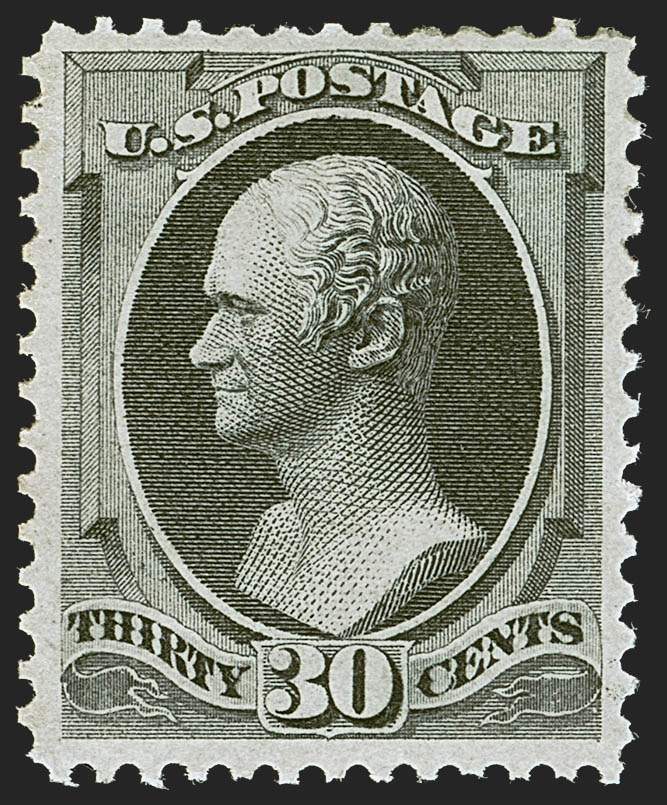
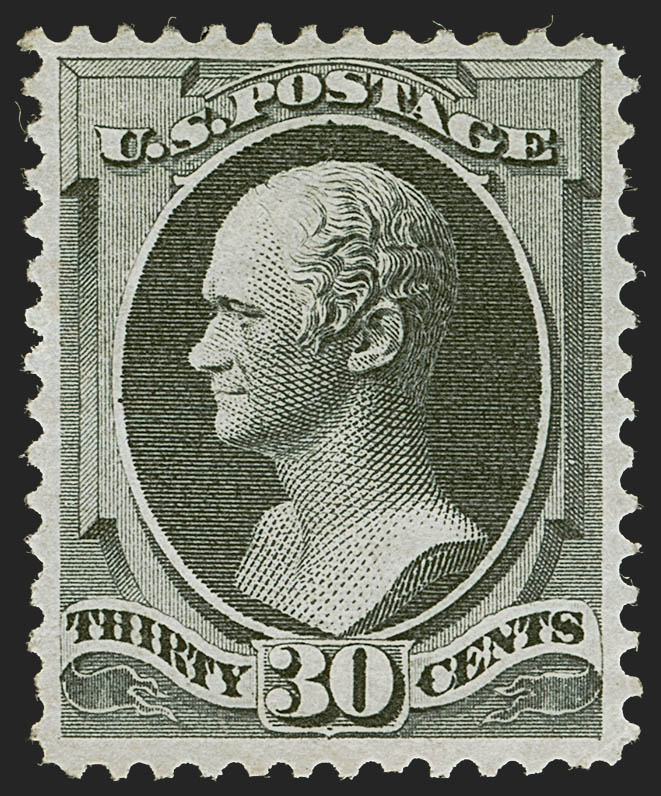
Rodcam, I see (or imagine) a little green tint on the second one. Did Siegel have certs with these? I would think recent PF reviews would involve some sort of spectrophotometer use but maybe not. A year or so ago, I spent some time trying to find a 154. I ended up taking a chance on one, got an extension, and sent in to PF. Came back ok as a 154. The image below shows my 154 next to (what I think) is my 165. To me, the 155 and 166 color diffs are even harder to see. 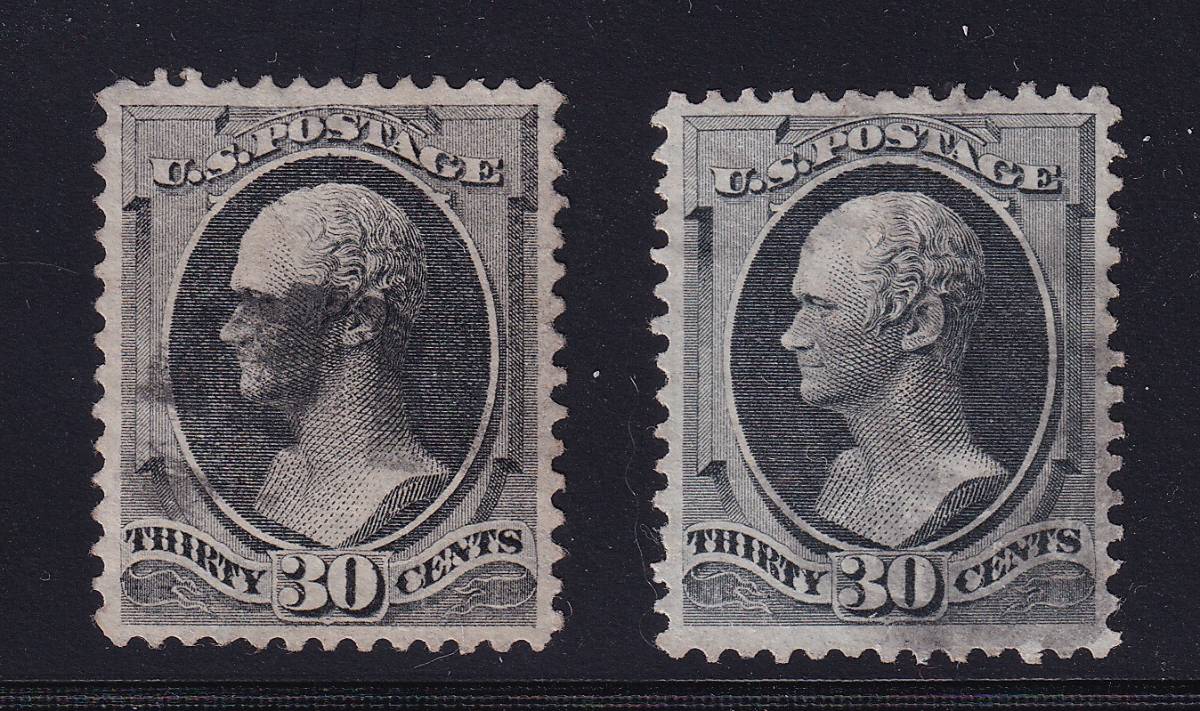 |
|
Send note to Staff
|
|
|
Rest in Peace
United States
920 Posts |
|
|
Bedrock Of The Community
12757 Posts |
|
|
Bedrock Of The Community
United States
10862 Posts |
|
|
Since we don't know the conditions or equipment under which they were scanned, they are meaningless in terms of comparisons. The two stamps would have to have been scanned at the same time for any possibility of being helpful. |
|
Send note to Staff
|
| Edited by revcollector - 04/15/2022 8:37 pm |
|
|
Pillar Of The Community

United States
1837 Posts |
|
|
Canyoneer, from the scan if the paper type is right, then, based on the way those scans look on my monitor, I think you are right about the 165. I agree though, the blacks are the hardest. The carmines are really hard too, but as others have said, if you get enough oF them together at one time you can start to see how they divide up. Someone on these forums once described the 155s as cool and the 166s as warm. I found that to be a very helpful hint. |
|
Send note to Staff
|
| Edited by rlsny - 04/15/2022 11:05 pm |
|
|
Pillar Of The Community
United States
1043 Posts |
|
|
I would like to thank all for replies re: 30c Hamilton. Maybe a look at proofs would help. I find these issues so difficult with color . |
|
Send note to Staff
|
|
|
Pillar Of The Community
United States
1946 Posts |
|
|
For the proofs, I scanned a die proof and block combo for each side by side which appeared fairly distinct as I viewed them normally. But I was not able to get a decent scan to reflect the difference I was seeing. I will keep at it, but obviously the differences are slight.
FWIW an American soft paper black is parallel to the National black. But the Americans can also come with a tint of green, so you have to be careful. Yet once you have identified a touchstone example, you will not have to struggle with the National vs Continental shades again. |
|
Send note to Staff
|
| Edited by essayk - 04/23/2022 11:37 am |
|
|
Replies: 41 / Views: 3,846 |
|



 Posted 04/14/2022 7:18 pm