| Author |
 Replies: 45 / Views: 4,510 Replies: 45 / Views: 4,510 |
|
|
|
Valued Member
68 Posts |
|
|
Pillar Of The Community
United States
1430 Posts |
|
|
Quote:
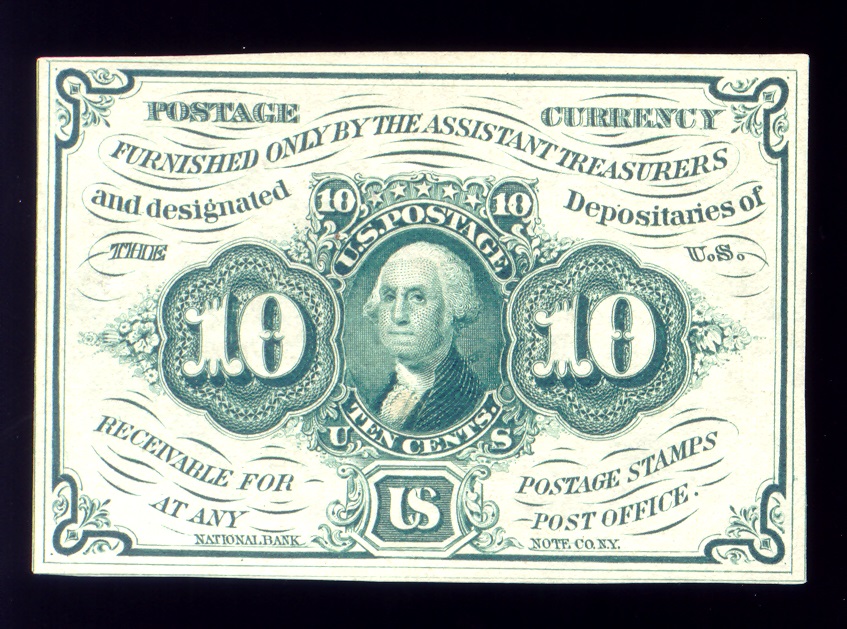
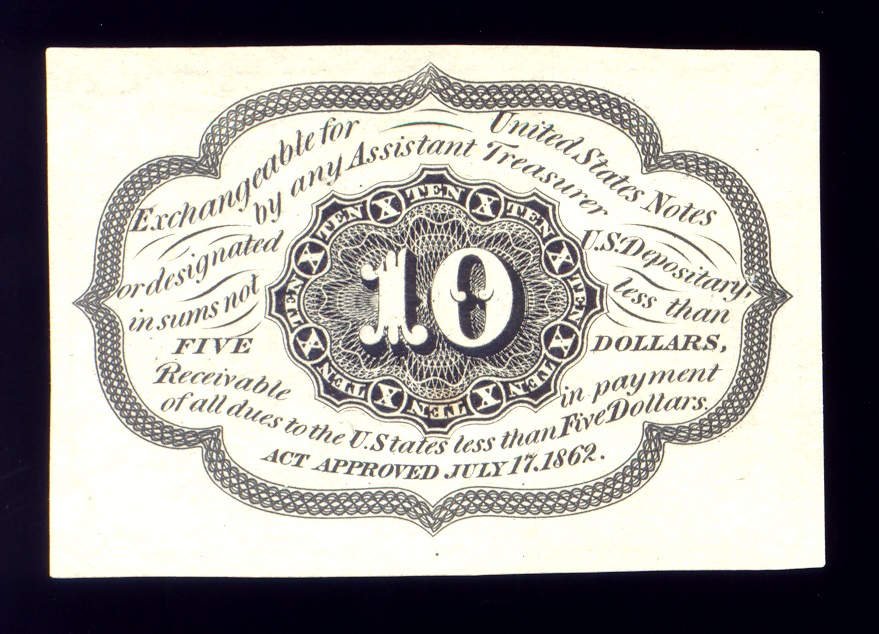
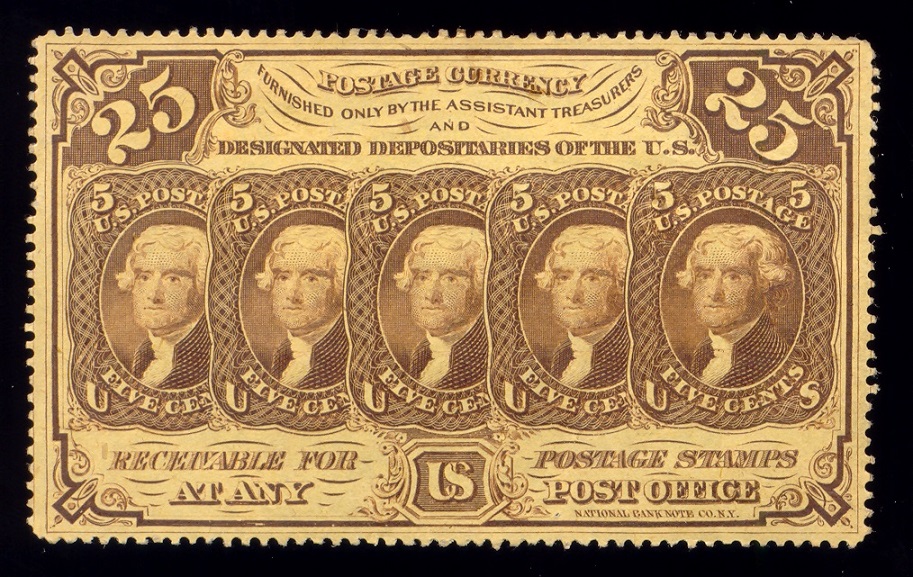
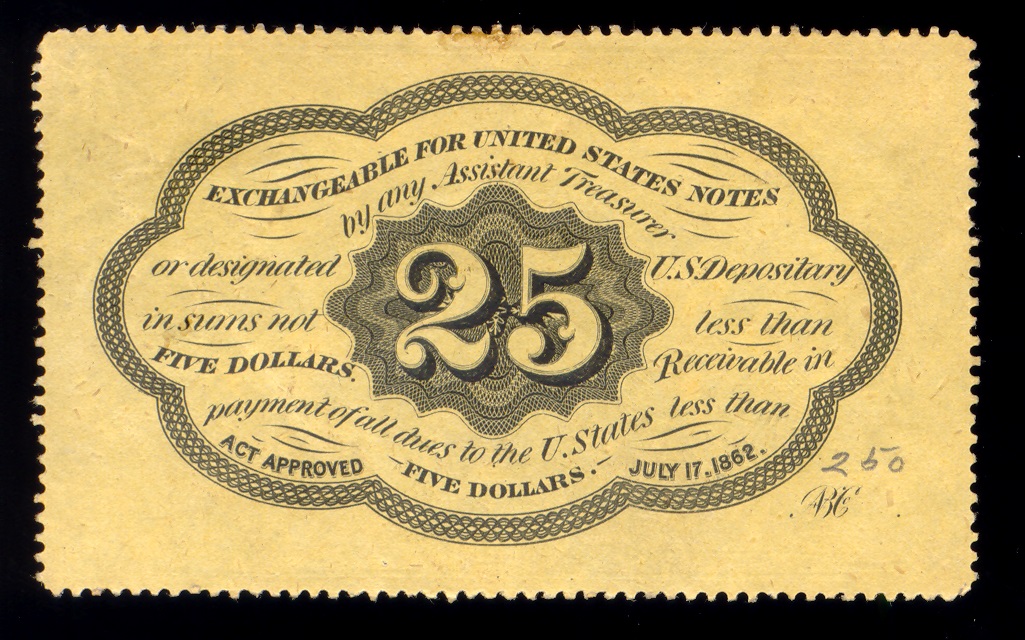
erilaz...Please post your 'horrible' notes. Don't say you weren't warned! I'd forgotten that one of them is Canadian. U.S. 10-cent note, fifth issue, 1874. 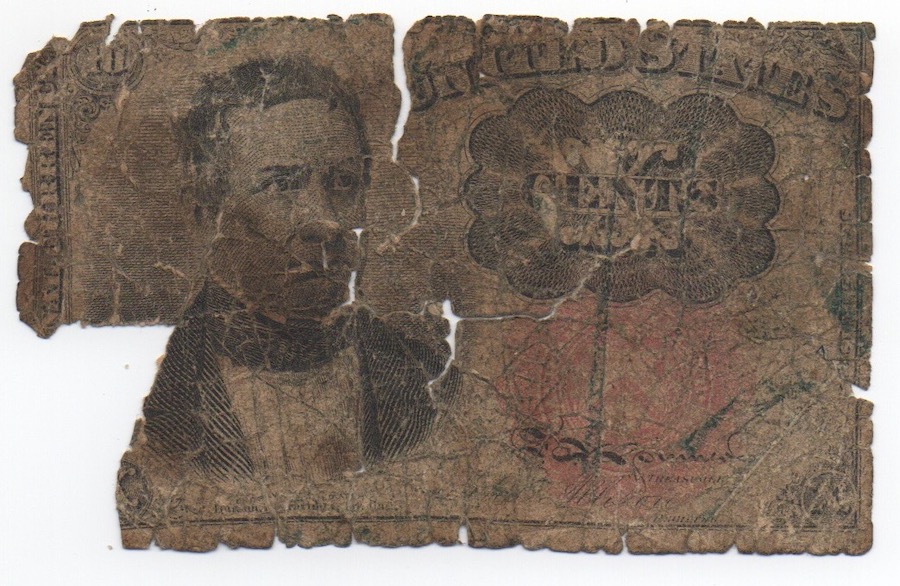 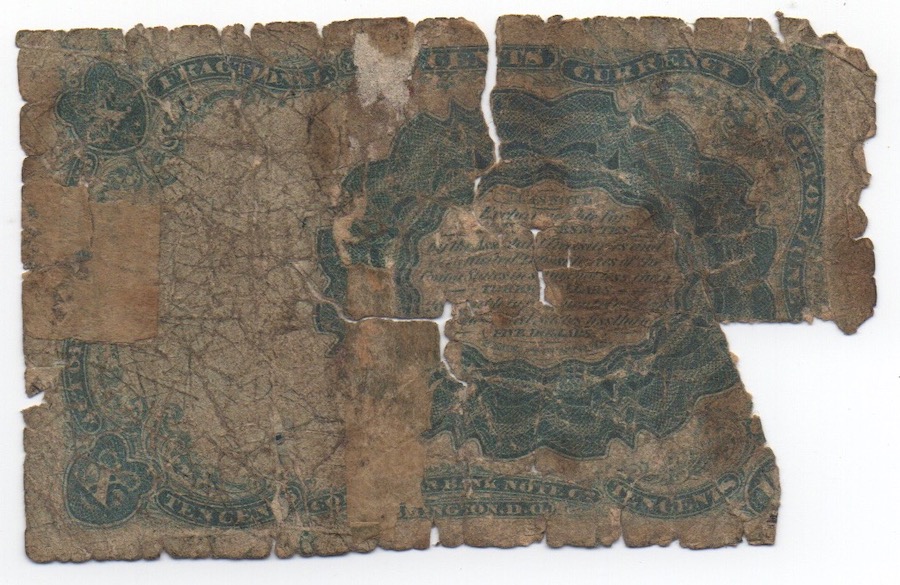 Canadian 25-cent note, first issue, 1870. 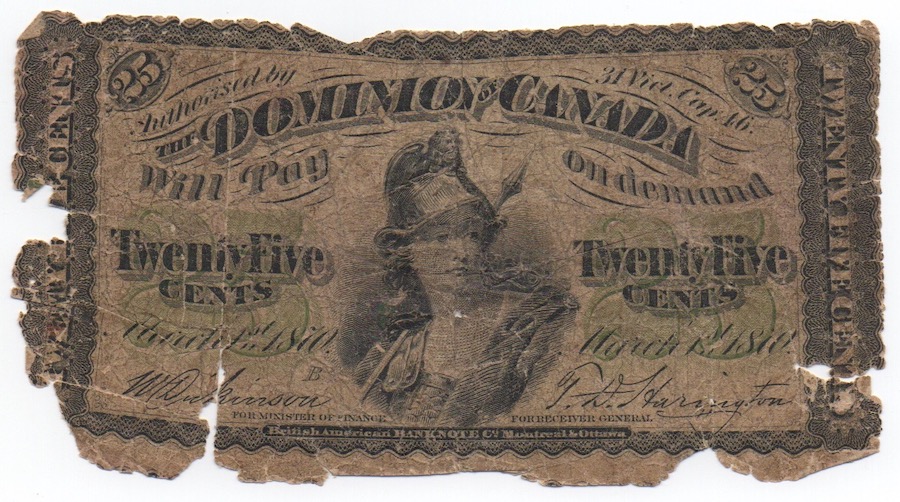 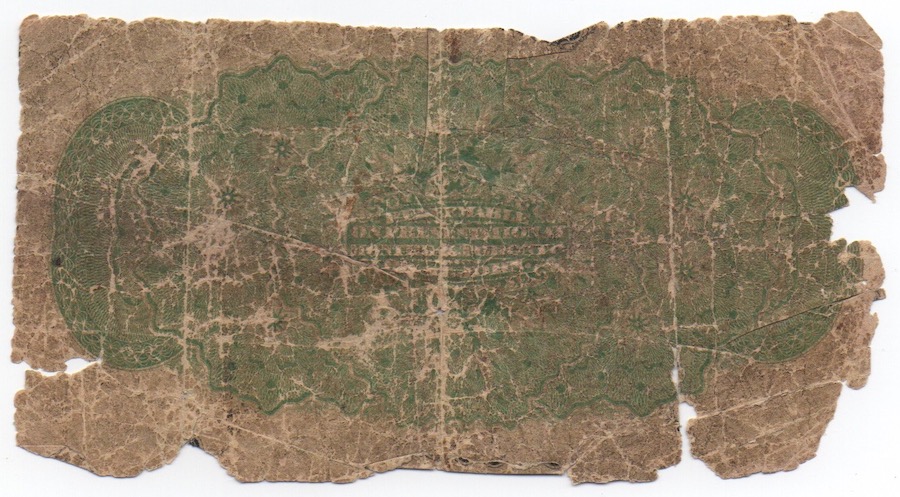 |
Send note to Staff 
|
|
|
Pillar Of The Community
501 Posts |
|
|
In Canada we call those 25c notes shinplasters. They had the same job. Metal was too precious to waste on currency at the time. |
|
Send note to Staff
|
|
|
Valued Member
68 Posts |
|
|
I was warned...but I still liked looking at them. Thanks for posting them. |
|
Send note to Staff
|
|
|
Valued Member
68 Posts |
|
|
Valued Member
68 Posts |
|
|
Pillar Of The Community
United States
1866 Posts |
|
|
Quote:
Is it safe to soak these? I have pesky hinge remnants on two of the three. I would say yes. Currency paper is not like stamp paper -- it was meant to circulate and is much more durable. Just don't iron it. ;-) Stamp hinge adhesive is typically water soluble (you lick them, right?), so they should soak off pretty easily. |
|
Send note to Staff
|
|
|
Valued Member
68 Posts |
|
|
Valued Member
68 Posts |
|
|
Valued Member
68 Posts |
|
|
All of these notes/stamps are still legal tender which means you can take them to the Post Office and they have to give you back face value. Even the 'terrible' and severely worn notes can be redeemed for face value. I wouldn't advise that, as even the highly worn stamps/notes are worth more than face value and the Postal employees probably would not know anything about these historic notes! What you have, please keep in a safe environment as you are only a caretaker for these items. |
|
Send note to Staff
|
|
|
Pillar Of The Community
501 Posts |
|
|
These have all been gorgeous, what a collection. I never see more than one or two on offer anywhere. I'd like to carry on and get a few more in time. |
|
Send note to Staff
|
|
|
Valued Member
68 Posts |
|
|
Valued Member
68 Posts |
|
|
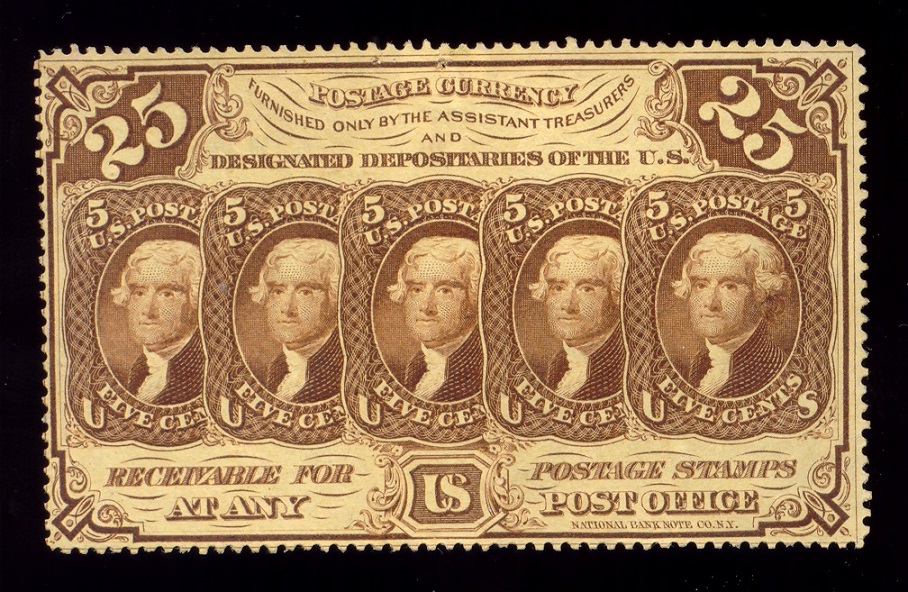
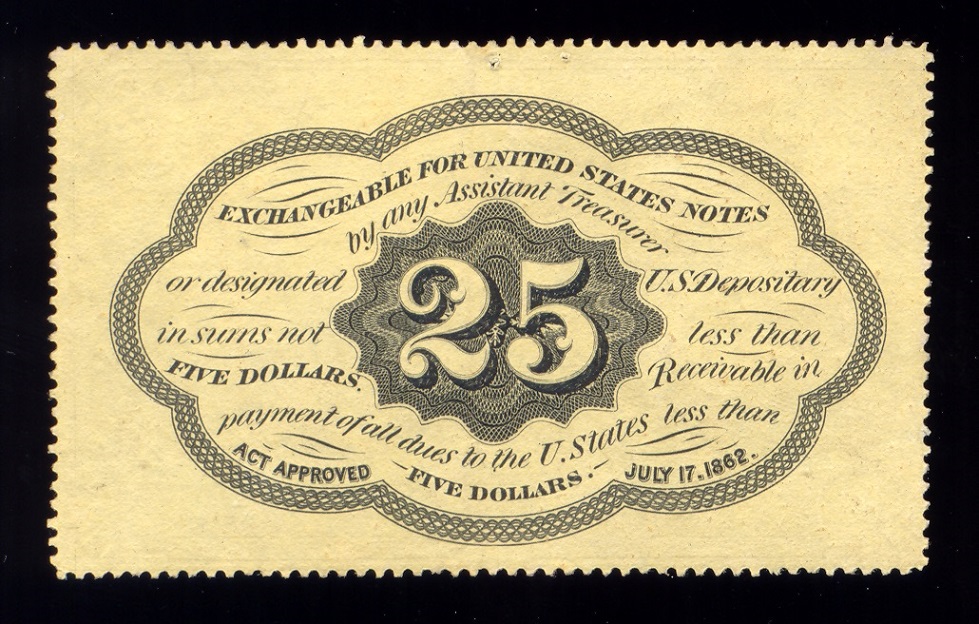
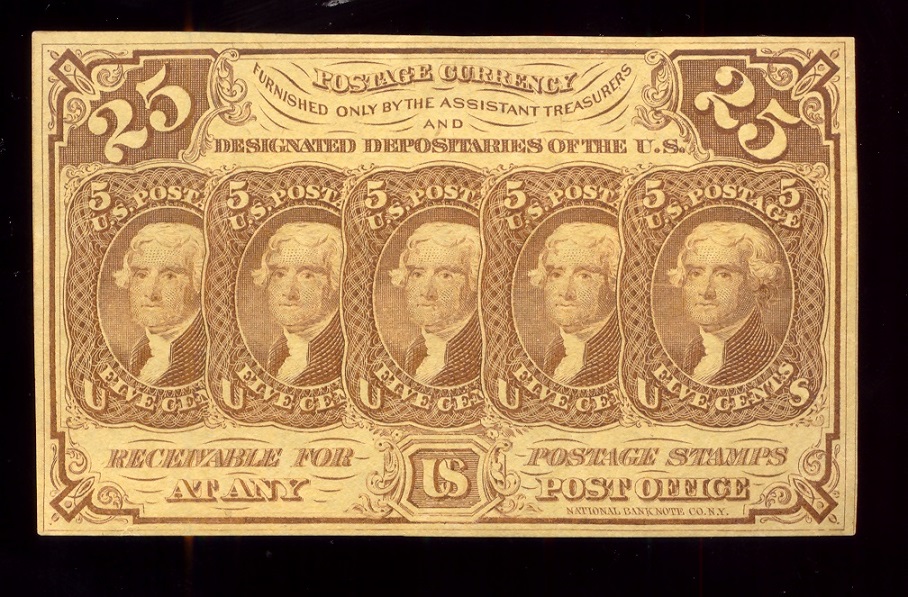
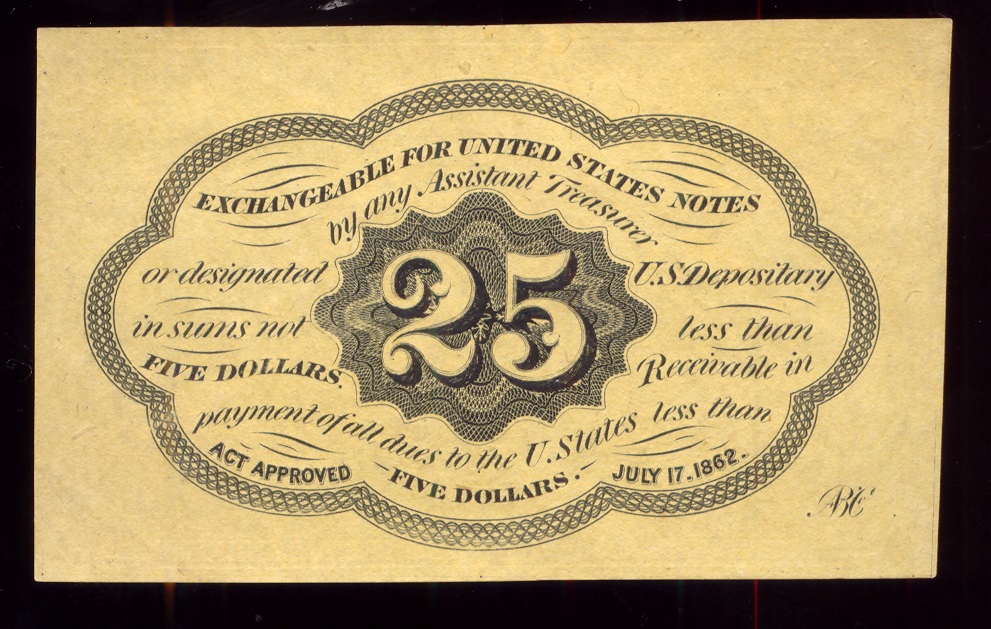
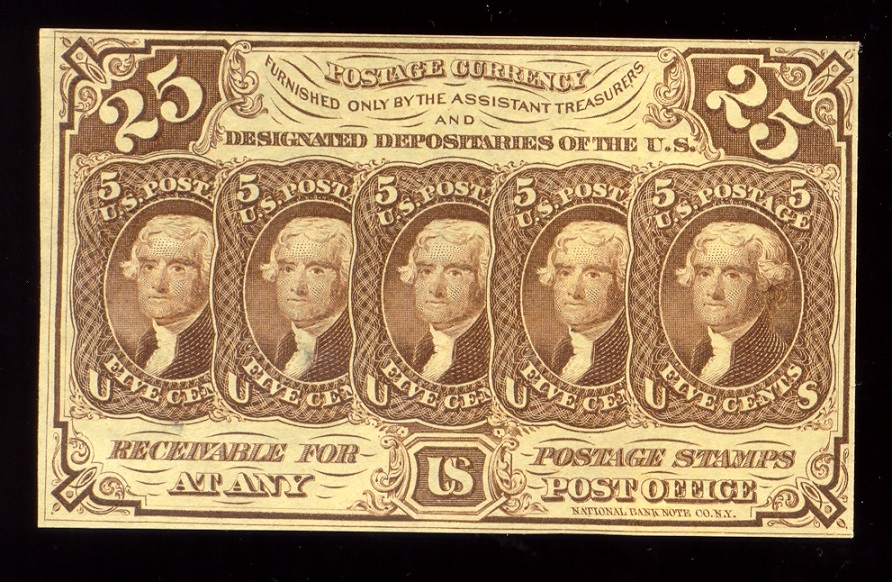
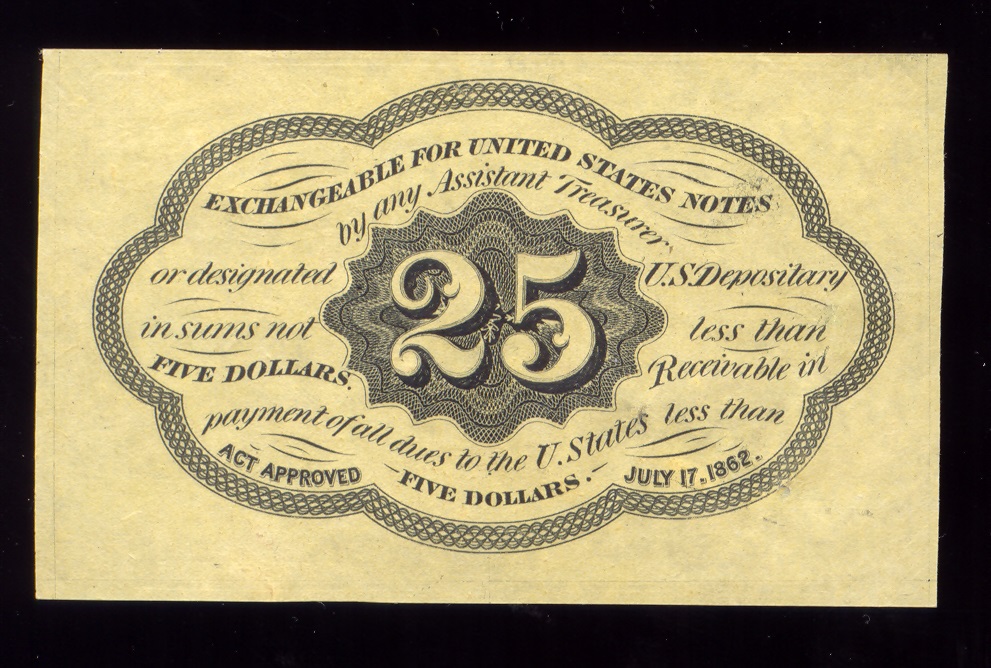
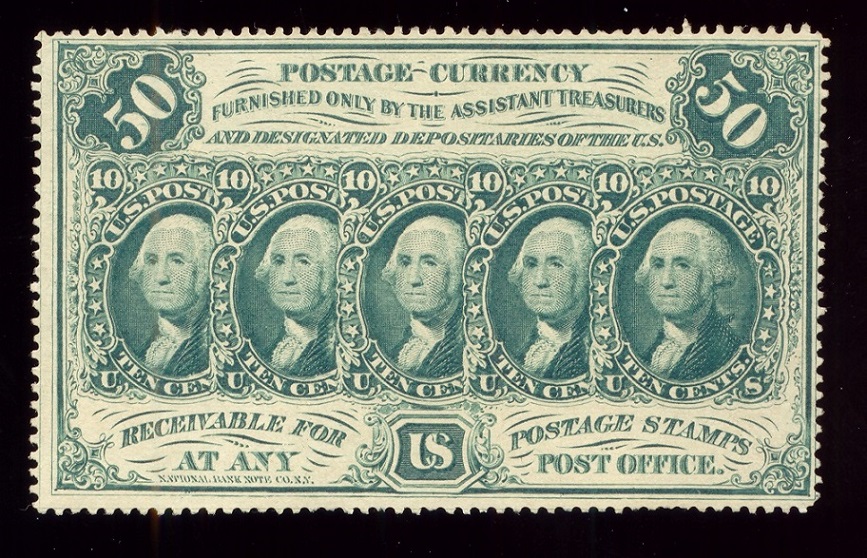
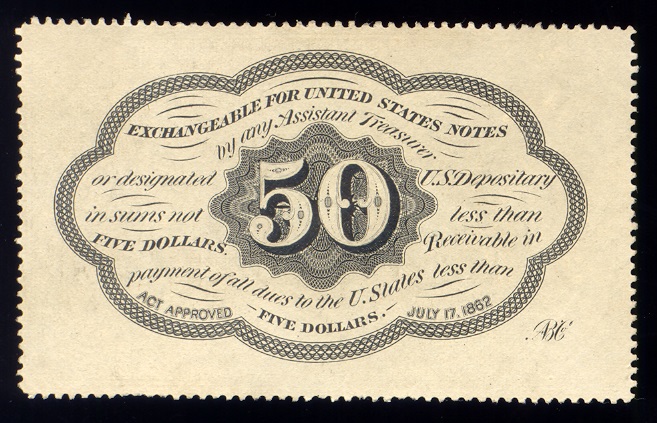
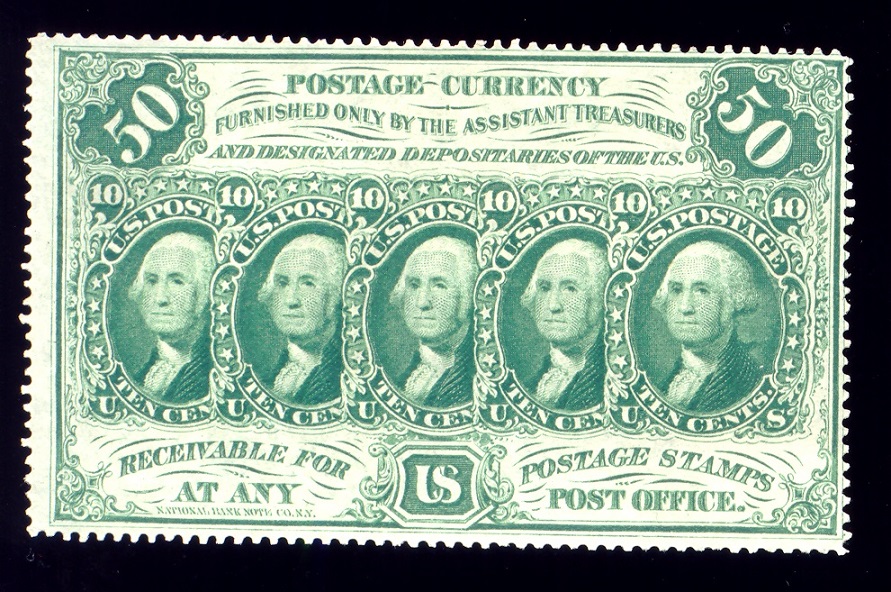
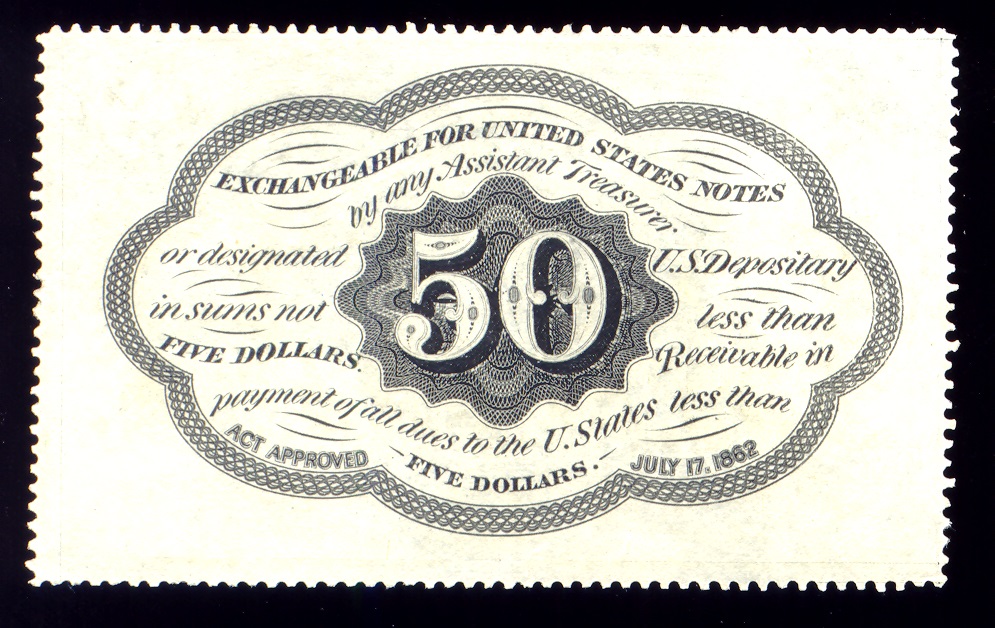
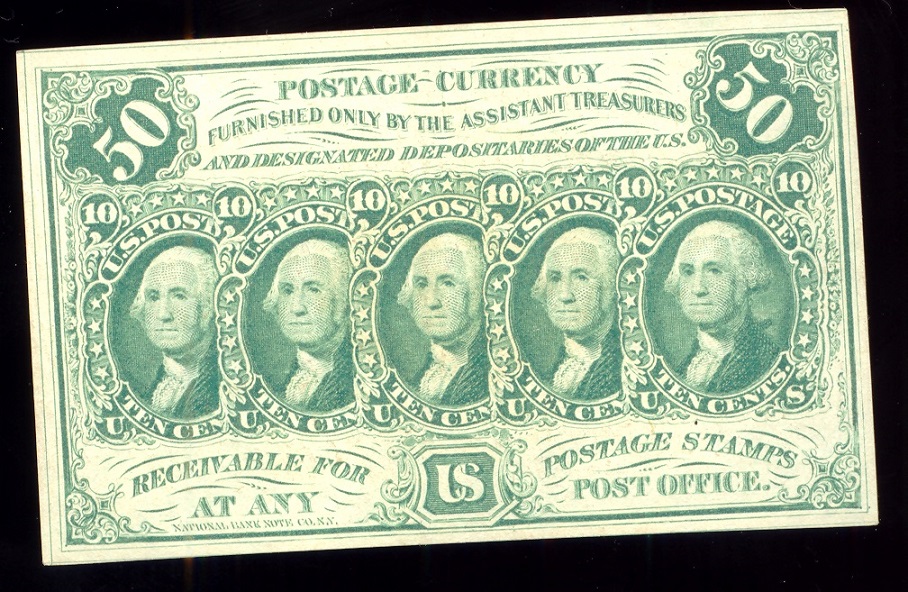
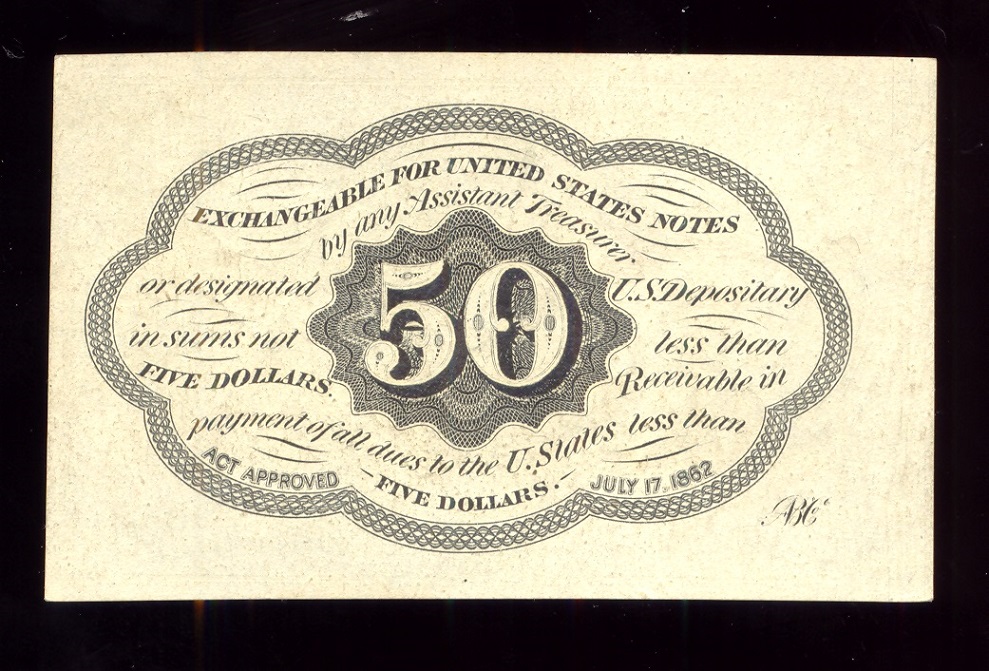
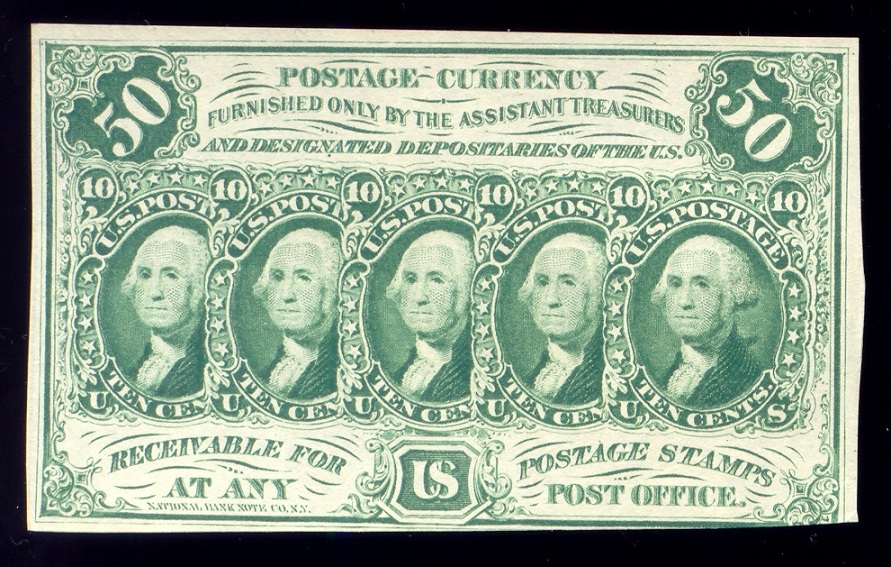
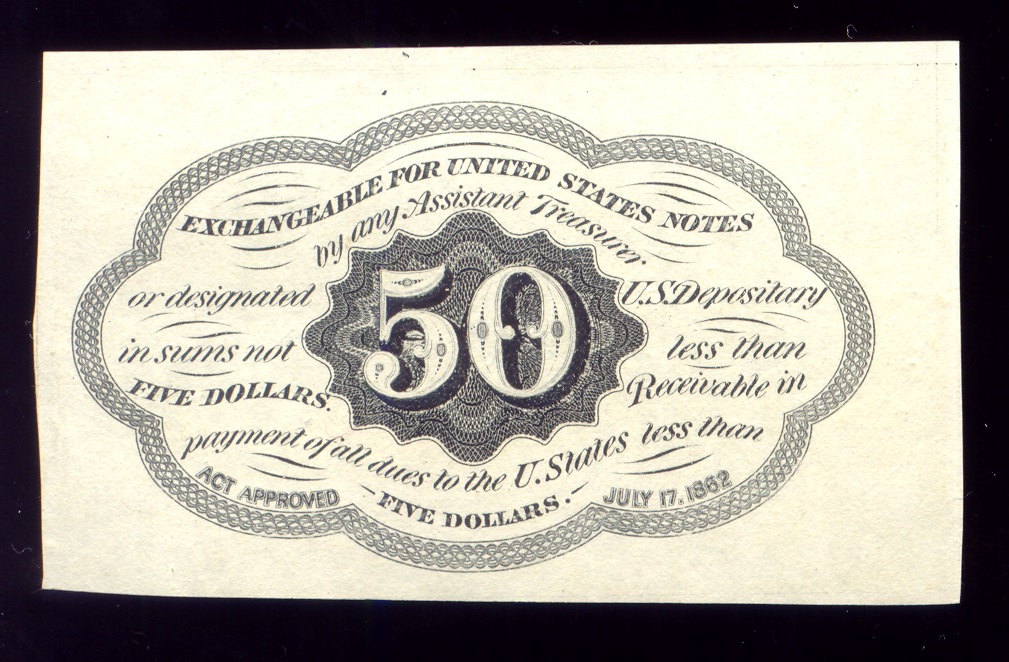
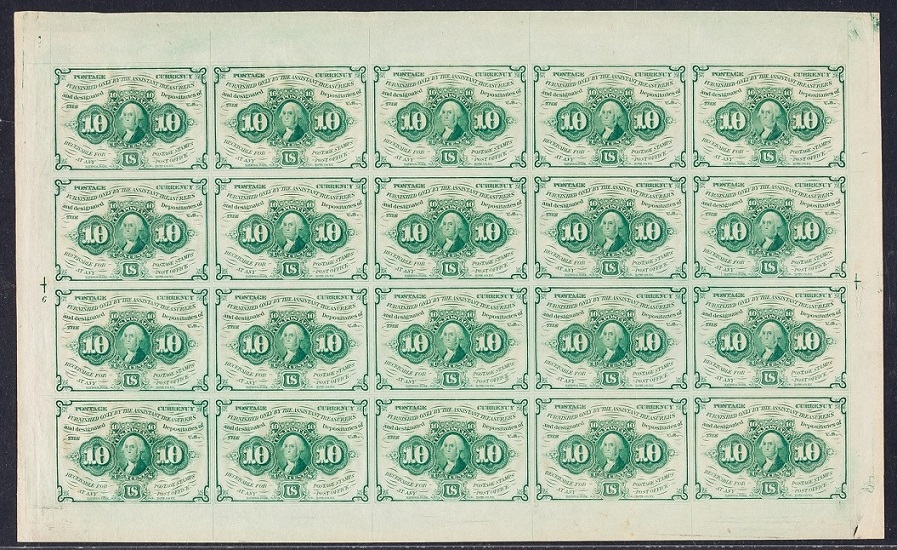
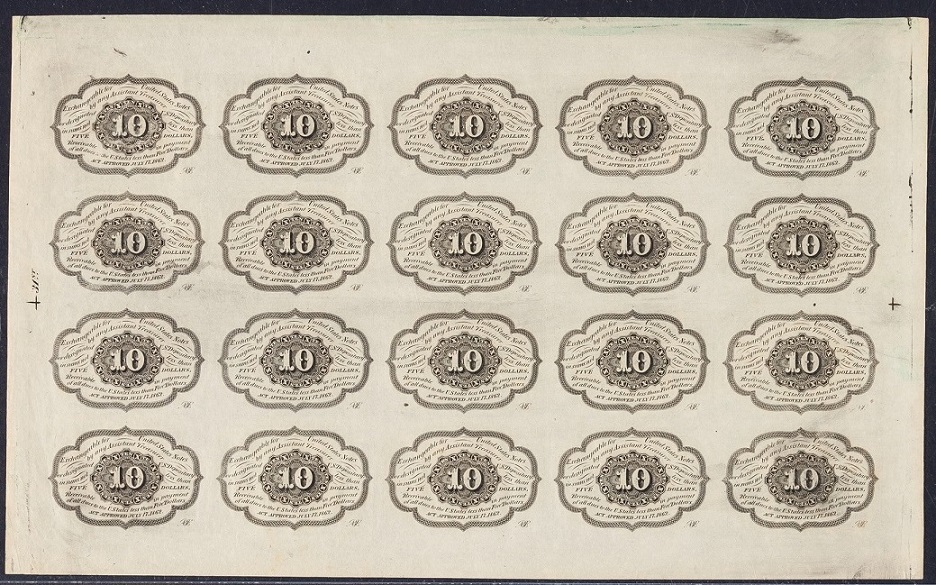
All the Postage Currency notes from the first issue have been posted in this thread. What was the necessity for Postage Currency? Here is another excerpt from my web site, "Postage stamps were being used to make change by different proprietors. The problem with using the stamps was that they would easily become discolored, damaged and torn. If they got wet, they would stick together and become useless. Next, stamps were placed in postage envelopes with a specified amount on the outside of the envelope. These envelopes were then passed as a form of currency. Unfortunately, some people tried to deceive others by sealing lesser amounts or plain paper inside these postage envelopes. John Gault, an entrepreneur of the times, decided to make a profit from the shortage of coins that was occurring in the summer of 1862. He decided that there must be a better way of using postage stamps and felt that encased postage stamps would be the answer. He decided that a brass container the size of a regular coin with its front open to show the denomination could be used as coins. A stamp with its corners folded was placed within the brass frame and a thin sheet of mica was placed over the stamp. The tabs of the brass container were then folded to keep everything in place. John Gault hoped that advertising placed on the reverse would generate his profits. He sold the copper frames to the merchants for a 1-2 cent profit. Merchants warmed to his idea of putting their advertising on the reverse and 31 different vendors decided to advertise on these colorful tokens. The denomination of the stamps used were the 1, 3, 5, 10, 12, 24, 30 and 90 cents. His patent was issued on August 2, 1862. It was the same time that the use of postage stamps that were used as money was banned in January 1863 by the Federal Government. The idea of encased postage did not last much longer. With the advent of postage currency and fractional notes, the encased postage stamps no longer filled a need. They lasted for several years and most show extensive wear with dents and broken mica." Here is an example of one the encased postage stamps that I have. These are highly collectable. 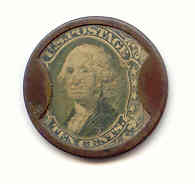 |
|
Send note to Staff
|
| Edited by dtreter - 04/27/2022 9:15 pm |
|
|
Valued Member
68 Posts |
|
|
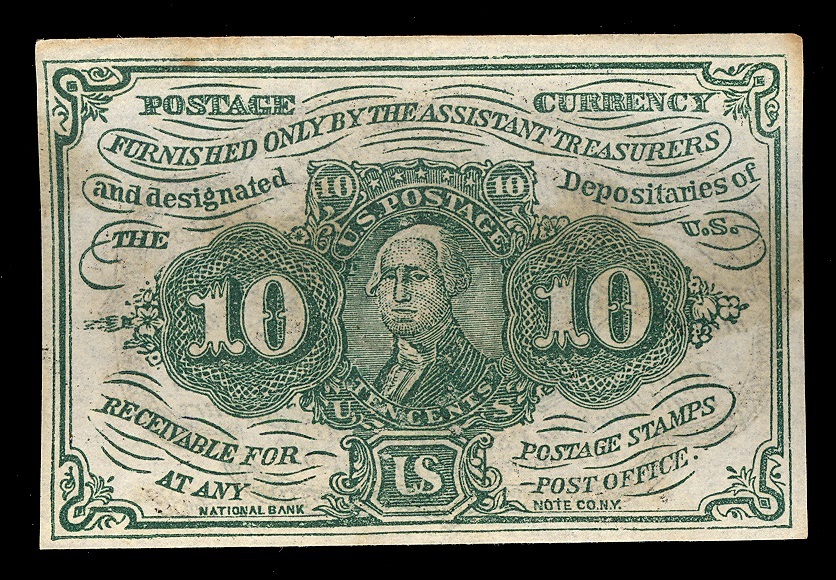
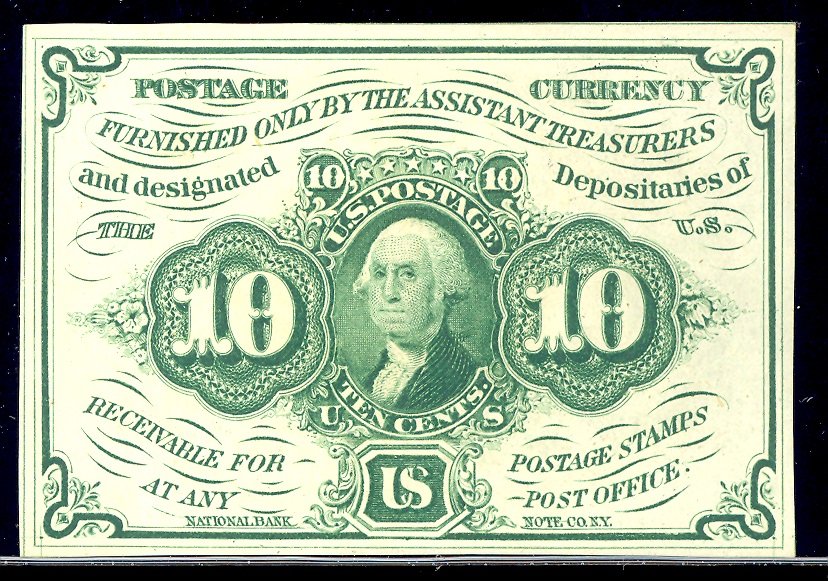
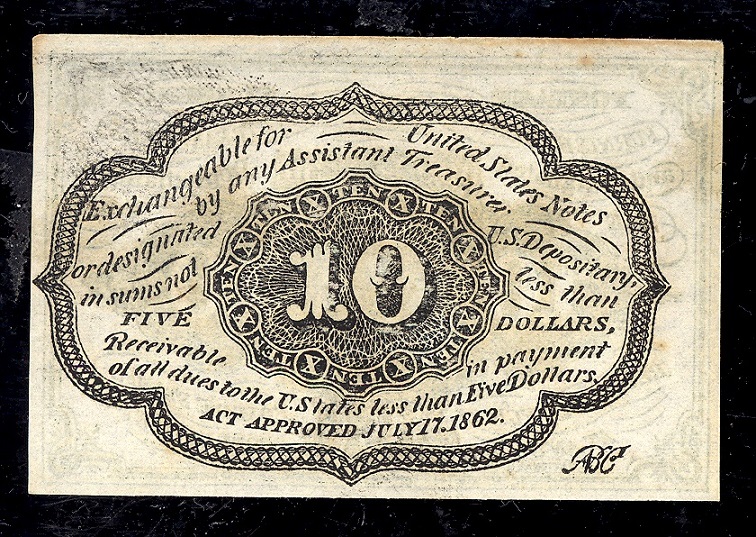
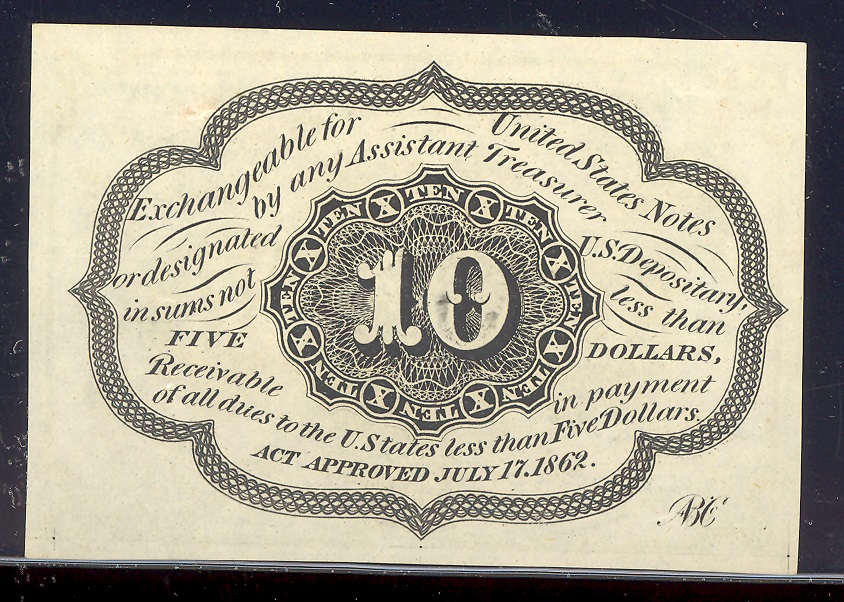
I don't know if I am boring everyone with this thread, but I will continue... Counterfeiting notes has been a problem in this country starting in the revolutionary times. Copies of early parchment notes were made by some unscrupulous printers. This forced the government to embed mica chips into the parchment to make it harder to duplicate the paper used in the printing process of the early script. With fractional currency, the production of all five different issues and all their varieties were done to try to thwart the production of spurious notes. As fast as the government printing came up with a solution, counterfeiters were already making and passing new counterfeit currency. All four denominations of the first issue postage currency were counterfeited. The paper used for the counterfeit notes appears to be thinner than the genuine notes. They had problems duplicating the reverse of these notes. The oval border surrounding the inscriptions in the genuine notes should have a series of distinct white dots in the center of the band. It should be so obvious to catch your eye. In the counterfeit, the band is dark and does not show the series of white dots. The portraits on the obverse of the spurious notes only crudely resemble their intended President. There has been only one variety for the 5C first issue counterfeit identified. It is extremely rare type with only two known examples of which I have one. Shown below it the note that I own. 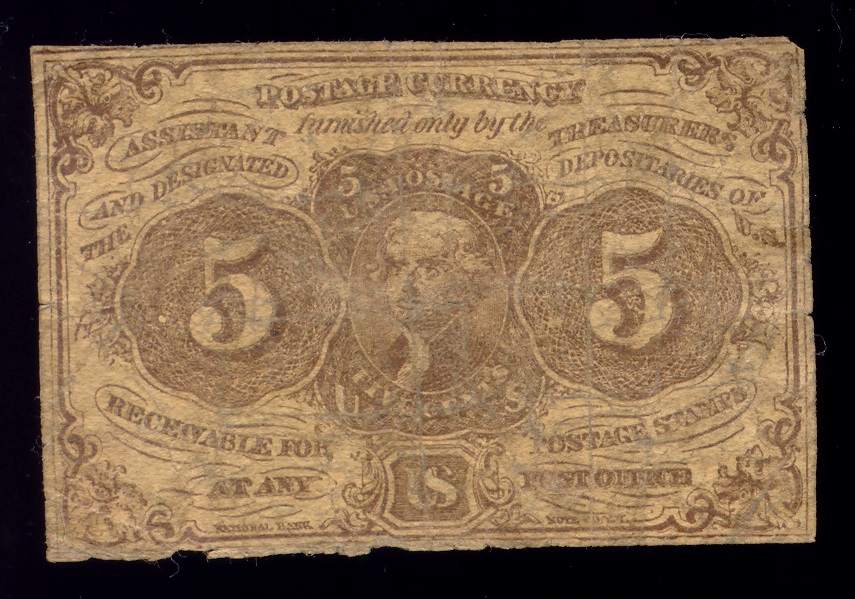 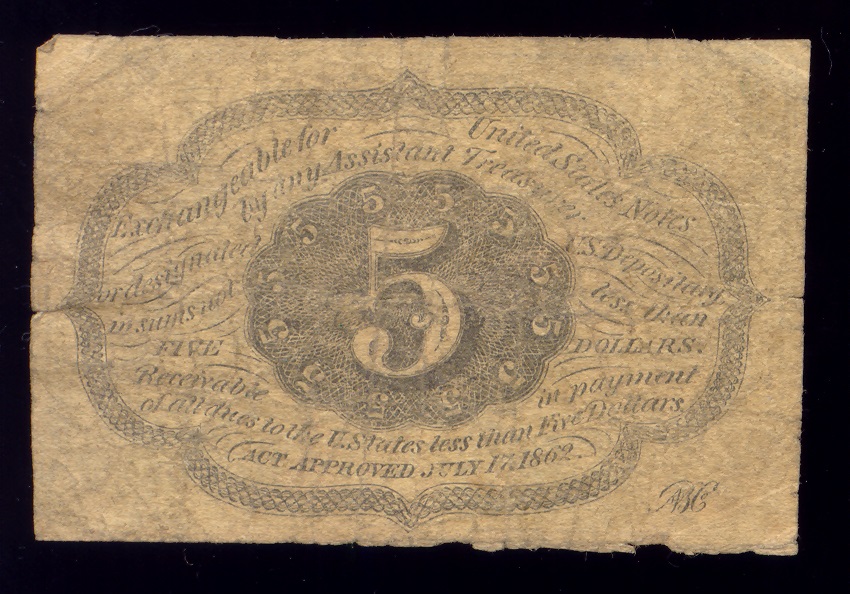 In the next scan. the highlighted areas on the reverse show what to look for in the counterfeit note. There is an extra flourish in the white circle and the blue arrow shows the trouble they had with the border. I also included a genuine note to compare. 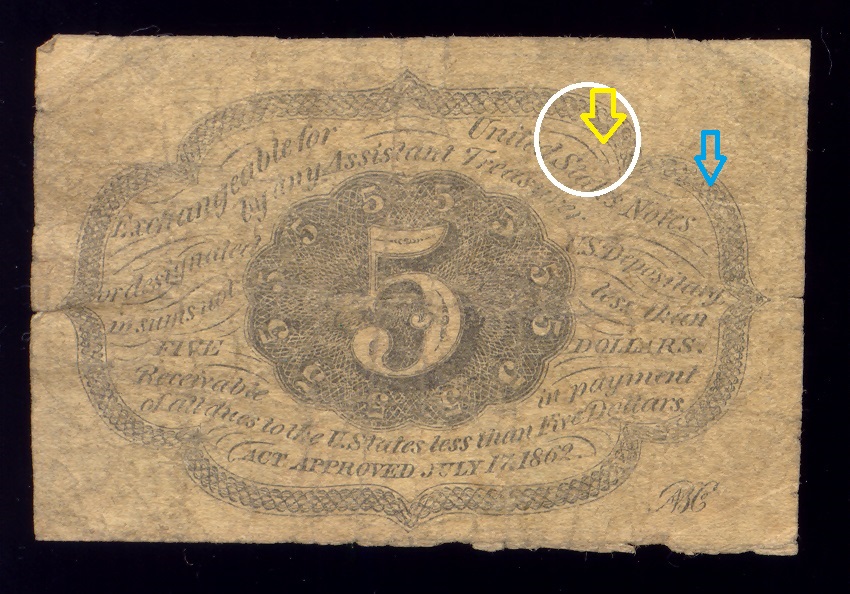 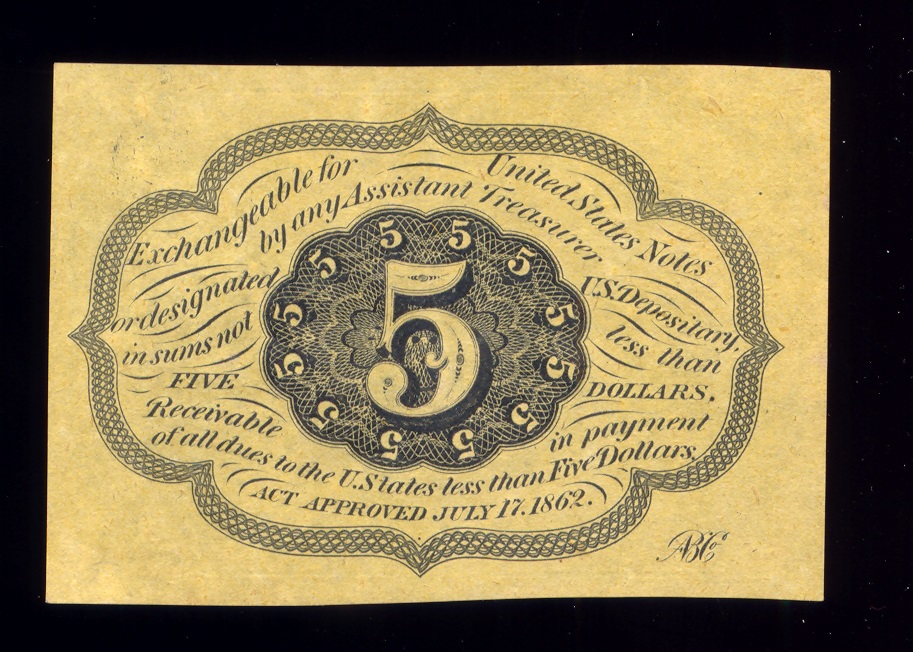 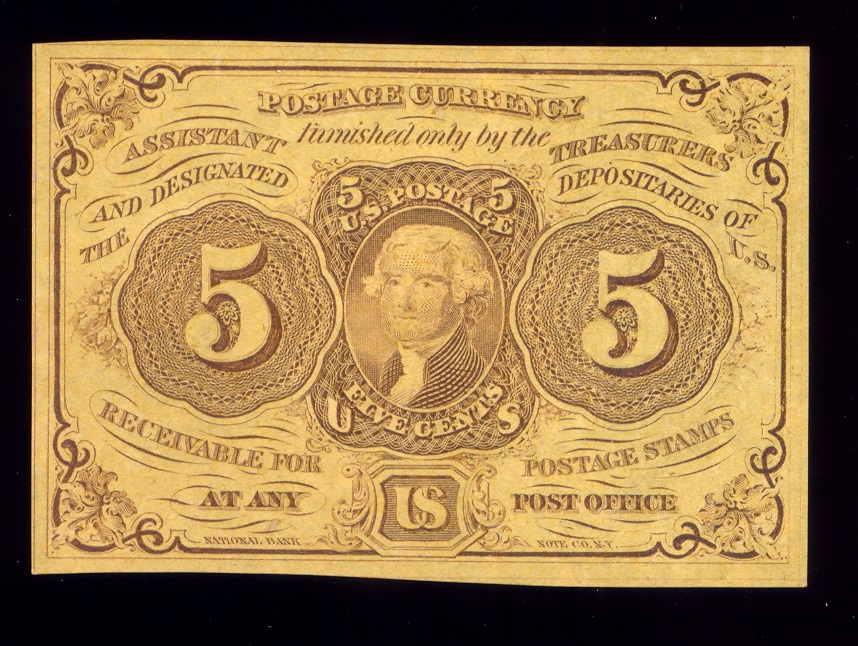 |
|
Send note to Staff
|
|
|
Valued Member
68 Posts |
|
|
Replies: 45 / Views: 4,510 |
|



 Posted 04/26/2022 10:22 am