Quote: Yep, and the news article cited mentioned none of this. Instead, they just left people with a scary feeling that they were being ripped off, with no information about what was actually going on.
I must ask you, alub, to please do not twist and lie about what I post. If you even bothered to read the first link you would not have been so willing to post a boldfaced lie. Now please explain how the below partial quote below, does not discuss a brushing scam:
Quote: What could be better than opening the mailbox or the front door and finding an unexpected package? We all love surprises and gifts, but when these seemingly harmless free items come from a company or retailer, they may come with a higher cost than you realize. Oftentimes, this kind of unsolicited merchandise is part of a larger brushing scam, which is illegal in the U.S. and many other countries.
This is how it works. A person receives packages or parcels containing various sorts of items which were not ordered or requested by the recipient. While the package may be addressed to the recipient, there is not a return address, or the return address could be that of a retailer. The sender of the item(s) is usually an international, third-party seller who has found the recipient's address online. The intention is to give the impression that the recipient is a verified buyer who has written positive online reviews of the merchandise, meaning: they write a fake review in your name. These fake reviews help to fraudulently boost or inflate the products' ratings and sales numbers, which they hope results in an increase of actual sales in the long-run. Since the merchandise is usually cheap and low-cost to ship, the scammers perceive this as a profitable pay-off.
This is why it's bad. While it may appear to be a victimless crime—you did after all get some free stuff—the reality is that your personal information may be compromised. Often scammers obtain personal information through nefarious means and with ill-intentions, and use it for a number of scams and other illicit activities in the future.
Your fake review may prompt people to purchase worthless stuff.
In other instances, bad actors are using a person's address and account information to receive merchandise then steal it from the home before the resident is able to intercept it....
parcel - Why do they need to send someone some stuff to write a fake review by the recipient? Why can't they just go straight to writing a fake review?
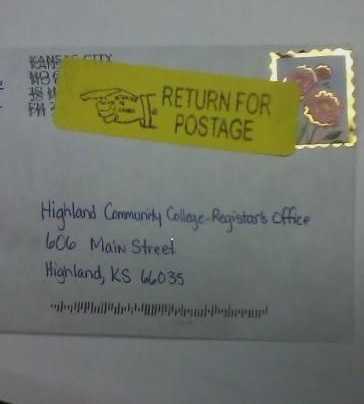
I received a letter earlier today... It brings to mind the tattoos found in boxes of Crackerjack or other.
The relatively few times I've mailed letters during my life, I've always gotten them from a post office -- so few in fact that each mailing was an event, filled with fun and purpose, yes. I took the time to pick out just the right stamps; no more having to shout from one hollow to another.
Quote: parcel - Why do they need to send someone some stuff to write a fake review by the recipient? Why can't they just go straight to writing a fake review?
Systems do not normally allow a review until something is actually received (delivered) and those little uninvited goodies are all tracked.
Elsewhere in SCF there is a thread on "The Cartel" in which the most recent incarnation was done by buying a prior ebay seller's ID, feedback and all to begin again selling fraudulently.
Quote: Sorry, I did not remember that part in the frist post.
We all make mistakes, such as I forgot to include the title for the quote from the first linked article (gee I wonder why I put it first), "Brushing Scam."
Quote: On Tuesday, CBP officers in Louisville seized 178 counterfeit championship rings from various locations in China heading to West Chapel, Florida. The championship rings were for the Atlanta Braves, Boston Red Sox, St. Louis Cardinals, NBA Boston Celtics, and the University of Georgia, CBP said.
"Shipments like these prey on the many sports fans across the nation who may be duped into paying high prices for non-genuine products," LaFonda D. Sutton-Burke, Director, Field Operations-Chicago Field Office said in a statement.
CBP seized 27,107 shipments with Intellectual Property Rights (IPR) related violations in Fiscal Year (FY) 2021. If genuine, the total MSRP of the items would have been valued at over $3.3 billion. That figure, according to CBP, was a 152% increase compared to FY2020, when goods valued at $1.31 billion MSRP were seized for IPR violations.
The dollar value of seized goods by the CBP seems impressive at first glance until you understand the scope of the problem at which point their "success" becomes statistically meaningless.
Quote: In fact, counterfeit products are not just a passing problem, but are part of a major global industry. Counterfeiting has grown from a $30B trade problem in the 1980s, and now exceeds $600B in trade. Trade data trends suggest that this number could soon rise to over $1.8 trillion, which is more than the gross domestic product of most countries. The explosion of e-commerce during COVID has also created a picture-perfect market channel for counterfeit goods, as it is easy to shut down a website selling these products at the request of Amazon or Alibaba, and open up another one the next day. Evidence shows that as e-commerce sales have grown from 10% of retail sales to more than 30% during COVID, this has offered a perfect opportunity for counterfeiters to exploit consumers buying products from their desktop.
The coin world is getting hit with convincing counterfeits too. I've seen Morgan Dollars that are amazing replicas. The weight is off by 5 grams, so they are not 90% silver. But most people would be fooled. I've even seen some counterfeit scarce dates.
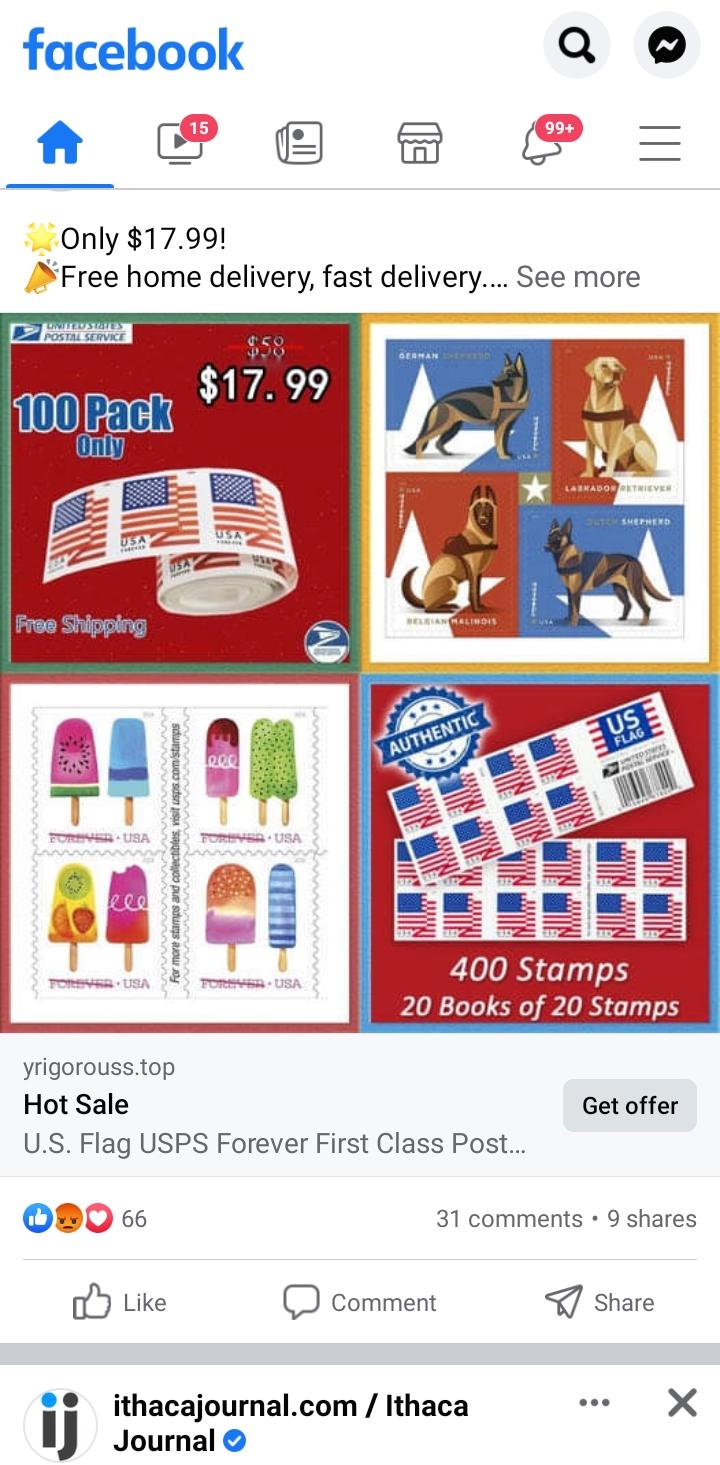
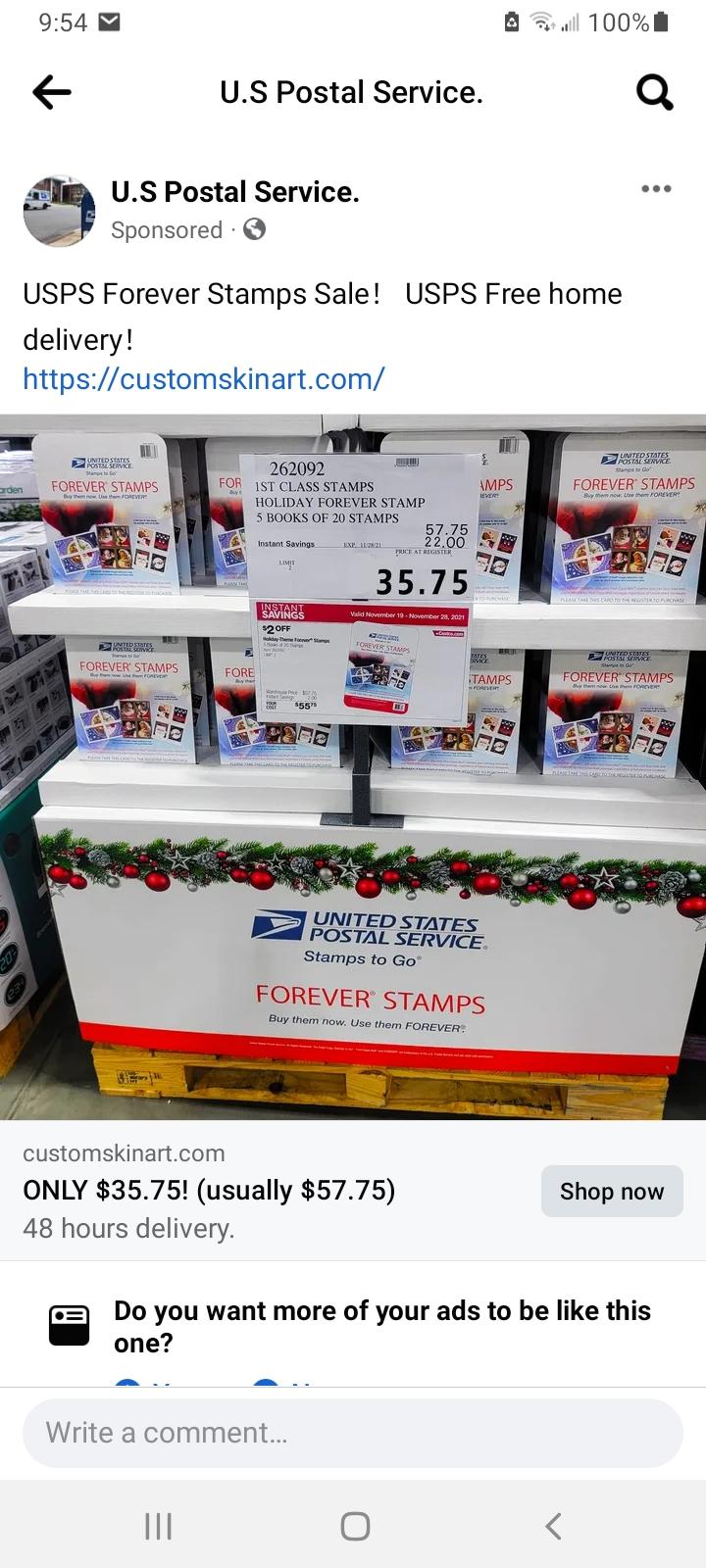
I have heard they have now counterfeited Scott #4520 (White Roses wedding stamp). Until now they were only counterfeiting current stamps. 4520 carries a premium, so they are now targeting premium stamps.
There is one seller on ebay currently offering a quantity sheets of 4520 at a price above face but far lower than others have been asking. Real or fake?
And another (with a feedback of 2) selling "100 Pcs" (pieces I assume) at 43.3% of face with lower prices if you buy more and you can easily guess if those are real.
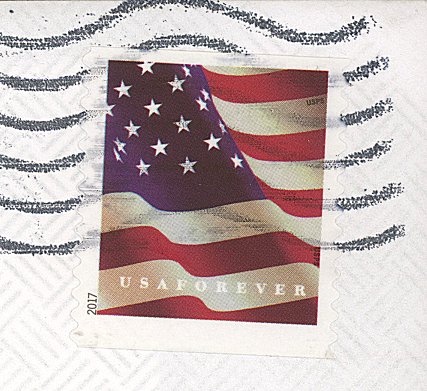
I have 9 booklets of 5344, US Flag, Plate No. P2222, in which the microprinted USPS is just a blob - letters are indistinguishable. (A scan of one of the stamps is on a different forum with a discussion about the stamps.) It was suggested by several people that the stamps were forgeries. Here's what's interesting about this - I purchased all of the booklets at the US Post Office. If they are forgeries, then the P.O. is selling them. How does that fit into the larger scheme of things?
The clerk bought a ready supply of counterfeits, went to work, sold them to you & pocketed the money... Stamp stock counts out right as never left the retail outlet. (No scan at POS either... watch the next transaction) The clerk will get caught, they never know when to pause or stop the 'good thing'
Disclaimer: While a tremendous amount of effort goes into ensuring the accuracy of the information contained in this site, Stamp Community assumes no liability for errors. Copyright 2005 - 2026 Stamp Community Family - All rights reserved worldwide. Use of any images or content on this website without prior written permission of Stamp Community or the original lender is strictly prohibited. Privacy Policy / Terms of UseAdvertise Here





 Posted 07/09/2022 3:37 pm