|
This page may contain links that result in small commissions to keep this free site up and running.

Welcome Guest! Registering and/or logging in will remove the anchor (bottom) ads. It's Free!
To participate in the forum you must log in or register.
| Author |
 Replies: 33 / Views: 4,759 Replies: 33 / Views: 4,759 |
|
|
|
Pillar Of The Community
United States
7110 Posts |
|
|
Pillar Of The Community
Netherlands
6647 Posts |
|
|
13. Monumento a Colón (Barcelona)The thirteenth stamp in the series is dedicated to the Columbus monument in the old town of Barcelona. The monument was erected for the 1888 Barcelona Universal Exhibition. It stands near the harbour on the crossing of the Rambla de Santa Mònica and the Passeig de Colom. The latter traces the sixteenth-century sea wall. It was unveiled on 1 June 1888. After making landfall in the current Bahamas, on 12 October 1492, Columbus and the Pinzón brothers returned to Spain with the news of their discovery. On 15 March both surviving caravels 'La Niña' and 'La Pinta' returned to Palos de la Frontera from where they had sailed on 3 August 1492. At the time, the Catholic Kings were in Barcelona. In April 1493, the Catholic Kings received Colón in the monastery of Sant Jerónimo de la Murtra, outside Barcelona. Plans to erect a monument for Cristóbal Colón (Columbus) in Barcelona date to 1851. In 1881, plans for the monument were approved and a competition was held for the design of the monument. The local government did not agree with the initial choice of the jury and a new jury was assembled. It chose the design by Cayetano Buigas y Monravá favoured by the original jury. A further competition was held for the sculptural elements of the monuments. 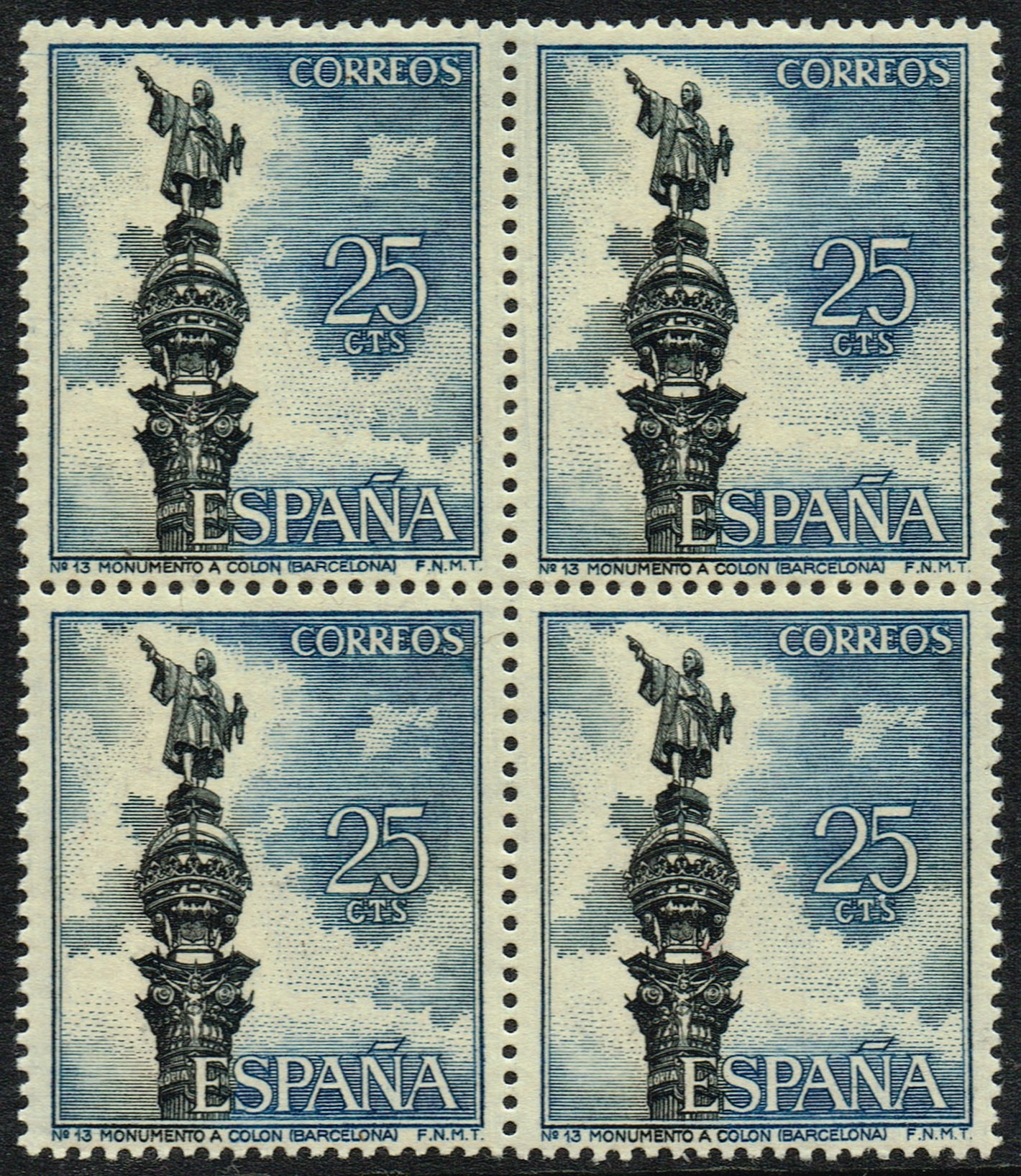 No. 13, Monumento a Colón (Barcelona), Edifil nr. 1643 No. 13, Monumento a Colón (Barcelona), Edifil nr. 1643The Stamp depicts the seven-metres high statue of Cristóbal Colón. With his right hand, the Admiral points at the horizon, whilst holding navigational charts in his left hand. He stands atop an orb supported by a capital with allegorical relieves representing Europe, Africa, Asia, and America. The total height of the monument is 57 metres. The pedestal is decorated with relieves relating to Colón's journey of discovery. Among the sculptures that are part of the monument are four sculptures of Catalans that are connected to the voyage. A further four allegorical statues represent the mediaeval Spanish kingdoms of Castilla, León, and Aragón, and the Principality of Cataluña that was subject to Aragón. 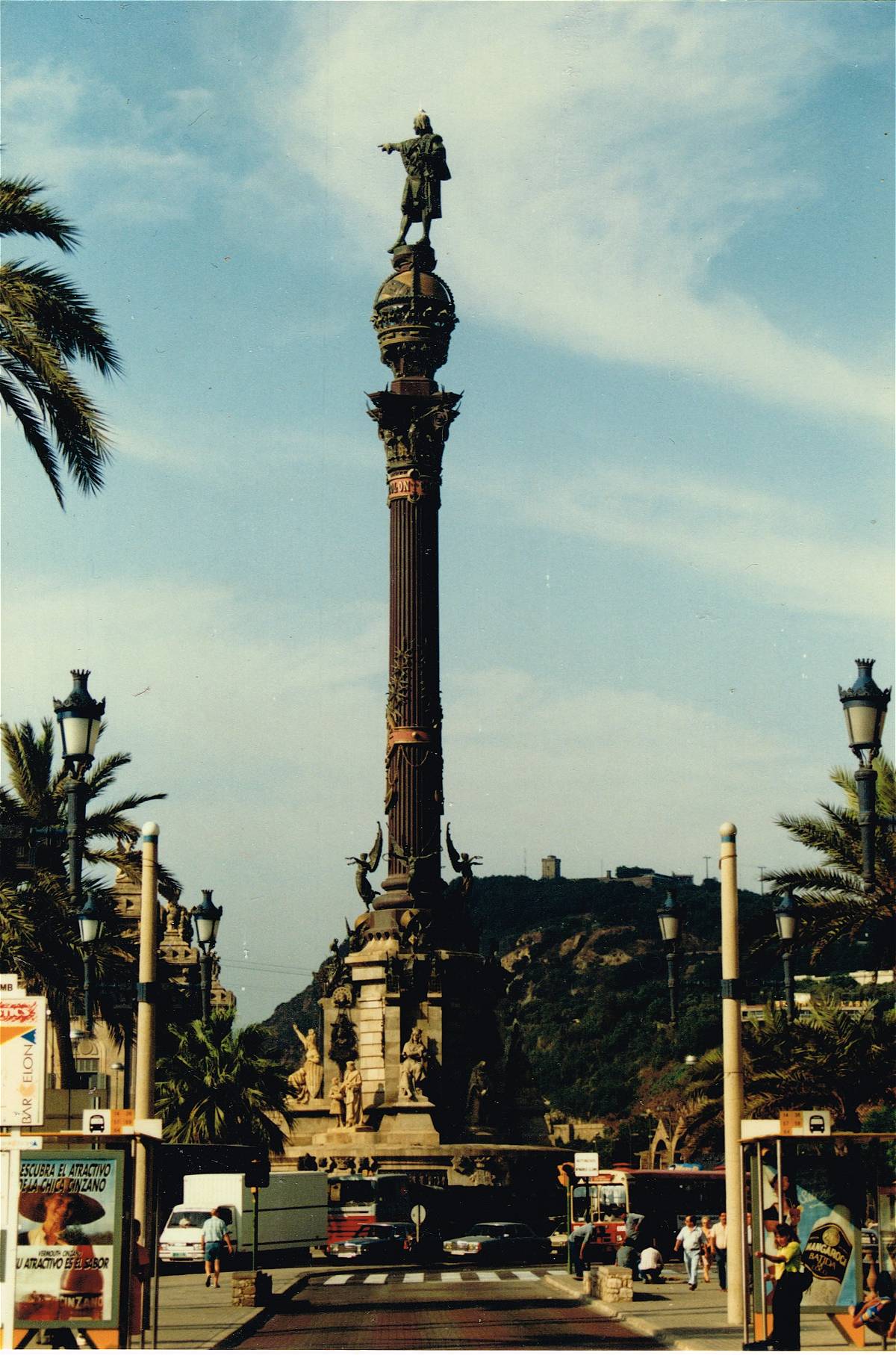 Monumento a Colón, Barcelona (July 1989)technical details Monumento a Colón, Barcelona (July 1989)technical detailsDate of issue: 17 March 1965 Value: 25 céntimos (airmail surcharge for postcards and letters up to 5 grammes and other objects up to 25 grammes to addresses in Spain and Andorra and supplement for commercial documents for each 50 grammes over the first weight step of 50 grammes to inland addresses including current and former possessions and bordering regions) Colours: blue and black Format: 28.8 x 33.2 mm. Perforation gauge: 13¼ Printer: F.N.M.T. (Fábrica Nacional de Moneda y Timbre) Printing process: intaglio Engraver: Unknown Number printed: 6,000,000 Edifil nr. 1643 |
Send note to Staff 
|
|
|
Pillar Of The Community
Netherlands
6647 Posts |
|
|
14. CudilleroCudillero, or Cuideiru, is a small fishing village in the principality of Asturias. It sits on a small inlet that cuts into a 100-metres high cliff on the Cantabrian coast. The village lies 50 kilometres northwest of the capital Oviedo. Asturias airport lies 10 kilometres due east of the village. ALSA operates a frequent bus service between Avilés, near the airport, and Cudillero. The village did not become a municipality until the nineteenth century. Pre-Roman oppida existed in the territory of the municipality. The fishing village itself was founded in the thirteenth century. It developed into the centre of the fishing industry in Asturias. Currently, it is dependent on its agricultural industry. The village is listed as one of 'Los Pueblos más Bonitos de España' (the most picturesque villages of Spain). 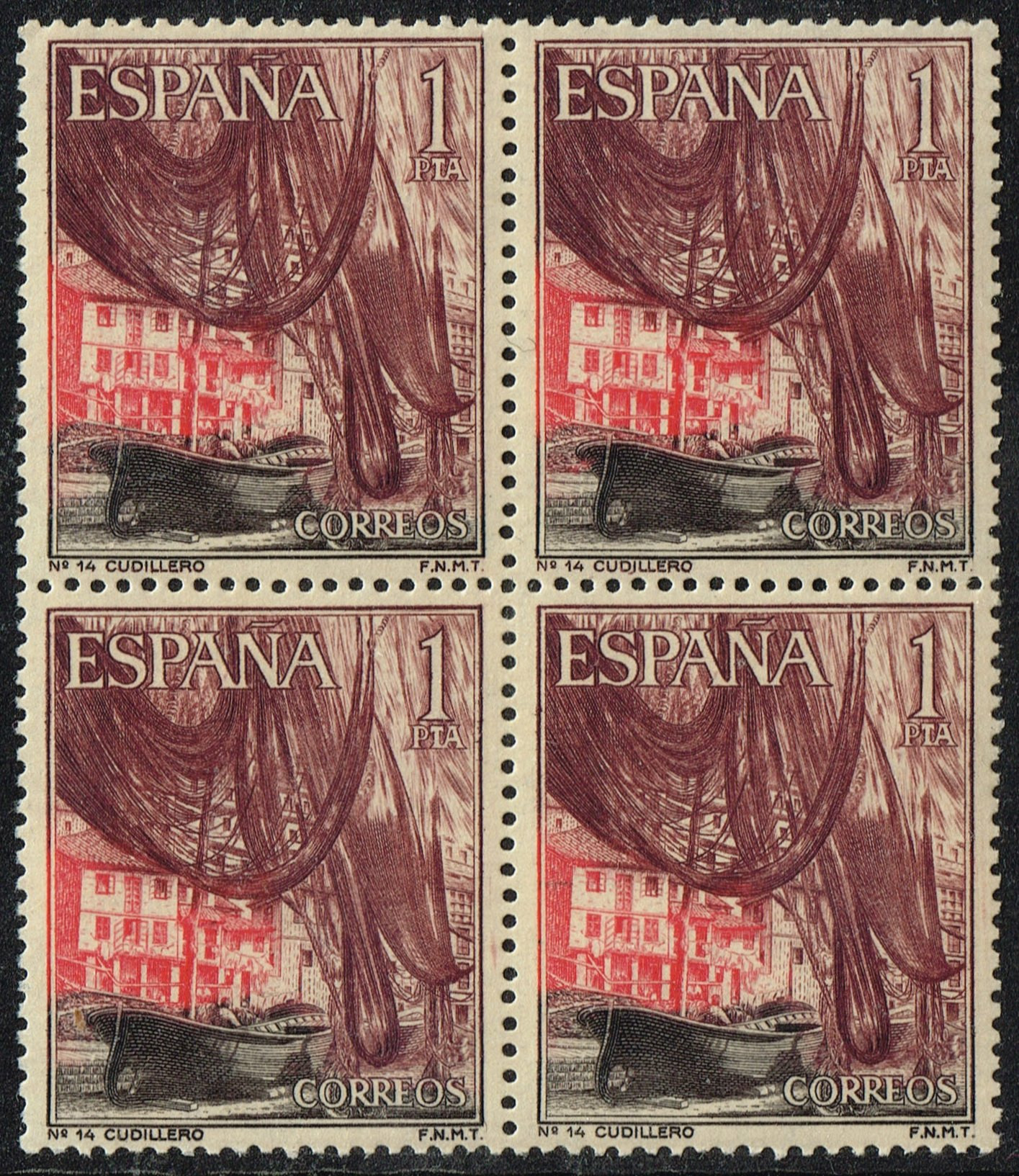 No. 14, Cudillero, Edifil nr. 1648 No. 14, Cudillero, Edifil nr. 1648The stamp depicts a small fishing boat and fishing nets against a background of houses 'hanging' from the cliff face with eaves and brightly coloured window frames typical for the village. Other than these typical houses, the village has a Gothic parish church and a Gothic chapel. Outside the village but within the municipality stands a pilgrim's hospice from the eighteenth century. This hospice stands on a pilgrim's route to Santiago de Compostela that passes through the municipality. technical detailsDate of issue: 12 April 1965 Value: 1 peseta (inland letters up to 20 grammes, incl. possessions, Philippines, UPAEP (not USA), Andorra, Gibraltar, Portugal, and French border zone) Colours: chestnut, carmine and black Format: 28.8 x 33.2 mm. Perforation gauge: 13¼ Printer: F.N.M.T. (Fábrica Nacional de Moneda y Timbre) Printing process: intaglio Engraver: Unknown Number printed: 6,000,000 Edifil nr. 1648 Note: whereas FESOFI lists the number printed for stamps 11 to 20 in this series as 6,000,000, the 'Catálogo Unificado Edifil de Sellos de España" lists the number printed as 12,000,000. |
|
Send note to Staff
|
|
|
Pillar Of The Community
United States
624 Posts |
|
|
Pillar Of The Community
Netherlands
6647 Posts |
|
|
15. Catedral (Sévilla)Sévilla (Seville) is the capital of the homonymous province and autonomous region of Andalucía. It stands on the banks of the Guadalquivir River. Sévilla is Spain's only inland port city, lying 90 kilometres from the mouth of the river. Because of this, the city became the centre of trade with the colonies in the Americas. In preparation for the 1992 World Expo held in the city, a high-speed rail link was constructed between Madrid and Sévilla. The frequent 'AVE' service covers the 470 kilometres in 2:45 to 3:00 hours. The acronym 'AVE' that means 'bird' in Spanish stands for Alta Velocidad Española (High Velocity of Spain). The name of the city, probably, derives from the Phoenician settlement of 'Hisbaal.' After the second Punic war, the Romans settled in the area and founded the first Roman settlement in Spain, Itálica. This birthplace of Emperors Trajan, Hadrian, and Theodosius I lies about 12 kilometres from Sévilla. According to the sixth-century Bishop Isidore of Seville, Julius Caesar founded Colonia Iulia Romana Hispalis, latinising the Phoenician name Hisbaal. On the middle of the first century A.D., the colony had a wall and forum. Sévilla became an important diocese. The city hosted the Visigoth court on several occasions. It was conquered by the invading Muslim forces. Among the many monuments in the city are the Reales Alcázares and Torre de Oro, listed as World Heritage by UNESCO, that date to Muslim era. The fifteenth stamp in the series of 'Monuments and Landscapes' is dedicated to the Gothic cathedral of Sévilla (Santa, Metropolitana y Patriarcal Iglesia Catedral de Santa María de la Sede y de la Asunción de Sevilla). The cathedral arises on the site of the demolished mosque of the aljama – community – of Ishb#299;liya (Sévilla), built between 1172 and 1182. After the Christian reconquest of the city on 23 November 1248, the mosque was consecrated as cathedral. In 1401, the chapter of the cathedral decided to build a new cathedral to replace the old one that had badly been damaged by an earthquake, in 1356. Construction of the new cathedral lasted from 1434 until 1506. 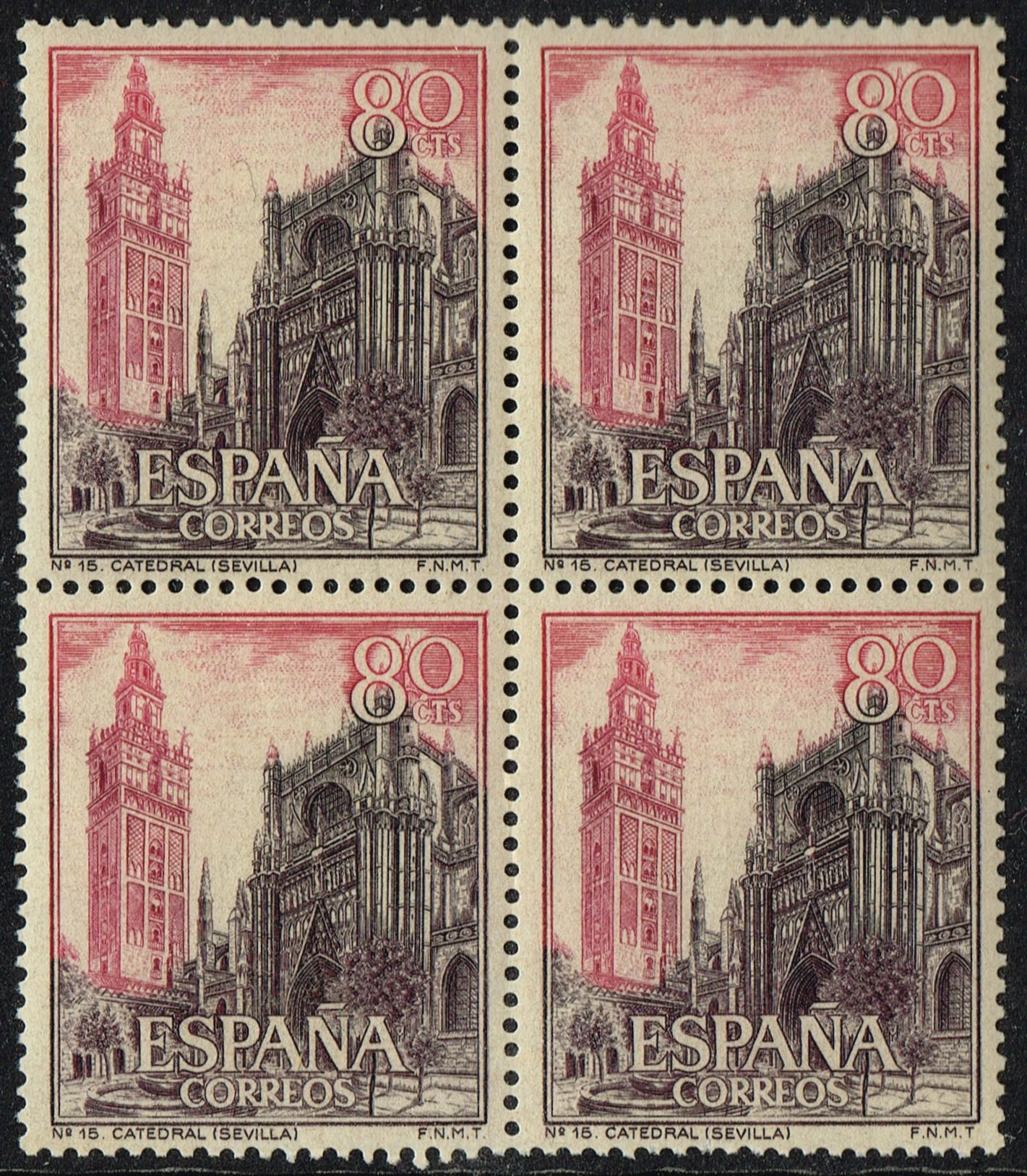 No. 15, Catedral (Sévilla), Edifil nr. 1647 No. 15, Catedral (Sévilla), Edifil nr. 1647The Stamp depicts a view of the Puerta de la Concepción and 'La Giralda' from the Patio de los Naranjos. The Patio de los Naranjos (Court of Oranges) is one of view remains of the old mosque. The courtyard served as a place where the faithful conducted their ritual cleansing before entering the mosque for prayer. The name of the courtyard derives from the orange trees that grow in it. The cathedral's bell tower, known as la Giralda, is 104 metres high and is visible from afar. This minaret of the old mosque was built between 1184 and 1198. Its original height was 82 metres. It lost its copper dome during the earthquake of Cape Saint Vincent, in 1356. Between 1557 and 1565, the tower was renovated, and the belfry added. In 1568, it was crowned with a weathervane in the shape of a bronze statue of a female representing Faith. The name of the tower derives from the Spanish word 'giralda' defined as a weathervane in the shape of a human or animal. The female sculpture became known as 'Giraldillo.' 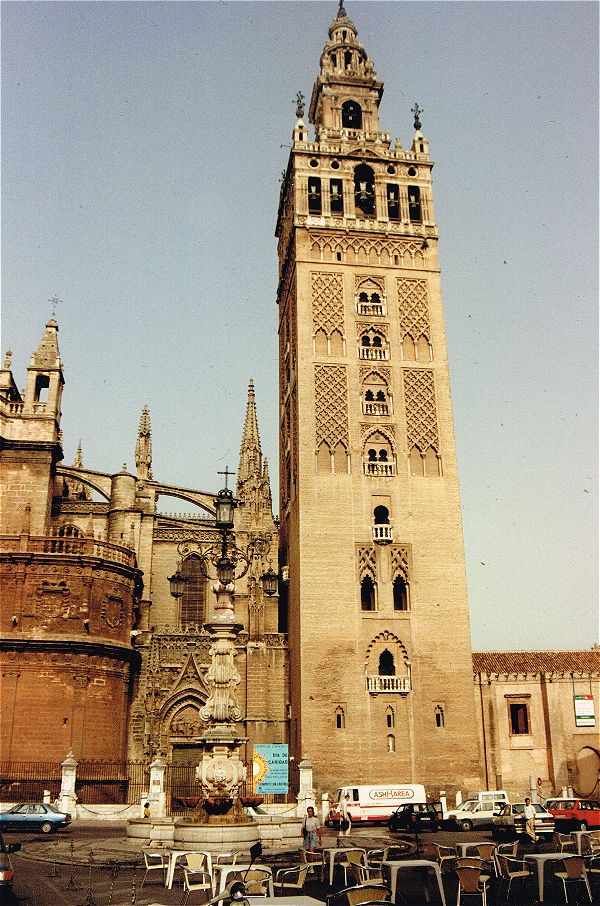 La Giralda, Sévilla (June 1991) La Giralda, Sévilla (June 1991)Construction of Spanish cathedrals, frequently, was halted when funds ran out. In the nineteenth century, work on unfinished parts of the cathedral started. Among the unfinished parts of Sévilla's cathedral was the façade of the north transept. The door of the north transept, the Puerta de la Concepción, was modelled in neo-Gothic style to fit in with the style of the cathedral. It was constructed between 1895 and 1917. technical detailsDate of issue: 31 May 1965 Value: 80 céntimos (local letters up to 20 grammes) Colours: red and chestnut Format: 28.8 x 33.2 mm. Perforation gauge: 13¼ Printer: F.N.M.T. (Fábrica Nacional de Moneda y Timbre) Printing process: intaglio Engraver: Unknown Number printed: 6,000,000 Edifil nr. 1647 |
|
Send note to Staff
|
|
|
Pillar Of The Community
Netherlands
6647 Posts |
|
|
16. Sinagoga (Toledo)Toledo is situated on the Tagus River, about 85 kilometres south-southwest of Madrid. High-speed trains cover the distance in just 33 minutes. It is the capital of the homonymous province in the autonomy of Castilla – La Mancha. In the fifth century, Germanic tribes invaded the Iberian Peninsula. Toledo became the capital of the Visigoth kingdom that would encompass all the Peninsula and a small part of France around Narbonne. Like much of the peninsula, Toledo was conquered by the Umayyads in 711. In 1085, Alfonso VI "The Brave" reconquered the city. As was the case in many mediaeval Spanish cities, it was populated by Christians, Muslims, and Jews who left their marks on the city's architecture. The sixteenth Stamp in the series depicts the arcades of the Mudéjar church of Santa María la Blanca in Toledo. The arcades that separate its five naves have horseshoe arches resting on Romanesque capitals decorated with carved pinecones and vegetal motifs. The capitals sit on octagonal brick pillars. The arches support a frieze decorated with geometrical patterns in Almohad style. The caption of the stamp alludes to the church's origin as synagogue. 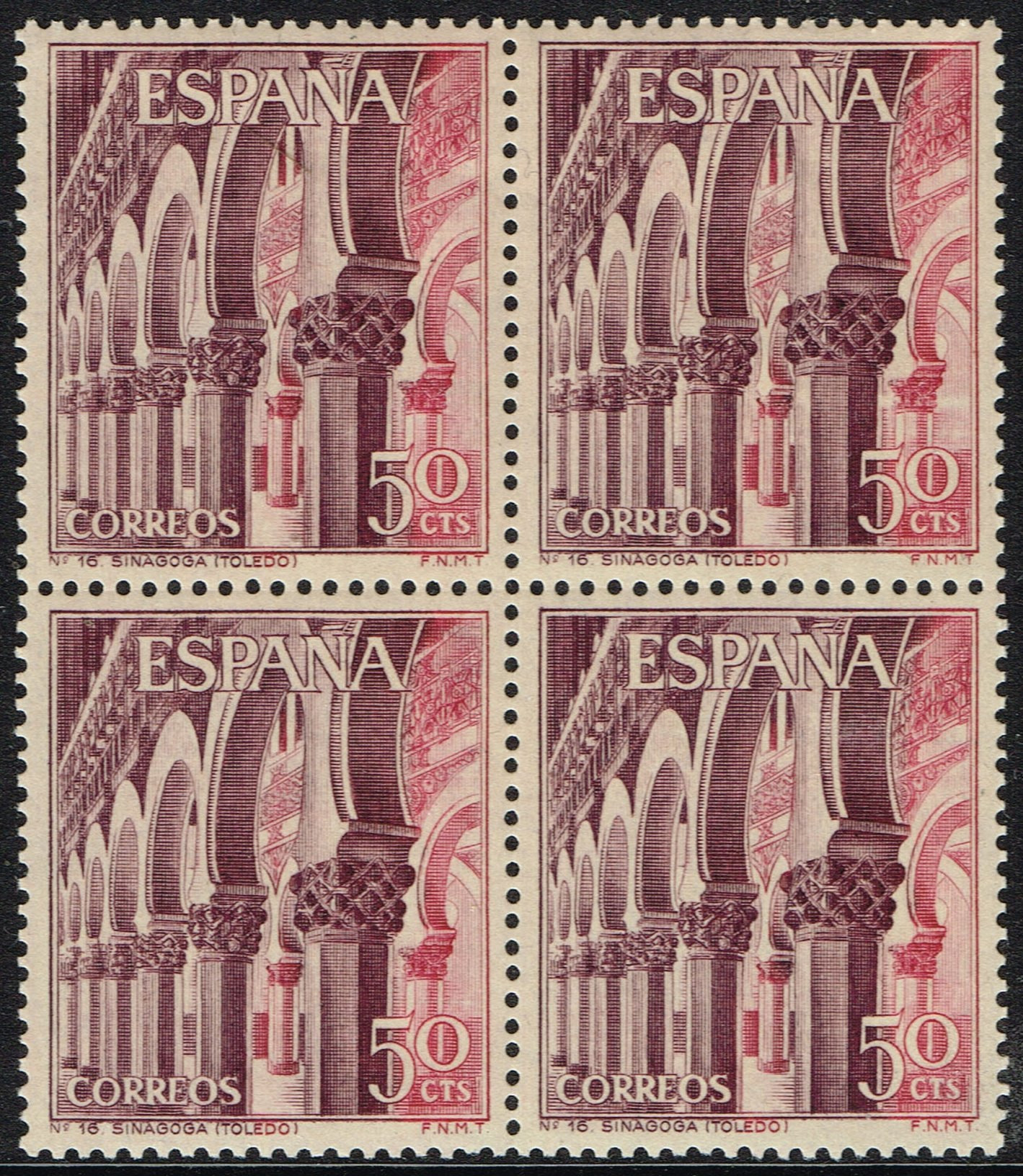 No. 16, Sinagoga (Toledo), Edifil nr. 1645 No. 16, Sinagoga (Toledo), Edifil nr. 1645Little is known about the construction of the synagogue. It, likely, was the main synagogue of Toledo's Jewish quarter, constructed by Abraham ibn Alfache, at the end of the twelfth century (ca. 1180). Abraham ibn Alfache was a councillor and emissary of King Alfonso VII "the Noble" of Castile. King Alfonso VIII was openly sympathetic to the Jewish community in Castile. The synagogue was destroyed by fire in 1250. In 1260, King Alfonso X "the Wise" of Castile granted the Jewish community of Toledo permission to reconstruct "the greatest and most beautiful synagogue in Spain." This was done by mudéjares, the Muslims that remained in the reconquered Spanish territories. At the end of the fourteenth century, Vicent Ferrer preached against the Jews in the Spanish kingdoms. He instigated the pogroms that occurred in 1391. Most of the ten synagogues in Toledo were destroyed during the pogroms. The main synagogue was one of only two synagogues known to have survived. In 1411, as a direct result of the preachings of Vicent Ferrer, the main synagogue was converted into a church of the Order of Calatrava and dedicated to Santa María la Blanca. technical detailsDate of issue: 26 July 1965 Value: 50 céntimos (supplement for airmail letters and postcards to Gibraltar, Portugal (excl. Azores), and Morocco for 5 grammes; supplement for each additional 20 grammes for inland letters and letters to possessions, Philippines, UPAEP (not USA), Andorra, Gibraltar, Portugal, and French border zone above 100 grammes) Colours: chestnut and rose Format: 28.8 x 33.2 mm. Perforation gauge: 13¼ Printer: F.N.M.T. (Fábrica Nacional de Moneda y Timbre) Printing process: intaglio Engraver: Unknown Number printed: 6,000,000 Edifil nr. 1645 |
|
Send note to Staff
|
|
|
Valued Member
Germany
12 Posts |
|
|
Pillar Of The Community
570 Posts |
|
|
They're very beautiful!! Some of these were also my first stamps during my childhood days!!! Today they are still in my albums!!! |
|
Send note to Staff
|
|
|
Pillar Of The Community
Canada
5821 Posts |
|
|
In the early sixties I ordered commemoratives direct from the Spanish Philatelic
Service.
I was amazed by the subjects and colours of the engraved stamps considering
the printing press could do only 2 colours. |
|
Send note to Staff
|
|
|
Valued Member
Germany
12 Posts |
|
|
NSK, if it may be of interest, the engravers of the stamps that you note as unknown:
- N°13: Monument to Colon engraved by Carlos Velamazan
- N°14: Cudillero also engraved by Carlos Velamazan
- N°15: Seville Cathedral engraved by Martinez Lauz
- N°16: Toledo Synagogue engraved by Pedro Pascual
Best regards |
|
Send note to Staff
|
|
|
Pillar Of The Community
Netherlands
6647 Posts |
|
|
Urquizar, thanks for that information. Juan A. Rodado Tortolá does not name the engravers of those stamps. Maybe they were not employed by FNMT but just contracted?
Edit, no, I see they did work under Camilo Delhom and Germán Martín Orbe.
Full name: Eustaquio Carlos Velamazán Pérez, Pedro Pascual Escribano |
|
Send note to Staff
|
| Edited by NSK - 03/15/2024 4:09 pm |
|
|
Valued Member
Germany
12 Posts |
|
|
NSK, upon seeing your great work, I also searched my data to see if I could find the authors and I didn't have them either. I contacted the FNMT engravers section and they provided me with the information. |
|
Send note to Staff
|
|
|
Pillar Of The Community
Netherlands
6647 Posts |
|
|
What is interesting is that Manuel Lauz does not appear on the payrolls of the FNMT of 1963, 1967, or 1968. I wonder if Manuel García Martínez, aka Manuel Lauz is the same as Martínez Lauz. Manuel García Martínez does not appear on the payrolls either. |
|
Send note to Staff
|
|
|
Valued Member
Germany
12 Posts |
|
|
Valued Member
Germany
12 Posts |
|
|
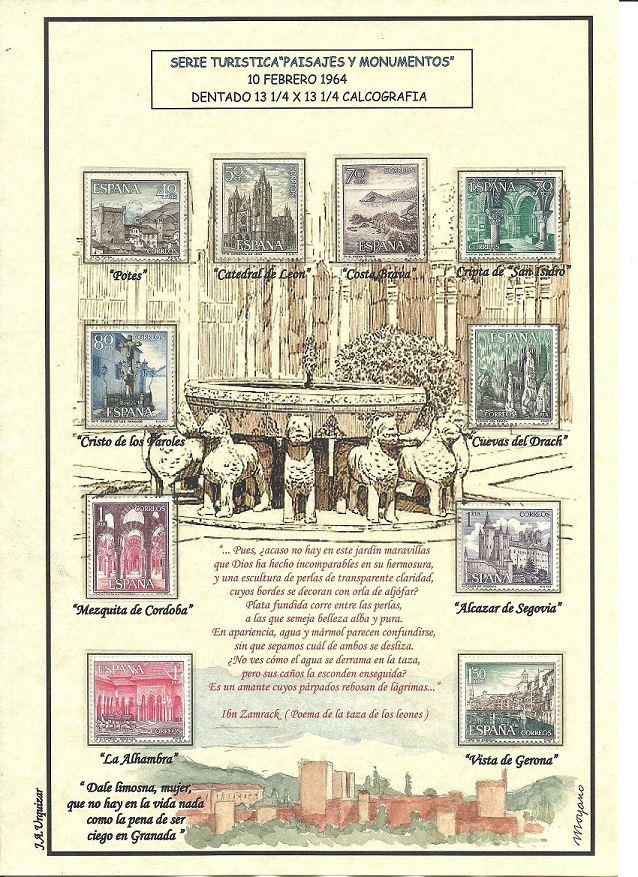
The page I created corresponding to this series we are talking about... 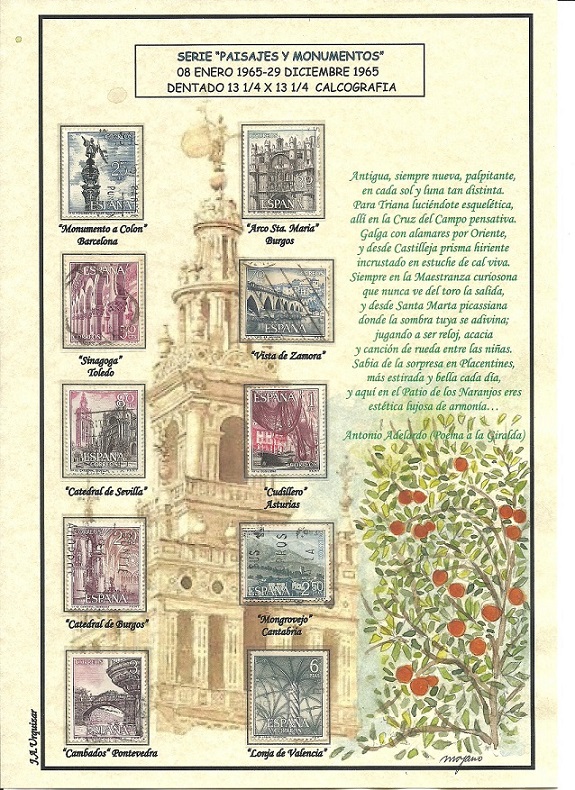 |
|
Send note to Staff
|
|
|
Replies: 33 / Views: 4,759 |
|
|
To participate in the forum you must log in or register. | |
Disclaimer: While a tremendous amount of effort goes into ensuring the accuracy of the information contained in this site, Stamp Community assumes no liability for errors. Copyright 2005 - 2026 Stamp Community Family - All rights reserved worldwide. Use of any images or content on this website without prior written permission of Stamp Community or the original lender is strictly prohibited.
Privacy Policy / Terms of Use Advertise Here |
| Stamp Community Forum |
© 2007 - 2026 Stamp Community Forums |
| It took 0.27 seconds to lick this stamp. |
 |
|
|
|


 Posted 04/10/2023 1:57 pm