Angore,
You ask two questions.
The first is what the *typical sizes* are. This is a "static" question. In the U.S. the vast majority are 8.5 x 11, with 11x17 coming in a distant second place and other sizes quite the exception.
Then you ask about the *trend* which is a "change" question. As noted by pothers, I too sense that U.S. collectors are gradually shifting to 11x17 to gain back some extra space normally lost to margins. 11x17 printers cost more and page protectors are more difficult to obtain and more expensive, so there are some economic factors.
The standard Ameripex-style frame which every WSP show uses has an opening of 35 x 47, which is ideal for sixteen 8.5 x 11 pages, or eight 11x17 pages. Yes, a few exhibitors have done quadrant pages, particularly for large documents with revenue stamps. This is a portion of a measured drawing of such a frame:
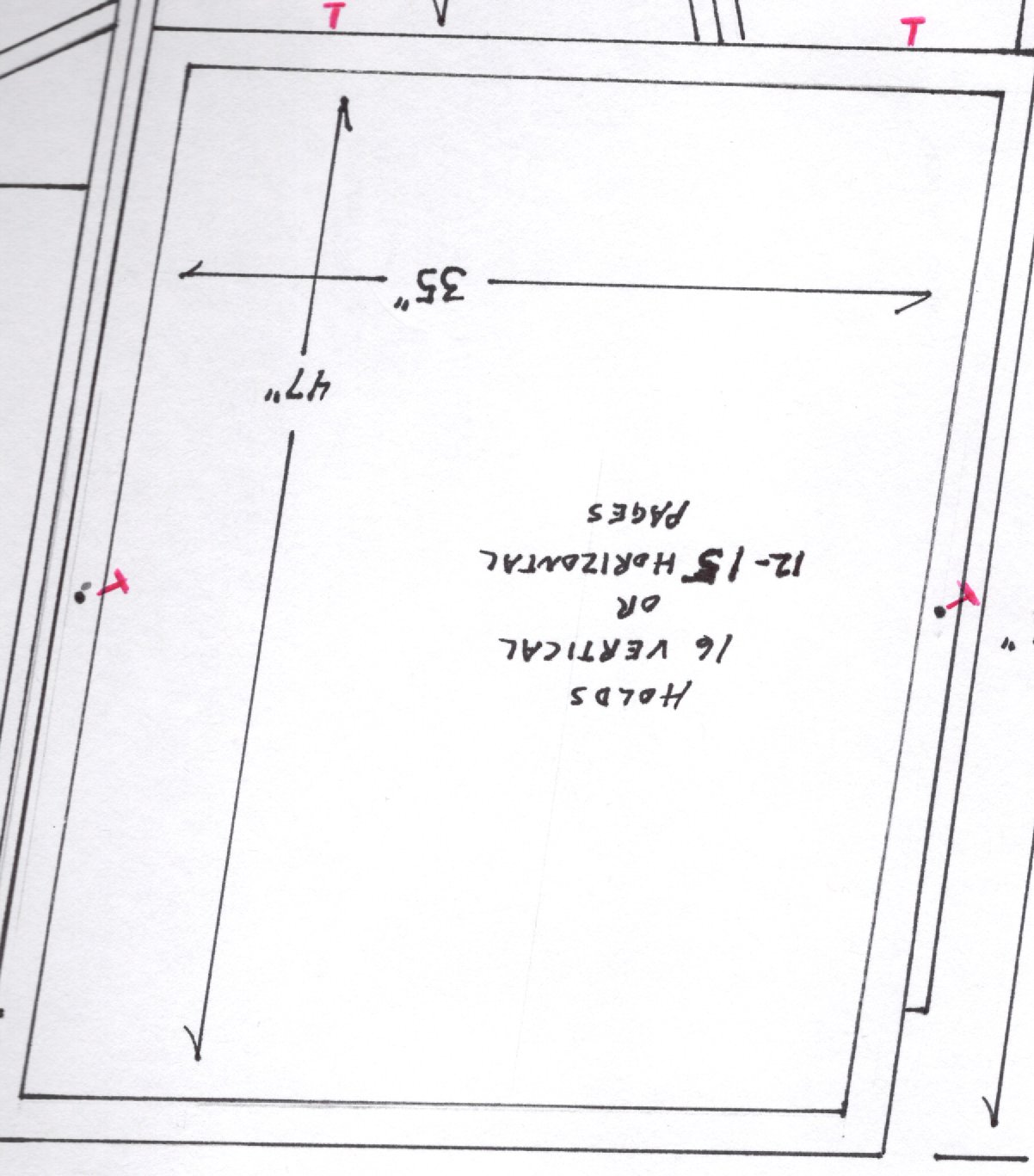
For those who want to fill every inch, one can have 11" pages in the top row and 12" pages in the other 3 rows, AND uses 9" wide pages with a wee bit of overlap. For non-standard sizes, I have done one exhibit with quadrant-sized pages and on the other extreme, one with 20 narrow pages fitting 5 pages per row.
You have been silent on the nature of the size of your material. Without any input from you on that question, it is hard to get meaningful detailed replies and thus it is best to stay with 8.5 x 11 pages - especially since you seem to be at the beginner level of exhibit preparation. In other words, don't worry about the status quo or the trend of other exhibitors, but let your material dictate its best presentation method.
Add:
Here is what 16 pages look like, note the lack of any space above the top page, but approximately 1" above the lower three rows:
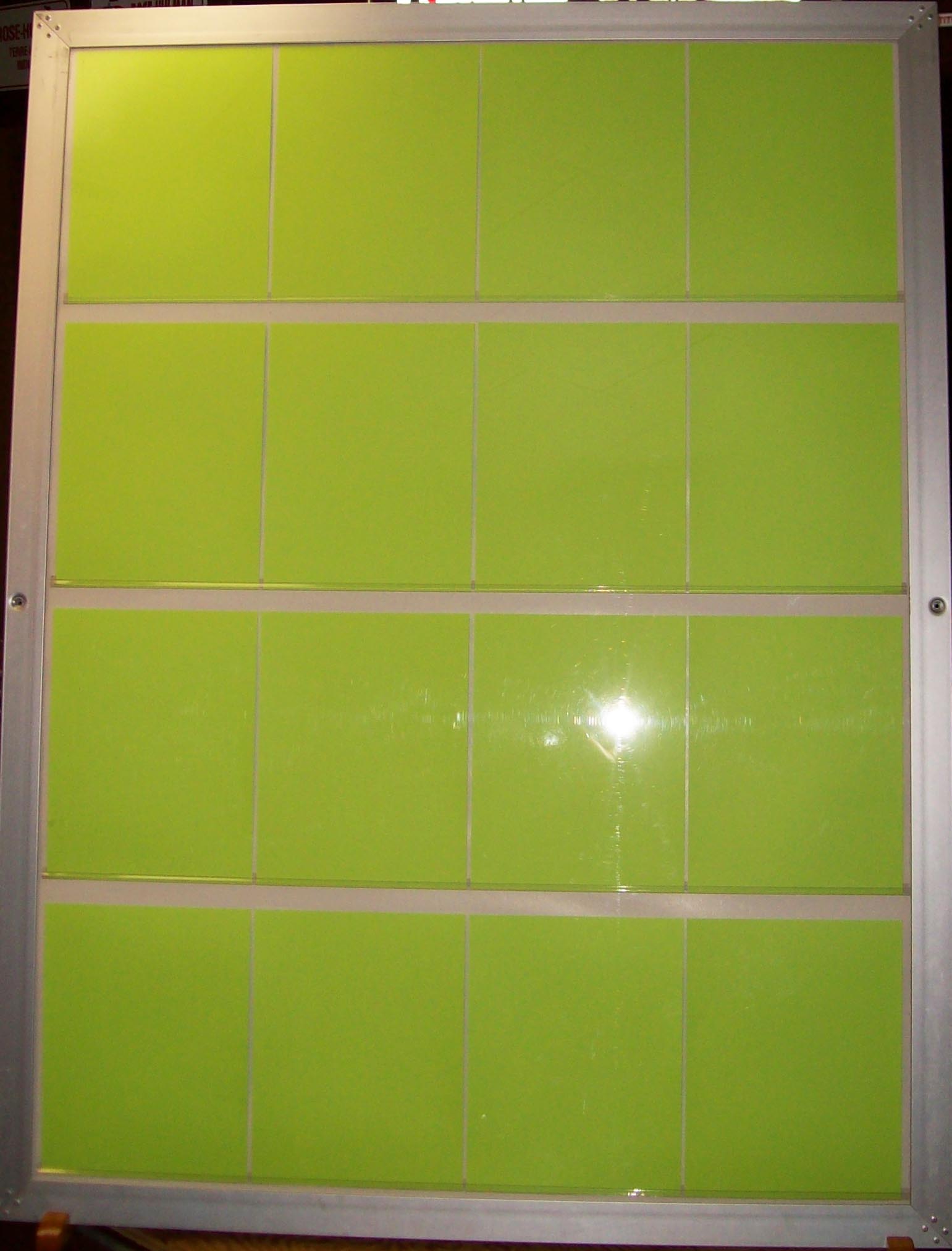
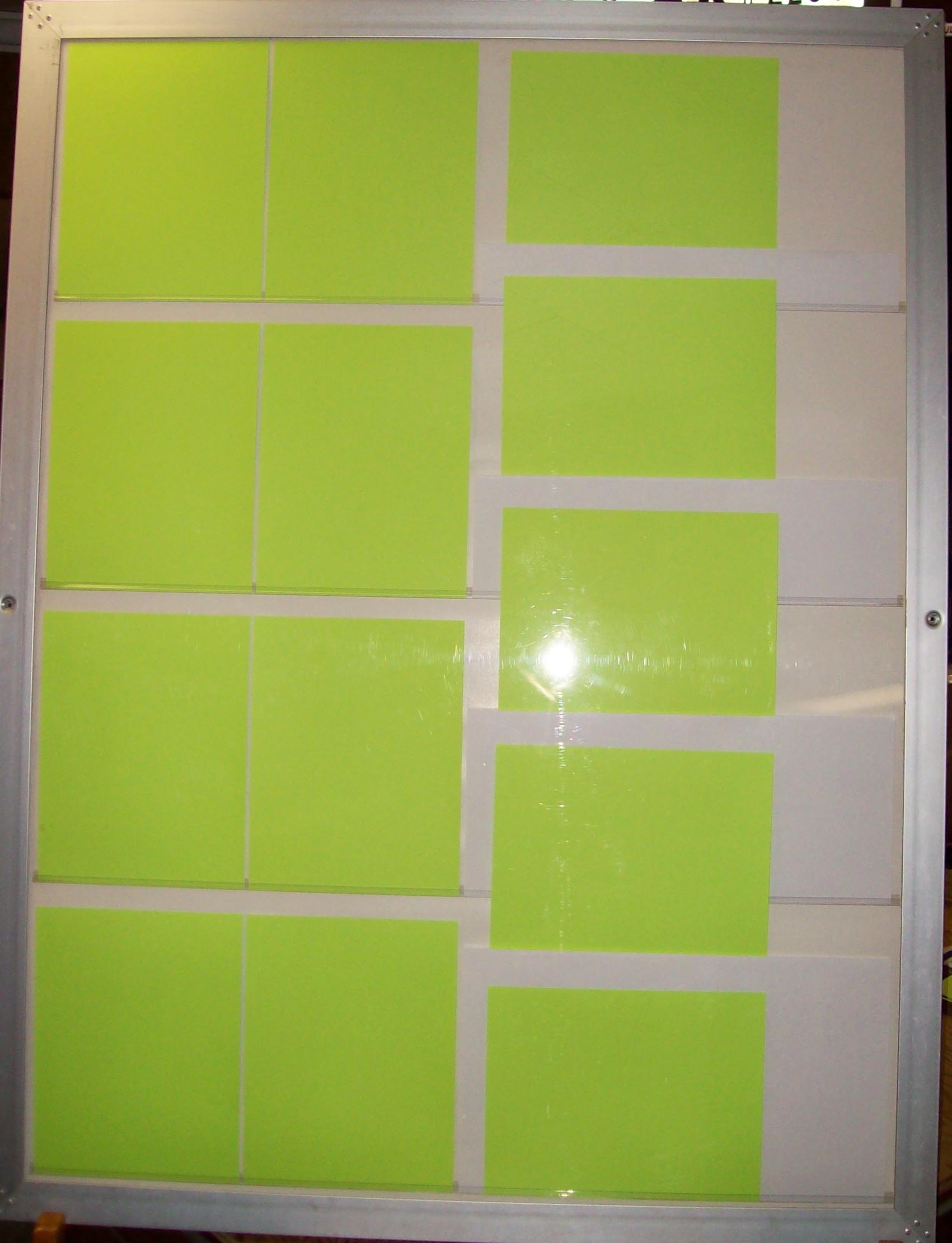
Non-philatelically, I recently had a friend want to show horizontal printouts from a Powerpoint presentation. Normally that would mean 4 rows of 3 pages = 12 total/frame, but that left a lot of blank space, so I folded 11x17 card stock to make elevated gutters at varying heights to make 5 rows, thus displaying 15 horizontal pages per frame, here showing a mock-up on the right side:
And here a closeup of the jig:
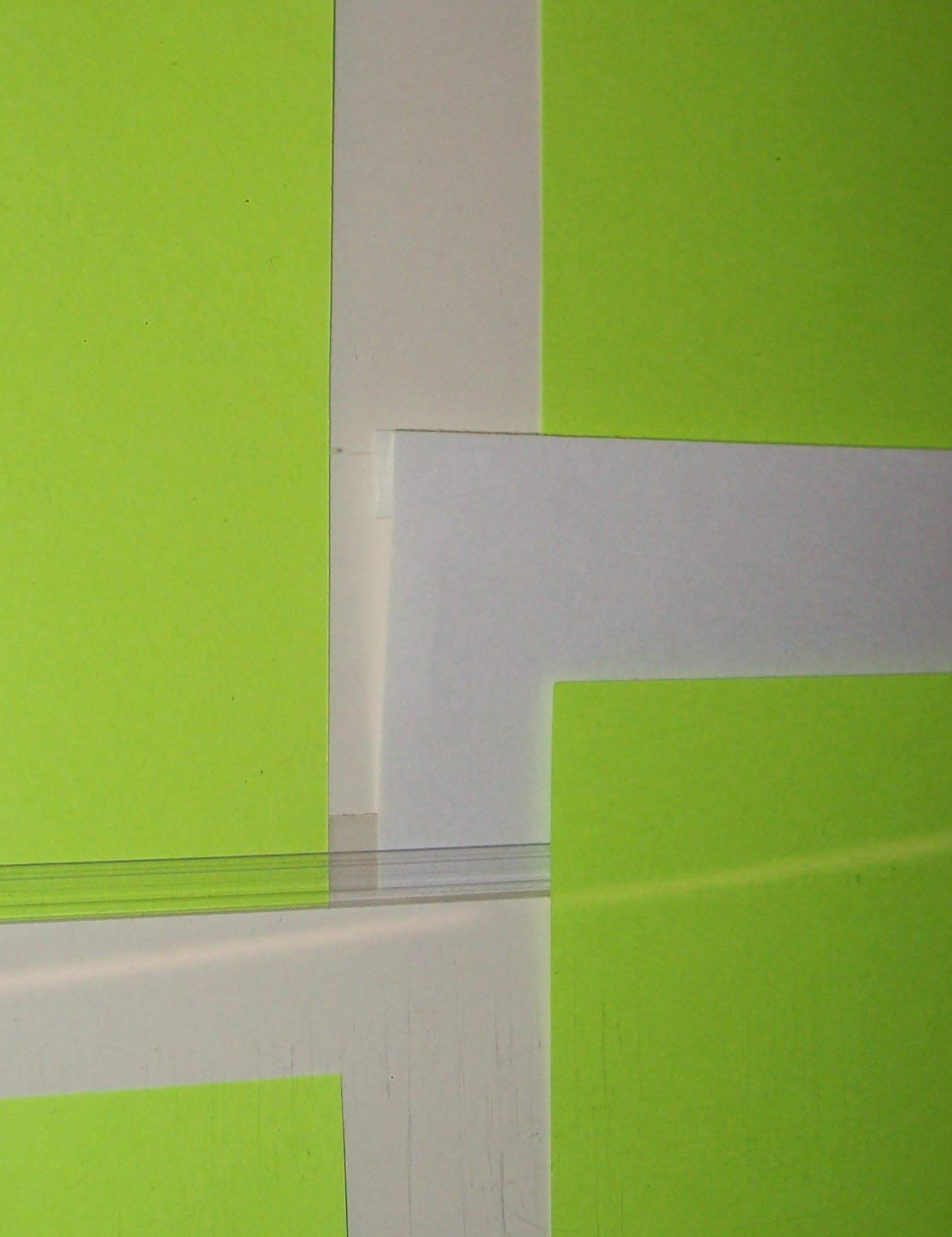
The moral to the story, if one wants to do something non-standard, it must be measured very carefully to fit, which is why I have a frame at home.





 Posted 04/17/2023 09:59 am