| Author |
 Replies: 20 / Views: 1,903 Replies: 20 / Views: 1,903 |
|
Pillar Of The Community
567 Posts |
|
|
I would like to tell you what has happened to me with this stamp, since perhaps I have made a mistake... I have removed and cleaned stamps many times with a method that my father taught me many years ago, and I have never had any problem with even the loss of color, not on the paper, not on anything...the stamp has always come out perfect after the treatment. That's why I decided to apply it to this stamp from 1873 probably SC#159, since it was very damaged and had very bad moisture stains. The stamp is interesting because despite its deterioration it has a beautiful cancellation of red ink. After a first treatment to remove the thickest part and in view of giving it a second to finish it off, I observed with horror that some black lines that were previously on the top and bottom of the seal had practically disappeared, leaving a trail of an orange line...I have stopped the treatment at this point…What do you think about it? was it a mistake? must I continue? Before 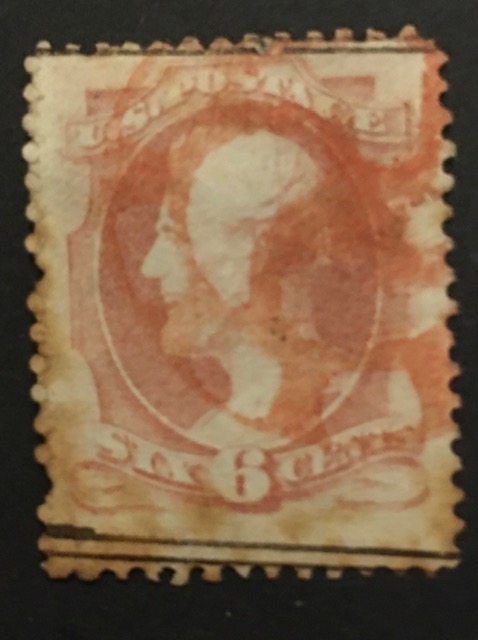 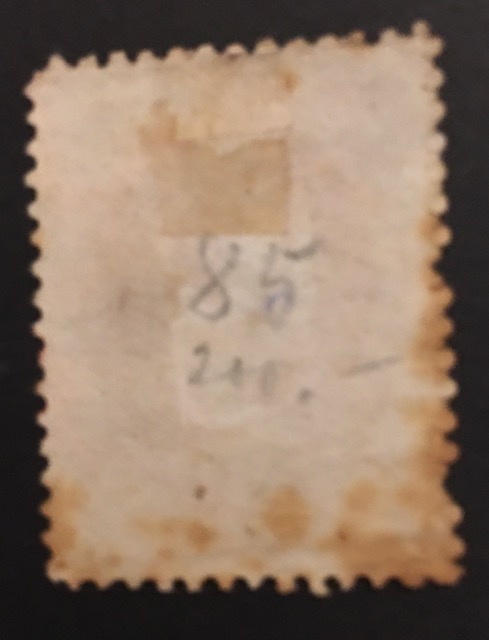 After 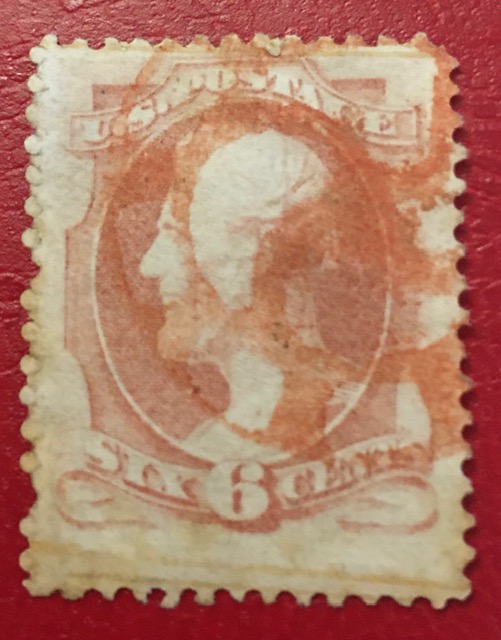 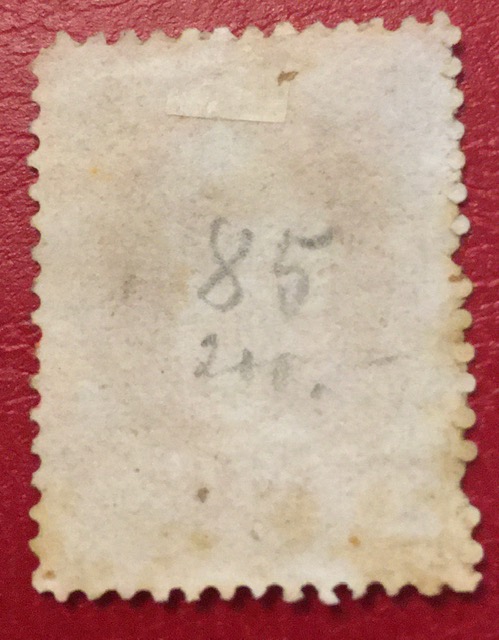 |
|
Send note to Staff
|
|
|
|
|
Pillar Of The Community
United States
8956 Posts |
|
|
Pillar Of The Community
567 Posts |
|
|
A common treatment, 4 baths:
-warm water with salt
-water with potassium permanganate
-water with lemon
-water with salt
|
Send note to Staff 
|
|
|
Pillar Of The Community
567 Posts |
|
|
The problem is that if I repeat the treatment to remove the remains of the hinge and dirt, in all likelihood the lines will disappear completely, and I don't know what importance they may have for the the stamp... |
|
Send note to Staff
|
|
|
Pillar Of The Community
6358 Posts |
|
|
Quote:
A common treatment Common? No. Wherever your father got this recipe, please stop using it. I shuddered as I read your post Admittedly, you do not provide the quantities/concentrations of the additives you ae using. But please stop. There should be no need for anything beyond a plain, cool water bath to remove the remnants on the back side - and that should always be the first step. Like trying to polish coins, "cleaning" stamps tends to make them less desirable. |
|
Send note to Staff
|
| Edited by John Becker - 02/11/2024 09:21 am |
|
|
Pillar Of The Community
United States
1434 Posts |
|
|
In almost half a century, I've never heard of any process like this; seems like a terrible idea. |
|
Send note to Staff
|
|
|
Moderator

United States
12330 Posts |
|
|
Quote:
A common treatment, 4 baths:
-warm water with salt
-water with potassium permanganate
-water with lemon
-water with salt I support and promote good stewardship of the material that we all temporarily possess. The above is NOT good stewardship; other than the water every chemical listed above potentially has a negative effect on paper. Potassium permanganate is a strong oxidizer, you are basically bleaching the stamp. I am sure that it makes a stamp 'look' cleaner/brighter, but so would using a light bleach. Lemon is acidic, if any lemon is left behind in the paper fiber this can result in future toning and deterioration of the stamp. Salt will dry on/in the paper fiber and be an abrasive and this can break down the paper fibers. I do believe in private ownership rights and think it is your 'right' to do whatever you want with your own stamps. But in my opinion, this is horrible stewardship. I also hope that if you ever sell any of your stamps that you have treated this way that you will disclose that they have had this chemical treatment. Soaking stamps should be about conservation, not about restoration. Conservation dictates using clean, cool water only. Don Edit: Older generations got a LOT of things wrong. My parents were full of incorrect information such as; Feed a cold; starve a fever. If you cross your eyes, they'll get stuck that way. Shaving hair makes it grow back thicker. Wait an hour after eating to go swimming. Cracking your knuckles causes arthritis. |
|
Send note to Staff
|
|
|
Pillar Of The Community
567 Posts |
|
|
It really surprises me that this treatment is not known...since it is or was really common in many used stamps damaged by humidity or fungus.
From what I understand, the salt water is to set the colors, the pergamanate is a fungicide, and the lemon is to eliminate the pergamanate. I have had stamps with this treatment for more than 30 years and they continue like the first day. It is obvious that it is not valid for new stamps since they would cease to be new... The problem come when details of the stamp are deleted such as the cancellation or in my case those lines that I still don't know what they are... |
|
Send note to Staff
|
|
|
Moderator
United States
12330 Posts |
|
|
Quote:
It really surprises me that this treatment is not known...since it is or was really common in many used stamps damaged by humidity or fungus.
From what I understand, the salt water is to set the colors, the pergamanate is a fungicide...
Can you supply a reference (that is less than 75 years old) that recommends this? Here is an excerpt from the 1989 "A Survey of Recent Scientific Research Which has Caused a Re-evaluation of Commonly Used Practices in Book and Paper Conservation." AIC Book and Paper Group Annual, vol. 7, 1988, p. 30-39 Quote:
"Bleaching
Bleaching is probably the most talked-about treatment in paper conservation. "To bleach, or not to bleach," that is the question. As Helen Burgess says: "It is difficult to conceive of a process which has more potential for the sheer destruction of artifacts."
Nevertheless, we do bleach! Over the last decade, chemical bleaches have been examined pretty closely and the general parameters of their safe use seen to be well defined. Bleaching must be done with the greatest respect for the artifact AND with the greatest attention to the method of application in order to make it as "safe" as possible.
The reactions which take place during bleaching are either chemical oxidation or reduction of the colored materials. It is difficult to confine this process solely to the stains you want to remove. Other components which make up the artifact, both the substrate and the medium, may be damaged by these same reactions. In addition to whitening, oxidizing agents cause changes that include a decrease in the degree of polymerization of the cellulose molecule, increase in carbonyl oxidation products, and the loss of a wide variety of physical strength properties. Nonetheless, oxidizing agents are often the only effective treatment against severe discoloration and have long been used in conservation treatments.
Some oxidizing bleaches which have fallen out of favor over the years are potassium permanganate and chloramine-T. The problem with chloramine-T is that it bonds very strongly to paper fiber and can be extremely difficult if not impossible to remove. There are better oxidizing bleaches available which do not have this problem. As for potassium permanganate, I do not know how widely it was used--I experimented with it once--it turned the paper sample bright purple-brown, then I added the acid which was the second step, and it became white again. It was 4th grade chemistry at its best. Chemically and esthetically it was terrifying to consider it as a conservation treatment."
Emphasis added by me. But my point is that yes, your approach will probably make the stamps look better. And it will impact fungus (but may not kill it completely). Bleach will do the same thing but that is hardly justification the irreversible damage that can occur. But it is NOT conservation, you are chemically altering stamps for strictly aesthetic reasons. It is horrible stewardship and I hope you never do this with any stamp that carries value. Don |
|
Send note to Staff
|
|
|
Pillar Of The Community
567 Posts |
|
|
Pillar Of The Community
United States
8956 Posts |
|
|
I found this reference from 50 years ago
A lot can change in 50 years. Please read the answers you are getting from the experts and quit this stuff
Peter |
|
Send note to Staff
|
|
|
Pillar Of The Community
United States
775 Posts |
|
|
Wow, there is a lot of exciting information in this article, including the possibility of an explosion. But one only needs to read the first and last paragraph to understand the consequences. Here is short excerpts of the first and last paragraphs:
"There also is a chance that attempts at restoration will result in more damage to a stamp".
and
"Notwithstanding a share of grievous disappointments, and many ruined stamps the stamp restorer will be able to convert certain eye-sore stamps . . ."
Philately has plenty of challenges without having to deal with chemicals. |
|
Send note to Staff
|
|
|
Pillar Of The Community
567 Posts |
|
|
I found another reference from 1938 by the restorer Max Schweilder, where he applies permanganate to the restoration of stamps. https://books.google.es/books?id=-k...sium&f=falseFor at least 100 years, stamps have been treated for conservation, restoration and even fraudulent manipulation...many stamps have been treated and are part of all types of collections, knowing them and valuing them in your collection is one more complication of philately. Naturally I take into account everything that the forum experts who help me so much tell me, I like to debate things, it's not that I'm opposing it, if I didn't trust the quality of this community I wouldn't ask anything or raise any doubts. |
|
Send note to Staff
|
| Edited by Murasama - 02/11/2024 1:45 pm |
|
|
Moderator
United States
12330 Posts |
|
|
Quote:
...For at least 100 years, stamps have been treated for conservation, restoration and even fraudulent manipulation...many stamps have been treated and are part of all types of collections, knowing them and valuing them in your collection is one more complication of philately... I do not understand...your position is to continue chemically treating stamps even when you acknowledge it is a problem in philately? How is it ANY justification that 'people used to do this'? People used to use Crystal Mounts, do we use the same logic for using them today too? People used to 'cut to shape' stamped envelopes. Do we use the same justification for using this practice today? One thing that we certainly want to do is encourage good stewardship practices in our hobby. Don |
|
Send note to Staff
|
|
|
Pillar Of The Community
567 Posts |
|
|
Obviously I will not continue the treatment. And my intention is not to justify it, I'm just trying to say that it is not a recipe that I invented, nor a rarity within philately, it is an ancient practice applied to very damaged stamps, and from what I see it already appears in articles and books between the year 38 and 73, I imagine that at some point in history it was very widespread, enough to reach my father's hands, so many stamps from important collections including museums or auction houses will contain stamps with this treatment or similar ones. and they do not throw their hands on their heads. I know that the NGC-type coin certificates say when they were cleaned, I don't know if the stamp certifications include this point. |
|
Send note to Staff
|
|
|
Pillar Of The Community
United States
1123 Posts |
|
|
fyi, the "beautiful cancellation of red ink" on that stamp is a New York Foreign Mail cancel, used on mail sent abroad from New York City, mostly to Europe. Weiss gives it a catalog number of GE-C7, Cole NYFM-45 and Vlissingen & Waud it is listed as #W2. Here is my copy of that cancel, in black. I think it is one of the fancier fancy cancels from that period, and especially nice when you can get it in red. 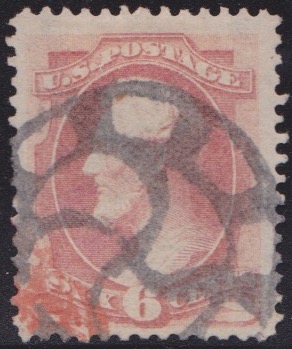 |
|
Send note to Staff
|
|
|
Replies: 20 / Views: 1,903 |
|




 Posted 02/11/2024 05:06 am


