| Author |
 Replies: 130 / Views: 12,910 Replies: 130 / Views: 12,910 |
|
|
|
Pillar Of The Community
Israel
4904 Posts |
|
|
Thanks, Nils, for additional information. It could be that the designer invented the design. The 6th African Congress of Micropaleontology, issued by Tunisia on March 21, 1974.  |
Send note to Staff 
|
|
|
Pillar Of The Community
Israel
4904 Posts |
|
|
Bernard Palissy (1510–1589) is known for his contributions to the natural sciences, and is famous for discovering principles of geology, hydrology and fossil formation. Palissy was imprisoned for his belief during the tumultuous Wars of Religion and sentenced to death. He died of poor treatment in the Bastille in 1589. French stamp assay shows Palissy, probably 1950-60's. The stamp was never issued. There is other a stamp of Palissy issued in 1957 and I don't know whether there is a connection to this assay.  |
|
Send note to Staff
|
|
|
Pillar Of The Community
Israel
4904 Posts |
|
|
Pillar Of The Community
Israel
4904 Posts |
|
|
Naracoorte Caves National Park is a national park near Naracoorte South Australia. It was officially recognized in 1994 for its extensive fossil record, especially mammal fossils, when the site was inscribed on the World Heritage List. Fossil cave, Naracoorte, issued by Australia on March 14, 1996.  |
|
Send note to Staff
|
|
|
Pillar Of The Community
Israel
4904 Posts |
|
|
Asaphus trilobite fossil, issued by Aland on October 9, 1996.  Postcards I bought while visiting Prague, Czech Republic about more than two decades ago. Both show trilobite fossils exhibited in the national museum.  |
|
Send note to Staff
|
| Edited by LaoPhil - 06/07/2025 1:22 pm |
|
|
Pillar Of The Community
Israel
4904 Posts |
|
|
Monte San Giorgio, located on the border of Switzerland and Italy, is a UNESCO World Heritage Site renowned for its exceptionally well-preserved Middle Triassic marine fossils. The site offers a unique window into life approximately 240 million years ago, with fossilized remains of reptiles, fish, and invertebrates. Its geological and paleontological significance makes it one of the most important fossil sites for understanding marine ecosystems of that era. Skeleton fossil of the reptile Ceresiosaurus, issued by Switzerland on September 7, 2004. 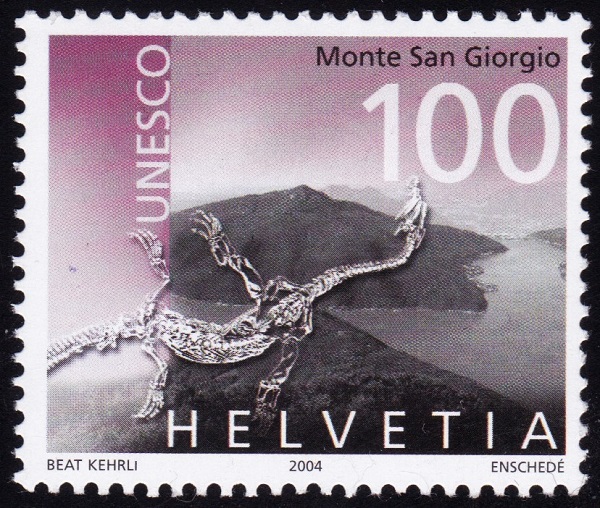 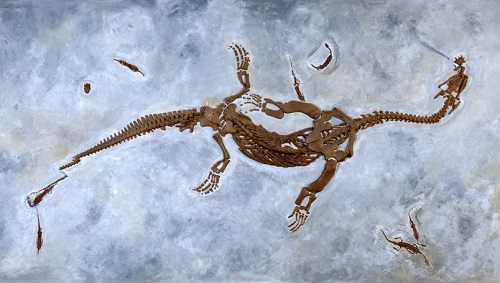 |
|
Send note to Staff
|
|
|
Valued Member
Slovenia
159 Posts |
|
|
Fossil mammals of Slovenia - Cave bear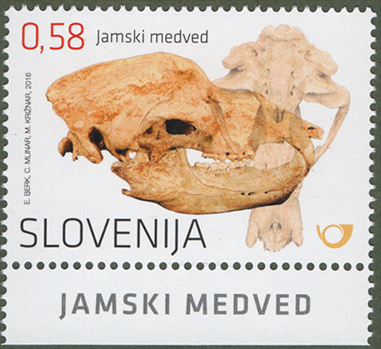 One of the most iconic Pleistocene mammals to roam the Slovenian landscape was the cave bear. Fossil remains of these impressive creatures have been unearthed across Europe and western Asia, with Slovenia boasting over seventy documented cave bear sites. In Slovenia, paleontologists have identified remains of several cave bear species: Ursus deningeri, found in Herkova cave; Ursus ingressus, discovered in Potocka zijalka and numerous other locations; and Ursus ladinicus, known from Ajdovska cave. These species offer a fascinating glimpse into the region's prehistoric biodiversity. The last cave bears disappeared from Slovenian territory around 25,000 years ago, marking the end of an era in the country's natural history. |
|
Send note to Staff
|
| Edited by zomirp - 08/17/2025 04:57 am |
|
|
Valued Member
United States
194 Posts |
|
|
Here is a fossil-on-stamp that always intrigued me. Chad Scott #133, featuring a hominid skull identified as Tchadanthropus uxoris. Since the stamp was issued in 1966, it has generally been accepted that this is actually a species of the genus Homo. I could never quite figure out what I was looking at with this stamp. What you are seeing is the front of the skull... the eye sockets are pretty clear, but not too much more detail. To the left is a side view that you don't quite notice at first. I've included a photo from the original publication showing the fossil. It was designed and engraved by Michel Monvoisin. I posted the base stamp, followed by the photograph. Then I've included a signed artist's die proof, a partial plate proof sheet (trial color essays) and a deluxe proof. 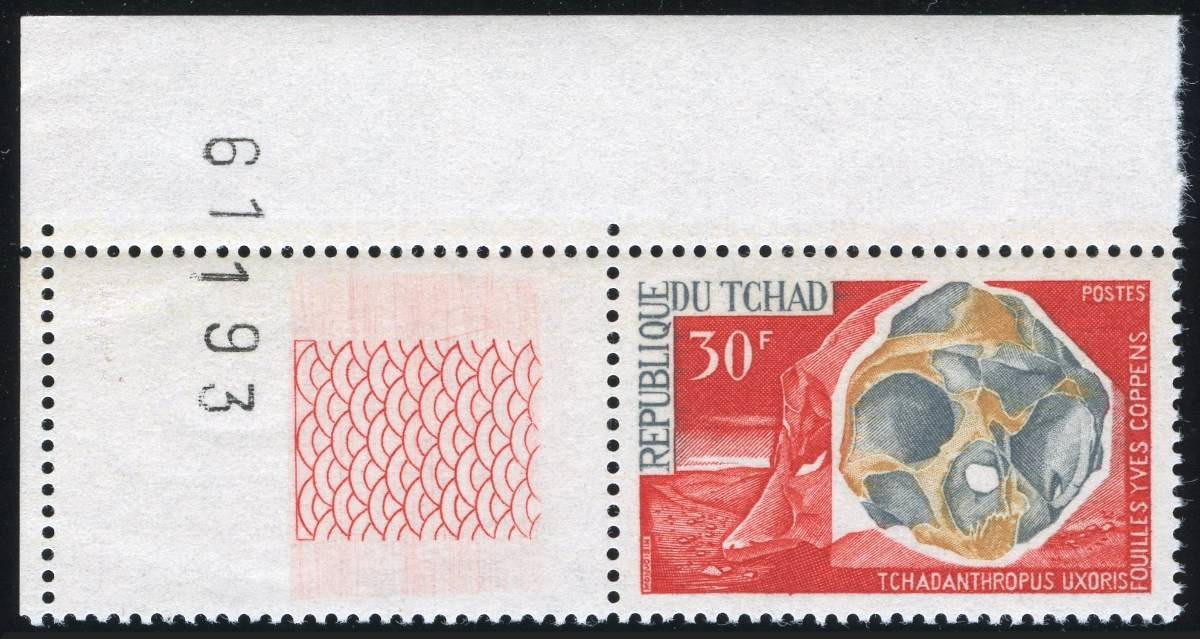 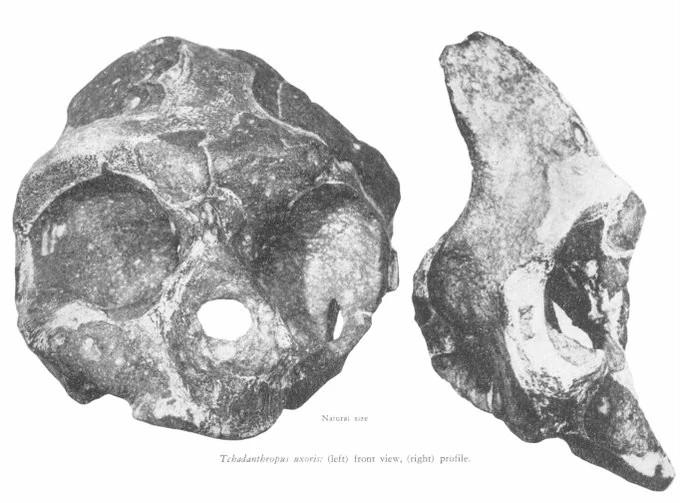 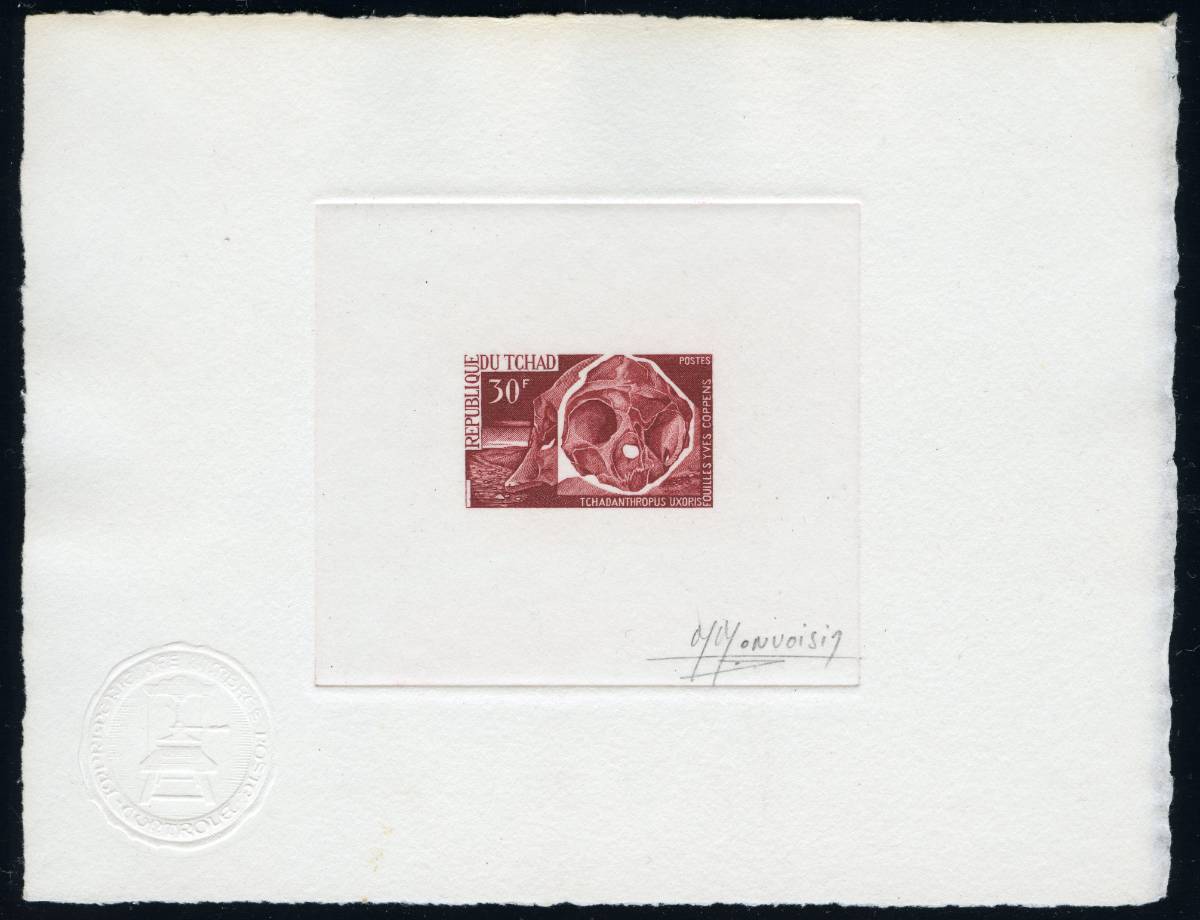 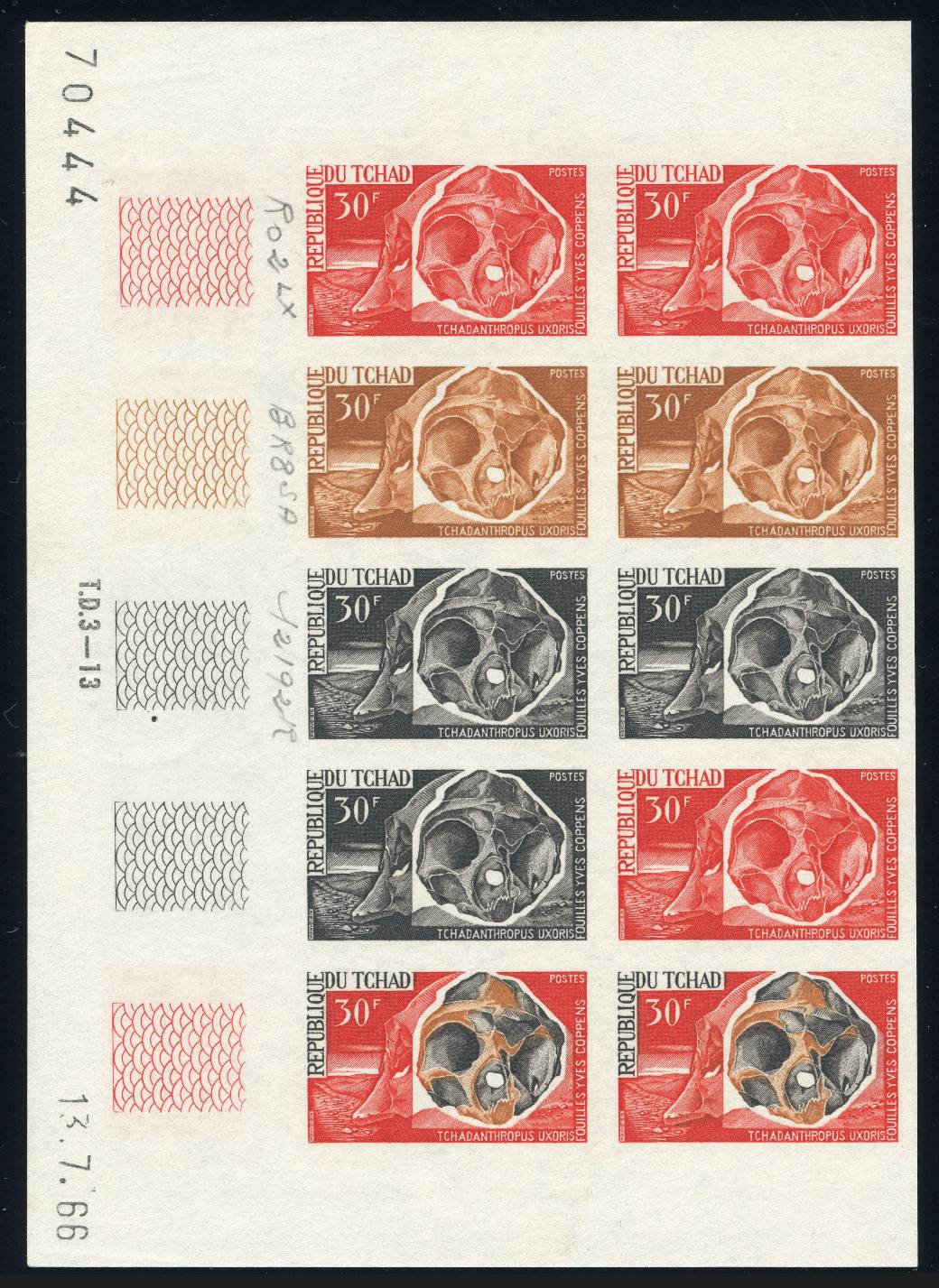 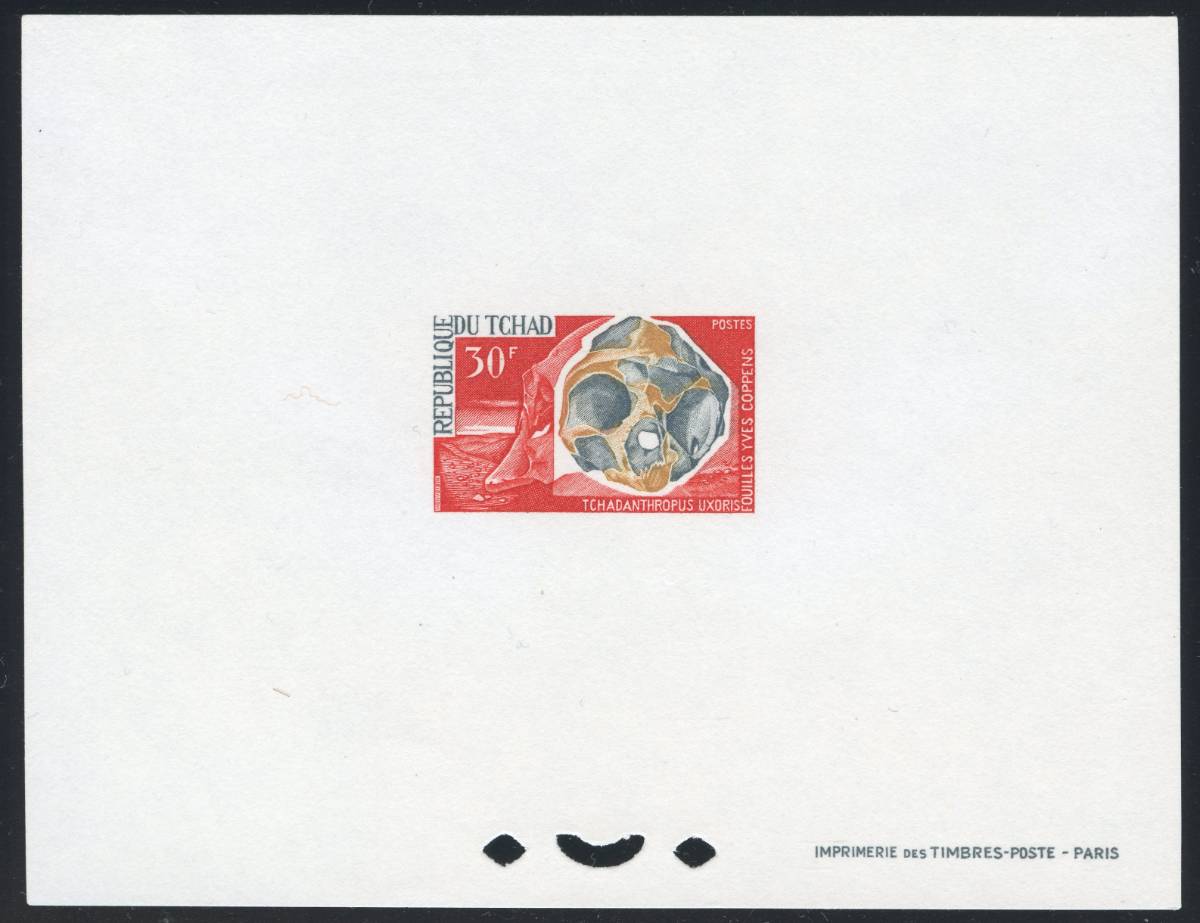 |
|
Send note to Staff
|
| Edited by Nils Helstrom - 08/31/2025 9:44 pm |
|
|
Valued Member
United States
194 Posts |
|
|
Laophil, I wanted to fill you in on the Bernard Palissy stamps you illustrated in this thread on 5/24/25. Those are actually printing test stamps... what Yvert & Tellier call experimental vignettes... that were produced to test printing machines. Y&T lists about 54 varieties of the Palissy stamp, of which there are three main types. The ones you illustrated are Type II. A little difficult for me to determine the color from the scan and relate it to the catalogue... it looks gray to me, it might be #Pa12. Although not dated in the catalogue, they list it before some 1955 issues, so early 50's (as you surmised) may be the date of production.
If you have or can access the Y&T catalogue, they're on pp 860-861 of the 2024 edition. |
|
Send note to Staff
|
| Edited by Nils Helstrom - 08/31/2025 10:18 pm |
|
|
Valued Member
Slovenia
159 Posts |
|
|
Fossil Mammals of Slovenia – Cave Lion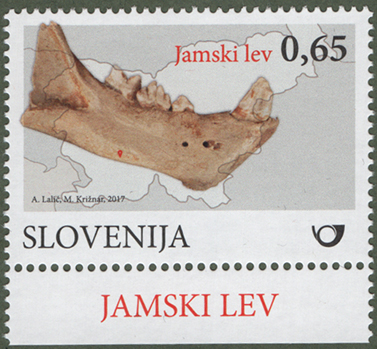 The cave lion ( Panthera leo spelaea) was one of the most formidable predators of the Ice Age, feared by all other animals for its massive size and ferocity. Fossil evidence of this apex predator has been discovered across much of Europe, underscoring its wide distribution and dominance. In central Europe, cave lions vanished between 25,000 and 15,000 BCE, marking the end of their reign. In Slovenia, the most well-preserved remains were unearthed in the Pleistocene layers of Postojna Cave. The lower jaw featured on the Slovenian stamp originates from this remarkable site. |
|
Send note to Staff
|
|
|
Replies: 130 / Views: 12,910 |
|




 Posted 05/23/2025 11:15 pm


