Look at any random PR of China-collection and you will discover some stamps with a big circulation are hard to find.
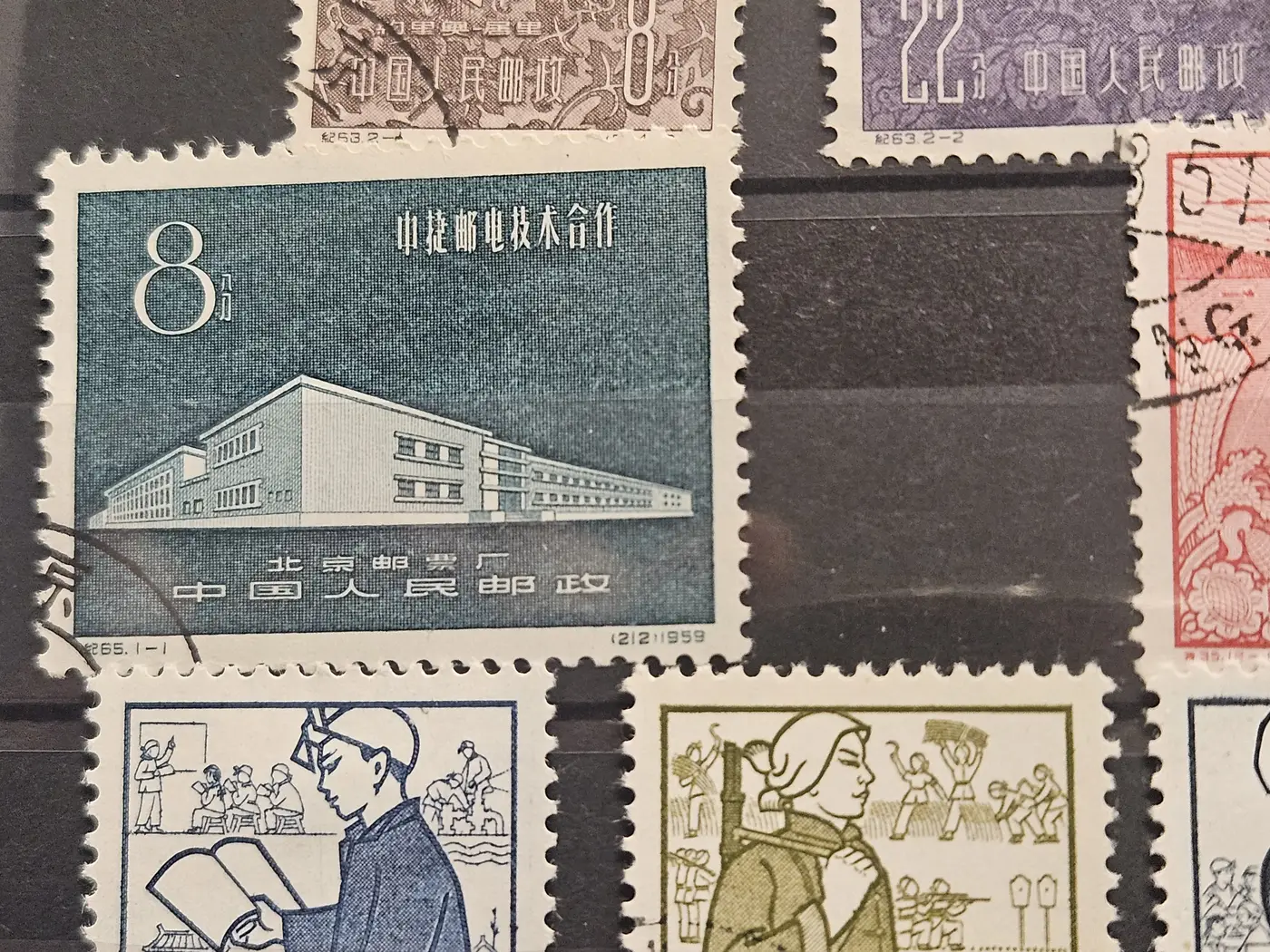 At last, an empty space filled( C65)...
Take for instance C65 from 1959, Sino-Czechoslovak Technical Cooperation on Posts and Communication (Let's just call it Sino-Czecho '

'). It had a circulation of some 7 million, and that's rather a lot for this period. It's worth only 6 dollar mint, 2 dollar used. Easy to find, you would say. Not at all. Took me a long time to encounter it and snap it up.
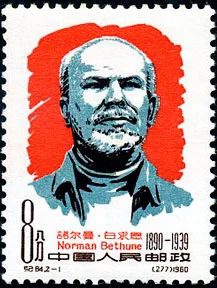
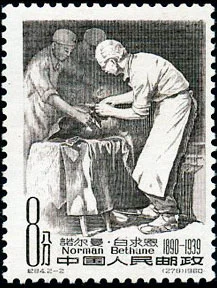 The Betune-set (C84), not al all common.
And C84, Dr. Norman Bethune, with a circulation of 5.4 million. The set is worth some 12 dollar mint and 6 used. Easy to find, you would say. Not at all. While many other set, like C56 Inauguration of Beijing Telegraph Building, with a similar circulation of 4.5 million, can be found in many, many collections.
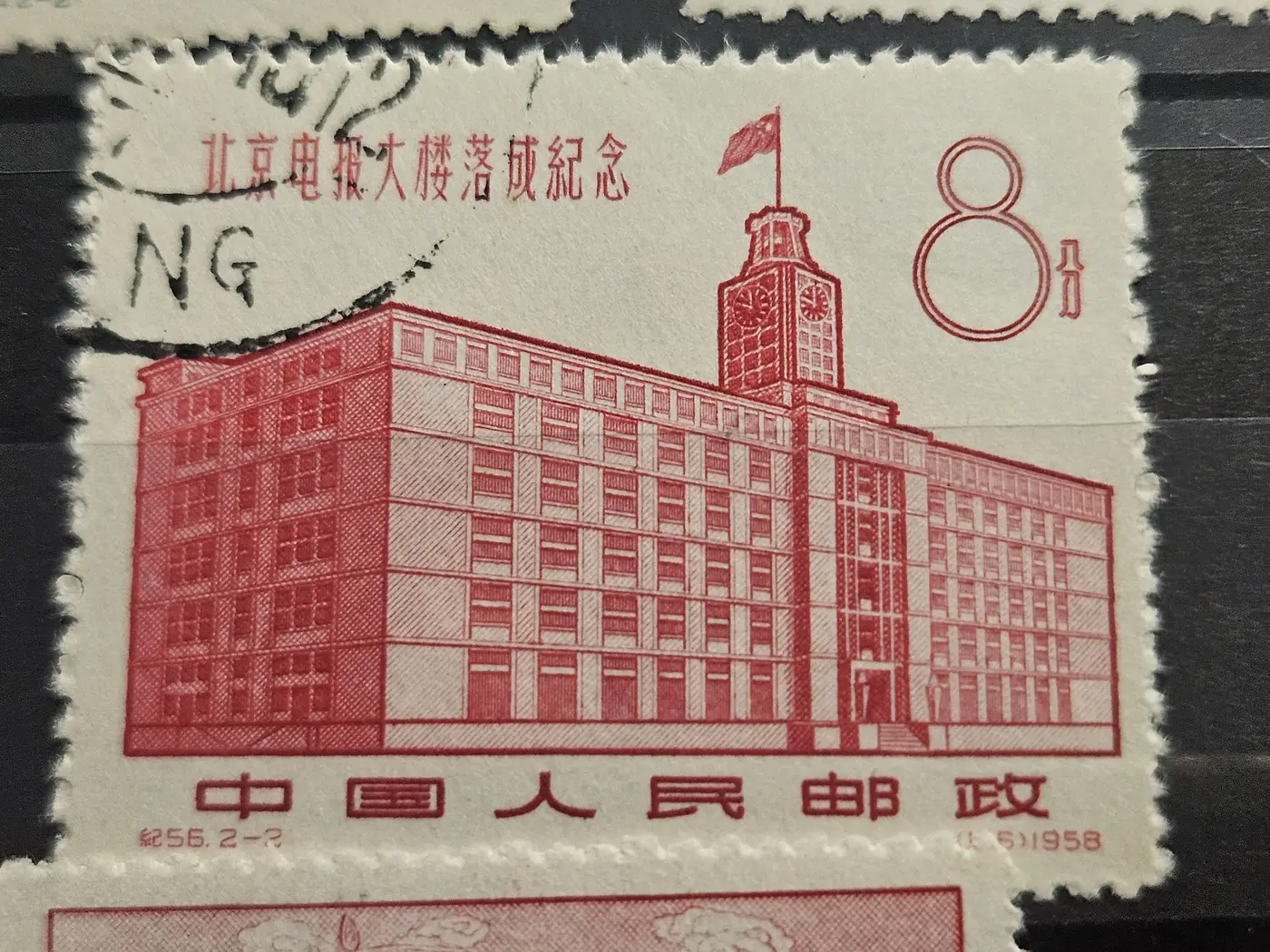 One stamp of the C56-set: Not a very large circulation, but can be found easily.
Some stamps may have survived the ravages of times, and there were a lot in China, while others perished. But why? There must be reasons behind it. And when talking about value, there often seems to be no real connection between the actual number of stamps still in collections and the value. Sino-Czecho, C65, should have a much higher value, for instance.
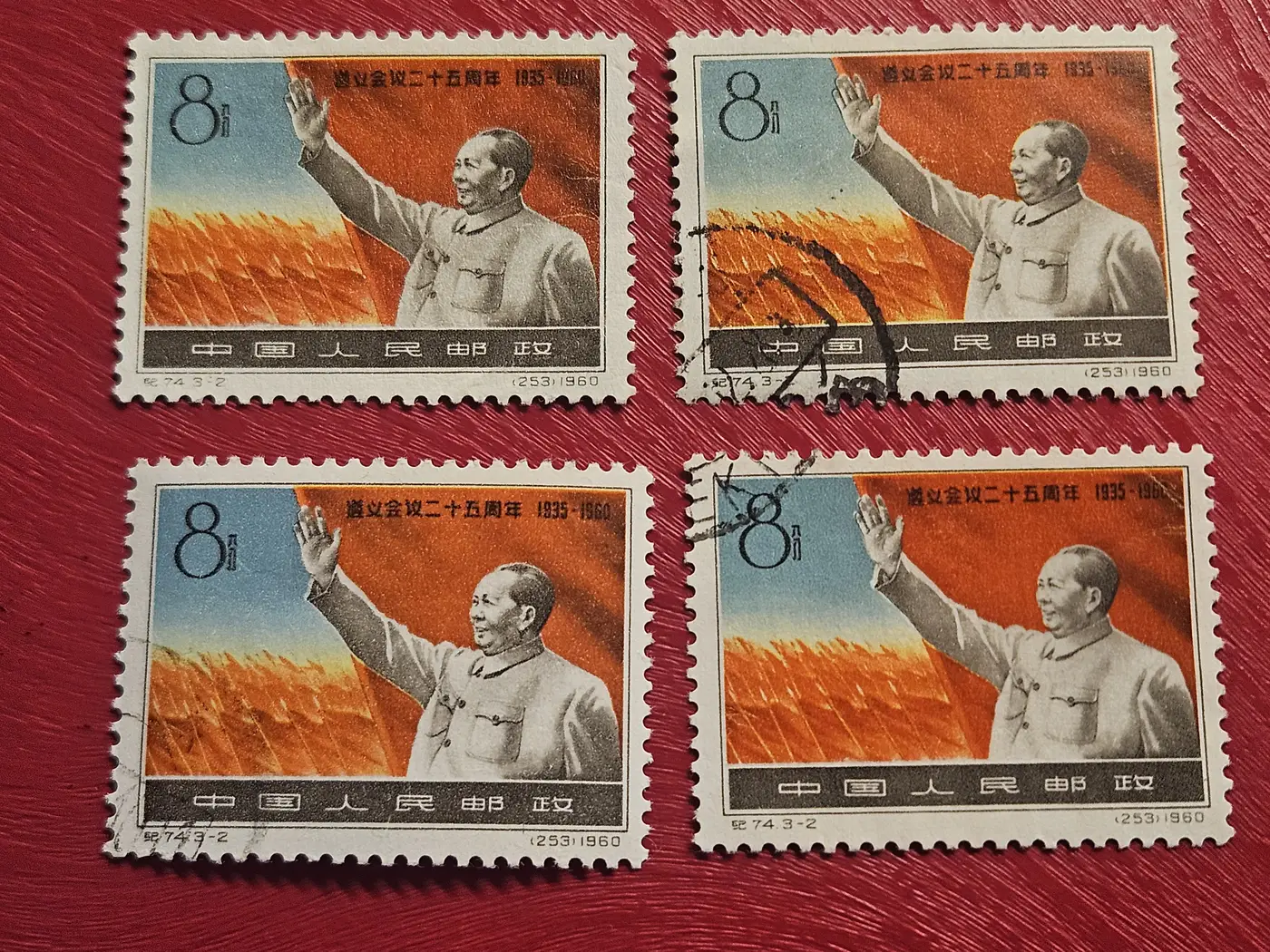 My Zunyi-Mao's. The whole set comprises 3 stamps. If I ever part with them, it will be with pain.
But it's off course also the topic that defines value, especially with Chinese stamps. Thus C74, 25th Anniversary of Zunyi Meeting, is now valued at some 200 dollar mint. Its circulation does not warrant that: 3 million. And I have seen it more than that C65 Sino-Czecho-stamp. It took not that much time for me to harvest 3 used and even 1 mint stamp from that set of 3 from large haphazard collections. It must be the Mao-theme that inflated its catalogue value, not its rarity.





 Posted 01/22/2026 11:21 am


