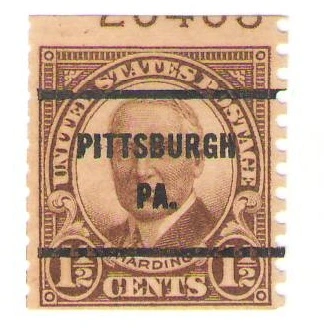
This stamp shows a plate block number in the usual spot for a regular issue with perforations on all 4 sides. But this is a coil perforated vertically. When they made these did they just slit and perf the regular plates into rolls instead of the normal sheets.
Yes, as well as sheets made specifically for coils. Plate number appeared on the plates as usual and the top and bottom number could be seen when the slicing was off the mark.
They are quite collectible, the more the number, the better.
Hand assembled coils were from flat plate sheets perforated in one direction, cut into strips of 20, and pasted up into coils. After Stickney coilers became available, flat plate sheets were perforated in one direction and cut in half and pasted up into rolls to be stripped into coils. Once Stickney rotary presses were operational, coil stamps were printed on continuous rolls of paper, perforated offline and stripped into coils. Rotary press plate numbers were placed next to the top and bottom row of stamps at the corner of each plate. Two plates were required to surround the cylinder on rotary press. The joint between plates shows as a line between adjacent stamps. Flat plate coil plate numbers can sometimes be found hidden in paste up pairs. Flat plate line pairs are known as "guideline" pairs while rotary press line pairs are called "joint line" pairs. Rotary press coils replaced flat plate coils between 1914 and 1915.
Disclaimer: While a tremendous amount of effort goes into ensuring the accuracy of the information contained in this site, Stamp Community assumes no liability for errors. Copyright 2005 - 2026 Stamp Community Family - All rights reserved worldwide. Use of any images or content on this website without prior written permission of Stamp Community or the original lender is strictly prohibited. Privacy Policy / Terms of UseAdvertise Here





 Posted 02/05/2026 1:03 pm