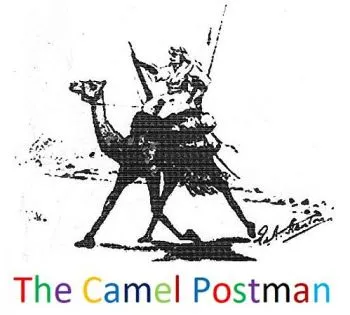
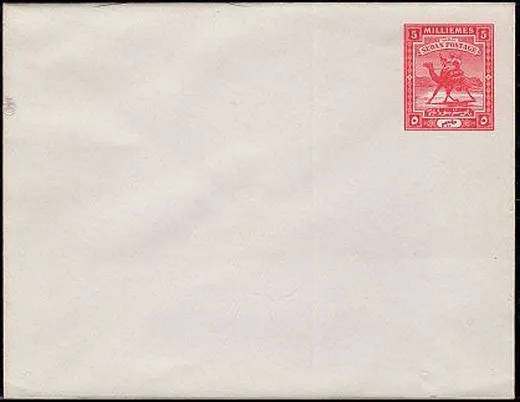
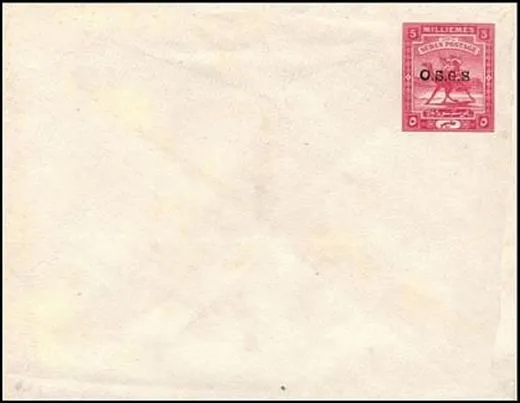
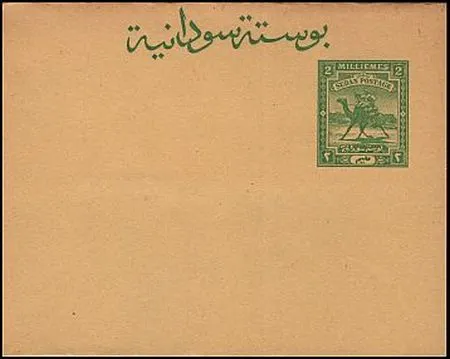
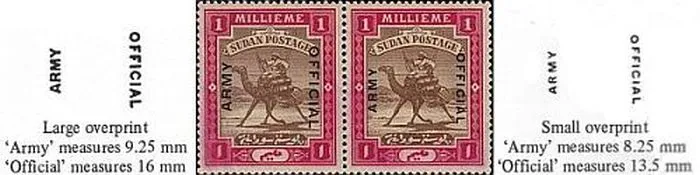
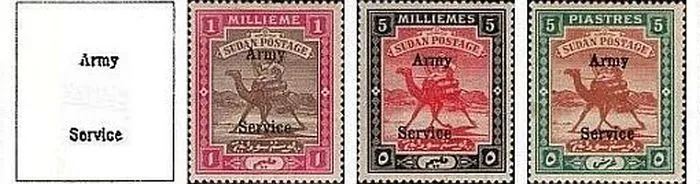
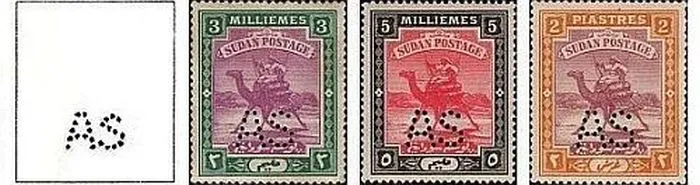
The Camel Postman ordinary stamps of Sudan were printed from 1898 to 1952 in a variety of colors and watermarks while using the same vignette on all stamps in the series. The attractive stamps are all bi-colored. Shown below are the stamps (star and crescent watermark) from 1902-21.
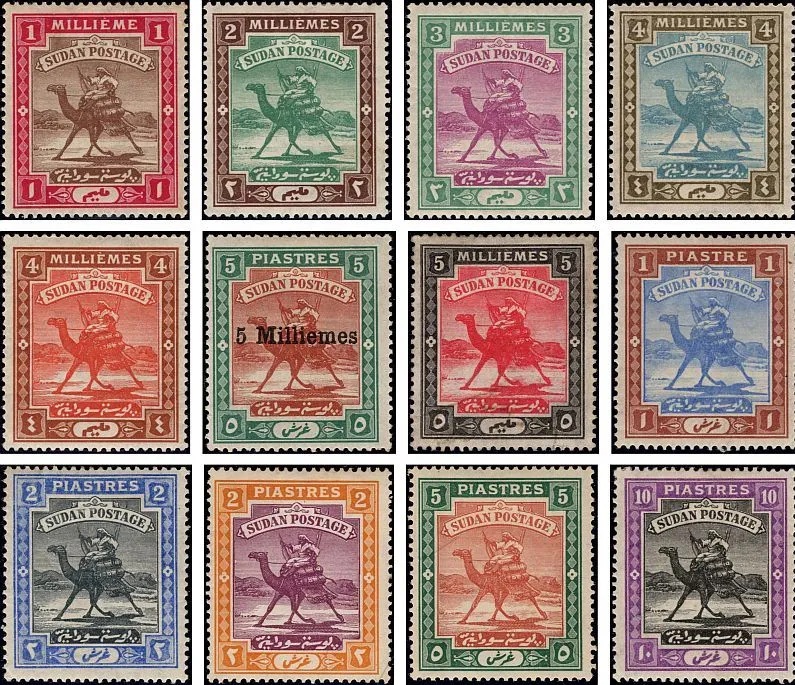
Sudan was governed as a possession of the United Kingdom during the era of the Camel Postman. Much of the stamp use was by the British army and civilian authorities. Sudan was declared an independent country in 1956.
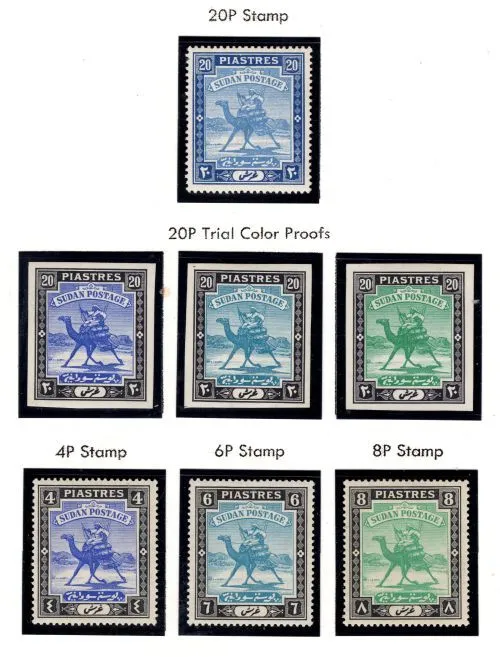
A Trial Color is a proof of a stamp die printed in a test color. The die used could be that of the stamp design being color tested or from a comparable die if the tested stamp die is not available.
4P, 6P, and 8P stamp values were added in 1936 to the 1927 series (SG watermark) of the Camel Postman. Their colors were tested using the die of the 20P stamp that had been added to the series in 1935. Shown below is the 20P stamp, its trial colors for the 4P, 6P, 8P stamps, and the eventual 4P, 6P, 8P stamps.
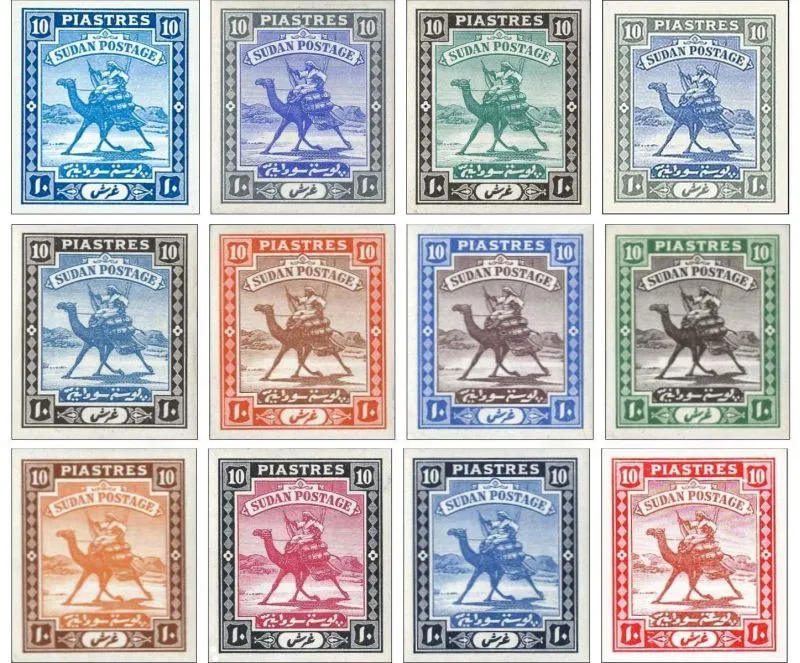
 The 10P Camel Postman of the 1927 series was printed in at least 12 different trial color proofs.
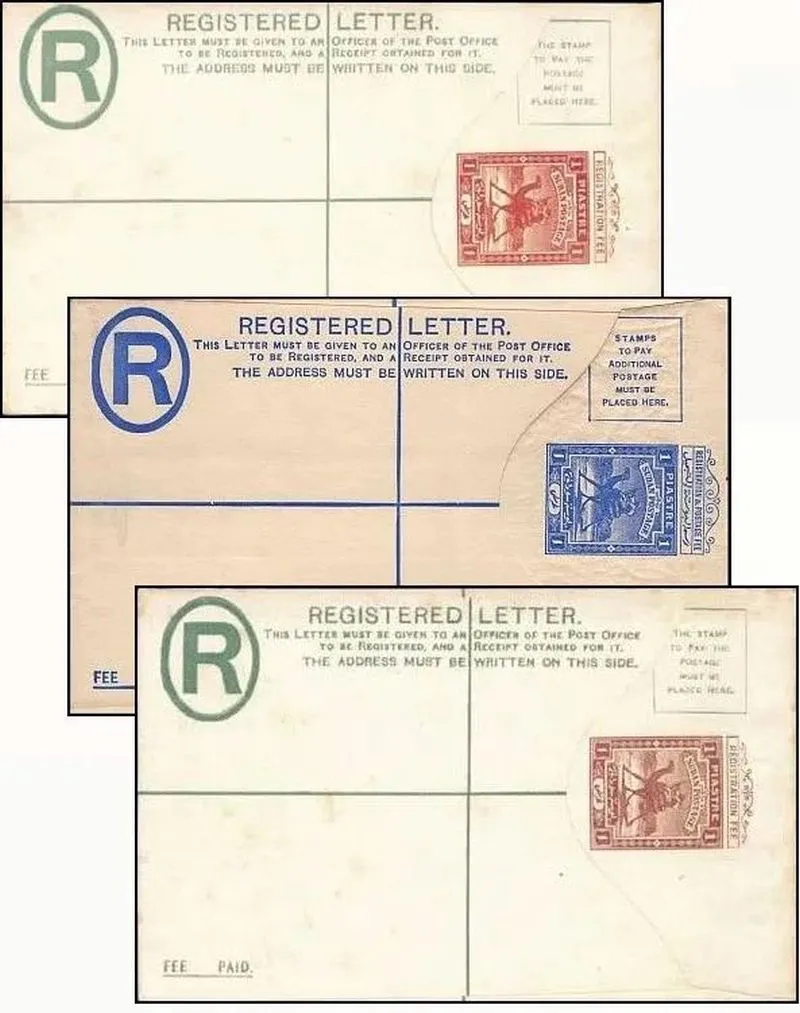
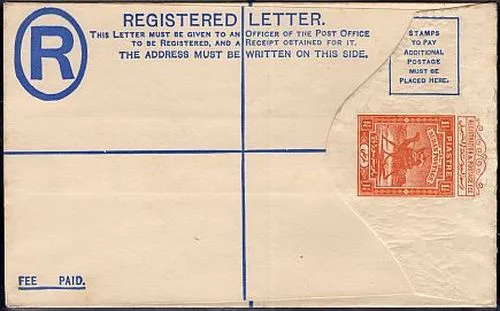
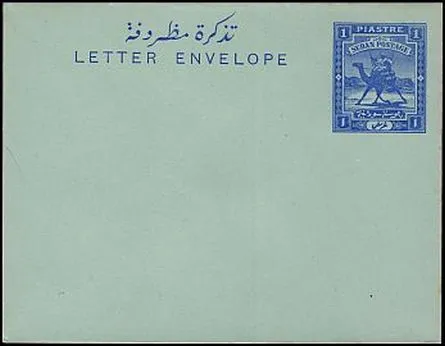
Trial color proofs exist for postal stationery as well. Below is the 1P blue registered envelope (1908) surrounded by two of its trial color die proof essays. Note the differences in color, design, and layout.
I collect mint stamps, unused postal stationery, and die proofs of the Camel Postman. I felt I had a need several years ago to find a new philatelic interest when activity significantly slowed up in my major collecting interests. I then recalled that the cover on my stamp album that I had when I was ten years old had a picture of a Camel Postman stamp. It fascinated me. An easy choice.





 Posted 02/21/2026 12:15 am





 </center>
 </center>
 </center>
 </center>
 </center>
 </center>
