| Author |
 Replies: 3,985 / Views: 1,945,454 Replies: 3,985 / Views: 1,945,454 |
|
|
|
Valued Member
Australia
18 Posts |
|
|
Hello …
I've been away from my computer for a week – after having only just joined the forum – a week filled with desolation at being away and longing to get back. Seriously!
Have read through most of the 22 post sections to date, and am filled with wonder at the breadth of knowledge therein.
And now I have a question: Do the ridges of an engraved, intaglio-printed stamp subside over time? If so, how can you still determine its engraved character.
Or am I still confused about the process?
Would love a knowledgeable response to this question.
Regards,
Sperati.
|
Send note to Staff 
|
|
|
Pillar Of The Community
Australia
687 Posts |
|
|
Good question Sperati (and welcome to the forum)! I am also very interested in the answer...
|
|
Send note to Staff
|
|
|
Pillar Of The Community
7838 Posts |
|
|
Sperati - Re your question: "Do the ridges of an engraved, intaglio-printed stamp subside over time?" - Not that I have ever noticed. But then again, I don't rely on the "feely" method anyway. I always take care to handle my stamps with tongs! |
|
Send note to Staff
|
|
|
Pillar Of The Community
7838 Posts |
|
|
Charles A. Brooks was one of the USA's finest vignette engravers; his career lasted from the late 1930s to the mid-1960s. In my opinion, one of his greatest talents was his ability to engrave depictions of sculptures; here are images of three examples of Brooks's skill in this genre, along with photos of the relevant artworks. (Lettering engraving on all three stamps by J.S. Edmondson). - nethryk Louisiana Purchase 150th Anniversary, issued on April 30, 1954, Scott No. 1020.  "Louisiana Purchase," bronze by Karl Theodore Francis Bitter (1867-1915), Austrian-born American sculptor: Robert Livingston (standing), James Monroe (seated), and Francis Barbe-Marbois signing the document by which the United States purchased the land west of the Mississippi River. This sculpture was originally designed for the 1904 St. Louis World's Fair and made out of staff, a temporary plaster and fiber material. It was recast in bronze for the Capitol Complex in Jefferson City, Missouri.  American Bar Association 75th Anniversary, issued on August 24, 1953, Scott No. 1022.  A portion of the West Wall Frieze in the courtroom of the U.S. Supreme Court, sculpted by Adolph A. Weinman (1870–1952), a noted German-born American Beaux-Arts sculptor. It is an allegorical representation of "Good Versus Evil." In this sculpture, the central female figures are Justice and Divine Inspiration. Leaning on a sheathed sword representing her might, Justice faces to the viewer's right, staring down the forces of Evil. The winged figure of Divine Inspiration holds out the Scales of Justice. Flanking these two figures are representations of Wisdom, to the left, with an owl perched on his shoulder, and Truth, to the right, holding a mirror and a rose.  Nebraska Territorial Centenary, issued on May 7, 1954, Scott No. 1060.  "The Sower," by American architectural sculptor Lee Oscar Lawrie (1877-1963), a 19.5 feet (5.94 m) tall statue, perched atop a 13 foot-tall base, on top of the golden Nebraska state capitol dome, 400 feet above the ground. The statue can be seen for nearly 20 miles.  |
|
Send note to Staff
|
| Edited by nethryk - 07/03/2011 12:52 pm |
|
|
Pillar Of The Community
Canada
5821 Posts |
|
|
Thanks for the link Perf14. I found a couple more which might help or confuse even more.  http://www.stamphelp.com/HELP%20ABO...PRINTING.HTMhttp://www.linns.com/howto/refreshe...rcourse.aspx http://www.stamphelp.com/HELP%20ABO...PRINTING.HTMhttp://www.linns.com/howto/refreshe...rcourse.aspxWelcome Sperati Nice to have another engraving affectionado on board. I also haven't noticed any subsiding of the raised ink on my engraved stamps. The only observation I have made is that improper soaking (in hot water?) can remove the crispness of an engraved stamp. But I suppose if one were to rub them hundreds of times then sure the ink would wear. Same as engraved banknotes. On a brand new US bill (or Canadian for that matter) you can feel the ridges but much less so or not at all on one that's been in circulation for months or years. Another thing to look for is on the back. Engraved has raised ink on front and slight depressions on the back. Typography, which is basically the opposite of the engraving process, impresses the lines on the face of the stamp and slightly raises them on the back. If in doubt check it out in a catalogue. |
|
Send note to Staff
|
|
|
Pillar Of The Community
Canada
5821 Posts |
|
|
A section from the 15th Century Book of Hours, Très Riches Heures du Duc de Berry. Month of August , Falconry. Designed & engraved by René Cottet.Combination print : 1 colour (black) recess engraving & multicolour photogravure. UPDATE printing was done in multicolour engraving. Notice the poor colour registration in some areas. Another example of paintings (in this case a miniature) being just not suitable to be portrayed on a stamp. Issued September 27, 1965 France Scott 1115 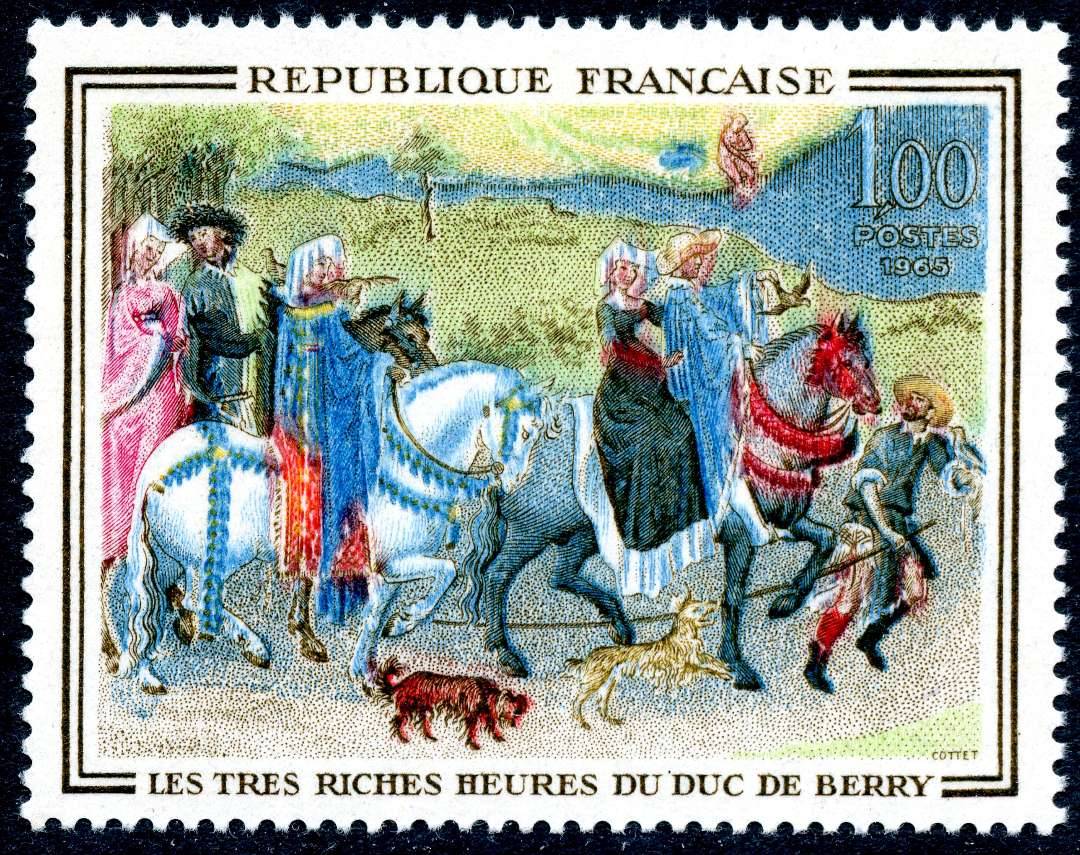  |
|
Send note to Staff
|
| Edited by lithograving - 10/04/2019 7:46 pm |
|
|
Pillar Of The Community
Canada
5821 Posts |
|
|
Nethryk, thanks for another interesting Stamps and the story behind it.The 3 stamps are examples of BEP "wet" printings which caused some of the ink to bleed ? (permeate) over the whole stamp. Apparently this type of "wet" printing was used until the fifties when the BEP switched over to printing on "dry" paper. Here is a quote from Scott's Catalog Quote:
The new process required a thicker, stiffer paper,
special types of inks and greater pressure to force
the paper into the recessed plates. The "dry" printings show
white paper, a higher sheen on the surface, feel thicker and
stiffer,and the designs stand out more clearly than on the
"wet" printings. |
|
Send note to Staff
|
|
|
Pillar Of The Community
Canada
5821 Posts |
|
|
Portion of stained glass window in the La Sainte-Chapelle, Paris. Design & Engraving by Georges BétempsCombination print : recess engraving & multicolour photogravure. UPDATE, printed by multicolour engraving Issued October 24, 1966 France Scott 1151 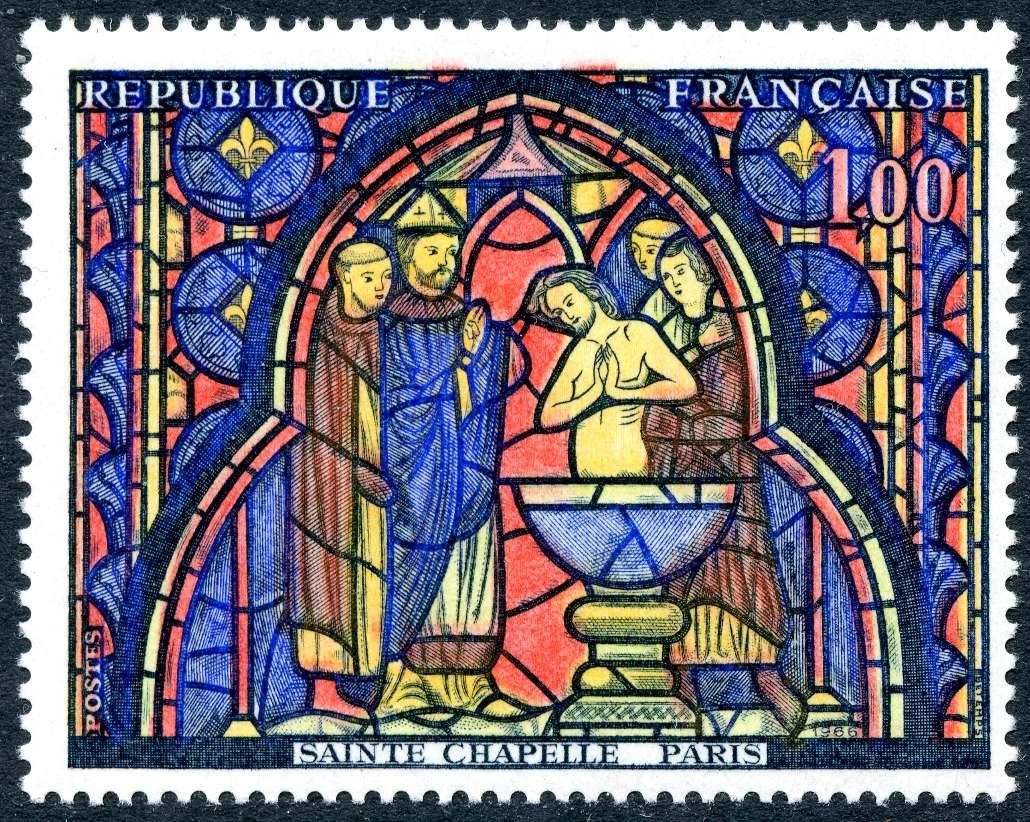  |
|
Send note to Staff
|
| Edited by lithograving - 10/04/2019 7:49 pm |
|
|
Pillar Of The Community
Australia
687 Posts |
|
|
Thank you for the links, lithograving; the first one was particularly good IMO
:) |
|
Send note to Staff
|
|
|
Pillar Of The Community
Canada
5821 Posts |
|
|
@ Perf14, I'm glad they were useful links. Couple more French ones which I believe haven't been shown before but this thread is so long now that there is bound to be some duplication. Emile Zola , French novelist, playwright, journalist Design & engraving by C. DurrensThe pair was issued on February 4, 1967 Scott B404  The stamp reminds me of the 1958 movie I Accuse.Great acting from José Ferrer who played Capt. Alfred Dreyfus "I accuse! Letter to the President of the Republic". https://www.britannica.com/topic/JaccusePierre Beaumarchais,was a watchmaker, inventor, musician, diplomat, fugitive, spy, publisher, arms dealer, and revolutionary (both French and American) He certainly kept himself busy. Designer : C. Durrens Engraver : J. CombetScott B405  Beaumarchais was similar in appearance to Robespierre IMO. But maybe it's just the hair & the cocky pose. 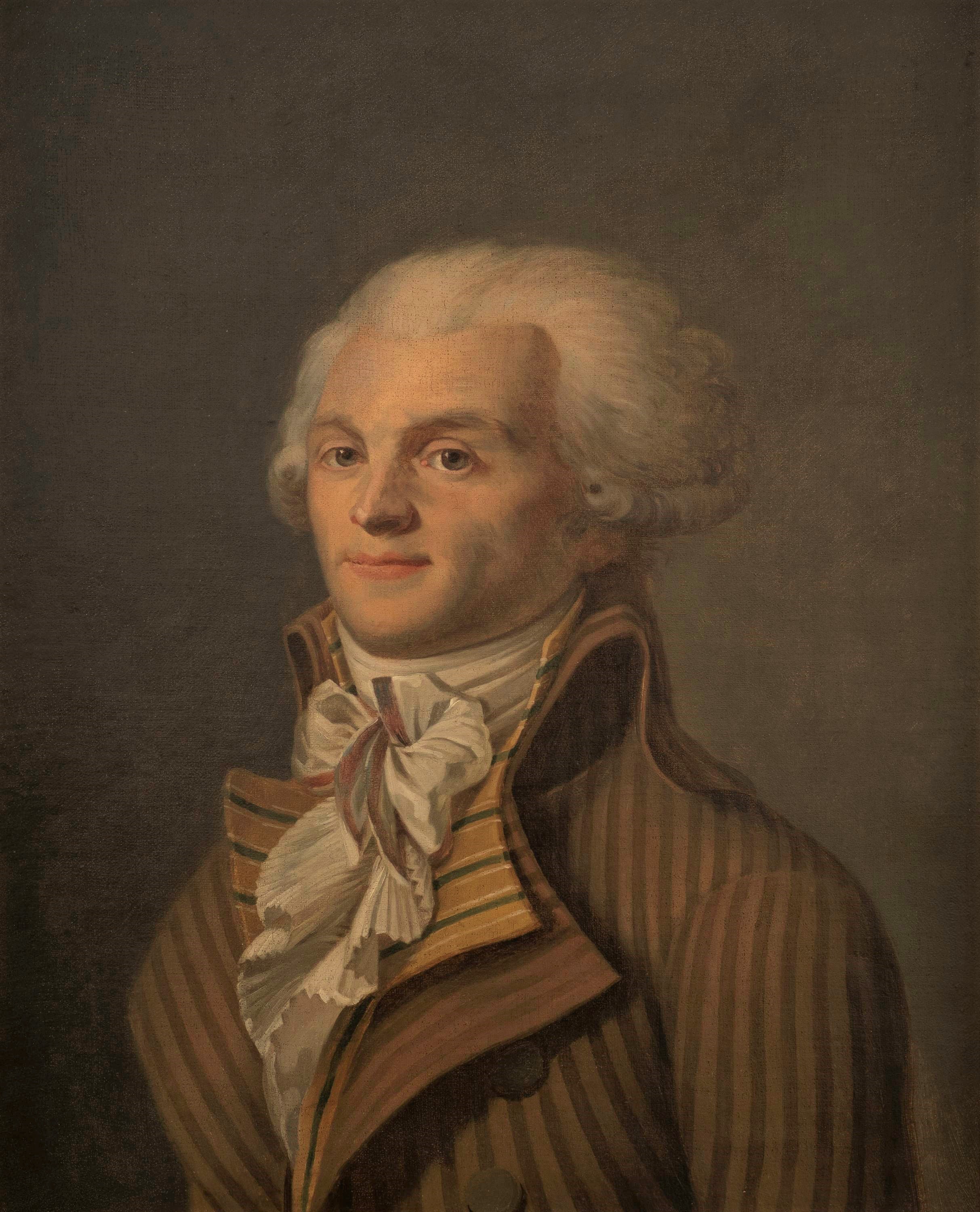 |
|
Send note to Staff
|
| Edited by lithograving - 10/04/2019 8:00 pm |
|
|
Valued Member
Australia
18 Posts |
|
|
Thanks, everyone, for responses to my last question. Just one final question (to get the matter settled in my comprehension of this subject):
Is the intaglio method of printing ALWAYS associated with an engraved stamp? Do they go together like love and marriage, or a horse and carriage?
Thanks in anticipation of your patience.
|
|
Send note to Staff
|
|
|
Pillar Of The Community
Canada
5821 Posts |
|
|
Quote:
Is the intaglio method of printing ALWAYS associated with an engraved stamp? Yes and no. One definition of intaglio is a design carved (inscribed, etched)into or beneath the surface of hard metal or stone. Which fits engraved perfectly since it is recess (below the surface) printing On the other hand photogravure is also a form of recess printing since the printing plate is made up of tiny dots forming depressions of various depths. Some of the earlier photogravure stamps for example from Mexico look like they are engraved. Generally though intaglio, engraved, line engraved, recess engraving, copper plates basically all mean the same thing. |
|
Send note to Staff
|
|
|
Pillar Of The Community
Canada
5821 Posts |
|
|
To complicate matters even more here are a couple of Liechtenstein stamps issued in 1920. Michel catalogue states they were engraved using copper plates. But I can't feel raised ink on front nor see any kind of depressions on the back. The lines aren't sharp or crisp. The whole appearance is more like a lousy photogravure job. 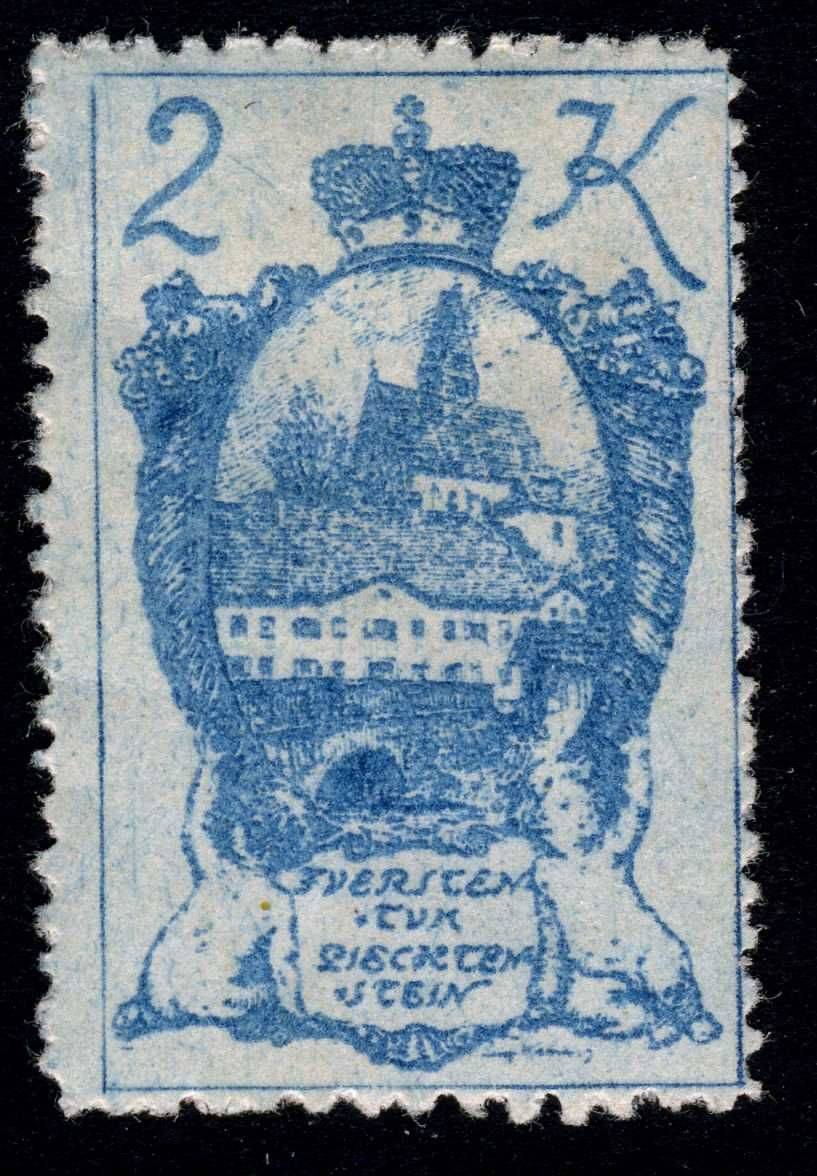 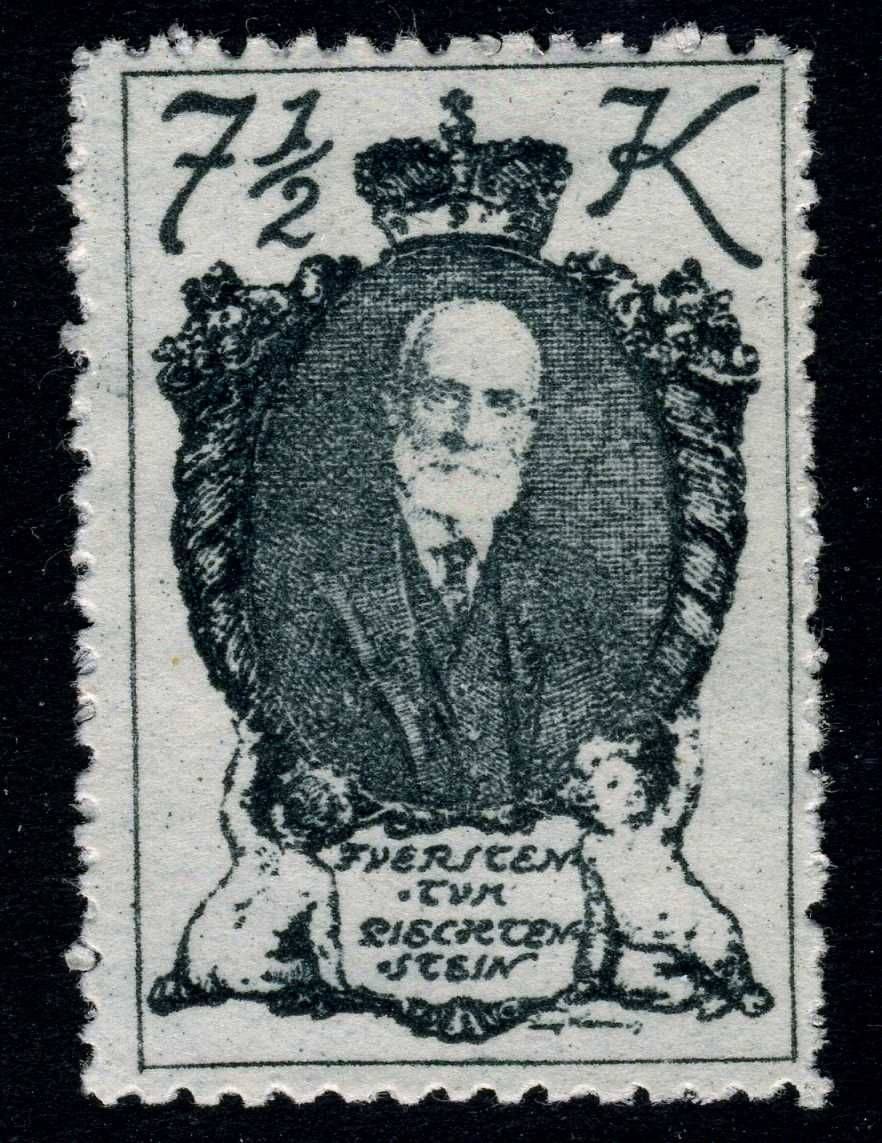 |
|
Send note to Staff
|
| Edited by lithograving - 10/04/2019 8:03 pm |
|
|
Valued Member
Australia
18 Posts |
|
|
Thank you, Lithograving, for your very helpful explanations. I'm slowly (as one might say) getting the picture!
I suppose that, eventually, there is an almost immediate visual recognition of an engraved stamp, with further steps (manual, foil, etc.)used for confirmation of first impressions.
What a fascinating subject this is!
I have quite a few stamps I would love to display, but am having so much trouble mastering the process that I have almost given up trying.
Thank you again. |
|
Send note to Staff
|
|
|
Pillar Of The Community
Canada
5821 Posts |
|
|
Quote:
I have quite a few stamps I would love to display, but am having so much trouble mastering the process that I have almost given up trying. Sperati, don't give up before you've even begun. Start showing some of your stuff, I would love to see them.  |
|
Send note to Staff
|
|
|
Replies: 3,985 / Views: 1,945,454 |
|



 Posted 07/03/2011 05:55 am


