|
This page may contain links that result in small commissions to keep this free site up and running.

Welcome Guest! Registering and/or logging in will remove the anchor (bottom) ads. It's Free!
To participate in the forum you must log in or register.
| Author |
 Replies: 3,985 / Views: 1,946,023 Replies: 3,985 / Views: 1,946,023 |
|
|
|
Pillar Of The Community
United Kingdom
1361 Posts |
|
|
Pillar Of The Community
7838 Posts |
|
|
AnthonyUK - Great job!  I'm afraid you may feeling like Sisyphus at times, though, as many more engravers are waiting patiently in line for their turn in the spotlight.  - nethryk |
Send note to Staff 
|
|
|
Pillar Of The Community
7838 Posts |
|
|
Kenneth Kipperman (1946- ) is a Polish-born American engraver whose brilliant career includes some bizarre events. In 1987 it was discovered that Kipperman had secretly altered an engraving die and hidden a Star of David in the beard of educator Bernard Revel's portrait on a $1 stamp issued by the USA in 1986. The object itself wasn't questionable, as Revel was Jewish, as also is Kipperman, but his action was in violation of BEP regulations. The whole situation became even stranger when Kipperman was arrested for threatening to bomb the site of the Holocaust Memorial Museum in D.C. He was protesting the destruction of the current building to make way for the Holocaust Museum, which happened to be right next door to the Bureau of Engraving and Printing. Here are images of several examples of Kipperman's engraving work for the USA, including the Revel stamp with a blow-up of the non-regulation religious symbol. - nethryk Carl Sandburg (1878-1967), American writer and poet, designed by American artist (and friend of Sandburg) William A. Smith (1918-1989) from a 1952 portrait by Smith, and issued on January 6, 1978, Scott No. 1731. (Lettering: Albert Saavedra)  Palace of the Arts, by American architect Bernard Maybeck (1862-1957), se-tenant stamp designed by Walter E. Richards, and issued on August 28, 1981, Scott No. 1930. (Lettering: Dennis Brown)  Helping hand, designed by Paul Calle, and issued on April 20, 1983 to publicize voluntarism, Scott No. 2039. (Lettering: Gary J. Slaught)  Bernard (Dov) Revel (1885-1940), Jewish Orthodox rabbi and scholar who served as the first President of Yeshiva College, definitive stamp designed by Tom Broad, and issued on September 23, 1986, Scott No. 2193. (Lettering: Robert G. Culin, Jr.)  Detail of Revel's beard, near the left side of his mouth  Canoe 1800s, non-profit organization definitive stamp designed by Paul Calle, and issued on May 25, 1991, Scott No. 2453. (Lettering: Gary J. Slaght)  William George Meany (1894-1980), American labor union leader, designed by American artist Chris Calle, and issued on August 16, 1994 for Meany's birth centenary, Scott No. 2848. (Lettering: Deborah Alexander)  |
|
Send note to Staff
|
| Edited by nethryk - 01/10/2012 12:27 pm |
|
|
Pillar Of The Community
Czech Republic
623 Posts |
|
|
Hi, everyone.
This is what I've been looking for: great scans of artistically designed and finely engraved stamps of glorious memory such as those once produced by French, Austrian, Scandinavian, American, Australian and many other designers and engravers of mark, in short, graphic art in miniature and in a whole gamut of engraving styles and printing techniques whose effect I've always been admiring under my magnifying glass, now each specimen to be appreciated as a whole in even greater detail on the monitor.
Just splendid ... For what I relish about engraved stamps, besides their artistic beauty, is the magnifiable delicacy of the engraver's line combined with the otherwise unattainable brilliance of the colours of ink rising in ridges on the paper of each stamp.
Thanks a lot, AnthonyUK, lithograving, nethryk or Perf14, for your dedication, as well as the other posters who keep this wonderful thread going.
|
|
Send note to Staff
|
|
|
Pillar Of The Community
Czech Republic
623 Posts |
|
|
I'd like to make a few observations about some of the topics that have been discussed in this thread so far.
The Czechoslovak Post never ceased to issue stamps in pure multicolour steel engraving done in up to five printing runs on mercatile paper flat plate presses and its successors, the Czech and the Slovak Posts, still continue the tradition established with such stamps as the 1958 Mushrooms designed by Karel Svolinský (1896-1986) and engraved by Ladislav Jirka (1914-1986) or the 1961 Butterflies designed by Max Švabinský (1873-1962) and engraved by Jindøich Schmidt (1897-1984). Such issues have obviously always been a treat for connoisseurs of the art of stamp design, engraving and printing.
Czech engravers, e.g. Václav Fajt (b. 1952), Bedøich Housa (their doyen, born in 1926 and still active), Miloš Ondráèek (b. 1936), Martin Srb (b. 1954), Bohumil Šnejder (b. 1936), Jaroslav Tvrdoò (b. 1950) or Slovak engravers Rudolf Cigánik, Martin Èinovský (b. 1953) and František Horniak (b. 1956) as well as the Czech Post stamp printers often send amateurs of stamp art in this country into raptures over their achievements.
|
|
Send note to Staff
|
|
|
Pillar Of The Community
Czech Republic
623 Posts |
|
|
In the Czech Republic the multicolour steel engraved stamps printed from flat press plates are produced by traditional engraving and printing methods. Each of the three, four or even five colours in which a stamp is printed requires the engraver to engrave a separate die and the successive colours are printed over each other, beginning with the palest and ending with the darkest, in the necessary number of printing runs on mercantile paper flat plate presses, each sheet of paper to be printed on being fed into the press by hand with the utmost precision to ensure perfect register. Occasional minute misregister does naturally occur under the circumstances. Still, both the engravers and the anonymous printers as well as the Czech and the Slovak Posts do deserve recognition. It was not until 1999 that the Czech Post stamp printers began to combine steel engraving for fine contours in black done on mercantile paper flat plate presses with offset printing for colour. This method of printing is, however, used on a small minority of issues. Multicolour steel-engraved stamps printed exclusively from flat press plates still continue to be issued (see http://www.ceskaposta.cz/en/filatel...005-id35951/ ). |
|
Send note to Staff
|
|
|
Pillar Of The Community
Czech Republic
623 Posts |
|
|
The Hydrological Decade issue from 1974 and the Helsinki Conference M/S from 1976, whose fine images were posted by lithograving on January 2, are both in pure multicolour steel engraving, not a combination of different printing techniques.
What can lead the observer into believing that these stamps are printed by a combination of two printing methods, that is line engraving and photogravure, is the fact that only the engraver's lines in the darkest ink stand up in ridges from the surface of the paper. This is due to the fact that the inks used in the preceding printing runs have to be thinner to soak into the paper in order to allow the thick ink of the final printing run to appear in relief.
|
|
Send note to Staff
|
|
|
Pillar Of The Community
7838 Posts |
|
|
florian - Welcome to SCF and to this thread. This is a terrific place for engraved stamp enthusiasts to share information and to learn. Also, many thanks for both your flattering compliments about our posted images, and for your enlightening comments on the printing methods used to produce stamps from Czechoslovakia and its successor states. I'm sure that all of us are looking forward to your active participation in our ongoing discussions.
- nethryk |
|
Send note to Staff
|
|
|
Pillar Of The Community
Czech Republic
623 Posts |
|
|
The famous French engraved stamps in six colours (taille-douce six couleurs) of the 1960s and successive decades were actually printed by a combination of two printing methods, that is line engraving in three colours (taille-douce directe trois couleurs) and offset in three colours (taille-douce report trois couleurs), the whole process requiring the engraver to cut two dies, one used in a printing process similar to that of the Giori Press, the other used in the offset printing process, in which the inked impression is first made on a plastic-covered roller, then transferred to paper (see http://www.coppoweb.com/momes/fr.m_td.php ) as well as the 1966 Pour le Musée Postal souvenir sheet showing the printing stages of the France 1966 de la Tour painting). What I find intriguing is the printing process used in producing such stamps as the 1958 Laos Elephants set, the 1958 French Polynesia 100 F Airmail (The White Horse by P. Gauguin) or the 1962 Monaco National Multiple Sclerosis Society, N.Y. Although done in more than three colours, these stamps do not present any traces of offset printing. I am very sorry I have not got a scanner nor adequate computer expertise to post some images. Those in this thread and in that of engraved stamps are a joy to follow closely. |
|
Send note to Staff
|
|
|
Pillar Of The Community
Czech Republic
623 Posts |
|
|
Thanks, nethryk. I am happy to have discovered this wonderful site.
My good wishes to all SCF posters.- florian
|
|
Send note to Staff
|
|
|
Pillar Of The Community
United Kingdom
1361 Posts |
|
|
Hi Florian,
It is great you have joined us and even if you are unable to contribute images your background info will be most useful.
Anthony |
|
Send note to Staff
|
|
|
Pillar Of The Community
Canada
5821 Posts |
|
|
Hi Florian A hearty welcome fro me also. It's great to have on this site someone with your interest and knowledge regarding printing processes and Czechoslovakian stamps. Also let me compliment you on your expert English. I have at least a thousand questions. You said Quote:
each sheet of paper to be printed on being fed into the press by hand with the utmost precision to ensure perfect register. That is amazing. With print runs of two,three & four million how long would this take? How many presses were used? What make where these presses and how long were they in use? Are the stamps for Slovakia printed by the State Printer in Prague or are they printed locally? You said Quote:
The Hydrological Decade issue from 1974 and the Helsinki Conference M/S from 1976, whose fine images were posted by lithograving on January 2, are both in pure multicolour steel engraving, not a combination of different printing techniques. I did not say that Scott 1931 - 1934 were combination print. This is what I said. Quote:
Hydrological Decade 1965 - 1974
Designer : Josef Liesler (1912-2005)
Engravers : Josef Hercik (60h, 1.69 k), Ladislav Jirka ( 1k ) and Jan Mracek (1.20k)
Print process : multicolour engraving
Scott 1931 - 1934 issued in sheets of 4 ( missing is the 2k value, Scott 1935 ) As far as the Helsinki (Scott 2076) is concerned that is what Scott says it is but they could be mistaken since they have been before. 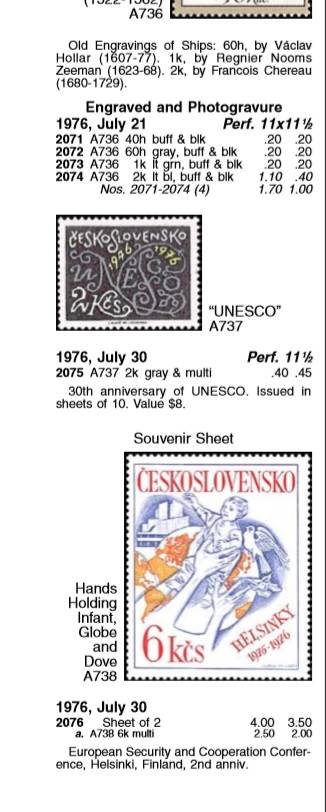 Looking at the stamp again I would agree that its totally multicolour engraved. I have lots more questions Florian. |
|
Send note to Staff
|
| Edited by lithograving - 10/06/2019 7:52 pm |
|
|
Pillar Of The Community
7838 Posts |
|
|
lithograving - Fascinating! I'm so excited for you. Someone finally comes along who fluently speaks your language...about printing methods!  Here are images of five Czechoslovakia and Czech Republic stamps engraved by Václav Fajt which might facilitate further discussion about Czech printing methods. I have indicated what Scott says about each stamp, for the record. florian - Any and all informative comments about the artists and designers would also be much appreciated! - nethryk Chessboard and emblem, designed by Czech artist Anna Podzemna-Suchardova (1909-1991), combined engraved and photogravure, and issued on April 13, 1985 to commemorate the National Chess Organization's 80th anniversary, Scott No. 2557.  Karlova (Charles) University and fountain, designed by Czech graphic designer Rostislav Vanek, combined engraved and photogravure, issued on June 1, 1988, Scott No. 2707.  International Year of the Family, designed by A. Fuchs, combined engraved and photogravure, and issued on January 19, 1994, Scott No. 2911.  Kitten, designed by Czech artist Josef Palecek (1949- ), combined engraved and photogravure, and issued on June 1, 1995 for Children's Day, Scott No. 2958. 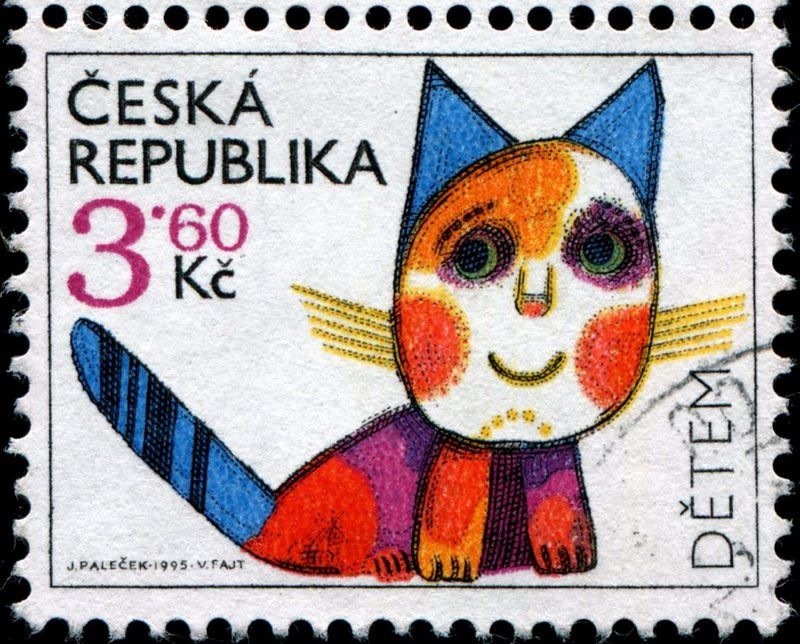 "Amorfa-Dvoubarevná fuga," designed after a work (1912) by Czech painter and graphic artist František Kupka (1871-1957), multicolored engraved, issued on June 17, 1998, Scott No. 3054.  |
|
Send note to Staff
|
| Edited by nethryk - 02/23/2012 7:52 pm |
|
|
Pillar Of The Community
Australia
687 Posts |
|
|
I see this incredible thread is still growing. Great work! Anthony kindly pointed out to me that all of my images had disappeared. This was because my image host suddenly shut down a couple of weeks ago. I have started re-addressing them but it's going to take sometime before I do them all. Thanks you for your patience alex |
|
Send note to Staff
|
|
|
Pillar Of The Community
Canada
5821 Posts |
|
|
Yes nethryk it will be fun having someone on the site as knowledgeable as Florian concerning printing processes. And here are some more from the annual Czechoslovakia Art series. Engravers : Milos Ondracek (1.60k, 3k), Jan Mracek (2k) Jindra Schmidt (3.60k), Bedrich Housa (5k) Print process : 100% engraving no photo or offset added. Scott 2265 - 2269 1979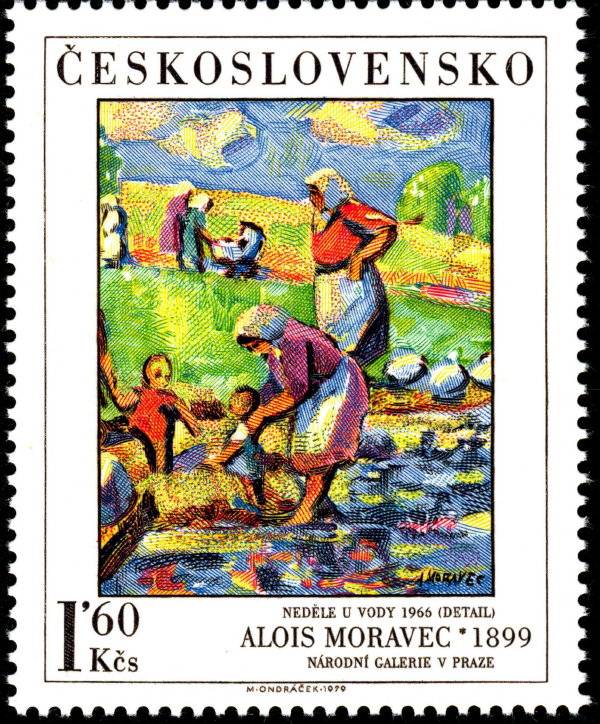 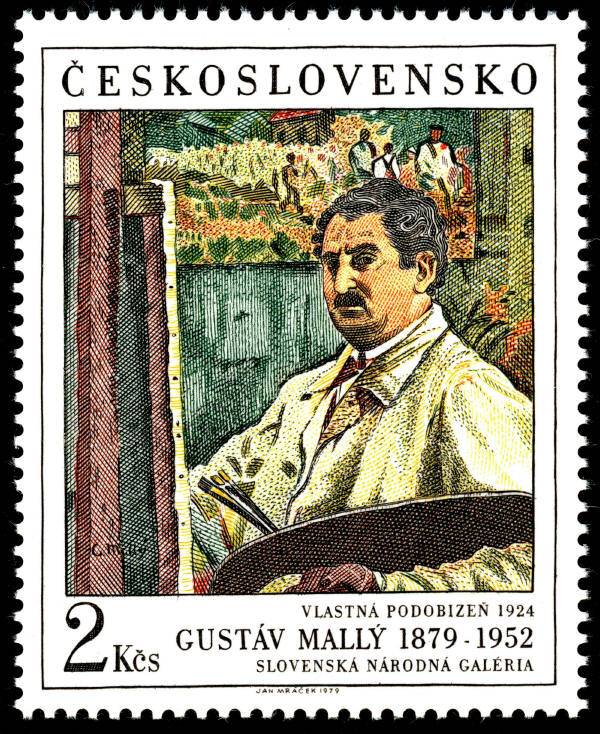 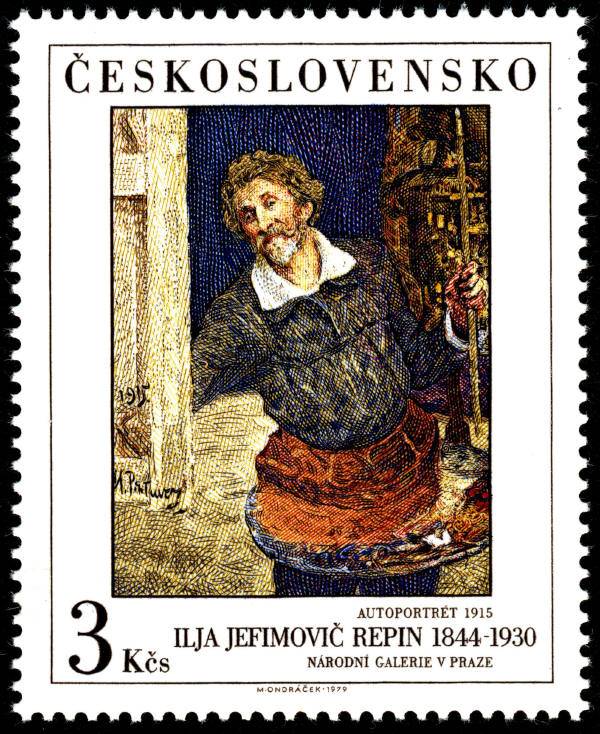 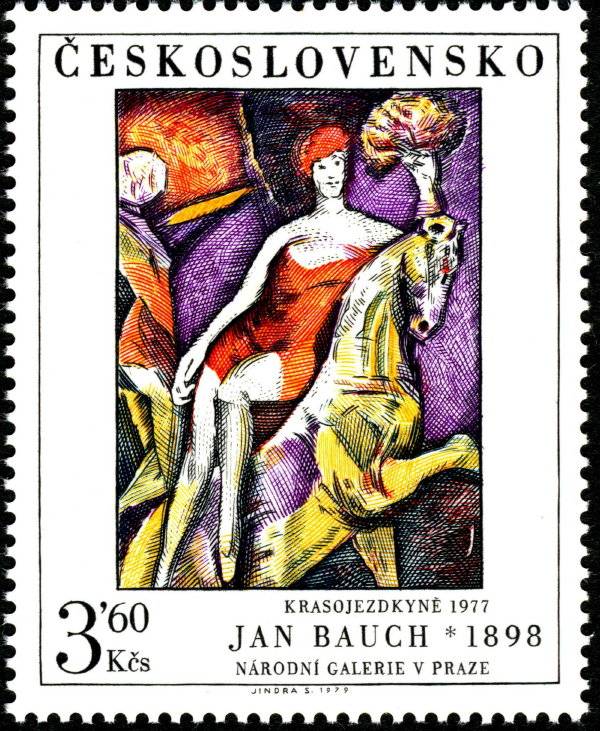 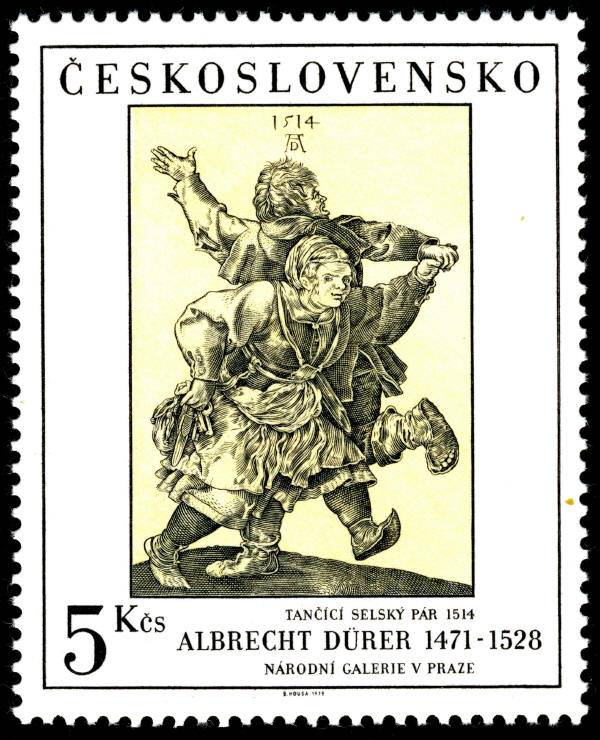 Looking at the yellow background on the stamp above it does almost appear a solid colour possible printed either photogravure or offset. But as Florian has pointed out this is achieved using "thinner" colours and engraving faint lines diagonally as can be seen below. 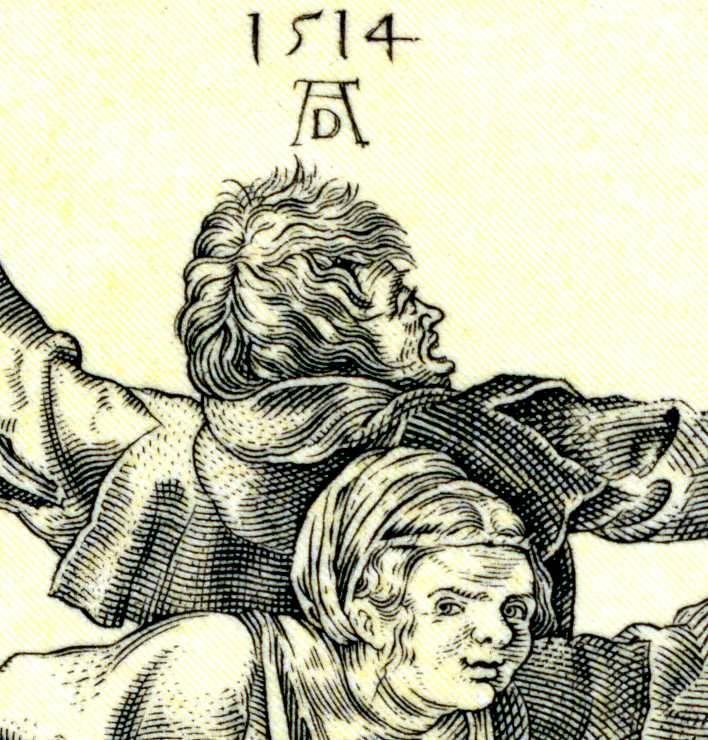 |
|
Send note to Staff
|
| Edited by lithograving - 10/06/2019 7:56 pm |
|
|
Replies: 3,985 / Views: 1,946,023 |
|
|
To participate in the forum you must log in or register. | |
Disclaimer: While a tremendous amount of effort goes into ensuring the accuracy of the information contained in this site, Stamp Community assumes no liability for errors. Copyright 2005 - 2026 Stamp Community Family - All rights reserved worldwide. Use of any images or content on this website without prior written permission of Stamp Community or the original lender is strictly prohibited.
Privacy Policy / Terms of Use Advertise Here |
| Stamp Community Forum |
© 2007 - 2026 Stamp Community Forums |
| It took 0.35 seconds to lick this stamp. |
 |
|
|
|


 Posted 01/10/2012 09:45 am


