While Kewriga auctions, in my opinion, did their consignors no favors in how they publicized their auction (catalogue and Stamp Auction Network listing weren't available online until 2 days before the auction), as a bidder I'm not going to complain.
The morning session started late, the lunch break got delayed and then they came back late as well. I was on the show floor, and since the 3 lots I was interested in were well into the session, I monitored the proceedings on my phone until it got to roughly 25 lots from where I was planning to bid, at which point I went up to my hotel room to bid from my laptop. I wasn't sure how well or poorly the bidding would work from a mobile device and didn't want to take any chances.
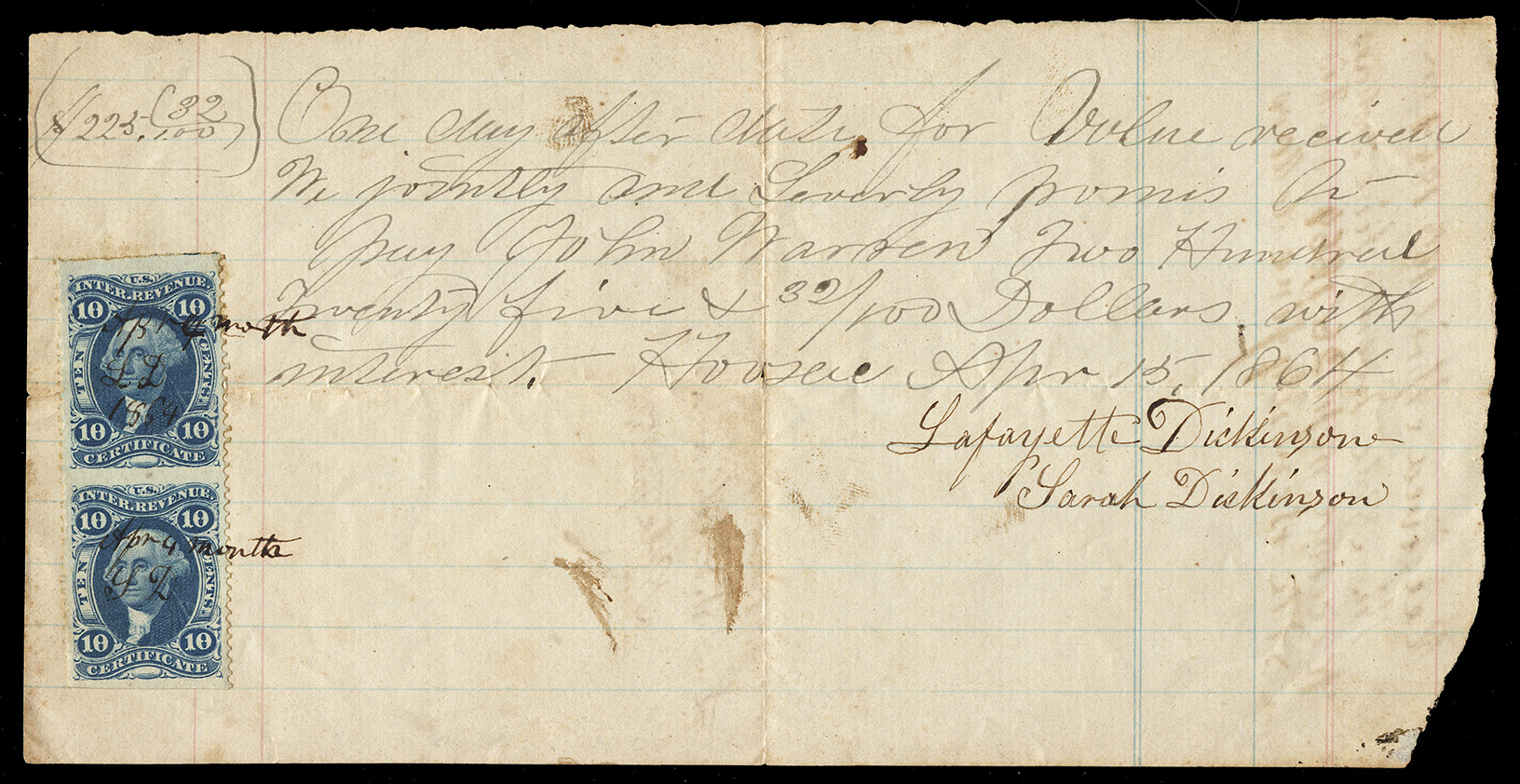
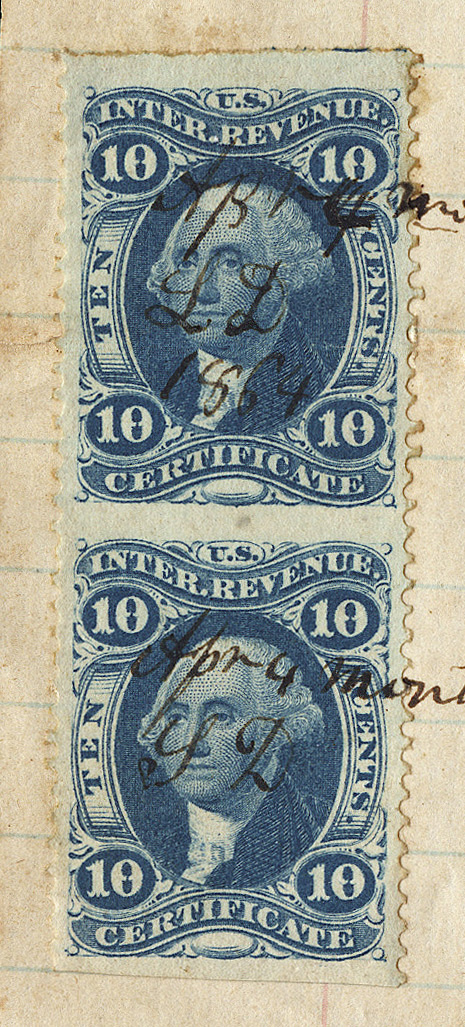
I went 1 for 2 on the first 2 lots, both documents with postage improperly used as revenues. The third lot, #358, was the one I was really interested in however. I had been unable to find any examples of R33b, the 10-cent Certificate part perforate on document anywhere. Not at the PF, PSE, APEX, SAN, or in my archive of auction catalogues.
Per Mike Mahler, he recalls having seen some singles of R33b on certificates several decades ago, but does not recall where they wound up, and has never seen an example of a multiple on document. Nor have Eric Jackson, Richard Friedberg, or Tim Wait.
I was a bit hung up on the rate in question, as a 1-day promissory note should have been taxed 2 cents, not 20 cents. However, the 2 sets of initials on the stamps match the 2 signatories of the document, and the stamps are tied as well, so no indications of contrivance.
Discussing it with Mike and Tim, apparently this was not an unsual occurrence for the period: in order to maximize the flexibility for repayment, it wasn't uncommon to write the note as a 1-day note, but pay the tax for maximum duration. In this case, "payable in over six months, three days" was a rate of 10 cents per $200 or fraction, and the note was for $225.32, so maximum tax would have been 20 cents, as affixed.
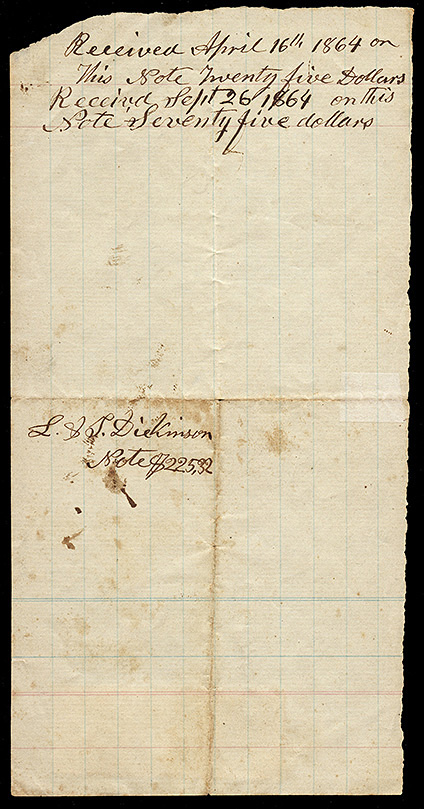
The desired flexibility in payment terms is borne out by the entries on the reverse of the document, indicating that $25 was paid on the note the following day, April 16, 1864, with a second payment of $75 made 5 months later, on September 26, 1864. No further payments or payoff are indicated.
When all was said and done, including buyer premium, it came in at under 50% of Scott for a pair... and it's actually a very nice pair in and of itself, with excellent left-to-right centering and very large top and bottom margins; just a slight horizontal crease at right on the top stamp where the document fold crosses. Not too shabby for an only-known example.
The revenue folks I spoke with at the show weren't even aware there were any revenue-related lots in the auction, as Kewriga tends to be almost exclusively postal history.
So lack of awareness worked in my favor... I'm not complaining.



 Replies: 2 / Views: 64


 Posted Today 2 Hrs 43 Min ago





