| Author |
 Replies: 14 / Views: 3,514 Replies: 14 / Views: 3,514 |
|
|
Pillar Of The Community
Australia
2156 Posts |
|
|
I make extensive use of the Stanley Gibbons British Commonwealth catalogue. One of the most striking facts about this catalogue is that once nations achieve independence, the catalogue pays scant attention to watermark varieties. Singapore, for example. This 1c stamp issued on November 10, 1969 (SG 101), features an inverted watermark (w42). 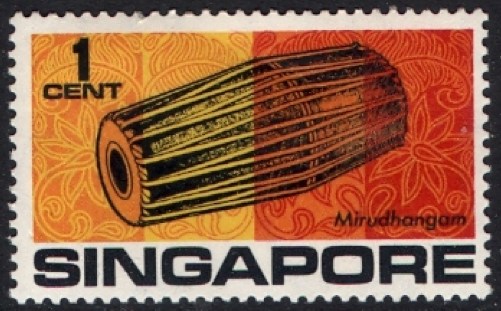 This solarised image allows you to see the watermark clearly: 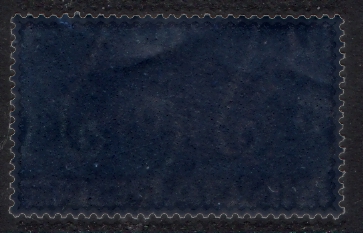 Not only is this variety not listed in the catalogue - leaving me in the dark as to whether this is a collectible or even valuable variety - I can find only one instance of a watermark variety being listed after Singapore became an independent republic in 1966 - and that's on the country's first series of definitives which still used the British Multiple St Edward's Crown Block CA watermark (1966/67). Are we to assume that watermark varieties do not occur in independent republics? Or that, for some reason no one is interested in them when they do? |
|
Send note to Staff
|
|
|
|
|
Pillar Of The Community
Australia
1865 Posts |
|
|
I am wondering how you can tell that this is an inverted w42. I had a look at my copy of this stamp. The complete scrolled S multiples are longer than the height of the stamp, so you can only see one end of each S.
There are no watermark varieties listed after this definitive set, because, as far as I can tell, there is no further use of watermarked paper for Singaporean stamps. |
Send note to Staff 
|
|
|
Pillar Of The Community
Australia
2156 Posts |
|
|
22crows, you can tell it's inverted because it looks the same as it is supposed to look from the front of the stamp. To know what the correct watermark should look like from the back of the stamp, you have to have a picture of how it looks from the front, and fortunately there's one in Gibbons. You can't just work it out from the stamp alone.
Of course, you're right. Watermarks were dropped after this definitive set. Singapore was perhaps not the best chosen example of the general tendency of the SG catalogue to which I was referring. It's something I've been noticing more and more, but I suppose it never really hit me until I found a stamp with an inverted watermark that wasn't listed and it just happened to be one from Singapore.
I found two other Singapore stamps with similar problems today. In both two cases, Gibbons implies that the watermark is upright but the examples I found both feature sideways watermarks. There is nothing necessarily odd about this because vertical or taller stamps often do have sideways watermarks. With Ceylon issues, for example, some vertical stamps have sideways watermarks and others don't. But because Gibbons doesn't say, I don't know whether these sideways watermarks are the way they're supposed to be or whether they're collectible rarities.
I think a catalogue should give guidance on these issues, regardless of whether the watermark is the classic British crown over CA type or not. |
|
Send note to Staff
|
|
|
Pillar Of The Community
Australia
1865 Posts |
|
|
I rather thought Inverted in this context meant upside down. Never mind. |
|
Send note to Staff
|
|
|
Pillar Of The Community
Australia
2156 Posts |
|
|
Pillar Of The Community
Australia
2156 Posts |
|
|
Perhaps I need to add this: the 'loops' (or little scrolls) face in different directions at the top and bottom. If the watermark were not inverted we'd see them the other way around, so the two big ones were facing left not right and the one in the middle would be facing right not left. |
|
Send note to Staff
|
|
|
Pillar Of The Community
Australia
4031 Posts |
|
|
I really enjoy looking at watermarks. They totally fascinate me. They are a strong part of collecting KGVs. Some time ago I seriously considered collecting watermarks from any part of the world so long as they were different types.
Decided not to because I just do not have the time to do it properly. I like to go indepth with what I collect and even though I have time on my hands I will never get to the end of KGVs let alone Aust dec. I am very happy with this decision just to stay with these two areas of collecting and do not think that will change. There is no need to change I have more than enough to do. Thanks for sharing about your watermarks.It is nice to collect info about them. KGV |
|
Send note to Staff
|
|
|
Rest in Peace
Canada
5701 Posts |
|
|
Jimjam, Scott catalog shows the watermark and it looks like your image. I don't know how "S" can be inverted, it looks the same upside down. |
|
Send note to Staff
|
|
|
|
Pillar Of The Community
Australia
3547 Posts |
|
|
I don't think Gibbons is discriminating against post-Independence issues. The catalogue is slowly bringing on board more and more inverted watermark varieties. I notice that the 2011 Part 1 has four 'new' inverted watermarks listed for George V and George VI India, and even one for George V era Cochin.
It's probably simply a matter of reporting. Until the variety is reported, and inspected by the catalogue editor, it's not going to get a listing. |
|
Send note to Staff
|
|
|
Pillar Of The Community
Australia
2156 Posts |
|
|
BeeSee wrote 'I don't know how "S" can be inverted, it looks the same upside down.'
However, it's not just an 'S,' it's an 'S' with loops going in different directions at top and bottom. As long as we know how the loops should look at top and bottom we can tell whether the watermark is right way up or inverted.
Just turn the image of w42 in your SG catalogue upside down and you'll see! |
|
Send note to Staff
|
|
|
Pillar Of The Community
Australia
2156 Posts |
|
|
BeeSee wrote, the 'Scott catalog shows the watermark and it looks like your image.'
That's the problem. It shouldn't look like that from the back of the stamp.
Catalogue illustrations always show watermarks as they look from the front.
However, I'd be wrong if SG departed from its usual practice in this instance and for some reason they showed the watermark as it looked from the back of the stamp!
|
|
Send note to Staff
|
|
|
Rest in Peace
Canada
5701 Posts |
|
|
I don't know about Gibbon's Jimjam, but Scott shows the watermark as it looks from the BACK of the stamp. In other words, all British watermarks in Scott show the illustrations with letters backwards, such as C.A and C.C. Like this:  |
|
Send note to Staff
|
|
|
|
Pillar Of The Community
Australia
2156 Posts |
|
|
BeeSee, thanks for the info - I didn't know that Scott did that!
I've sometimes wondered why Gibbons didn't do this, since most people looking at stamps for watermarks are looking at the stamps from the back, but then I realised that it's easier to deal with all the many possible variations of a watermark if you have a very clear idea of what was originally inserted into the paper.
So in the final analysis I think I'd still go for the way SG do it.
|
|
Send note to Staff
|
|
|
Rest in Peace
Canada
5701 Posts |
|
|
According to Scott's illustration, your watermark is normal, IF your solarized version is looking from the back. By the way, Scott does not list any watermark position varieties, unless it signifies a new printing. Errors are not listed. |
|
Send note to Staff
|
|
|
|
Pillar Of The Community
Australia
2156 Posts |
|
|
BeeSee, I agree. And according to SG, it's inverted!
Clearly, either Scott of SG has their illustration of this watermark wrong. This, I suppose, is likely to happen with unfamiliar watermarks, esp. ones where no catalogue value is given for watermark variations.
|
|
Send note to Staff
|
|
| |
Replies: 14 / Views: 3,514 |
|




 Posted 12/03/2010 10:17 pm


