| Author |
 Replies: 18 / Views: 14,305 Replies: 18 / Views: 14,305 |
|
Valued Member
United States
373 Posts |
|
|
|
I was going through the Scott Catalog in the wee hours of the morning and I came across a couple of descriptions of stamps (and I don't remember what countries they were off hand right now), but they mentioned that they were made of granite paper. What is that? I know that we've had a couple of discussions on stamps and the type of paper that they are printed on, but I've never heard of granite paper. Is there a noticeable difference?
Donna
|
|
Send note to Staff
|
|
|
|
|
Pillar Of The Community
United States
6756 Posts |
|
|
Granite paper is usually thick/rough to the touch.
However, the easiest way to confirm granite paper is usually by looking at the back of the stamp. You should be able to see very small color silk fibers embedded in the paper. The fibers are curvy (not straight) and are usually 1-3mm long. You can also usually see them on the front of the stamp, but I find it easier to look at the back of the stamp. |
Send note to Staff 
|
|
|
Valued Member
United States
373 Posts |
|
|
Pillar Of The Community
United States
6756 Posts |
|
|
I'm sorry, Donna, I should have typed cloth/paper fibers. It is not necessarily silk fibers.
I do not know why they call it granite paper.
Most of the time, you should be able to see the color fibers with the naked eye -- although you may not be able to discern the actual color without the use of a magnifier. |
|
Send note to Staff
|
|
|
Bedrock Of The Community
Australia
38679 Posts |
|
|
I've not come across any suitable explanation differentiating silk paper from granite paper. Granite paper <may> be the addition of coloured cloths and paper fibres during the paper making process. Granite paper <may not> include silk fibres but this is conjecture. Most striking examples I recall, especially in the US catalogue are silk papers, ie the fibres included are most definitely silk, not just coloured. I have taken that the Granite nomenclature stems from it's general look, grey, with coloured fibres, as the rock granite kitchen benchtops I have seen. 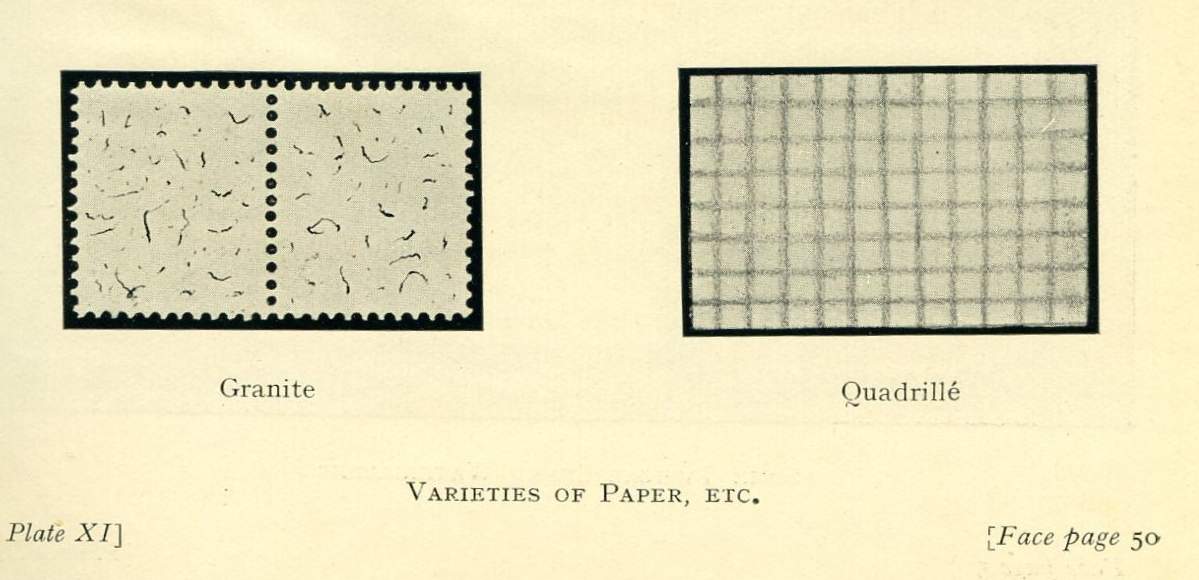 Brazil Granite 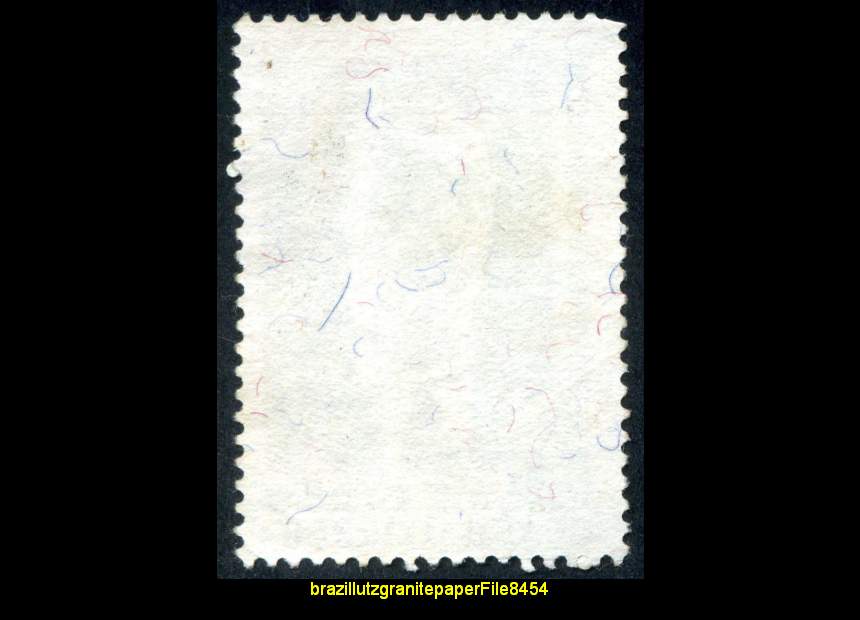 |
|
Send note to Staff
|
|
|
Valued Member
United States
373 Posts |
|
|
Thanks. I think I left the stamps in the pages of the catalog so I could find the countries again later. My eye may be naked, but I still need a magnifying glass to see.....lol
Donna |
|
Send note to Staff
|
|
|
Pillar Of The Community
United States
6756 Posts |
|
|
My understanding is that for granite paper, the fibers are ALWAYS broken, regardless of whether the color fibers are cloth/silk or other color fiber material.
Silk paper ALWAYS uses silk fiber/threads, which may or may not be broken. Therefore in some types of silk paper, you may see one or more silk threads running through the length of the paper. Examples can be found in early GB and Swiss stamps.
That is my understanding based on what I have read and seen practiced over the years. It explains why stamps printed on paper with broken silk fibers are often interchangeably called silk or granite paper.
There are numerous variations to silk paper, which I will not go into since this thread was originally about granite paper.
Also one thing to note. On some granite paper (usually more modern stamps), the color fiber density is very very low. On these issues, if the stamp is small enough, it is actually possible to find a stamp which has no obvious color fibers but is still printed on granite paper. This is not a common occurrence, but does happen every once in a while. It is rarely a problem on older stamps which often have a higher color fiber density. |
|
Send note to Staff
|
|
|
Pillar Of The Community
United States
6756 Posts |
|
|
Pillar Of The Community
Australia
2156 Posts |
|
|
Pillar Of The Community
United States
6756 Posts |
|
|
Yeah, the Austrians tried just about everything, including varnish bars. |
|
Send note to Staff
|
|
|
Pillar Of The Community
Australia
2156 Posts |
|
|
Which I still haven't seen. I don't think I have any with varnish bars in my collection. However, I have these odd wartime issues with various kinds of lines - and sometimes even words - embedded in them (not printed on the back). The paper they used to make stamps with during the last half of the war must've been recycled: 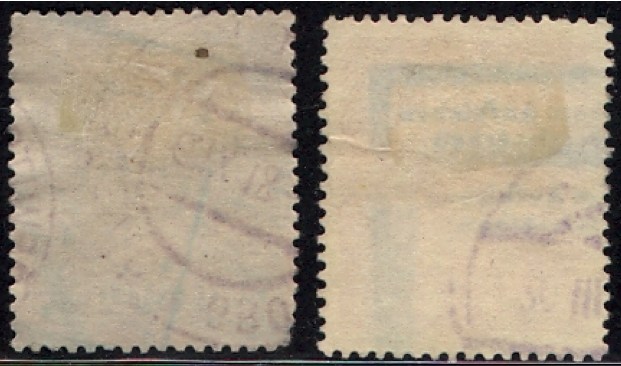 Austrian empire stamps, are proving a fascinating subject! |
|
Send note to Staff
|
|
|
Pillar Of The Community
United States
6756 Posts |
|
|
The varnish bars on the Austrian stamps should be very obvious when held at an angle under a light. They are probably about 3-4mm wide (taken from memory) and you can usually see 2 of them running diagonally across the stamp. If you can't see them at an angle, then they probably aren't there. They are pretty hard to get rid of without doing obvious damage to the stamp. |
|
Send note to Staff
|
|
|
Bedrock Of The Community
Australia
38679 Posts |
|
|
Thanks for that clarification on granite khj, I'll keep this for reference. Short fibres makes sense as visula granite. Austrian Varnish Bars: when I was learning my philately and everything got soaked this was the result of the varnish bars working as they were inteded by the inventor.  |
|
Send note to Staff
|
|
|
Pillar Of The Community
Australia
2156 Posts |
|
|
Thanks for the image, Rod222.
I wonder if that means that none of my Austrian stamps have ever been soaked. |
|
Send note to Staff
|
|
|
Bedrock Of The Community
Australia
38679 Posts |
|
|
Jam,
the stamps in question are very awkward indeed.
They come with gum that was probably made from old war horses
as soon as the stamps sniff a whiff of water
they curl like cigarette filters, and the gum then
does not take lightly the rinse in water,
one has to place the stamp on the meaty part
at the base of the thumb
and using a knife, very carefully scrape the yellowish
muck / mucilage from the back of the stamp,
which is extremely thin like gold beaters skin.
Overall not a likeable excercise.
|
|
Send note to Staff
|
|
|
Pillar Of The Community
United States
6756 Posts |
|
|
Quote:
I wonder if that means that none of my Austrian stamps have ever been soaked. It depends on how long they were soaked, the water temperature, and any chemical impurities that may be in the water. |
|
Send note to Staff
|
|
|
Replies: 18 / Views: 14,305 |
|




 Posted 12/31/2010 3:39 pm


